Addax
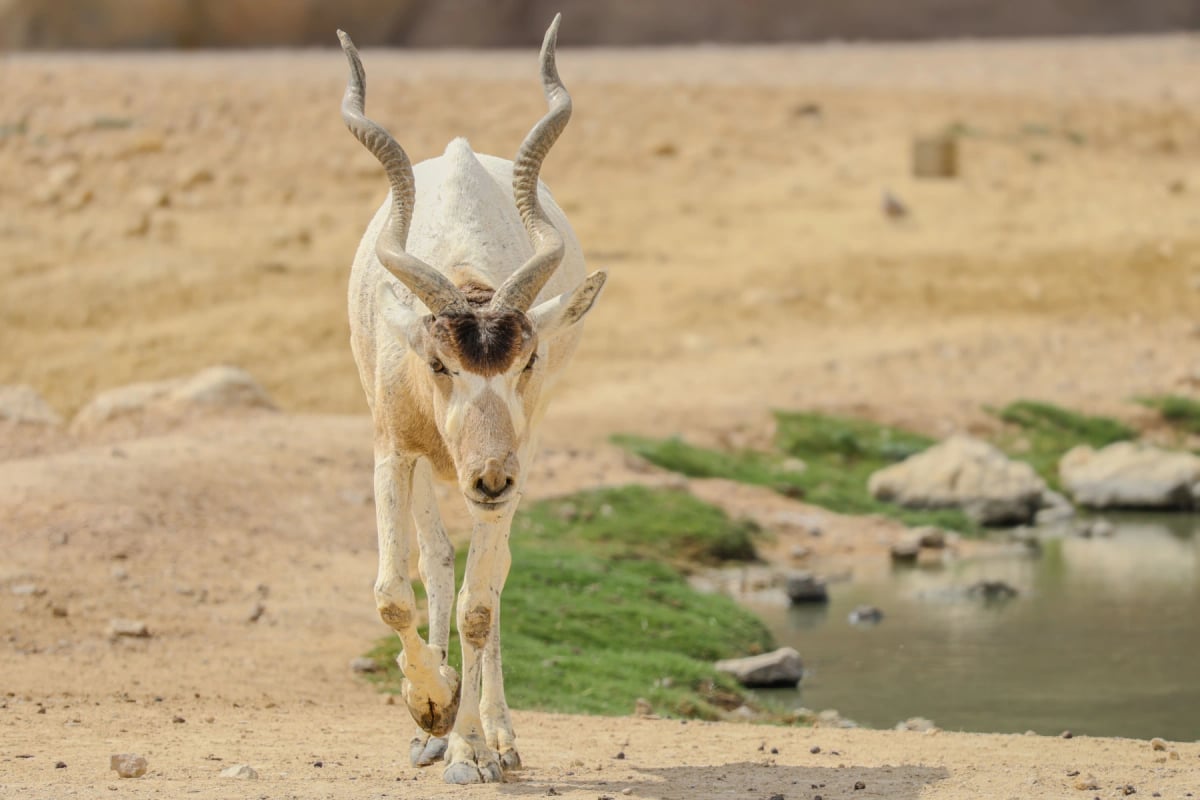
The addax (Addax nasomaculatus) is a critically endangered antelope once widespread across the Sahara Desert. Recognized by its long spiral horns and pale coat, it is supremely adapted to arid conditions, surviving without free water by obtaining moisture from plants. Addax live in small groups, traveling across sand dunes and gravel plains in search of sparse vegetation. Once numbering in hundreds of thousands, relentless hunting and habitat degradation reduced their wild population to fewer than a hundred individuals. Conservation programs in Niger and Chad, supported by reintroductions from captive breeding, now offer hope for recovery.
Habitat and distribution
The addax once ranged across nearly the entire Sahara, from Mauritania and Morocco in the west to Sudan and Egypt in the east. Today, wild individuals survive in only two areas: the Termit and Tin Toumma National Nature Reserve in northeastern Niger, and scattered pockets in Chad. The species favors flat, open terrain: sandy plains, gravel flats, and shifting dunes, moving nomadically to follow seasonal rainfall and the sparse vegetation it triggers. Reintroduction programs have placed small herds in protected areas of Morocco and Tunisia
Desert adaptations
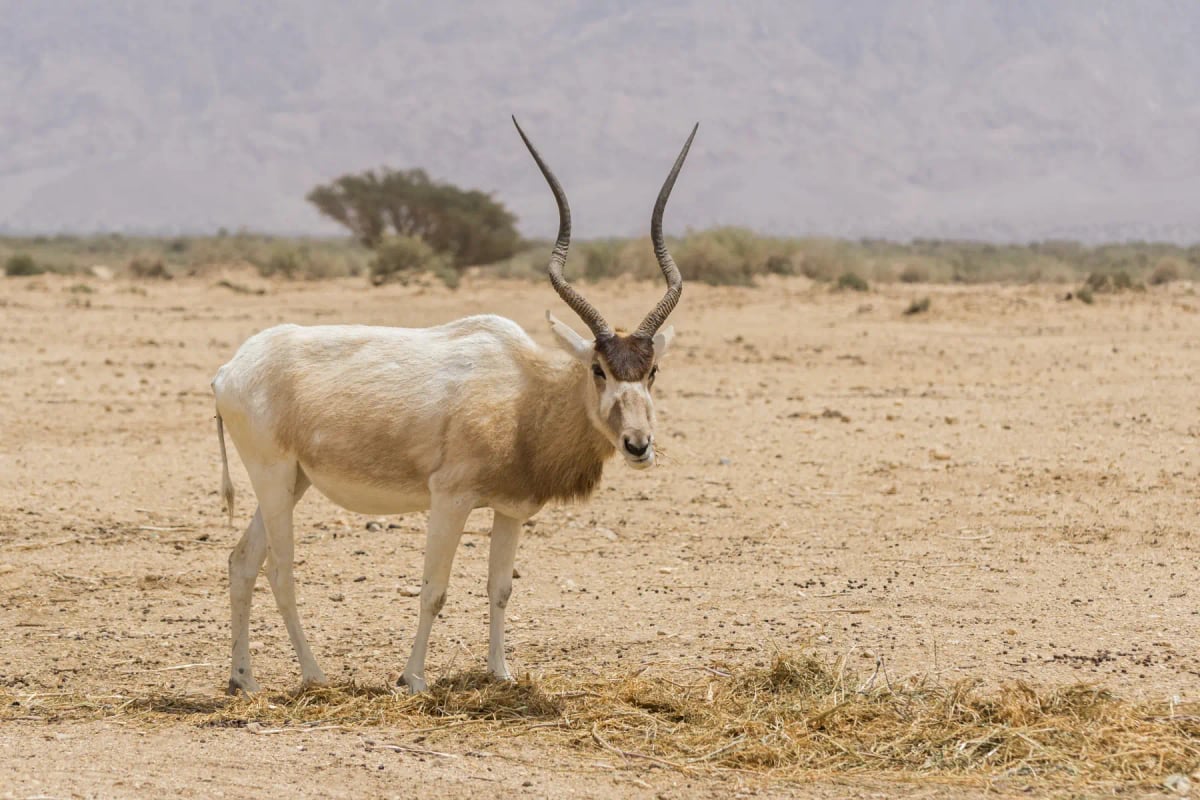
The addax is built for Saharan life in every detail. Its coat shifts from nearly white in summer, reflecting intense solar radiation, to grayish brown in winter, absorbing warmth during cooler months. Wide, flat hooves distribute its weight across loose sand without sinking. Instead of drinking free water, it extracts moisture from grasses and succulents, aided by kidneys that concentrate urine to cut water loss to a minimum. It can also tolerate its own body temperature rising several degrees, reducing the need to sweat and conserving precious internal fluids through the hottest part of the day.
Behavior and social life
Addax are nomadic animals, drifting across the desert to follow rain and the vegetation it brings. They move mainly at night and during the cooler hours around dawn and dusk, resting in shallow scrapes in the sand during peak heat. Herds are small, typically guided by a dominant male, though group composition shifts as animals converge on food sources. Despite their size, addax are not fast runners, which makes them vulnerable to persistent hunters and vehicles. During the rut, males become competitive, using their long spiral horns in pushing contests to assert dominance over rivals.
Conservation
The addax is listed as Critically Endangered by the IUCN. Relentless poaching, civil unrest within its range, and the expansion of oil exploration into remote desert areas have collapsed wild populations to a fraction of their former size. The 2017 IUCN assessment estimated fewer than 300 wild individuals; more recent field surveys suggest the number may be considerably lower. Niger's Termit and Tin Toumma reserve remains the primary refuge. International zoo networks maintain substantial captive populations, and reintroduction programs in Morocco, Tunisia, and Senegal are actively expanding. Strict enforcement against poaching is critical to any lasting recovery.
Researched and written by Juan Pablo. Sources: IUCN Red List, scientific literature and regional field guides. Last updated: .
Technical factsheet




Frequently Asked Questions
What does the addax eat?
The addax is a herbivore that feeds on grasses, herbs, and succulents across the Sahara. It targets vegetation with high moisture content, which allows it to survive without drinking free water. It moves nomadically across the desert to find food wherever rain triggers new growth. In captivity, addax receive hay, grasses, and specially formulated pellets. Their digestive system efficiently extracts nutrients from sparse, tough desert vegetation.
Where does the addax live?
The addax is native to the Sahara Desert, once ranging from Mauritania and Morocco to Sudan and Egypt. Today, wild individuals survive only in the Termit and Tin Toumma National Nature Reserve in northeastern Niger and in isolated pockets in Chad. The species favors open, flat terrain such as sandy plains and dune fields. Reintroduced populations also exist in protected areas in Morocco and Tunisia.
How does the addax survive without water?
The addax obtains virtually all the moisture it needs from the plants it eats, particularly grasses and succulents that store water in their tissues. Its kidneys produce highly concentrated urine to minimize fluid loss. It can also allow its body temperature to rise during the hottest part of the day, reducing the need to sweat. This combination makes the addax one of the most efficient large mammals when it comes to surviving in true desert conditions.
Why is the addax critically endangered?
The addax's collapse from hundreds of thousands to fewer than 100 wild individuals results from multiple combined pressures. Unregulated hunting using motorized vehicles decimated populations throughout the twentieth century. Civil instability in Niger, Mali, and Chad made enforcement of wildlife laws nearly impossible for decades. Oil exploration brought workers and vehicles into previously inaccessible habitat. Its low reproductive rate has made any natural recovery extremely slow.
How many addax are left in the wild?
Estimating the exact number of wild addax is difficult because they live in some of the most remote terrain on Earth. The 2017 IUCN assessment estimated fewer than 300 individuals; more recent surveys suggest the number may be between 30 and 100. The main wild population is in Niger's Termit and Tin Toumma reserve. Captive populations in zoos worldwide number in the thousands, supporting active reintroduction programs.
What are the addax's spiral horns used for?
Both male and female addax carry long spiral horns that can reach up to 120 centimeters. During the breeding season, males use them in pushing and wrestling contests to establish dominance and access to females. Outside the rutting period, addax are generally calm. Historically, the combination of slow running speed and impressive horns made the addax a prized trophy, contributing significantly to the hunting pressure that drove the species to the edge of extinction.