Emu
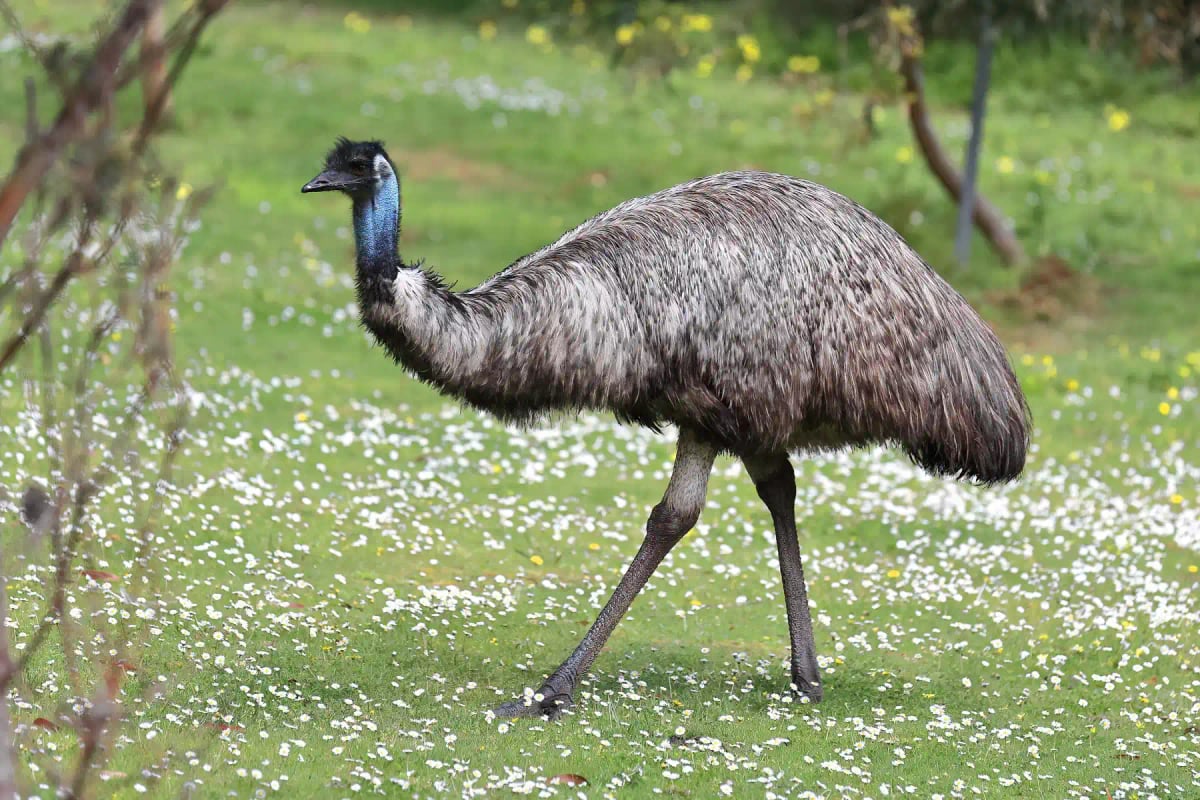
The emu is Australia's largest native bird and the second tallest bird on Earth, standing up to 1.9 metres. It cannot fly, but it can run at speeds of up to 50 km/h and is also a capable swimmer. Its loose, shaggy feathers act as insulation against the intense Australian heat. Emus roam across grasslands, open woodlands and arid plains in loose groups, shifting with the seasons in search of seeds, fruits, flowers and insects. One of their most striking traits is their breeding behaviour: the female lays a clutch of large, dark green eggs, then leaves the male to do all the work. He builds the nest, incubates the eggs for around eight weeks without eating, and raises the chicks on his own. Emus also appear on the Australian coat of arms alongside the kangaroo.
Habitat and distribution
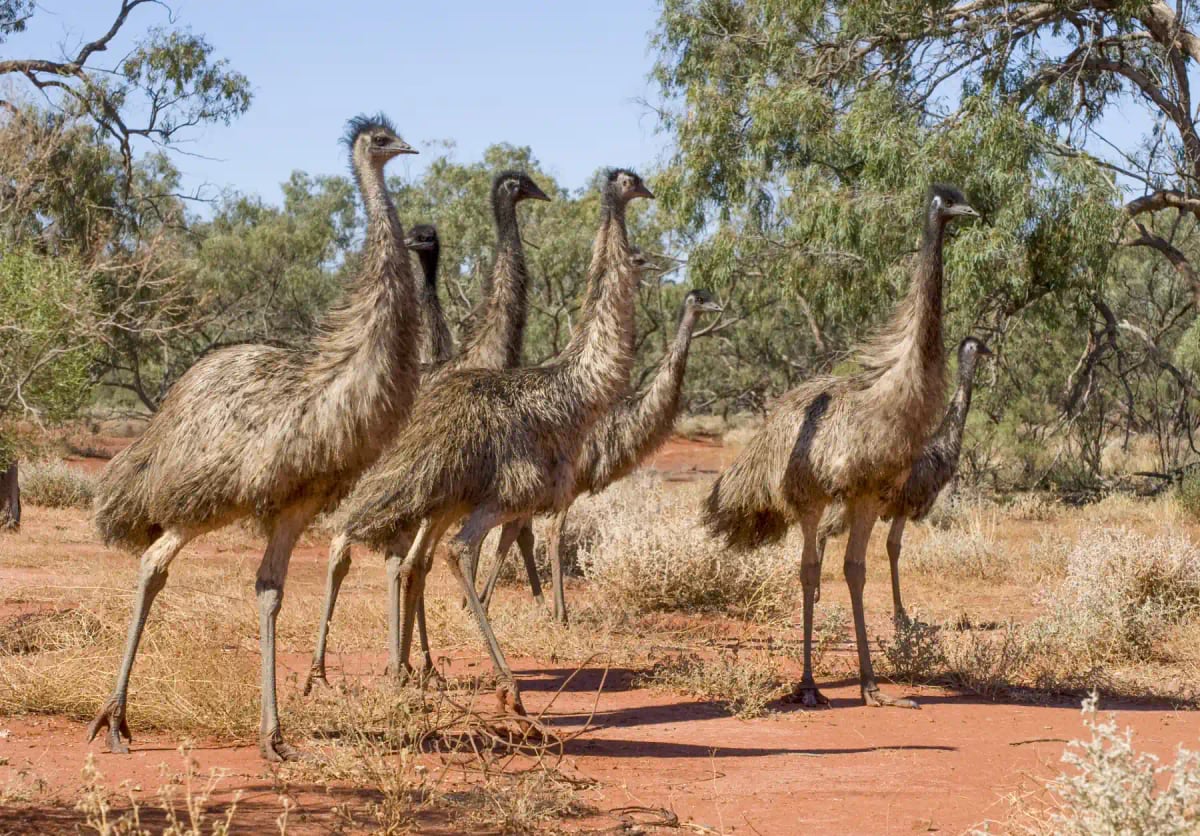
Emus are found across almost all of mainland Australia, making them one of the most widely distributed large animals on the continent. They thrive in open habitats such as grasslands, dry woodlands, shrublands and the vast arid plains of the interior. Along the coast, they also occupy open farmland and heath. Emus tend to avoid the dense rainforests of Queensland's wet tropics and steer clear of heavily built-up urban areas. They are well suited to regions with low or unpredictable rainfall, and their movements often follow rain events and the seasonal flush of new plant growth. The island of Tasmania once had its own emu subspecies, but it was hunted to extinction in the 1800s. Today the mainland population remains healthy and widespread.
Diet
Opportunistic by nature, emus eat a wide variety of plant and animal matter depending on what is available at any given time of year. Seeds and fruits form the bulk of their diet, but they also consume flowers, young shoots, and insects such as grasshoppers, beetles and caterpillars. They are known to swallow small stones, which sit in the gizzard and help grind tough plant material. Emus can go for extended periods without food when resources are scarce, relying on fat reserves built up during times of plenty. Because seeds pass through their digestive system intact, they play a genuine role in spreading plant species across large areas of the Australian landscape. They will travel remarkable distances to reach areas where rain has recently triggered a burst of new growth.
Reproduction
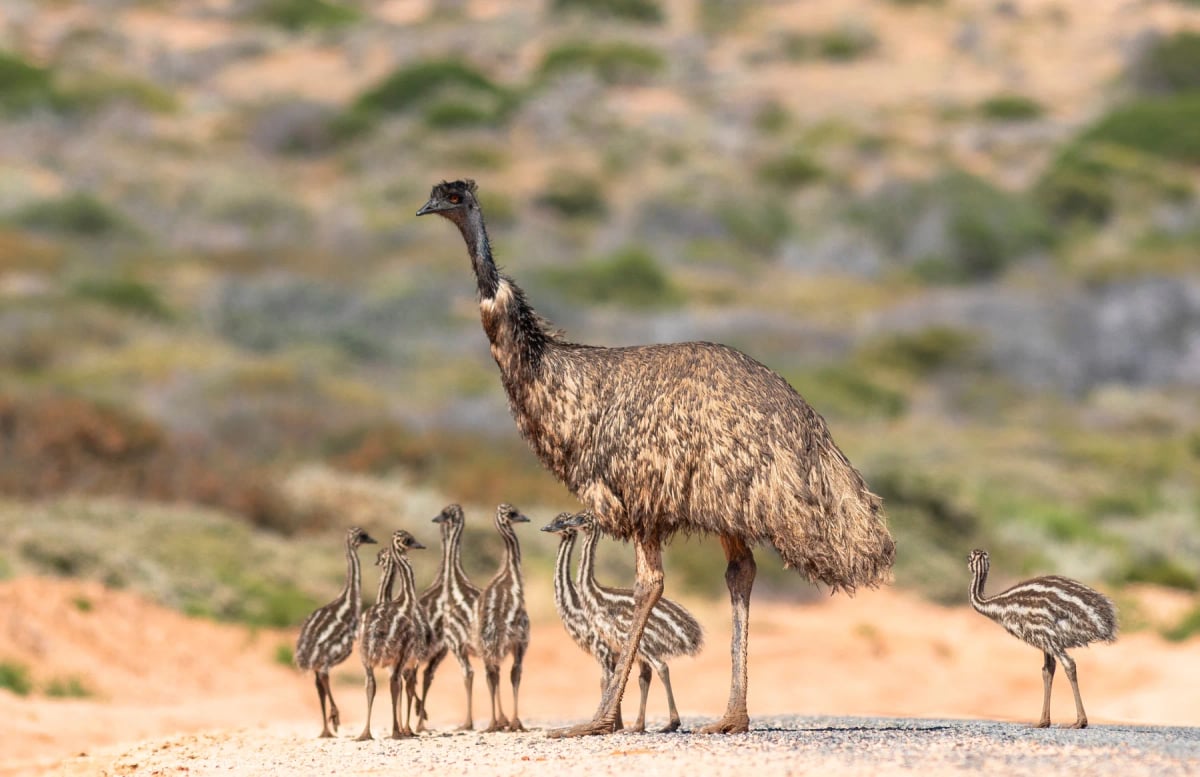
Breeding in emus involves an unusual division of roles that sets them apart from most birds. The female courts the male, and once she has laid her clutch of between five and fifteen large, dark green eggs, her involvement largely ends there. Each egg can weigh around 900 grams. The male takes over entirely, arranging the eggs on a rough nest of grass, leaves and bark on the ground. He then incubates them for approximately 56 days, during which he barely eats, drinks or leaves the nest. By the time the eggs hatch, he may have lost nearly a third of his body weight. He goes on to raise the striped chicks alone for up to 18 months, teaching them to find food and protecting them from predators.
Behavior
Few birds match the emu for sheer physical capability. It can sprint at up to 50 kilometres per hour using powerful three-toed feet, and it is also a confident swimmer, crossing rivers and lakes when necessary. Emus are generally active during the day, though they may rest during the hottest part of the afternoon. They gather in loose groups rather than tight flocks, and these groups shift across the landscape in response to rainfall and food availability, sometimes covering hundreds of kilometres in a season. Emus communicate through a range of sounds: females produce a loud booming call using an inflatable throat pouch, while males tend to make softer grunting sounds. Their shaggy double-layered feathers provide insulation against both heat and cold, making them remarkably well suited to Australia's extreme climate.
Conservation
The IUCN lists the emu as Least Concern, reflecting a population that is large and stable across its range. Estimates suggest there are between 600,000 and 700,000 emus in Australia, though numbers naturally fluctuate with drought cycles. The species does face localised pressures: land clearing for agriculture reduces available habitat in some regions, and collisions with vehicles are a known cause of mortality along rural roads. In Western Australia, emus have historically been culled to protect wheat crops, most famously during the so-called Emu War of 1932. Today, farmers use fencing as the main tool to manage emu movements. Subspecies on Kangaroo Island and King Island were lost to hunting and habitat loss, but the mainland species remains secure for the foreseeable future.
Researched and written by Juan Pablo. Sources: IUCN Red List, scientific literature and regional field guides. Last updated: .
Technical factsheet

Frequently Asked Questions
Can emus fly?
No, emus cannot fly at all. Their wings are tiny and completely useless for flight. What they lack in the air, though, they more than make up for on the ground. Emus can run at speeds of up to 50 kilometres per hour, and they are surprisingly strong swimmers too, crossing rivers and lakes with ease when they need to.
What do emus eat?
Emus eat a wide variety of foods depending on the season. Seeds and fruits are their main staples, but they also munch on flowers, young shoots, and insects like grasshoppers and beetles. They swallow small stones to help grind down tough plant material in their gizzard. When food is scarce, they can survive on fat reserves built up during better times.
Where do emus live?
Emus are found across almost all of mainland Australia. They prefer open landscapes such as grasslands, dry woodlands, shrublands and the vast arid plains of the interior. They do well in areas with low or unpredictable rainfall and tend to follow rain events in search of fresh food. They generally avoid dense rainforests and busy urban areas.
How tall is an emu?
Emus are the tallest birds native to Australia and the second tallest birds on Earth, standing up to 1.9 metres. That puts them just below the ostrich in terms of height. Despite their impressive size, they are fast and agile. Females and males are similar in height, though females tend to be slightly larger overall during the breeding season.
Do male or female emus raise the chicks?
It is the male who does all the work. After the female lays her clutch of eggs, she leaves and the male takes over completely. He incubates the eggs for around 56 days, barely eating during that time and losing up to a third of his body weight. He then raises the chicks on his own for up to 18 months, protecting them and teaching them to find food.
Are emus endangered?
No, emus are not endangered. The IUCN classifies them as Least Concern, with an estimated population of between 600,000 and 700,000 individuals across Australia. Numbers do go up and down with drought cycles, and there are some local pressures like habitat loss and road collisions, but the overall population is large, stable and not under serious threat.
What is the Emu War?
In 1932, the Australian government sent soldiers with machine guns to Western Australia to cull emus that were damaging wheat crops. The operation, quickly nicknamed the Emu War, turned into something of a disaster. The birds proved difficult to target and scattered easily, and the effort was largely abandoned. It remains one of the more unusual wildlife management stories in history.