Monitor Lizard
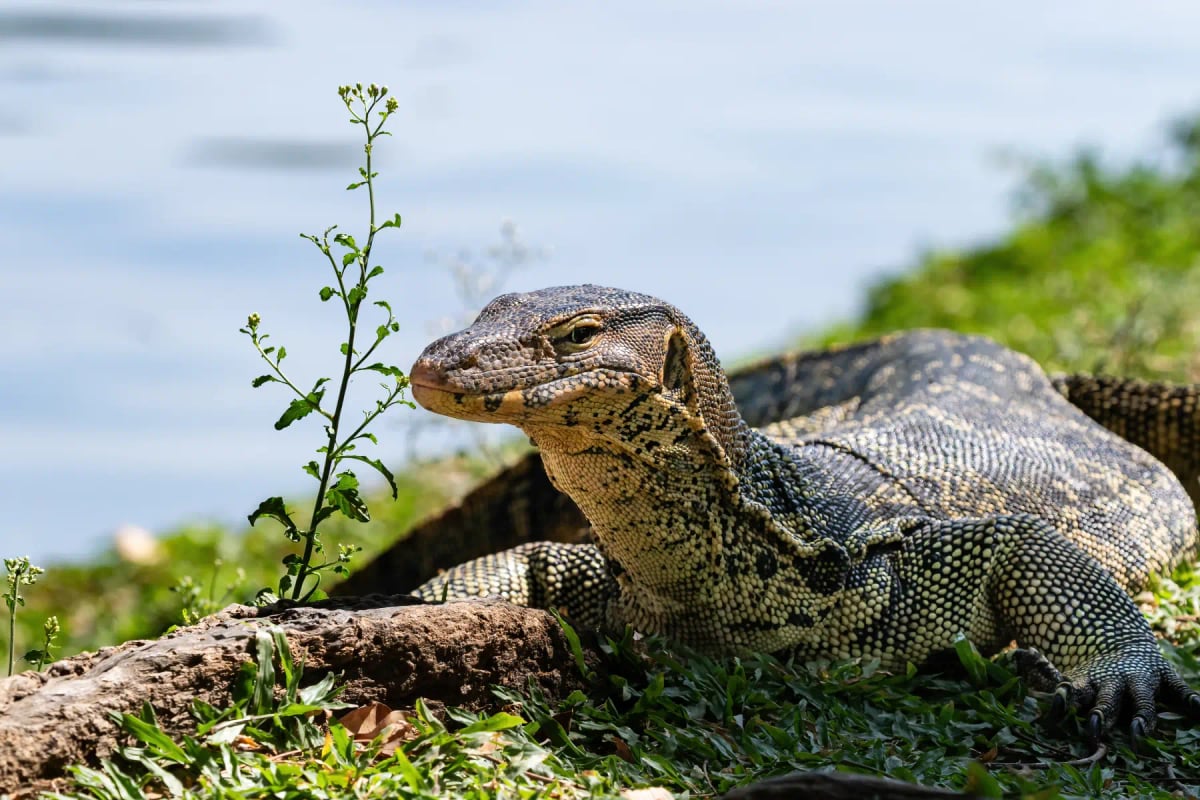
The Asian water monitor (Varanus salvator) is one of the world’s largest lizards, native to South and Southeast Asia. It inhabits rivers, swamps and mangroves, where it preys on fish, birds, small mammals, eggs and carrion. Adaptable and strong, it can also be found in agricultural areas and city canals. An excellent swimmer with a powerful tail, it can remain submerged for long periods. Although listed as Least Concern, it is sometimes hunted for its meat, skin and use in traditional medicine.
Habitat and distribution
The Asian water monitor has one of the widest ranges of any large lizard. It is found from northeastern India and Bangladesh across Myanmar, Thailand, Cambodia, Laos, Vietnam, Malaysia and Indonesia, continuing to the Philippines and reaching as far north as Hainan Island and the southern provinces of China. It occupies a remarkable variety of environments: riverbanks, mangrove forests, coastal swamps, rice paddies and urban waterways. Cities like Bangkok and Singapore have stable populations living alongside people in parks and canals. A small introduced population exists in southern Florida, most likely from escaped or released animals.
Diet
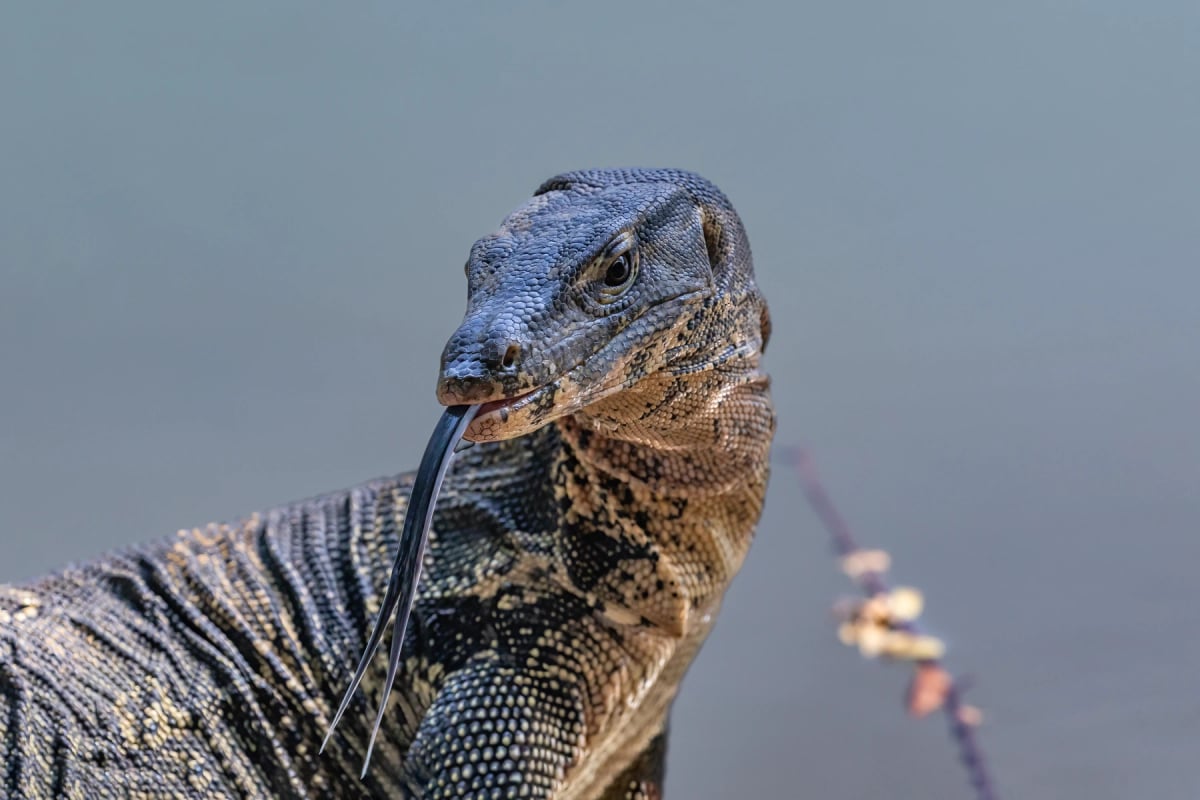
The Asian water monitor is one of the most opportunistic predators among large reptiles. Its diet includes fish, crabs, frogs, snakes, birds, small mammals and eggs, and it readily consumes carrion whenever it finds it. There are documented cases of it raiding bird nests and even crocodile nests to eat eggs and hatchlings. In cities and towns it has adapted to scavenging near garbage dumps, fish markets and drainage canals. It locates food by flicking its forked tongue constantly to detect chemical signals in the air, which lets it pick up the scent of prey or carcasses from a considerable distance.
Behavior
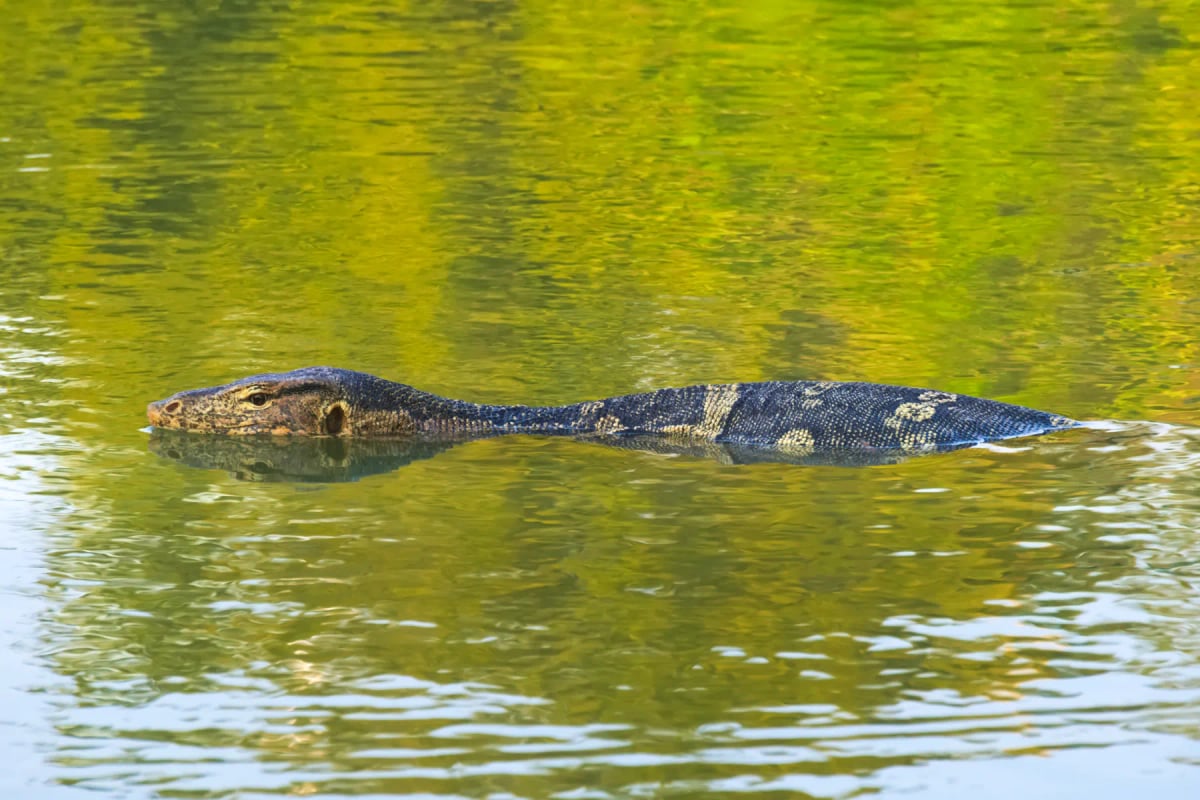
The Asian water monitor is equally capable in and out of the water. Its tail is laterally flattened, working as a powerful paddle that allows it to swim strongly and stay submerged for several minutes when escaping or hunting. On land it can move quickly in short bursts. When threatened, it often rises on its hind legs to appear larger and may lash its tail or bite if cornered. Individuals are generally solitary, though several can gather at a large carcass without serious conflict. Activity peaks in the morning and drops off during the hottest hours.
Threats
The Asian water monitor faces its greatest pressure from commercial hunting for its skin. Studies in Peninsular Malaysia recorded between 50,000 and 120,000 individuals harvested annually for the leather trade alone, and the global annual trade in monitor lizard skins has been estimated at over one million pieces. The hides are turned into shoes, belts and handbags sold internationally. Beyond the skin trade, it is also hunted for meat and for use in traditional medicine. Habitat loss through wetland drainage and deforestation removes available territory, and in farming areas it is sometimes killed by people who see it as a threat to poultry.
Conservation
Although classified as Least Concern by the IUCN, the Asian water monitor is listed on CITES Appendix II, meaning international trade in its skins requires regulated permits. In India it holds the highest level of legal protection under Schedule I of the Wildlife Protection Act of 1972, the same category as tigers and elephants. Enforcement varies across its range and tends to be weaker in Indonesia and parts of Southeast Asia, where commercial harvesting continues. Bangkok recently approved commercial breeding as an alternative to wild capture, a move that reflects growing recognition that unregulated hunting poses a real risk to wild populations over time.
Where it is found
The Monitor Lizard can be found in places such as:
Researched and written by Juan Pablo. Sources: IUCN Red List, scientific literature and regional field guides. Last updated: .
Technical factsheet










Frequently Asked Questions
Is the Asian water monitor dangerous to humans?
The Asian water monitor is generally not aggressive toward people and tends to flee rather than confront a human. It can deliver a strong bite and use its tail defensively if cornered or grabbed, which has caused minor injuries in rare cases. It carries bacteria in its mouth that can cause infection, so any bite should be treated promptly. Most encounters in cities and villages end without incident.
How big can a monitor lizard get?
The Asian water monitor typically reaches between one point five and two point four meters in total length, including its long tail, and can weigh between five and seventeen kilograms. It is one of the largest lizard species in the world, surpassed only by the Komodo dragon. Males generally grow larger than females, and the biggest individuals tend to live in areas with abundant food and little human disturbance.
Why are monitor lizards found in cities?
Monitor lizards thrive in urban areas because canals, parks and drainage systems offer the water, shelter and food sources they need. They scavenge near fish markets, garbage dumps and waterways, taking advantage of the same opportunistic diet that serves them well in the wild. Cities like Bangkok and Singapore host stable populations that have adapted to traffic, noise and people without significant stress.
What do monitor lizards eat?
Monitor lizards eat an extremely varied diet that includes fish, crabs, frogs, snakes, birds, small mammals and eggs, and they readily feed on carrion whenever they find it. They have even been documented raiding the nests of other reptiles, including crocodiles, to eat eggs and hatchlings. Their constant tongue flicking helps them detect chemical signals in the air, allowing them to locate food from a considerable distance.
How long can a monitor lizard stay underwater?
An Asian water monitor can remain submerged for several minutes thanks to its laterally flattened tail, which works as a powerful paddle, and its ability to slow its metabolism while diving. This skill helps it escape predators or threats and also makes it an effective swimmer when hunting fish and other aquatic prey. Despite this aquatic ability, it still needs to surface regularly to breathe air.
Are monitor lizards hunted for their skin?
Yes, the Asian water monitor is heavily hunted for the international leather trade, with studies in Peninsular Malaysia recording tens of thousands of individuals harvested every year for this purpose alone. The global annual trade in monitor lizard skins has been estimated at over one million pieces, used to make shoes, belts and handbags. This trade is regulated under CITES, though enforcement varies widely across the species' range.
Is the monitor lizard endangered?
The Asian water monitor is classified as Least Concern by the IUCN, meaning the species as a whole is not currently at high risk of extinction. However, it is listed on CITES Appendix II due to heavy international trade in its skin, which requires regulated permits for export. Local declines have occurred in areas with intense hunting or significant habitat loss, even though the global population remains relatively stable.