Scarlet Macaw
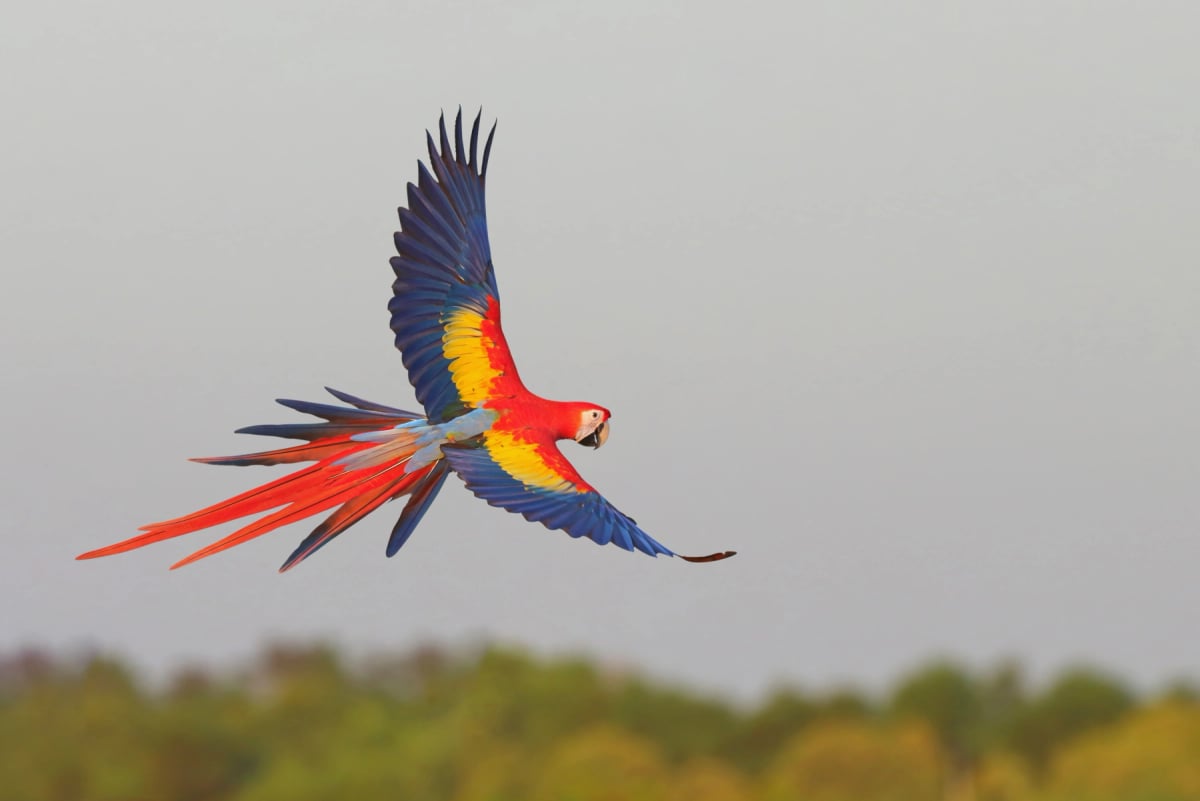
The scarlet macaw is one of the largest and most brilliantly colored parrots in the world. Its plumage is almost entirely scarlet red, with broad yellow bands across the wings and vivid blue flight feathers. Found from southern Mexico through Central America and down into the Amazon Basin, it favors lowland tropical forests and riverine woodlands. It mates for life and pairs stay close year round, flying together with loud, raucous calls that carry far through the forest canopy. Nesting takes place in natural cavities high in large trees. The species feeds on fruits, seeds, nuts and occasionally flowers, and is well known for visiting riverbank clay licks to ingest minerals that help neutralize toxins in some of its food. Populations have declined in parts of its range due to habitat loss and the illegal pet trade, though the species as a whole remains listed as Least Concern by the IUCN.
Habitat and distribution
Scarlet macaws range across one of the widest distributions of any parrot in the Americas. Their territory stretches from the Pacific and Atlantic lowlands of southern Mexico through every country in Central America, continuing south through Colombia, Venezuela, the Guianas, and deep into the Amazon Basin of Brazil, Peru, and Bolivia. They favor lowland tropical forests below 1,000 meters, especially areas close to rivers where large fruiting trees are plentiful. Forest edges and riverine woodlands also suit them well, and they are often spotted flying over open ground between patches of forest. Their presence in a landscape is usually announced long before they come into view, as their calls travel far above the canopy.
Diet
Fruits, seeds, and nuts make up the bulk of what a scarlet macaw eats each day, though flowers and the occasional leaf round out the menu. Their bill is extraordinarily powerful, capable of cracking open seeds and nuts with shells too hard for most other animals to breach. This gives them access to food sources that are largely out of reach for other species. One of the more striking habits linked to their diet is the regular visits these birds make to clay deposits along riverbanks. By swallowing small amounts of clay, they appear to neutralize naturally occurring toxins found in some of the unripe fruits and seeds they consume, allowing them to safely eat foods that would otherwise be harmful.
Behavior
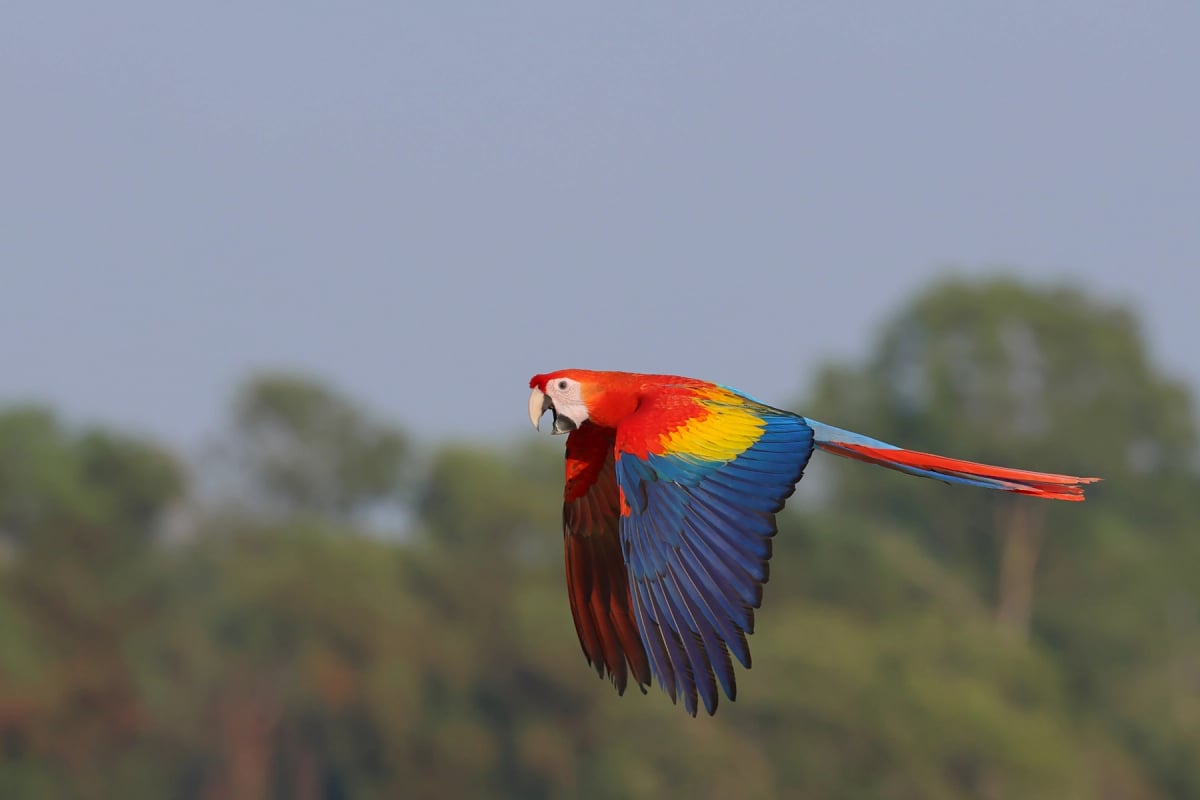
Few birds are as loyal to a partner as the scarlet macaw. Pairs bond for life, spending almost every moment of the year together. They roost together, forage together, and fly side by side, often calling back and forth in a series of loud, raspy vocalizations that echo through the forest. Outside of mated pairs, scarlet macaws gather in flocks, sometimes numbering in the dozens at communal roosting sites or clay licks. Nesting happens in natural cavities found high in large, mature trees, and both parents take part in raising their chicks. Young birds remain dependent on their parents for several months after leaving the nest, gradually learning which foods to eat and how to navigate their forest home.
Ecological role
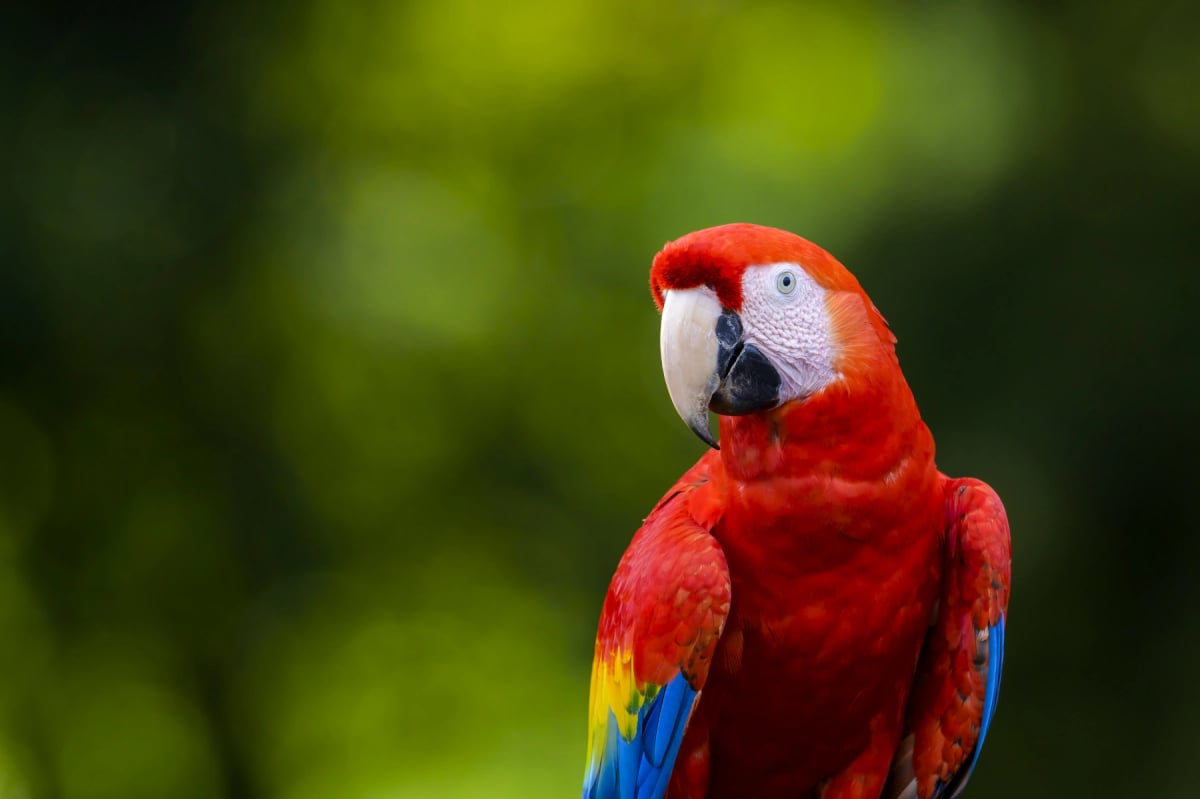
Tropical forests depend on a network of animals to move seeds from one place to another, and the scarlet macaw plays a genuine part in that process. As these birds travel across large areas of forest each day in search of food, seeds that pass through their digestive system or fall from their bill are deposited far from the parent tree. This kind of dispersal helps forests recover in areas where vegetation has been cleared or disturbed. Beyond seed dispersal, the nest cavities that scarlet macaws carve out or occupy in large trees are later used by a variety of other species, from smaller parrots to bats and insects. Their role in the forest is therefore broader than it might first appear.
Conservation
The IUCN currently lists the scarlet macaw as Least Concern, which reflects the overall size of the global population rather than the situation in every part of its range. In Mexico, Central America, and parts of South America, populations have been lost entirely from areas where they were once common. The two main drivers of this decline are the destruction of old growth forest, which removes the large trees these birds need for nesting, and the illegal capture of chicks for the pet trade. Conservation responses have included habitat protection within national parks and reserves, community monitoring programs, and ecotourism initiatives that give local people a direct economic reason to protect nesting sites. Breeding programs have also helped restore populations in some countries.
Where it is found
The Scarlet Macaw can be found in places such as:
Researched and written by Juan Pablo. Sources: IUCN Red List, scientific literature and regional field guides. Last updated: .
Technical factsheet




Frequently Asked Questions
What do scarlet macaws eat?
Scarlet macaws eat mostly fruits, seeds, and nuts. Their bill is strong enough to crack open shells that most animals cannot touch. They also visit clay deposits along riverbanks, swallowing small amounts of clay to neutralize toxins found in some of the unripe fruits and seeds they eat. This lets them safely consume foods that would otherwise make them sick.
Where do scarlet macaws live?
Scarlet macaws live across a huge stretch of the Americas, from southern Mexico through all of Central America and down into South America, including the Amazon Basin. They prefer lowland tropical forests below 1,000 meters, especially near rivers where large fruit trees grow. They also do well along forest edges and in riverine woodlands, and are often spotted flying over open areas between forests.
Do scarlet macaws mate for life?
Yes, scarlet macaws form bonds that last a lifetime. A mated pair stays together year round, foraging, roosting, and flying side by side. They also call back and forth constantly, which helps them stay in contact through dense forest. Both parents share the work of raising their chicks, and young birds stay close to their parents for several months after leaving the nest.
Are scarlet macaws endangered?
The scarlet macaw is listed as Least Concern by the IUCN, meaning the species as a whole is not at risk of extinction. However, populations in Mexico, Central America, and parts of South America have disappeared from many areas where they were once common. The main threats are the loss of old growth forest and the illegal capture of chicks for the pet trade.
How big is a scarlet macaw?
The scarlet macaw is one of the largest parrots in the world. Adults typically measure around 81 to 96 centimeters from the tip of the bill to the end of the tail, with much of that length coming from their long tail feathers. They weigh roughly 900 to 1,100 grams. Their wingspan can reach around 90 centimeters, which makes them an impressive sight in flight.
Why do scarlet macaws visit clay licks?
Scarlet macaws visit riverbank clay deposits to eat small amounts of clay or soil. Scientists believe this helps them counteract the natural toxins present in some of the unripe fruits and seeds that form part of their diet. By doing this, they can safely eat a wider range of foods. These clay lick gatherings can involve dozens of birds at once and are one of the most spectacular wildlife sights in Amazonia.
How long do scarlet macaws live?
In the wild, scarlet macaws can live for around 40 to 50 years, which is exceptionally long for a bird. In captivity, some individuals have lived even longer under proper care. This long lifespan means that pairs spend decades together and invest a great deal of time in raising each clutch of chicks. It also means that losing adult birds to trapping or habitat loss has a serious impact on local populations.