Animals in Belize
Tapir
Tapirus spp.
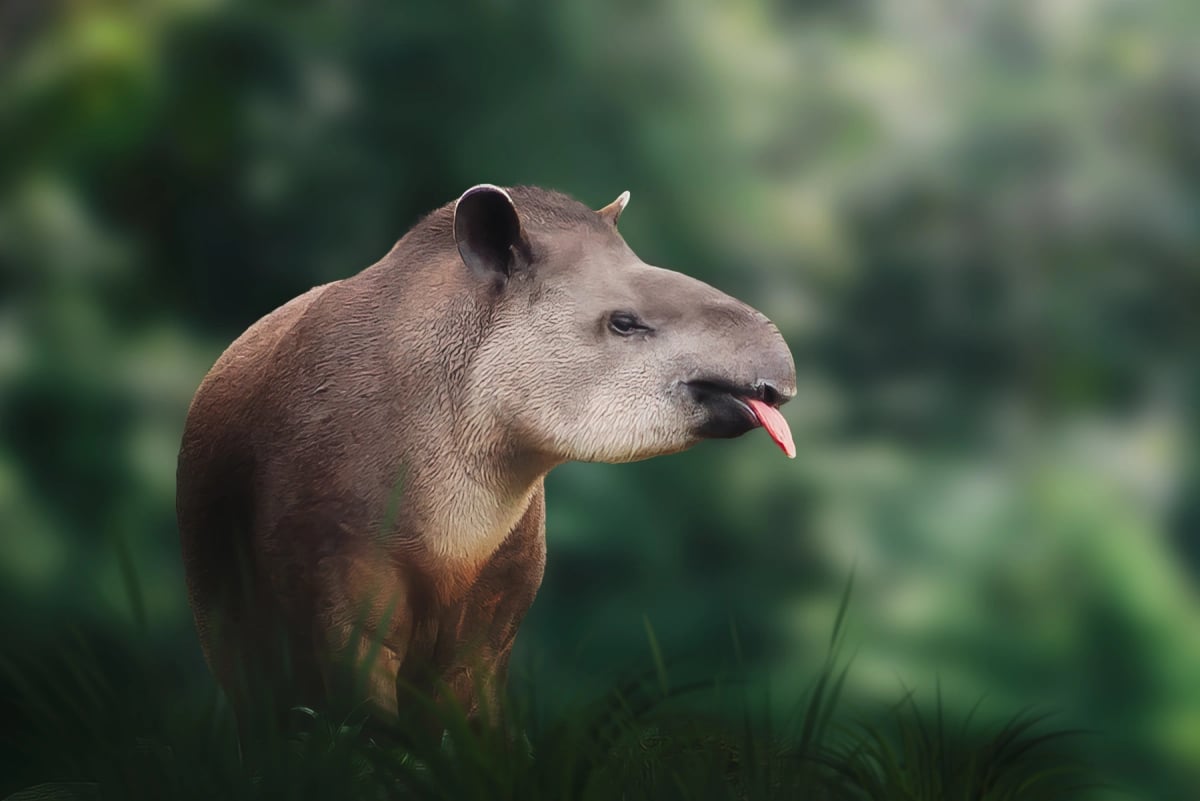
The Central American tapir, often called the mountain cow in Belize, is the national animal of the country. It is a heavy forest herbivore that prefers areas close to rivers and swamps, where it feeds on leaves, fruits and tender shoots, mostly at night. Its flexible snout helps pull plants within reach and its movements open small paths through the undergrowth. Because it needs large, quiet territories, protection of tapir populations is closely tied to the conservation of Belizean forests and wetlands.
View details→Wildlife in Belize
Belize wildlife combines dense tropical forest with one of the most important barrier reef systems on the planet. In the interior, cats, monkeys, deer and many forest birds move through river valleys and broadleaf jungle, while along the coast reefs, mangroves and seagrass meadows shelter reef fish, rays, turtles, manatees and visiting whales. National parks and marine reserves give travellers a chance to see these habitats on guided walks, boat trips and dives.
Most Dangerous Animals in Belize
Belize also has animals that can be dangerous if surprised or disturbed. In the interior, big cats, caimans and venomous snakes such as rattlesnakes and lanceheads live near rivers, forest edges and rocky slopes. At sea, barracuda and sharks including reef, bull and tiger sharks patrol channels and outer reef walls. Serious incidents are uncommon, but moving with a guide, watching where you step and following local advice are important parts of any safe trip into jungle or open water.
Top 10 Animals in Belize
On this site, the top ten group for Belize brings together large forest cats and a strong bird of prey. Jaguars and pumas represent the quiet, shaded side of the country, where tracks and calls often replace direct sightings, while eagles evoke open skies above rivers, lagoons and coast. Taken as a whole, these predators show how land and air hunters share the same tropical landscape and shape many wildlife stories told about Belize.
Ocelot
Leopardus pardalis
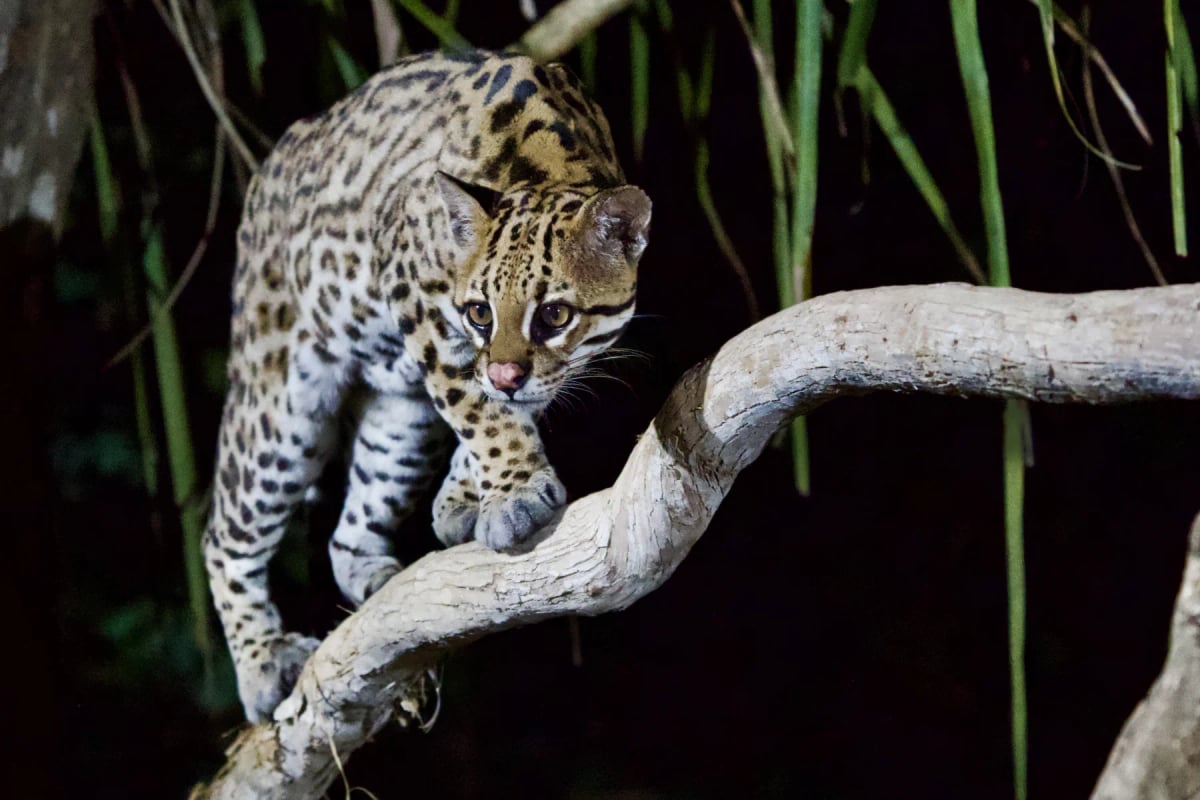
Belize supports a healthy ocelot population thanks to its extensive forest cover and protected areas, including the Cockscomb Basin Wildlife Sanctuary. Ocelots roam tropical forests and riverine habitats throughout the country. They are nocturnal hunters, preying on small mammals, birds, and reptiles. Belize's commitment to conservation and relatively low deforestation rates make it one of the more secure places for ocelots in Central America.
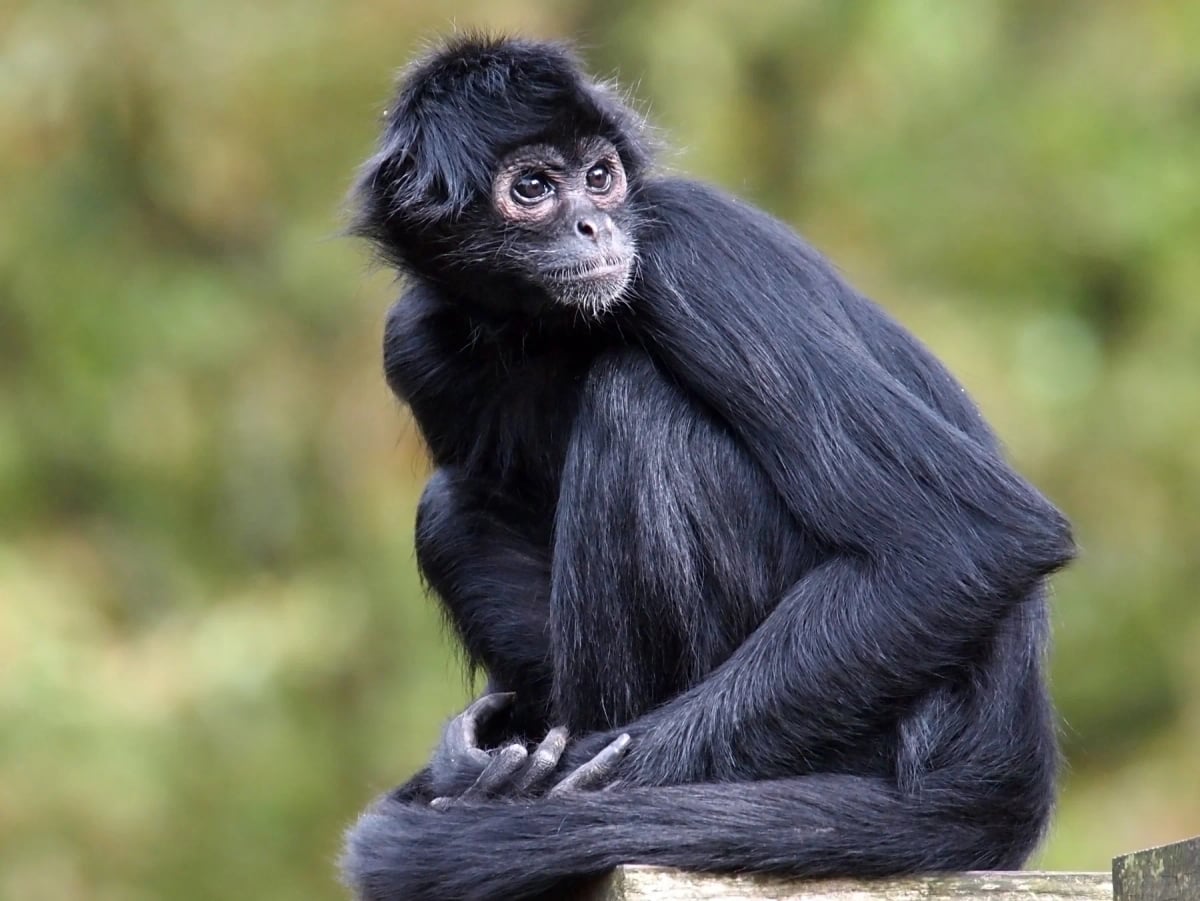
Spider Monkey
Ateles spp.
Belize is home to the Geoffroy's spider monkey, found in lowland tropical forests and protected areas such as the Cockscomb Basin Wildlife Sanctuary. These primates depend on large, continuous stretches of forest to find enough fruit throughout the year. Conservation efforts in Belize have helped protect some populations, though habitat loss outside protected zones remains a serious concern.
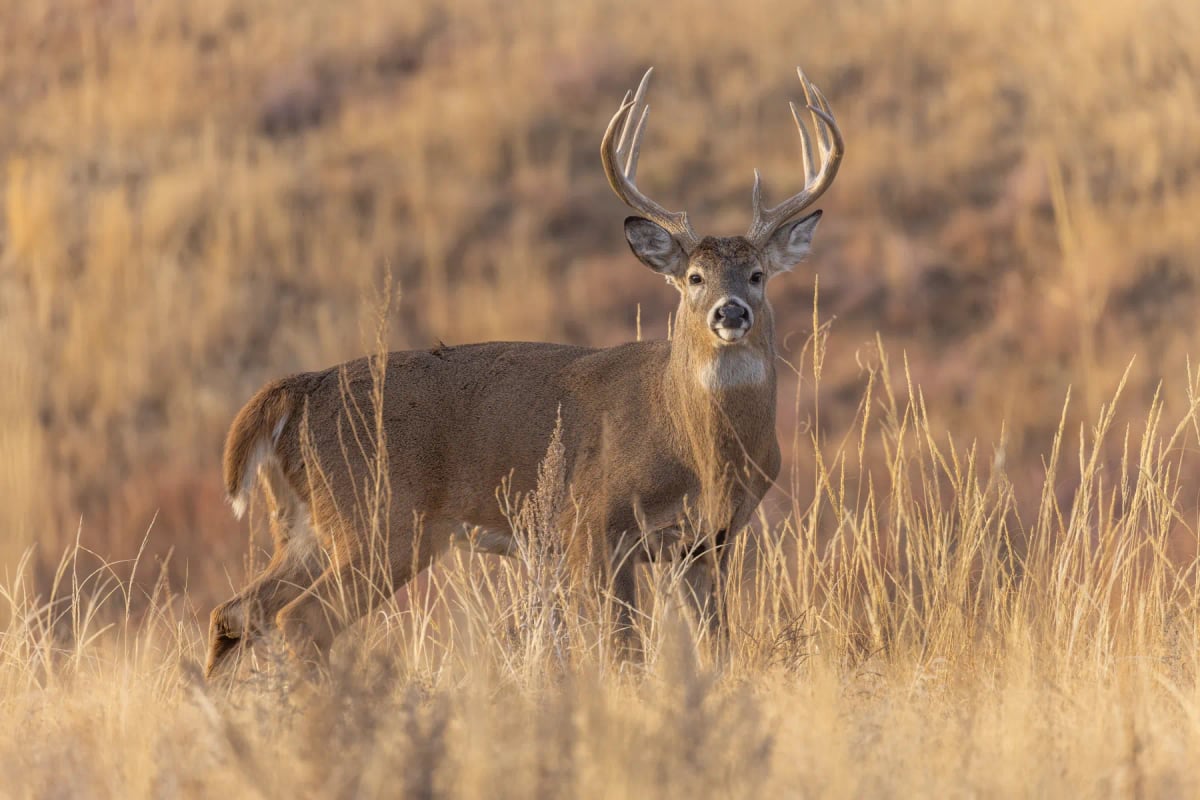
White tailed Deer
Odocoileus virginianus
The white tailed deer is one of Belize's most familiar wild mammals, found across the country's forests, savannas, and agricultural edges. It plays an important role in Mayan culture and has been a food source for centuries. In protected areas like the Chiquibul Forest Reserve, populations remain healthy. The deer's ability to thrive in both dense jungle and open farmland makes it a common sight throughout the country.
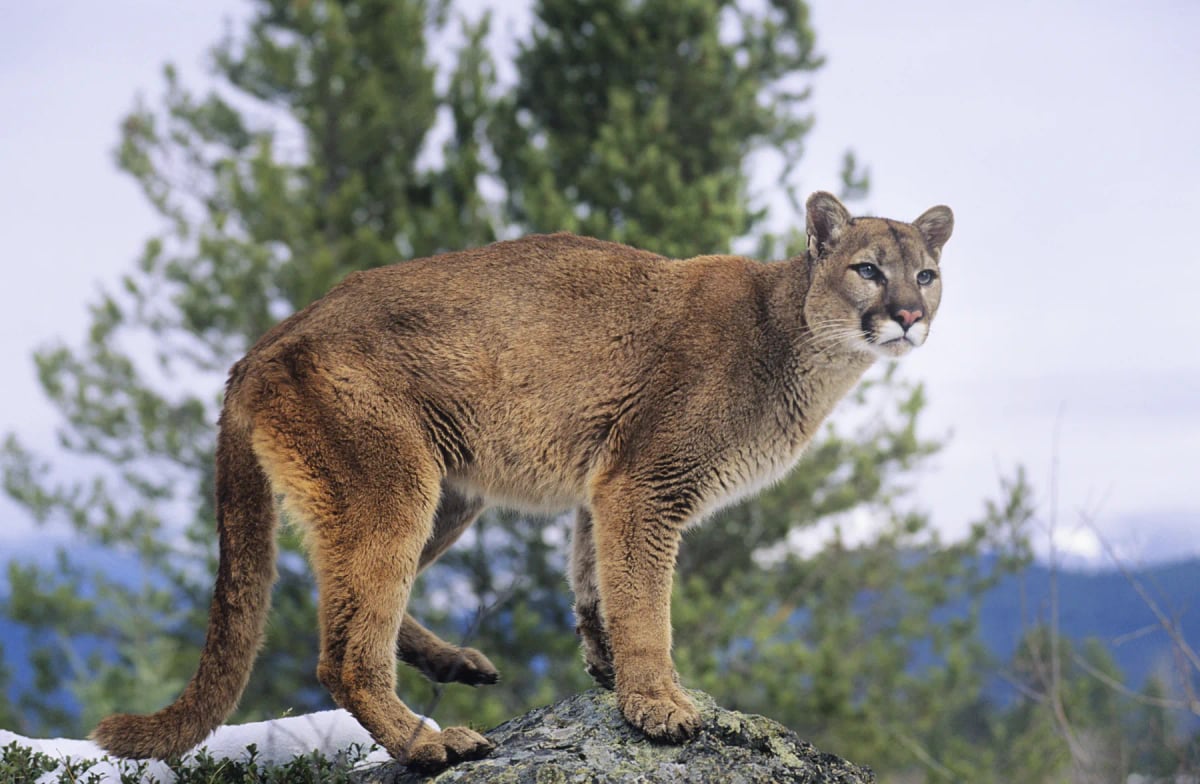
Cougar
Puma concolor
In Belize, the cougar inhabits tropical forests, savannas, and the foothills of the Maya Mountains. It shares this landscape with the jaguar, and the two large cats tend to avoid each other by hunting at different times and in different areas. Protected areas such as the Chiquibul Forest Reserve offer some of the best remaining habitat for cougars in this small Central American nation.
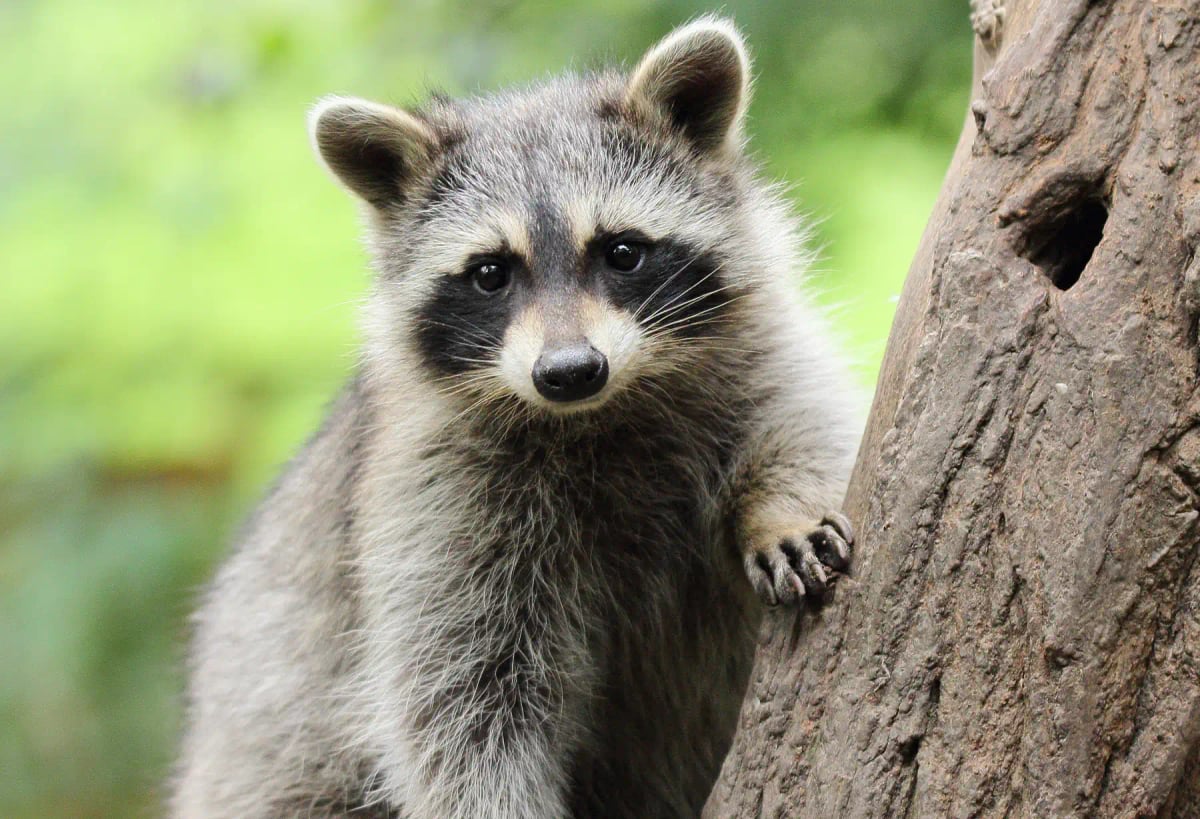
Raccoon
Procyon lotor
The raccoon is a familiar resident of Belize, found across coastal mangroves, tropical forests, and the banks of rivers and lagoons. It feeds on crabs, fish, fruit, and insects, adapting easily to whatever each habitat offers. Belizeans commonly encounter raccoons near villages and waterways. The species holds Least Concern status and faces no major threats in Belize, though habitat loss remains a concern across the region.
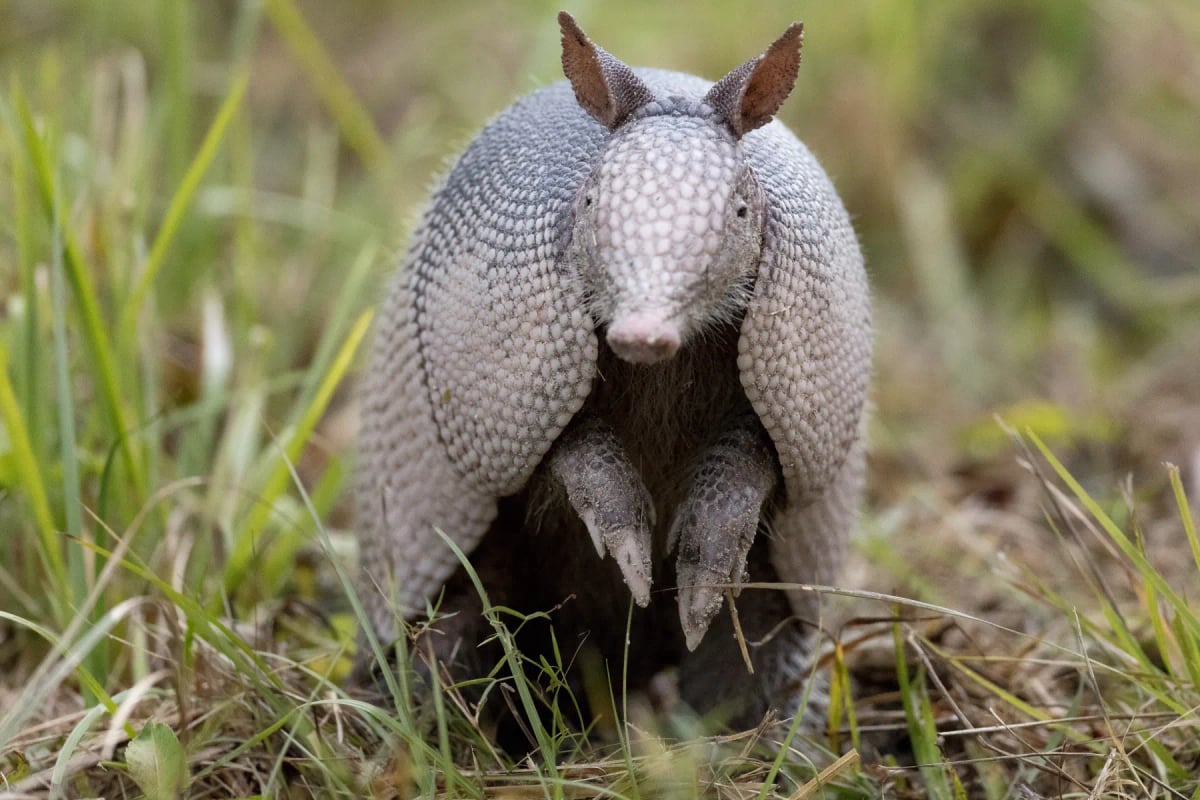
Armadillo
Dasypodidae spp.
The nine banded armadillo is found throughout Belize, from coastal lowlands to forested interior regions. It is a common nocturnal presence across the country and plays a role in soil aeration through its constant digging. Belize's relatively large areas of intact forest provide good habitat, and the species faces less pressure here than in heavily deforested parts of Central America. It is known locally and is occasionally taken for food in rural communities.
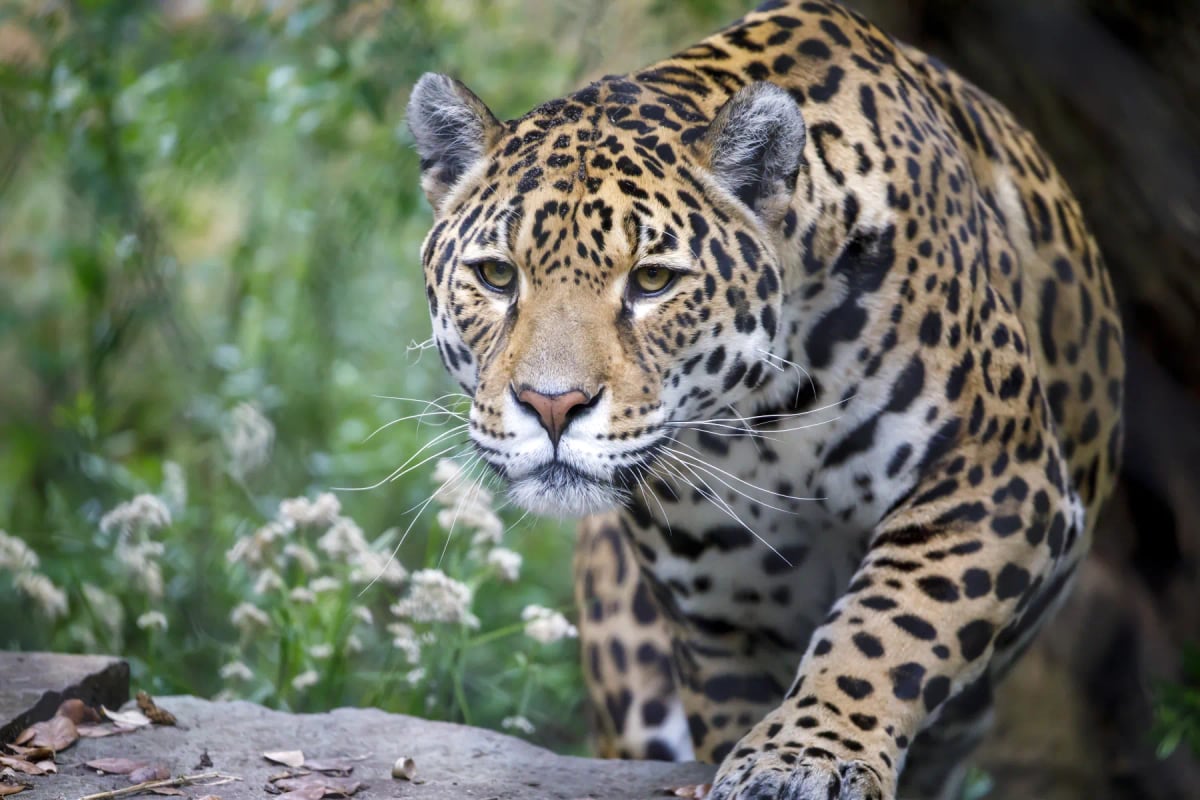
Jaguar
Panthera onca
Belize is home to the world's first jaguar sanctuary, the Cockscomb Basin Wildlife Sanctuary, established in 1986. This protected area in the Maya Mountains provides dense forest cover and abundant prey, making it one of the healthiest jaguar habitats in Central America. Belize has made the jaguar a national symbol, and efforts to protect forest corridors continue to support a stable population.
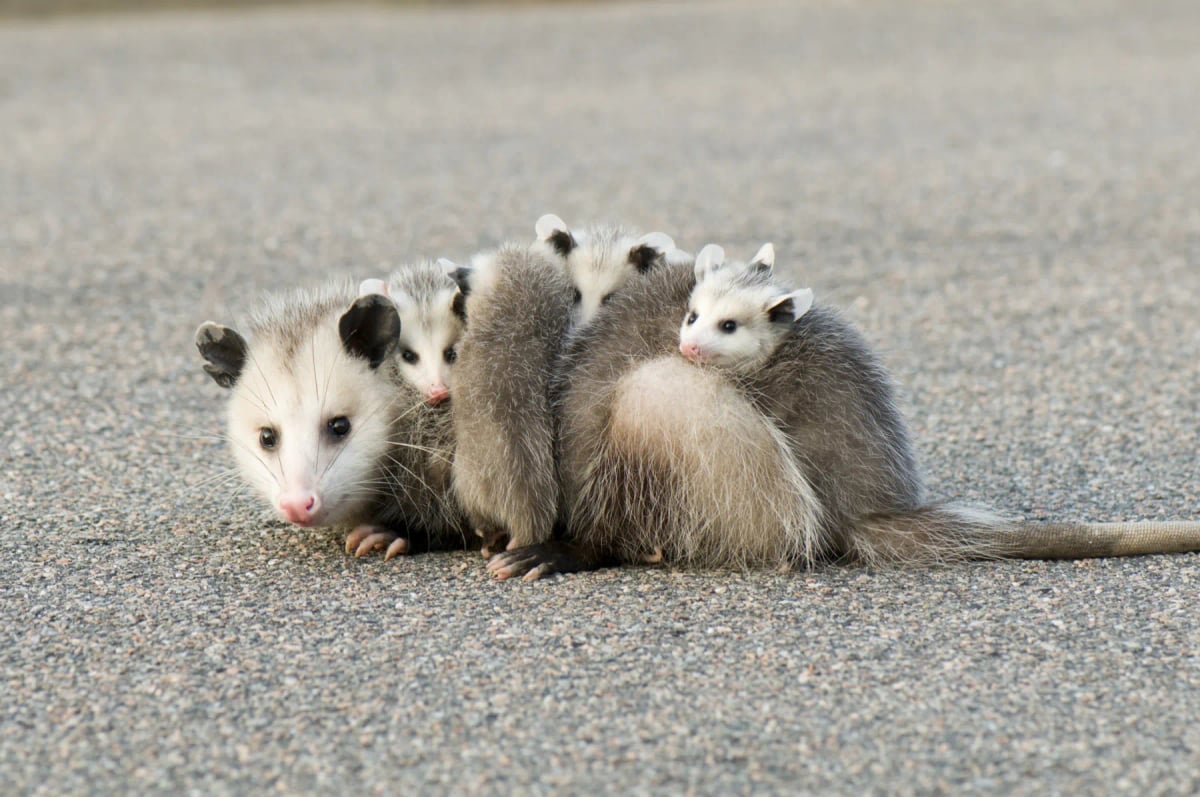
Opossum
Didelphis spp.
The common opossum (Didelphis marsupialis) is found throughout Belize, moving through tropical rainforests, mangroves, and the edges of farmland. It is especially active at night, foraging along riverbanks and forest clearings. In Belize's protected areas, such as the Cockscomb Basin Wildlife Sanctuary, it plays a useful role as a scavenger, helping to clean up carrion and control insect populations across the forest floor.
Tapir
Tapirus spp.
Belize is home to one of the healthiest remaining populations of Baird's tapir, which is also the country's national animal. It lives across a range of forested habitats, from lowland rainforests to pine ridges. Protected areas like the Cockscomb Basin Wildlife Sanctuary offer vital refuge. Belizeans hold the tapir in high regard, and local communities play an active role in its protection.
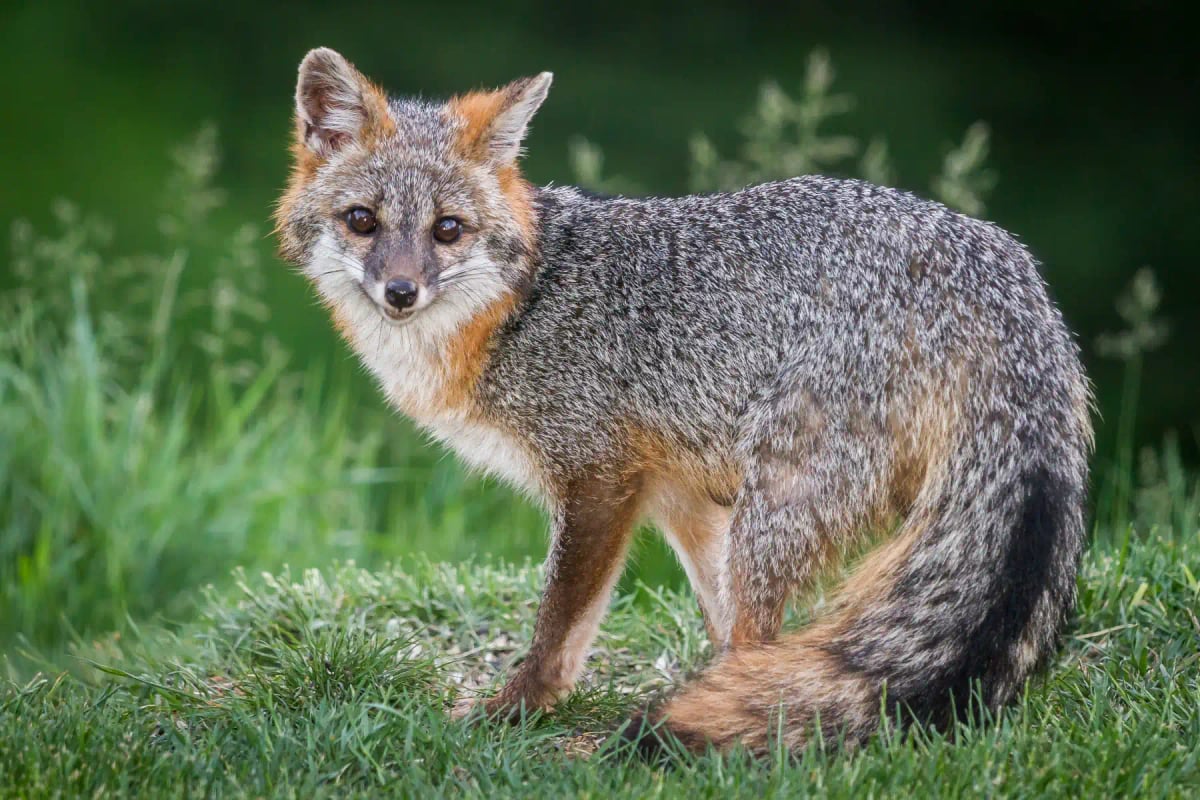
Gray Fox
Urocyon cinereoargenteus
In Belize, the gray fox inhabits forest edges, scrublands, and dry broadleaf forests, particularly in the northern and western parts of the country. It is less commonly observed than some other carnivores here, but camera trap surveys have confirmed its presence. It feeds on small mammals, birds, and fruit, adapting its diet to what each season provides. The forests of Belize form part of the broader Central American corridor that supports its southward range.
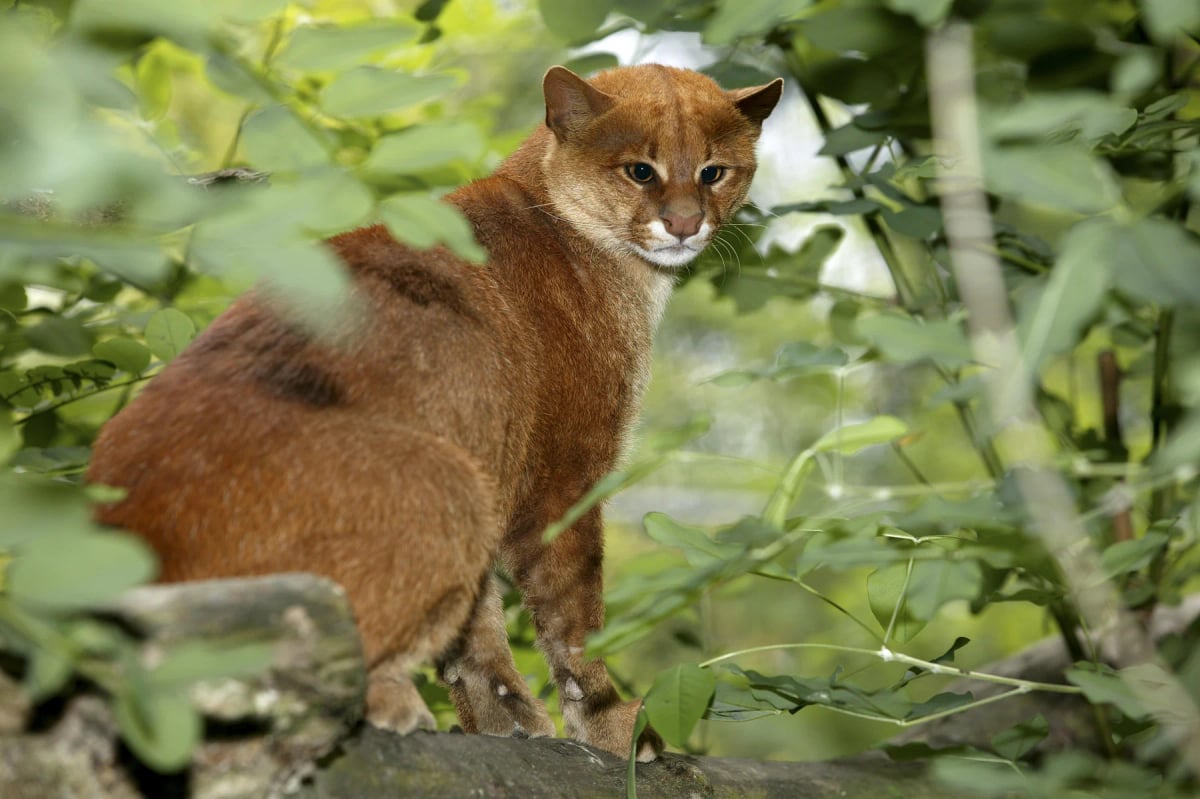
Jaguarundi
Herpailurus yagouaroundi
In Belize, the jaguarundi moves through tropical forests, forest edges, and scrublands across much of the country. It is one of five wild cat species found here, and though rarely seen, it is more likely to be spotted than most due to its daytime activity. It preys on birds, small reptiles, and insects. Protected areas such as the Cockscomb Basin Wildlife Sanctuary offer it important refuge.
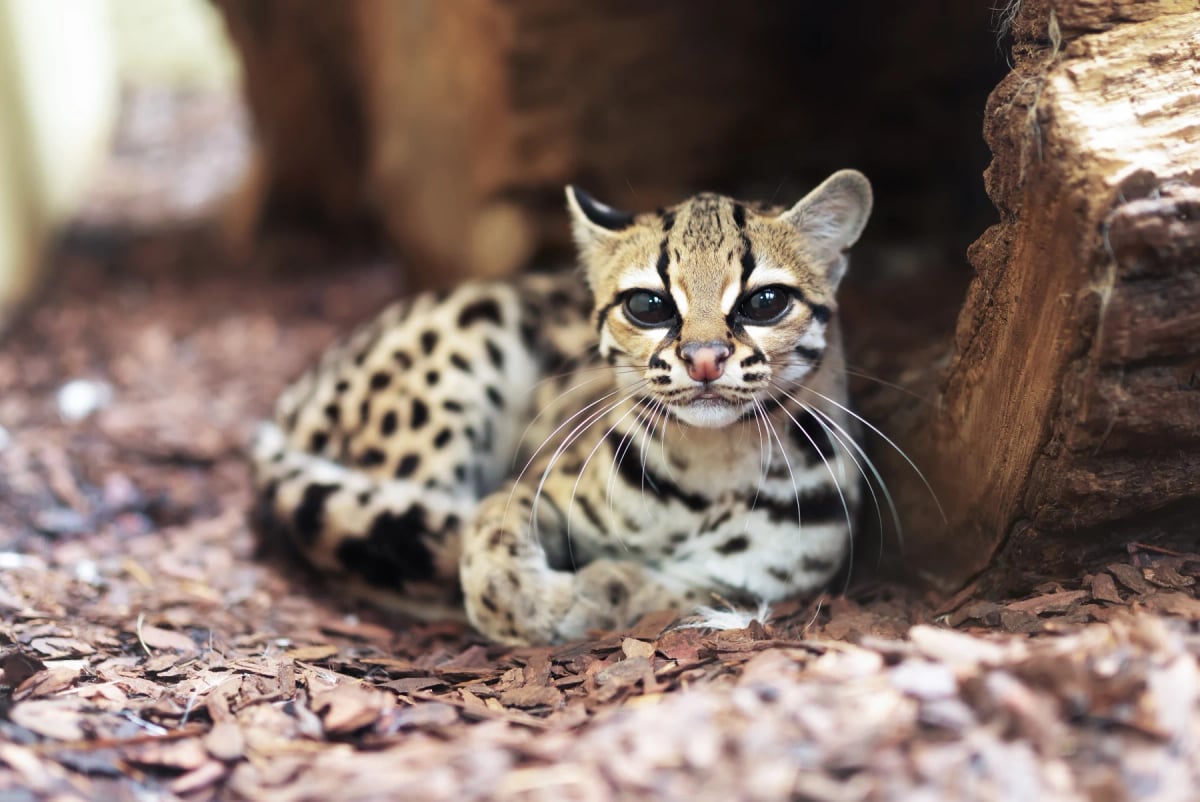
Margay
Leopardus wiedii
In Belize, the margay inhabits tropical forests across the country, including the vast broadleaf forests of the Maya Mountains and protected areas such as the Cockscomb Basin Wildlife Sanctuary. This small spotted cat is an agile climber, capable of descending tree trunks headfirst thanks to highly flexible ankles. Deforestation and the illegal pet trade remain ongoing threats, though Belize's relatively strong network of protected areas offers meaningful shelter.
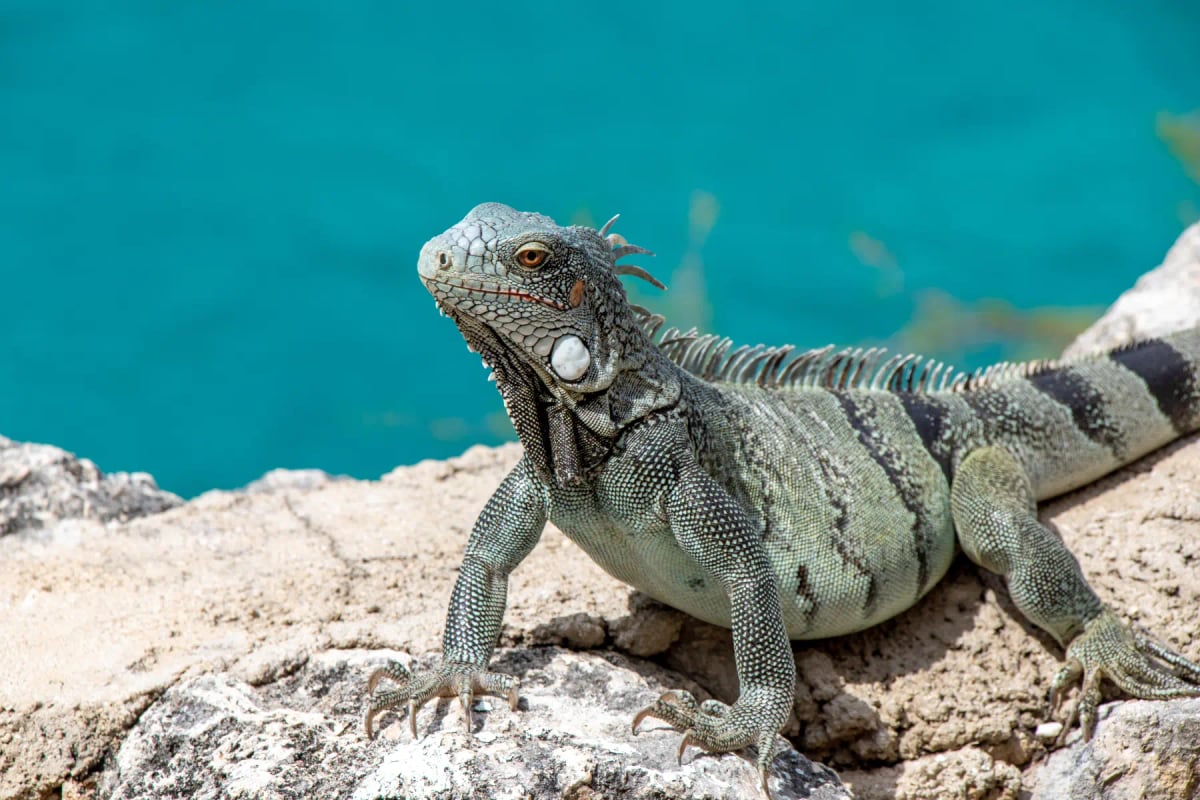
Iguana
Iguana iguana
The green iguana is a familiar reptile throughout Belize, found along the Belize River, in coastal mangroves and across the country's forested interior. It is a common sight on riverbank trees, where it basks on exposed branches and drops into the water when disturbed. Locally known as bamboo chicken, it has long been hunted for food, though populations remain widespread across suitable habitat in the country.
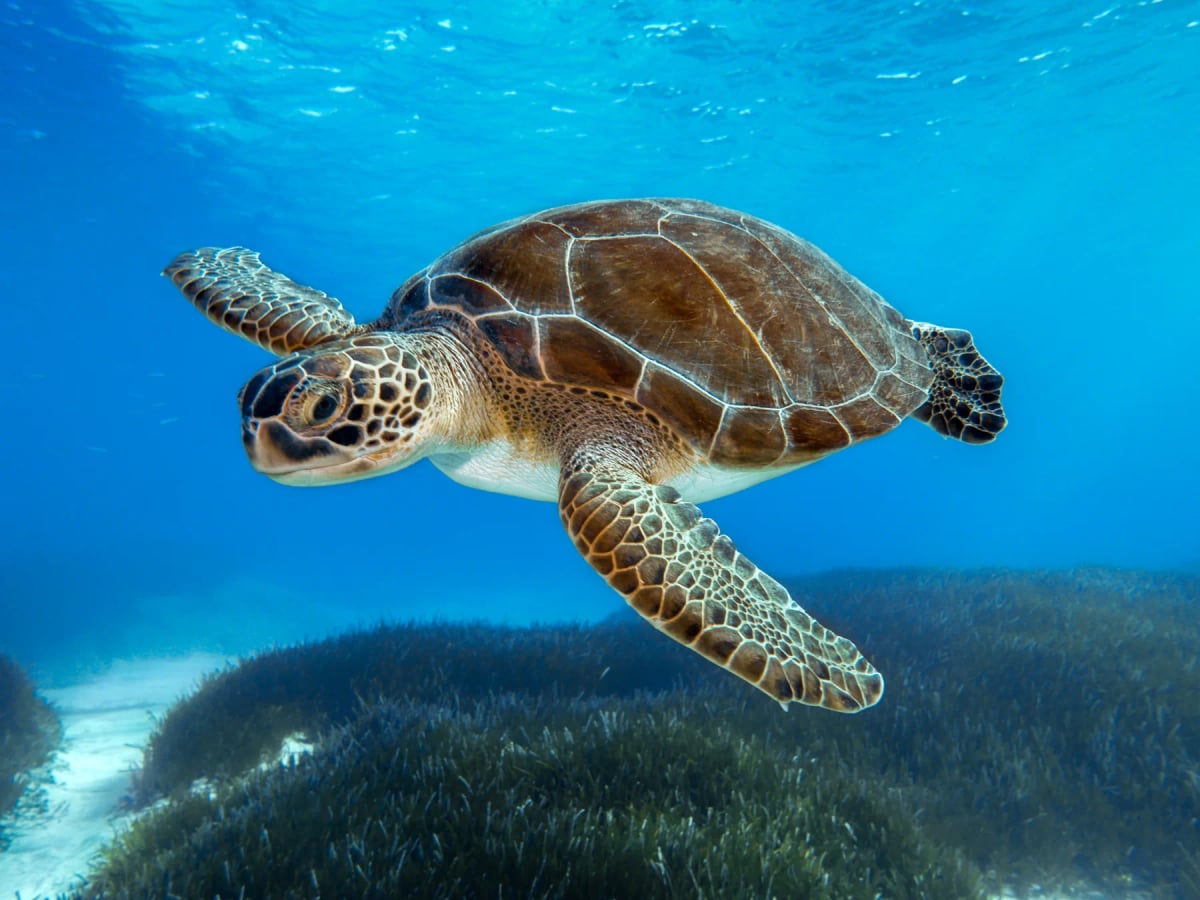
Sea Turtle
Cheloniidae & Dermochelyidae (families)
The Belize Barrier Reef, the largest barrier reef in the Western Hemisphere, makes Belize an important habitat for sea turtles. Loggerhead and hawksbill turtles nest on the cayes and mainland beaches, and green turtles use the reef's seagrass beds as foraging grounds. Several marine protected areas and conservation programs work to monitor nesting activity and protect these species along the coast.
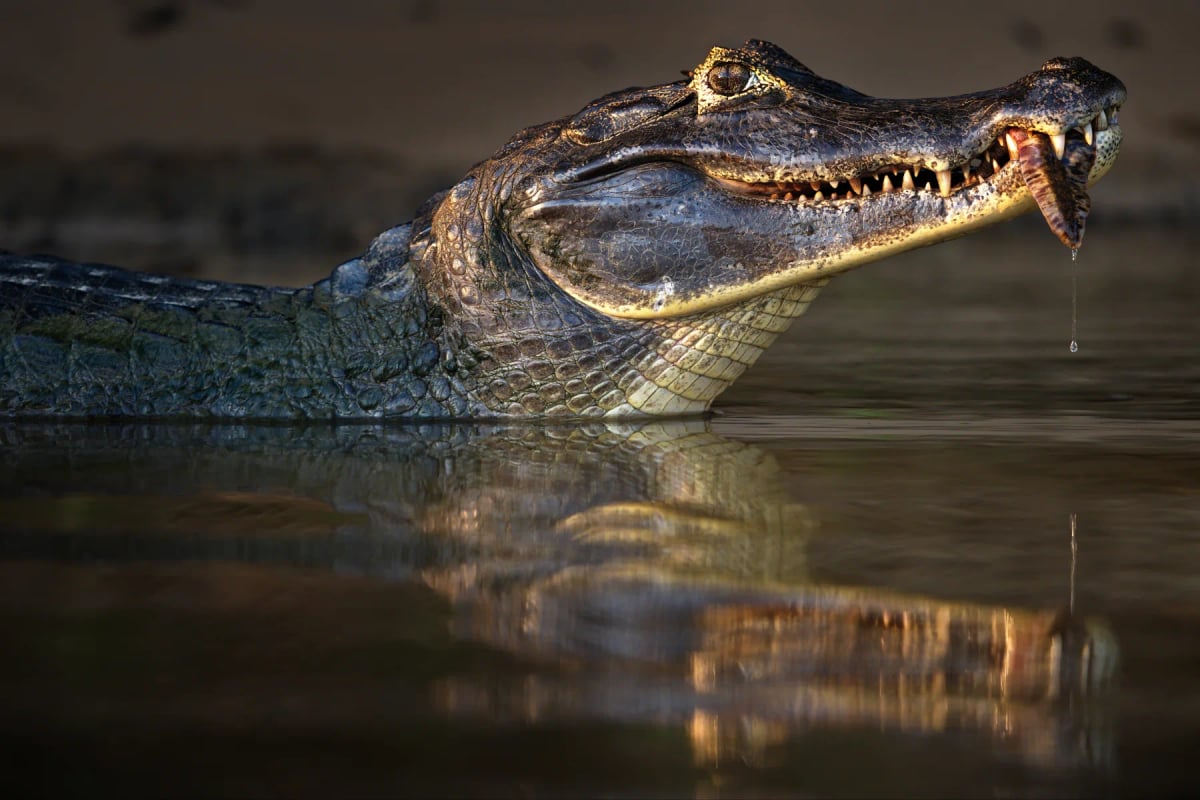
Caiman
Caiman spp.
Belize supports healthy caiman populations across its network of rivers, lagoons, and coastal wetlands. The spectacled caiman thrives in habitats such as the New River Lagoon and the wetlands surrounding the Community Baboon Sanctuary region. Belize's strong conservation framework and extensive protected areas have helped maintain stable numbers. Caimans here serve as important predators that help regulate fish and amphibian populations throughout the country's freshwater systems.
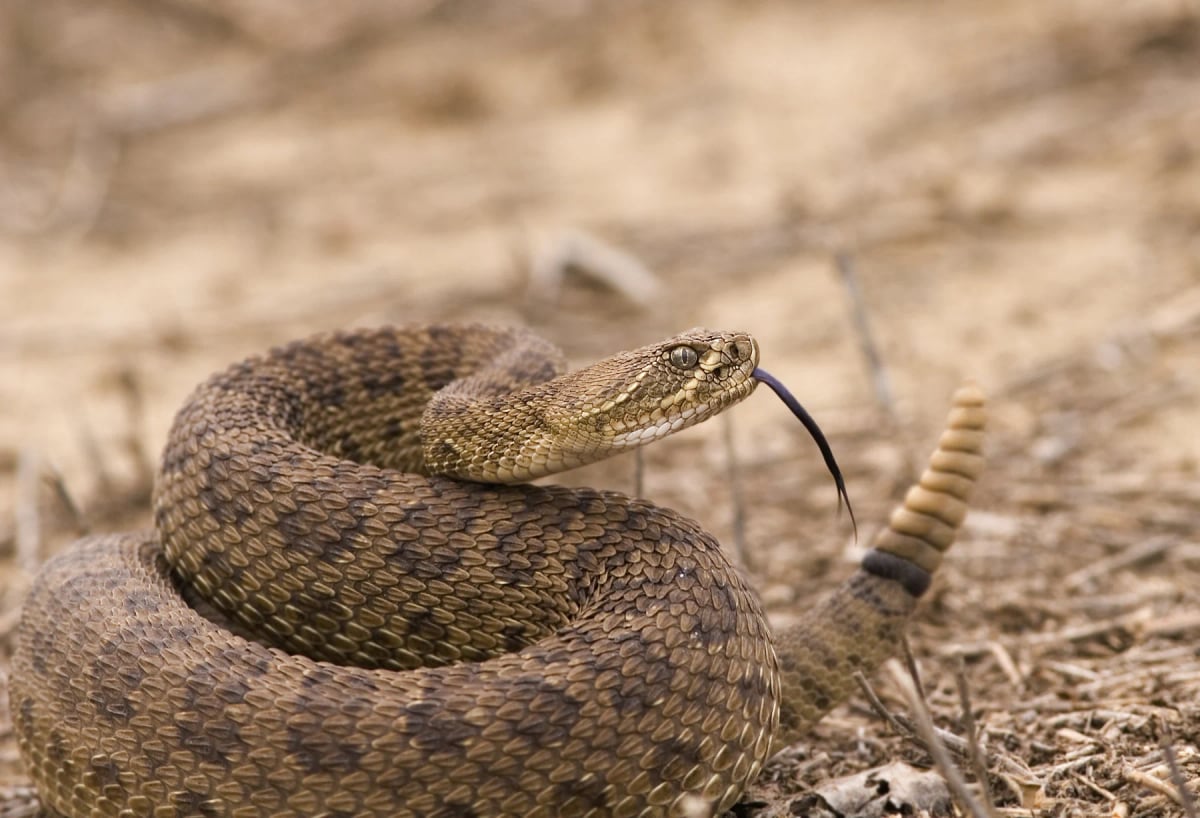
Rattlesnake
Crotalus spp. / Sistrurus spp.
In Belize, the Neotropical Rattlesnake (Crotalus simus) is found primarily in the drier savannas and open woodlands of the interior, particularly in the Vaca Plateau and surrounding areas. It is far less common than other venomous snakes in the country. Habitat conversion for agriculture has reduced its presence considerably. Though feared by many communities, it plays a genuine role in controlling rodent populations. IUCN status: Least Concern.
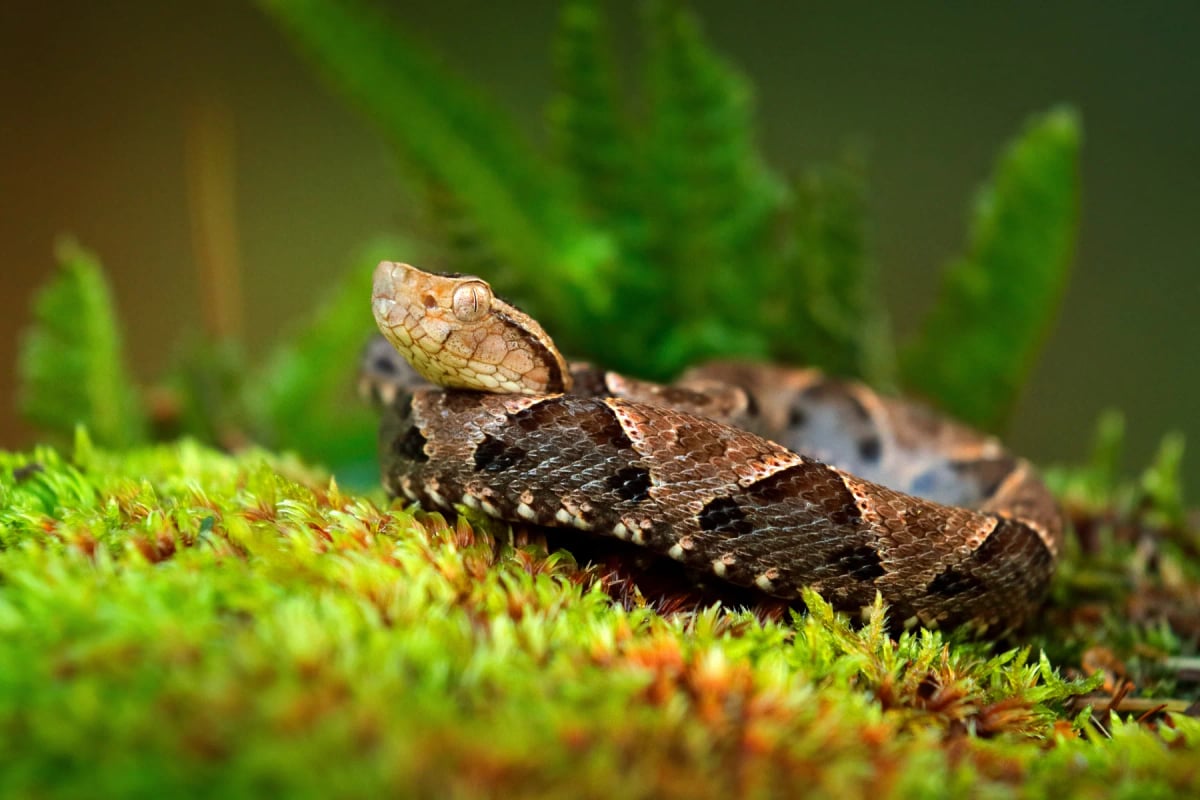
Lancehead
Bothrops spp.
In Belize, lanceheads inhabit the rainforests and river valleys that cover much of the country's interior. The fer-de-lance, one of the most recognized species in the genus, is a common presence in forested areas and agricultural land near the jungle edge. Farmers working in fields close to forest patches can occasionally encounter them. Despite the danger they pose, they help keep rodent numbers down across Belize's diverse ecosystems.
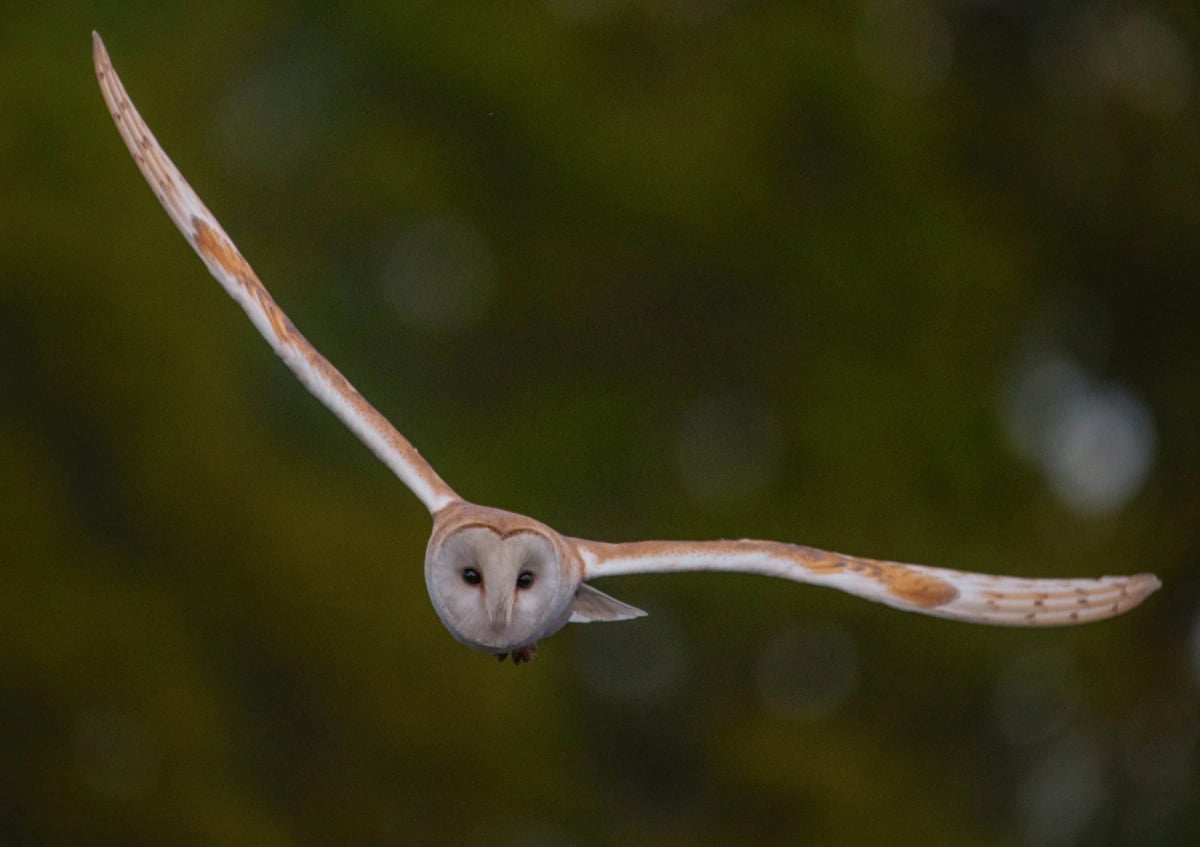
Barn Owl
Tyto alba
The barn owl is present in Belize in open farmland, savanna, and agricultural areas, particularly in the northern lowlands and the Belize River valley. It nests in old buildings, hollow trees, and cliff faces, and hunts rodents and other small prey at night. In farming communities it is considered beneficial for controlling rats and mice around crops and grain stores. It is less commonly encountered in dense forest areas.
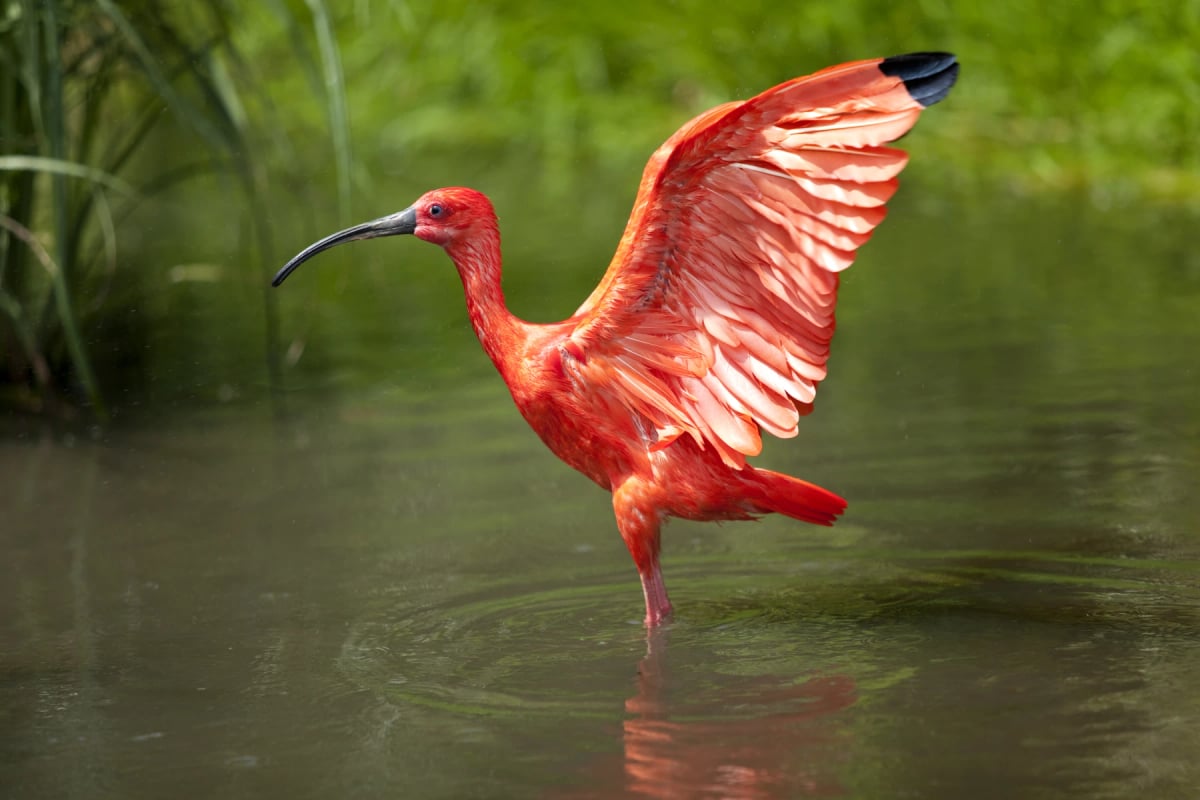
Scarlet Ibis
Eudocimus ruber
The Scarlet Ibis is a rare visitor to Belize rather than a resident, occasionally spotted along the country's coastal lagoons and mangrove edges. Its brilliant red plumage, earned through a diet rich in carotenoids from crustaceans, makes any sighting memorable. Belize's extensive wetland systems along the Caribbean coast provide suitable habitat during wandering episodes, though the species does not breed here. It is listed as Least Concern by the IUCN.
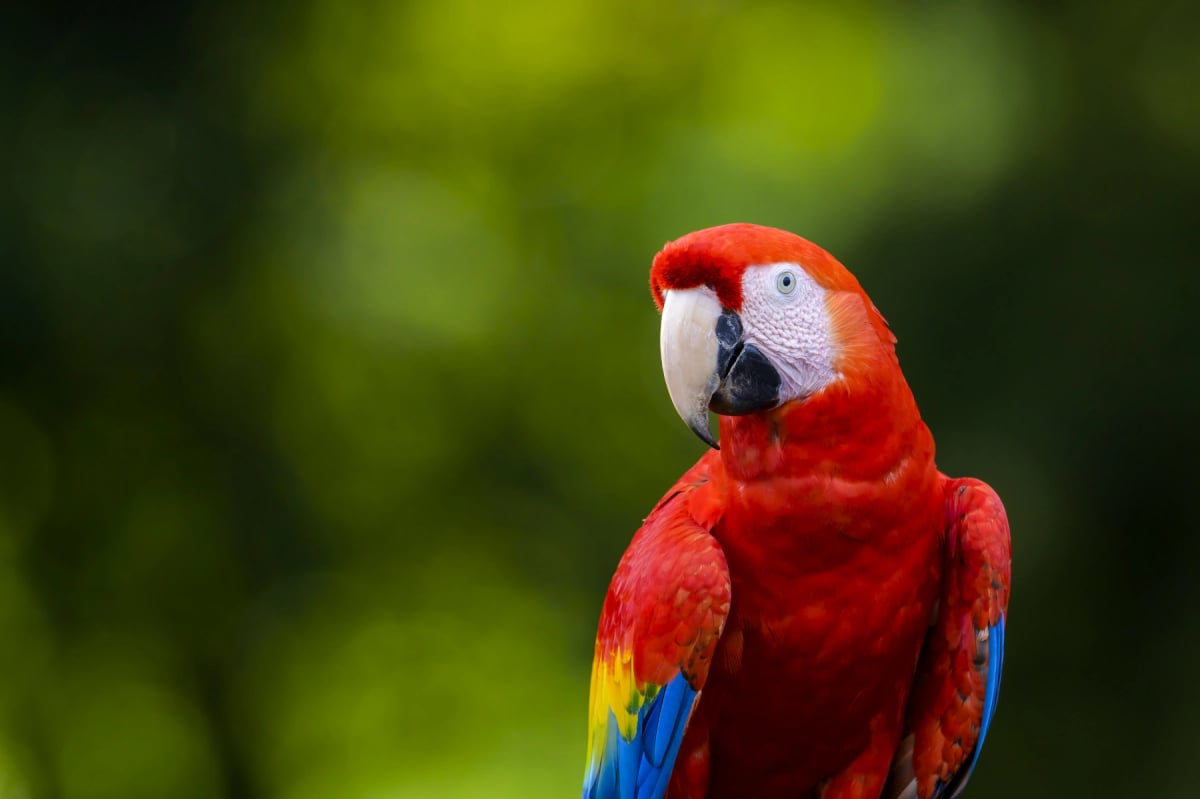
Scarlet Macaw
Ara macao
The scarlet macaw is one of Belize's most iconic birds, found in the lowland forests of the Chiquibul and along the Macal River valley. Belize hosts one of the healthiest scarlet macaw populations in Central America, thanks to active conservation efforts and protected forest reserves. Pairs fly together year round, filling the canopy with loud calls. The species feeds on fruits, seeds, and nuts and is listed as Least Concern by the IUCN.
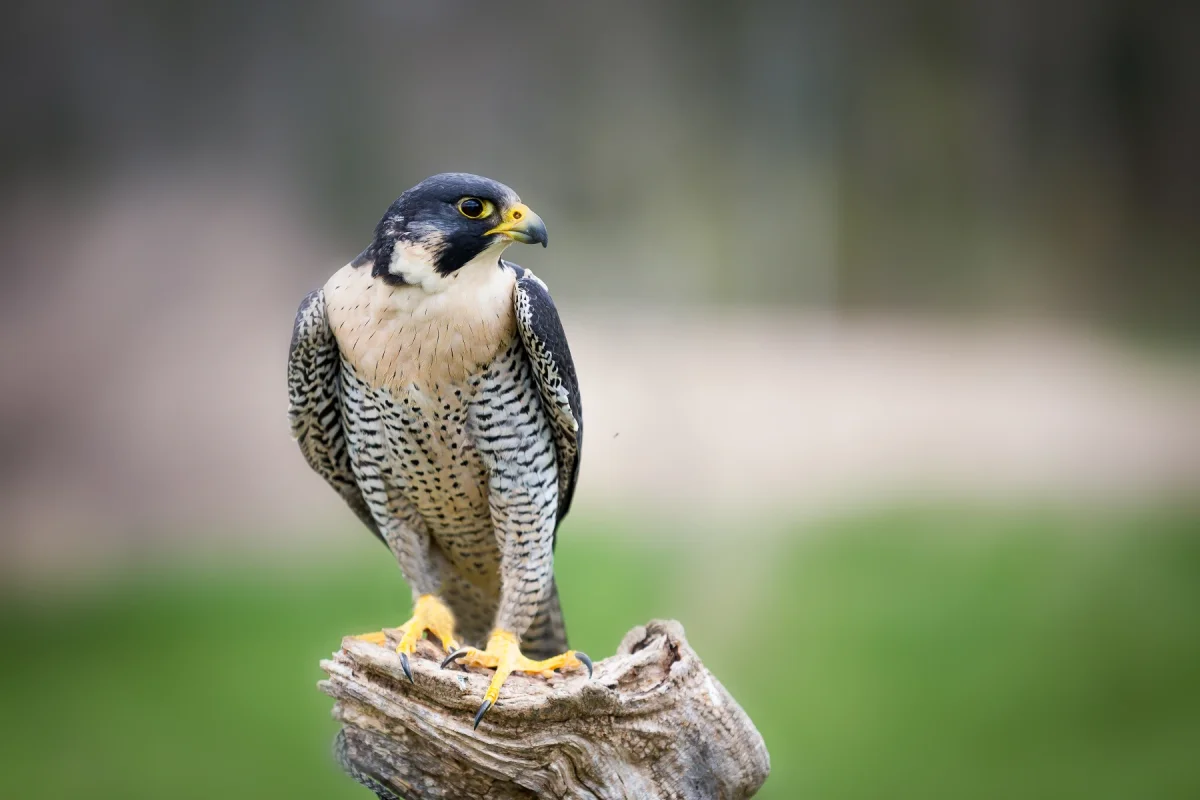
Peregrine Falcon
Falco peregrinus
The peregrine falcon visits Belize as a seasonal migrant, arriving from breeding grounds further north each autumn and departing in spring. It can be spotted along the Caribbean coastline, over the cayes, and above forested lowlands as it pursues shorebirds and smaller birds in flight. Belize's varied habitats, from coastal lagoons to inland savannas, offer productive hunting grounds for this swift predator during its months in the country.
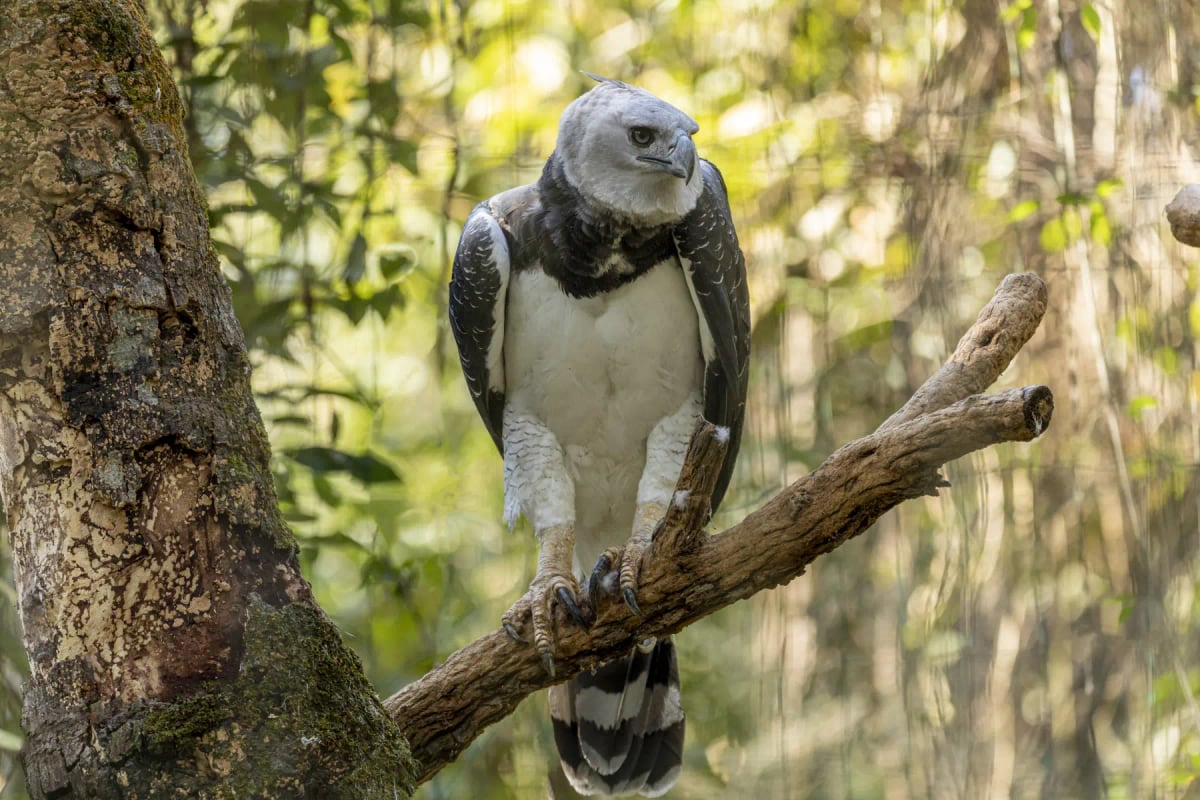
Harpy Eagle
Harpia harpyja
The harpy eagle is a rare and powerful raptor found in the broadleaf forests of Belize, particularly in the Maya Forest region near the Guatemalan border. It hunts sloths and monkeys from high perches in the canopy. Belize's protected areas, including Chiquibul National Park, offer some of the best remaining habitat for this Vulnerable species in Central America.
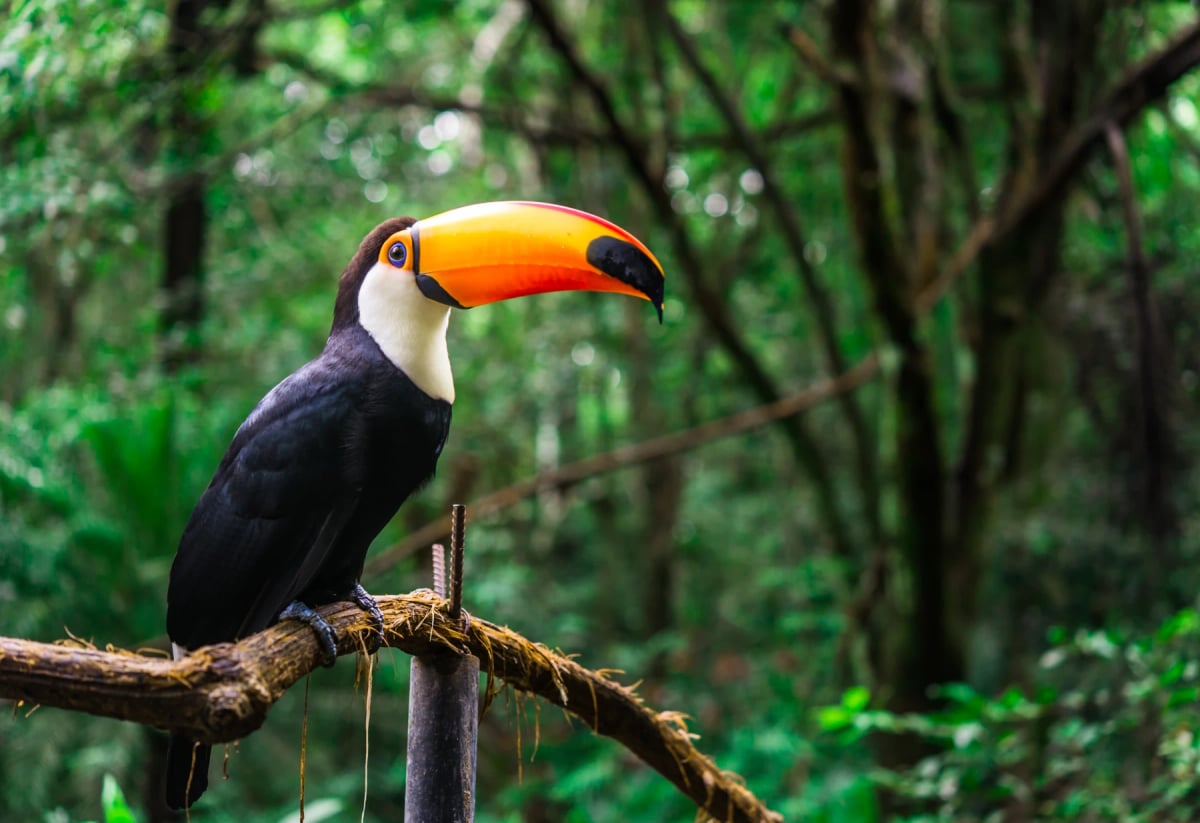
Toucan
Ramphastos spp.
Belize is home to the keel-billed toucan, which also serves as the country's national bird. It lives throughout the lowland rainforests and forest edges, particularly in the Toledo and Cayo districts. Belize's extensive network of protected areas and forest reserves gives toucans some of the best-preserved habitat in Central America, and they are commonly spotted along rivers and in community-managed conservation zones.
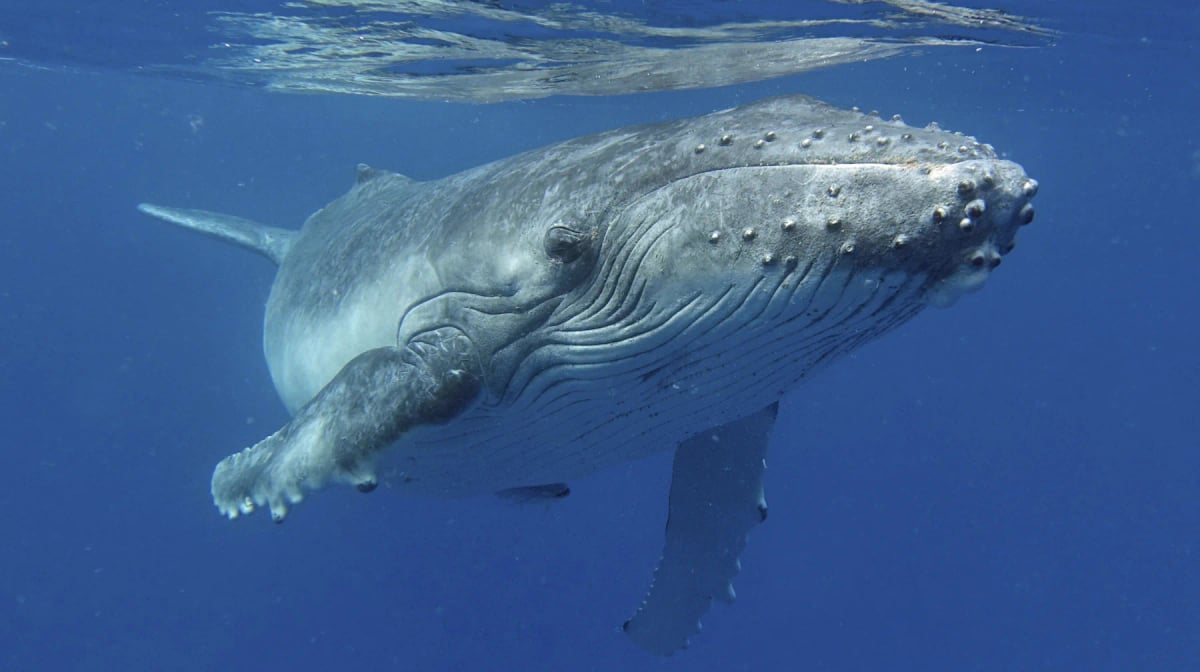
Humpback Whale
Megaptera novaeangliae
Humpback whales move through the waters off Belize in the Caribbean during their seasonal migration between northern feeding grounds and tropical breeding areas. The waters near the Belize Barrier Reef, the largest coral reef system in the Northern Hemisphere, provide a rich marine environment these whales pass through. Sightings, while not frequent, are recorded in the region. The IUCN lists the humpback whale as Least Concern.
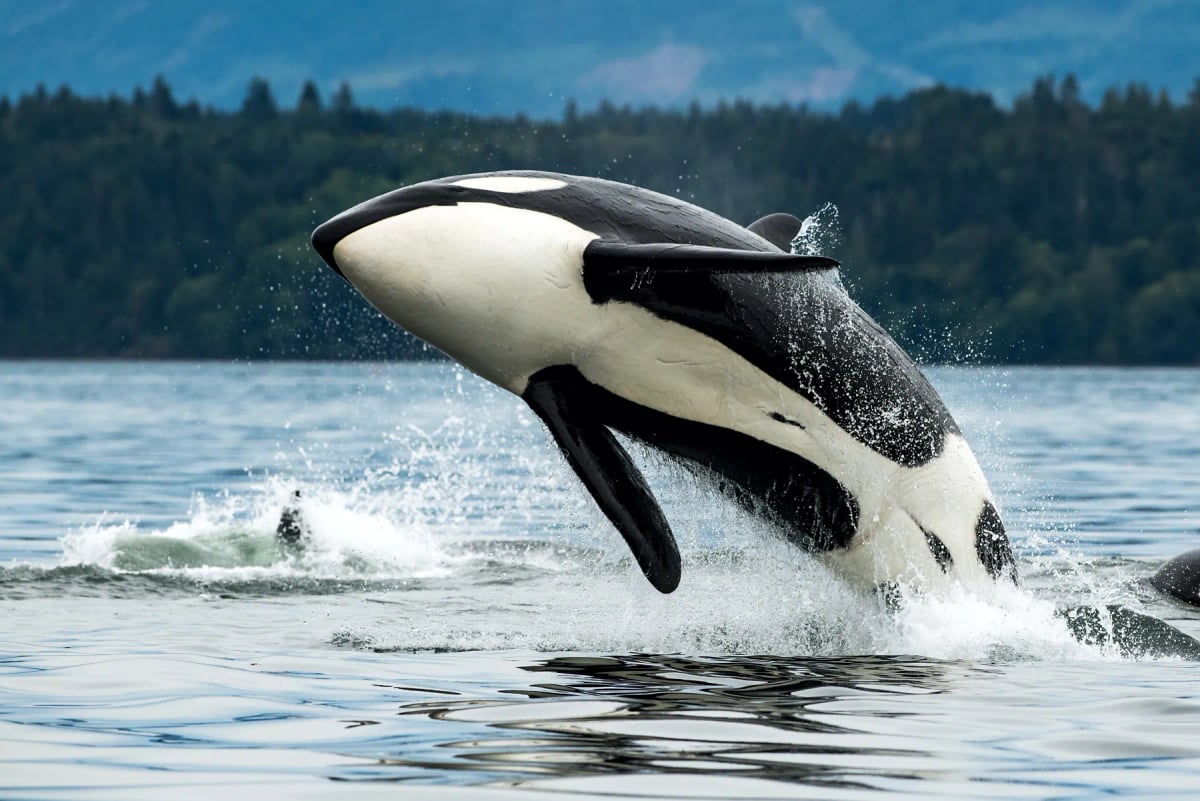
Orca
Orcinus orca
Powerful black and white dolphin and top marine predator that lives in tight family pods and cooperatively hunts fish, seals and sometimes large whales.
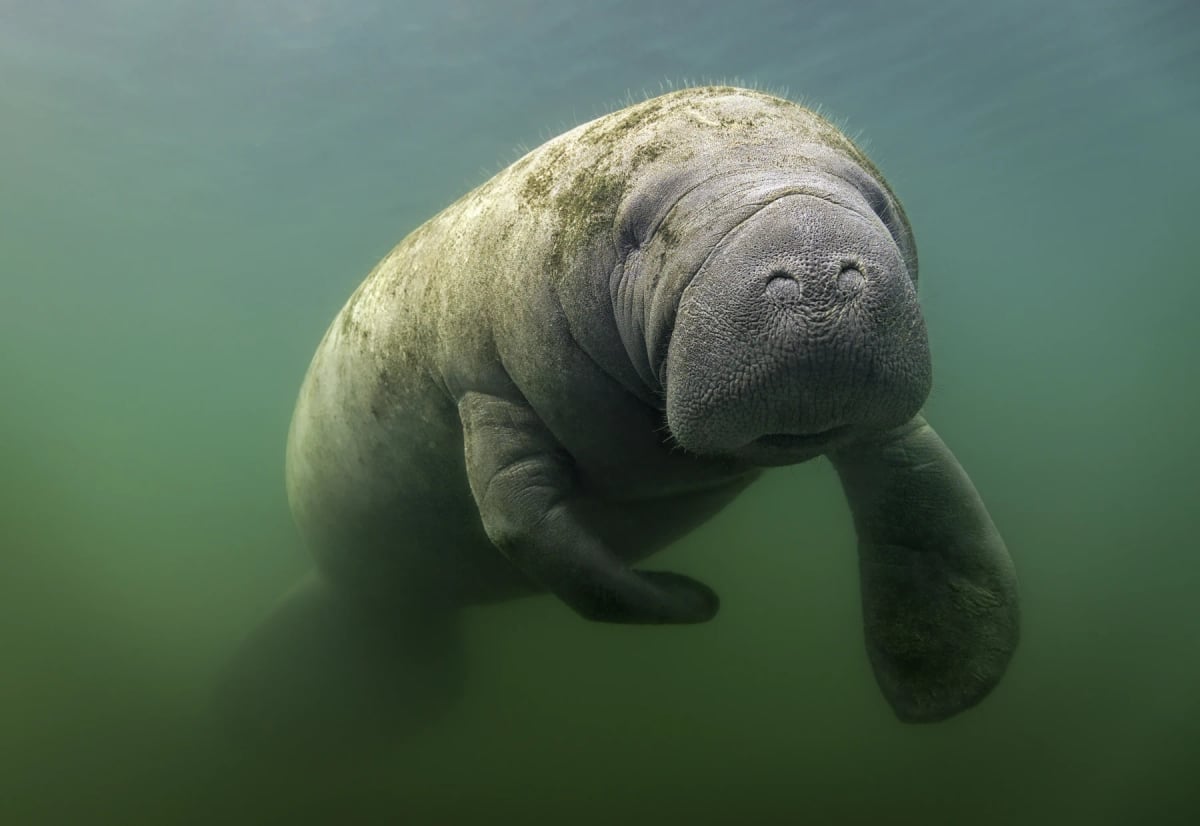
Manatee
Trichechus manatus
Belize holds one of the healthiest manatee populations in the Caribbean, supported by the vast seagrass beds and mangrove systems along its coast. The Belize Barrier Reef, a UNESCO World Heritage Site, provides ideal foraging habitat. Swallow Caye Wildlife Sanctuary was established specifically to protect manatees near Belize City. The country is widely regarded as a regional leader in manatee conservation and research.
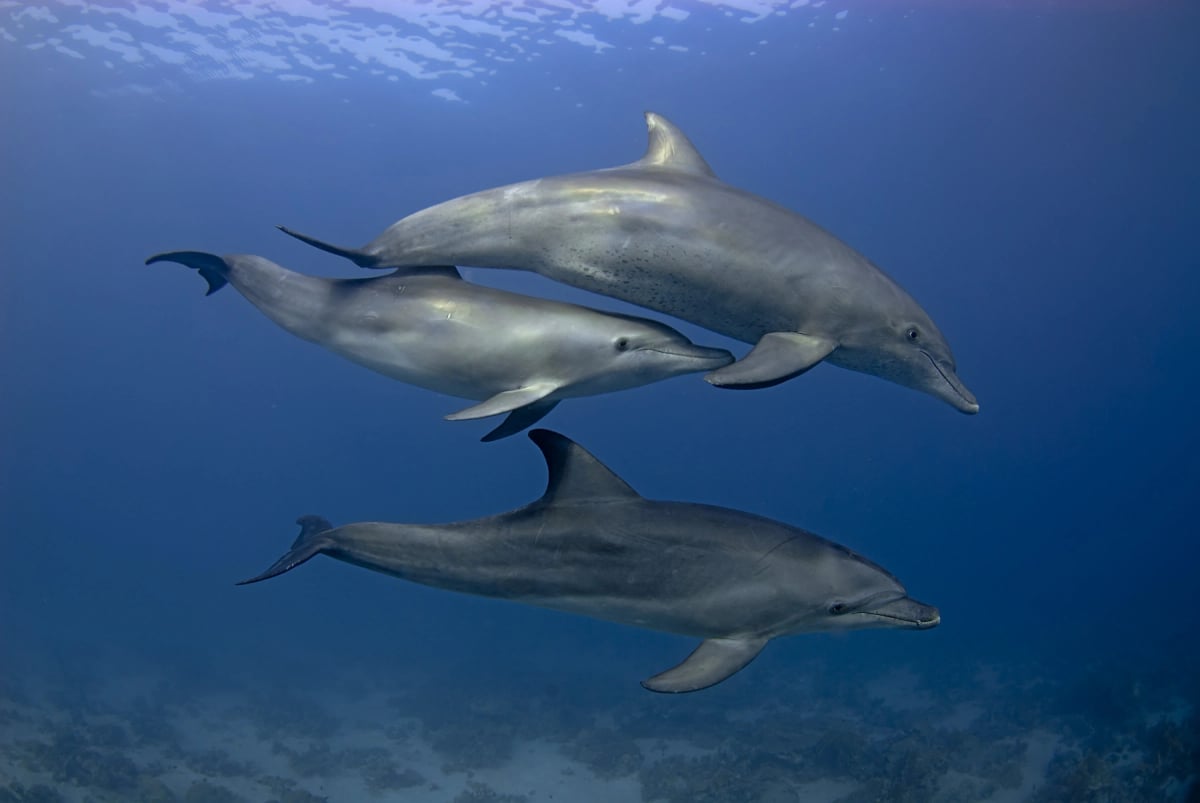
Bottlenose Dolphin
Tursiops truncatus
Bottlenose dolphins are a regular feature of Belize's coastal and reef waters, including the lagoons and channels behind the Belize Barrier Reef, the second largest coral reef system in the world. They feed on reef fish and schooling species in these warm, sheltered waters. Dolphin sightings are a highlight for divers and snorkelers visiting the marine reserve network. The IUCN classifies the bottlenose dolphin as Least Concern.
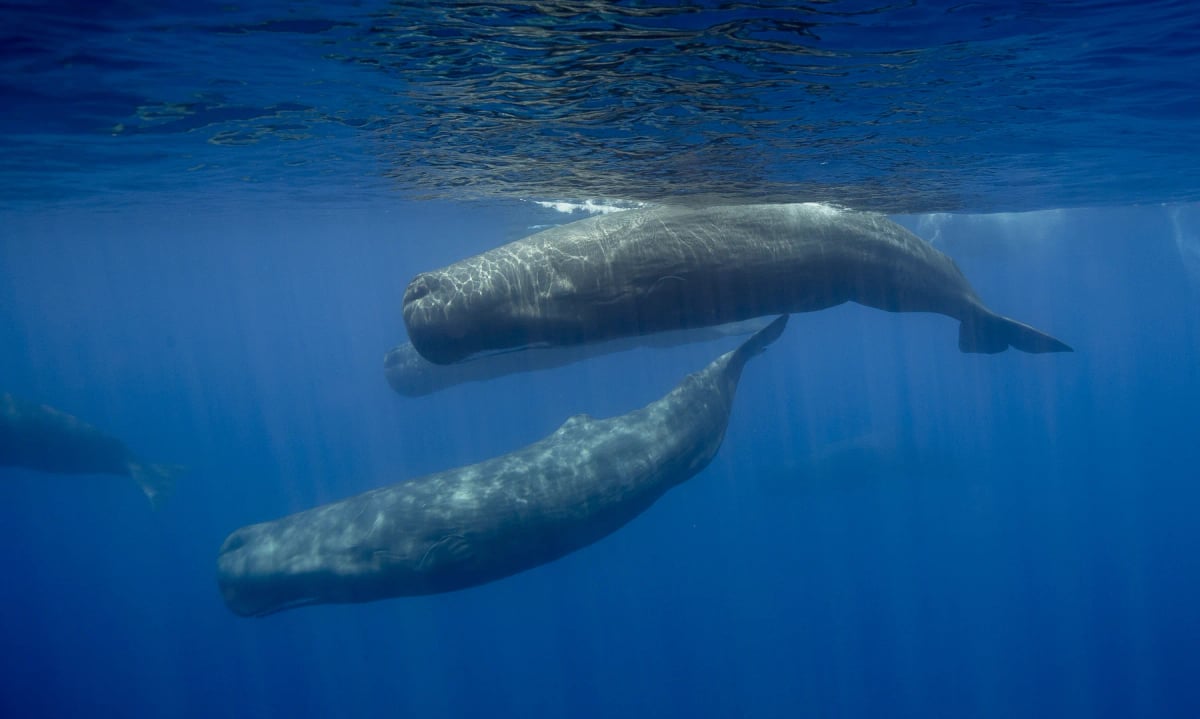
Sperm Whale
Physeter macrocephalus
The waters off Belize, particularly beyond the famous Mesoamerican Barrier Reef, transition into the deep Caribbean Sea where sperm whales are known to range. While the shallow reef system close to shore is not suitable for these deep ocean hunters, the offshore drop into deeper Caribbean waters brings them into the broader Belizean maritime zone. Their presence in the western Caribbean highlights the importance of protecting deep water habitats alongside coral reef ecosystems.
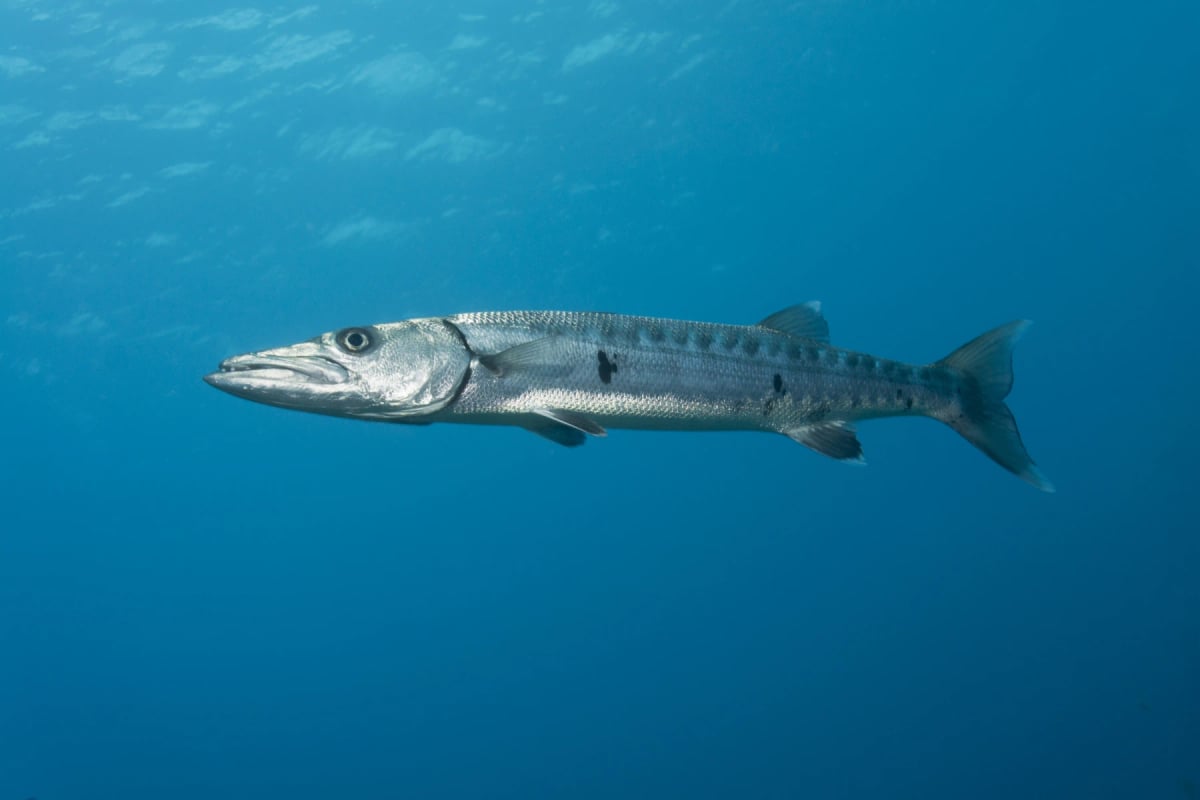
Barracuda
Sphyraena spp.
Barracudas are a common presence in the warm coastal and reef waters of Belize, particularly along the Belize Barrier Reef, the second largest coral reef system in the world. The great barracuda is regularly encountered by divers and snorkelers at reef edges, drop-offs, and in the clear lagoon waters between the coast and the outer reef. Belize's extensive marine protected areas and healthy reef system support good populations of barracuda, which play an important role in regulating smaller reef fish.
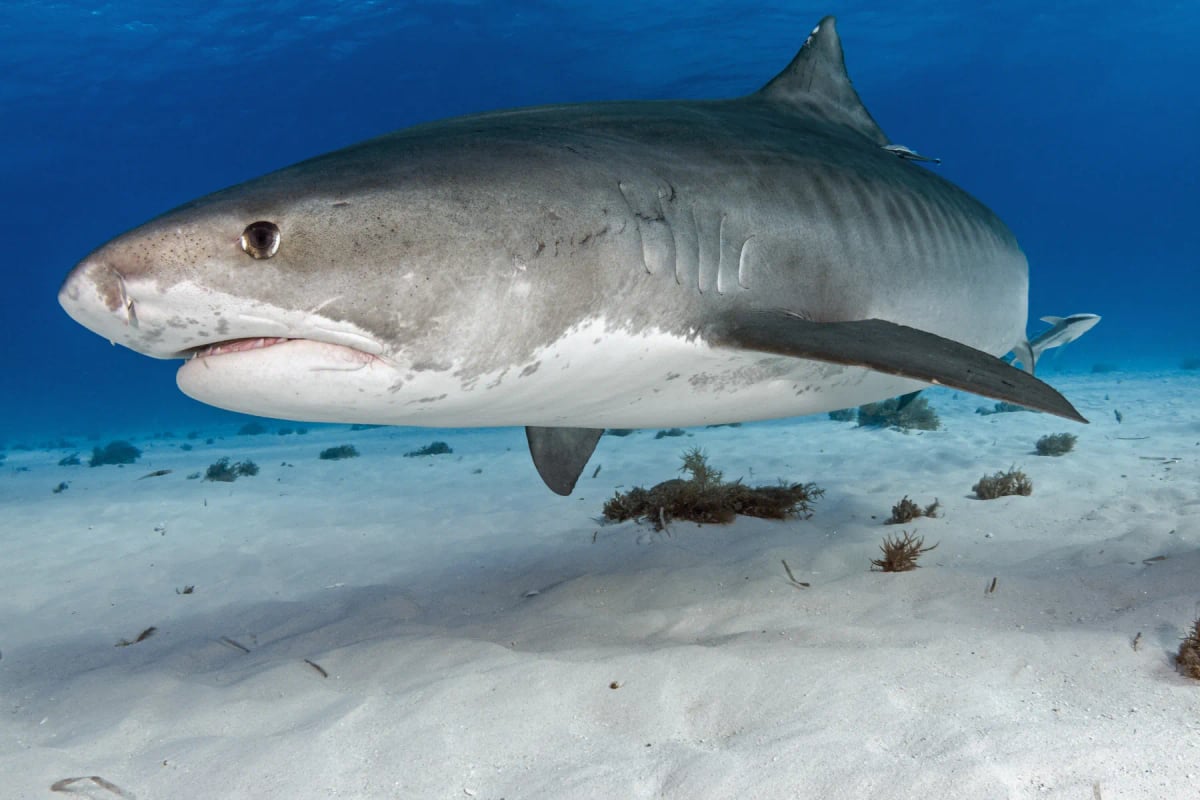
Tiger Shark
Galeocerdo cuvier
Along the Belize Barrier Reef, the second largest coral reef system in the world, tiger sharks move through channels and open lagoons in search of sea turtles, rays, and fish. This reef system offers ideal habitat for a predator that thrives in warm, shallow tropical waters. Conservation efforts in Belize include marine protected areas that also benefit large sharks by safeguarding the prey populations they depend on.
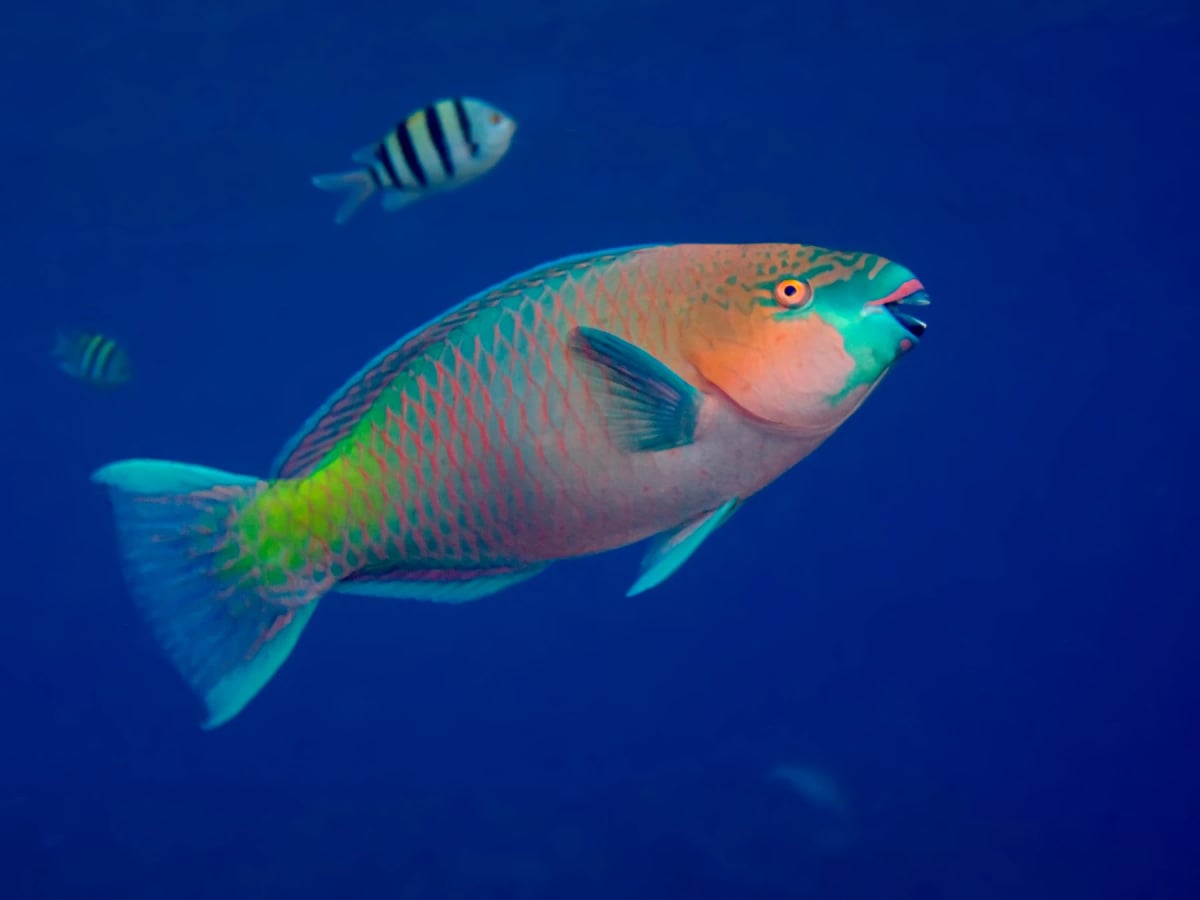
Parrotfish
Scaridae
The Belize Barrier Reef, a UNESCO World Heritage Site, is one of the healthiest reef systems in the Caribbean, and parrotfish are central to keeping it that way. These colorful fish graze across the reef every day, scraping algae from coral surfaces and grinding the material into sand. Belize has taken steps to protect parrotfish through fishing regulations, recognizing that their grazing activity is one of the most important factors in reef resilience and recovery.
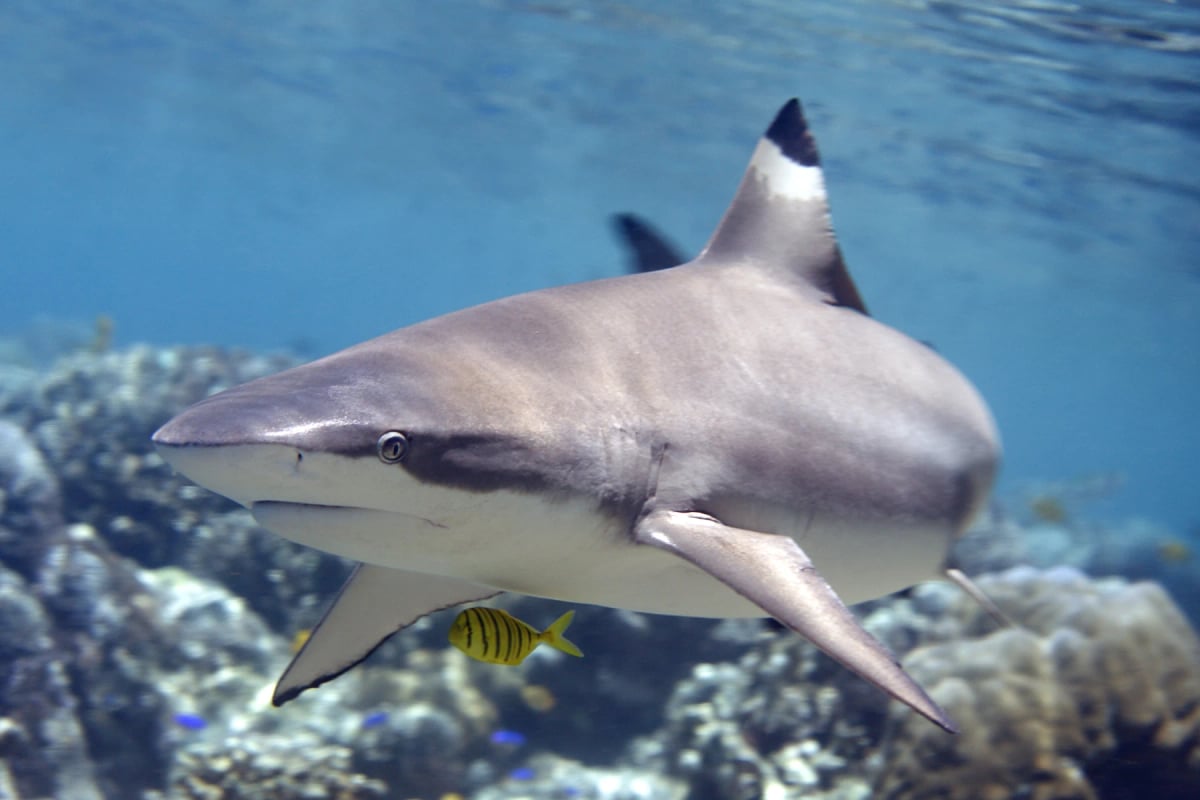
Reef Shark
Carcharhinus spp.
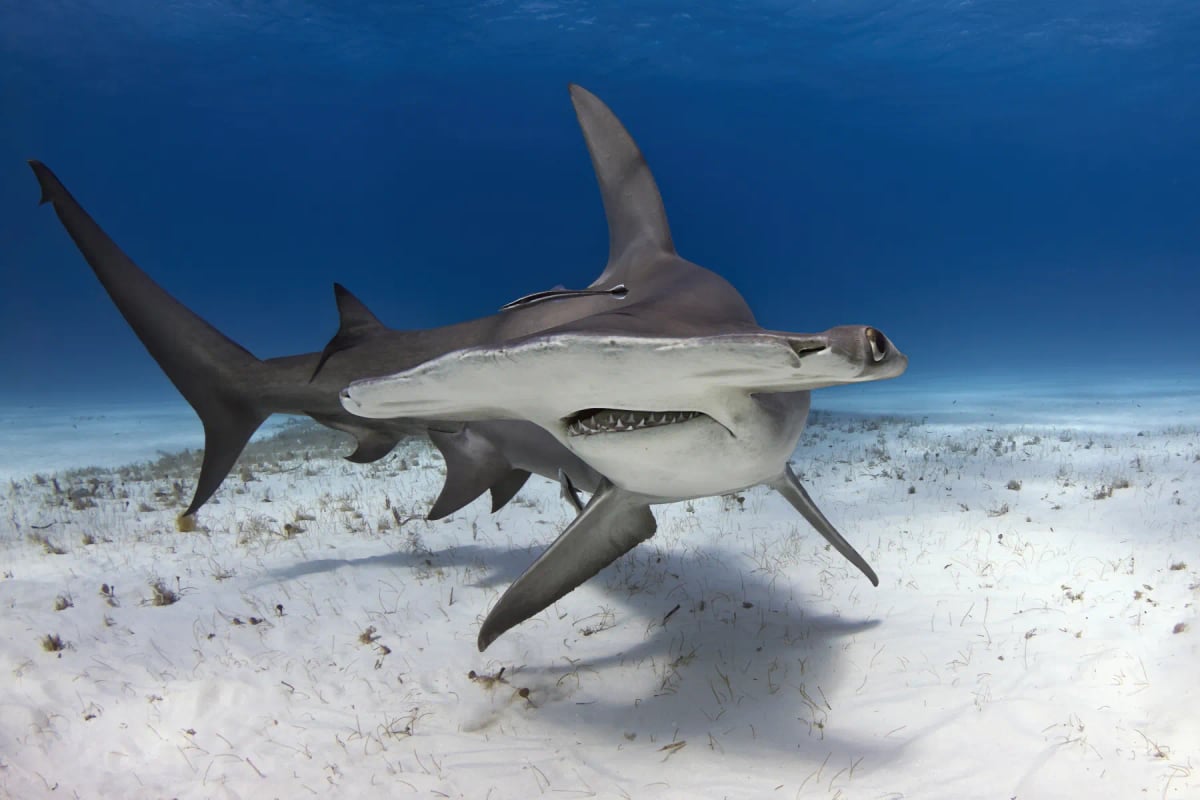
Belize is home to the Mesoamerican Barrier Reef, the second largest coral reef system in the world, where Caribbean reef sharks are regular residents. These sharks help keep the reef's fish populations in balance by feeding on smaller species. Belize has established several marine reserves along its coast, offering meaningful protection to reef sharks and the broader ecosystem they depend on.
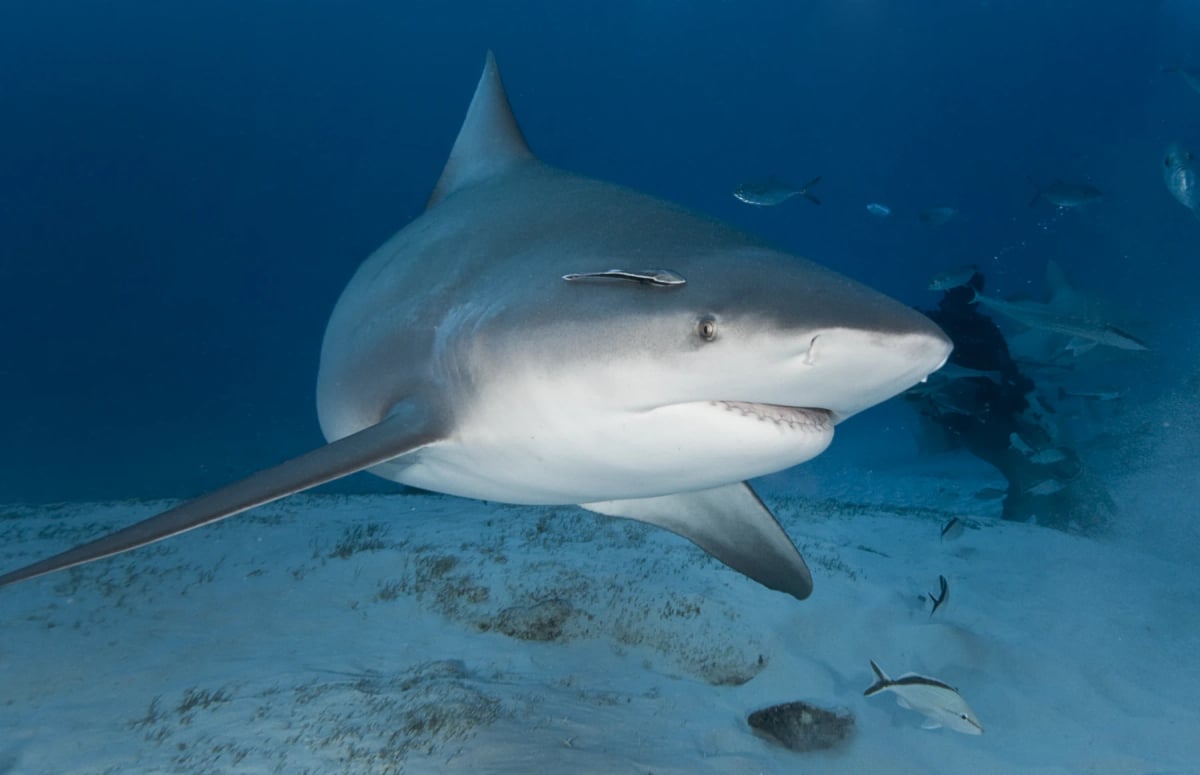
Bull Shark
Carcharhinus leucas
Belize's extensive barrier reef system, coastal lagoons, and river mouths create a rich mosaic of habitat for bull sharks. The species is known to use shallow nursery areas along the coast and has been recorded moving into freshwater rivers. Belize has developed a growing network of marine protected areas, and the bull shark is a species of interest for the country's ecotourism industry, with dive operators offering guided shark encounters.
Researched and written by Juan Pablo. Sources: IUCN Red List, scientific literature and regional field guides. Last updated: .