Chimpanzee
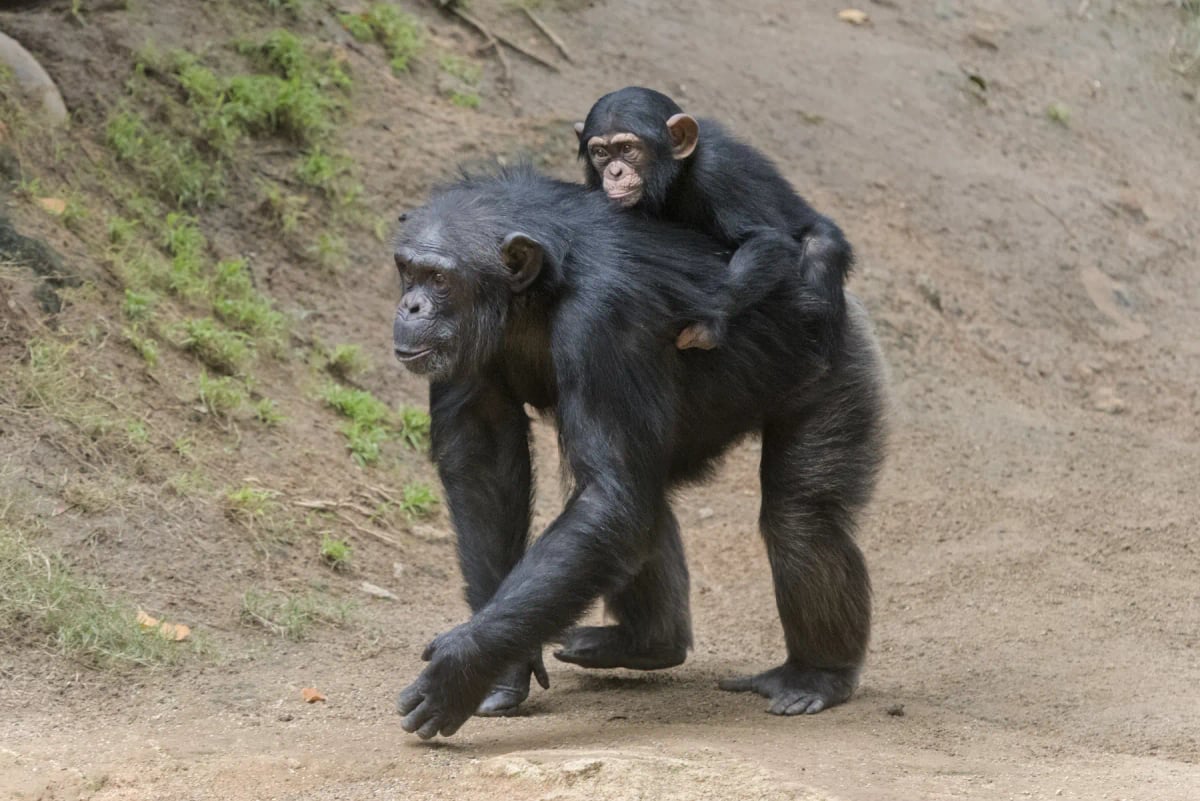
The chimpanzee is our closest living relative, sharing more than 98% of human DNA. It ranges across over 20 countries in sub-Saharan Africa, from the dense rainforests of West and Central Africa to the drier woodlands and forest-savanna mosaics of East Africa. Adults are powerfully built, with dark hair covering most of the body and bare faces that show a wide range of emotions. Chimpanzees live in communities of up to 150 individuals organized around a hierarchy of dominant males, though the group regularly splits into smaller parties for foraging. They are skilled tool users, fashioning sticks to extract termites, cracking nuts with stones and using leaves as sponges to drink water. These techniques are learned and passed down through generations, making each community's toolkit a genuine cultural tradition. Classified as Endangered, they face growing pressure from deforestation, bushmeat hunting and outbreaks of disease.
Habitat and range
Chimpanzees are found across more than 20 countries in sub-Saharan Africa, making them one of the most widely distributed of all the great apes. Their range stretches from Senegal and Guinea-Bissau in the west through the vast rainforest basin of Central Africa and into Uganda and Tanzania in the east. While dense tropical forest is their preferred environment, chimpanzees are remarkably adaptable. In West Africa, some populations occupy dry woodland and forest patches within savanna landscapes, where they must travel large distances to find food and water. In East Africa, communities in Tanzania's Gombe and Mahale ranges live along steep, forested valleys. Elevation is not a barrier either. Groups have been recorded in montane forests above 2,900 metres in Uganda's Rwenzori foothills. Access to fruiting trees is the single factor that shapes their presence most consistently across all habitat types.
Diet
Fruit forms the backbone of the chimpanzee diet, accounting for the majority of feeding time across most populations studied. Ripe figs are a particularly important resource, consumed heavily when other fruits are scarce. Beyond fruit, chimpanzees eat leaves, flowers, seeds, bark, and a variety of invertebrates including ants and termites, which they extract with thin sticks fashioned for the purpose. Honey is eagerly sought in some populations, with individuals using tools to access hives in tree cavities. Chimpanzees also hunt vertebrate prey. Groups at Gombe and Tai Forest have been observed conducting coordinated hunts for red colobus monkeys, with males taking on distinct roles to cut off escape routes. Meat is consumed and sometimes shared, particularly by the dominant male. Diets shift with season and habitat, demonstrating a level of dietary flexibility unusual among primates.
Intelligence and culture
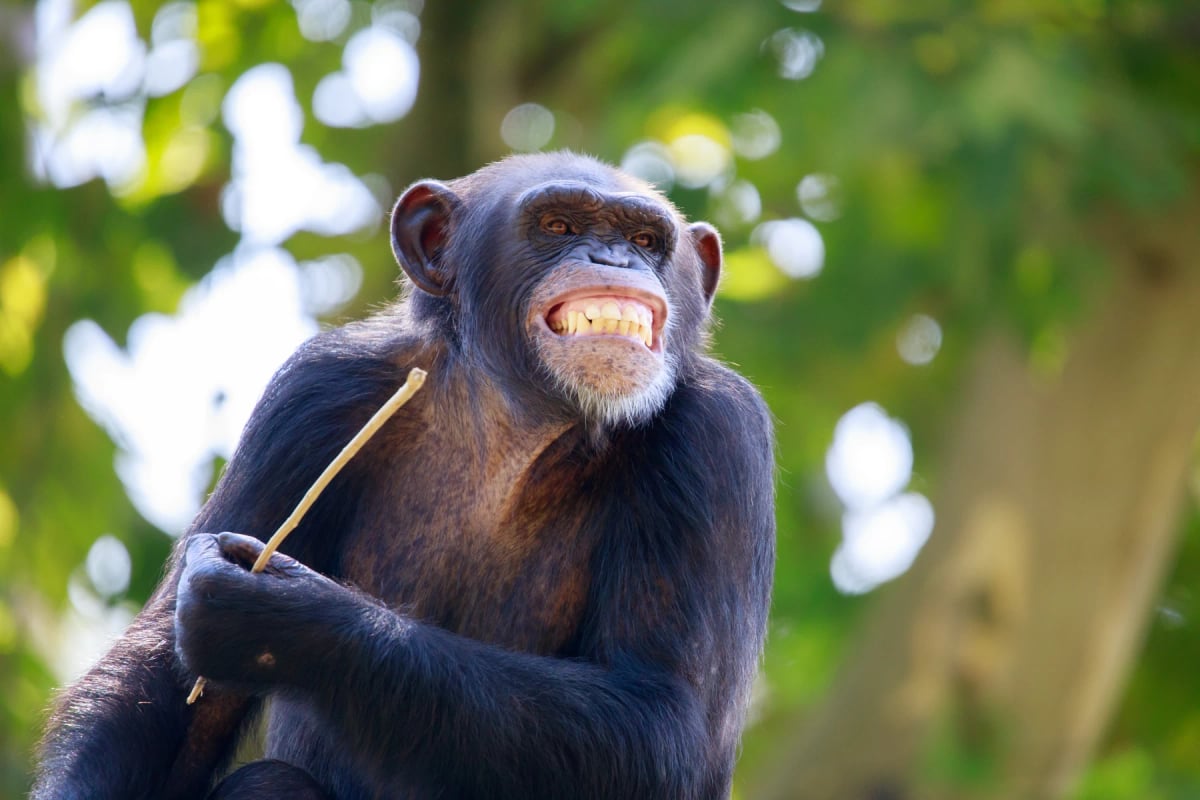
Few animals reveal the depth of their intelligence as clearly as chimpanzees do. Their capacity for tool use goes well beyond simple manipulation: West African populations crack hard nuts by placing them on stone or root anvils and striking them with a hammer stone, a technique requiring practice over several years to master. Young chimpanzees learn by watching experienced individuals, and the specific methods used vary between communities living only a short distance apart. This is widely accepted as evidence of culture in a non-human animal. Chimpanzees also demonstrate impressive memory, problem-solving ability, and an understanding of cause and effect. In controlled studies, they have outperformed humans on certain short-term memory tasks. Communication is rich, involving a repertoire of calls, gestures, and facial expressions, with some gestures shown to carry consistent meaning across populations that have never been in contact.
Social life
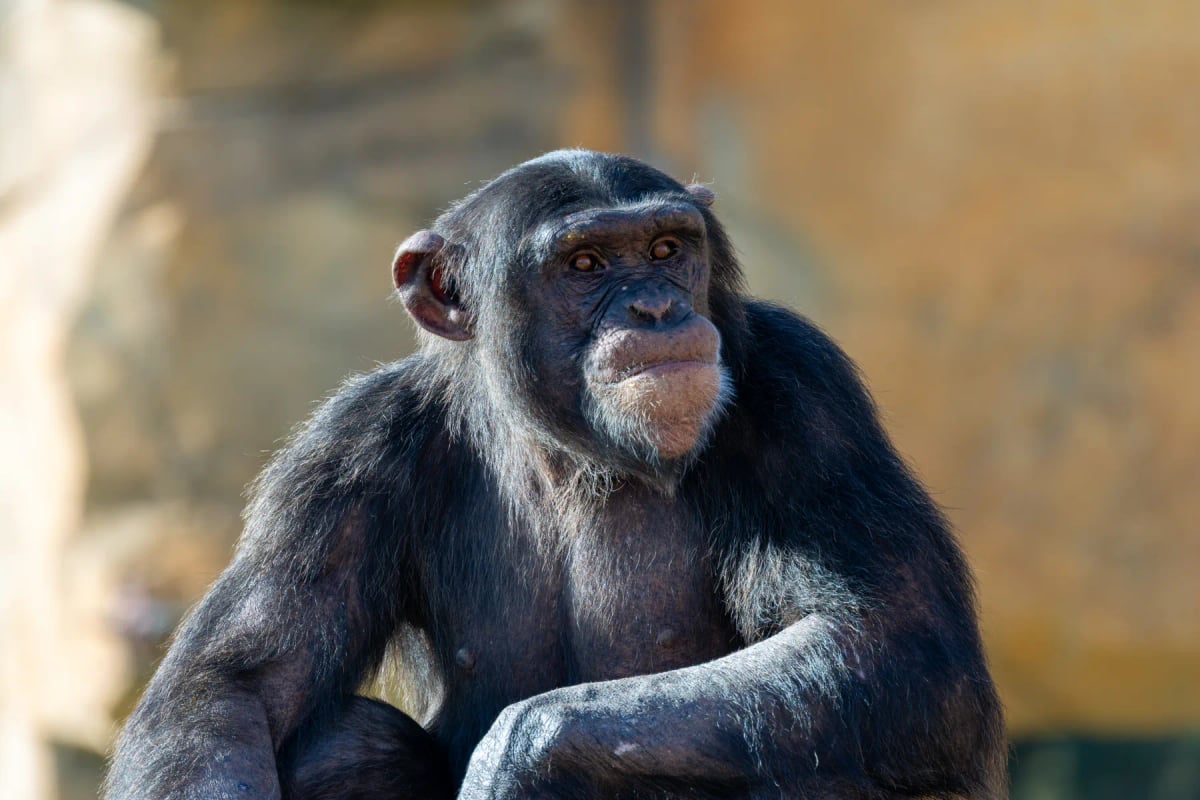
Chimpanzee society is built around a system of fusion and fission, in which a large community of up to 150 individuals constantly breaks into smaller parties and reforms depending on food availability, reproductive state, and social dynamics. The overall community defends a shared territory, and boundary patrols by males can turn lethal when rival groups meet. Within the community, males compete intensely for rank. The alpha male holds privileged access to food and mates, but his position depends on alliances rather than physical strength alone. Grooming is the social currency that holds these alliances together, and individuals invest considerable time in it each day. Females have their own hierarchies, and a high-ranking mother gives her offspring a measurable advantage in survival and social advancement. Mother and offspring bonds are exceptionally strong, often lasting for life.
Conservation
Classified as En peligro on the IUCN Red List, chimpanzees have lost a significant portion of their historical range over the past century. The total wild population is estimated at between 172,000 and 300,000 individuals, but numbers continue to fall. Deforestation driven by logging, agriculture, and the expansion of human settlements is the primary cause of habitat loss, leaving many populations confined to isolated forest fragments with limited ability to disperse or recover. Hunting for bushmeat remains a serious pressure across much of the range, and live capture for the illegal pet trade still occurs. Respiratory diseases, including outbreaks similar to human colds and influenza, can devastate small communities. Conservation efforts focus on protected area management, anti-poaching enforcement, and community engagement programs that give local people a stake in forest preservation. Reintroduction projects are also underway in several countries where populations have been wiped out.
Where it is found
The Chimpanzee can be found in places such as:
Researched and written by Juan Pablo. Sources: IUCN Red List, scientific literature and regional field guides. Last updated: .
Technical factsheet






Frequently Asked Questions
How closely related are chimpanzees to humans?
Chimpanzees share more than 98% of their DNA with humans, making them our closest living relatives on Earth. This genetic proximity is reflected in many shared traits, including similar facial expressions, blood types, and immune responses. Scientists study chimpanzees to better understand human evolution, brain function, and social behavior. Despite this closeness, the two species last shared a common ancestor roughly six to seven million years ago.
What do chimpanzees eat?
Fruit makes up the bulk of a chimpanzee's diet, with ripe figs being especially important during periods when other fruits are hard to find. They also eat leaves, seeds, bark, and insects such as termites and ants, which they extract using thin sticks. Some communities actively hunt red colobus monkeys in coordinated group efforts. Their diet shifts considerably depending on the season and the habitat they live in.
Where do chimpanzees live?
Chimpanzees are found across more than 20 countries in sub-Saharan Africa, from Senegal in the west to Tanzania and Uganda in the east. They thrive in tropical rainforests but also adapt to dry woodlands and areas where forest meets savanna. Some communities live in montane forests at elevations above 2,900 metres. Access to fruiting trees is the key factor that determines where any given group will settle.
Are chimpanzees good at using tools?
Chimpanzees are among the most skilled tool users in the animal kingdom. They use thin sticks to fish termites out of mounds, crack hard nuts with stone hammers on rock or root anvils, and fold leaves into cups to scoop up water. What makes this remarkable is that these techniques are not instinctive. Young chimpanzees learn them by watching older individuals, and the specific methods differ between communities, pointing to genuine cultural traditions.
How do chimpanzees communicate?
Chimpanzees communicate through a rich combination of calls, gestures, and facial expressions. Their most distinctive vocalization is the pant-hoot, a loud call used to announce their location or signal excitement. Researchers have identified gestures that carry consistent meaning across populations that have had no contact with one another, a finding that points to a shared ancestral communication system. Grooming also plays a social role, strengthening bonds and reducing tension within the group.
Why are chimpanzees endangered?
Chimpanzees are classified as Endangered on the IUCN Red List, with a wild population estimated at between 172,000 and 300,000 individuals. The main threats are deforestation from logging and agriculture, hunting for bushmeat, and the illegal capture of young animals for the pet trade. Outbreaks of respiratory disease can also devastate small, isolated communities. Many populations are now confined to forest fragments with little room to recover or expand.
How long do chimpanzees live?
In the wild, chimpanzees typically live between 30 and 40 years, though some individuals have been recorded surviving into their late 50s. In captivity, where they are protected from predators, disease, and food shortages, lifespans can extend beyond 60 years. Females generally outlive males, partly because males take greater risks during territorial conflicts. The survival of young chimpanzees is strongly influenced by their mother's social rank within the community.