Resplendent Quetzal
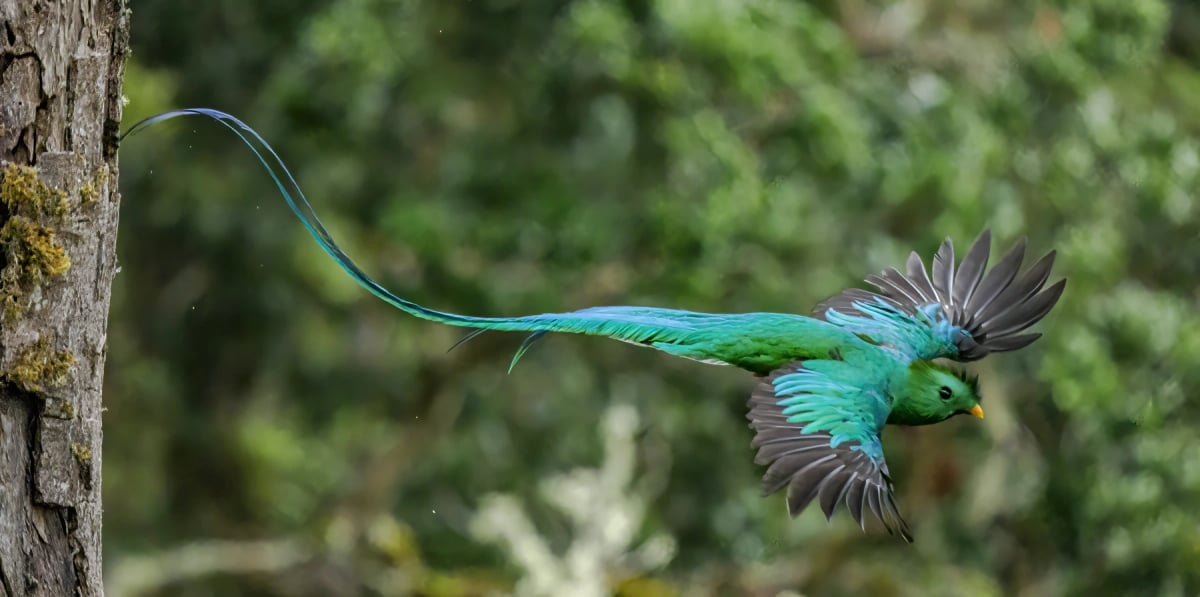
The Resplendent Quetzal is one of the most visually striking birds on Earth, living in the cloud forests of Central America from southern Mexico to Panama. Males wear plumage of vivid crimson and iridescent green, and during the breeding season they grow twin tail feathers that can reach up to a meter in length. These feathers were prized by Maya and Aztec rulers, who considered the bird sacred and a symbol of freedom. The quetzal feeds mainly on wild avocados and other small fruits, swallowing them whole and later regurgitating the pits, which helps regenerate forest trees. It nests in cavities carved into rotting trunks. Females are duller in color and lack the long plumes. Guatemala adopted the quetzal as its national bird and named its currency after it. Habitat loss in highland forests is the main threat the species faces today.
Habitat and distribution
Resplendent Quetzals are found across a narrow but remarkable band of cloud forest stretching from the highlands of Chiapas in southern Mexico through Guatemala, Belize, Honduras, El Salvador, Nicaragua, Costa Rica, and into western Panama. These birds rely on humid montane forests, typically at elevations between 1,200 and 3,000 meters above sea level, where mist and rainfall keep the canopy dense and food sources plentiful. Within this range they show a preference for mature forest with large, older trees, which provide both the fruiting plants they depend on and the rotting trunks they need for nesting. Some populations make seasonal altitudinal movements, descending to lower elevations outside the breeding season in search of fruit. The fragmented nature of highland forest across Central America means suitable habitat is increasingly patchy.
Diet
Fruit sits at the heart of the quetzal's diet, with wild avocados of the genus Lauraceae making up a large share of what it eats throughout the year. The bird swallows fruits whole, digests the flesh, and later regurgitates the pits intact, a behavior that makes it one of the cloud forest's most important seed dispersers. This relationship with laurel family trees is so close that the health of quetzal populations is often seen as a direct reflection of forest condition. Alongside fruit, quetzals occasionally catch insects, small frogs, lizards, and even snails, particularly during the breeding season when the higher protein content supports egg development and chick growth. They tend to forage by sallying out from a perch, snatching food in flight, and returning to the same branch.
Appearance
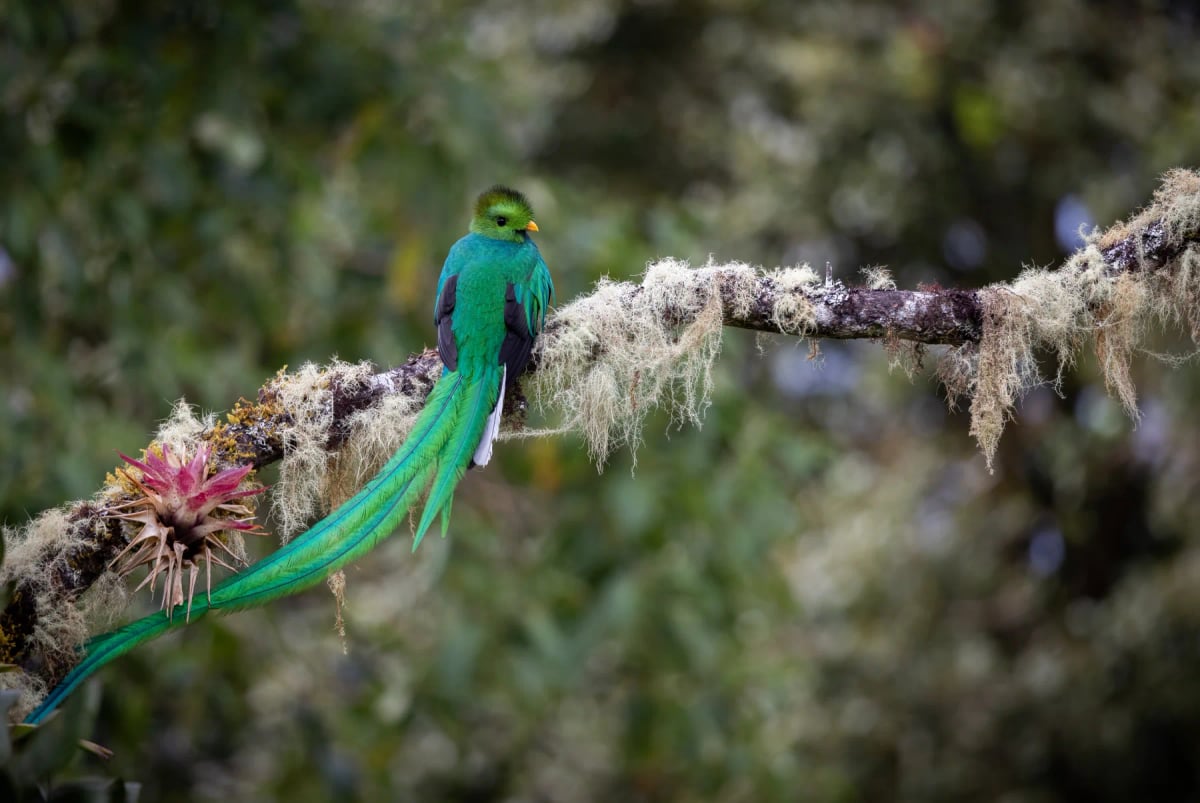
Few birds anywhere in the world match the visual drama of an adult male Resplendent Quetzal. His head is crowned with a short crest of bristly feathers, and his body is covered in plumage that shifts between emerald and golden green depending on the light. The chest and belly are a deep crimson red. Most striking of all, during the breeding season males grow two elongated upper tail coverts that can trail behind them for up to a meter, rippling as they fly through the forest. Females share the green coloring on the back but have a grey chest, a barred tail, and no long plumes at all. Juveniles of both sexes start out duller and develop their adult colors gradually. The bill is yellow in males and mostly dark in females.
Cultural significance
Across centuries of Mesoamerican history, the quetzal occupied a place unlike almost any other animal. For the Maya and the Aztec, its tail feathers were worth more than gold and could only be worn by rulers and high priests. The feathers adorned elaborate headdresses used in religious ceremonies, and killing a quetzal was considered a serious offense. The bird became bound up with Quetzalcoatl, the feathered serpent deity central to several Mesoamerican religions. Today that reverence carries forward in a different form. Guatemala named the quetzal its national bird and also adopted the name for its currency, the quetzal, which has been in use since 1925. The bird appears on the Guatemalan coat of arms alongside a scroll representing the declaration of independence. Across the region, the quetzal remains a symbol of freedom and the natural heritage of Central America.
Conservation
The IUCN currently lists the Resplendent Quetzal as Near Threatened, a status that reflects real and ongoing pressure on its populations. The loss of cloud forest to agriculture, logging, and the expansion of human settlements has reduced and fragmented the habitat the species depends on. Because quetzals need large tracts of mature forest to find enough food and suitable nesting sites, even moderate levels of deforestation can make an area unsuitable for them. Protected areas such as the Monteverde Cloud Forest Reserve in Costa Rica and the Sierra de las Minas Biosphere Reserve in Guatemala provide critical refuges. Ecotourism has proven valuable in some of these areas, giving local communities a financial reason to protect forest rather than clear it. Continued monitoring and the restoration of forest corridors between protected areas are considered priorities for the survival of this species over the long term.
Where it is found
The Resplendent Quetzal can be found in places such as:
Researched and written by Juan Pablo. Sources: IUCN Red List, scientific literature and regional field guides. Last updated: .
Technical factsheet




Frequently Asked Questions
What does the Resplendent Quetzal eat?
Wild avocados are the quetzal's favorite food. It swallows the whole fruit, digests the flesh, and spits the pit back out later, which helps new trees grow. This makes it a vital seed disperser for cloud forests. It also eats other small fruits and, especially during the breeding season, catches insects, small frogs, and lizards to get extra protein.
Where does the Resplendent Quetzal live?
The quetzal lives in the cloud forests of Central America, from the highlands of southern Mexico down through Guatemala, Honduras, El Salvador, Nicaragua, Costa Rica, and into western Panama. It prefers elevations between roughly 1,200 and 3,000 meters, where mist keeps the forest dense. It needs mature trees for both food and nesting, so it avoids areas where the forest has been cleared.
How long are the quetzal's tail feathers?
Only the males grow the famous long tail feathers, and only during the breeding season. Those feathers are actually elongated upper tail coverts, and they can reach up to one meter in length. They trail behind the bird as it flies through the forest. Outside the breeding season, males lose these plumes, and females never grow them at all.
Is the Resplendent Quetzal endangered?
The IUCN classifies it as Near Threatened, which means it is not yet endangered but populations are declining and the situation is serious. The main problem is the loss of cloud forest to farming, logging, and the growth of towns. Because quetzals need large areas of mature forest to survive, even small reductions in habitat can push them out of an area completely.
Why was the quetzal sacred to the Maya and Aztec?
For both civilizations, the quetzal's shimmering green tail feathers were more valuable than gold. Only rulers and high priests could wear them. The bird was linked to Quetzalcoatl, the feathered serpent god, and killing one was considered a grave offense. That sense of reverence has lasted. Guatemala named its national currency the quetzal and placed the bird on its coat of arms.
Does the quetzal migrate?
The quetzal does not migrate in the traditional sense, but it does make seasonal moves up and down the mountain. After the breeding season, some populations descend to lower elevations to follow the fruiting cycles of wild avocados and other forest plants. These altitudinal movements can cover significant distances, but the birds generally stay within the same mountain range throughout the year.
How does the quetzal build its nest?
Quetzals nest inside cavities in rotting tree trunks, which are soft enough for the birds to carve out with their bills. Both the male and female take turns incubating the eggs. The long tail plumes of the male often stick out of the entrance hole while he sits inside. This dependence on decaying trees is one reason the species needs old, undisturbed forest to breed successfully.