Animals in Georgia
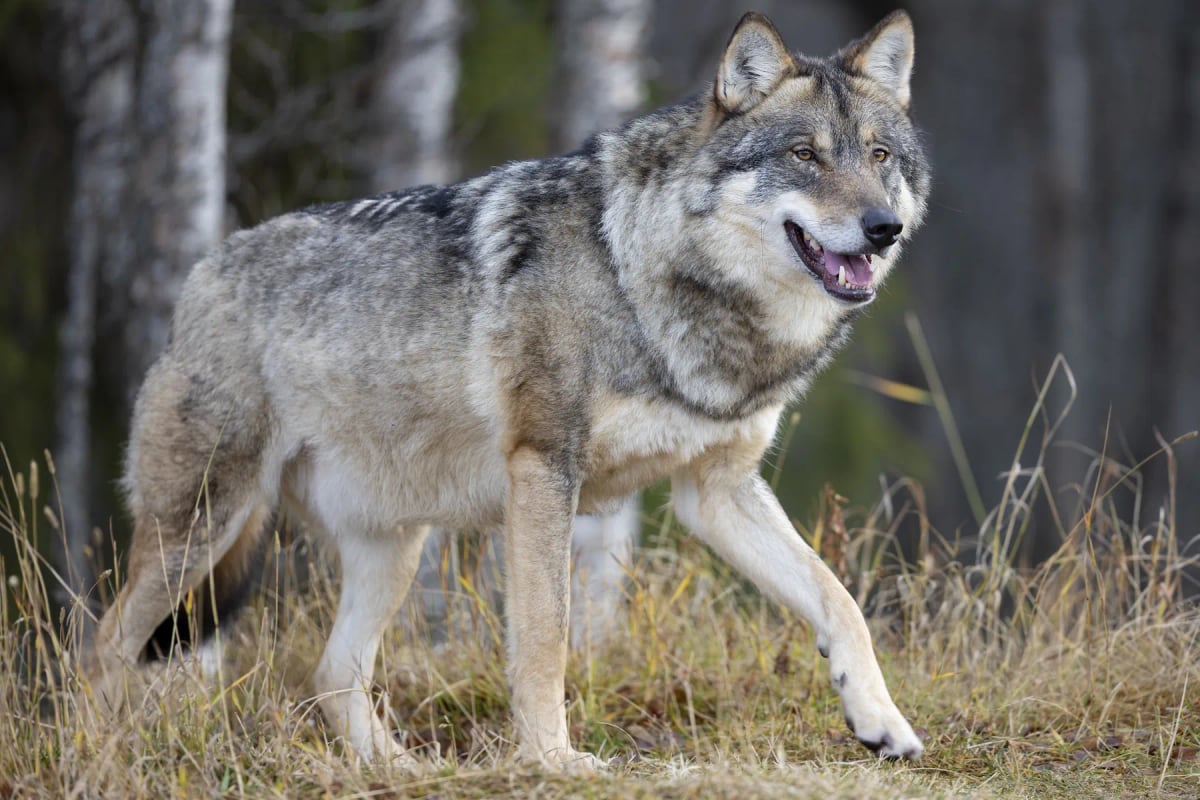
Gray Wolf
Canis lupus
The wolf is an important animal symbol for Georgia and appears often in local stories and legends. It suggests mountain life and the old link between shepherds, flocks and large predators. In many rural areas people still speak about wolves when they describe hard winters, remote valleys and the balance between grazing land and nearby forests.
View details→Wildlife in Georgia
Georgia stretches from Black Sea coasts to forested hills and high Caucasus mountains, so wildlife changes over short distances. Visitors often explore nature on day trips from towns, using marked trails in valleys, easy walks near villages and scenic roads across passes where they may see deer, foxes, wolves or birds of prey.
Most Dangerous Animals in Georgia
Danger for visitors in Georgia appears mainly in remote rural zones. Wild boar can defend themselves with force if they are surprised in thick scrub, while wolves, lynx, leopards and striped hyenas normally avoid people but remain strong carnivores. Along usual tourist routes encounters are rare and are mostly limited to distant sightings, tracks or sounds in the evening.
Top 10 Animals in Georgia
The top 10 list for Georgia focuses on large mammals and a fast bird of prey that match its main landscapes. Deer use forests and open slopes, lynx and leopards move through quiet ravines, and wolves cross wide hills in small groups. Above the valleys the peregrine falcon hunts near cliffs and ridges that today are part of many short hikes and road viewpoints.
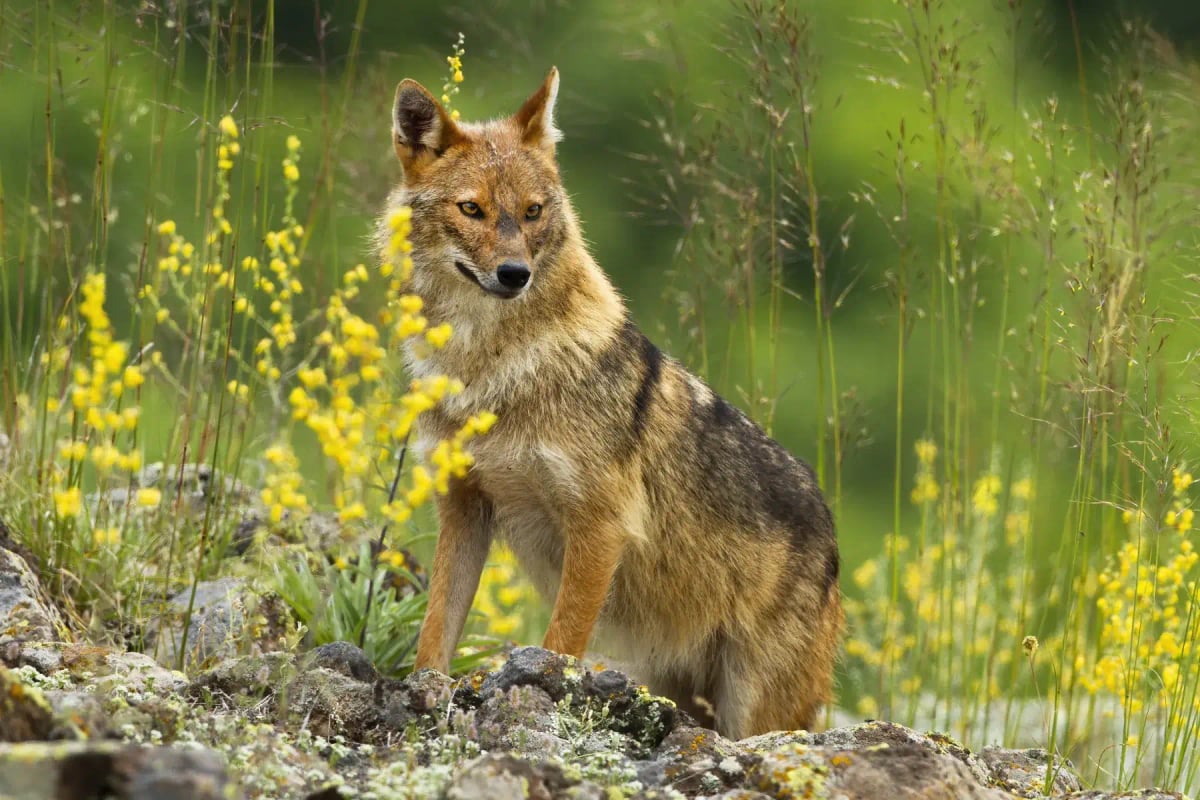
Golden Jackal
Canis aureus
In Georgia, the golden jackal is widespread across the lowland and foothill zones, particularly in the Colchic wetlands of the west and the dry plains of the east. It navigates farmland, river margins, and dense thickets with equal ease. The species is common enough that it is considered a familiar part of the rural soundscape, its calls echoing across valleys on warm nights. IUCN status: Least Concern.
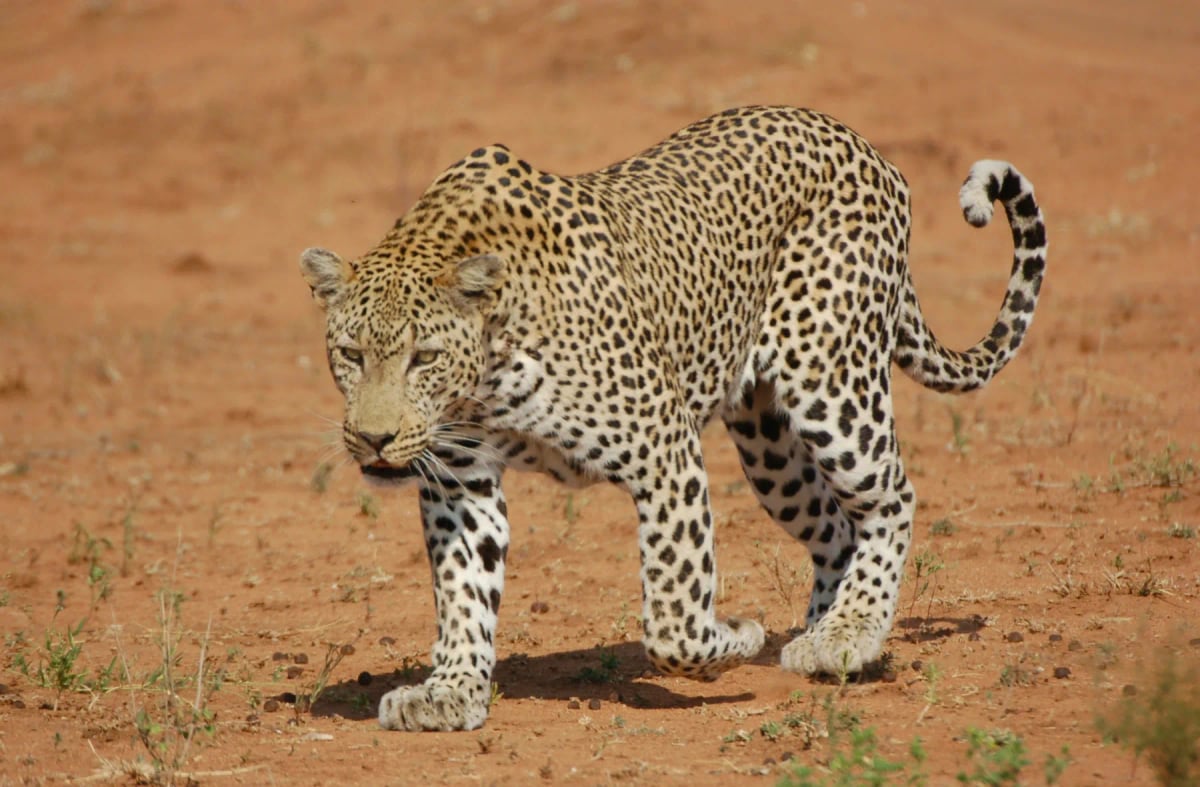
Leopard
Panthera pardus
The Persian leopard, a subspecies of particular concern, historically ranged across the Caucasus mountains of Georgia. Today sightings are extremely rare, and the population is considered functionally extinct in the country. Conservation programs linked to neighboring Iran and Azerbaijan aim to support any potential recovery. Georgia's forested mountain slopes and river valleys could in principle support leopards if prey and protection were sufficient.
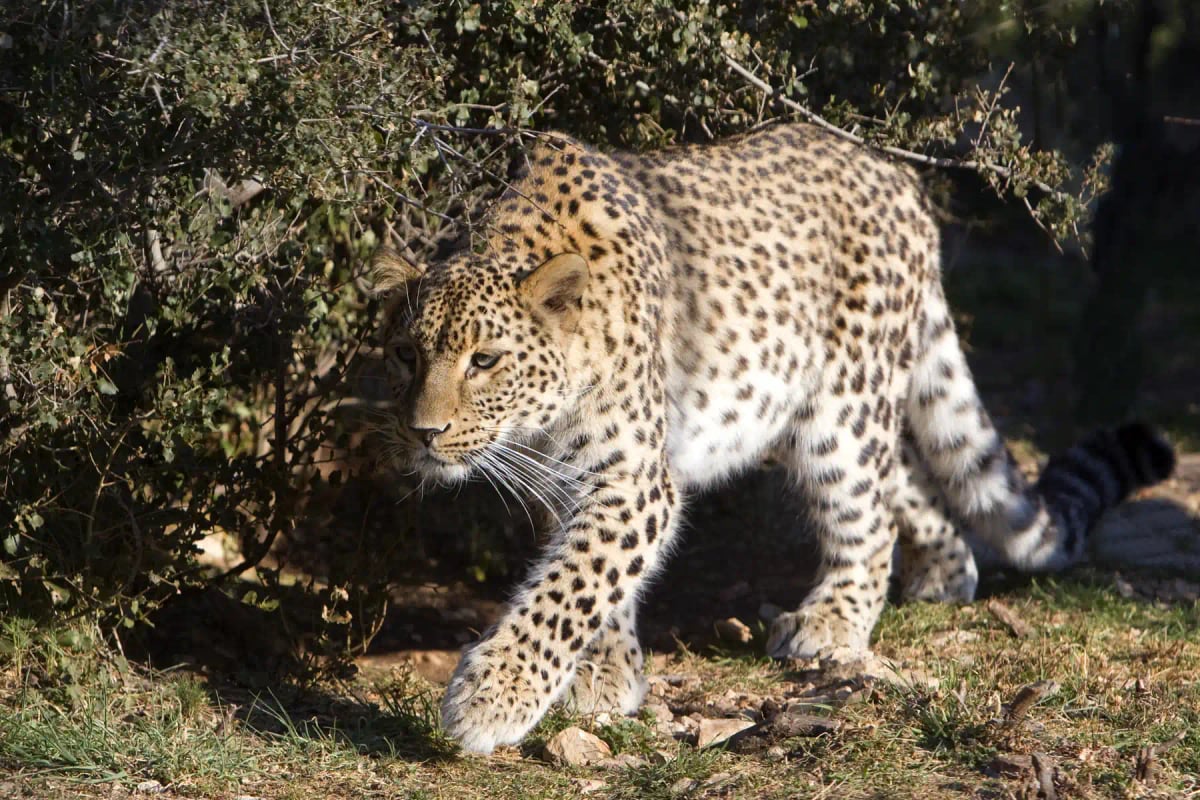
Persian Leopard
Panthera pardus tulliana
Georgia represents the northern edge of the Persian leopard's range in the Caucasus. The animal occasionally moves through forested and mountainous areas in the south and east of the country. Records are sporadic, suggesting a very low number of individuals. Protecting forest connectivity between Georgia, Armenia, and Azerbaijan is considered essential for any chance of a stable population returning to the region.
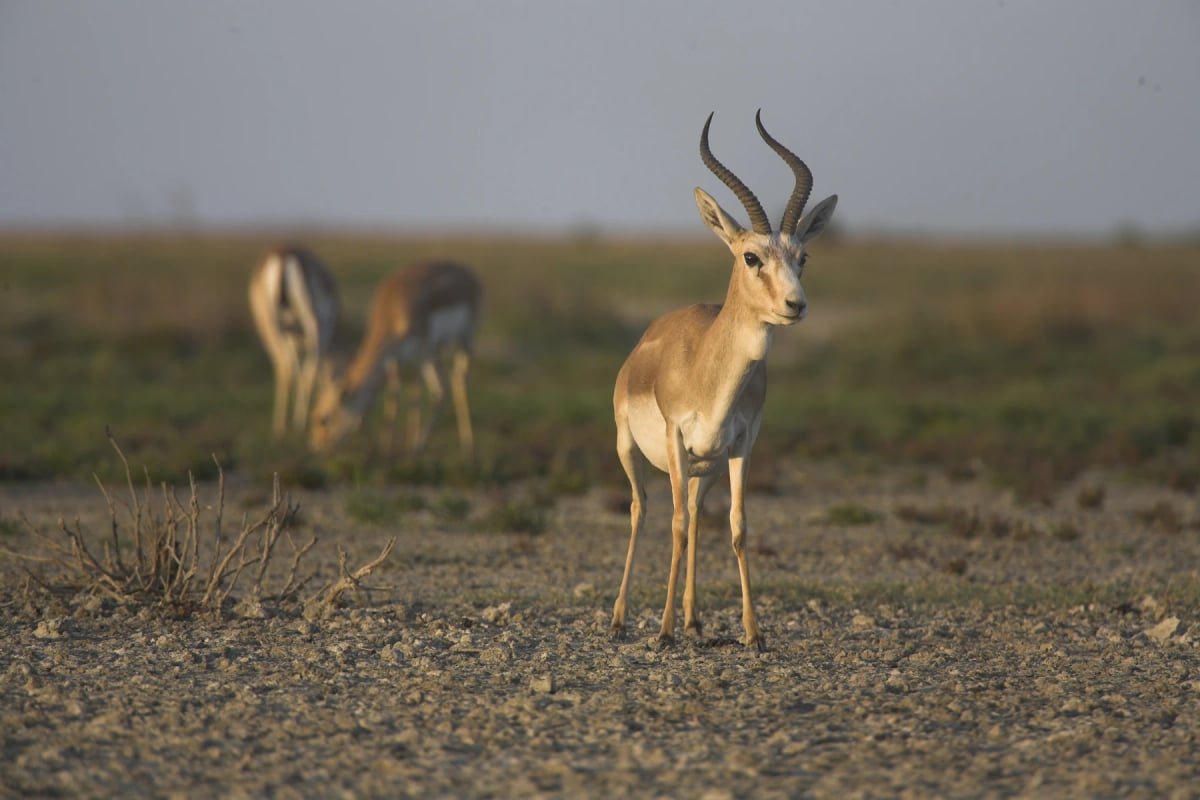
Goitered Gazelle
Gazella subgutturosa
In Georgia, the goitered gazelle is found in the semi-arid lowlands of the eastern part of the country, particularly in the Vashlovani protected area. This is one of its westernmost populations, making it especially significant for the species as a whole. Habitat loss and poaching have placed strong pressure on this small population. The IUCN lists this species as Vulnerable.
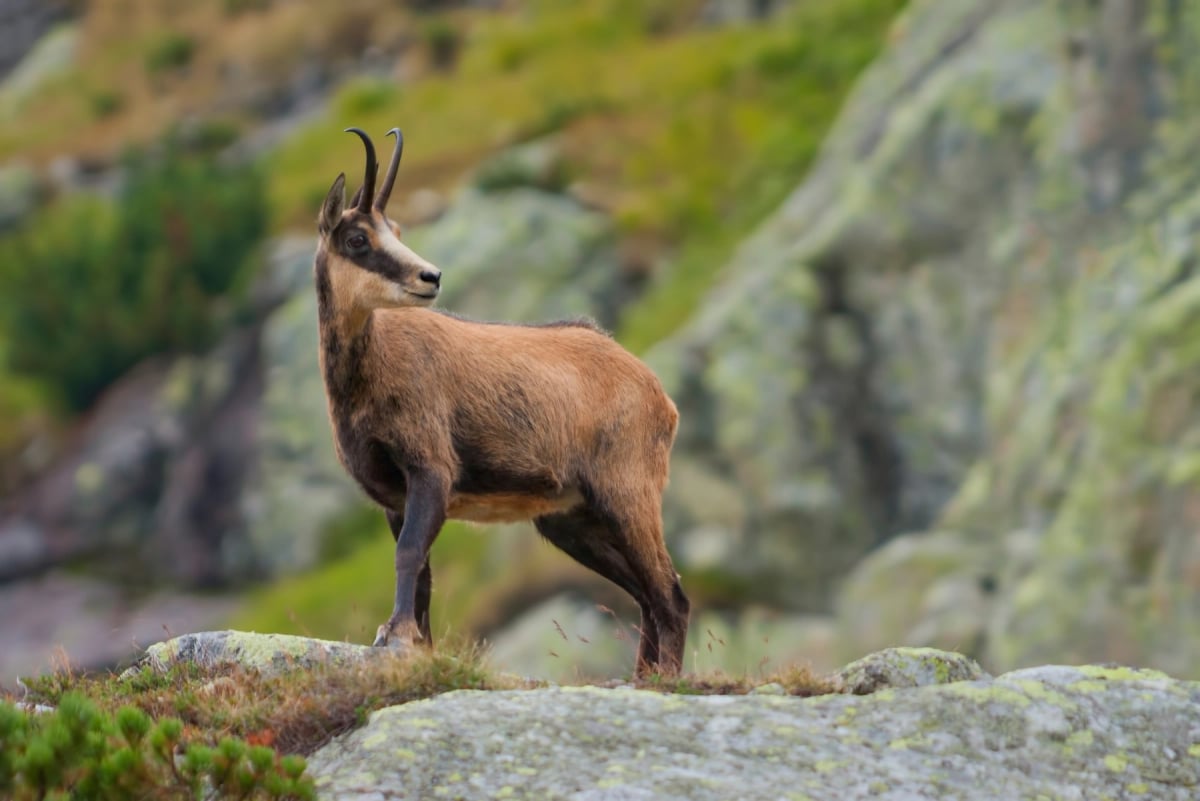
Chamois
Rupicapra rupicapra
In Georgia, the chamois inhabits the high ridges of the Greater Caucasus, with important populations recorded in the Kazbegi and Tusheti areas. The terrain here is dramatic, with sheer cliffs and alpine meadows that suit the species well. Tusheti National Park offers protection to some of these animals. Populations face pressure from poaching, and conservation monitoring in the Caucasus ecoregion is considered a priority for the species.
Gray Wolf
Canis lupus
Gray wolves are found across Georgia, from the forested valleys of the Caucasus Mountains to the semi arid lowlands near the borders with Armenia and Azerbaijan. The Caucasus region supports a distinct genetic lineage of wolves. Prey includes deer, wild boar and domestic livestock. Wolves are not strictly protected in Georgia, and they are hunted in some areas. Their presence is deeply woven into local folklore and the pastoral traditions of the mountain communities.
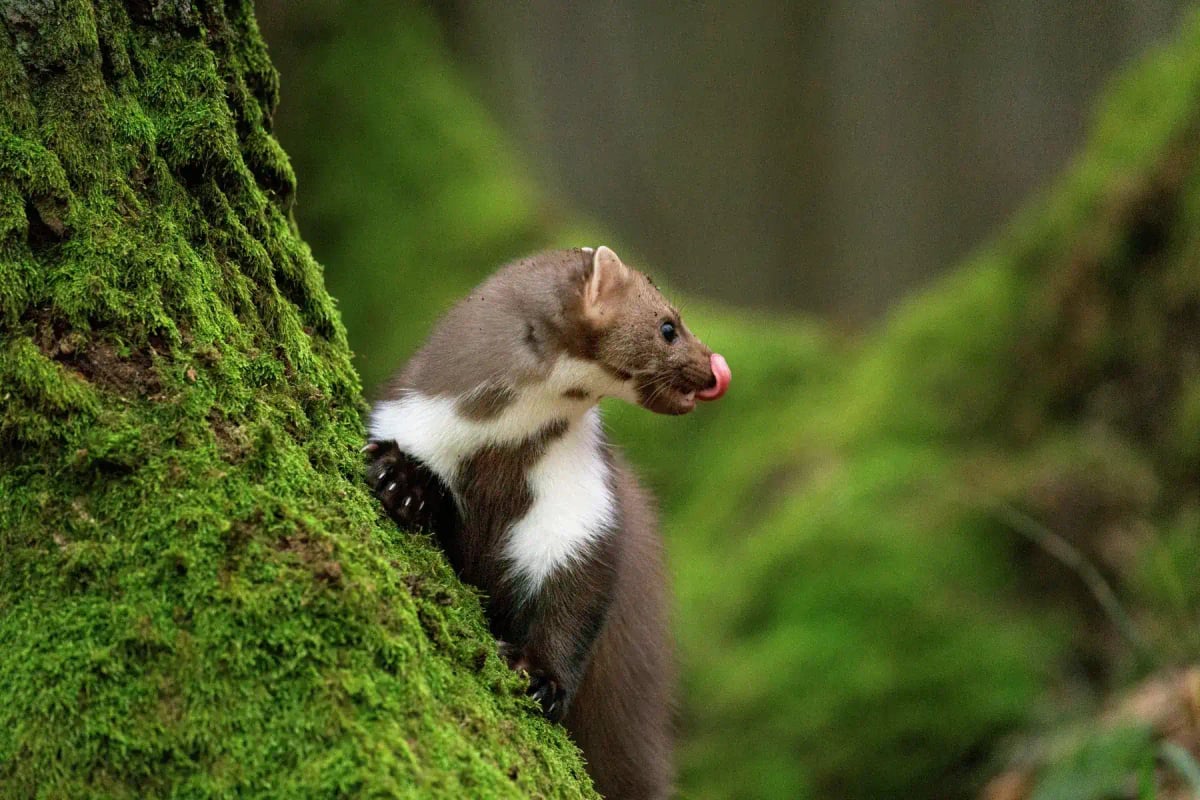
Marten
Martes martes / Martes foina
In Georgia, both the pine marten and the stone marten are present, with the Caucasus region offering a rich mix of forested mountain slopes and rocky terrain that suits both species well. Pine martens tend to stay within the dense forests of the Greater Caucasus range, while stone martens are more at home in the drier, open landscapes of eastern Georgia. Both play a role as mid-level predators in these biodiverse mountain ecosystems. Their IUCN status is Least Concern.
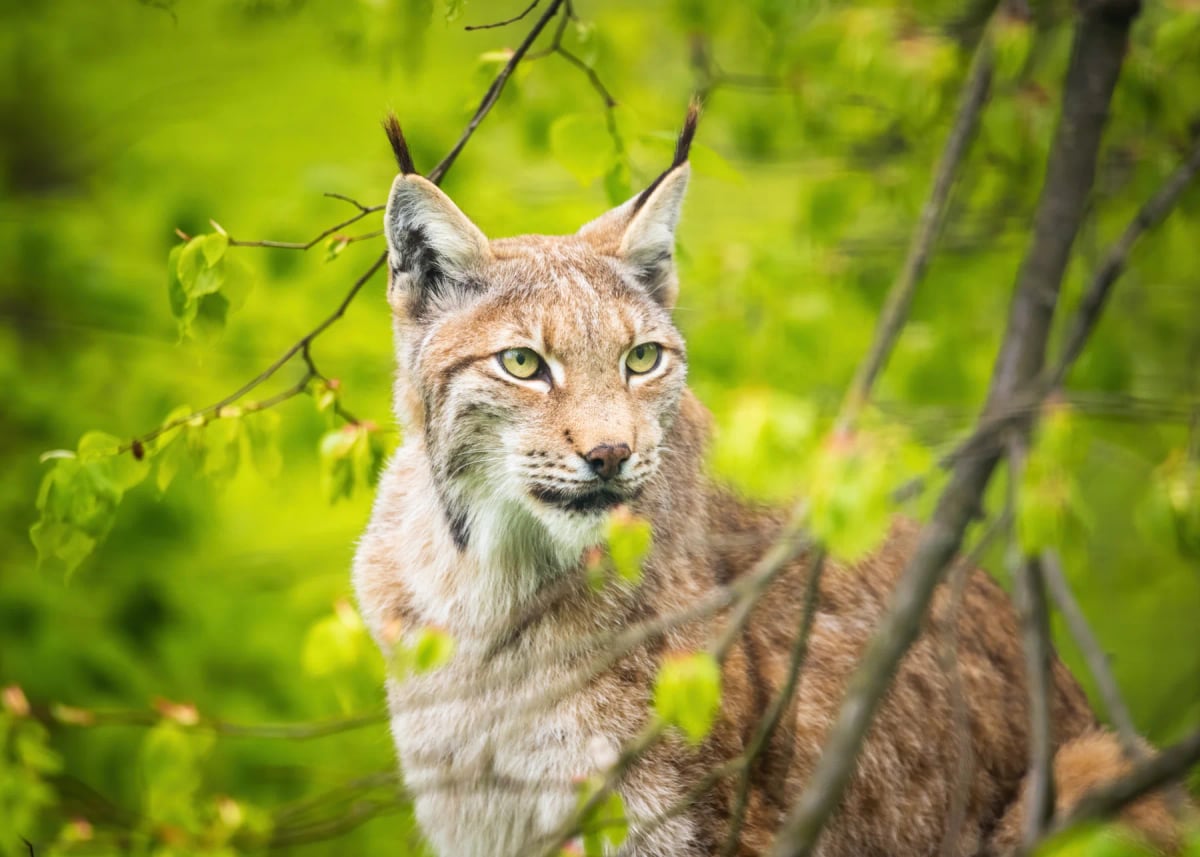
Eurasian Lynx
Lynx lynx
The Eurasian Lynx inhabits the forested mountain slopes of Georgia, particularly in the Greater Caucasus range. It is rarely observed and population data remain limited, though the species is considered present in protected areas such as Borjomi-Kharagauli National Park. Roe deer and other ungulates are its likely main prey in this region. The IUCN lists the species as Least Concern at the global level.
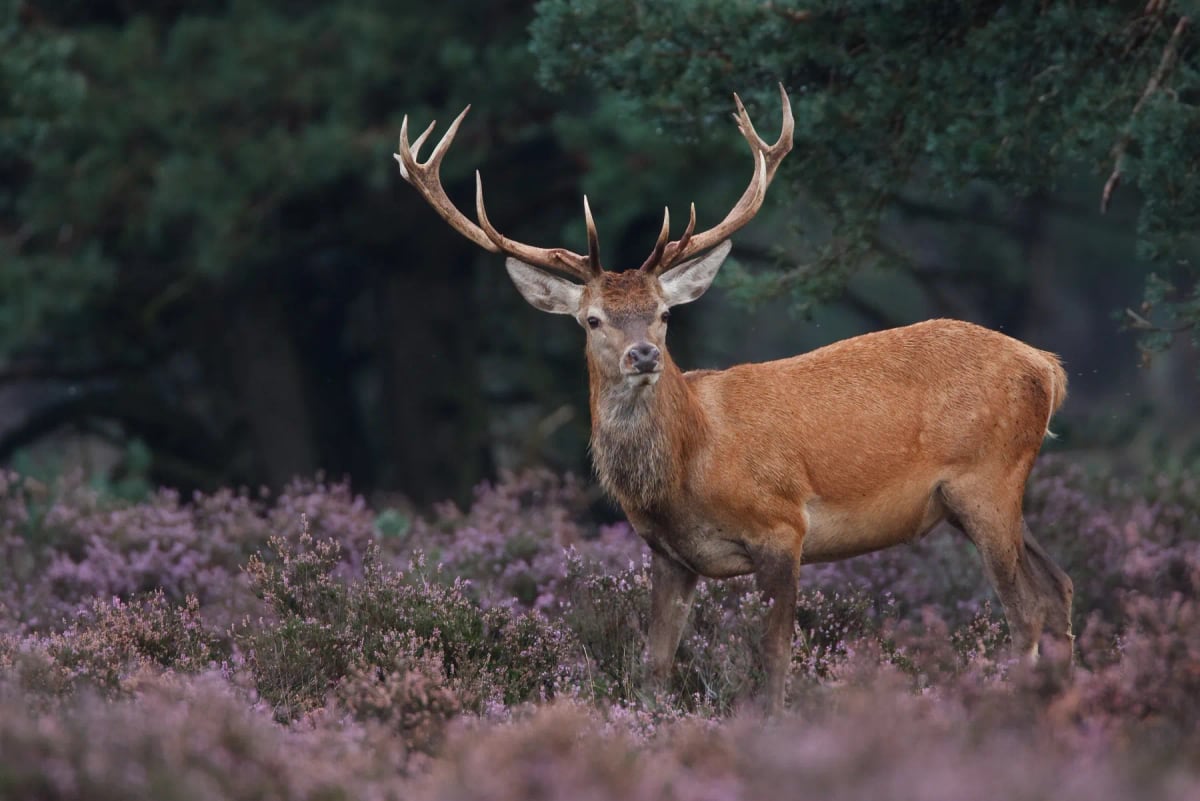
Red Deer
Cervus elaphus
In Georgia, red deer inhabit the dense forests and subalpine meadows of the Caucasus Mountains, including areas within the Borjomi-Kharagauli National Park. The rugged terrain of the Greater and Lesser Caucasus provides both shelter and seasonal grazing grounds. Populations have faced pressure from poaching and habitat loss in the past, but conservation efforts within protected areas have helped support their recovery in recent years. IUCN status: Least Concern.
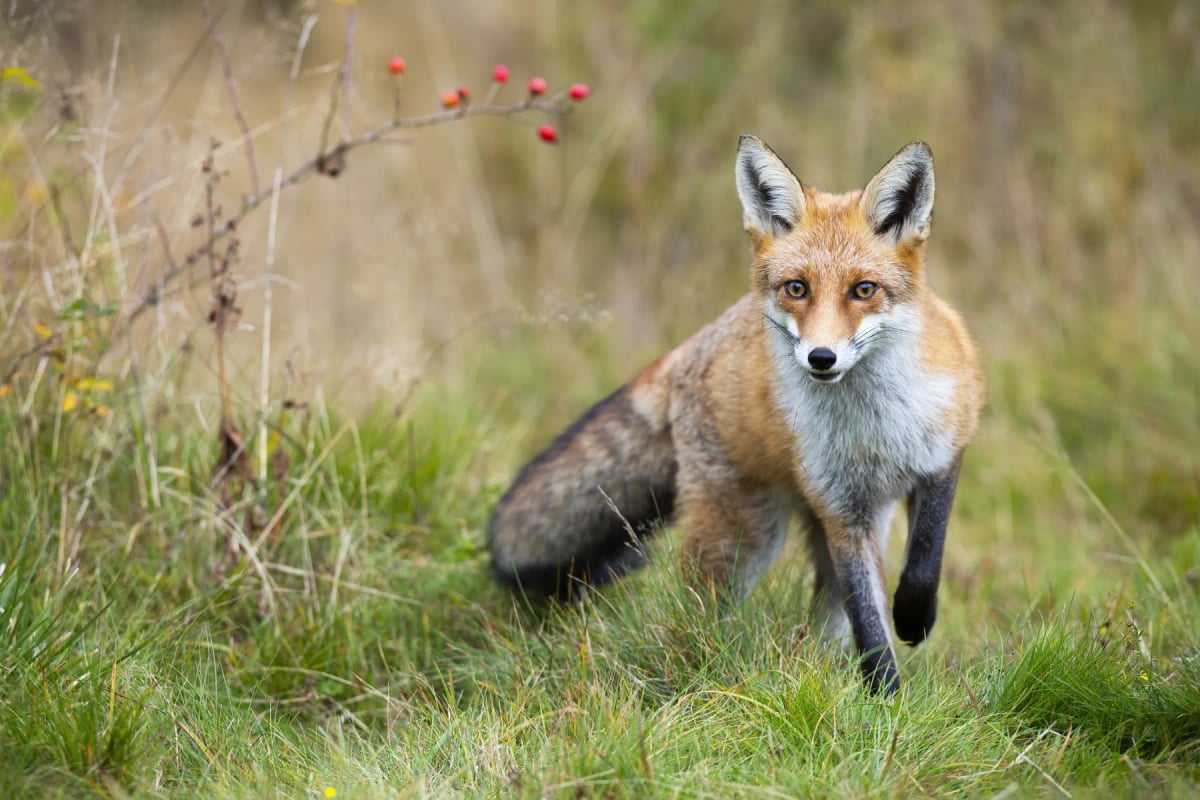
Red Fox
Vulpes vulpes
In Georgia, the red fox lives across a striking variety of landscapes, from the lowland wetlands of Kolkheti on the Black Sea coast to the subalpine meadows of the Greater Caucasus. It is a common and adaptable predator throughout the country. Rodents and small birds form the bulk of its diet, and it plays a useful role in keeping agricultural pest populations in check across rural Georgia.
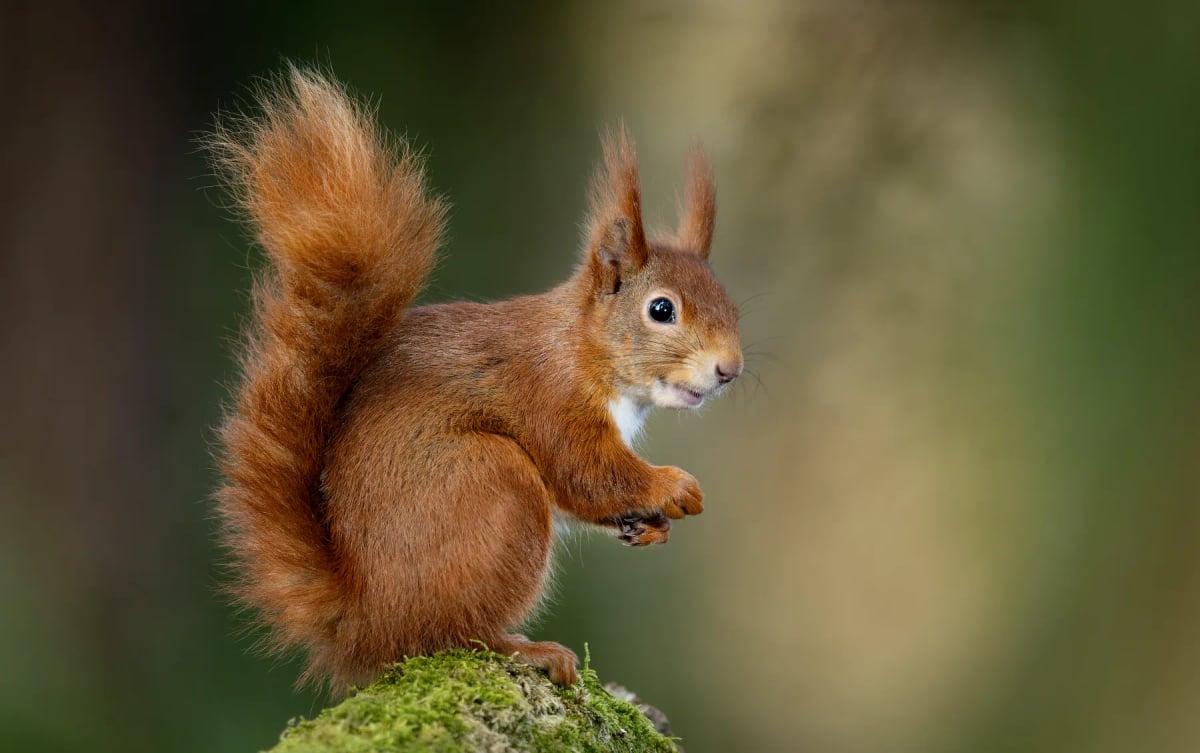
Red Squirrel
Sciurus vulgaris
In Georgia, the red squirrel is found in the forests of the Greater and Lesser Caucasus, as well as in the lush woodlands of Adjara and other humid regions to the west. It feeds on seeds, nuts, and fungi among mixed broadleaf and coniferous trees. The country's well preserved mountain forests support healthy populations of this agile rodent. Its IUCN status is Least Concern.
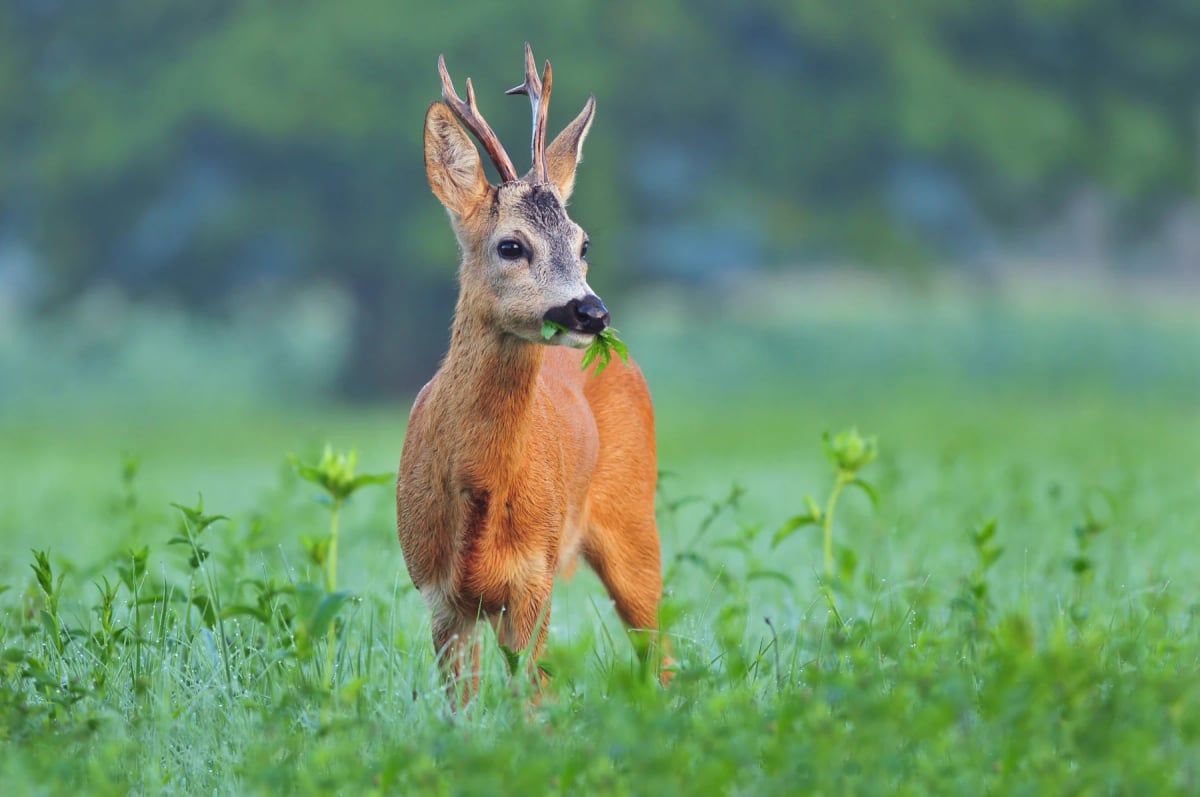
Roe Deer
Capreolus capreolus
In Georgia, the roe deer inhabits the forests of the Caucasus foothills and the mixed woodlands of the country's western and eastern lowlands. The forested slopes of the Greater and Lesser Caucasus provide ideal cover and food. It shares this terrain with wolves and other predators, which naturally regulate its numbers. Georgia's varied landscape supports a healthy population. Its IUCN status is Least Concern.
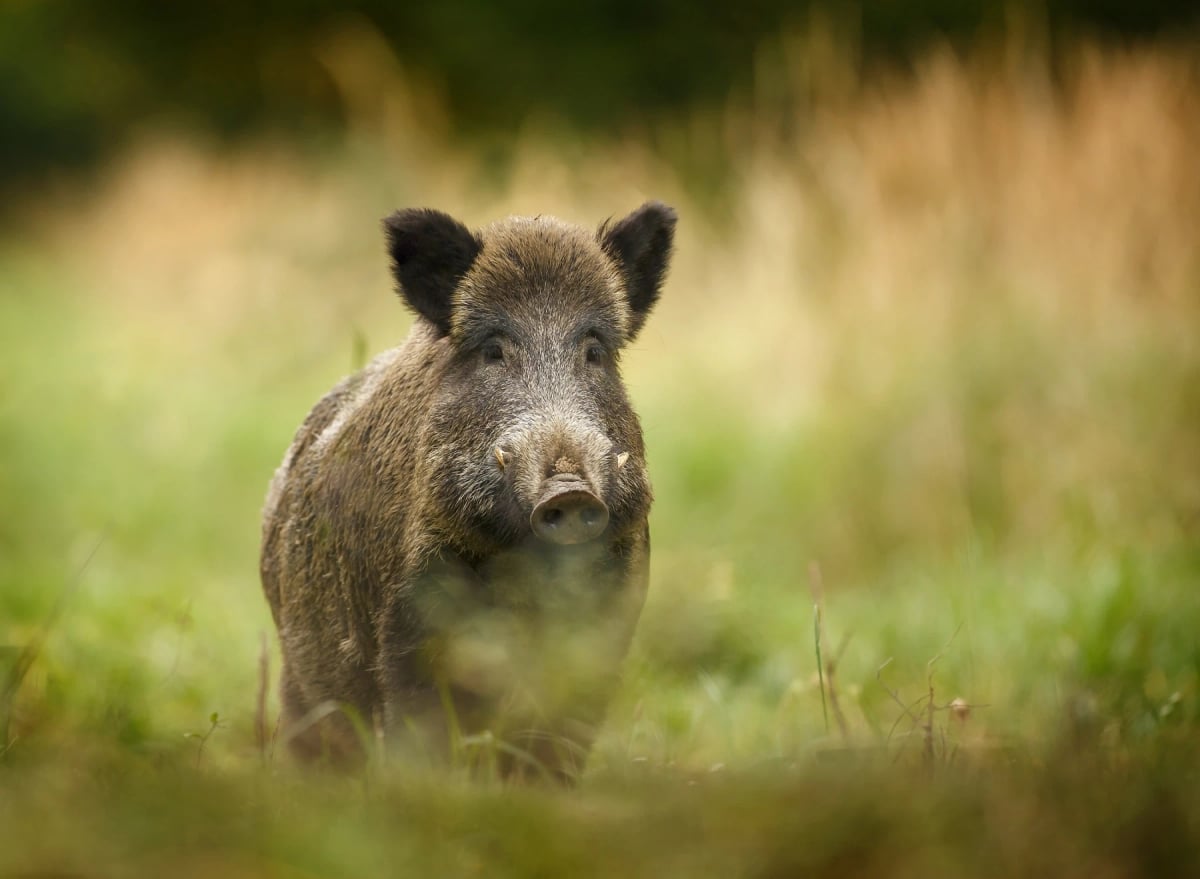
Wild Boar
Sus scrofa
Wild boars are widespread in the forested mountains and foothills of Georgia, including protected areas such as Borjomi Kharagauli National Park. They favor dense woodland with good cover, feeding on roots, acorns and fallen fruit, and sometimes raiding nearby farmland. Wild boars are a popular game species in rural Georgia and also serve as important prey for wolves and lynx in the country's forested regions.
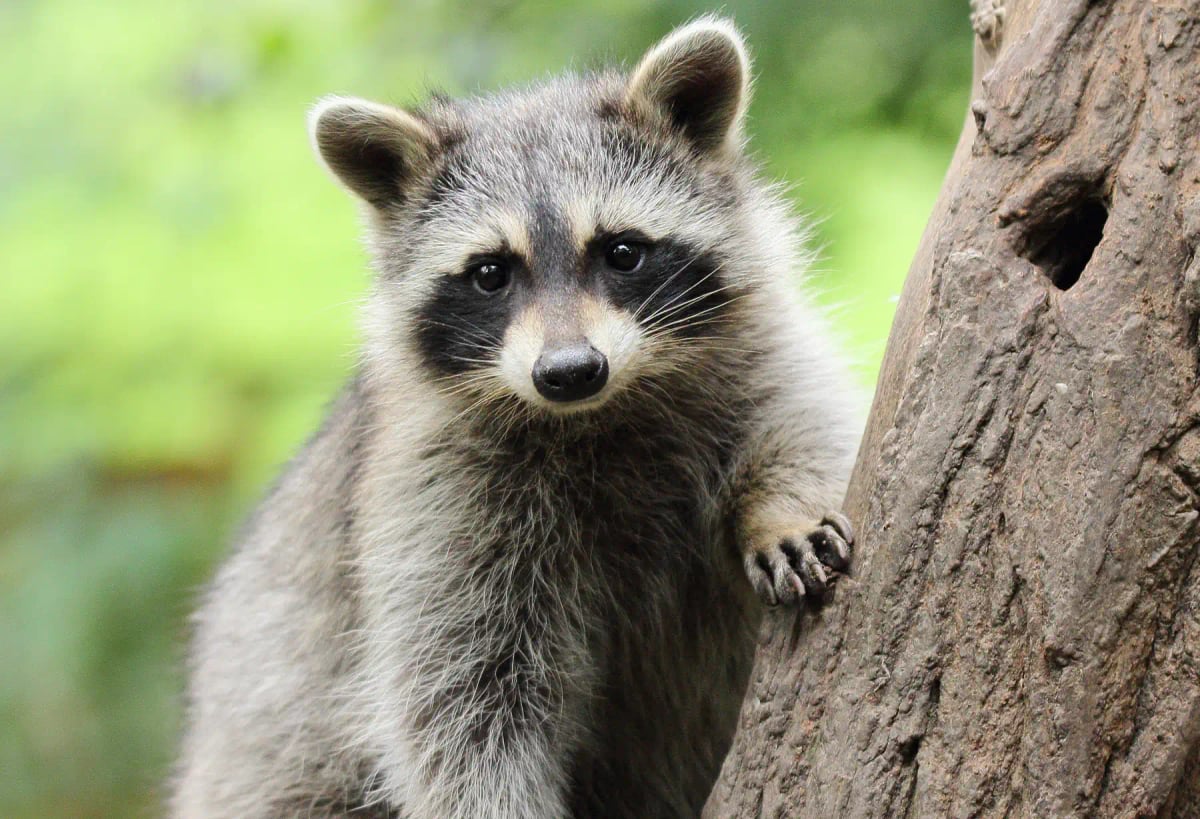
Raccoon
Procyon lotor
Raccoons were introduced to Georgia during the Soviet period and have since established populations in parts of the country, particularly in lowland forests and river valleys in the west. Their status here is less studied than in Western Europe, but they are considered an alien species. The lush, humid forests near the Black Sea coast and the Colchic region offer conditions well suited to this resourceful and opportunistic mammal.
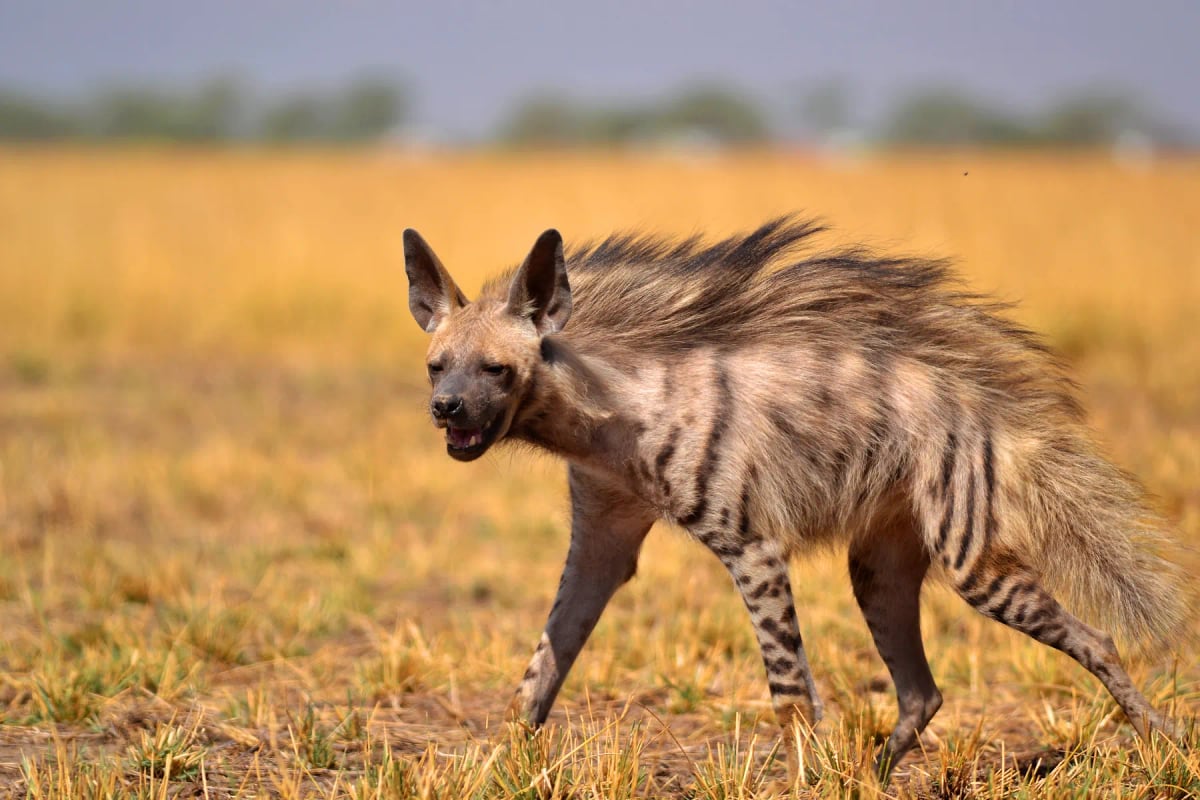
Striped Hyena
Hyaena hyaena
The striped hyena lives in the drier lowland areas of Georgia, particularly around the Vashlovani protected area in the southeast, where semi-arid scrubland offers shelter and foraging ground. It is nocturnal and spends the day hidden in rocky crevices or dense brush. Classified as Near Threatened globally, it faces pressure in Georgia from habitat loss and persecution by local communities who view it with suspicion.
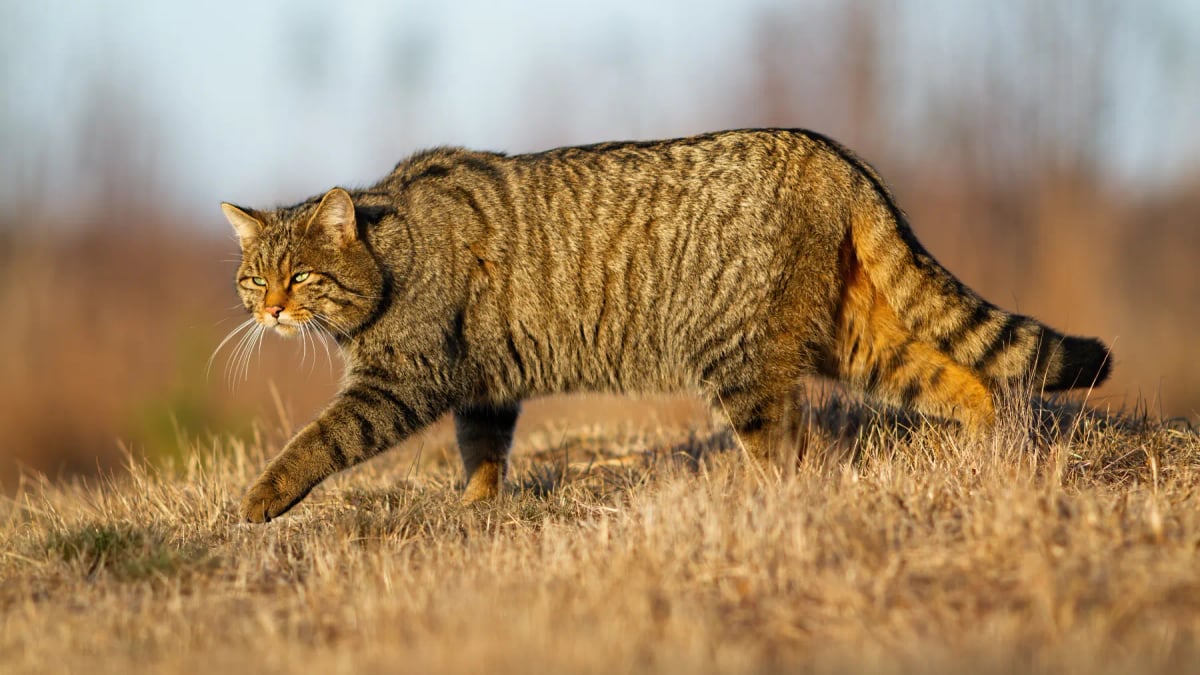
European Wildcat
Felis silvestris silvestris
In Georgia, the European wildcat is found in forested zones of the Caucasus, including areas of Colchic woodland along the Black Sea coast and mixed forests further inland. It shares its range with a variety of other predators in this biodiversity rich region. Nocturnal and territorial, it relies on healthy forest cover to survive. Deforestation and hybridization with stray cats are the main pressures on local populations.
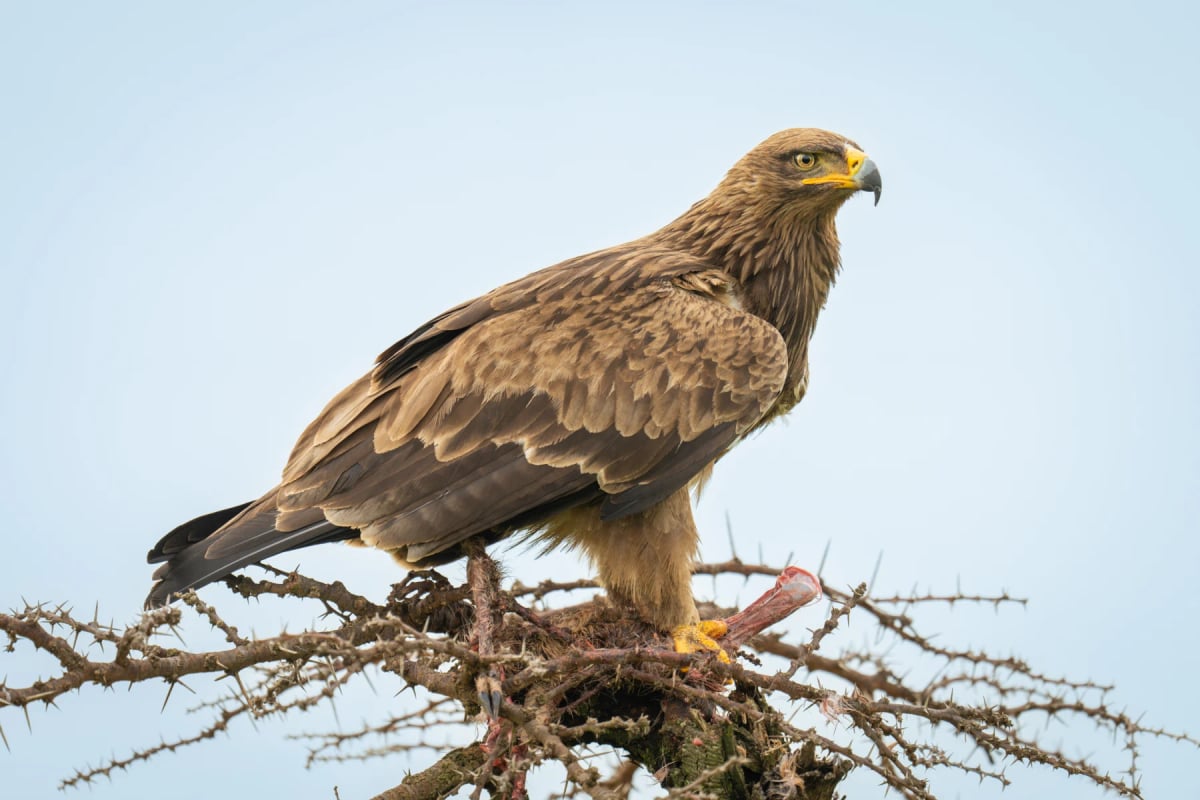
Steppe Eagle
Aquila nipalensis
The Steppe Eagle passes through Georgia during its seasonal migrations between Central Asian breeding grounds and African wintering areas. Travelers can spot these large, dark brown raptors soaring over the Caucasus ridges and river valleys, riding thermals as they move south in autumn and north in spring. Classified as Endangered by the IUCN, this eagle faces serious threats from electrocution on power lines and poisoning across its range.
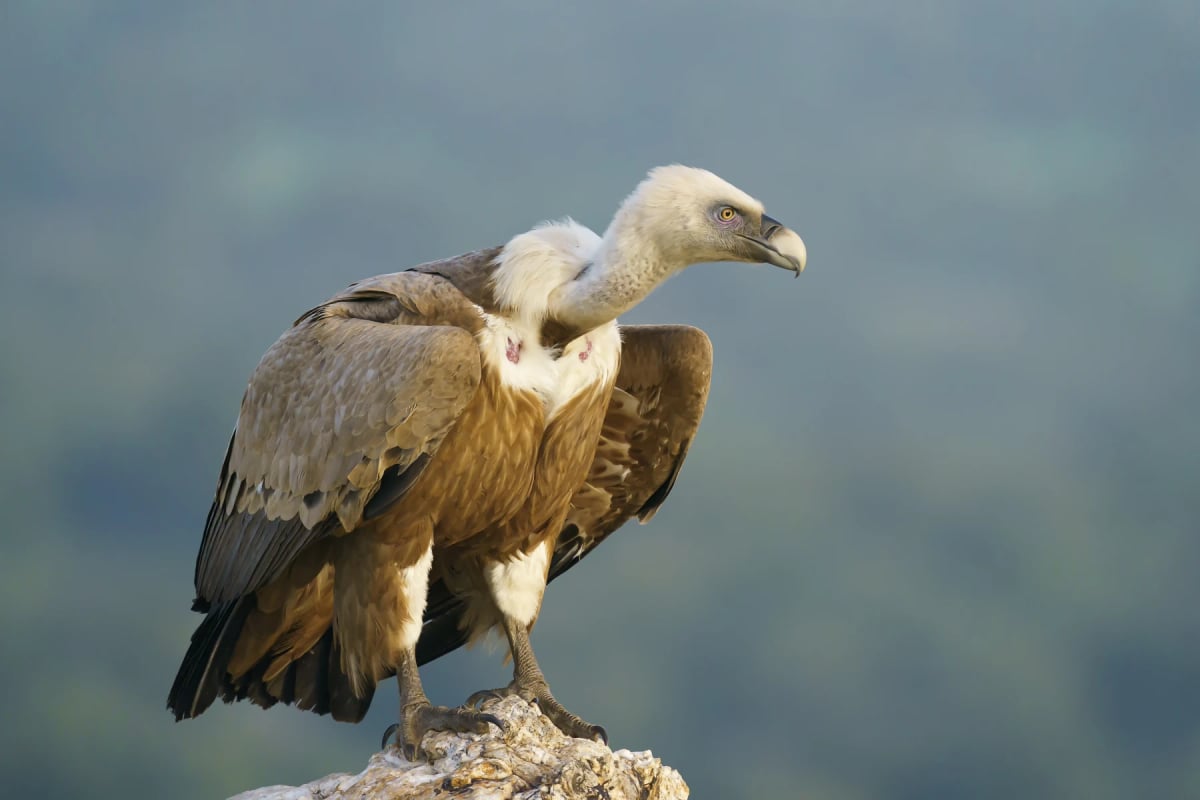
Griffon Vulture
Gyps fulvus
The griffon vulture is a familiar sight in Georgia's Greater and Lesser Caucasus mountain ranges, where it nests on rugged cliff faces and soars on warm air currents above deep river gorges. With a wingspan reaching 2.8 metres, it is one of the largest birds in the region. It plays a vital role in keeping mountain ecosystems clean by feeding on the carcasses of livestock and wild animals. Its IUCN status is Least Concern.
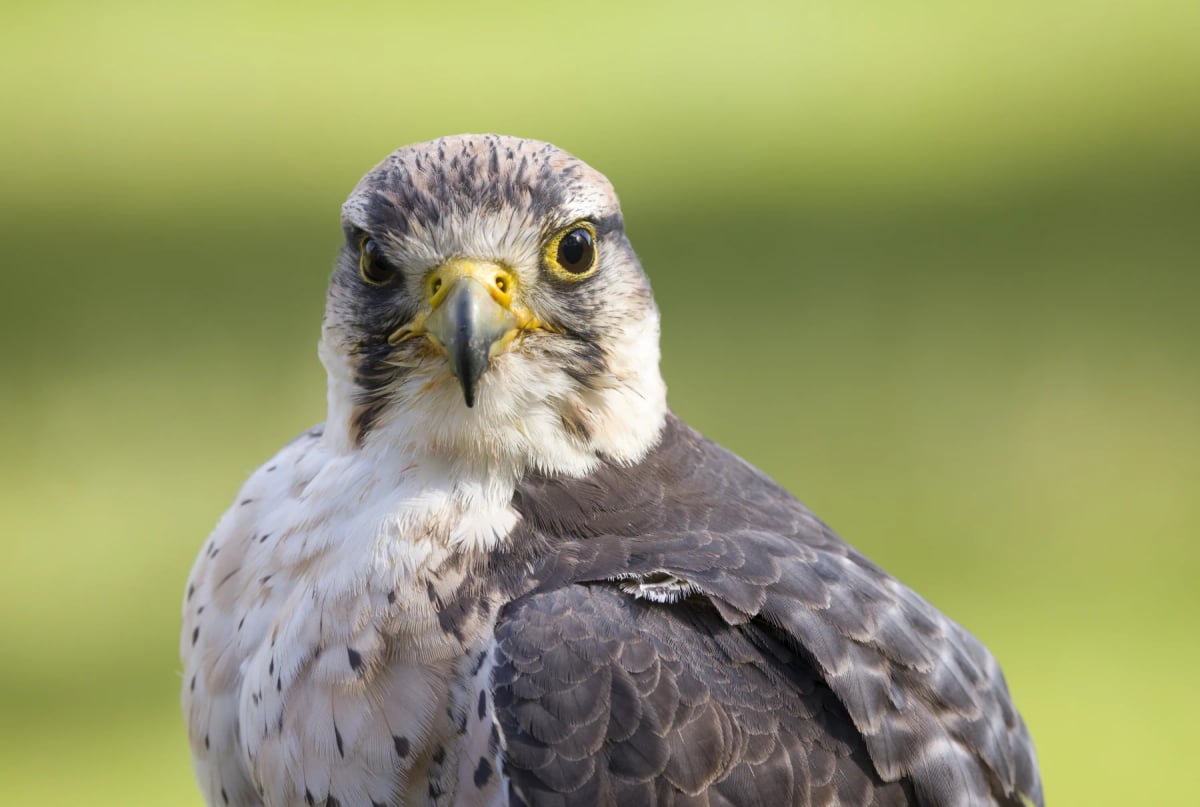
Lanner Falcon
Falco biarmicus
The lanner falcon reaches the northern edge of its range in Georgia, where it inhabits rocky gorges, dry valleys, and open steppe landscapes, particularly in the eastern and southern parts of the country. Nesting occurs on cliff ledges in areas with reliable prey. Populations here are small and considered vulnerable to disturbance. The IUCN lists the species globally as Least Concern, but local numbers in the Caucasus are limited.
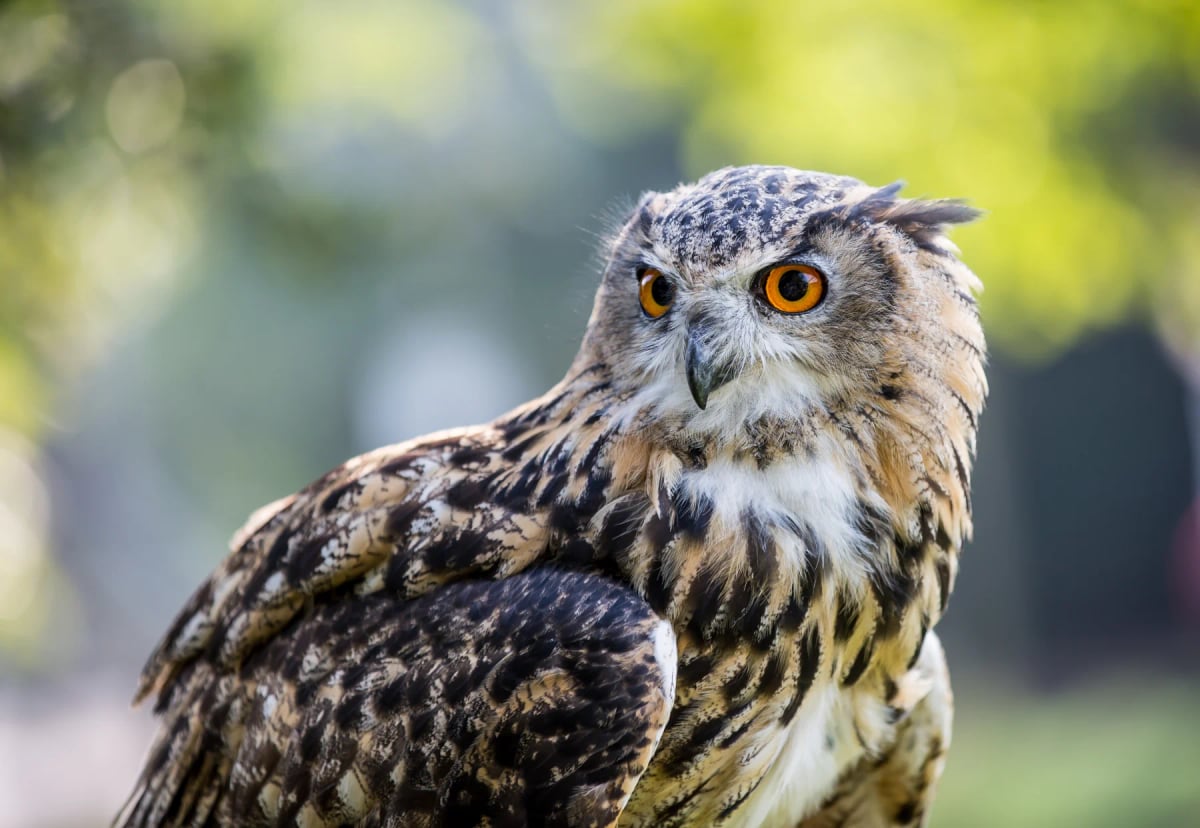
Eagle Owl
Bubo bubo
In Georgia, the eagle owl inhabits the rugged terrain of the Greater and Lesser Caucasus mountain ranges, where it nests on rocky ledges among steep cliffs. It also occurs in the semi-arid lowlands of the east, particularly around the Alazani river valley. Its nocturnal habits make it seldom seen, but its deep booming call echoes across the mountains after dark. The IUCN lists it as Least Concern.
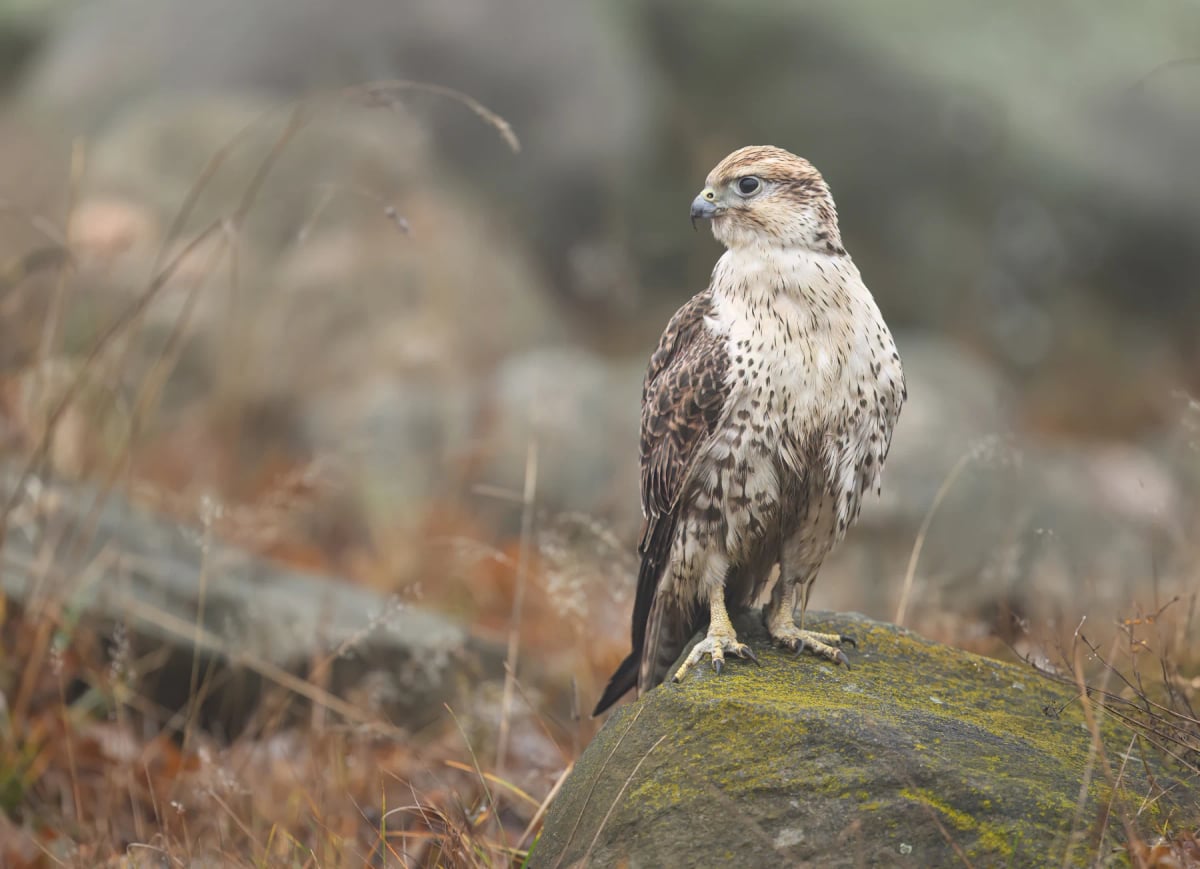
Saker Falcon
Falco cherrug
Georgia sits within the Caucasus region, where saker falcons pass through during migration and where small numbers may winter in the open lowlands near the Kura River valley. The semi-arid steppe terrain of eastern Georgia, particularly around Kartli and Kakheti, provides the kind of open landscape this falcon favors. Regional threats including illegal trapping and power line collisions affect birds moving through the South Caucasus corridor. The IUCN lists the saker falcon as Endangered.
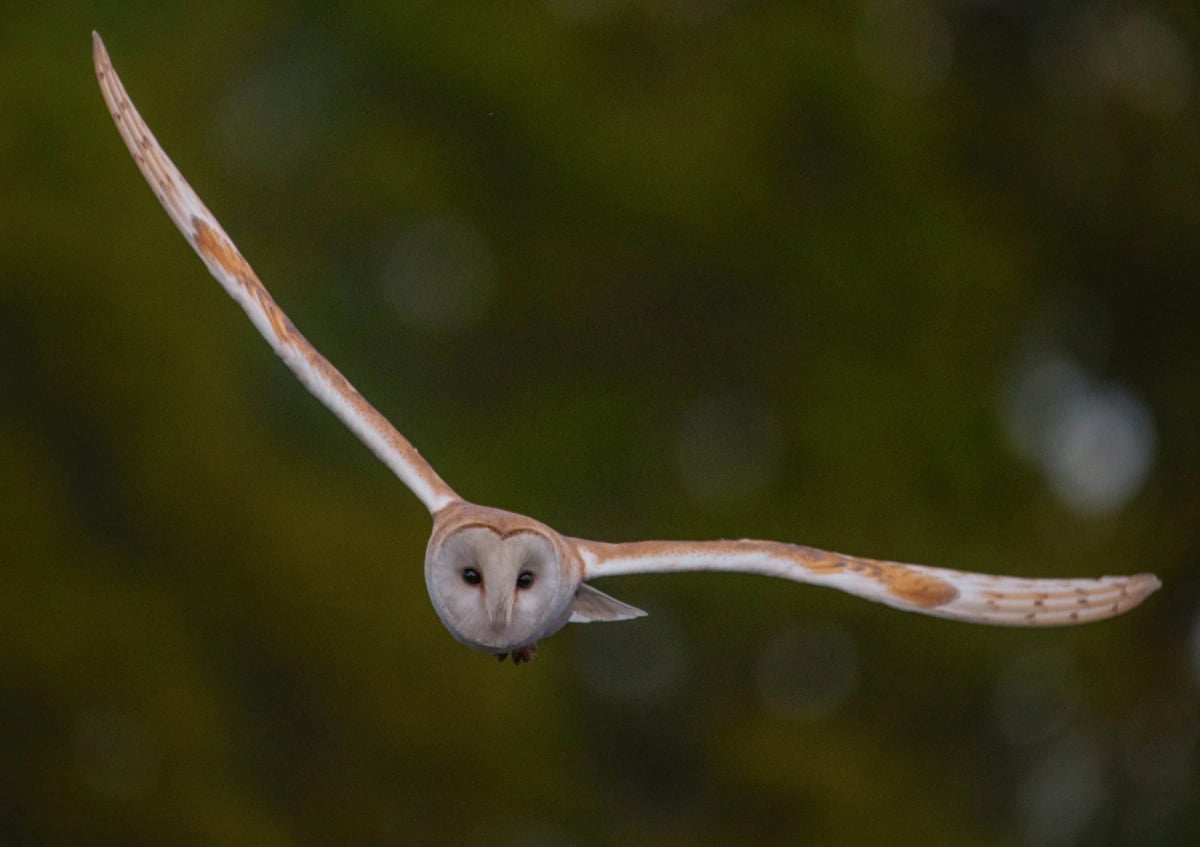
Barn Owl
Tyto alba
The barn owl is found in Georgia in open farmland, scrubland, and rural villages across the lowland Colchic plain, the Kartli valleys, and the Kakheti wine region in the east. It nests in old stone buildings, church towers, and cliff faces, and hunts mice and voles at night. It avoids the high Caucasus mountain zones, where harsh winters and snow cover limit prey availability for extended periods. In the agricultural communities of the Alazani and Kura river valleys it provides useful natural control of rodent populations.
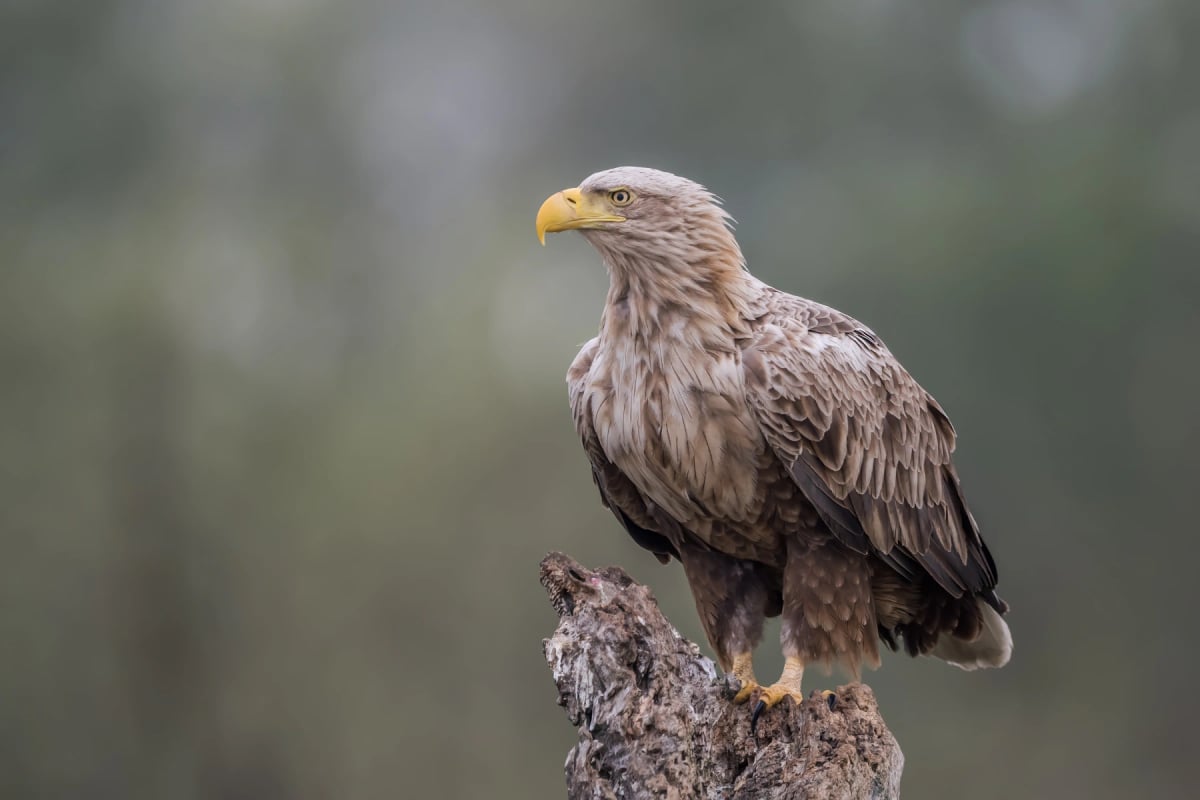
White tailed Eagle
Haliaeetus albicilla
In Georgia, the white-tailed eagle occurs mainly as a winter visitor and passage migrant, appearing along the Black Sea coast, large river valleys, and wetlands in the lowlands. The Colchic lowlands and the Rioni River basin are among the areas where sightings are most frequent. Habitat loss remains a concern for the species in the region. The IUCN lists it as Least Concern.
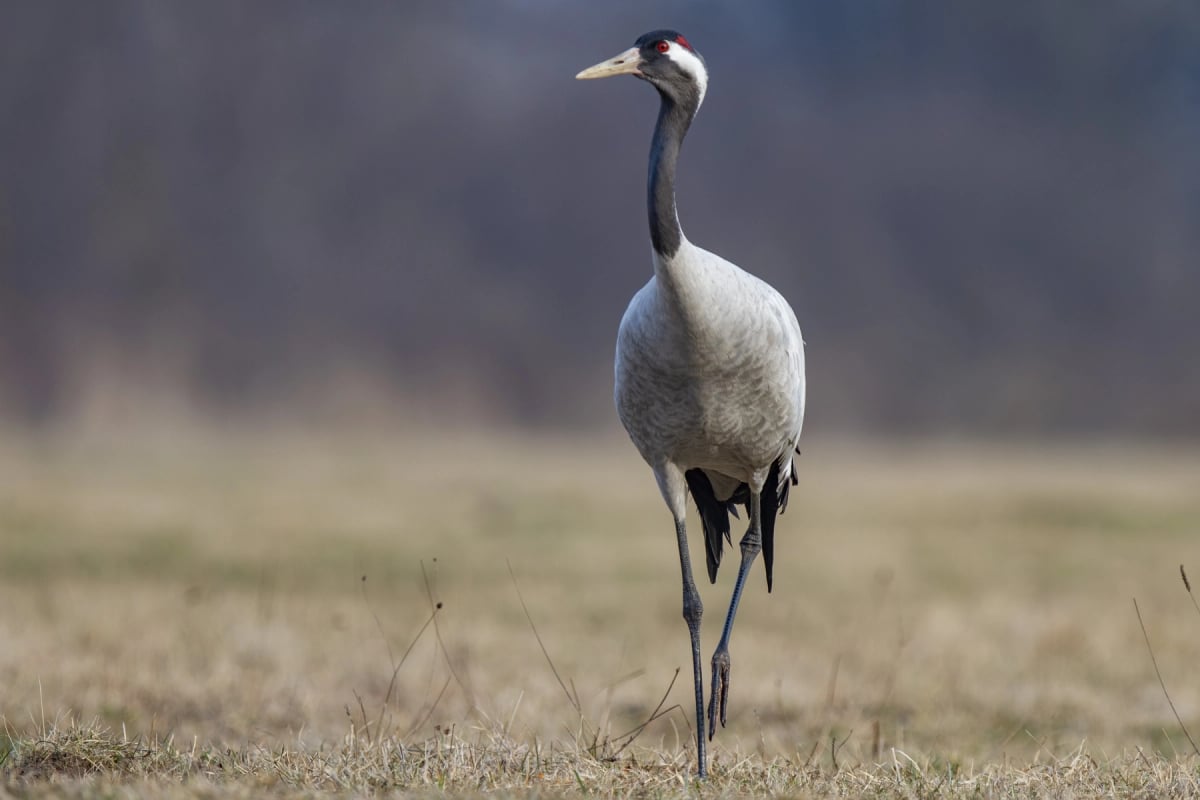
Crane
Grus grus
Georgia sits on an important migration corridor for common cranes moving between breeding grounds in northern Europe and Russia and wintering areas in the Middle East and East Africa. Large flocks cross the South Caucasus in autumn, using river valleys and open lowlands as pathways. The Kolkheti wetlands on the Black Sea coast also provide resting habitat for passing birds. The species reaches 120 centimetres in height and forms lifelong pair bonds. Its IUCN status is Least Concern.
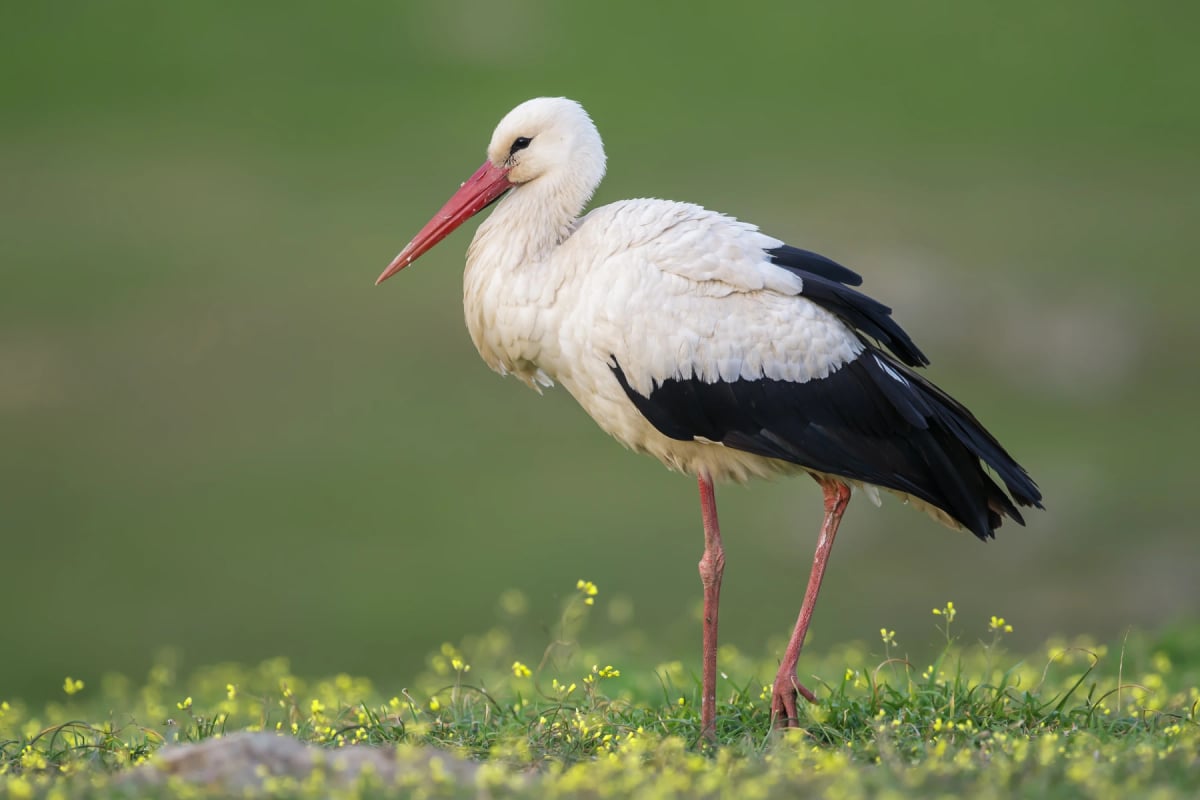
Stork
Ciconia ciconia
Georgia lies within the white stork's breeding range, and pairs nest in villages and farmland areas across the country, particularly in the lowland regions of the east and west. The Colchic wetlands and river valleys offer good foraging habitat. Storks return each spring to reuse their large stick nests, which grow heavier every season. Georgia also sits on a migration corridor linking Europe to Africa. The IUCN lists the species as Least Concern.
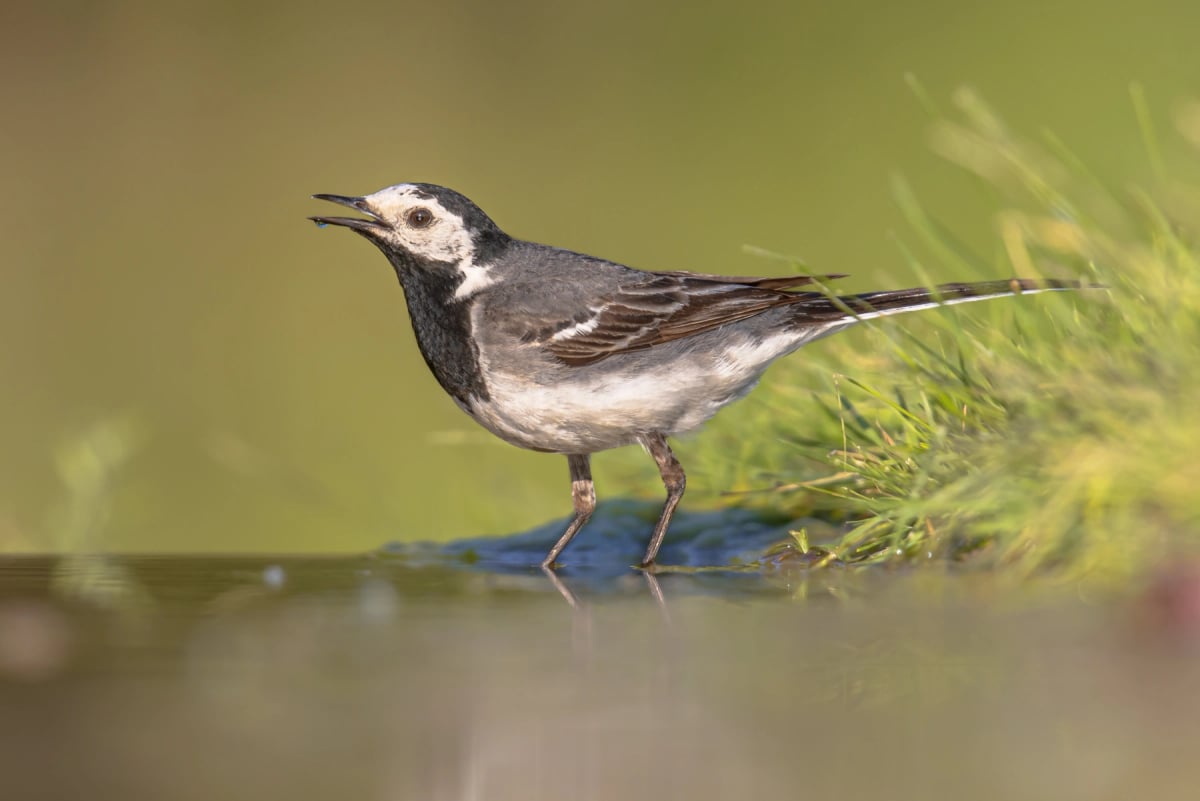
White Wagtail
Motacilla alba
Small black, white and grey bird with a slender tail that bobs up and down as it walks and feeds along the edges of water and open ground.
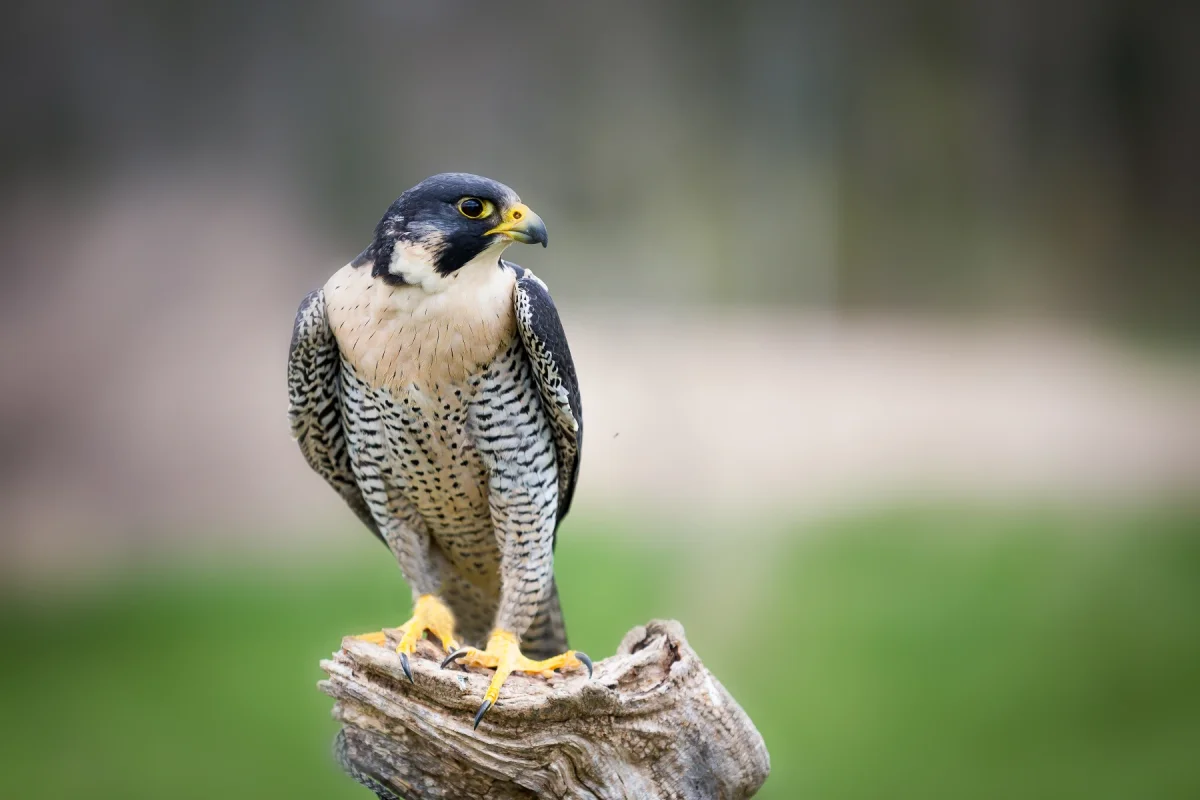
Peregrine Falcon
Falco peregrinus
The peregrine falcon breeds in Georgia, particularly along the rocky gorges of the Greater Caucasus and in the volcanic cliff landscapes of the south. The country lies on a major migratory corridor between Europe and Africa, so passage birds also move through in considerable numbers each autumn and spring. After severe declines caused by DDT in the twentieth century, populations have recovered well. Its current IUCN status is Least Concern.
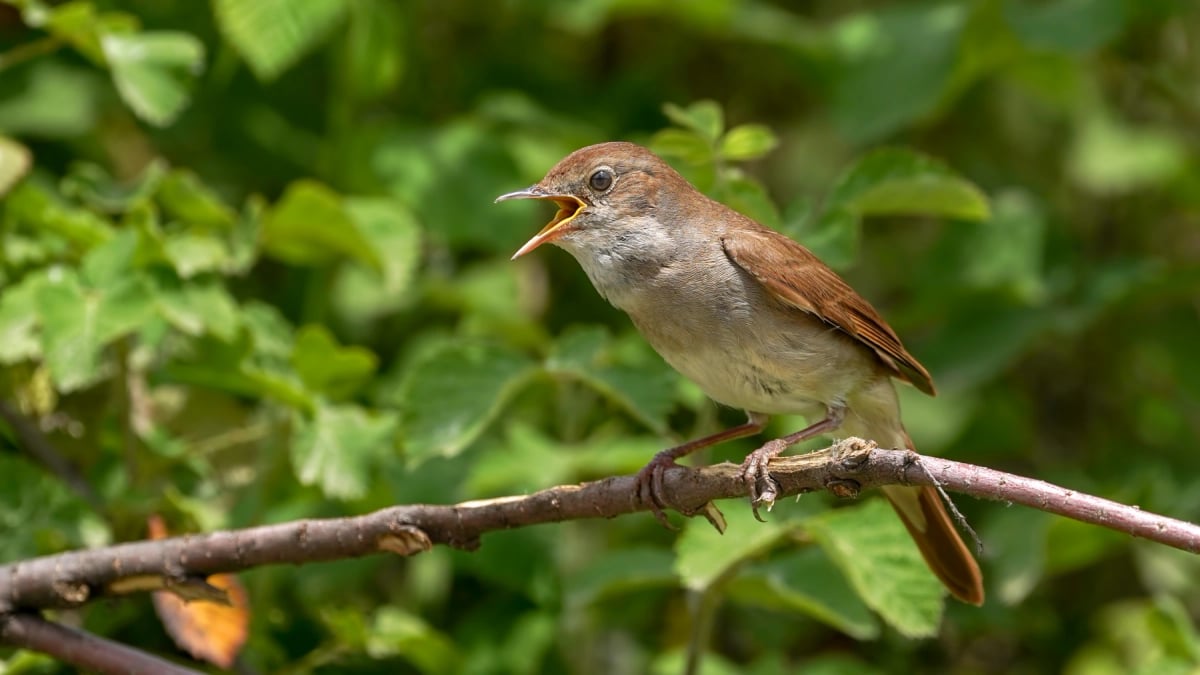
Nightingale
Luscinia megarhynchos
Georgia sits within the natural breeding range of the nightingale, with birds nesting in the river valleys and forested lowlands of the Colchic region along the Black Sea coast, as well as in the Kura and Alazani river corridors to the east. Dense riparian thickets and the edges of broadleaved forest provide ideal conditions. The species is a well known and appreciated songbird throughout the Georgian countryside. It is rated Least Concern by the IUCN.
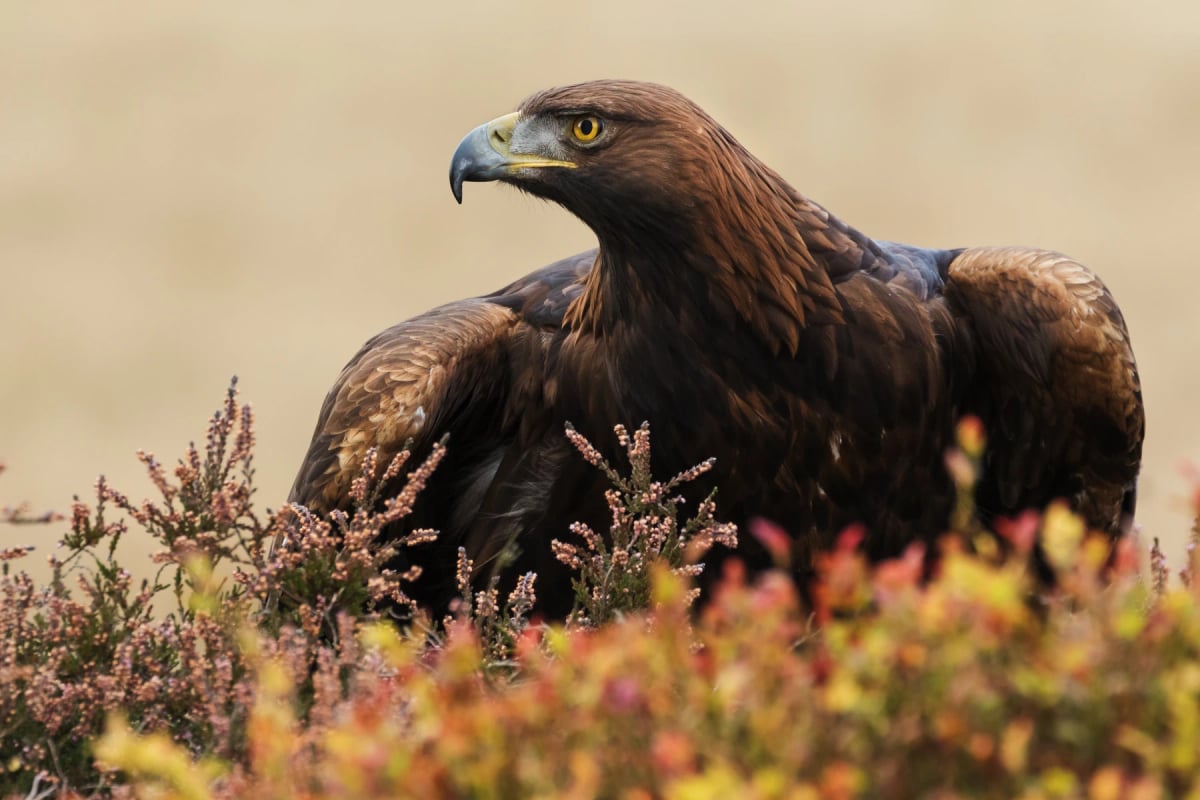
Golden Eagle
Aquila chrysaetos
Georgia's dramatic landscape, shaped by the Greater and Lesser Caucasus ranges, provides excellent habitat for the golden eagle. The species breeds on rocky cliffs and in mountain forests, hunting over the alpine and subalpine zones for hares, rodents, and birds. Georgia's position in the Caucasus, a globally recognised biodiversity hotspot, gives local golden eagle populations added conservation significance. Human disturbance in remote highland areas remains relatively low.
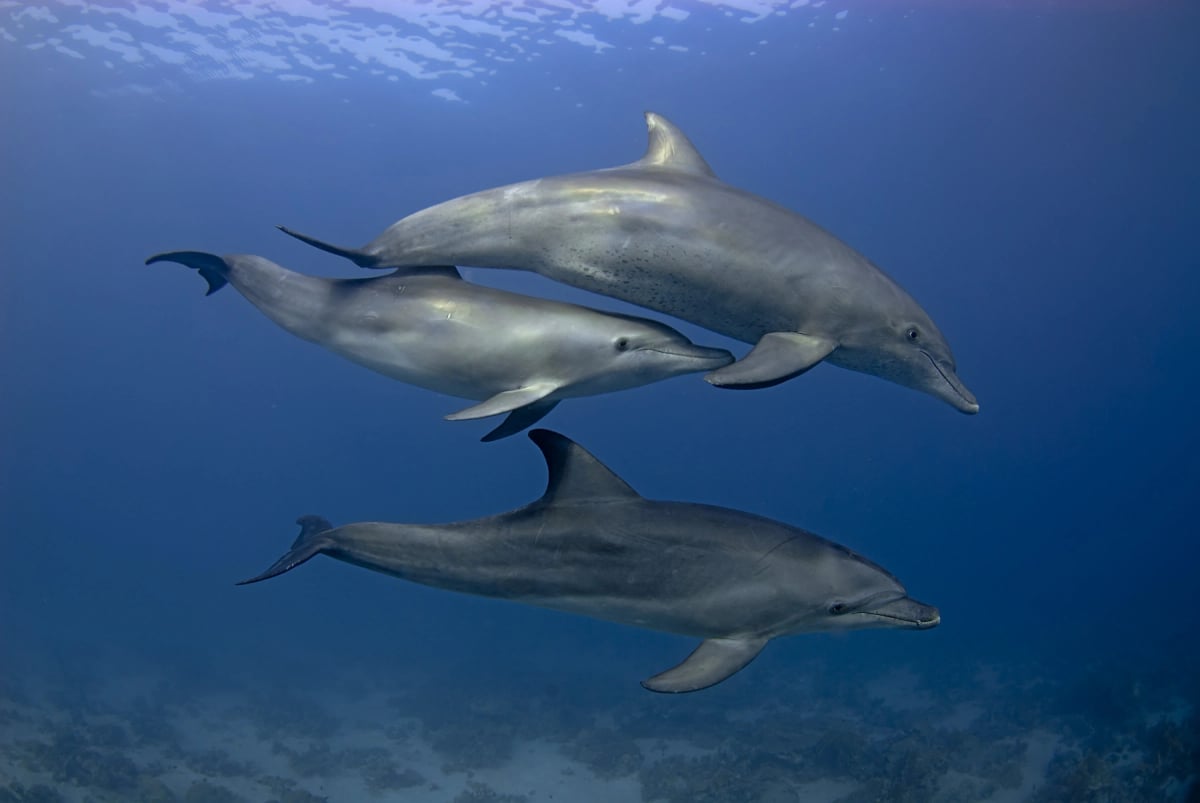
Bottlenose Dolphin
Tursiops truncatus
Bottlenose dolphins are among the cetacean species recorded in the Black Sea along the coast of Georgia. The Black Sea population of bottlenose dolphins is genetically distinct from those in the Atlantic and has faced significant pressure from historical hunting, bycatch, and habitat degradation. Georgian coastal waters near Batumi and the broader eastern Black Sea shelf provide foraging habitat for these dolphins. Regional conservation cooperation is important for the survival of this population. The IUCN lists the species as Least Concern.
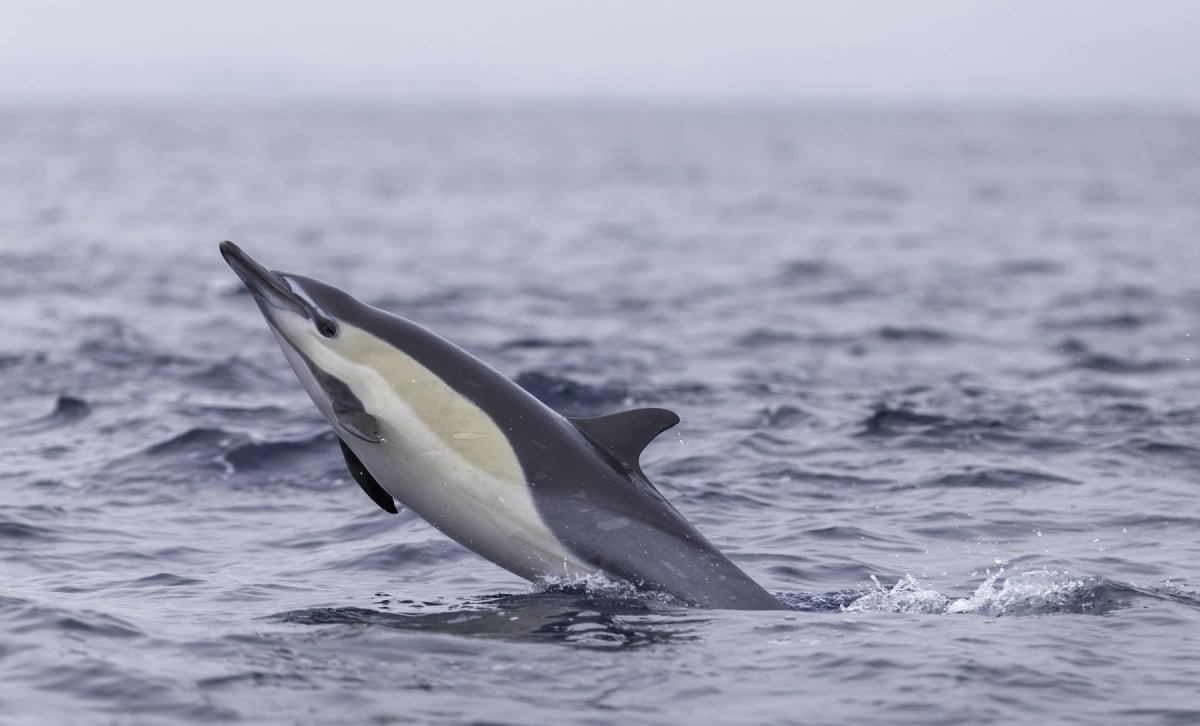
Common Dolphin
Delphinus delphis
The common dolphin is found in the Black Sea along the coast of Georgia, where it shares its habitat with two other dolphin species. Black Sea populations face significant pressures, including pollution, prey depletion due to overfishing, and entanglement in fishing gear. These local dolphins are smaller on average than their oceanic counterparts and represent a population of particular concern to regional conservationists. IUCN status: Least Concern.
Researched and written by Juan Pablo. Sources: IUCN Red List, scientific literature and regional field guides. Last updated: .