Polar Bear
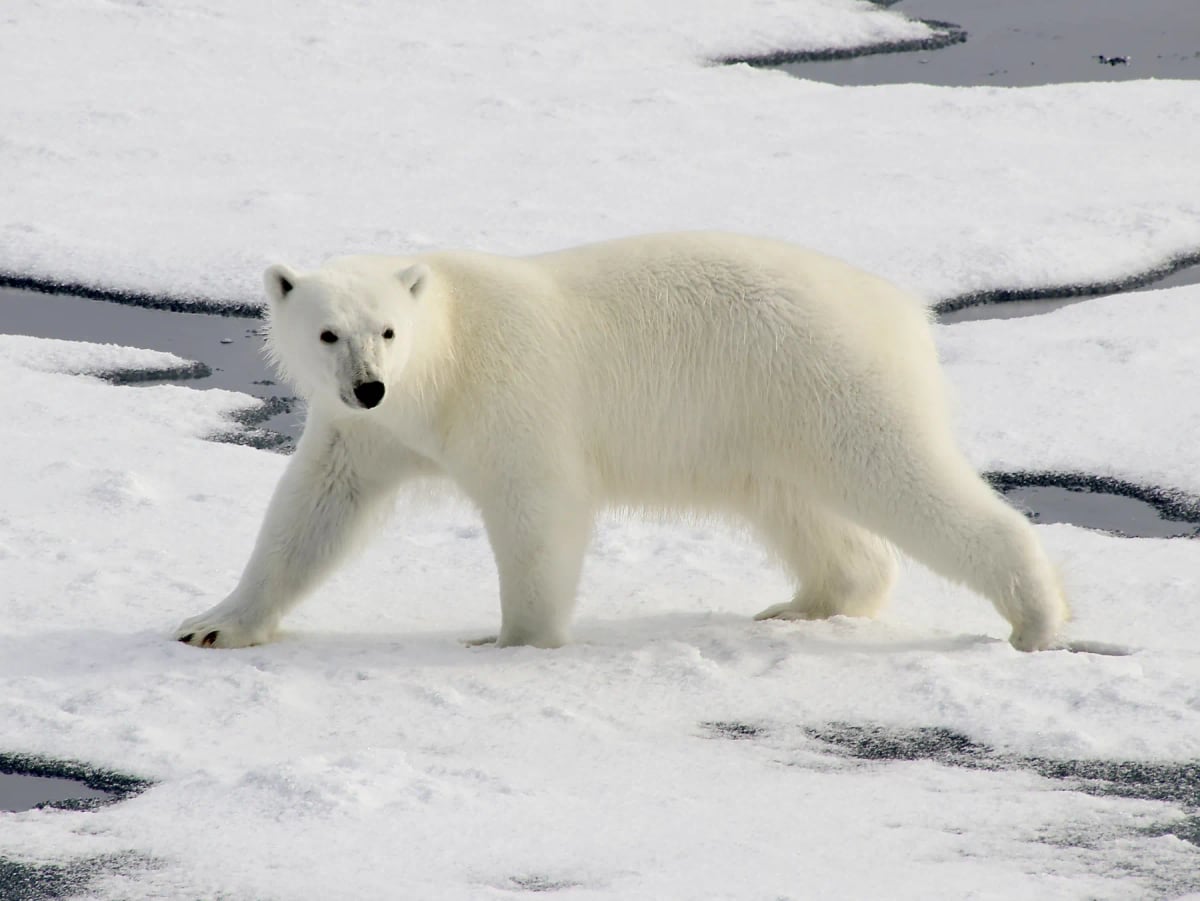
The polar bear (Ursus maritimus) is the largest bear on Earth and the top predator of the Arctic. Adults can weigh over 600 kg, yet they move with surprising ease across sea ice and open water. Their skin is black beneath a coat of transparent guard hairs that scatter light and appear white, and a thick layer of blubber keeps them warm in temperatures that drop far below freezing. Polar bears depend almost entirely on ringed and bearded seals for food, ambushing them at breathing holes or hauling-out spots on the ice. As the climate warms, sea ice is forming later and breaking up earlier each year, cutting into the time bears have to hunt and build up the fat reserves they need to survive. The IUCN lists the species as Vulnerable, with an estimated global population of between 22,000 and 31,000 individuals.
Habitat
Polar bears are found across the Arctic Circle, ranging through Canada, Greenland, Norway's Svalbard archipelago, Russia, and Alaska. They are uniquely tied to sea ice, spending most of their lives on frozen ocean surfaces rather than on land. The ice acts as a platform for hunting, resting, and sometimes traveling enormous distances in search of food. Some populations venture onto land during summer when ice retreats, surviving on fat reserves until conditions allow them to return. Coastal areas near polynyas, which are patches of open water surrounded by ice, tend to be especially productive hunting grounds. The quality of their habitat is directly linked to temperature: as Arctic warming accelerates, the sea ice these bears depend on shrinks in extent and duration each year.
Diet
Seals form the core of the polar bear's diet, with ringed seals being by far the most important prey, followed by bearded seals. Bears are remarkably patient hunters. They practice a technique called still hunting, waiting motionless beside a seal's breathing hole in the ice for hours until the animal surfaces. They will also stalk seals resting on top of the ice, crawling forward slowly to close the distance before launching a short charge. A successful hunt can provide enough fat to sustain a bear for many days. When seals are scarce, polar bears may eat walrus, beluga whales, bird eggs, or even kelp, though none of these alternatives come close to replacing the energy gained from seal blubber.
Adaptations
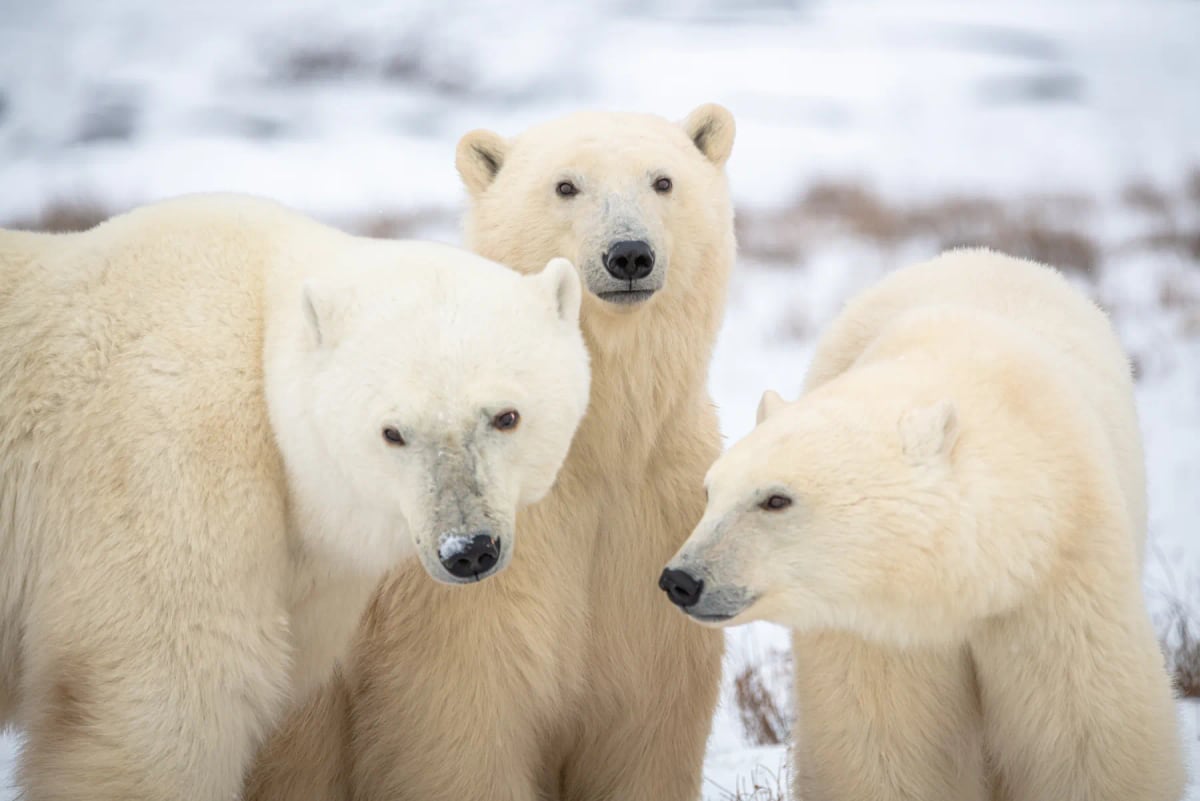
Few animals are as well equipped for extreme cold as the polar bear. Beneath its fur, the skin is black, which helps absorb heat from sunlight. The outer coat is made up of guard hairs that are transparent and hollow, scattering light so the bear appears white or yellowish against snow and ice. Below the skin lies a layer of blubber up to 11 centimetres thick that insulates the body and serves as an energy store during lean periods. Their large, slightly webbed paws make them capable swimmers over long distances, and rough pads on the soles give them grip on slippery ice. A strong sense of smell allows them to detect a seal beneath a metre of snow, making it one of their most valuable hunting tools.
Behavior and danger to humans
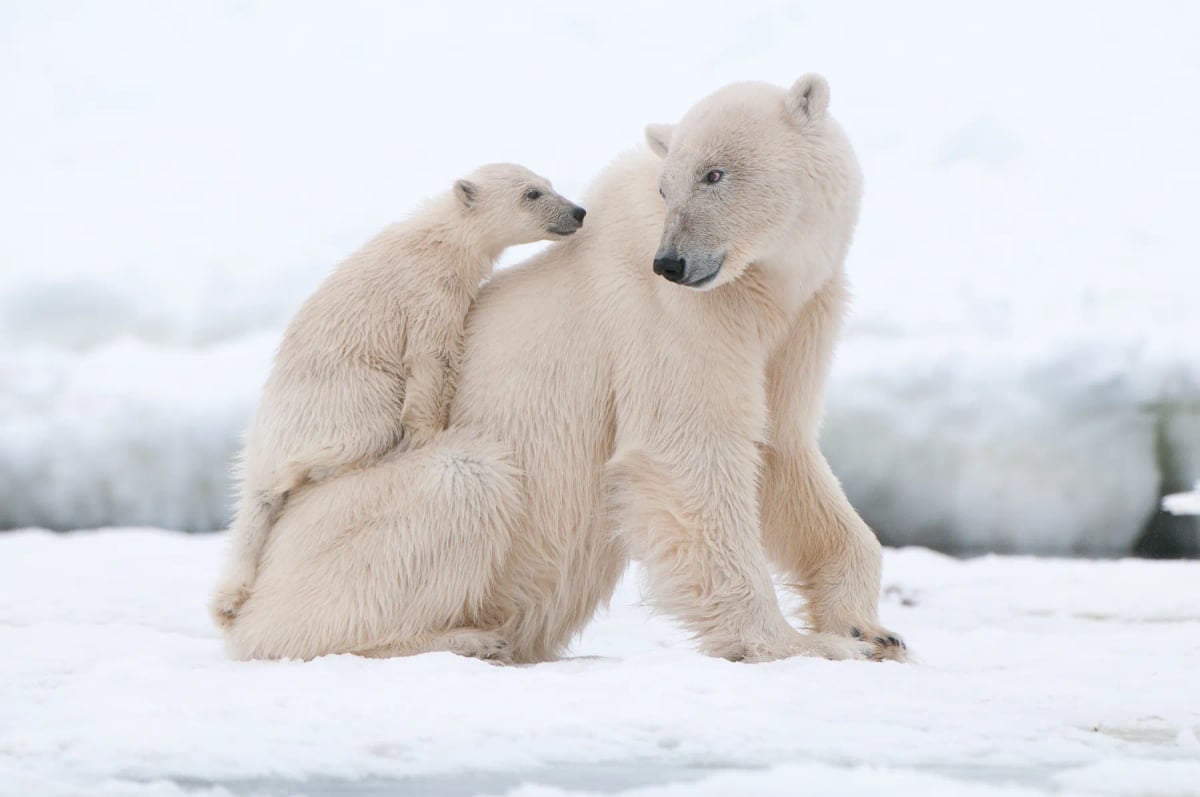
Outside of mothers with cubs, polar bears lead largely solitary lives and roam vast territories across the ice. They are generally curious animals and will investigate unfamiliar objects or smells without much hesitation. That curiosity, combined with their size and strength, makes them genuinely dangerous to people. Unlike most bears, polar bears are active predators with no natural fear of humans, and a hungry bear in particular will approach settlements, camps, or people directly. Fatal attacks, while rare, have occurred in places like Svalbard and northern Canada. Communities and research teams in polar bear territory typically carry flares and firearms as a precaution. Females give birth in snow dens, usually to twins, and are fiercely protective of their young during the first two years of a cub's life.
Conservation
The IUCN classifies the polar bear as Vulnerable, with a global population estimated at between 22,000 and 31,000 individuals spread across 19 recognized subpopulations. Climate change is the most serious threat the species faces. As global temperatures rise, Arctic sea ice forms later in autumn and breaks up earlier in spring, reducing the time bears can spend hunting seals and building up the fat reserves they need to survive and reproduce. Some subpopulations in Hudson Bay have already shown declines in body condition and cub survival tied directly to shorter ice seasons. Hunting is regulated across all five range countries under agreements that have been in place since the 1970s. Even so, without meaningful reductions in greenhouse gas emissions, scientists project that polar bear numbers will fall significantly by the end of this century.
Where it is found
The Polar Bear can be found in places such as:
Researched and written by Juan Pablo. Sources: IUCN Red List, scientific literature and regional field guides. Last updated: .
Technical factsheet
Frequently Asked Questions
How fast can a polar bear run?
Polar bears can reach speeds of around 40 km/h in short bursts on land, which is surprisingly quick for an animal of their size. However, they tire fast and rarely chase prey on land. In water, they are strong swimmers and have been recorded traveling over 300 km without stopping, paddling at a steady pace using their large front paws.
How long do polar bears live?
In the wild, polar bears typically live between 20 and 25 years, though most do not reach the upper end of that range. Males generally live shorter lives than females. In captivity, with a steady food supply and no harsh winters to endure, some individuals have lived past 30 years. Survival in the wild depends heavily on a bear's ability to hunt seals successfully.
Are polar bears really white?
Not exactly. A polar bear's skin is actually black, and its fur is made up of transparent, colorless hairs. They look white because those hairs scatter and reflect visible light, much like how snow appears white. In certain lighting conditions, such as at sunset, their coats can take on a yellow or cream tone. The black skin underneath helps the bear absorb warmth from sunlight.
How much does a polar bear weigh?
Adult male polar bears typically weigh between 350 and 600 kg, though some individuals have exceeded 700 kg after a successful hunting season. Females are considerably smaller, usually ranging from 150 to 250 kg. Weight can vary dramatically throughout the year. Before the sea ice breaks up in spring, a bear may be much heavier than it is after spending a long ice-free summer on land.
Why are polar bears endangered?
Polar bears are currently listed as Vulnerable, not yet endangered, but their future is a serious concern. The main threat is climate change. As Arctic temperatures rise, sea ice melts earlier each spring and forms later each autumn, leaving bears less time to hunt seals and build up fat reserves. Some populations have already declined. Without major cuts in global emissions, scientists expect the situation to worsen significantly this century.
Do polar bears hibernate?
Most polar bears do not hibernate the way brown or black bears do. Adult males and females without cubs remain active throughout the winter, hunting on the sea ice. Only pregnant females enter a den, where they give birth and nurse their cubs through the coldest months. They enter a state similar to hibernation during this time, but it is not the same deep, months-long sleep seen in other bear species.
How many polar bears are left in the world?
Current estimates place the global polar bear population at between 22,000 and 31,000 individuals, spread across 19 recognized subpopulations in Canada, Greenland, Norway, Russia, and Alaska. Some subpopulations are considered stable, others are declining, and the status of several remains uncertain due to the difficulty of conducting surveys in such remote and harsh conditions. Climate change is the main factor expected to drive future population changes.