Axolotl
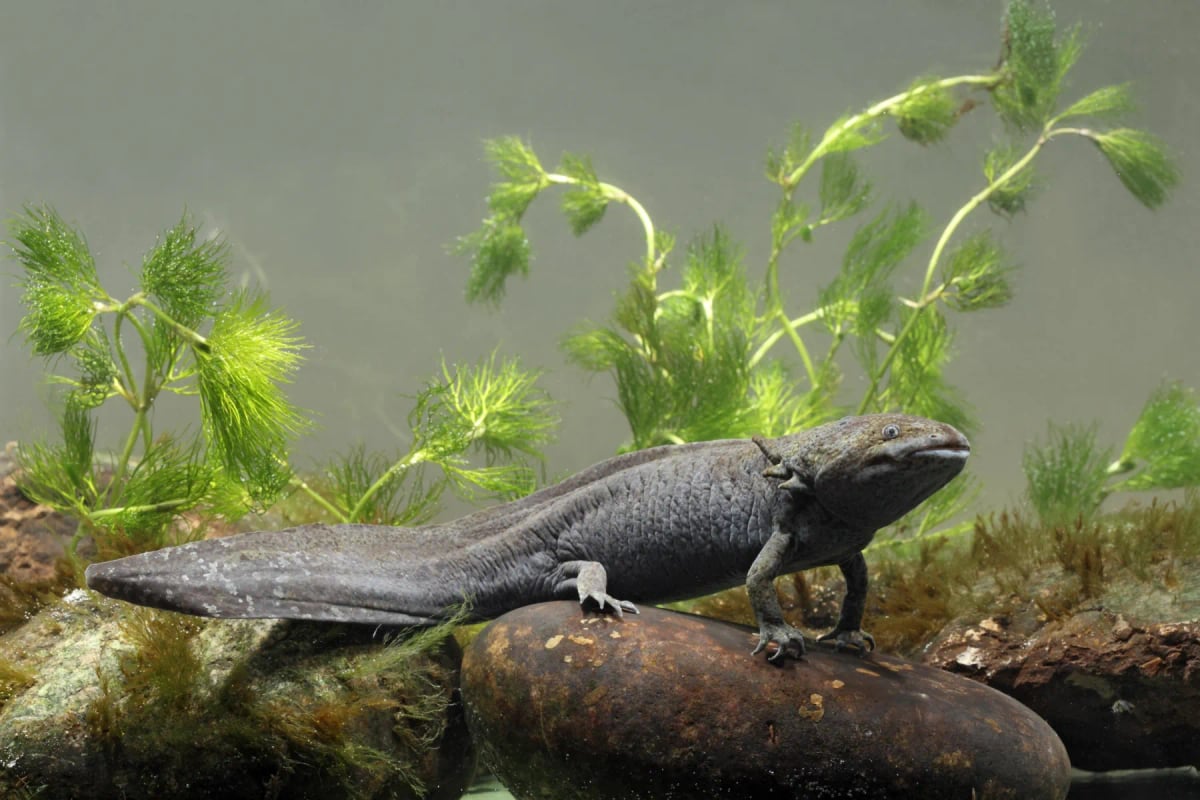
The axolotl (Ambystoma mexicanum) is a neotenic salamander endemic to the lake system of Xochimilco in southern Mexico City. Unlike most amphibians, it never undergoes full metamorphosis, retaining its feathery external gills and remaining fully aquatic throughout its life. It is one of the most scientifically remarkable vertebrates known, capable of regenerating entire limbs, segments of the spinal cord, and portions of the heart and brain without scarring. Once found across several high-altitude lakes in the Valley of Mexico, it now survives in a drastically reduced habitat. Wild populations have collapsed by more than 99% since 1998, with current estimates placing between 50 and 1,000 individuals remaining in the wild. The species is listed as Critically Endangered by the IUCN and faces ongoing threats from water pollution, urban expansion, and invasive fish species. In captivity, however, axolotls are abundant, kept in homes, labs, and aquariums worldwide.
Habitat and distribution
Wild axolotls are now confined to the canals and remnant wetlands of Lake Xochimilco, a UNESCO World Heritage Site on the southern edge of Mexico City, at around 2,240 metres above sea level. Historically, the species also occupied nearby lakes Chalco, Texcoco, and Zumpango, but extensive drainage projects and urban growth eliminated those habitats over the 20th century. Within Xochimilco, axolotls depend on the chinampas system, a network of traditional floating gardens whose root structures and sheltered canals provide food and refuges. Water quality in this system has deteriorated significantly due to runoff, wastewater, and the presence of invasive fish.
Regeneration capacity
The axolotl's regenerative abilities are unmatched among vertebrates. It can fully regrow amputated limbs, including bone, muscle, nerves, and skin, within weeks, with no scar tissue forming at the site. It can also regenerate segments of the spinal cord after injury, restore damaged portions of the heart muscle, and even recover parts of the brain. These capabilities have made the axolotl one of the most studied animals in regenerative medicine and developmental biology. Scientists hope that understanding the molecular mechanisms behind its healing process could eventually lead to advances in human tissue repair.
Cultural significance
The axolotl holds a deep place in Mexican culture, stretching back to the Aztec civilization. In Nahuatl mythology, it was linked to Xólotl, the dog-headed god of lightning and death, who was said to have transformed into the creature to avoid sacrifice. The name axolotl itself comes from Classical Nahuatl and means roughly 'water monster' or 'water dog.' Today the axolotl appears on the Mexican 50 peso note and is recognized internationally as a symbol of the country's biodiversity. Its pop culture presence has also grown significantly, with appearances in video games, animation, and online media drawing global attention to its conservation status.
Conservation
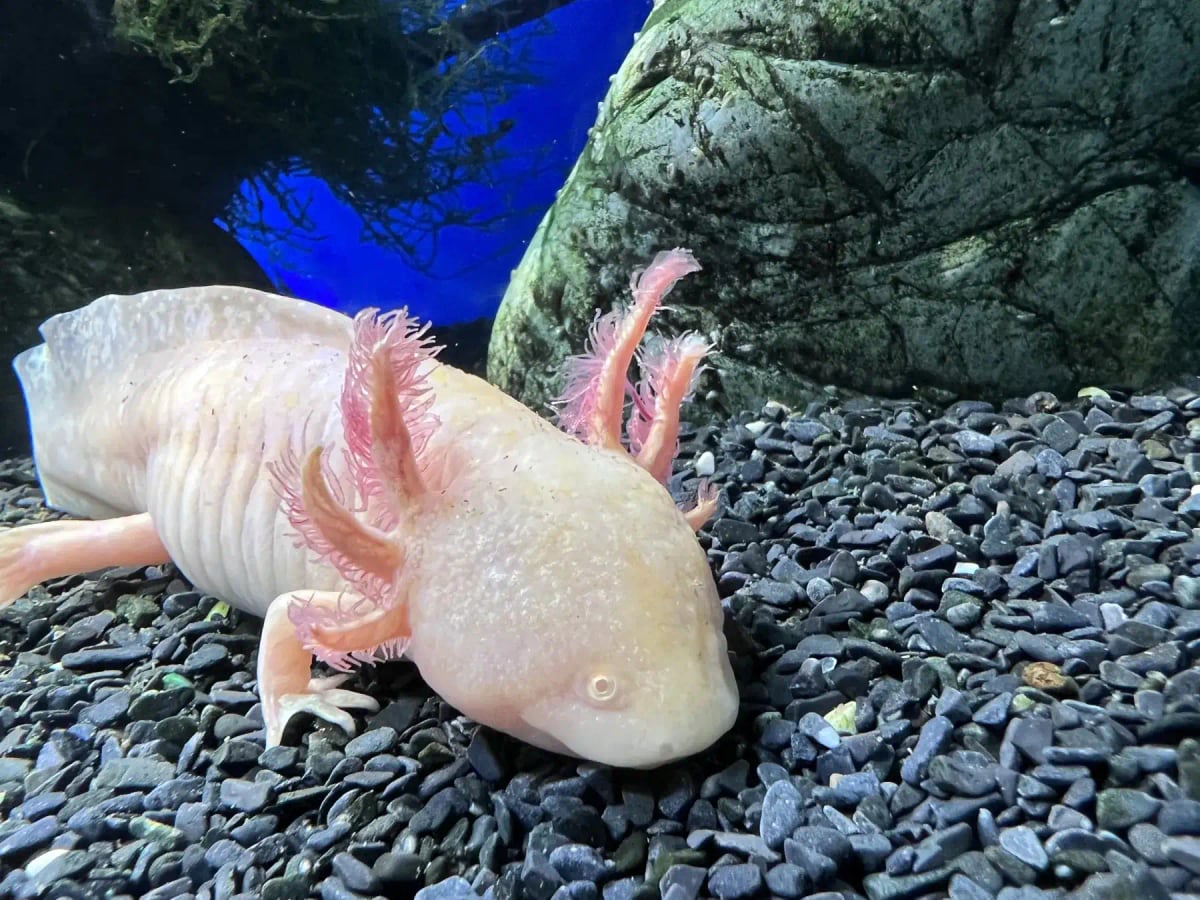
The axolotl is Critically Endangered, with wild numbers estimated at just 50 to 1,000 individuals. Its population fell by more than 99% between 1998 and 2014, driven by water pollution, urban encroachment, and invasive species including carp, tilapia, and African cichlids that prey on eggs and juveniles. Conservation efforts focus on restoring water quality in Xochimilco, establishing fish-free refuges within the chinampas system, and carefully reintroducing captive-bred individuals to the wild. A 2025 study confirmed that captive-bred axolotls released into protected canal sections were able to survive, offering cautious hope for future reintroduction programs.
Captivity
While the wild axolotl teeters on the edge of extinction, captive populations number in the millions worldwide. Axolotls are bred extensively in research laboratories, where they have been used in biological studies for over a century, and are also popular as exotic pets across Europe, Asia, and North America. They require cool water between 14 and 20 degrees Celsius, low flow, and a diet of live or frozen invertebrates. In Mexico, their sale and possession are regulated under wildlife protection laws. Researchers stress that captive abundance does not offset wild decline, as laboratory strains have diverged genetically from the remaining wild population.
Researched and written by Juan Pablo. Sources: IUCN Red List, scientific literature and regional field guides. Last updated: .
Technical factsheet





Frequently Asked Questions
Why is the axolotl endangered?
The axolotl is Critically Endangered due to the near-total destruction of its natural habitat. Lake Xochimilco, the only place where wild axolotls exist, has shrunk dramatically as Mexico City expanded around it. Water pollution from urban runoff and wastewater has severely degraded the canals, while invasive fish such as carp, tilapia, and African cichlids prey on axolotl eggs and juveniles. Wild populations fell by more than 99% between 1998 and 2014, with current estimates placing only 50 to 1,000 individuals remaining.
Can axolotls really regenerate their limbs?
Yes, and their regenerative abilities go far beyond limbs. Axolotls can fully regrow amputated legs, feet, and toes, including bone, muscle, nerves, and skin, with no scar tissue forming. They can also repair segments of the spinal cord after injury, recover damaged portions of the heart muscle, and restore parts of the brain. This process typically takes a few weeks for a limb. No other vertebrate is known to regenerate complex structures so completely, which is why axolotls are central to regenerative medicine research worldwide.
Where does the axolotl live in the wild?
Wild axolotls exist only in the canal system of Lake Xochimilco, located on the southern edge of Mexico City at about 2,240 metres above sea level. Historically the species also inhabited nearby lakes Chalco, Texcoco, and Zumpango, but drainage projects and urban growth eliminated those habitats during the 20th century. Today the species survives in a small network of canals within the chinampas, the traditional floating garden system of Xochimilco, which is a UNESCO World Heritage Site.
What does the axolotl eat?
Axolotls are carnivores that hunt by suction, drawing prey into their mouths with a rapid gulp. In the wild they feed on small invertebrates including worms, insect larvae, small crustaceans, and mollusks, as well as small fish when available. They have small, rudimentary teeth that are not used for chewing but help grip prey. In captivity they are typically fed bloodworms, brine shrimp, earthworms, and specially formulated pellets. They are ambush predators and tend to be most active at night.
What is the axolotl's connection to Aztec mythology?
In Nahuatl mythology, the axolotl was linked to Xólotl, the dog-headed god associated with lightning, fire, and the underworld, who was believed to guide the souls of the dead through the underworld. According to legend, Xólotl transformed into an axolotl to escape being sacrificed along with the other gods during the creation of the sun and moon. The name axolotl comes from Classical Nahuatl and is generally interpreted as meaning 'water dog' or 'water monster.' The species was also eaten by the Mexica people as a food source.
Are axolotls good pets?
Axolotls are kept as pets in many countries and can thrive in captivity with proper care, though they have specific requirements. They need cool water between 14 and 20 degrees Celsius, as higher temperatures cause stress and illness. They require a spacious aquarium with gentle filtration, no bright lighting, and hiding spots. They should not be housed with other fish. In Mexico, keeping axolotls as pets is regulated under wildlife protection laws. Elsewhere, ownership rules vary by country and region, so checking local regulations before acquiring one is important.