Sea Turtle

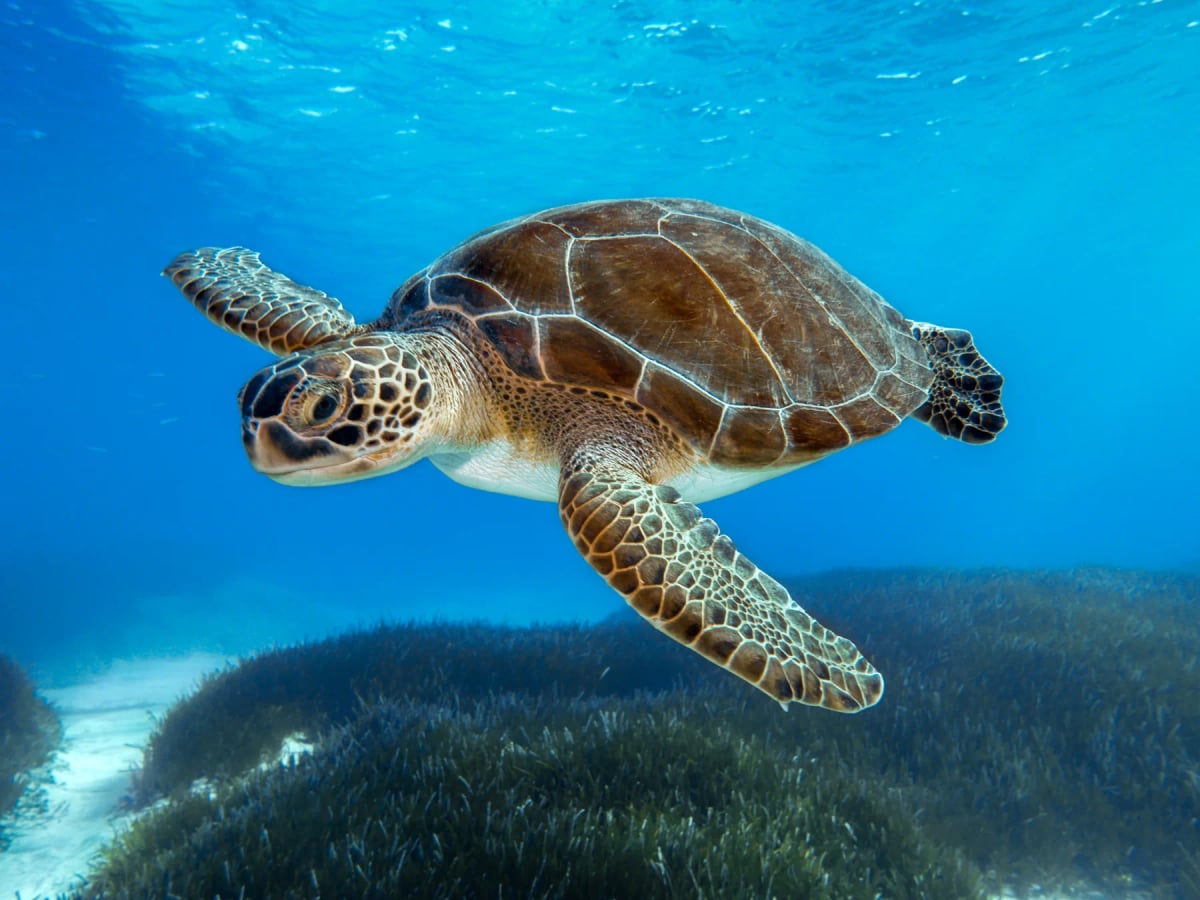
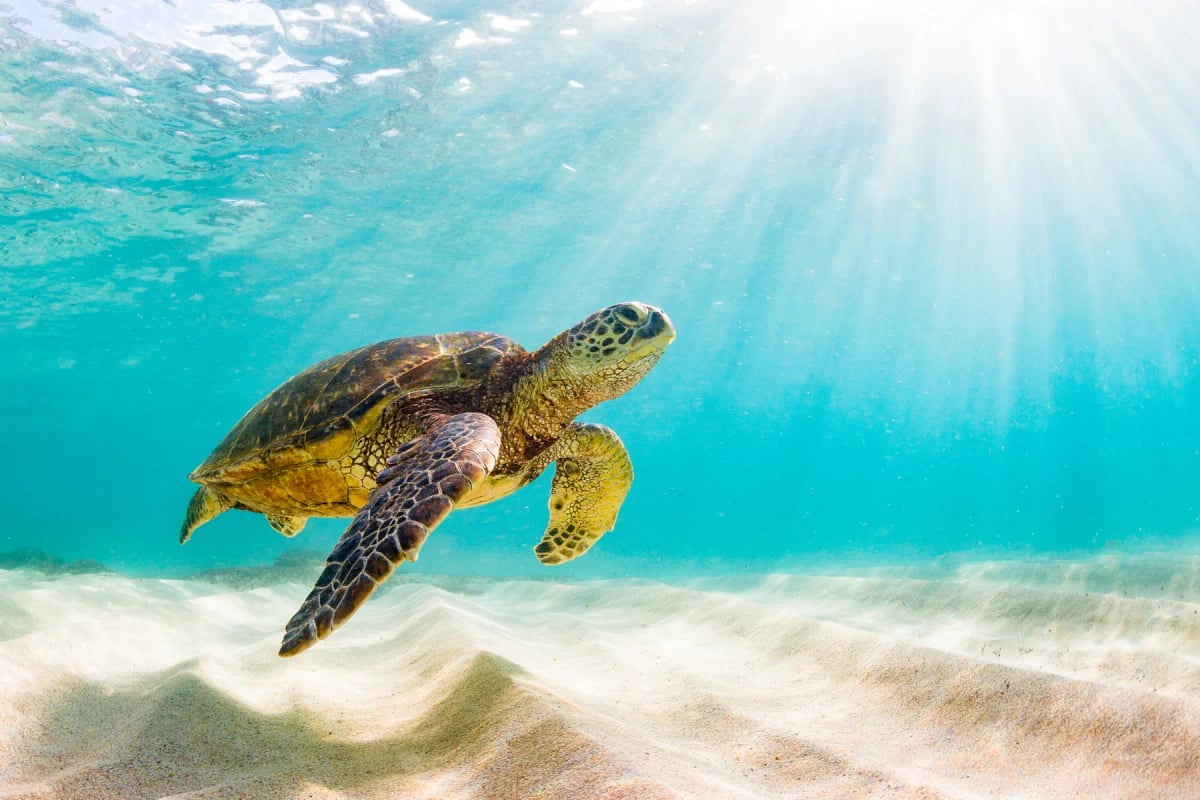
Sea turtles are ancient reptiles that have roamed the world's oceans for over 100 million years. Seven species survive today, ranging from the small Kemp's ridley to the massive leatherback. They migrate thousands of kilometers between feeding grounds and nesting beaches, guided by Earth's magnetic field with remarkable precision. All seven species face serious threats from bycatch, plastic pollution, coastal development and rising temperatures that disrupt egg incubation and alter the sex ratio of hatchlings.
Habitat and distribution
Sea turtles inhabit tropical and subtropical waters across the Atlantic, Pacific and Indian Oceans, spending virtually their entire lives at sea. Most species stay in warm coastal areas where food is plentiful, though the leatherback regularly ventures into cold temperate and even subarctic seas to follow jellyfish blooms. Green turtles favor shallow seagrass beds along coastlines, while loggerheads tend to forage in deeper offshore waters. All seven species return to sandy beaches to nest, typically on the same coast or even the same beach where they hatched years earlier.
Diet
Diet varies considerably across the seven species. The leatherback feeds almost exclusively on jellyfish and other gelatinous invertebrates, while the hawksbill specializes in sponges on coral reefs. Green turtles shift from an omnivorous diet as juveniles to eating mainly seagrass and algae as adults. Loggerheads and Kemp's ridleys target hard prey like crabs and mollusks, crushing them with powerful jaws. Olive ridleys are more opportunistic, eating crustaceans, fish and jellyfish depending on what is available in their current feeding grounds.
Behavior
Sea turtles are solitary animals that spend most of their time swimming, resting on the seafloor or drifting near the surface. They navigate using Earth's magnetic field, an ability precise enough for females to return to the exact stretch of beach where they hatched decades earlier. Males never return to land after entering the ocean as hatchlings. When resting, turtles can hold their breath for several hours. Though they travel alone, many individuals converge on the same feeding and nesting areas, creating predictable seasonal gatherings along coastlines around the world.

Reproduction
Females return to their natal beach every two to five years to nest, often traveling thousands of kilometers to reach it. After mating at sea, they crawl ashore at night and dig a deep chamber in the sand above the tide line, depositing between 50 and 200 eggs depending on the species. Incubation lasts around 60 days. The temperature inside the nest determines the sex of the hatchlings, with warmer conditions producing more females. Hatchlings emerge together at night and move instinctively toward the sea, guided by the brightness of the horizon over the water.
Conservation
Six of the seven sea turtle species are classified as Vulnerable, Endangered or Critically Endangered on the IUCN Red List. The main threats are bycatch in fishing gear, particularly longlines and trawl nets, along with egg poaching, loss of nesting beaches to coastal development and the effects of climate change. Rising sand temperatures are shifting sex ratios in many populations, producing far more females than males. Sea turtles are protected under CITES Appendix I, and many countries have established marine protected areas and nest monitoring programs to support population recovery.
Technical factsheet
Where it is found
The Sea Turtle can be found in places such as:
Frequently Asked Questions
How many species of sea turtles are there?
There are seven living species of sea turtle, divided into two families. Six belong to the family Cheloniidae: green, loggerhead, hawksbill, olive ridley, Kemp's ridley and flatback. The seventh, the leatherback, is the sole survivor of the family Dermochelyidae and lacks a hard shell. All seven share the same basic body plan and life cycle, though they differ widely in size, diet and habitat preference.
How do sea turtles find their way back to the same beach?
Sea turtles navigate using Earth's magnetic field, which acts like an internal compass. Hatchlings imprint on the magnetic signature of their birth beach before swimming out to sea, and females use that same signature years later to return and nest in almost the exact spot where they hatched. Scientists believe turtles also rely on visual and chemical cues once they get close to shore.
What do sea turtles eat?
Diet varies a lot between species. The leatherback eats almost nothing but jellyfish, while the hawksbill specializes in sponges found on coral reefs. Green turtles switch from a varied diet as juveniles to mostly seagrass and algae as adults. Loggerheads and Kemp's ridleys prefer hard prey like crabs and mollusks, crushing them with strong jaws built for that purpose. Olive ridleys are the most opportunistic of all, eating whatever crustaceans, fish or jellyfish happen to be available nearby.
Are sea turtles endangered?
Six of the seven sea turtle species are listed as Vulnerable, Endangered or Critically Endangered by the IUCN. The main threats are accidental capture in fishing gear, egg poaching, loss of nesting beaches to coastal development and rising temperatures that affect how eggs incubate. All species are protected under CITES, and conservation programs around the world work to monitor nests and reduce these pressures.
How long do sea turtles live?
Most sea turtles live between 50 and 100 years, though their slow growth makes exact ages hard to confirm. Many species take 20 to 30 years to reach sexual maturity, spending most of that time at sea before returning to nest for the first time. This long lifespan, combined with late maturity, makes population recovery especially slow once numbers decline.
Why does warmer sand put sea turtle nests at risk?
The temperature inside a sea turtle nest determines the sex of the hatchlings rather than genetics alone. Warmer sand produces more females, while cooler sand produces more males. As global temperatures rise, many nesting beaches are now producing far more females than males, raising concern among scientists about the long term balance needed for these populations to keep reproducing successfully.
How big is the largest sea turtle?
The leatherback is by far the largest sea turtle, with adults reaching up to 200 centimeters in length and weighing as much as 700 kilograms. Unlike the other six species, it lacks a hard bony shell, relying instead on a thick, leathery skin reinforced by small bony plates underneath. Its size and unique build allow it to dive deeper and travel farther than any other sea turtle species.