Clouded Leopard
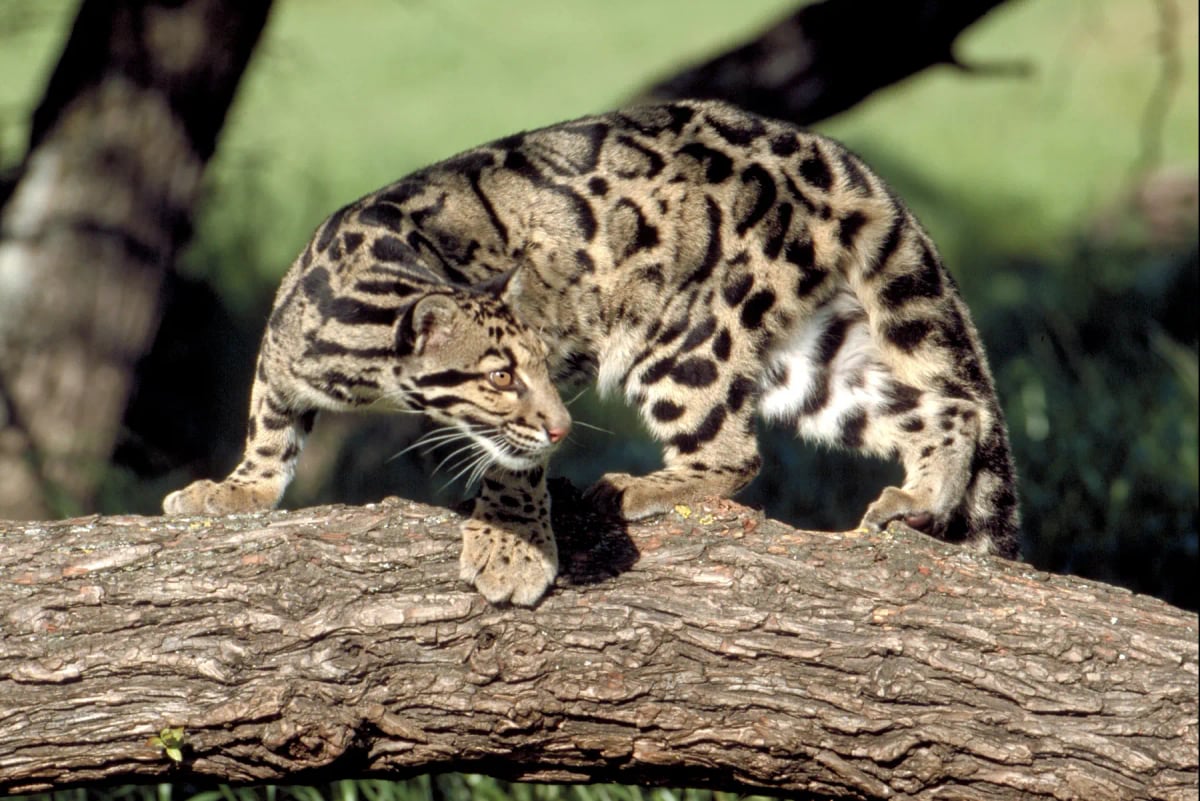
The clouded leopard (Neofelis nebulosa) is a medium-sized wild cat found across South and Southeast Asia, from the foothills of the Himalayas through southern China and the forests of Indochina. Its coat is marked with large, irregular blotches that resemble clouds, offering superb camouflage in dappled forest light. Among all living cats, it holds the record for the longest canine teeth relative to skull size, a feature that brings to mind the saber-toothed cats of the past. A remarkable climber, it can descend tree trunks headfirst and hang from branches using its hind legs alone. Its long, heavy tail acts as a counterbalance in the canopy. It feeds on deer, primates, birds, and smaller mammals. Mostly nocturnal and very seldom seen, the clouded leopard is listed as Vulnerable by the IUCN, threatened mainly by forest loss and illegal hunting.
Habitat and distribution
Across a broad sweep of South and Southeast Asia, clouded leopards occupy a range that stretches from the foothills of the Himalayas in Nepal and Bhutan through Myanmar, southern China, Thailand, Laos, Cambodia, and into the Malay Peninsula. They are most at home in dense tropical and subtropical evergreen forests, where broken canopy cover and thick undergrowth give them both shelter and hunting ground. They also turn up in drier deciduous forests, grasslands bordering woodland, and occasionally mangrove swamps near the coast. Elevation is no barrier: individuals have been recorded well above 2,000 metres in parts of their range. Across all these habitats, continuous forest cover appears to be the single most important factor in determining where this cat can survive.
Diet
Clouded leopards are dedicated carnivores with a varied menu shaped by whatever prey is available in their forest home. Deer and wild pigs form a large part of their diet, but they also take primates, civets, porcupines, birds, and smaller rodents. Their extraordinarily long canine teeth allow them to deliver a powerful bite, and their broad, flexible paws help secure struggling prey. Hunting happens both on the ground and in the trees, making them unusually versatile compared to most cats of similar size. Camera trap studies suggest they are most active at night, though some daytime hunting has been recorded. Because direct observation in the wild is so rare, much of what is known about their feeding habits comes from examining stomach contents and tracks left at kill sites.
Behavior
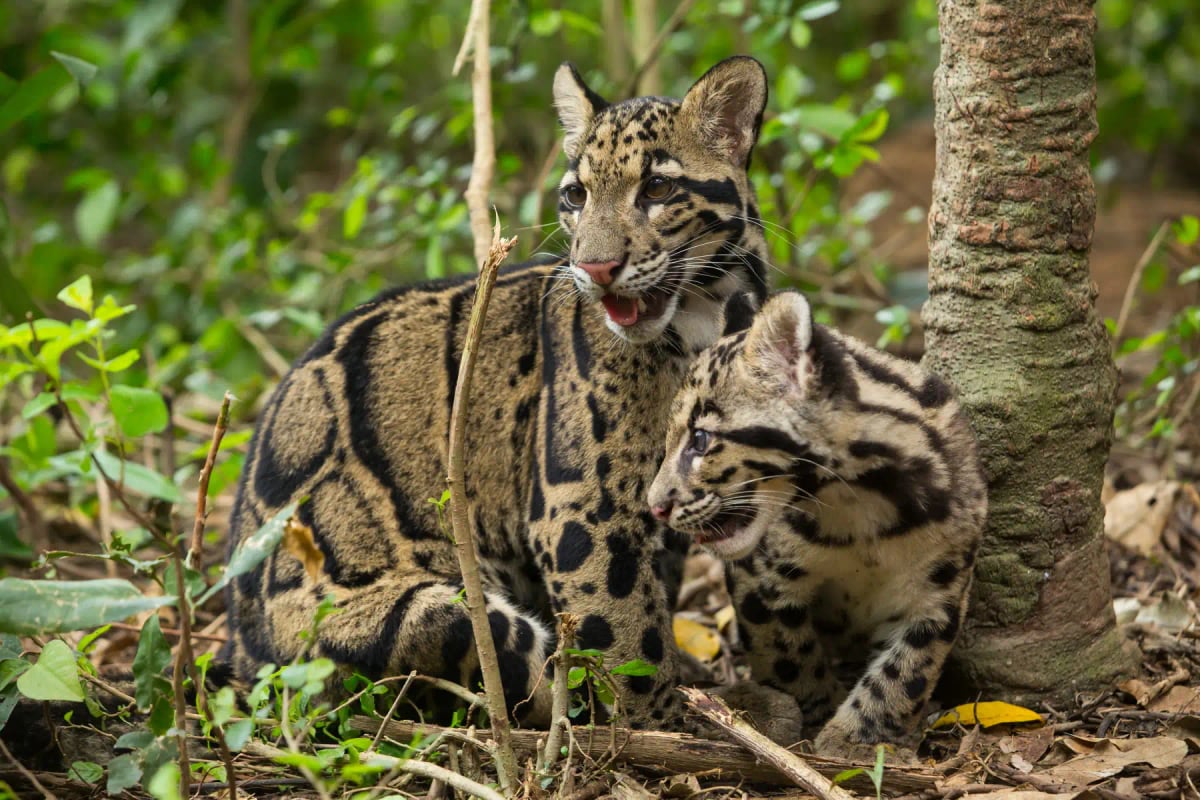
Few wild cats rival the clouded leopard when it comes to life in the trees. Rotating ankle joints give it a grip that allows it to climb down vertical trunks headfirst, a trick almost no other cat can manage, and it can suspend itself from a branch using its hind legs alone. Its long, heavy tail acts as a counterbalance, keeping it stable while moving through the canopy. On the ground, it moves quietly and alone, as adults are largely solitary outside of mating. Activity peaks after dark, and individuals appear to maintain home ranges that they mark with scent. Very little is known about their social calls or communication, partly because encounters in the wild are so uncommon that researchers rely heavily on camera traps and radio tracking to piece together their daily routines.
Unique adaptations
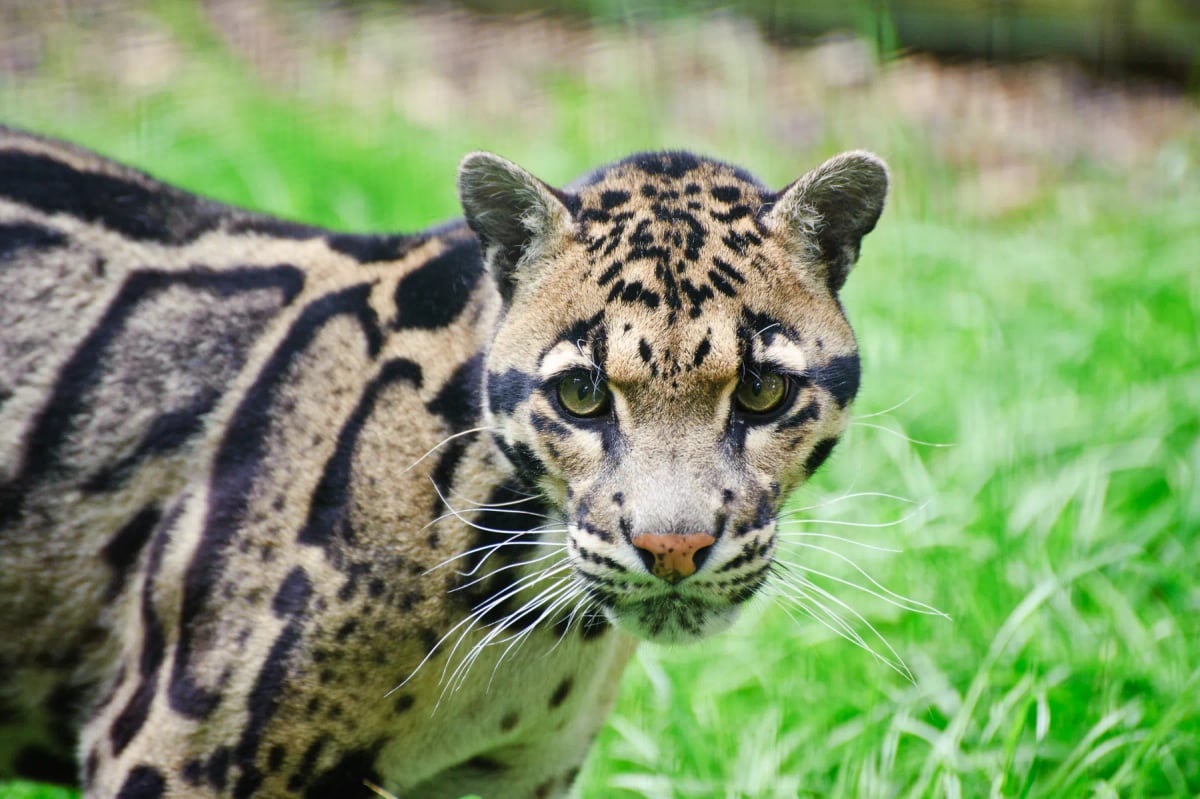
What sets the clouded leopard apart from every other living cat is a combination of physical features that seem almost purpose built for forest life. Its canine teeth are the longest of any cat alive today relative to skull size, a proportion that echoes the saber toothed cats that went extinct thousands of years ago. The skull itself is long and narrow, creating a wide gape that adds extra force to its bite. Flexible ankle joints allow rotation in both directions, enabling headfirst descent on tree trunks. Its coat, marked with large irregular blotches edged in black, breaks up its outline perfectly against the shifting light of the forest floor. Even the tail plays a role, providing balance while the animal navigates branches that would challenge far larger or smaller animals.
Conservation
The IUCN lists the clouded leopard as Vulnerable, with populations believed to be declining across most of its range. The biggest driver of that decline is the loss of forest cover to agriculture, logging, and expanding settlements. When forest patches become isolated from one another, local populations lose the connectivity they need to find mates and new territory. Illegal hunting adds further pressure: the species is targeted for its pelt and for use in traditional medicine markets, and it also falls victim to traps set for other animals. Monitoring populations is genuinely difficult because the cat is so rarely seen in the wild. Conservation efforts focus on protecting large forest blocks, strengthening anti poaching patrols, and using camera trap networks to estimate how many individuals remain in key areas.
5 Curiosities about the Clouded Leopard
Here are five things that make the clouded leopard truly stand out: • Its canine teeth are longer in proportion to skull size than those of any other living cat, including lions and tigers. • It can rotate its hind ankles backward far enough to descend tree trunks headfirst, something almost no other cat species can do. • Despite sharing a name with the leopard, it belongs to its own separate genus, Neofelis, and is not closely related to true leopards. • Its cloud shaped coat markings are unique to each individual, much like a fingerprint. • Camera trap footage has shown it spending long stretches of time resting in trees, suggesting the canopy is far more central to its life than previously thought.
Where it is found
The Clouded Leopard can be found in places such as:
Researched and written by Juan Pablo. Sources: IUCN Red List, scientific literature and regional field guides. Last updated: .
Technical factsheet
Frequently Asked Questions
What does a clouded leopard eat?
Clouded leopards eat a wide variety of prey, including deer, wild pigs, primates, civets, porcupines, birds, and small rodents. They hunt both on the ground and up in the trees, which makes them more flexible hunters than most cats of a similar size. Their remarkably long canine teeth and broad, powerful paws help them catch and hold onto struggling animals.
Where do clouded leopards live?
Clouded leopards are found across South and Southeast Asia, from Nepal and Bhutan through Myanmar, southern China, Thailand, Laos, Cambodia, and down to the Malay Peninsula. They prefer dense tropical and subtropical forests, but also turn up in drier woodlands and occasionally mangrove swamps. Some individuals have been recorded at elevations above 2,000 metres, showing they can handle a wide range of conditions.
Is the clouded leopard dangerous to humans?
Clouded leopards are extremely shy and almost never seen in the wild, so encounters with people are very rare. There are no well documented cases of them attacking humans. Like any wild cat, a cornered or injured individual could act defensively, but their natural instinct is to avoid people altogether. They pose no meaningful threat to human safety under normal circumstances.
Why is the clouded leopard endangered?
The clouded leopard is listed as Vulnerable by the IUCN, with numbers falling across most of its range. The main threat is the loss of forest to farming, logging, and expanding human settlements. When forests become fragmented, cats lose the connected territory they need to survive and find mates. Illegal hunting for pelts and use in traditional medicine also takes a serious toll on remaining populations.
How does the clouded leopard climb trees so well?
The clouded leopard has ankle joints that can rotate much further than those of most cats, allowing it to grip a trunk and climb down headfirst rather than backing down tail first. It can even hang from a branch using just its hind legs. Its long, heavy tail helps it stay balanced while moving through the canopy. These features together make it one of the most capable climbers among all living cat species.
How big is a clouded leopard compared to other wild cats?
The clouded leopard is a medium sized wild cat, generally weighing between 11 and 23 kilograms, which puts it well below lions, tigers, and leopards but above smaller cats like the ocelot. Despite its modest size, it has the longest canine teeth of any living cat relative to skull size, a feature more commonly associated with much larger predators. Its body length typically ranges from about 60 to 110 centimetres, not counting the tail.
Is the clouded leopard related to the leopard?
Despite the name, the clouded leopard is not closely related to the common leopard. It belongs to its own separate genus, Neofelis, and sits on a distinct branch of the cat family tree. Genetically, it split from other big cats millions of years ago and is considered something of a bridge between the smaller wild cats and the large cats like lions and tigers. The name comes purely from the cloud shaped markings on its coat.