Animals in Nepal
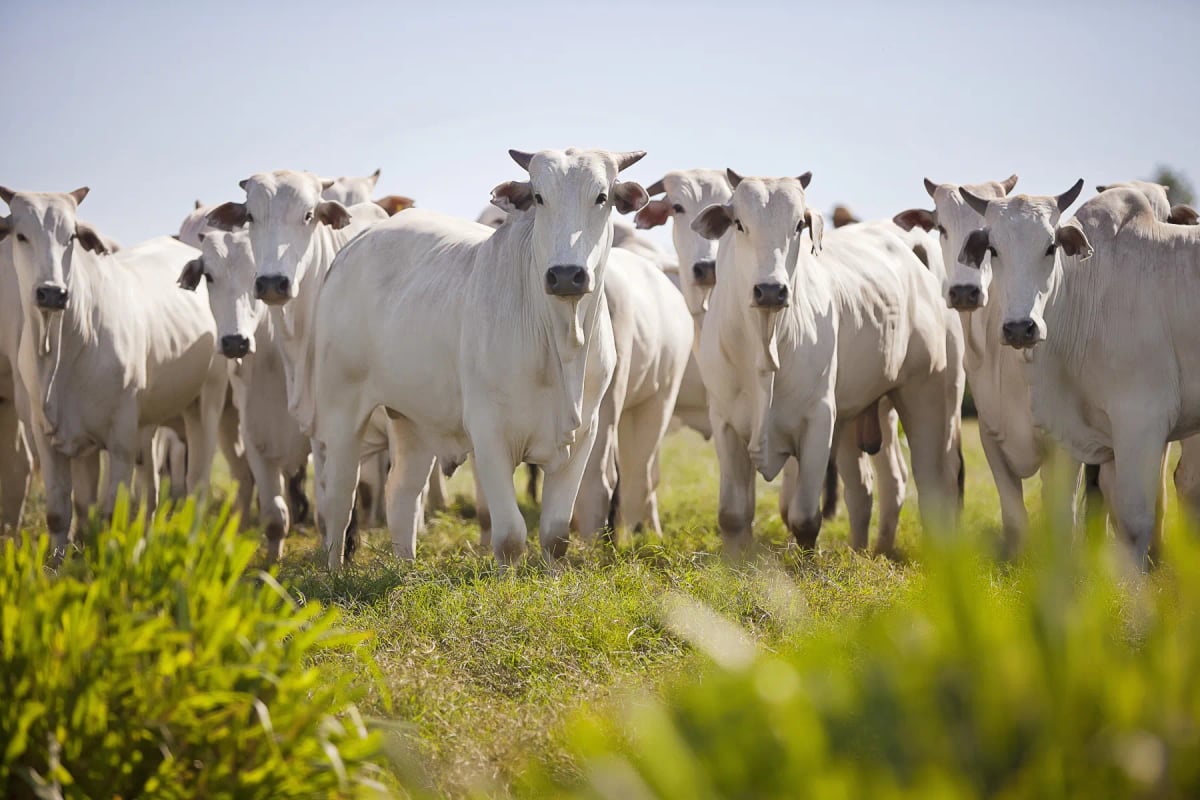
Cow
Bos taurus
In Nepal the cow is a protected and respected animal linked to daily life. It appears in farm work, street scenes and many religious events, and its calm image suggests care and patience. Temples, village art and festival offerings use the figure of the cow as a quiet reminder of respect for living beings.
View details→Wildlife in Nepal
In Nepal high peaks, river valleys and forested hills sit close together, so visitors can see many landscapes in short trips. Popular routes cross mountain villages with clear viewpoints, while lowland parks offer jeep rides and quiet boat journeys along calm rivers where people often watch birds, deer and monkeys from a safe distance.
Most Dangerous Animals in Nepal
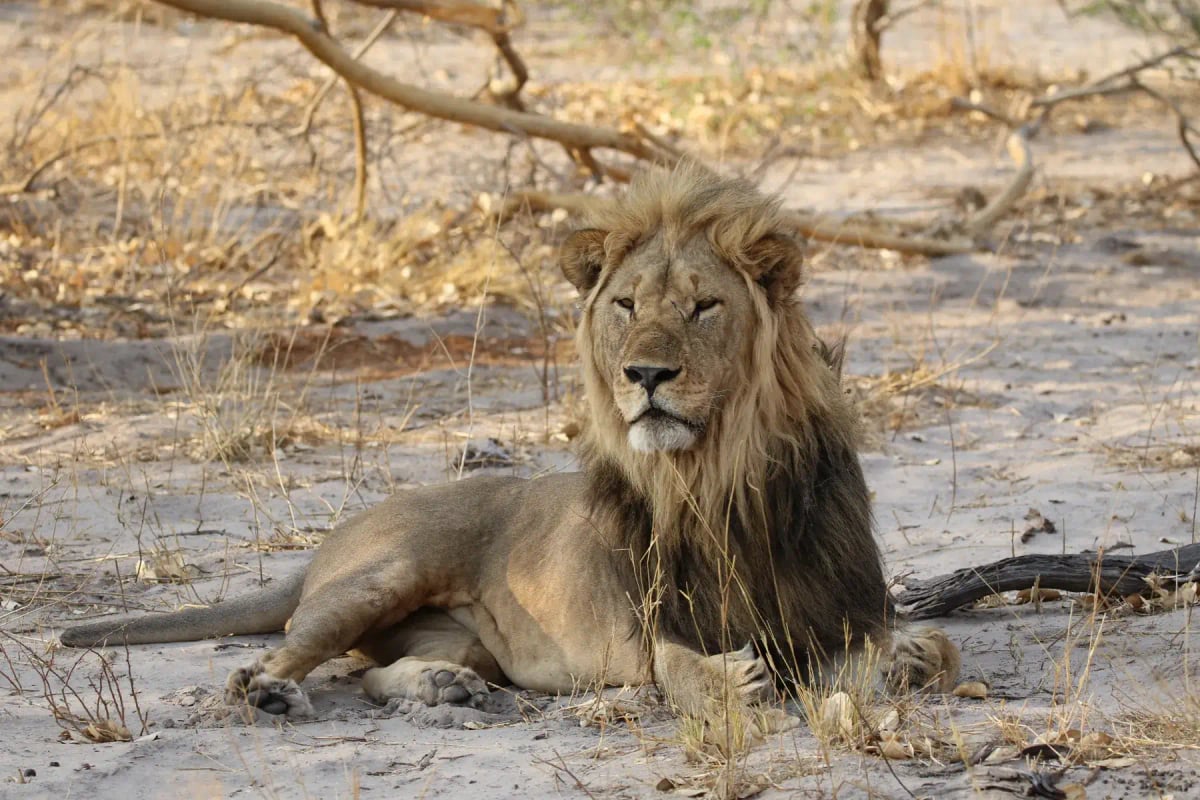
In Nepal most wild animals avoid people, yet some species become dangerous when surprised or disturbed. Leopards, snow leopards, clouded leopards, striped hyenas, Bengal tigers, wolves and bears may attack if they guard food or young. Wild boar, water buffalo and gaur can charge, while king cobra, gharial and mugger crocodile add quiet risk along rivers, and many meetings stay brief or distant.
Top 10 Animals in Nepal
The top 10 list for Nepal brings together leopard, Bengal tiger, Asian elephant, gray wolf and peregrine falcon. Big cats and wolves stay in forest and steep slopes, where they are seen mainly on guided drives or from watch towers. Elephants appear in warmer lowlands, while falcons cross high valleys during migration.
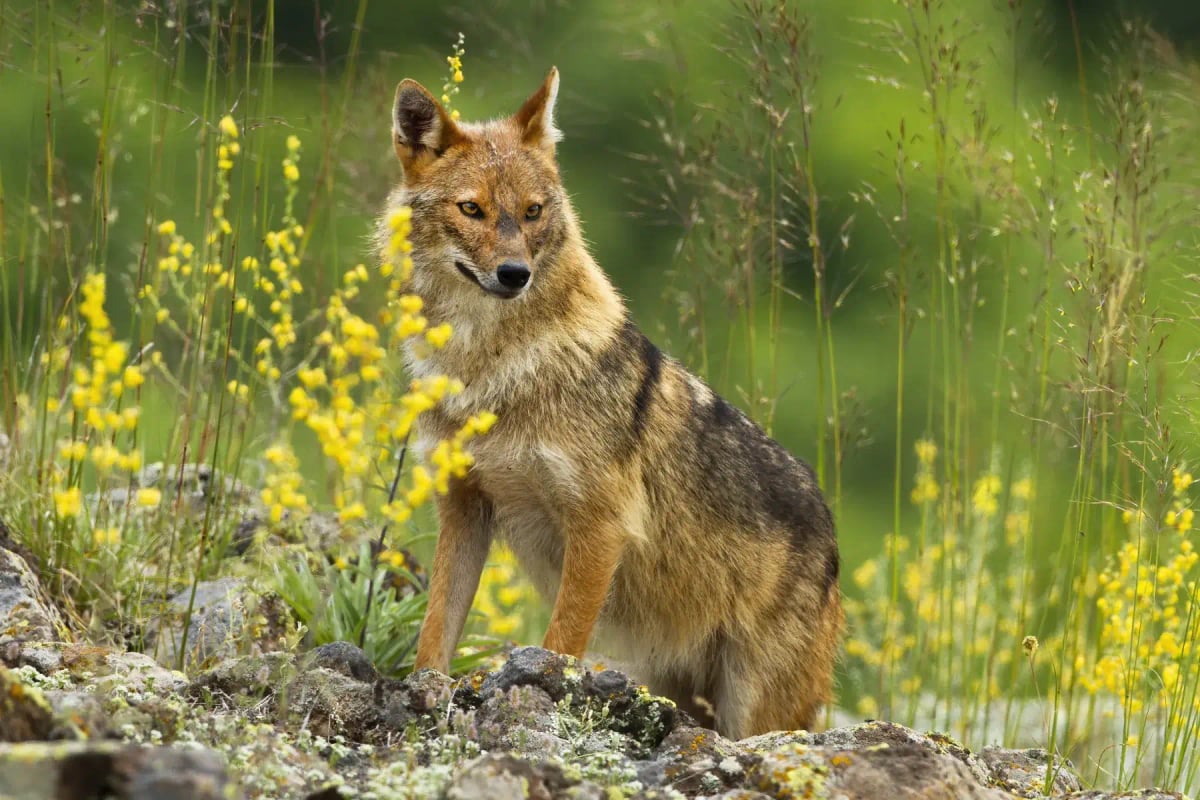
Golden Jackal
Canis aureus
The golden jackal is widespread across Nepal's lowland Terai zone, where grasslands, riverine forests, and farmland offer a rich variety of food and cover. It is commonly found near the edges of protected areas such as Chitwan and Bardia national parks, where it fills the role of a small, generalist carnivore. Pairs often call to each other at dusk, a familiar sound to local communities. Its status is Least Concern.
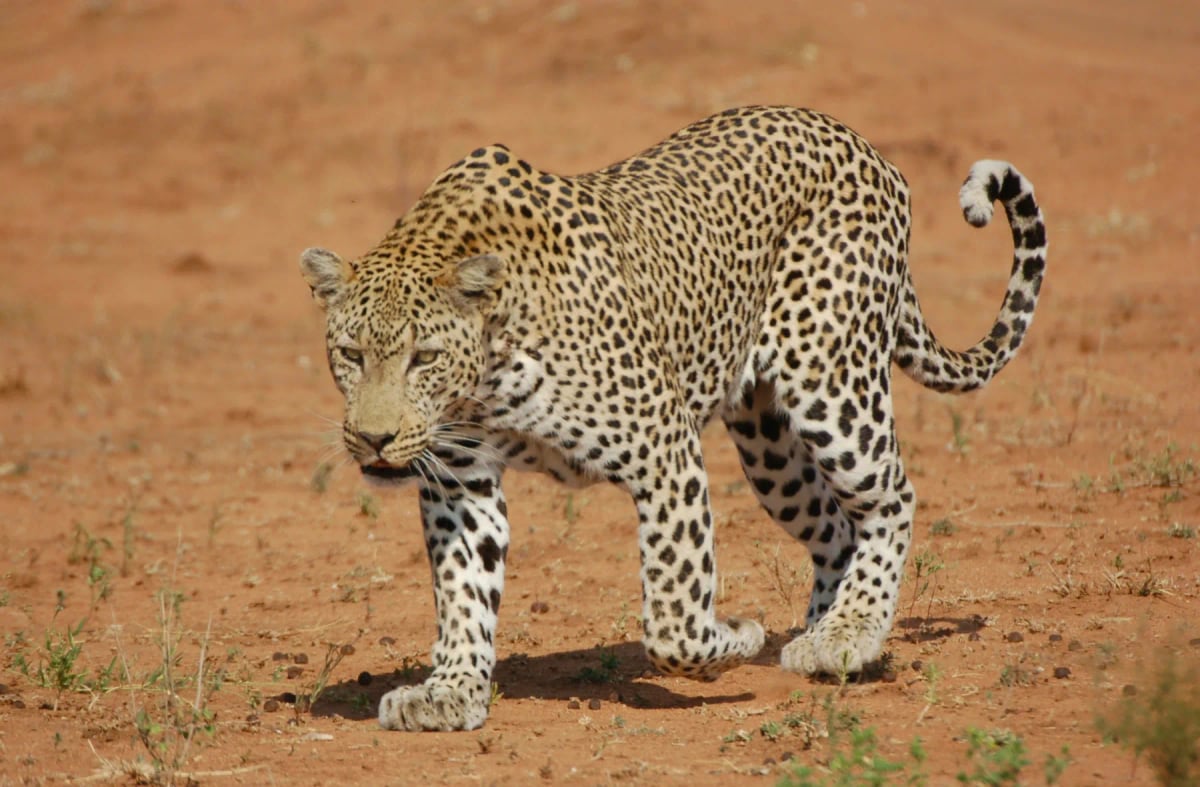
Leopard
Panthera pardus
In Nepal, leopards occupy a wide range of elevations, from the lowland forests of the Terai to the middle hills and lower slopes of the Himalayas. They share some habitat with tigers in areas like Chitwan and Bardia national parks, where the two species generally avoid direct competition by using different zones. Snow leopards occupy the higher altitudes. Human and wildlife conflict, particularly involving livestock, is a key conservation challenge in Nepal.
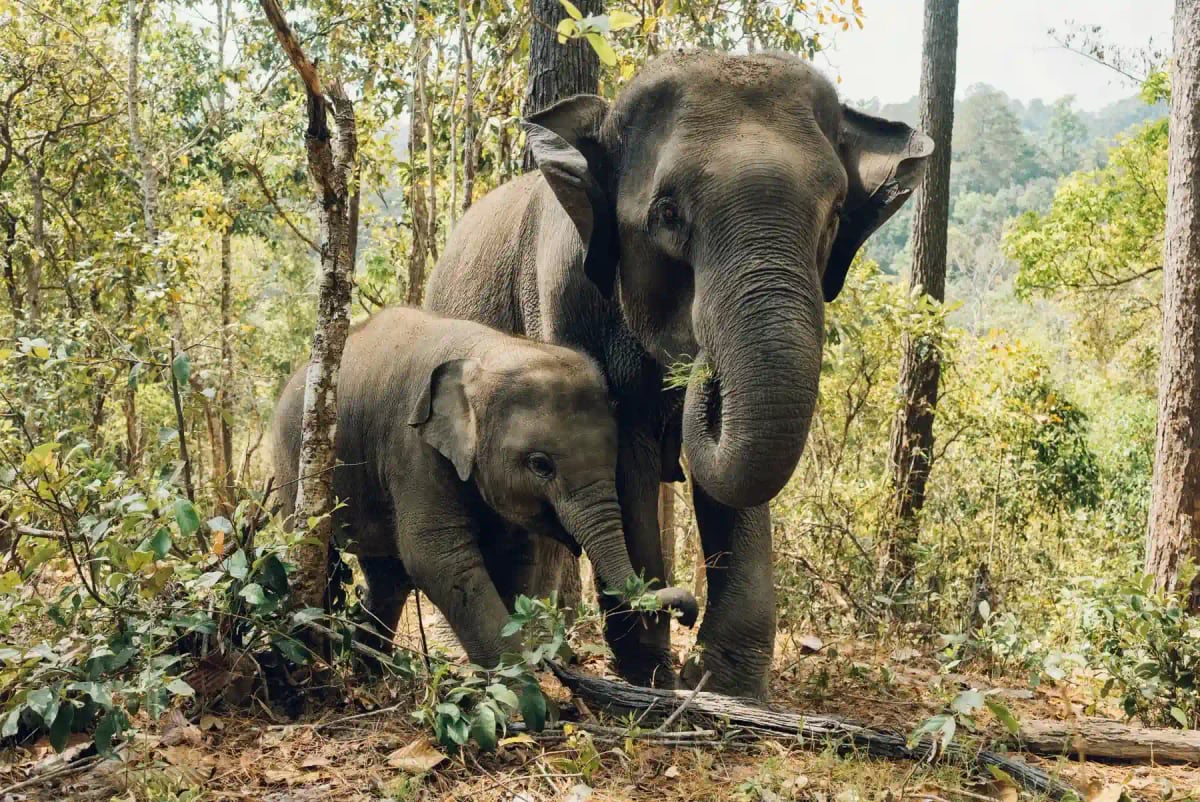
Asian Elephant
Elephas maximus
Nepal's Asian elephants inhabit the lowland Terai region in the south, particularly in and around Chitwan National Park and Bardia National Park. The wild population is estimated at around 100 to 200 individuals, forming part of a larger transboundary population that moves between Nepal and the forests of northern India. Conflict with farming communities in buffer zones is a persistent challenge, and wildlife corridors connecting the two parks are critical to the survival of the population.
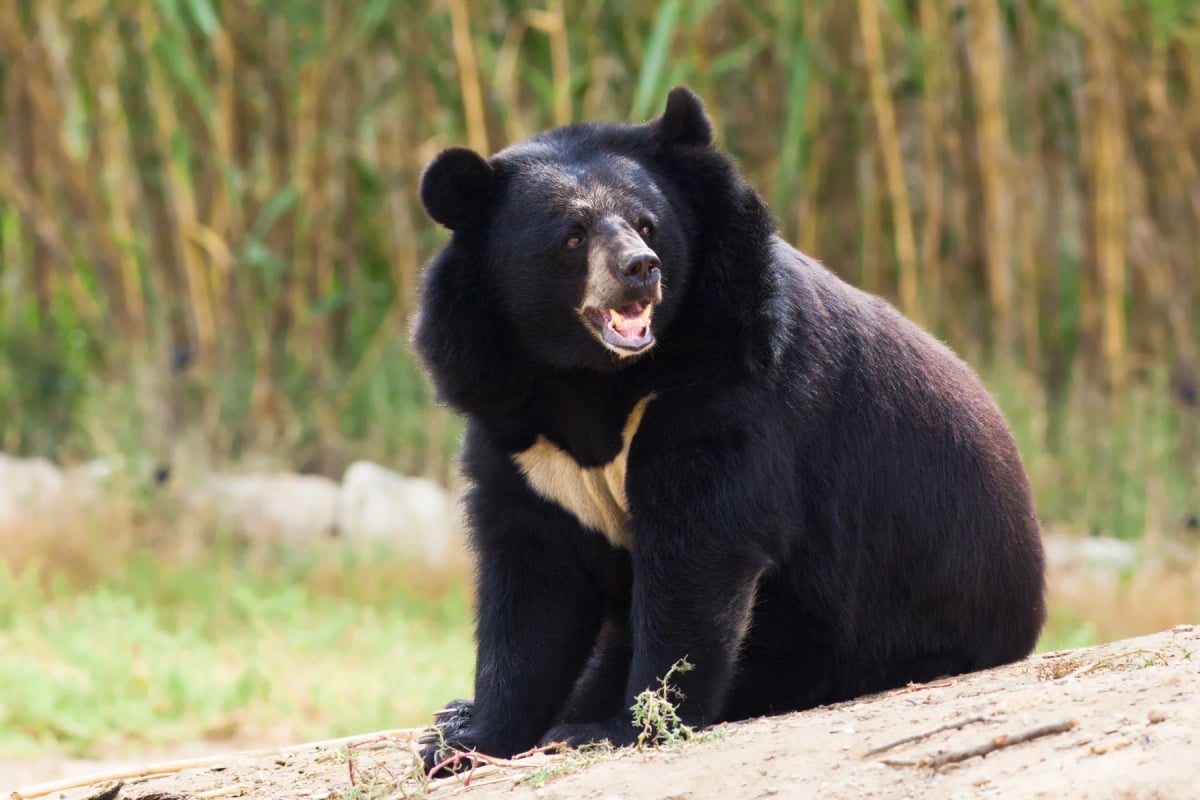
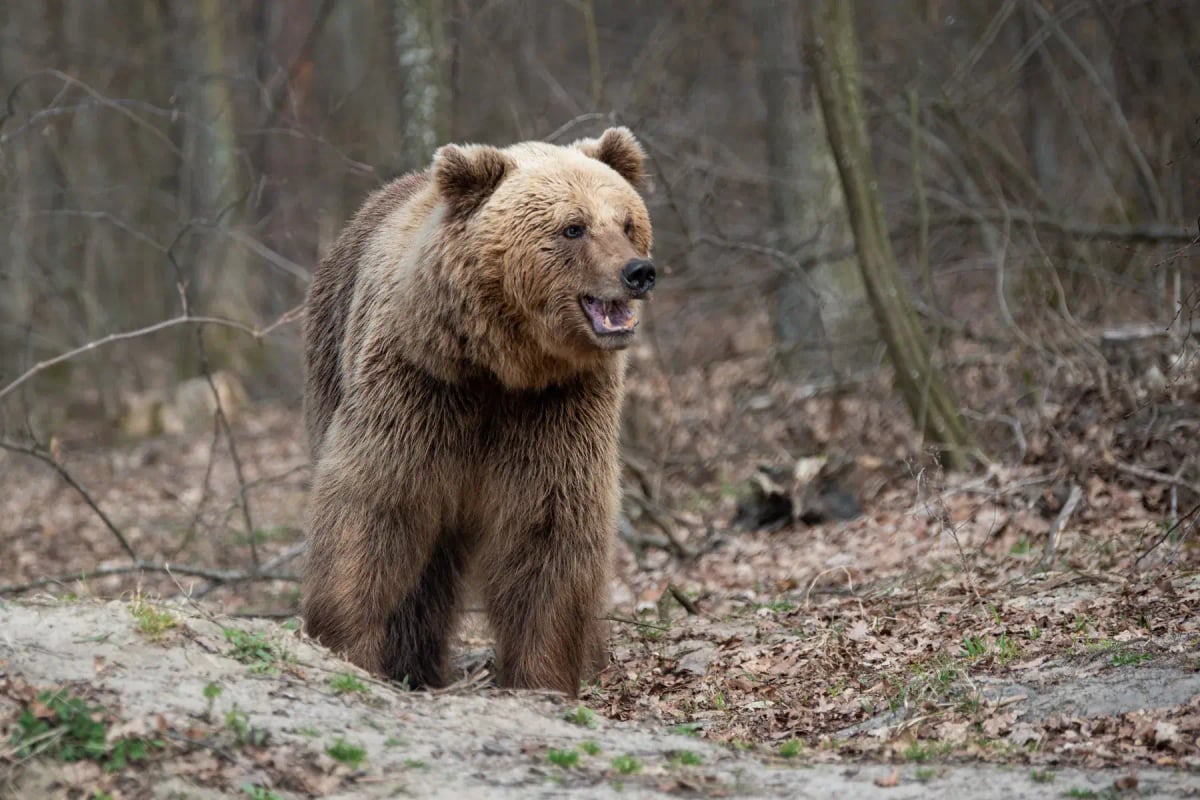
Asiatic Black Bear
Ursus thibetanus
The Asiatic black bear inhabits the middle and upper forest zones of Nepal's Himalayas, typically between 1,500 and 3,500 meters in elevation, though it can descend lower in winter. It is known to raid crops and beehives in villages near forested areas, and conflict with farming communities is one of the main challenges for its conservation. Chitwan and Bardia national parks hold populations in the lowland Terai, while the Annapurna and Langtang areas support bears at higher elevations.
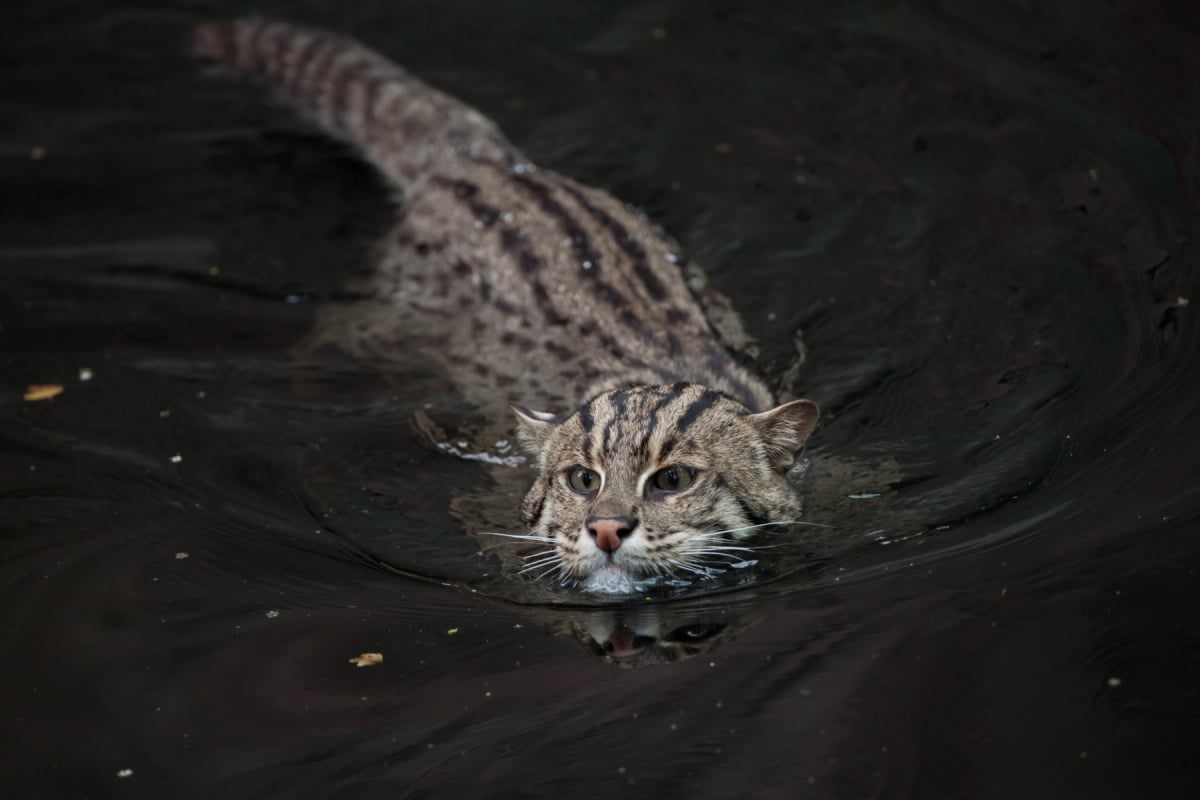
Fishing Cat
Prionailurus viverrinus
In Nepal, the fishing cat is found in the lowland Terai region, particularly in and around wetland areas within protected zones such as Chitwan National Park. It favors dense vegetation along rivers and oxbow lakes. This is one of the northernmost parts of its global range. Habitat loss outside protected areas and retaliatory killing by communities who fish the same waters remain ongoing concerns. IUCN status: Vulnerable.
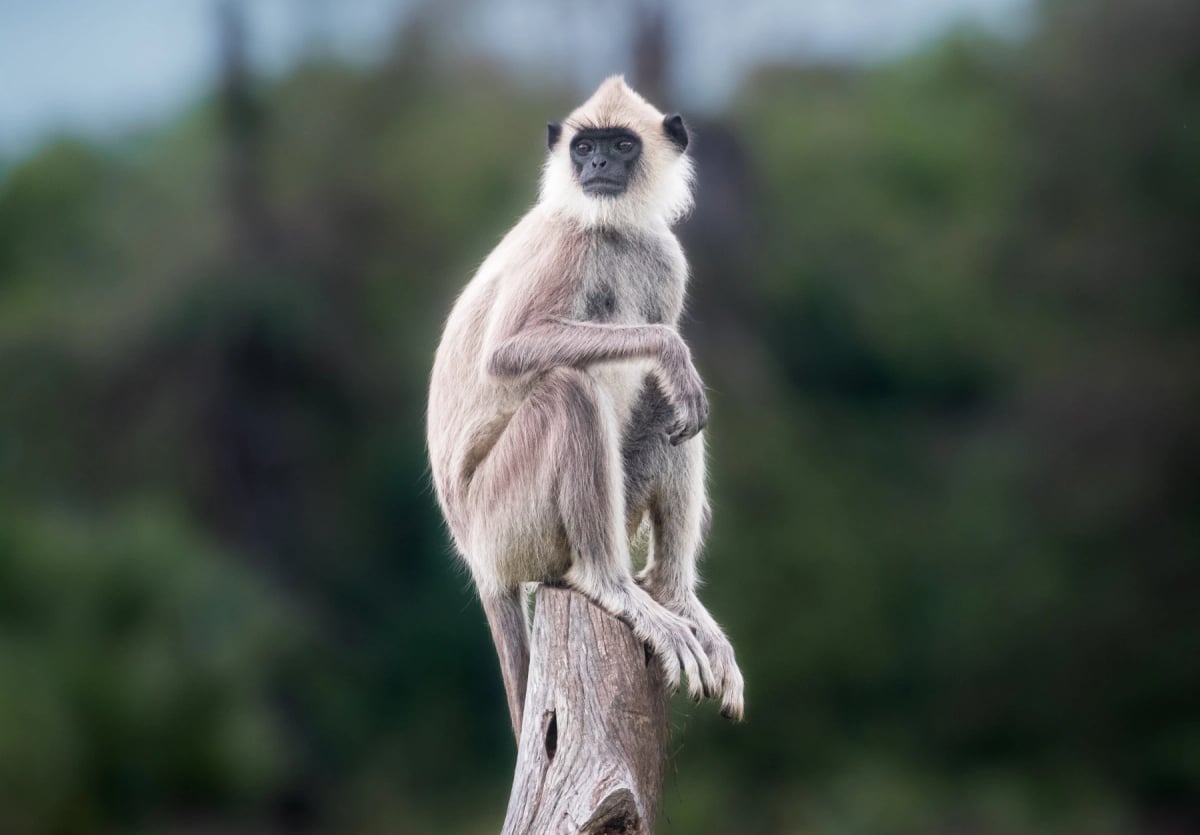
Langur
Semnopithecus spp.
Langurs are widely distributed across Nepal, from the lowland forests of the Terai to the mid-hill zones at higher elevations. They are well adapted to cool temperatures and can be spotted near monasteries and villages in hilly regions. Their diet of leaves, fruit, and seeds helps spread plant species across forest ecosystems. Forest clearance for farming and firewood collection continues to reduce suitable habitat for these monkeys.
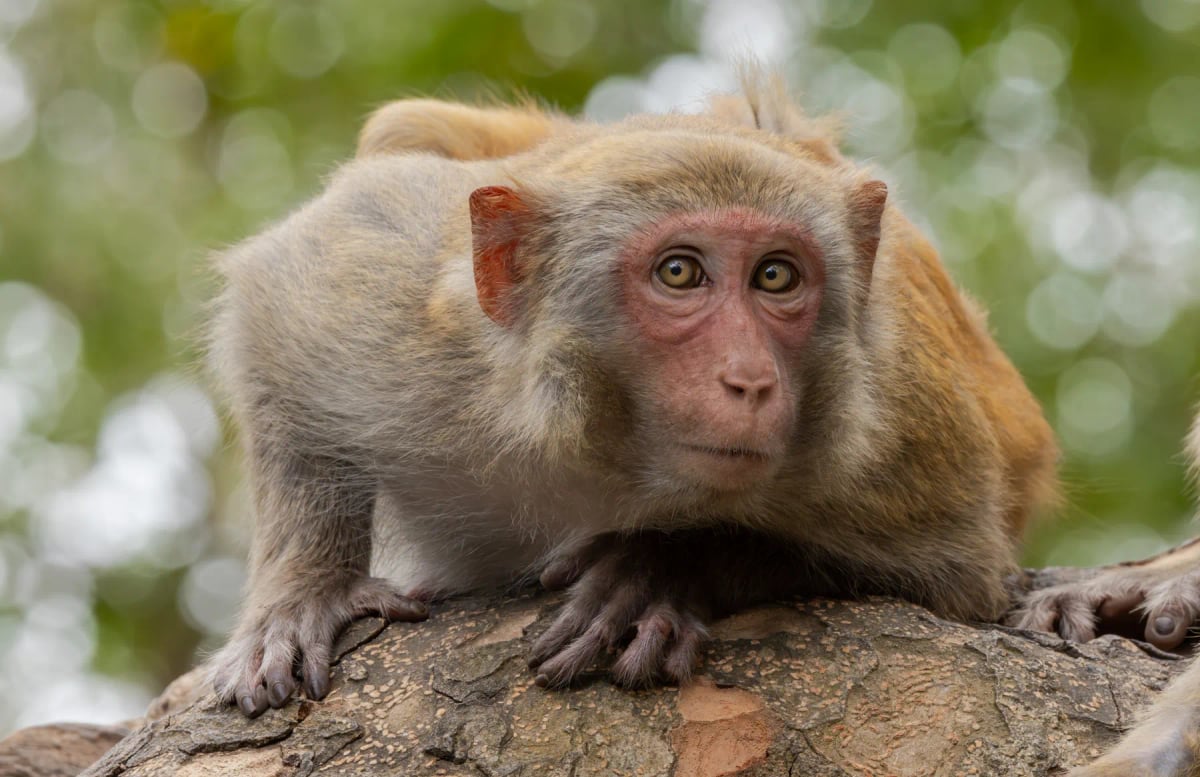
Macaque
Macaca spp.
Nepal is home to several macaque species, including the rhesus macaque and the Assamese macaque, found across the Terai lowlands and forested hills of the middle mountains. They live in large social troops and often raid crops near villages, creating conflict with farmers. In protected areas like Chitwan National Park, they share habitat with tigers and elephants, forming a visible part of Nepal's rich wildlife.
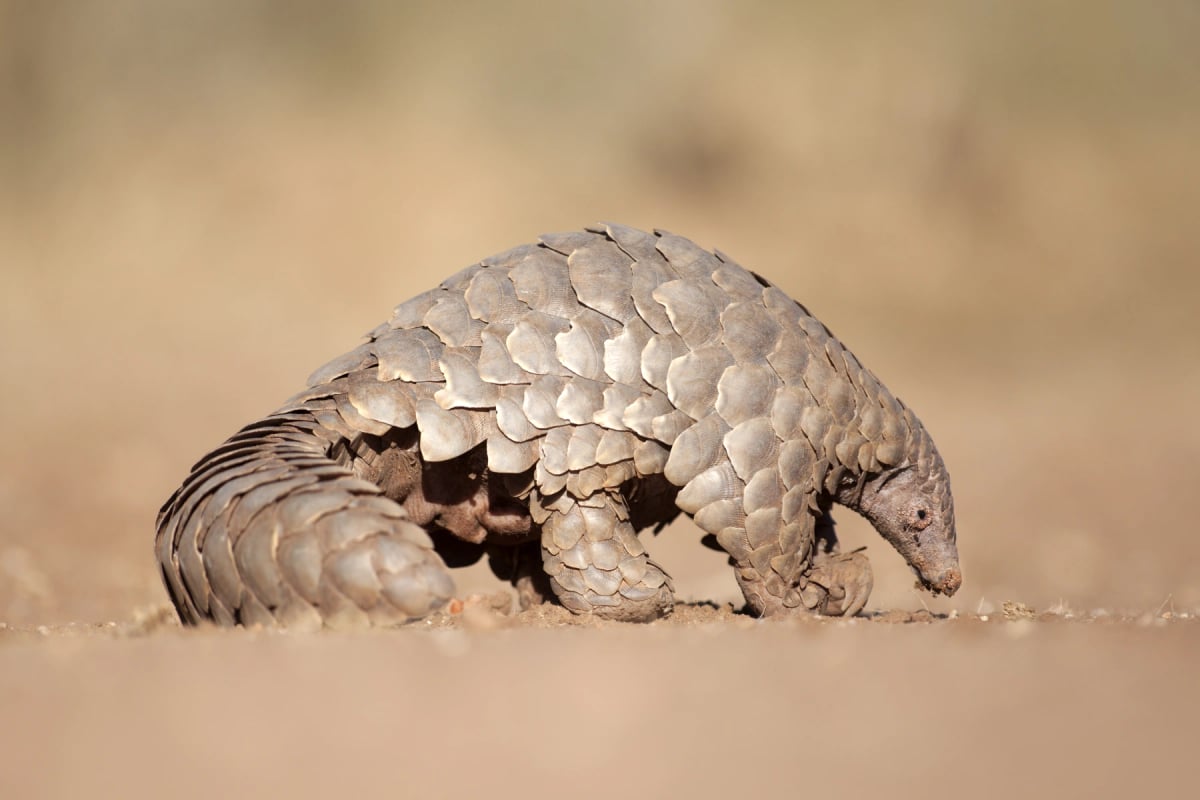
Pangolin
Manis spp.
The Chinese pangolin (Manis pentadactyla) inhabits Nepal's subtropical forests and the lower slopes of the Himalayas, particularly in the Terai Arc region. It shelters in burrows dug into hillsides and feeds on ants and termites in the leaf litter. Poaching for the cross-border trade with China is the primary threat to its survival. Nepal has listed it as a protected species, and community conservation programs are helping monitor wild populations.
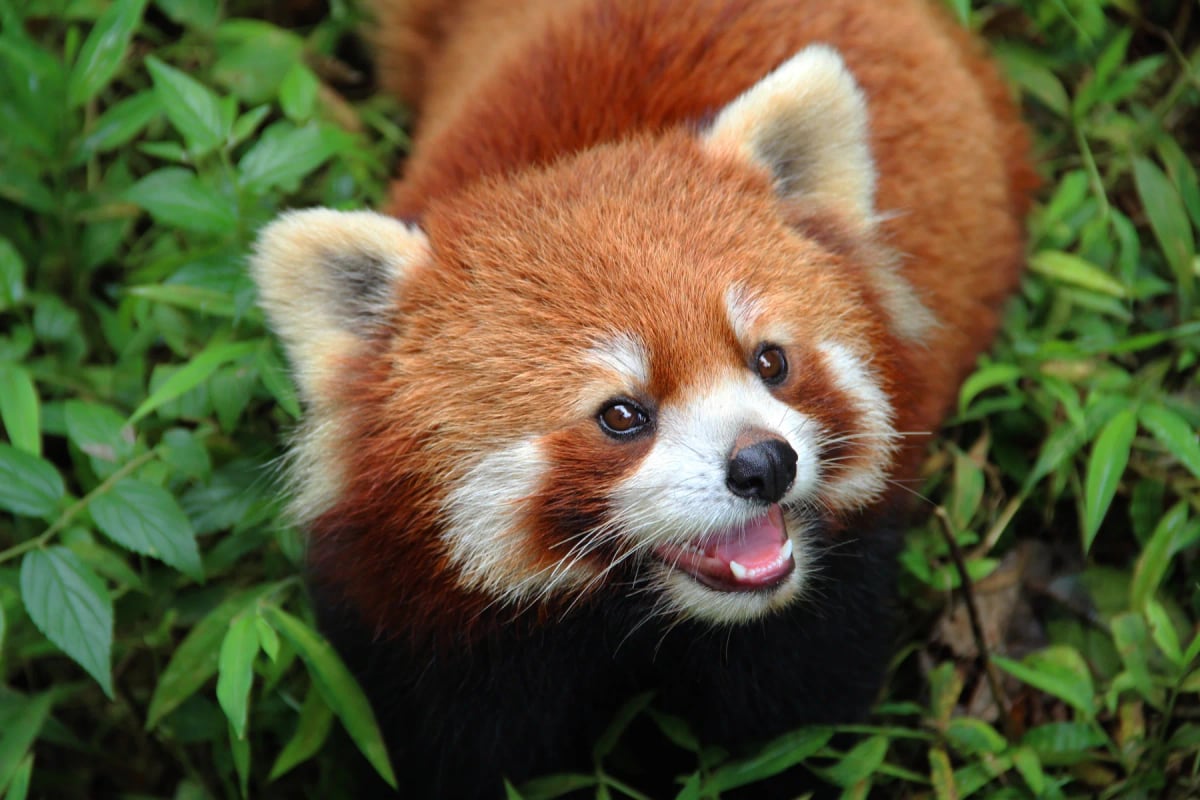
Red Panda
Ailurus fulgens
Nepal's eastern Himalayas, including protected areas such as Langtang National Park and Kangchenjunga Conservation Area, provide vital habitat for the red panda. It lives in the temperate forests on slopes between roughly 2,200 and 4,800 metres, where bamboo is plentiful. Nepal has invested in community conservation efforts to protect the species and reduce poaching pressure across its mountain forests. Its status is Endangered.
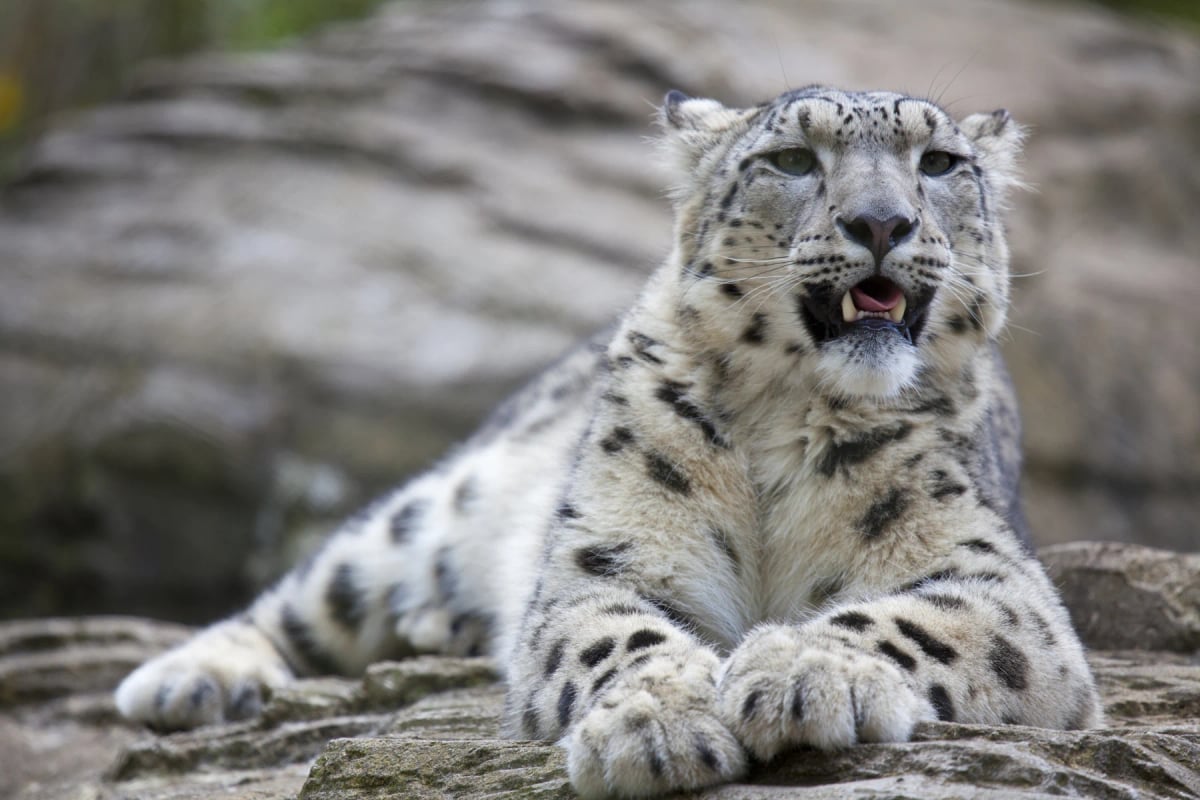
Snow Leopard
Panthera uncia
Nepal's high Himalayas and trans-Himalayan zones, particularly in regions such as Dolpo, Mustang, and Kangchenjunga, provide critical habitat for snow leopards. Shey Phoksundo National Park in Dolpo is among the best-known sites for the species in the country. Nepal has invested in community stewardship programs and camera trap networks to monitor populations. Prey availability and livestock conflict remain the key issues shaping the cat's survival here. IUCN status: Vulnerable.
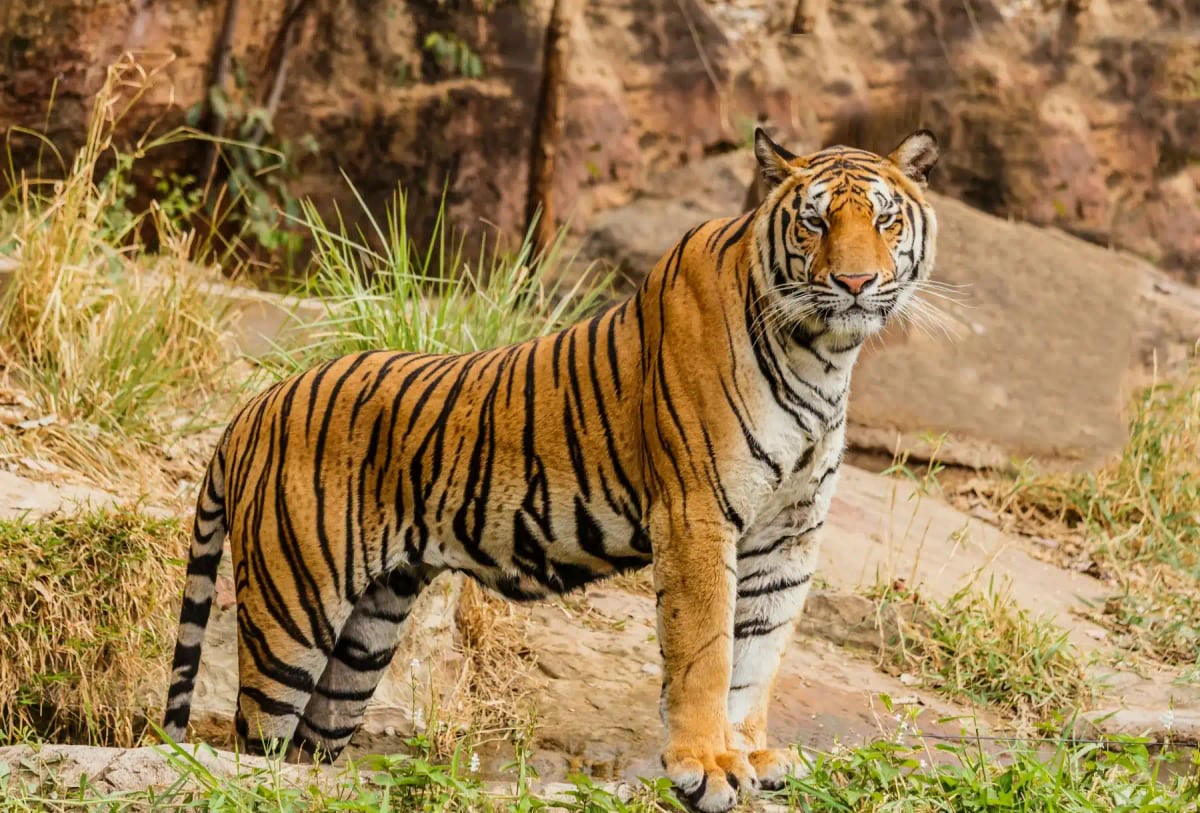
Bengal Tiger
Panthera tigris tigris
Nepal's Bengal tigers are concentrated in the lowland Terai region, particularly within Chitwan and Bardia national parks. The country has recorded notable population growth in recent decades, achieving one of the few genuine increases in wild tiger numbers globally. These tigers inhabit dense sal forests and tall elephant grass, sharing their territory with rhinos, elephants, and a rich diversity of prey species. IUCN status: Endangered.
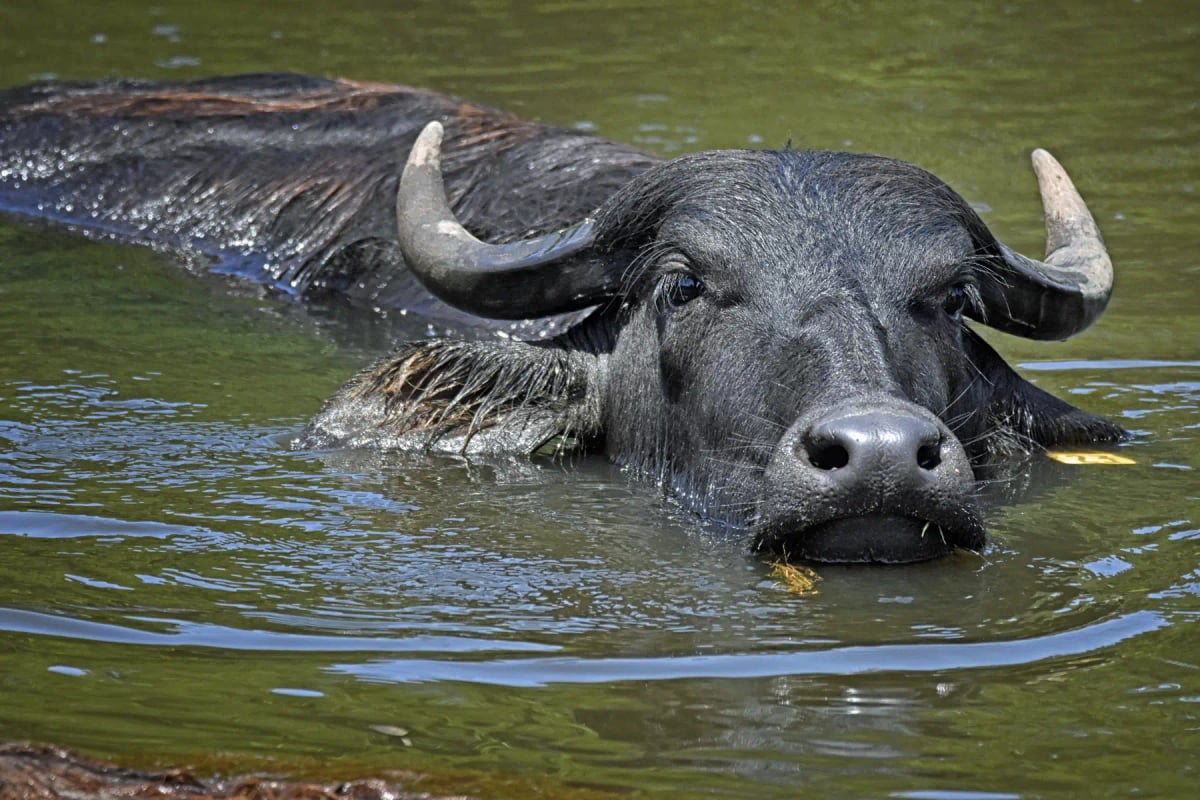
Water Buffalo
Bubalus arnee
Nepal's wild water buffalo are concentrated in the terai lowlands, particularly in and around Koshi Tappu Wildlife Reserve, the country's only site known to hold a genuine wild population. They graze and rest in the floodplain grasslands and wetlands along the Koshi River. Adults can weigh over 1,000 kg. Crossbreeding with domestic buffalo threatens the purity of the wild gene pool. The species is Endangered.
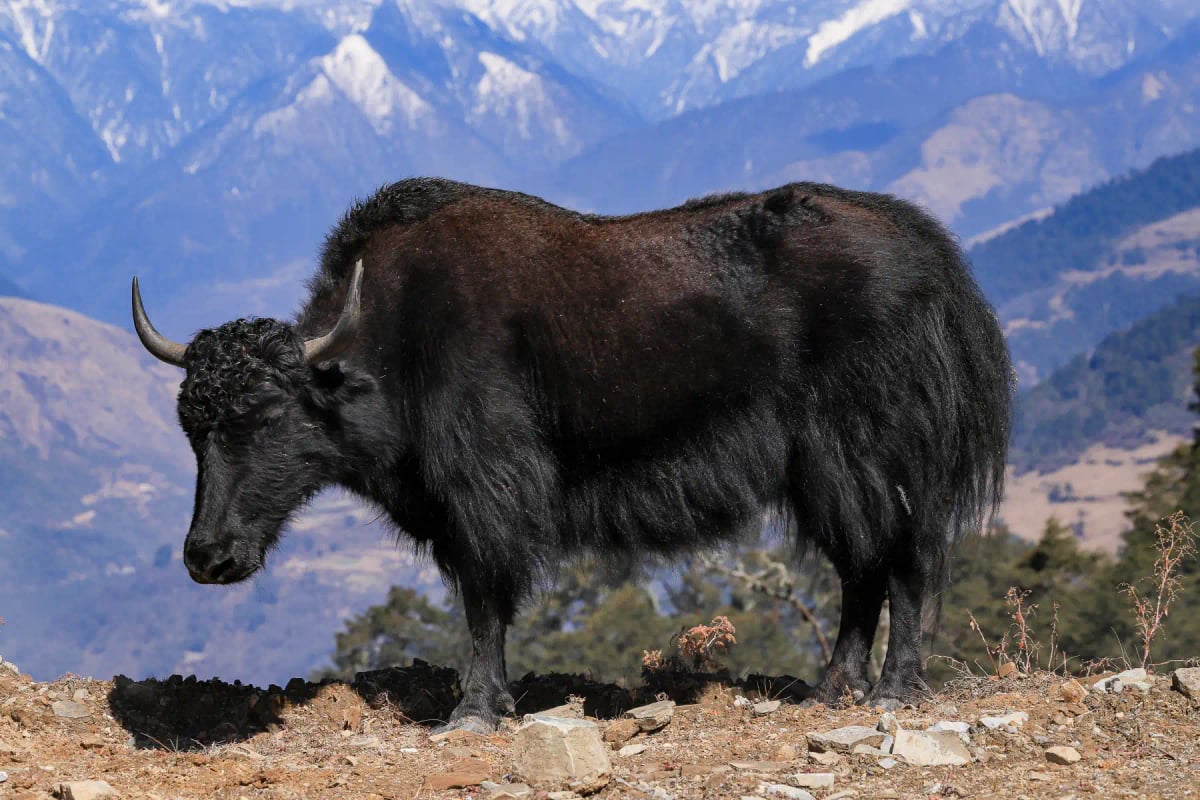
Yak
Bos grunniens
In Nepal, yaks are raised across high Himalayan valleys, including areas near Everest used by Sherpa communities. They serve as pack animals on mountain trails and trekking routes where other livestock cannot manage the altitude or terrain. Their milk is turned into butter and a hard, dried cheese called chhurpi, a staple snack for herders and trekkers traveling through the high country.
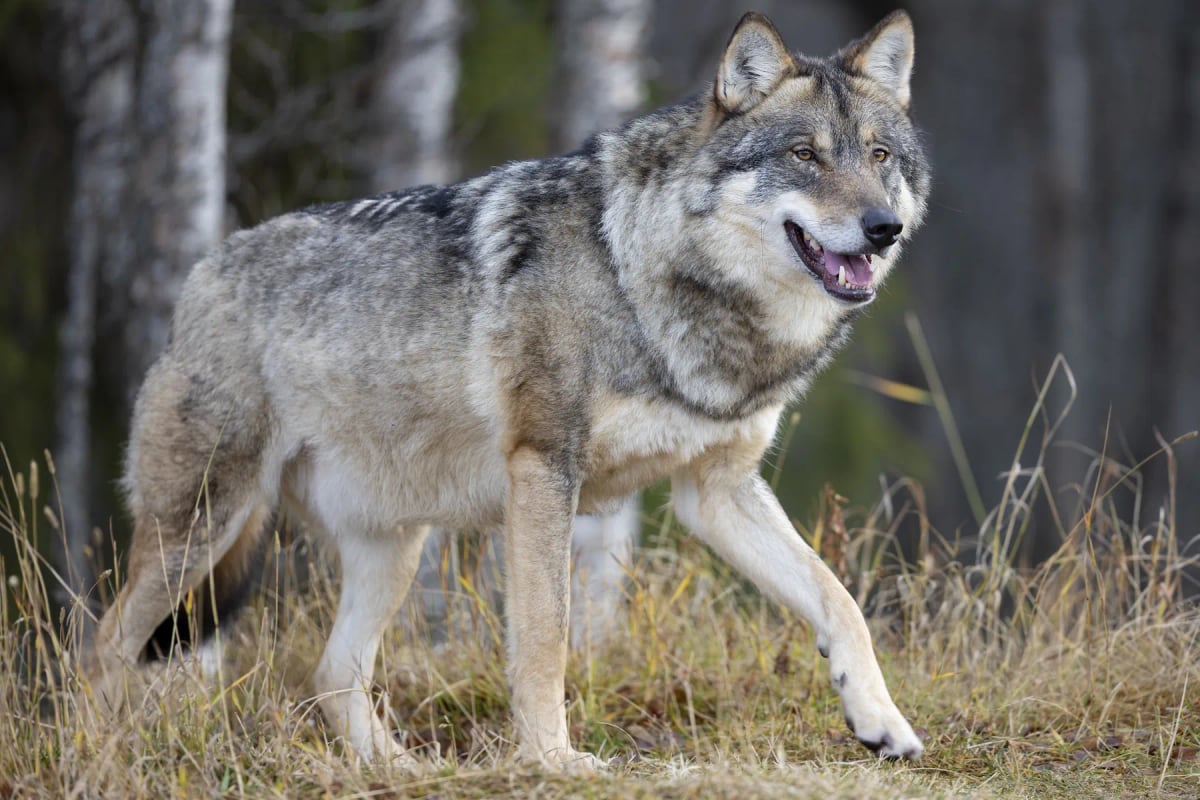
Gray Wolf
Canis lupus
In Nepal, gray wolves live primarily in the high plateaus and valleys of the Himalayas, particularly in the Dolpa and Mustang regions, where elevations can exceed 4,000 metres. This is one of the most rugged environments any wolf population occupies. They prey on blue sheep and other mountain ungulates. Conflict with herders is a concern, and conservation efforts focus on reducing livestock losses while protecting these high altitude populations.
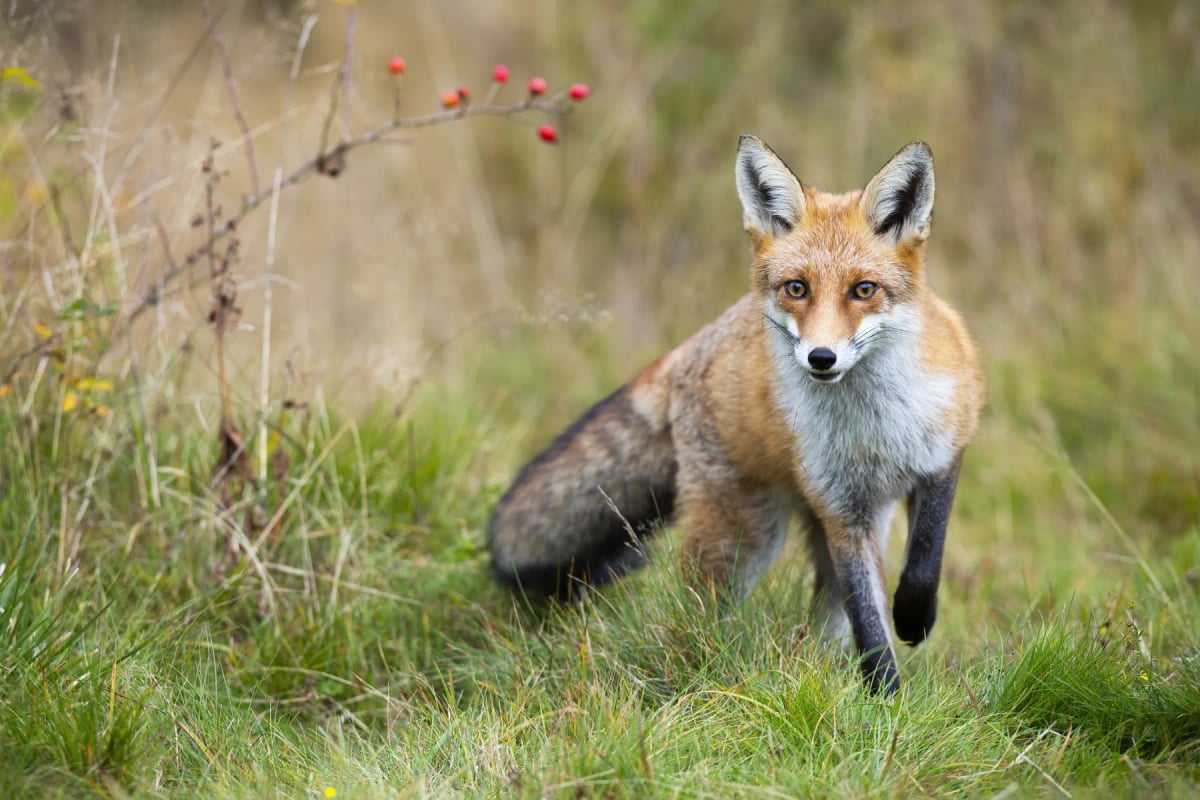
Red Fox
Vulpes vulpes
In Nepal, the red fox is found primarily in the open valleys, grasslands, and shrublands of the middle hills and higher Himalayan zones, including areas near Mustang and the Tibetan Plateau border. It hunts pikas, mice, and birds, and occasionally scavenges near villages. It is well adapted to high altitude life and thin air. Across Nepal it remains widespread and is listed as Least Concern globally.
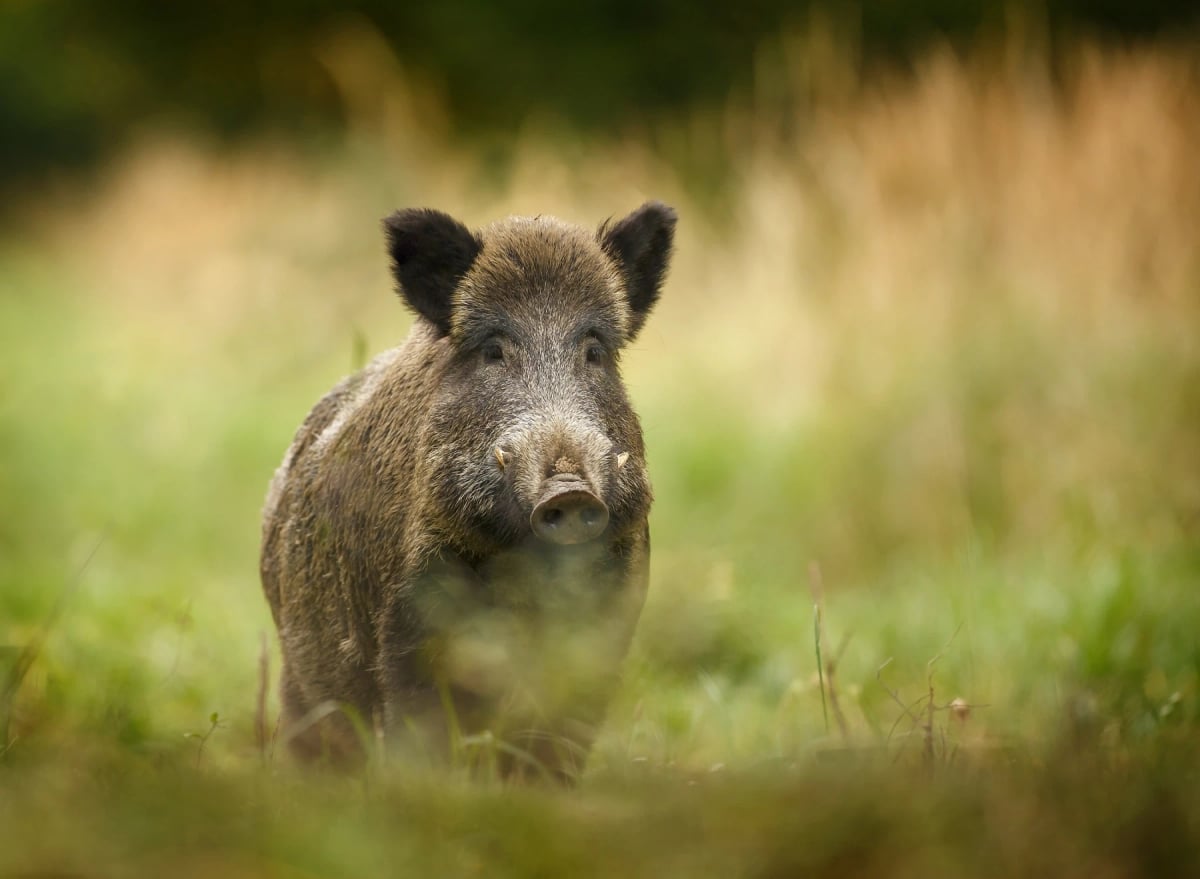
Wild Boar
Sus scrofa
Wild boars are found across Nepal's lowland Terai forests and the wooded mid hills further north, where they form an important part of the prey base for tigers and leopards in parks such as Chitwan and Bardia. They frequently raid crops near park boundaries, bringing them into regular conflict with farming communities, even as they remain ecologically important for soil turnover and seed dispersal.
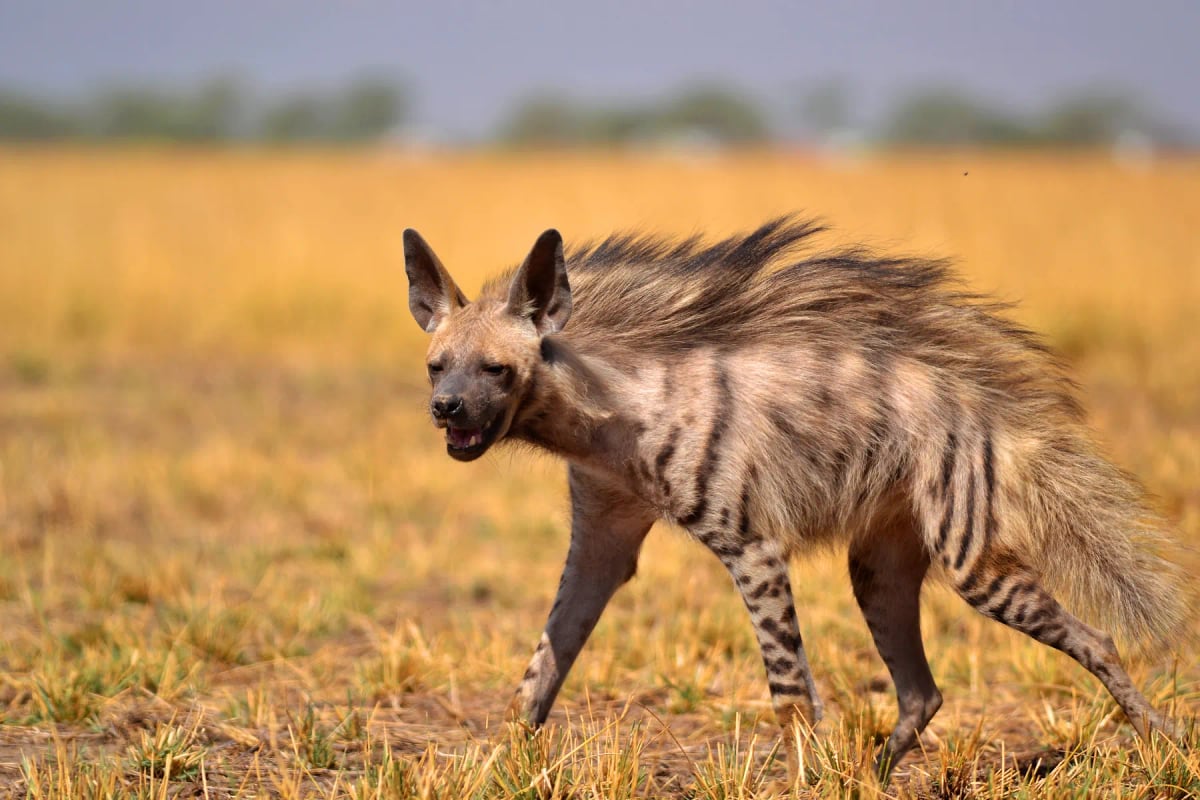
Striped Hyena
Hyaena hyaena
In Nepal, the striped hyena occupies the dry lowland plains of the Terai, particularly in and around protected areas such as Bardia National Park. It is a secretive scavenger that comes out at night, feeding on carcasses and occasionally fruit. Habitat encroachment and poisoning of carcasses intended for other animals threaten its survival. The IUCN lists it as Near Threatened.
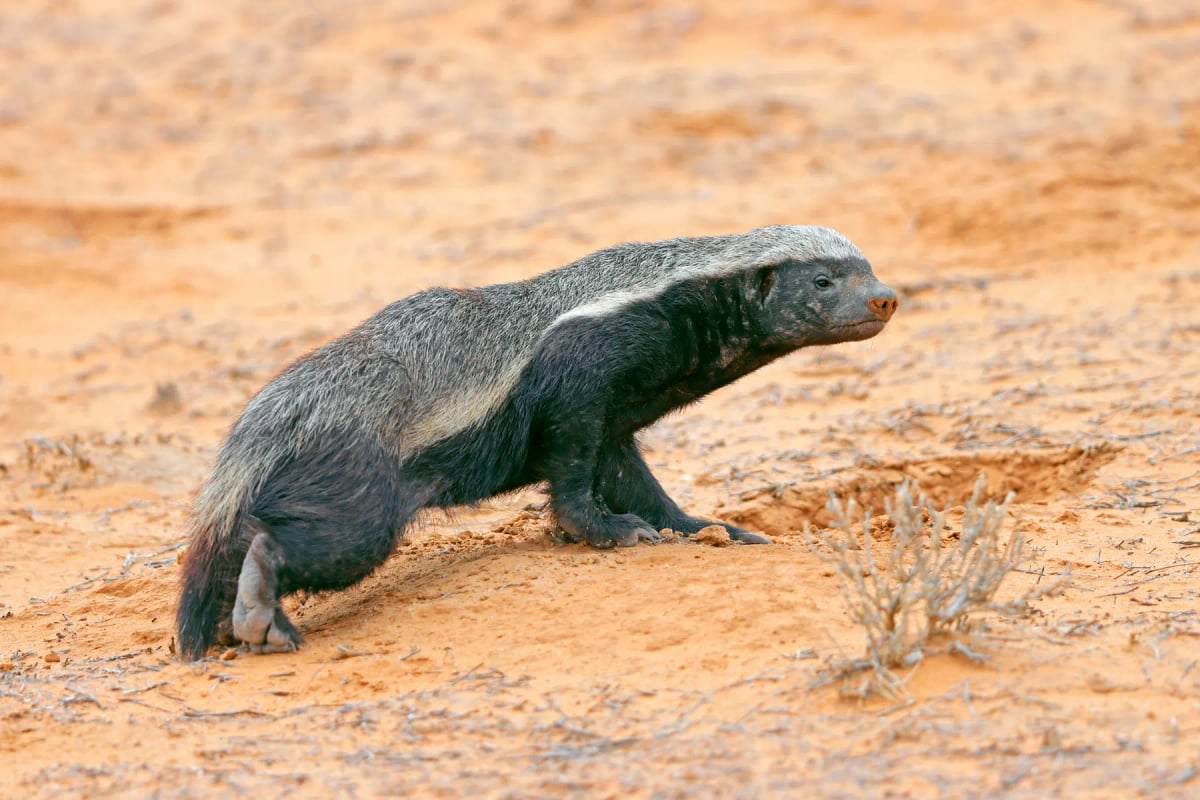
Honey Badger
Mellivora capensis
The honey badger is found in Nepal's southern lowlands, the Terai region bordering India, where forest and grassland habitats support a range of prey. It is rarely seen due to its nocturnal, solitary behavior and the limited surveys conducted in this part of its range. It feeds on rodents, reptiles and insects and digs burrows for shelter. The species is listed as Least Concern by the IUCN.
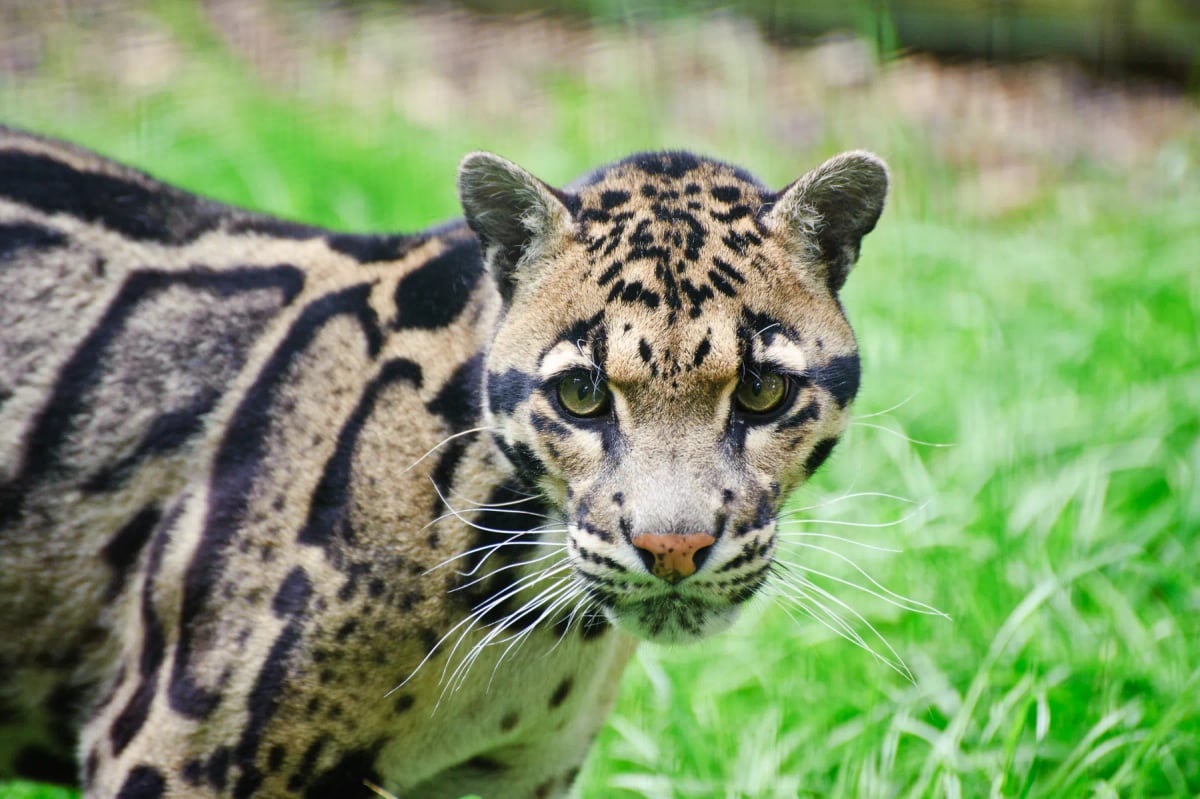
Clouded Leopard
Neofelis nebulosa
In Nepal, the clouded leopard is found in the subtropical forests of the Terai and the lower hills of the middle Himalayas, with confirmed records from Chitwan and Bardia as well as forested areas further east. It is one of the least studied large carnivores in the country. Deforestation and prey depletion are the main threats. Nepal's network of national parks and community forests plays a key role in safeguarding what habitat remains.
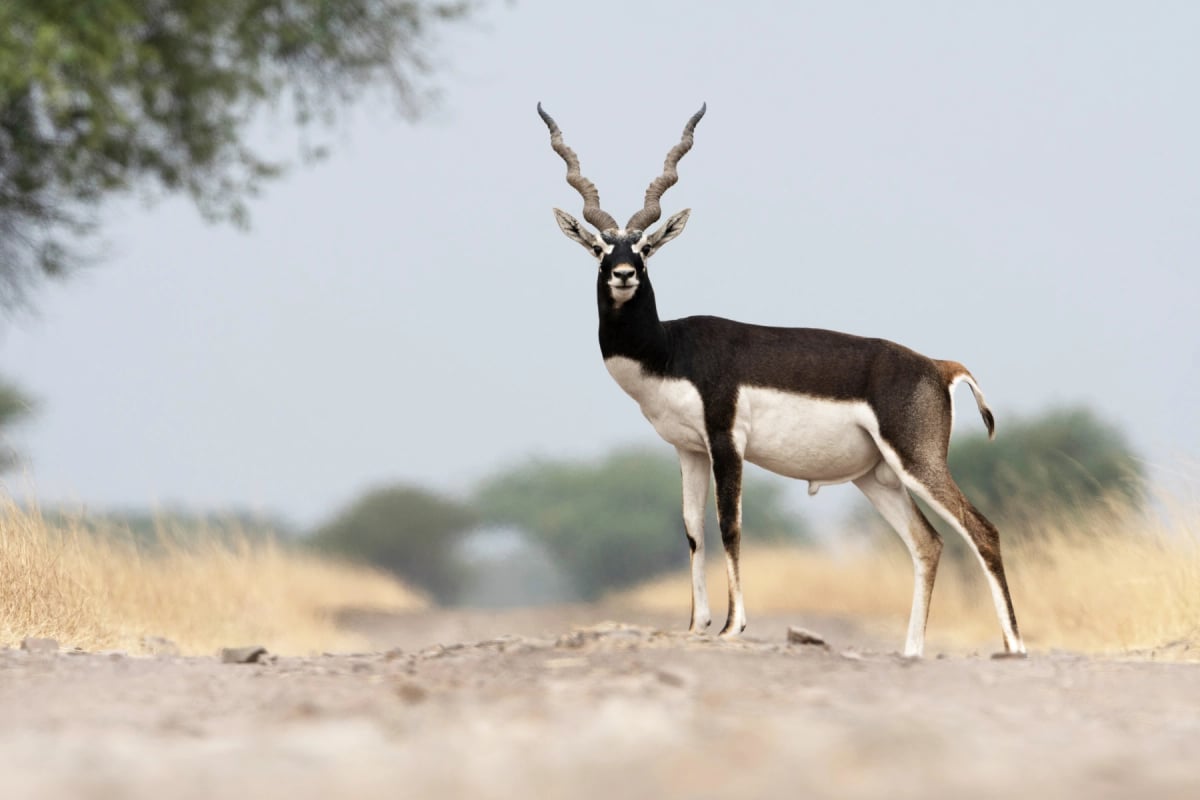
Blackbuck
Antilope cervicapra
In Nepal, the blackbuck survives in a small but significant population concentrated in the lowland grasslands of the Terai, particularly within and around Bardia National Park and the Blackbuck Conservation Area near Bardiya. The species is considered locally threatened due to its restricted range and vulnerability to poaching and agricultural encroachment. Nepal's population is one of the northernmost occurrences of the species. IUCN status: Least Concern.
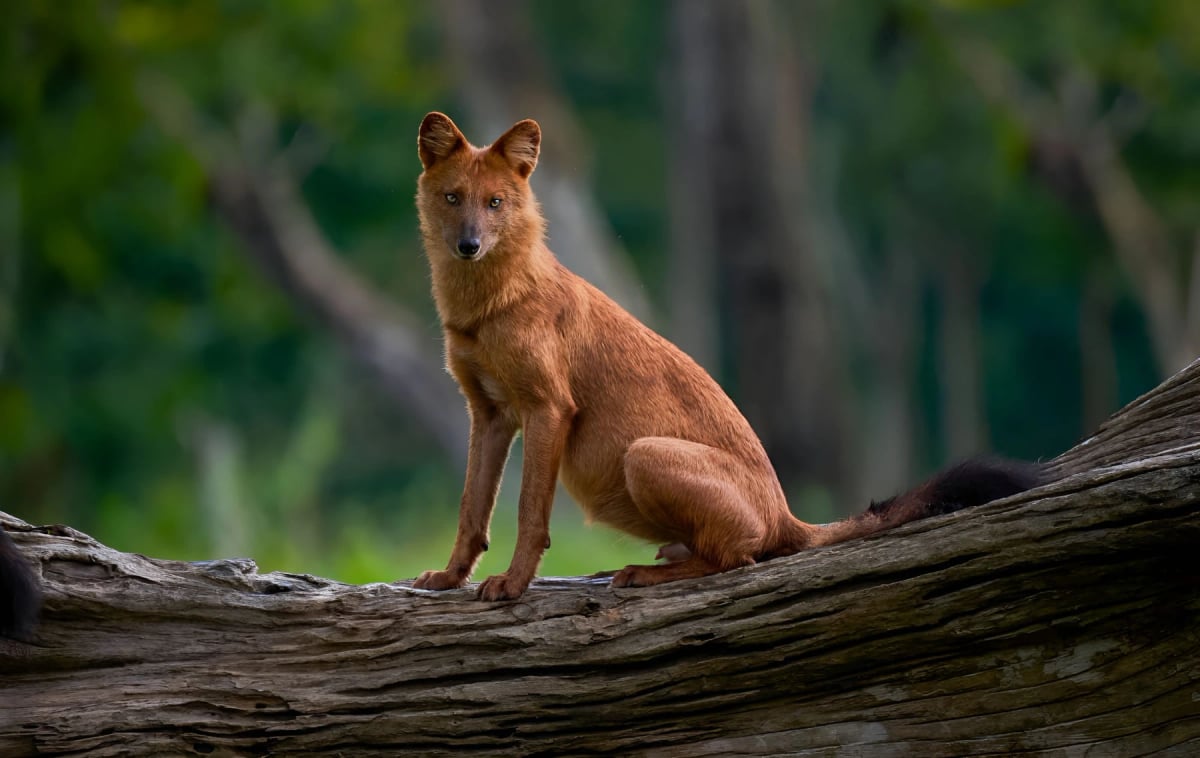
Dhole
Cuon alpinus
In Nepal, dholes are found in the lowland forests of the Terai and in forested hills further north, with records from protected areas like Chitwan and Bardia National Parks. They share these landscapes with tigers and leopards, competing for similar prey. Their population in Nepal is small and fragmented. Conservation work in these parks helps, but disease and prey loss remain ongoing challenges. The IUCN lists the dhole as Endangered.
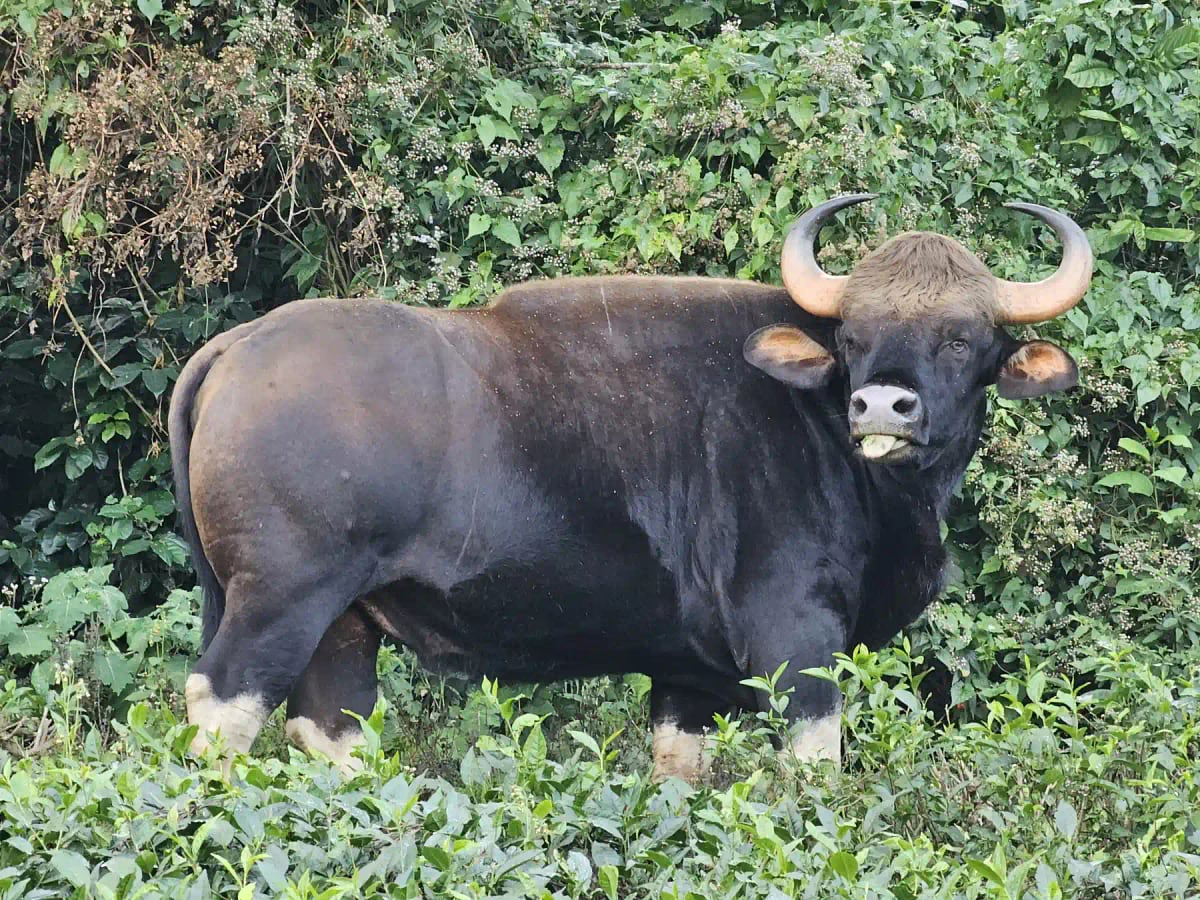
Gaur
Bos gaurus
The gaur is found in the lowland Terai region of Nepal, particularly in and around Chitwan National Park and Bardia National Park. Nepal's protected area network has helped stabilize numbers in these areas. The species shares its habitat with tigers, elephants, and one-horned rhinoceroses, making the Terai one of the most wildlife-rich landscapes in all of Asia.
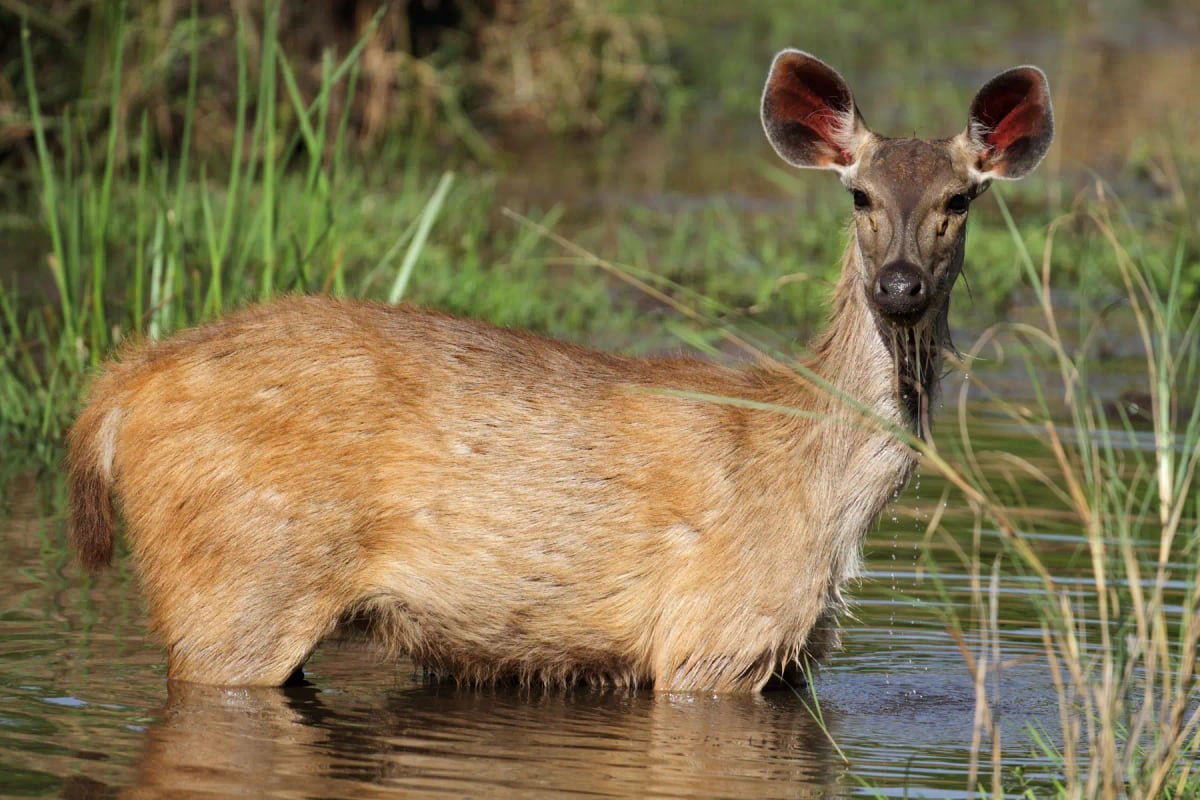
Sambar Deer
Rusa unicolor
The sambar deer is found across Nepal's lowland Terai region, where it roams the dense forests and tall grasslands of protected areas such as Chitwan and Bardia National Parks. It is a vital prey species for tigers and leopards in these ecosystems. Populations face pressure from habitat loss and poaching, and the IUCN lists the species as Vulnerable.
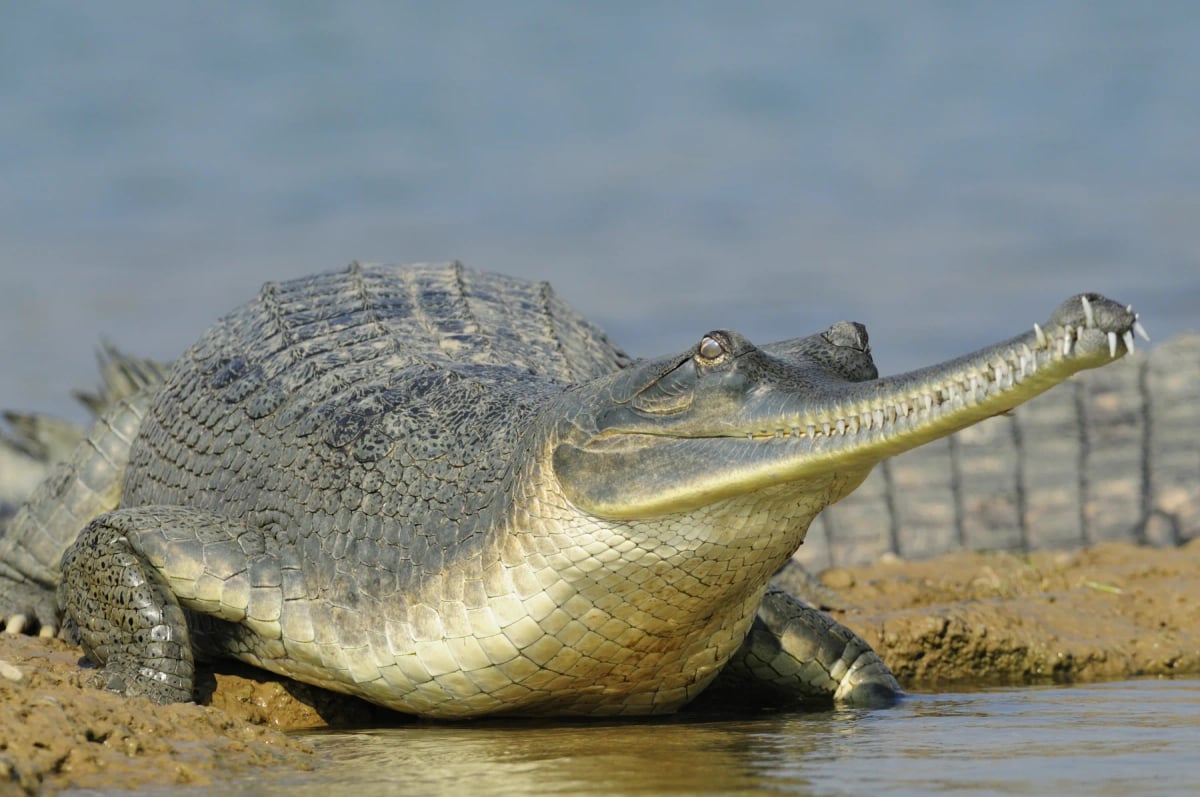
Gharial
Gavialis gangeticus
The gharial is a striking river reptile recognized by its extremely long, narrow snout and its rows of small, sharp teeth suited to gripping fish. In Nepal, it is found in the Narayani and Rapti rivers flowing through Chitwan National Park, one of its last strongholds. Fishing nets and habitat loss remain serious threats, and ongoing conservation work inside the park is essential to its survival over the long term.
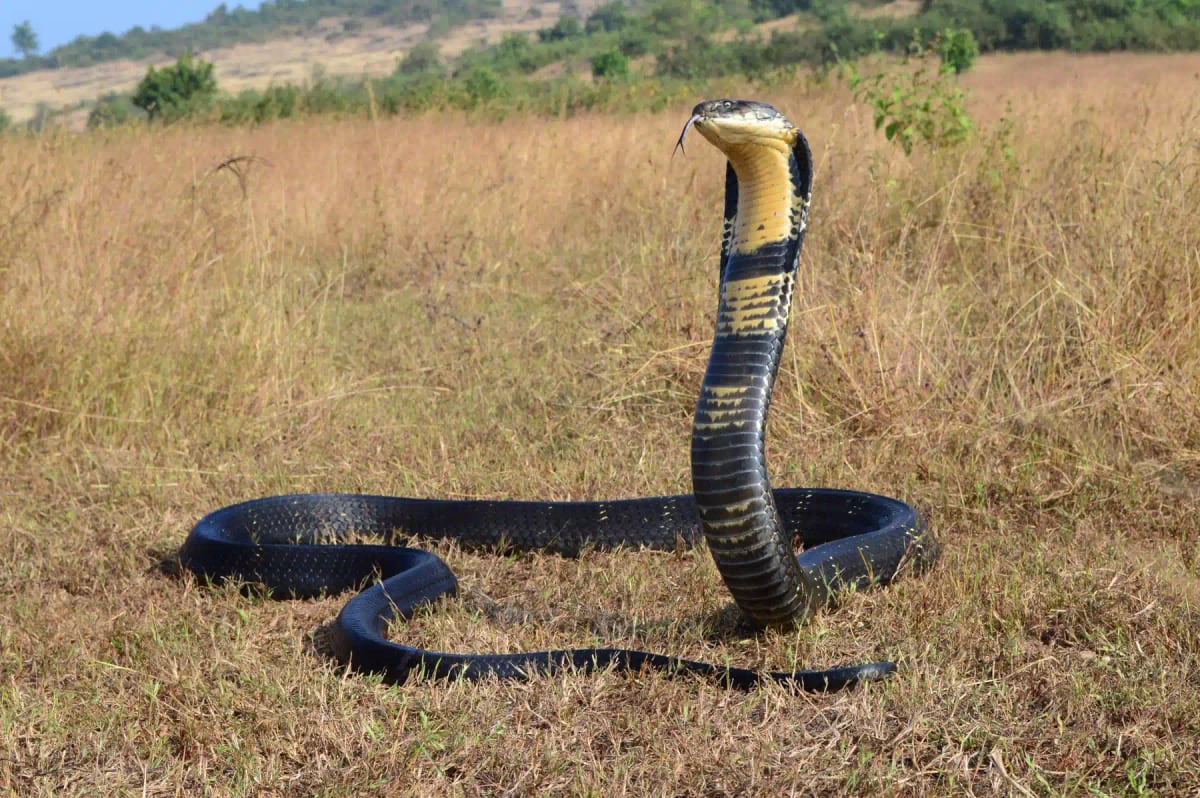
King Cobra
Ophiophagus hannah
The king cobra reaches the northern edge of its range in Nepal, where it inhabits the subtropical forests and grasslands of the Terai lowlands. It is occasionally seen in and around protected areas like Chitwan and Bardia national parks. Feared by local communities, it rarely enters populated areas. Habitat loss in the Terai due to agricultural expansion is the main threat to the species in Nepal.
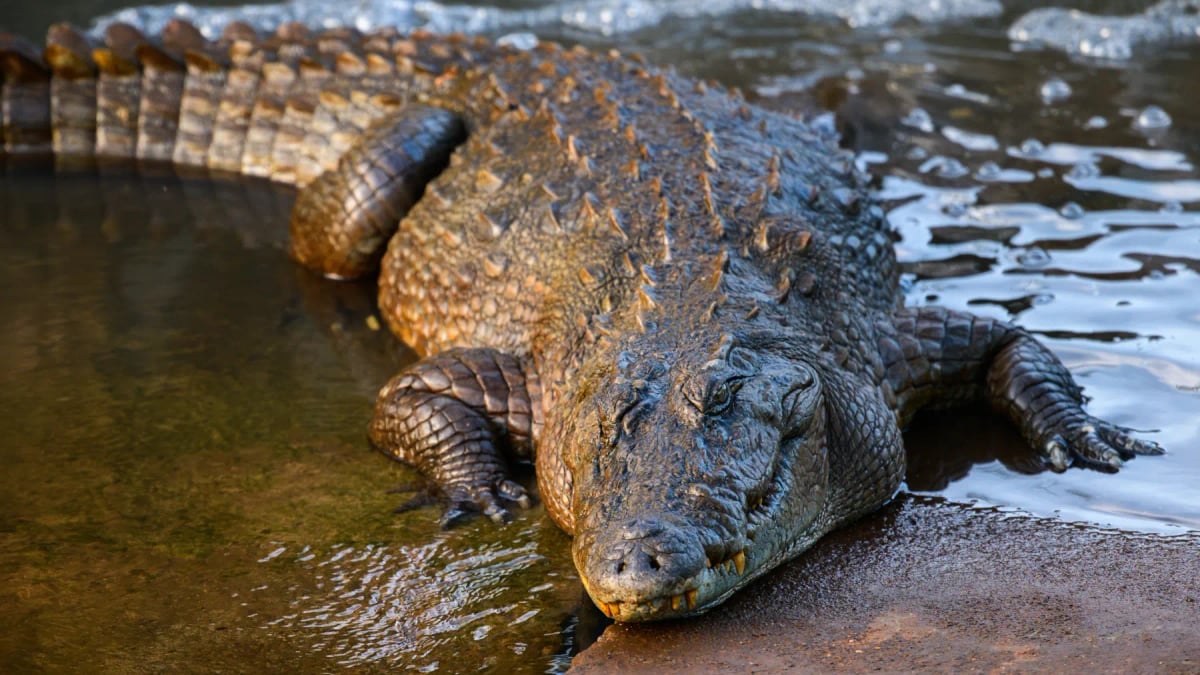
Mugger Crocodile
Crocodylus palustris
The mugger crocodile shares Nepal's lowland rivers with the gharial, though it tolerates a wider range of water conditions. It is found mainly in the Terai region, particularly in and around Chitwan National Park, where it basks on the banks of the Rapti and Narayani rivers. It feeds on fish and opportunistically takes larger prey. Habitat loss in the Terai is the main pressure on the species in Nepal.
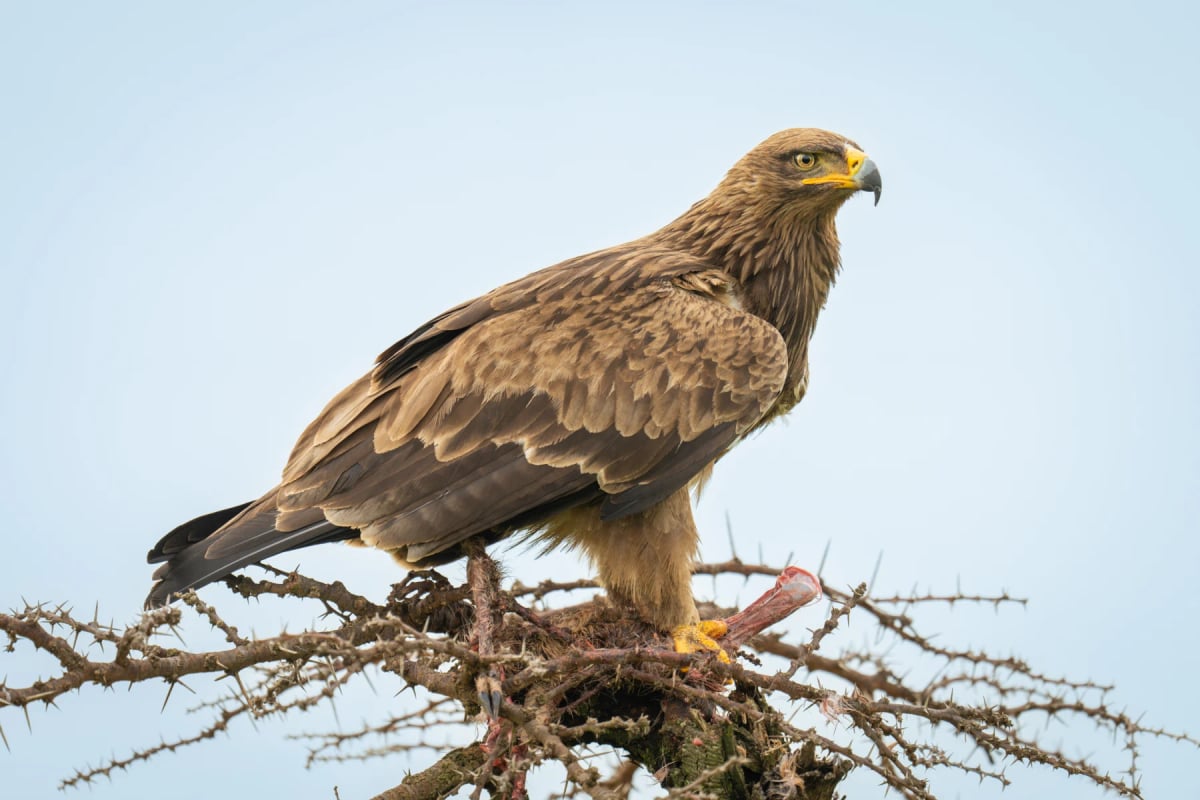
Steppe Eagle
Aquila nipalensis
Nepal serves as both a migration corridor and a wintering area for the Steppe Eagle, with birds recorded across the lowland Terai region and the valleys of the middle hills. The species passes through Nepal each autumn and spring as it moves between its breeding grounds further north and its wintering areas to the south. The IUCN lists it as Endangered, and power line electrocution remains a serious threat throughout South Asia.
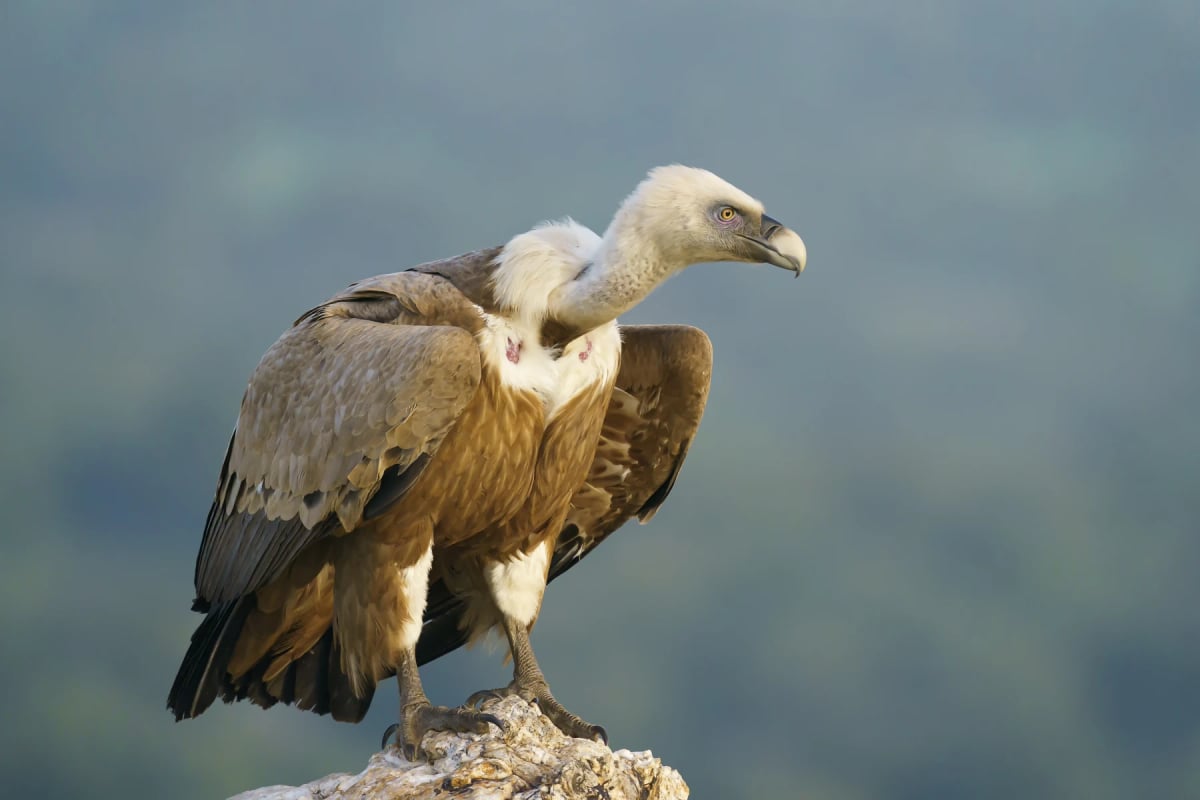
Griffon Vulture
Gyps fulvus
In Nepal, the griffon vulture soars over the Himalayas and the mid-hill regions, riding thermal currents to great heights in search of carrion. It often gathers in groups at carcasses alongside other vulture species. Nepal has taken steps to address the decline of vultures caused by veterinary drugs harmful to birds, making conservation efforts in the country especially important for the species. Its IUCN status is Least Concern.
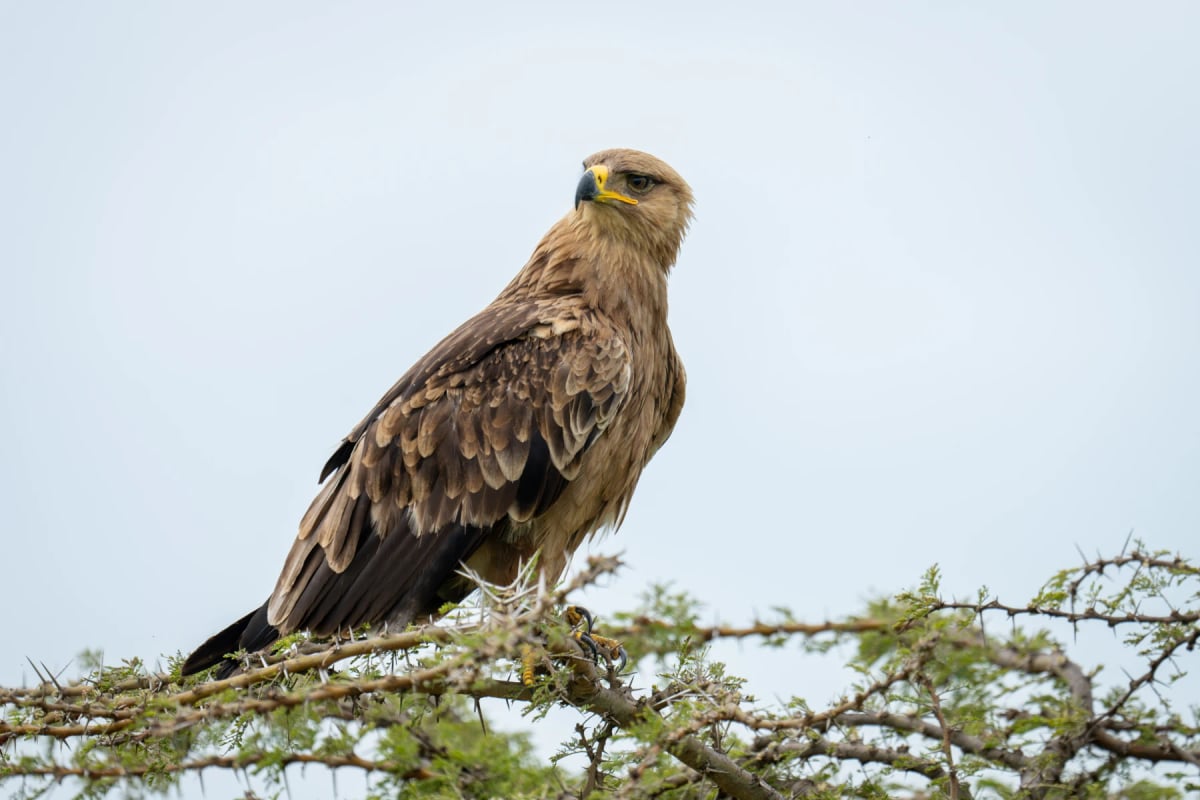
Tawny Eagle
Aquila rapax
The tawny eagle is found in the lowland grasslands and open plains of Nepal's Terai region, where it hunts small mammals and reptiles or scavenges from carcasses. It faces serious pressure from habitat loss, poisoning, and collisions with power lines. Once more widespread across the subcontinent, its numbers have fallen sharply. The IUCN lists it as Vulnerable, making conservation efforts in the Terai increasingly important.
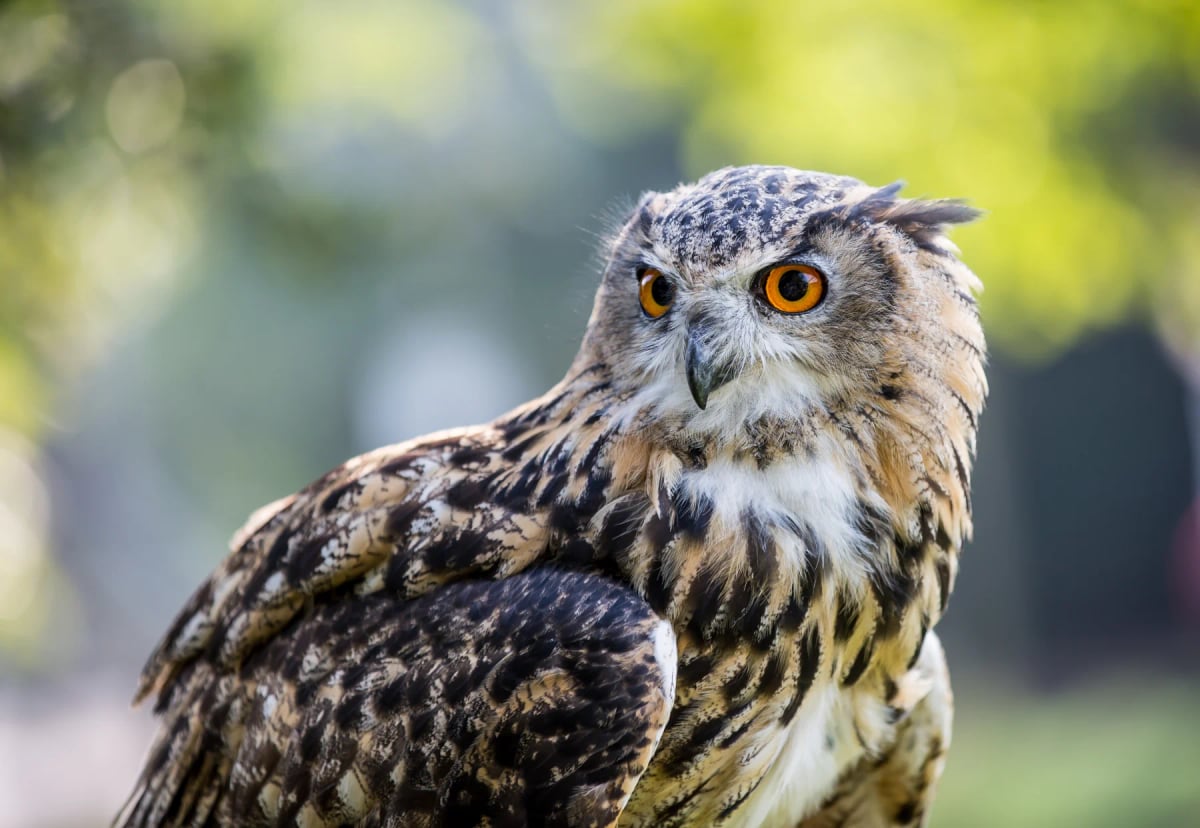
Eagle Owl
Bubo bubo
In Nepal, the Eurasian eagle owl is found across a range of elevations, from the foothills of the Himalayas to higher rocky terrain. It favours steep gorges, forested hillsides, and open mountain slopes. A nocturnal predator of considerable size, it feeds on rodents, birds, and small mammals. Nepal's varied topography supports a number of resident pairs. It is one of the largest owls recorded in the country. The IUCN lists it as Least Concern.
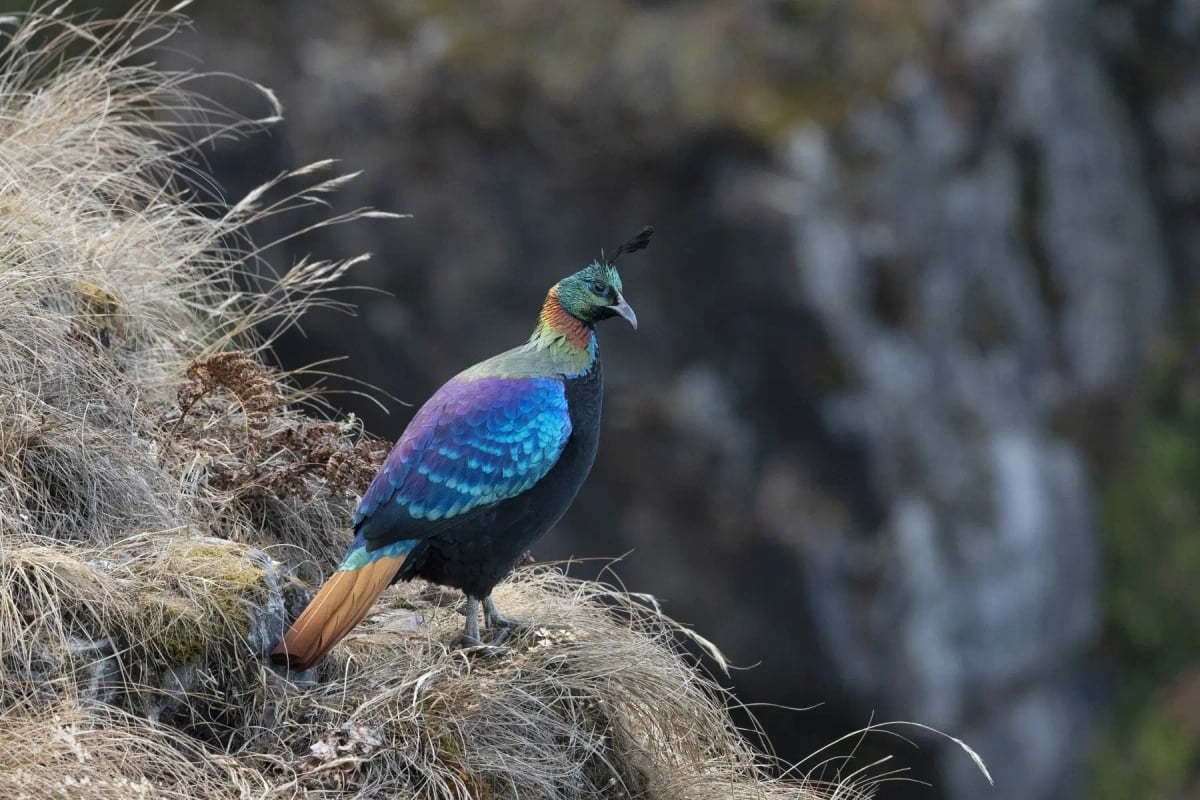
Himalayan Monal
Lophophorus impejanus
Nepal holds a special bond with the Himalayan monal: it is the country's national bird, known locally as the danphe. Found across the country's middle and high Himalayas, it thrives in forests of oak and rhododendron and on open alpine slopes. Males are famous for their spectacular iridescent plumage. Conservation efforts in protected areas such as Sagarmatha and Langtang national parks help support healthy populations of this celebrated bird.
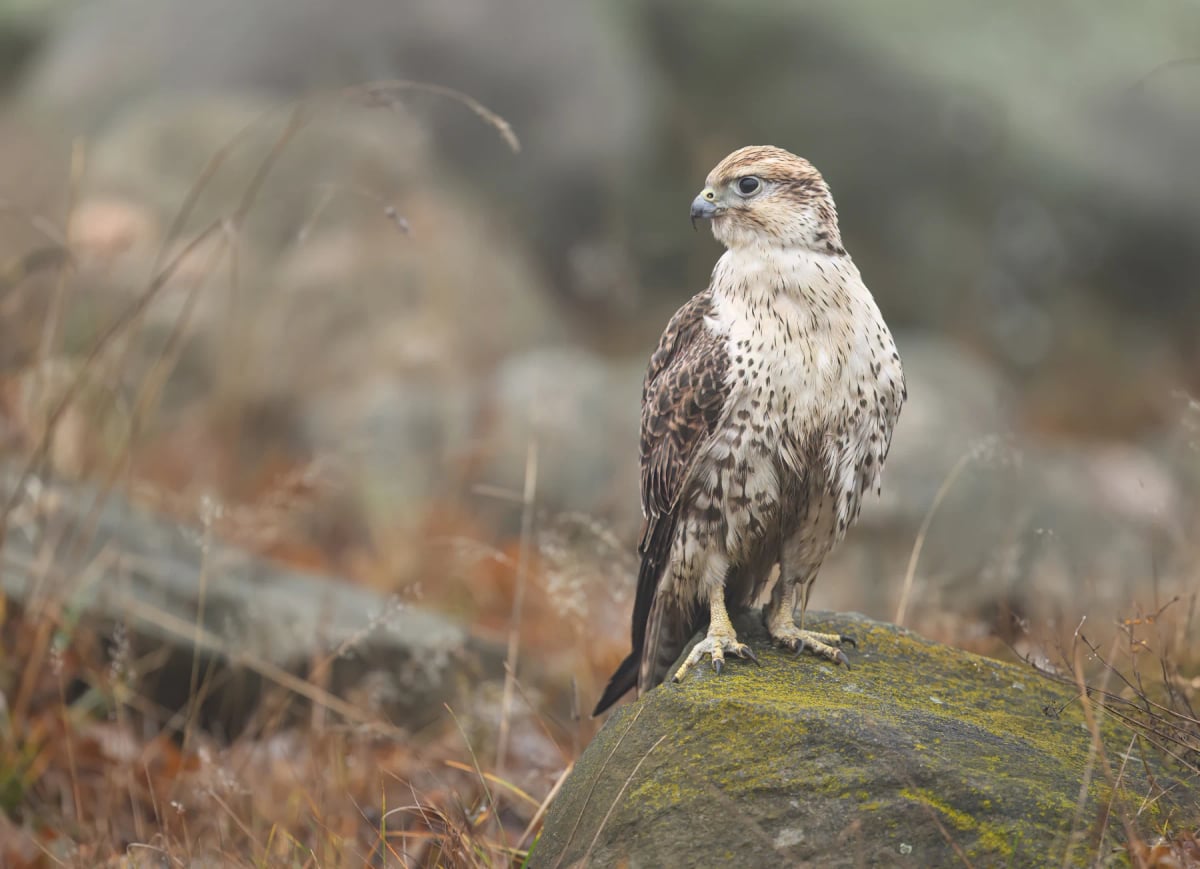
Saker Falcon
Falco cherrug
In Nepal, the saker falcon is recorded as a winter visitor, descending from its Central Asian breeding grounds to spend the cooler months in lower-lying open areas. The Terai lowlands and river valleys in the south of the country offer the open terrain this species favours for hunting. Sightings in Nepal are relatively uncommon, but the country forms part of the broader South Asian wintering range for this falcon. The IUCN lists it as Endangered.
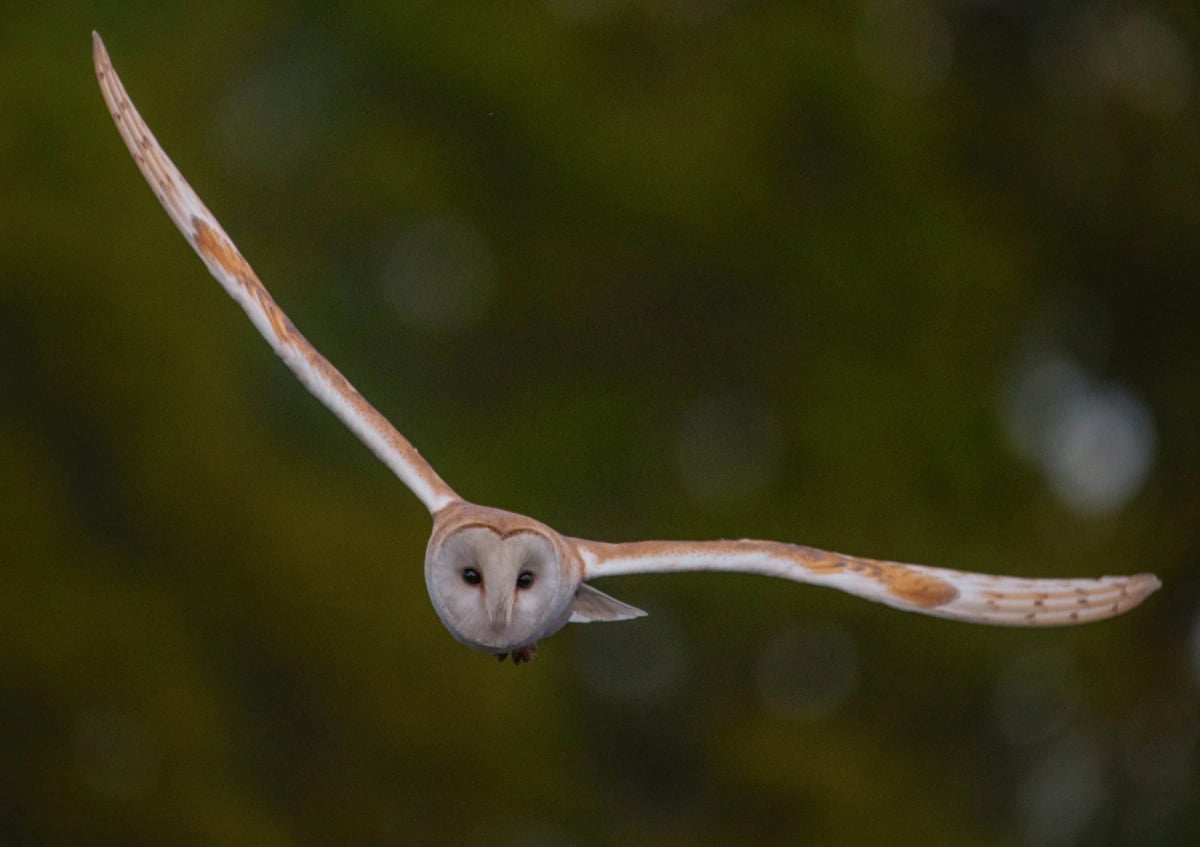
Barn Owl
Tyto alba
The barn owl is found in Nepal mainly in the Terai lowlands and the lower hill zones, where open farmland, rice paddies, and areas near villages provide suitable hunting habitat. It nests in old buildings, hollow trees, and cliff faces, and hunts rodents at night. It avoids the high Himalayan zones, where cold temperatures and altitude make survival difficult. In the agricultural communities of the Terai, where rodent damage to rice and wheat is a persistent problem, it is valued as a natural pest controller.
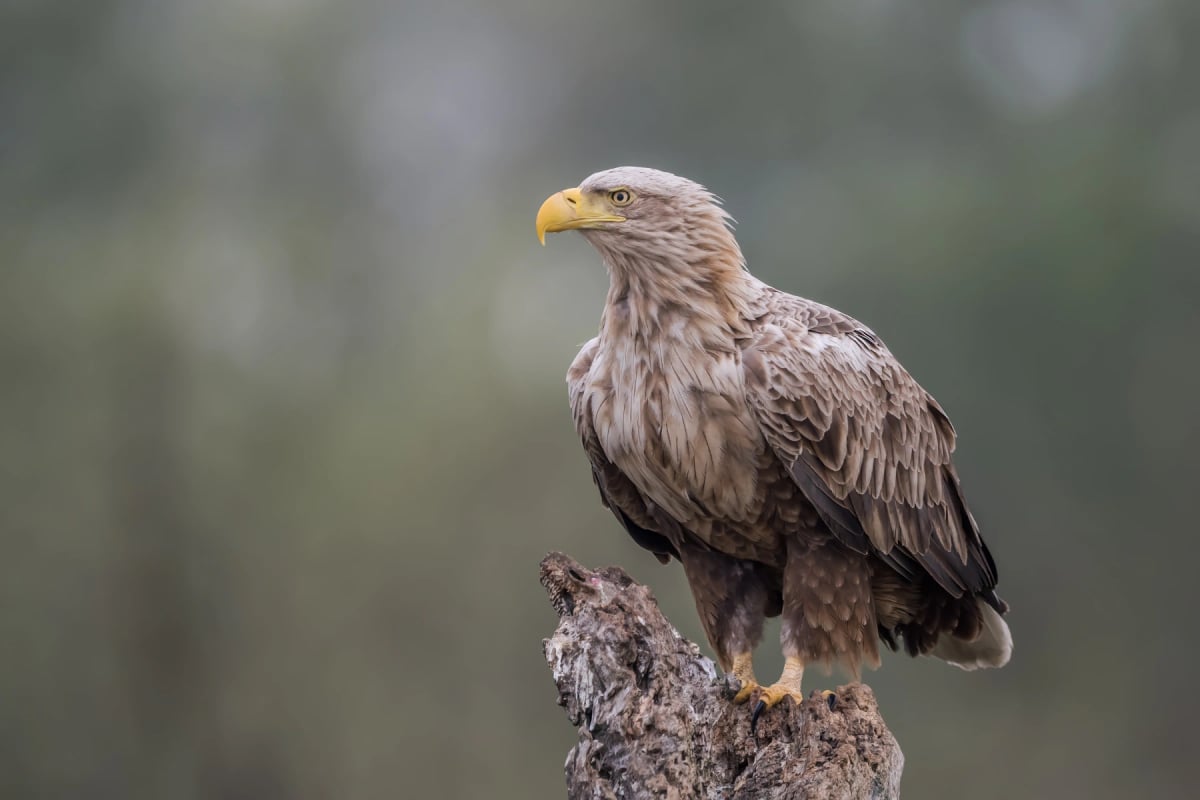
White tailed Eagle
Haliaeetus albicilla
The white tailed eagle reaches Nepal as a rare winter visitor, typically found in the lowland Terai region along rivers and wetlands close to the border with India. The floodplains of rivers such as the Koshi and Narayani, as well as protected areas including Koshi Tappu Wildlife Reserve, offer suitable habitat. Sightings are infrequent, and the species is considered a notable record whenever one is confirmed in the country.
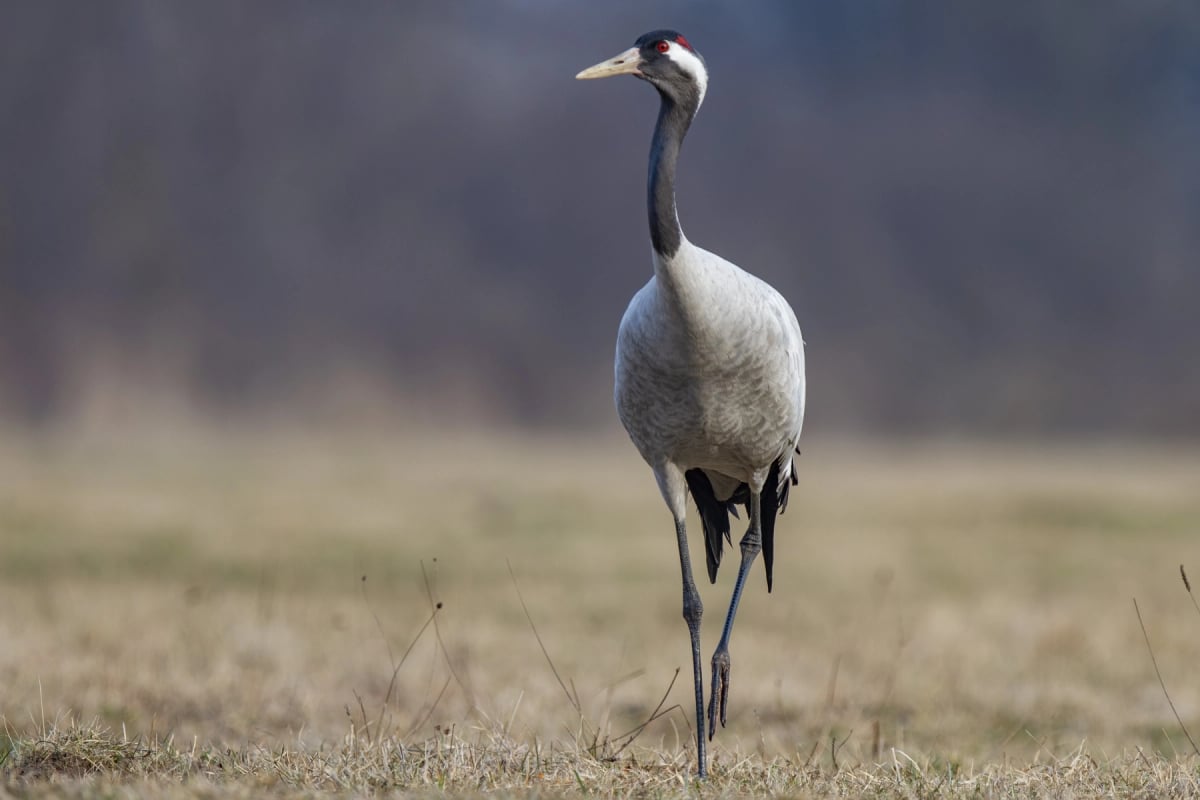
Crane
Grus grus
In Nepal, the common crane is a winter visitor, descending from Central Asian breeding grounds to lower elevations across the Terai plains and river valleys. Flocks have been recorded in wetlands and agricultural fields, where the birds feed on roots, grain and small invertebrates. Nepal sits on the Central Asian Flyway, making it an important corridor for this species. Its IUCN status is Least Concern.
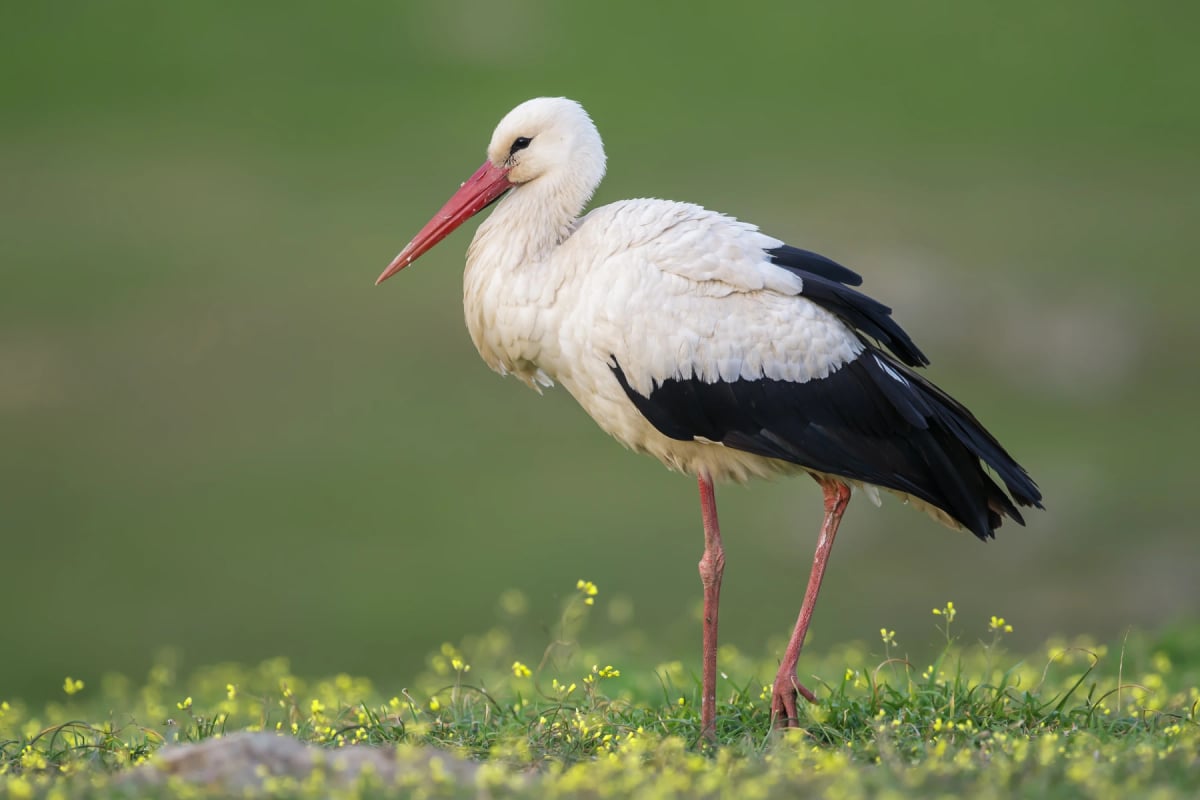
Stork
Ciconia ciconia
The white stork is recorded as a rare winter visitor to Nepal, occasionally seen in the lowland Terai region near wetlands, river floodplains, and open agricultural land. Sightings are uncommon, placing it at the eastern edge of the species' wintering and passage range in South Asia. The bird feeds on frogs, fish, and insects in shallow water habitats. The IUCN lists it as Least Concern.
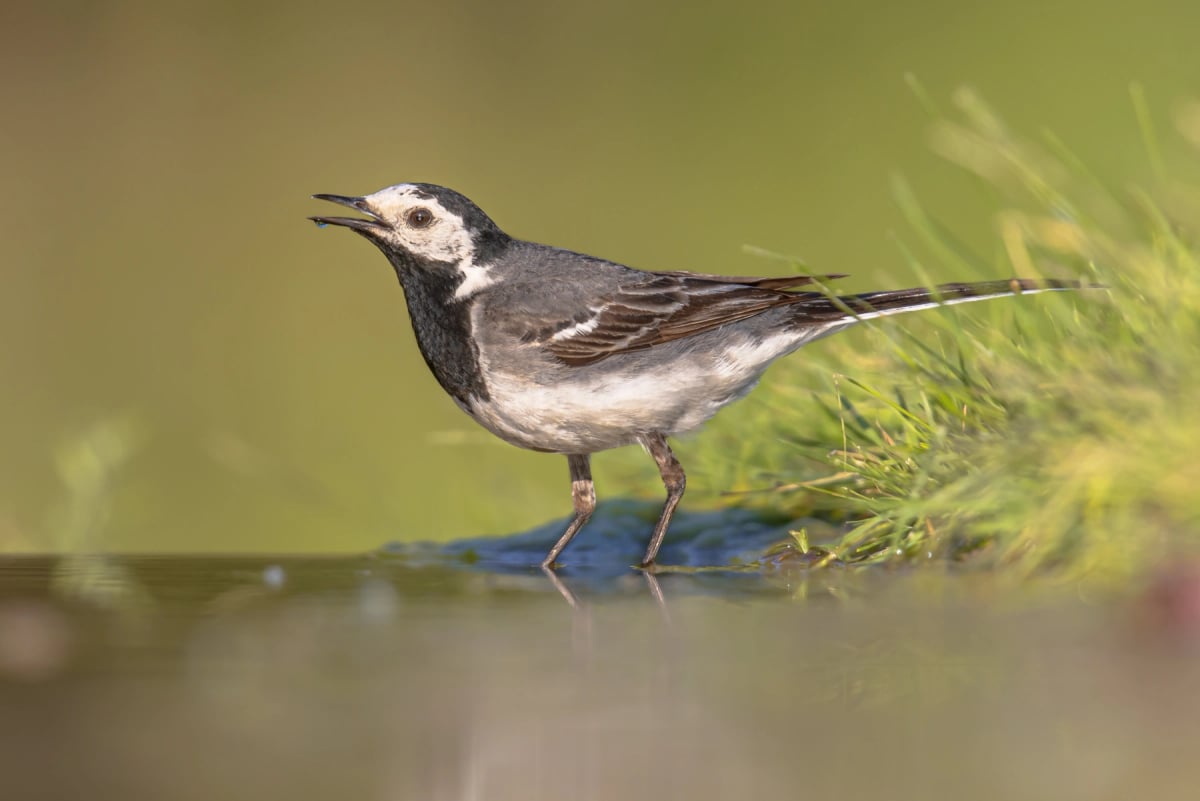
White Wagtail
Motacilla alba
Small black, white and grey bird with a slender tail that bobs up and down as it walks and feeds along the edges of water and open ground.
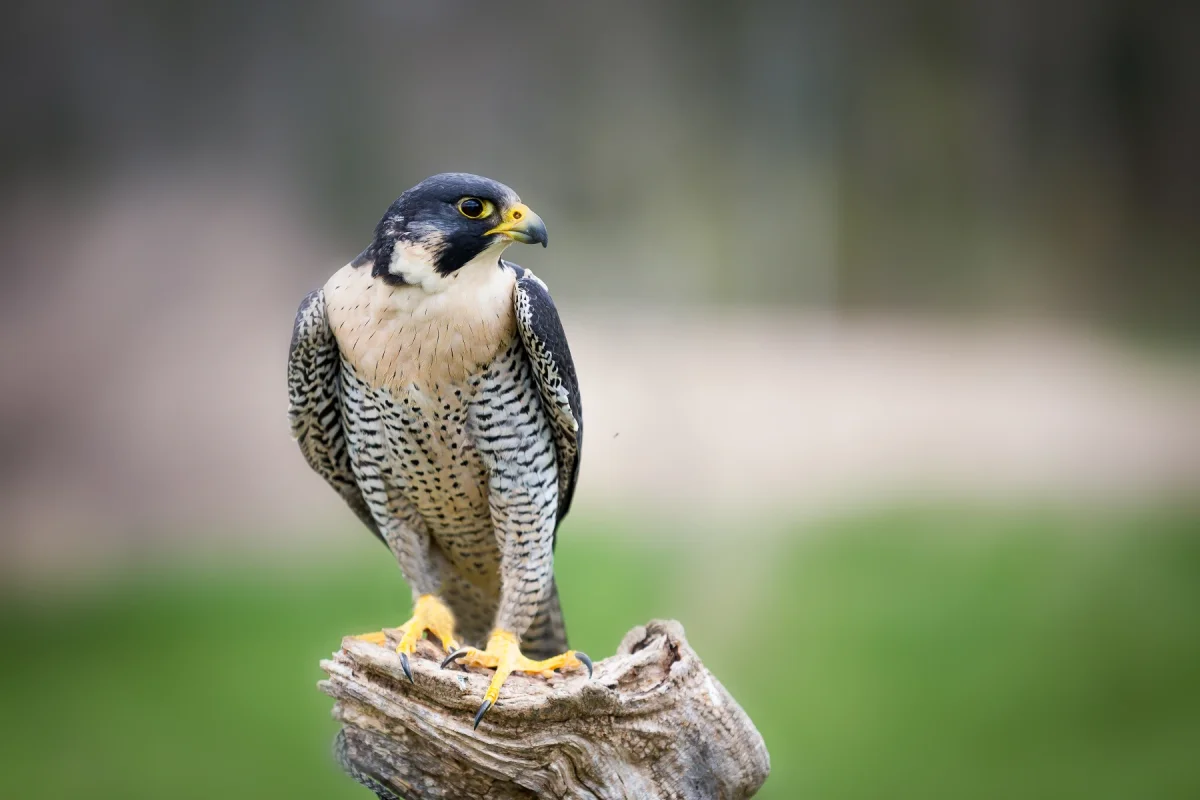
Peregrine Falcon
Falco peregrinus
Nepal is home to some of the highest terrain on Earth, and the peregrine falcon uses the Himalayan valleys and rocky gorges of this country as both nesting sites and migration routes. It has been observed at remarkable altitudes, riding thermals above the mountain ridges. Lower valleys and the Terai plains attract wintering birds and passage migrants. The species is seen across a wide range of elevations, which reflects its impressive ability to adapt to different environments. Its IUCN status is Least Concern.
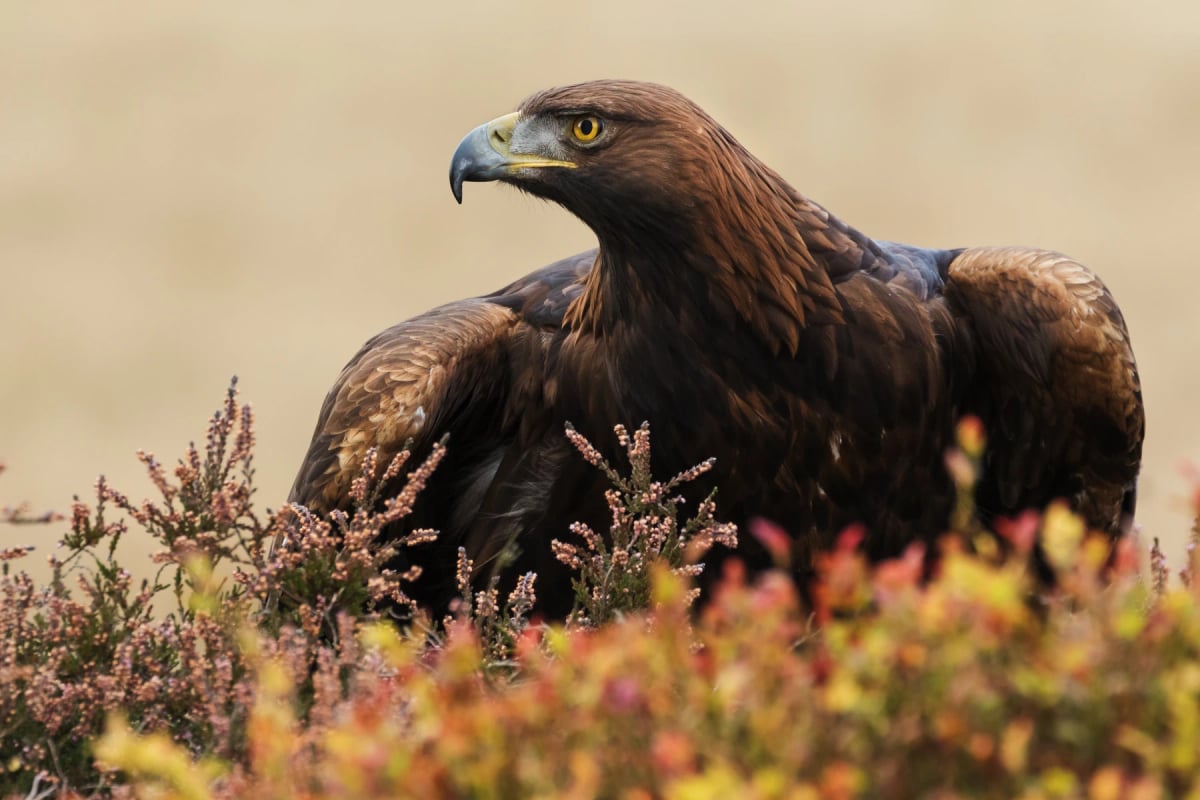
Golden Eagle
Aquila chrysaetos
In Nepal, the golden eagle is found across the high Himalayan valleys and mountain passes, particularly in the remote northern regions. It hunts marmots, hares, and other alpine animals across open slopes above the treeline. Nesting takes place on steep cliff faces far from human activity. The species benefits from the vast undisturbed terrain that Nepal's high altitude landscapes provide.
Researched and written by Juan Pablo. Sources: IUCN Red List, scientific literature and regional field guides. Last updated: .