Brocket Deer
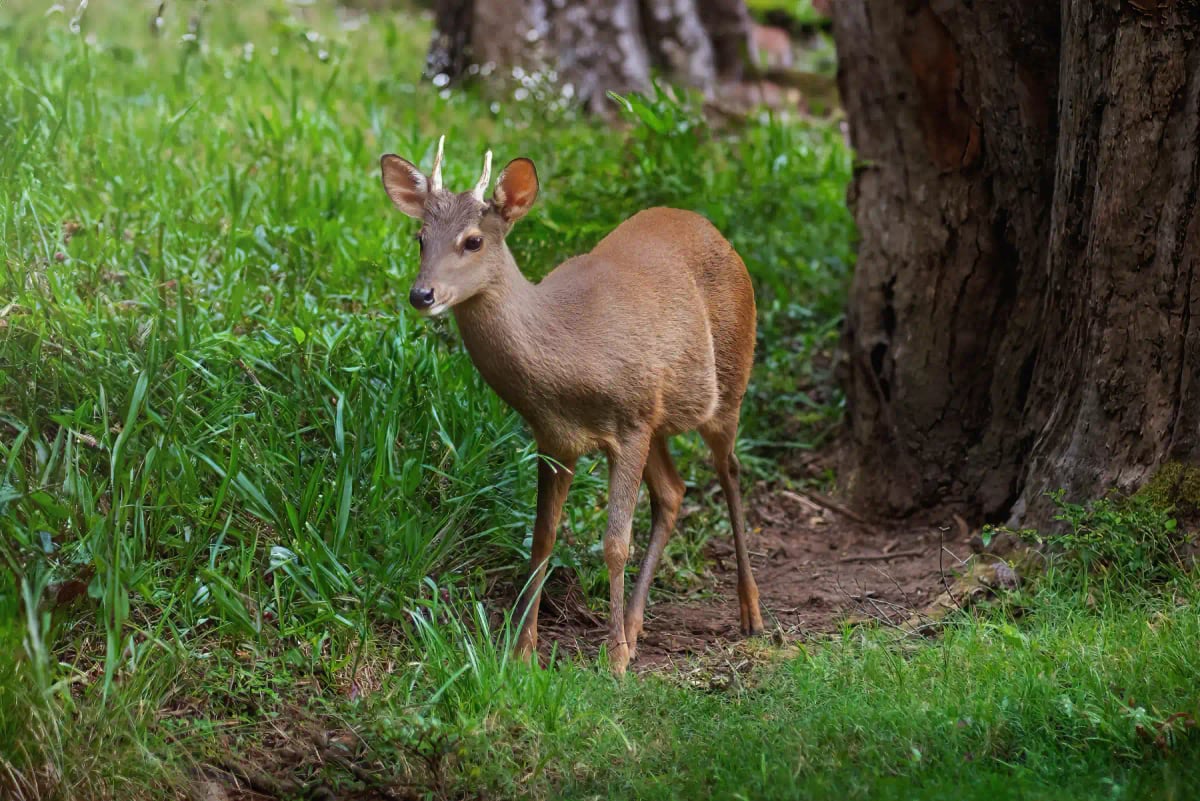
Brocket deer are a group of small forest cervids native to South America, with the red brocket (Mazama americana) and the gray brocket (Mazama gouazoubira) being the most familiar species. They are compact animals, standing roughly 60 to 90 cm at the shoulder, with short, unbranched antlers found only in males. Their coats range from deep reddish brown in the red brocket to grayish brown in the gray brocket. Naturally shy and largely solitary, they are most active around dawn and dusk, slipping quietly through dense rainforest, savanna and subtropical woodland. Their diet consists of fruits, leaves, shoots and fungi, and their habit of swallowing seeds whole makes them valuable agents of forest regeneration. Predators include jaguars, pumas and large birds of prey. Several species face pressure from subsistence hunting and the ongoing loss of forested habitat across the continent.
Species
The genus Mazama contains more than a dozen recognized species, making it one of the most diverse deer genera in the world. The red brocket (Mazama americana) is the largest and most widespread, with a rich chestnut coat and a stocky build. The gray brocket (Mazama gouazoubira) is smaller and paler, favoring drier, more open habitats. Other notable members include the pygmy brocket (Mazama nana) of Atlantic Forest remnants in Brazil and Argentina, the dwarf brocket (Mazama chunyi) of Andean cloud forests, and the Yucatan brown brocket (Mazama pandora). All male brocket deer grow short, simple spike antlers that are never branched, a feature that sets them apart from other cervids of the Americas. Taxonomy within the genus continues to be revised as genetic studies clarify species boundaries.
Habitat and distribution
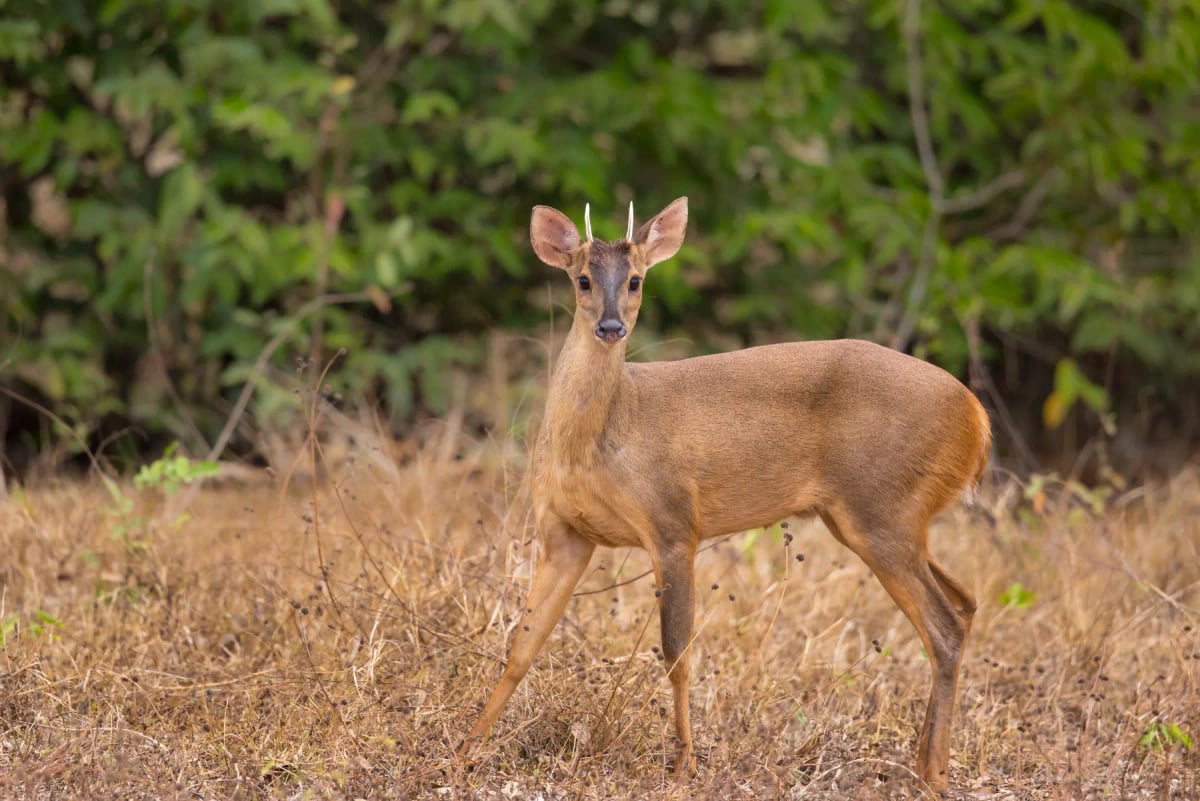
Across South America and into the southern Caribbean, brocket deer occupy a remarkable range of environments. The red brocket is closely tied to dense tropical rainforest, including the vast lowlands of the Amazon basin, while the gray brocket thrives in drier habitats such as the Cerrado savannas, Chaco woodlands and scrubby grasslands of Argentina, Paraguay and Bolivia. Several Andean species, such as the dwarf brocket, live at elevations above 1,000 metres in cloud forest and páramo. Together, the species of the genus span from Trinidad and Tobago and Venezuela in the north to the Patagonian foothills in the south. Dense understorey cover, access to water and the availability of fruiting trees are the key factors that determine where individual species settle and thrive.
Diet
Fruit forms the cornerstone of the brocket deer diet, supplemented by leaves, tender shoots, bark, and fungi depending on seasonal availability. Unlike many larger ungulates, brocket deer are selective feeders that tend to seek out the most nutritious plant parts rather than grazing indiscriminately. They swallow fruit whole and pass seeds intact through their digestive system, distributing them across the forest floor as they travel. This behavior makes them important agents of seed dispersal for many tree species, including some with large seeds that few other animals can handle. During leaner dry season periods, foliage and fungi become more prominent in their diet. Because their nutritional needs are met by relatively small quantities of high quality food, they do not need to cover large distances each day in search of sustenance.
Behavior
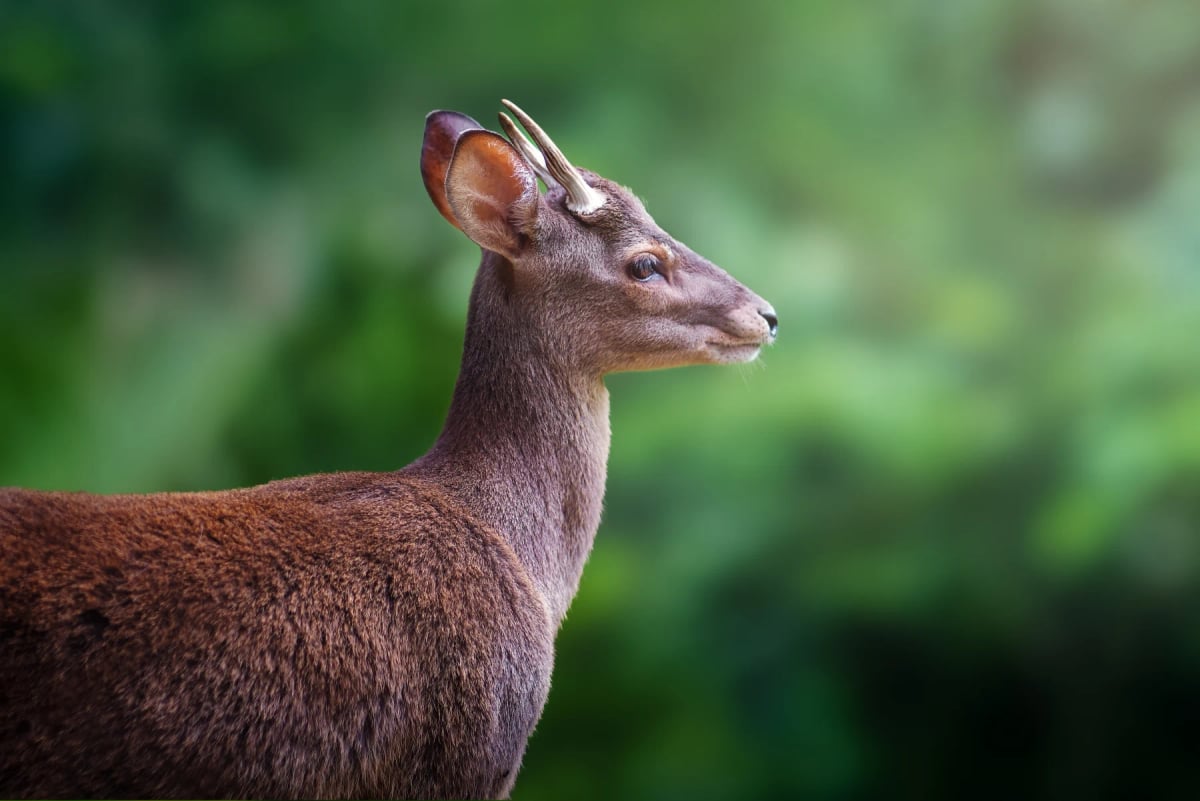
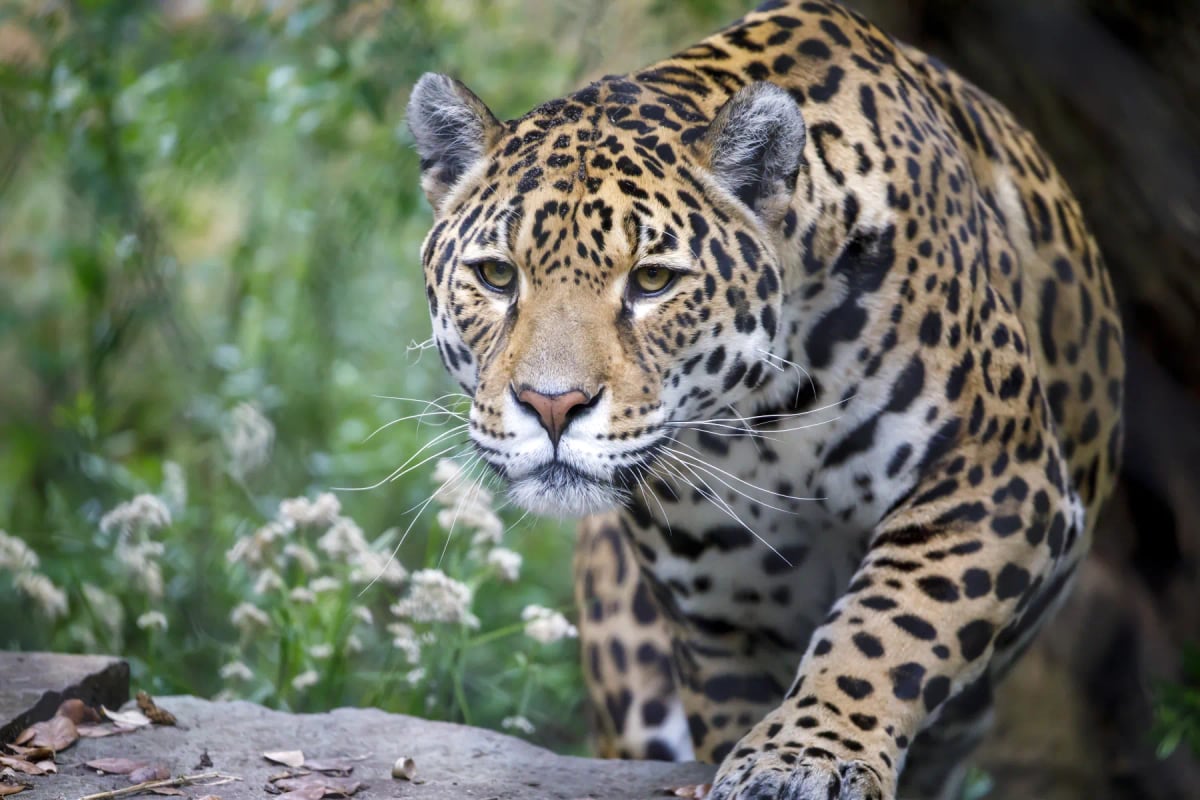
Solitary by nature, brocket deer rarely gather in groups outside of the brief period of courtship. Each individual maintains a home range that it marks using scent glands located near the eyes and between the hooves. Activity peaks around dawn and dusk, when low light offers some protection from visual predators such as jaguars and pumas. When threatened, a brocket deer rarely flees in a straight line. Instead, it ducks and weaves through dense undergrowth at speed, using its compact body and familiarity with local terrain to its advantage. Vocalizations are limited, and communication relies heavily on scent marking. Males become more territorial during the breeding season and may engage in brief confrontations, though serious injuries from fighting are uncommon given the simple, unbranched structure of their antlers.
Conservation
The conservation picture for brocket deer varies considerably across the genus. The IUCN classifies the red brocket as Least Concern, though populations in heavily fragmented landscapes are declining. The pygmy brocket and the dwarf brocket are assessed as Vulnerable, and ongoing habitat loss continues to put pressure on several other species. Subsistence hunting represents a serious threat across much of their range, as brocket deer are a traditional source of protein in many rural and indigenous communities. Deforestation driven by agriculture, cattle ranching and road expansion fragments their habitat and isolates populations, reducing genetic exchange over the long term. Effective conservation depends on protected area networks, hunting regulations that are both fair and enforceable, and research to better understand the many species within this genus that remain poorly studied.
Where it is found
The Brocket Deer can be found in places such as:
Researched and written by Juan Pablo. Sources: IUCN Red List, scientific literature and regional field guides. Last updated: .
Technical factsheet




Frequently Asked Questions
What do brocket deer eat?
Brocket deer are selective feeders that prefer fruit above all else, rounding out their diet with leaves, tender shoots, bark, and fungi. They tend to pick the most nutritious parts of a plant rather than grazing broadly. Seasonal availability shapes what they eat day to day. During dry periods, foliage and fungi become more important. Because they favor food that is rich in nutrients, they can meet their daily needs without traveling great distances.
Where do brocket deer live?
Brocket deer are found across a wide range of habitats in South America and the southern Caribbean. The red brocket favors dense tropical rainforest, while the gray brocket prefers drier environments like savannas and scrubland. Some Andean species live in cloud forests above 1,000 metres. Countries such as Brazil, Colombia, Venezuela, Argentina, and Peru all host brocket deer populations. Access to water, dense cover, and fruiting trees are the key factors in where they settle.
Are brocket deer endangered?
It depends on the species. The red brocket is classified as Least Concern by the IUCN, though some populations are declining due to habitat loss. The pygmy brocket and the dwarf brocket are both assessed as Vulnerable. Across the genus, threats include deforestation driven by agriculture and cattle ranching, as well as subsistence hunting. Several species remain poorly studied, which makes it difficult to get a full picture of their conservation status.
How do brocket deer behave when threatened?
When a brocket deer senses danger, it rarely runs in a straight line. Instead, it ducks and weaves through dense undergrowth at speed, relying on its compact build and knowledge of the local terrain to escape predators like jaguars and pumas. They are most active at dawn and dusk, when low light helps conceal them. Their instinct is to vanish into thick vegetation rather than confront a threat or stand in the open.
Do brocket deer have branched antlers?
No. This is one of the most distinctive features of brocket deer. Males grow short, simple spike antlers that are never branched, which sets them apart from most other deer in the Americas. The antlers are small relative to body size, and males use them mainly during confrontations in the breeding season. Because the antlers lack branches, serious injuries from fighting between males are quite rare.
What role do brocket deer play in the ecosystem?
Brocket deer are valuable agents of seed dispersal throughout South American forests. They swallow fruit whole and pass seeds intact through their digestive system, depositing them across the forest floor as they move. This helps many tree species regenerate, including some with large seeds that few other animals can disperse. By spreading seeds across wide areas, brocket deer contribute directly to forest recovery and to maintaining plant diversity in the ecosystems they inhabit.
How many species of brocket deer are there?
The genus Mazama contains more than a dozen recognized species, making it one of the most diverse deer genera in the world. The red brocket and the gray brocket are the most familiar, but the group also includes smaller and less studied species such as the pygmy brocket, the dwarf brocket, and the Yucatan brown brocket. Ongoing genetic research continues to refine the taxonomy of the group, and the total number of recognized species may still change.