South American Gray Fox
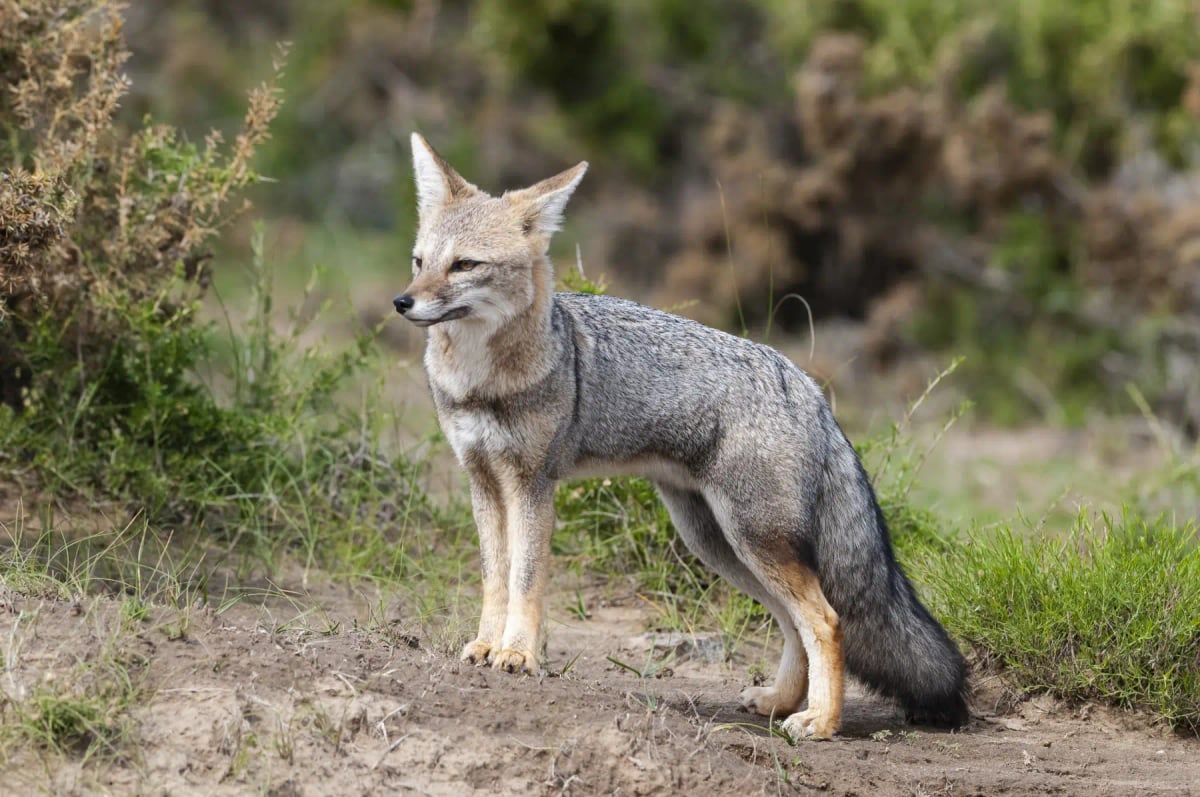
The South American gray fox, also known as the chilla or Patagonian fox, is a small wild canid found across Chile, Argentina and parts of southern Peru. It has a coat of gray fur with warm reddish tones on the sides and legs, and a bushy tail with a dark tip that helps it blend into dry grasslands and open scrub. Highly adaptable, it thrives in steppe, shrubland, Andean foothills and even farmland. As an omnivore it pursues rodents, birds, insects and lizards, and rounds out its diet with wild fruits and carrion. It is mostly active at dusk and during the night, spending daylight hours resting in burrows or rocky shelters. It is generally solitary outside of the breeding season. The IUCN lists it as Least Concern, though hunting and habitat loss still pressure local populations.
Habitat and distribution
The South American gray fox ranges across Chile and Argentina from the Atacama Desert in the north all the way down to Patagonia, with a smaller presence in southern Peru. It is one of the most adaptable wild canids on the continent, comfortable in open steppe, thorny shrubland, Andean foothills, coastal scrub and even the edges of farmland. It tolerates both arid and cold climates with ease, and in Chile it can be found from sea level up to elevations above 4,000 metres in the Andes. It generally avoids dense forest, preferring open terrain or areas with partial cover where it can move freely and spot prey. In Patagonia it is a familiar sight on windswept plains where few other carnivores of similar size compete with it.
Diet
Few wild animals in South America are as opportunistic at the table as this fox. Small rodents make up the core of its diet, but it also takes birds, lizards, insects, scorpions and carrion whenever the opportunity arises. Wild fruits, seeds and plant matter round out its meals, particularly during seasons when animal prey is harder to find. This variety is one of the main reasons the species manages so well across such different environments. In areas where European hares have been introduced, the fox will hunt them too, showing just how readily it adjusts its hunting habits to whatever is available. It forages alone, relying on sharp hearing and a keen sense of smell to locate prey in the dark across grassland and scrub.
Behavior
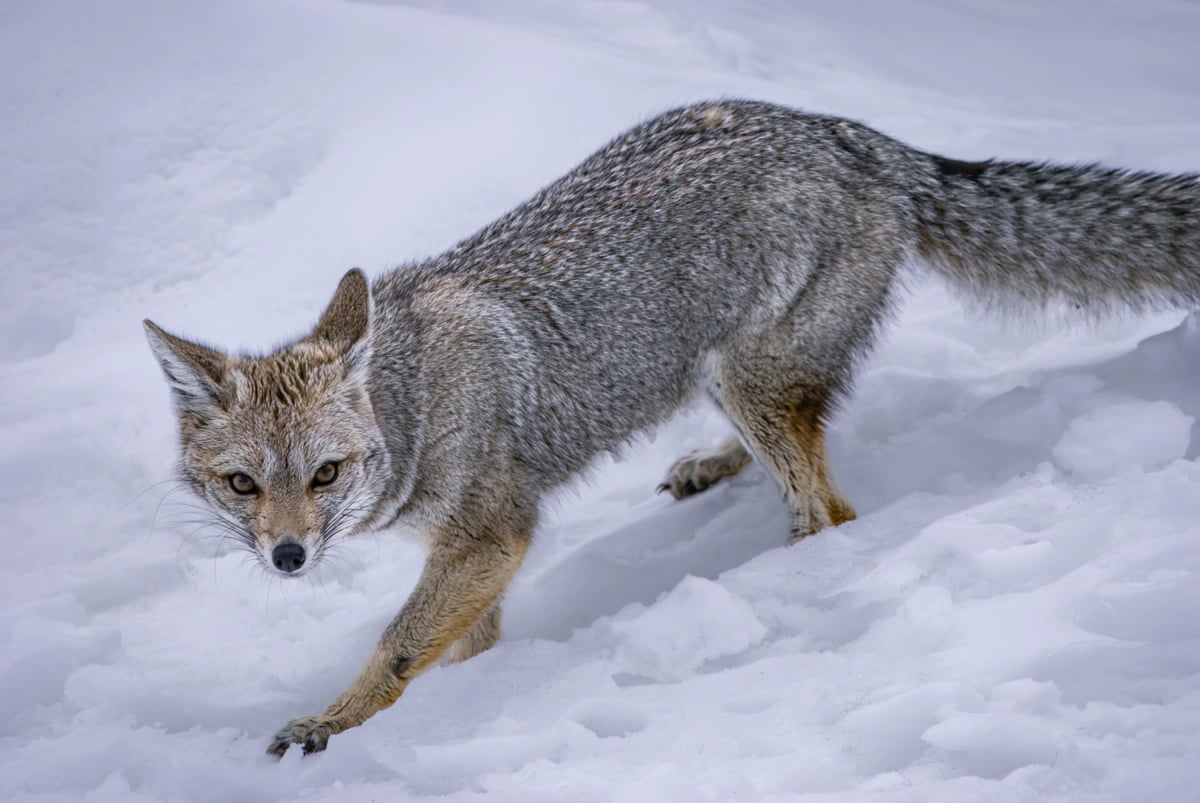
At dusk, when most people are heading indoors, the South American gray fox is just getting started. It is active mainly from late afternoon through the night, resting during daylight hours inside burrows it digs itself or borrows from other animals, and among rock crevices and dense vegetation. Outside of the breeding season, adults live alone and defend loosely defined home ranges. Pairs come together in late winter to mate, and both parents take part in raising the pups, which are born after a gestation of roughly 53 to 58 days. The young become independent within a few months. Although generally silent, these foxes communicate through scent marking and occasional barks or whines, especially around the den site during the breeding period.
Relation with humans
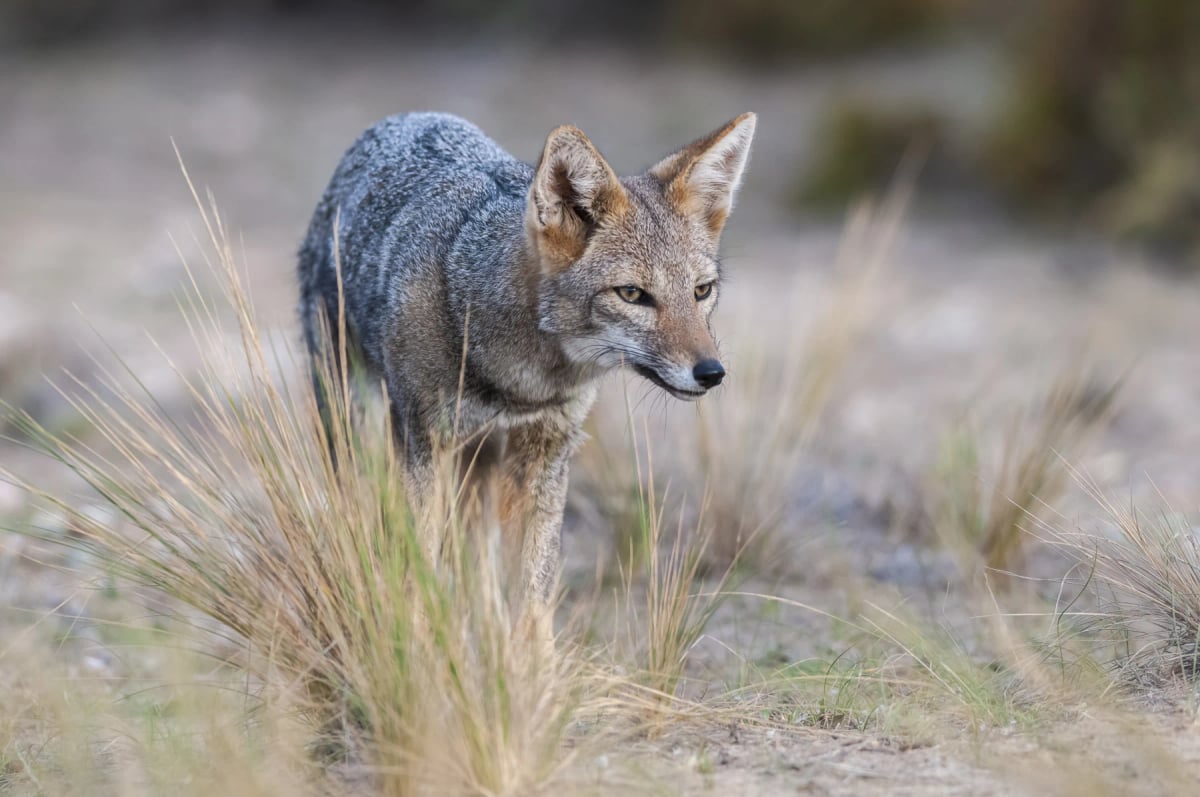
Across rural Chile and Argentina, the chilla is a familiar neighbor on farms and ranches. On the positive side, it keeps rodent populations in check, which benefits crops and pastures. However, it occasionally targets poultry and newborn lambs, which brings it into conflict with farmers and shepherds. For much of the twentieth century it was heavily hunted for its fur, and the trade in pelts caused significant declines in some areas. Today the fur trade is far less active, but persecution by livestock owners continues in places. The fox has also shown a surprising ability to adapt to suburban edges, sometimes scavenging near human settlements. In Andean communities it holds a small but recognized place in local folklore, though this rarely translates into active protection.
Conservation
The IUCN rates the South American gray fox as Least Concern, reflecting the fact that it remains widespread and relatively numerous across its range. That said, the picture is not entirely without worry. Ongoing conversion of natural habitat to agriculture, along with road casualties, hunting and competition from domestic dogs, puts pressure on populations in certain regions. The species also faces the threat of diseases passed on by feral and domestic dogs, including canine distemper and mange. In Chile and Argentina it receives some legal protection, though enforcement varies. Conservation efforts focused on preserving open grasslands and shrublands benefit this fox indirectly. Continued monitoring is important to detect any future shifts in population trends, particularly in areas where habitat loss is advancing quickly.
Researched and written by Juan Pablo. Sources: IUCN Red List, scientific literature and regional field guides. Last updated: .
Technical factsheet





Frequently Asked Questions
What does the South American gray fox eat?
It eats a wide variety of things. Rodents are its main prey, but it also hunts birds, lizards, insects, and scorpions, and feeds on carrion when it finds it. Wild fruits and seeds fill the gaps when animal prey is scarce. In areas where European hares have been introduced, it hunts those too. This flexibility in diet is a big part of why it survives so well across so many different environments.
Where does the South American gray fox live?
It lives across Chile and Argentina, from the Atacama Desert in the north down to the cold plains of Patagonia, with a smaller population in southern Peru. It does well in open steppe, shrubland, Andean foothills, coastal scrub, and farmland edges. In Chile it reaches elevations above 4,000 metres in the Andes. It tends to avoid dense forest, preferring open ground where it can move and hunt freely.
Is the South American gray fox dangerous to humans?
No, it is not a threat to people. It is a small, shy animal that tends to avoid direct contact with humans. It may occasionally take poultry or newborn lambs on farms, which creates conflict with rural communities, but it poses no danger to people. In areas near human settlements it sometimes scavenges for food, but it keeps its distance. Like any wild animal, it should be observed from afar and never fed.
Is the South American gray fox nocturnal?
Mostly yes. It is most active from late afternoon through the night, which makes it crepuscular and nocturnal in its habits. During daylight hours it rests in burrows, rock crevices, or dense vegetation. This schedule helps it avoid the heat in arid areas and stay out of sight of larger predators. People living in rural Patagonia and Chile often hear it before they see it, sometimes catching a glimpse at dusk.
What are the main threats to the South American gray fox?
The biggest threats come from hunting, habitat loss, and conflict with farmers who see it as a pest. Road accidents also kill a significant number every year. On top of that, diseases spread by domestic and feral dogs, including canine distemper and mange, pose a serious risk to local populations. While the species is still widespread overall, these pressures can cause real declines in specific regions, particularly where farmland is expanding.
How long does the South American gray fox live?
In the wild, the South American gray fox typically lives around 6 to 8 years, though exact figures vary and survival over the long term depends heavily on local conditions. Threats like hunting, road traffic, and disease often shorten that lifespan in areas where pressure on the species is high. In captivity, with proper care and no predators, individuals have been known to live somewhat longer, occasionally reaching beyond 10 years.
Does the South American gray fox live alone or in groups?
It is mostly a solitary animal. Adults live and hunt alone for the greater part of the year, each one keeping to its own loosely defined home range. The exception comes during the breeding season in late winter, when males and females pair up to mate. Both parents then help raise the pups together until the young are old enough to fend for themselves, which happens within a few months of birth.