Cassowary
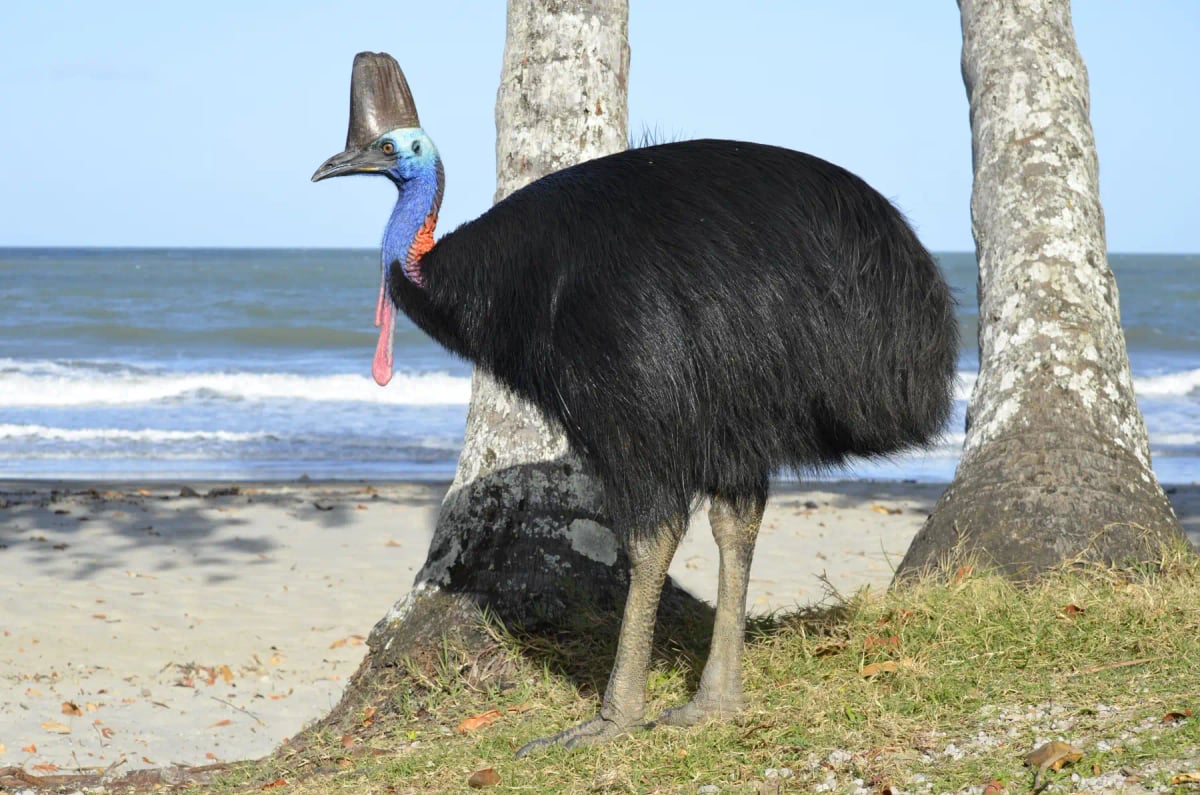
The Southern Cassowary is one of the heaviest birds on Earth and a vital presence in the tropical rainforests of northern Australia, Papua New Guinea, and Indonesia. Females are larger than males and can stand up to 1.8 meters tall, with a bony casque on the head whose exact function is still debated among researchers. The vivid blue and red skin of the neck makes this bird instantly recognizable. Although generally shy and reclusive, cassowaries will defend themselves if cornered, striking with the inner toe claw, which can reach up to 12 centimeters in length. As frugivores, they consume large fruits that few other animals can process, and their digestive system allows seeds to pass intact, making them one of the most important seed dispersers in their ecosystems. The IUCN currently lists the species as Vulnerable due to habitat clearing, vehicle collisions, and hunting pressure.
Size and appearance
Among the heaviest birds on Earth, the Southern Cassowary can stand up to 1.8 meters tall and weigh as much as 76 kilograms, with females consistently larger and heavier than males. The body is covered in coarse, black feathers that hang loosely, almost like fur. Bare skin on the face and neck blazes in vivid shades of blue and red, varying in intensity between individuals. Atop the head sits a hollow casque made of keratin over a bony core, which can grow to around 18 centimeters. Researchers continue to debate its purpose, with theories ranging from sound amplification to protection when pushing through dense vegetation. The legs are exceptionally thick and muscular, and the inner toe on each foot carries a straight claw that can reach up to 12 centimeters in length.
Diet and ecological role
Fruit forms the backbone of the cassowary's diet, and this bird is capable of swallowing whole fruits that are far too large for most other animals to consume. Seeds pass through the digestive system largely intact and are deposited considerable distances from the parent plant, making the cassowary one of the most effective seed dispersers in the rainforests of the Asia-Pacific region. Some plant species, including the large-seeded cassowary plum, appear to depend heavily on this process for regeneration. Beyond fruit, cassowaries will also eat fungi, insects, small vertebrates, and carrion when the opportunity arises. Their role in maintaining the structure and diversity of tropical forest communities is well recognized by ecologists, and the loss of cassowaries from an area can measurably reduce the recruitment of large-seeded tree species over time.
Behavior
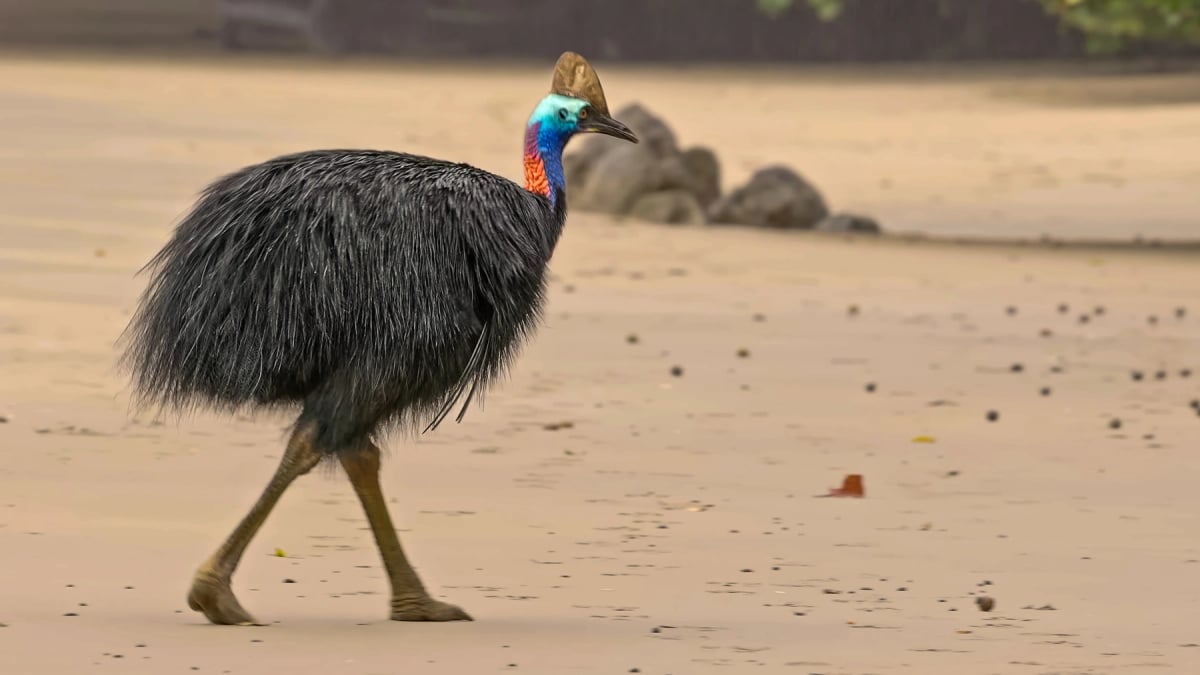
Cassowaries are solitary animals for most of the year, coming together only briefly during the breeding season. They are naturally shy and will typically retreat into dense vegetation at the first sign of a human presence. That said, individuals that have grown accustomed to being fed by people can become bold and unpredictable, which is when most recorded incidents with humans occur. When genuinely threatened and unable to escape, a cassowary defends itself by leaping and striking forward with its powerful legs. The inner claw, straight and dagger-like, is the primary weapon in these encounters. Nesting and chick-rearing duties fall entirely to the male, who incubates the eggs for around 50 days and cares for the young for up to nine months without any involvement from the female.
Distribution
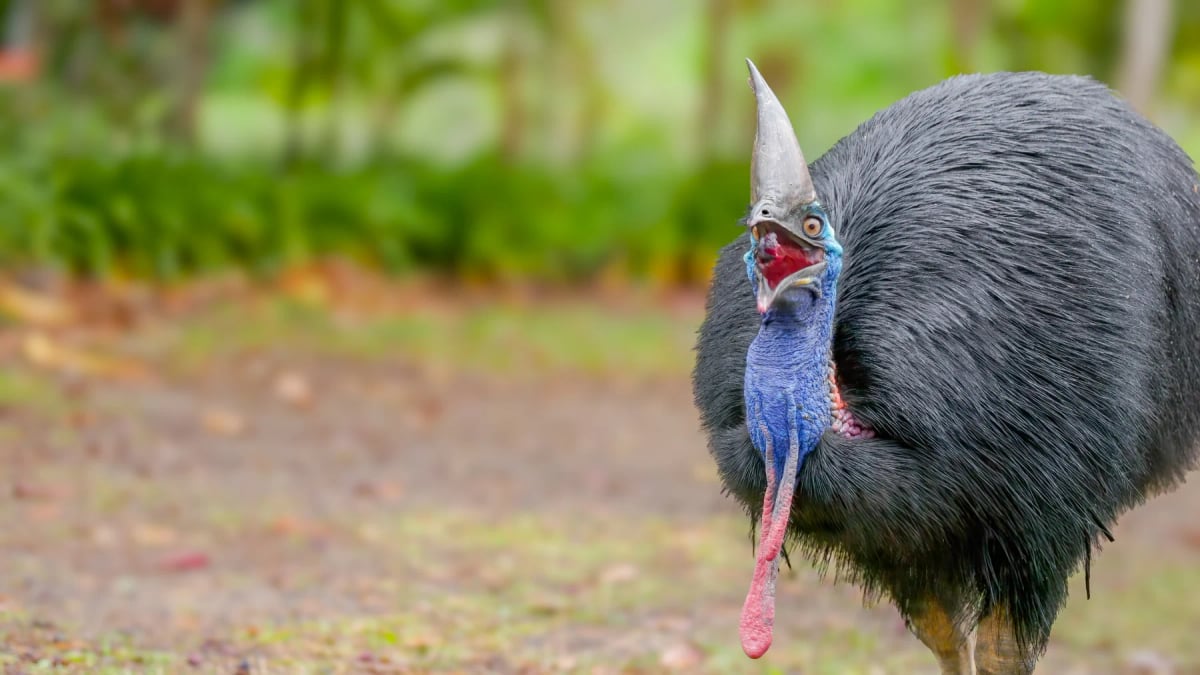
The Southern Cassowary occupies a range that spans the tropical and subtropical rainforests of three countries. In Australia, its presence is concentrated in the wet tropics of far north Queensland, from Cooktown south to Townsville, including Mission Beach and the Daintree region. Across the Torres Strait, populations extend through much of southern and lowland Papua New Guinea. The species also occurs on the islands of Seram, Aru, and the western tip of New Guinea within Indonesian territory. Within this range, cassowaries favor dense, lowland rainforest but will move into adjacent woodland and secondary growth, particularly when fruiting trees are scarce in primary forest. They generally stay below 1,100 meters in elevation, though some movement to higher ground has been recorded in parts of New Guinea.
Conservation
The IUCN lists the Southern Cassowary as Vulnerable, reflecting genuine population pressures across its range. Clearing of tropical rainforest for agriculture and development remains the most significant threat, shrinking and fragmenting the habitat that cassowaries need to survive. In Australia, vehicle strikes on roads that cut through cassowary territory are a leading cause of death for adults, and dog attacks pose a serious risk to chicks and juveniles. Hunting for meat and feathers continues to affect populations in Papua New Guinea and Indonesia. Conservation efforts in Queensland include road signage, reduced speed zones in key areas, and habitat rehabilitation programs. The species requires large areas of connected forest to maintain viable populations, so preserving and restoring forest corridors is considered essential for its survival over the long term.
Researched and written by Juan Pablo. Sources: IUCN Red List, scientific literature and regional field guides. Last updated: .
Technical factsheet
Frequently Asked Questions
Are cassowaries dangerous to humans?
Cassowaries are generally shy and prefer to avoid people. Attacks are rare and almost always happen when a bird feels cornered or has been fed by humans and lost its fear of them. When threatened, a cassowary leaps and kicks forward with its powerful legs, using the straight inner claw, which can reach 12 centimeters, as its main weapon. Giving them space and never offering food is the safest approach.
What do cassowaries eat?
Cassowaries are primarily fruit eaters and can swallow whole fruits far too large for most other animals to handle. They also eat fungi, insects, small vertebrates, and occasionally carrion. Their ability to digest large seeds and deposit them intact across wide distances makes them critical for forest health. Some tree species, like the cassowary plum, depend heavily on cassowaries to spread their seeds and regenerate.
Where do cassowaries live?
Cassowaries live in the tropical and subtropical rainforests of northern Australia, Papua New Guinea, and Indonesia. In Australia, they are found in the wet tropics of far north Queensland, including the Daintree region and Mission Beach. They favor dense lowland rainforest but will move into woodland and secondary growth when food is scarce. They generally stay below 1,100 meters in elevation across their range.
Why do cassowaries have a casque on their head?
The exact purpose of the cassowary's casque, the hollow bony structure on top of the head, is still debated among researchers. Leading theories suggest it may help amplify low-frequency sounds used for communication, protect the bird's head when pushing through dense vegetation, or play a role in display during the breeding season. It is made of keratin over a bony core and can grow to around 18 centimeters.
Who raises cassowary chicks, the male or female?
Chick-rearing is entirely the male's responsibility. After the female lays the eggs, she plays no further part in raising the young. The male incubates the eggs for around 50 days and then cares for the chicks for up to nine months, protecting them and guiding them to food sources. This makes the cassowary one of the few bird species where the female takes no role in parental care whatsoever.
Why is the cassowary important for the rainforest?
Cassowaries are considered a keystone species in the rainforests they inhabit. By consuming large fruits and passing the seeds intact through their digestive system, they disperse seeds across distances that no other animal in the ecosystem can match. Some tree species rely almost entirely on this process to reproduce successfully. Without cassowaries, the recruitment of large-seeded trees would decline noticeably, altering the structure of the entire forest over time.
What are the main threats to cassowaries?
Habitat loss from clearing of tropical rainforest is the biggest threat facing cassowaries across their range. In Australia, vehicle strikes on roads through cassowary territory are a leading cause of adult deaths, while dog attacks put chicks and juveniles at serious risk. In Papua New Guinea and Indonesia, hunting for meat and feathers continues to pressure wild populations. Preserving connected forest corridors is considered essential for the species to survive.