Red Panda
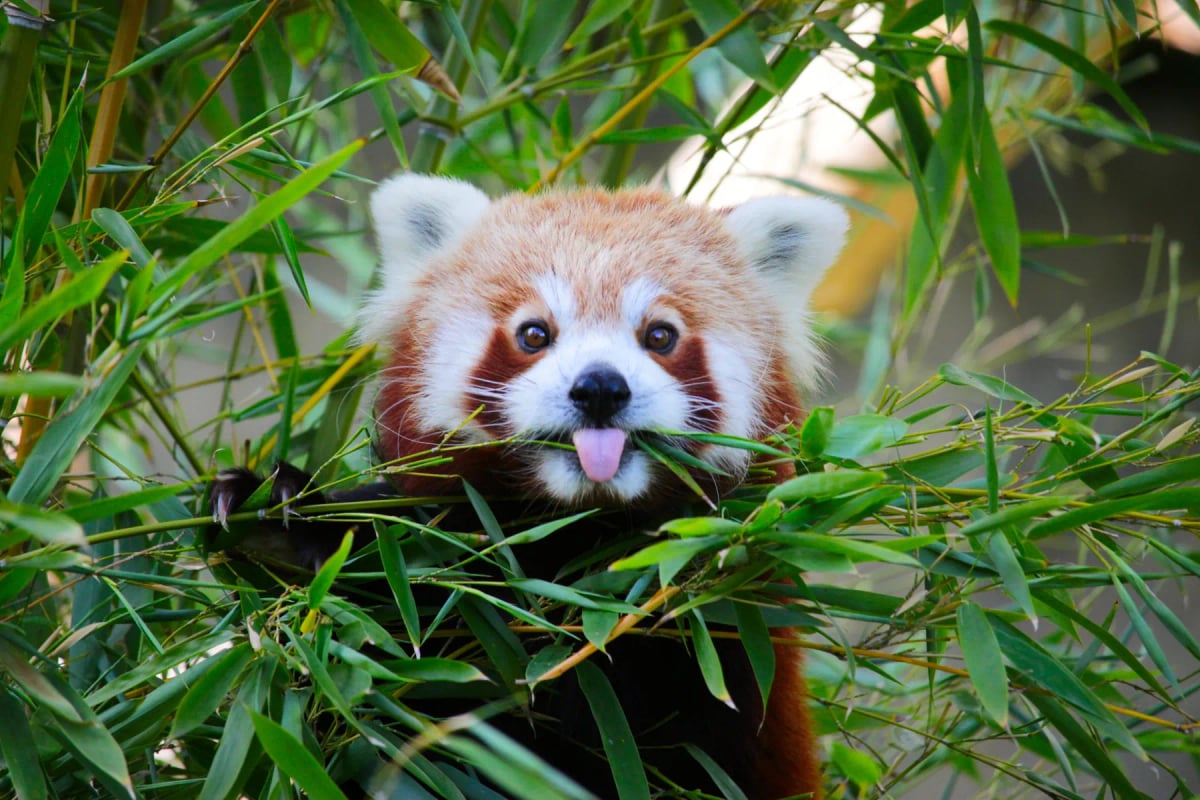
The red panda is a small tree-dwelling mammal native to the temperate mountain forests of the Himalayas, present across Nepal, Bhutan, northern India, Myanmar, and southwestern China. Despite sharing its name with the giant panda, it belongs to its own family, Ailuridae, and is not closely related to bears or raccoons. Bamboo shoots and leaves make up the bulk of its diet, though it rounds out its meals with fruit, berries, acorns, insects, and the occasional small vertebrate. Its thick, rust-colored fur and banded, bushy tail are among its most recognizable features. At rest, it often wraps that tail around itself like a blanket. Crepuscular and solitary by nature, it spends most daylight hours sleeping in the branches. Habitat loss, poaching, and the effects of climate change have pushed the species to Endangered status, with fewer than 10,000 adults estimated to remain in the wild.
Habitat and range
Red pandas are found across a relatively narrow band of temperate mountain forest stretching from the eastern Himalayas into southwestern China. Their range touches Nepal, Bhutan, the northeastern states of India, northern Myanmar, and the Chinese provinces of Sichuan and Yunnan. Within this region, they favor forests at elevations between roughly 2,200 and 4,800 meters, where a dense understory of bamboo grows beneath a canopy of fir, rhododendron, and mixed broadleaf trees. The presence of hollow trees and fallen logs is important for shelter and denning. Because red pandas rely so heavily on bamboo, the health of the forest floor matters just as much as the canopy above. Fragmentation of these forests into isolated patches is one of the greatest obstacles facing wild populations today.
Diet
Bamboo sits at the center of the red panda's diet, with the animal consuming shoots, leaves, and young stems across all seasons. Because bamboo is low in nutrients and hard to digest, red pandas must eat for much of their active hours just to meet their energy needs. Despite this heavy reliance on bamboo, they are technically omnivores. Fruits, berries, acorns, blossoms, and bird eggs are eaten when available, and they will occasionally take insects or small vertebrates. To handle tough bamboo stalks, red pandas have a modified radial sesamoid bone in the wrist that works much like a thumb, giving them a better grip. Their digestive system passes food quickly, which is typical of animals that have not fully adapted to processing plant fiber on a large scale.
Behavior and activity
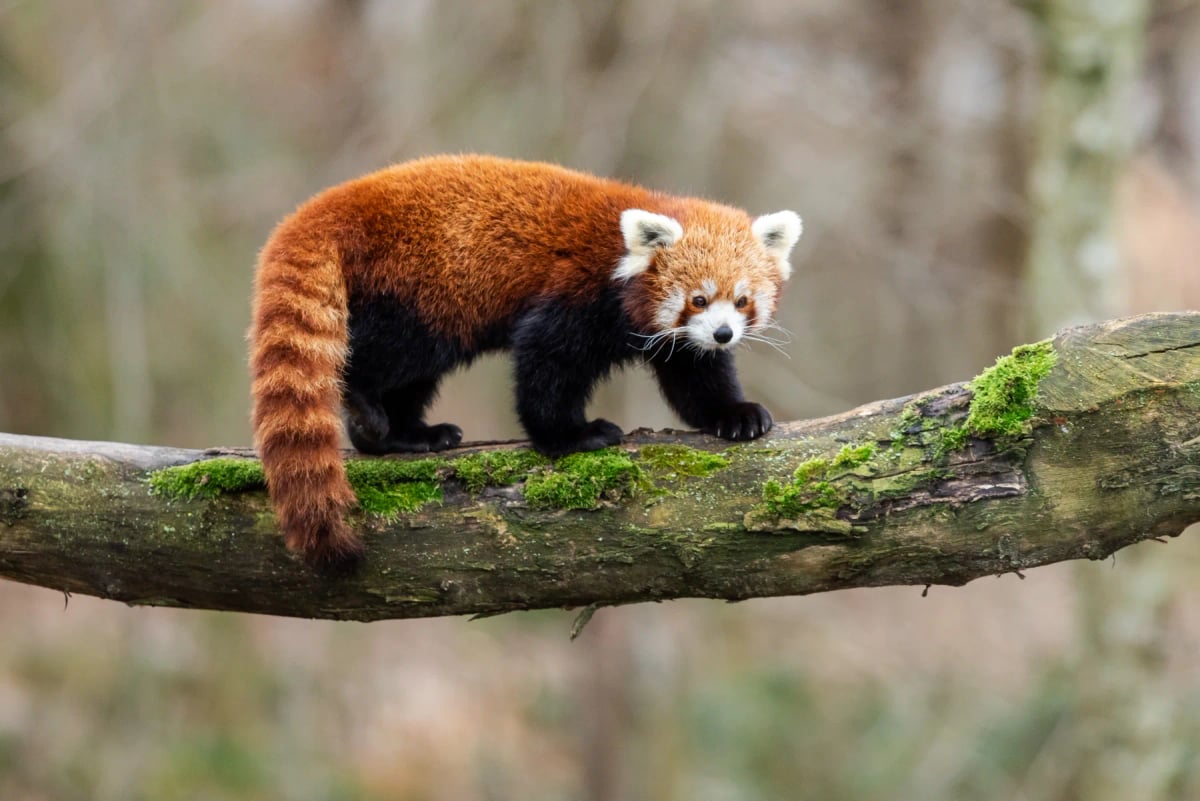
Most of a red panda's day is spent asleep. As a crepuscular animal, it becomes active around dusk and again near dawn, using those cooler hours to forage and move through its territory. During the day, it curls up on a branch or in a tree hollow, often wrapping its bushy tail around its body for warmth. Red pandas are largely solitary outside of the breeding season, and each individual maintains a home range that it marks with scent glands and urine. They are excellent climbers, moving through the branches with confidence, and they use their semi-retractile claws to grip bark securely. On the ground they tend to move slowly and deliberately. When threatened, a red panda may stand on its hind legs to appear larger, or release a strong scent as a warning.
Reproduction
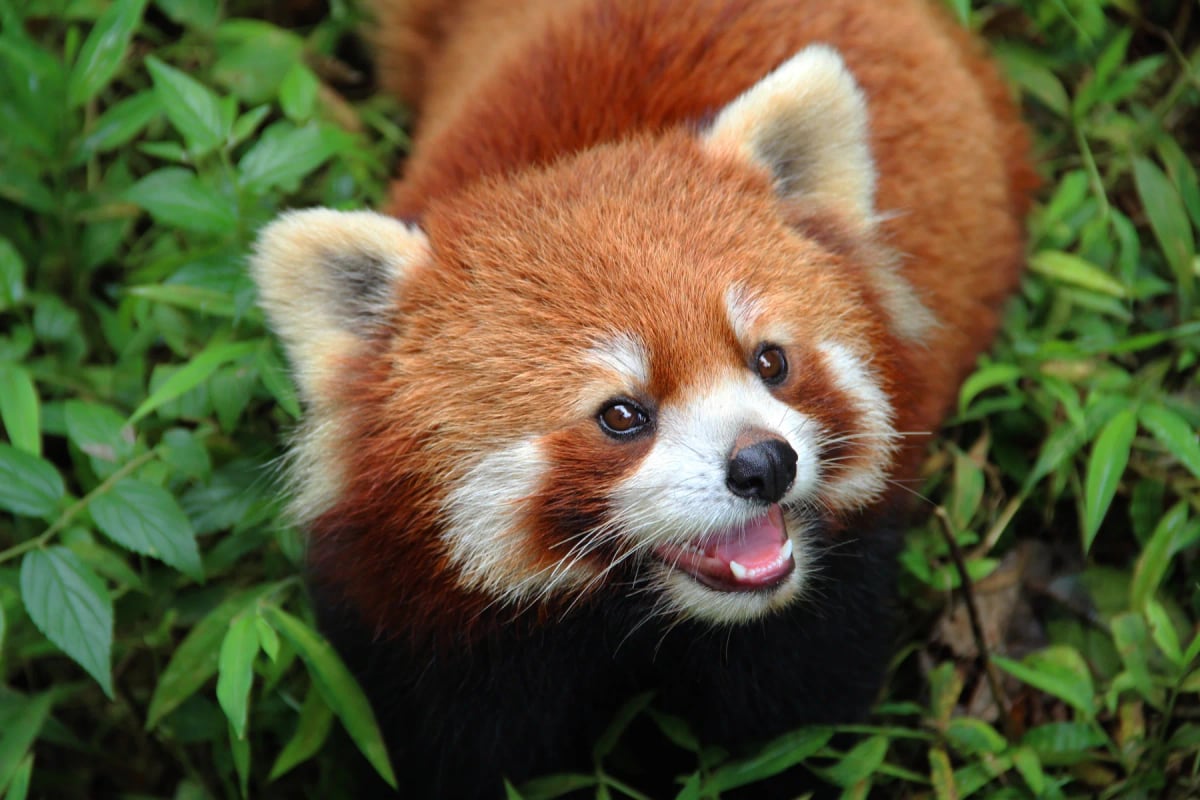
Mating takes place in winter, typically between January and March. After a gestation period of around 112 to 158 days, which includes a period of delayed implantation, the female gives birth in summer, usually between June and August. Litters contain one to four cubs, though two is the most common number. Before giving birth, the mother gathers leaves, grass, and moss to build a nest inside a tree hollow or a rocky crevice. The cubs are born blind and covered in grey fur, and they remain in the nest for several weeks. The mother raises them entirely on her own. By around 90 days the young begin venturing outside the nest, and they are generally independent before their first winter.
Threats
Pressure on red panda populations comes from several directions at once. The conversion of mountain forest into farmland and settlements reduces the habitat available to them, while the collection of firewood and timber degrades what remains. Poaching is a persistent problem. Red panda fur has historically been used in clothing, and live animals are captured for the illegal pet trade. Because their range spans several countries, enforcement of wildlife laws varies considerably from place to place. Climate change adds another layer of difficulty. Rising temperatures are shifting the zone where bamboo grows, and in some areas bamboo dieback after mass flowering has left animals with little food. All of these pressures together explain why fewer than 10,000 adults are thought to remain in the wild.
Conservation
Listed as Endangered on the IUCN Red List, the red panda is protected by law in all five countries where it occurs. Across its range, a number of national parks and wildlife reserves provide formal protection for its habitat, including Sagarmatha National Park in Nepal, Kangchenjunga Biosphere Reserve in India, and Wolong National Nature Reserve in China. International organizations such as the Red Panda Network work alongside local communities to monitor populations, reduce poaching, and restore degraded forest corridors that connect isolated patches. Captive breeding programs in zoos around the world serve as a safeguard for genetic diversity. Education programs in villages within red panda habitat have also shown real results, helping communities see the species as something worth protecting rather than a resource to exploit.
Researched and written by Juan Pablo. Sources: IUCN Red List, scientific literature and regional field guides. Last updated: .
Technical factsheet
Frequently Asked Questions
Is the red panda related to the giant panda?
No, the two animals are not closely related. The red panda belongs to its own family, Ailuridae, while the giant panda is a bear. They share a name largely because both rely heavily on bamboo and both live in parts of China. The resemblance ends there. Scientists consider the red panda a unique mammal with no close living relatives, which is part of what makes it so fascinating.
What does the red panda eat?
Bamboo shoots and leaves make up most of the red panda's diet. Because bamboo is low in nutrients, these animals spend a large part of their active hours eating just to get enough energy. They also snack on fruits, berries, acorns, and blossoms when available, and occasionally eat insects or small vertebrates. A special bone in their wrist acts almost like a thumb, helping them grip bamboo stalks while feeding.
Where do red pandas live?
Red pandas live in the temperate mountain forests of the eastern Himalayas and southwestern China. Their range covers Nepal, Bhutan, northeastern India, northern Myanmar, and the Chinese provinces of Sichuan and Yunnan. They prefer forests at elevations between about 2,200 and 4,800 meters, where bamboo grows thickly under a canopy of fir and rhododendron trees. Hollow trees and fallen logs are important to them for shelter and raising their young.
Is the red panda endangered?
Yes. The red panda is listed as Endangered on the IUCN Red List, with fewer than 10,000 adults estimated to remain in the wild. The main threats are the loss of mountain forest to farming and settlements, poaching for its fur and the illegal pet trade, and climate change, which is pushing bamboo zones to higher elevations. It is legally protected in all five countries where it is found, but enforcement remains a challenge.
Why does the red panda wrap its tail around itself?
Red pandas use their thick, bushy tails as a kind of blanket. When resting on a branch in cold mountain air, they curl up and wrap the tail around their body to hold in warmth. The tail also helps with balance while moving through the trees. Its banded, rust-and-cream coloring is one of the most recognizable features of the species and makes the animal look quite different from any other mammal in its range.
Are red pandas nocturnal?
Red pandas are crepuscular, meaning they are most active at dawn and dusk rather than strictly at night. During the day they sleep in the branches or inside tree hollows, conserving energy. Their activity picks up as temperatures drop in the evening, which is when they do most of their foraging. This pattern helps them avoid the heat and also reduces encounters with some of the predators that share their habitat.
How big is a red panda?
Red pandas are roughly the size of a large domestic cat. Adults typically weigh between 3.7 and 6.2 kilograms and measure around 50 to 65 centimeters in body length, with a tail that adds another 28 to 50 centimeters. Despite their compact size, they are well built for life in the trees, with strong limbs and semi-retractile claws that grip bark firmly. Their dense fur makes them look slightly larger than they actually are.