Magellanic Penguin
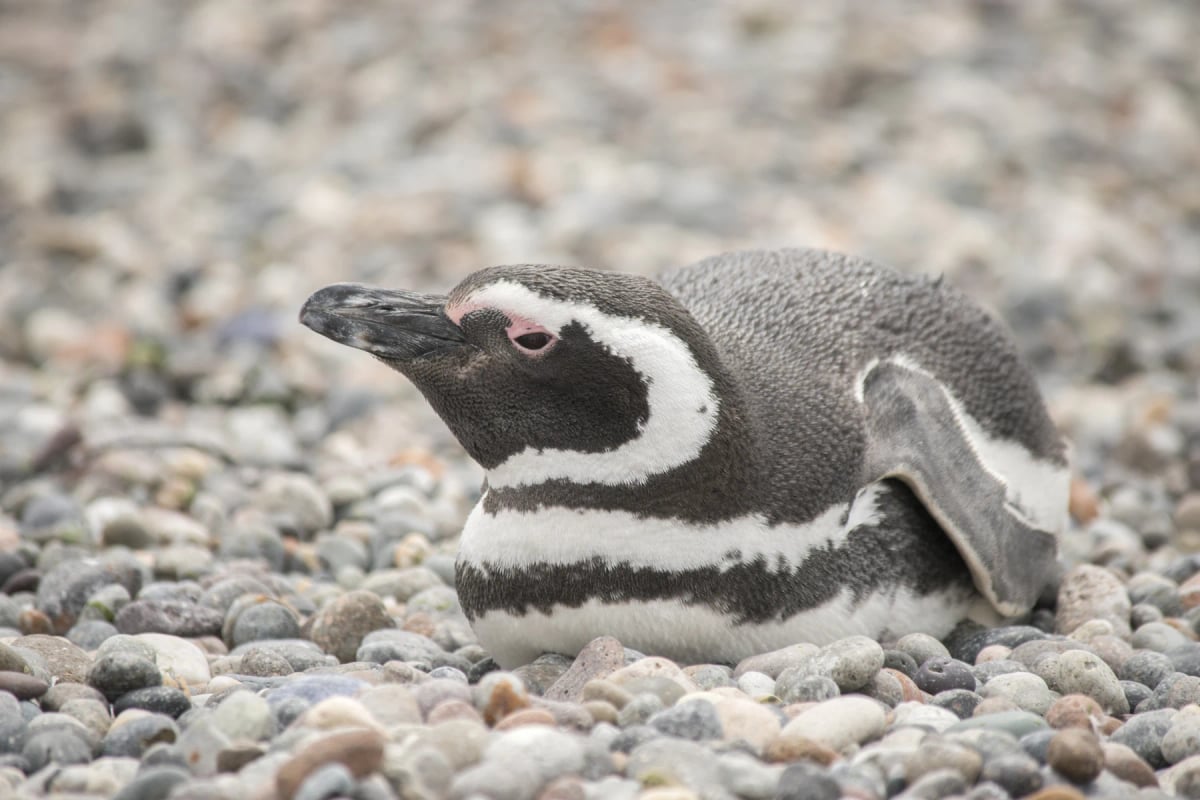
The Magellanic penguin is a seabird of medium build that nests in burrows along the Patagonian coast and the Falkland Islands. It is easy to identify by the two black bands that curve across its white chest, a pattern unique among South American penguins. For most of the year this bird lives at sea, covering thousands of kilometers in search of anchovies, sardines, and squid. Pairs bond for life and return faithfully to the same burrow each spring, taking turns incubating two eggs and feeding the chicks. Despite holding a status of Least Concern, colonies have declined at several sites due to oil pollution, entanglement in fishing gear, and shifts in prey distribution driven by warming oceans. Punta Tombo in Argentina holds the largest single colony in the world, hosting more than a million birds during the breeding season.
Habitat and distribution
Magellanic penguins spend their lives split between two very different worlds. During the breeding season, from September to February, they come ashore along the Atlantic and Pacific coasts of Patagonia, the Chilean channels, and the Falkland Islands, nesting in scrubby coastal terrain where sandy or soft soil makes digging burrows easy. Once the chicks are independent, the birds head out to sea for the winter and undertake migrations of thousands of kilometres. Birds from Argentine colonies typically travel north along the Atlantic coast, and individuals have been recorded as far as southern Brazil and Uruguay. The open ocean is their true home for most of the year, and they depend on cold, nutrient-rich currents, particularly the Falkland Current, to concentrate the fish and squid on which they feed.
Diet
Food is at the heart of almost every decision a Magellanic penguin makes. Anchovies and sardines form the core of their diet, but they also take sprats, squid, and small crustaceans when the opportunity arises. They are pursuit divers, using their stiff, paddle-like flippers to chase prey at depth rather than at the surface. Most dives last around one minute and reach depths of 50 to 90 metres, though birds have been recorded going deeper. They hunt cooperatively in groups, herding schools of fish toward the surface before striking. The location and abundance of prey shifts with ocean temperatures and seasons, which means that penguins breeding at colonies far from good fishing grounds must travel further and work harder to bring enough food back for their chicks.
Breeding
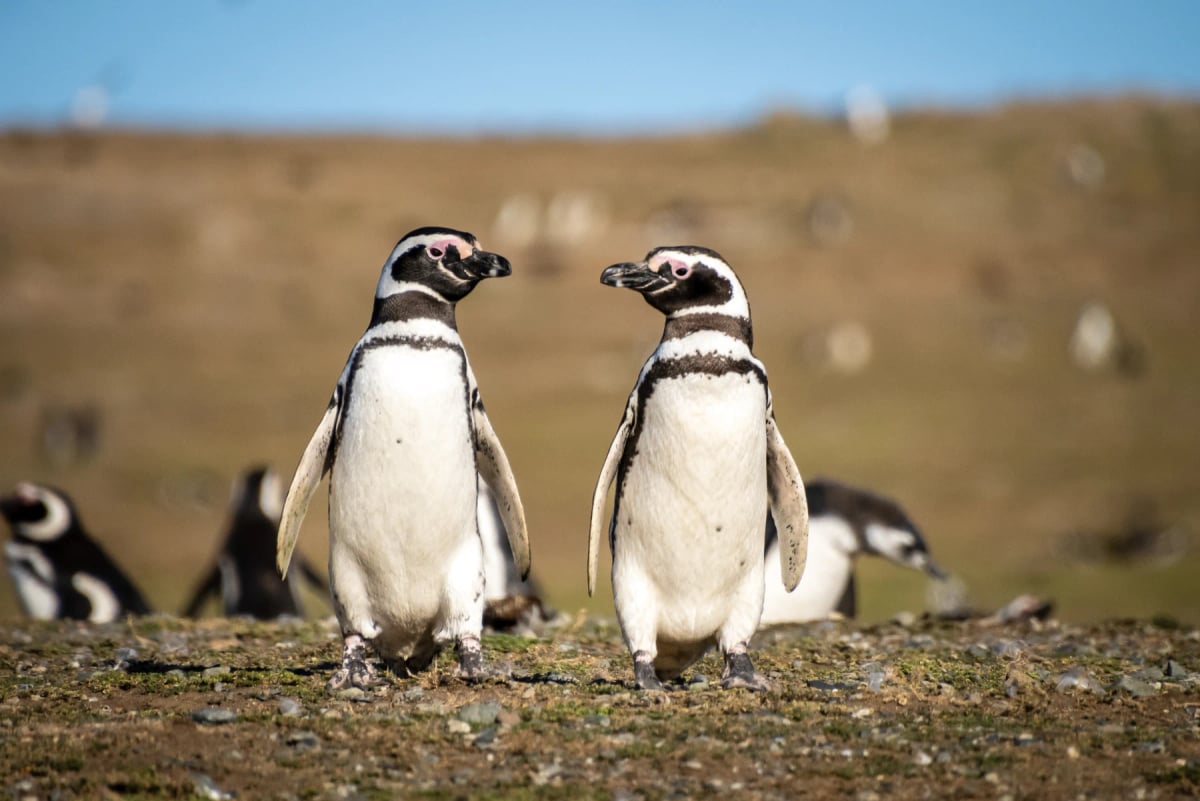
Every spring, Magellanic penguins return to the same colonies and, remarkably, to the same burrow they used the previous year. Pairs bond for life and greet each other with loud braying calls and mutual preening after months apart at sea. Females lay two eggs in September or October, and both parents share incubation duties in shifts lasting roughly two weeks each. The eggs hatch after about 40 days, and the chicks are guarded constantly at first. As the chicks grow, both adults make regular fishing trips to keep up with the demand for food. Young penguins fledge at around 60 to 70 days old and head to sea on their own. They will not breed themselves until they are at least four years old, returning to the colony where they were born to find a mate.
Behavior
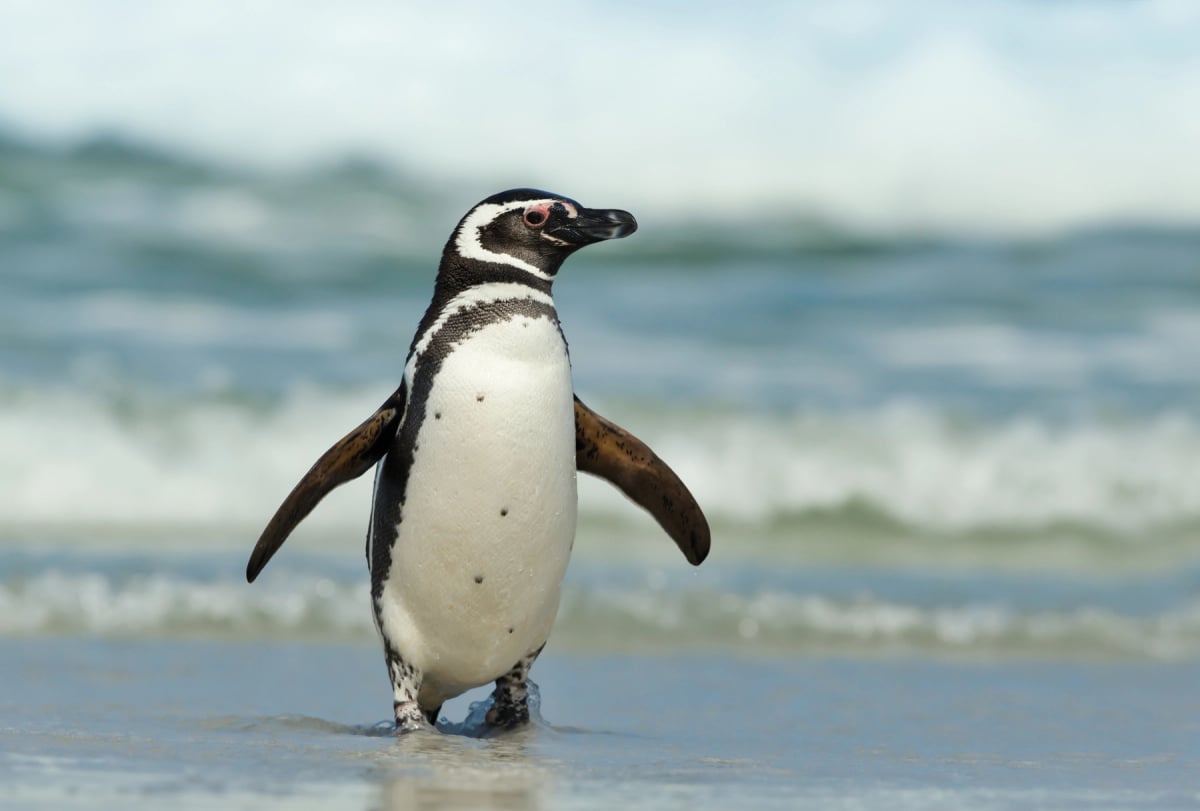
In the water, Magellanic penguins are remarkably athletic. They swim at speeds of around 25 kilometres per hour and porpoise, leaping in and out of the water, to breathe without losing momentum. On land, the picture changes entirely. They walk upright with a distinctive waddle and can also move on their bellies over rocky ground when needed. Colonies are noisy places: birds call constantly to locate their partners and chicks among thousands of identical looking neighbours. The call of each individual is unique, allowing pairs and parent chick groups to find one another reliably. Magellanic penguins also have a pronounced territorial streak around their burrows and will bite and flipper-slap rivals that come too close. Outside the breeding season they are largely solitary at sea, though they may gather in loose groups near productive fishing areas.
Conservation
The IUCN classifies the Magellanic penguin as Least Concern, yet the species faces genuine pressure from several directions. Oil pollution was historically one of the biggest threats, coating birds and reducing the insulating ability of their feathers, though improved regulations along Argentine shipping lanes have reduced incidents in recent decades. Entanglement in fishing gear remains a serious cause of death, particularly for young birds. Perhaps the most complex challenge comes from shifts in ocean conditions tied to climate change, which alter the distribution of prey and force penguins to travel further to find food, reducing breeding success. Punta Tombo in Argentina, the largest Magellanic penguin colony in the world, has recorded notable population declines over time. Tourism, if poorly managed, can also disturb nesting birds. Ongoing monitoring and protected area management are essential to keep colonies stable.
Researched and written by Juan Pablo. Sources: IUCN Red List, scientific literature and regional field guides. Last updated: .
Technical factsheet


Frequently Asked Questions
What do Magellanic penguins eat?
Magellanic penguins feed mainly on anchovies and sardines, along with squid and small crustaceans. They are strong divers, plunging to depths of 50 to 90 metres to chase prey. They often hunt in groups, herding fish toward the surface before striking. The availability of food shifts with ocean temperatures, so penguins sometimes have to travel very long distances to find enough to eat.
Where do Magellanic penguins live?
Magellanic penguins breed along the Patagonian coasts of Argentina and Chile, as well as in the Falkland Islands. They nest in burrows dug into soft coastal soil. Once the breeding season ends, they head out into the open ocean for the winter, traveling as far north as southern Brazil and Uruguay. They spend most of the year at sea, depending on cold, productive ocean currents to find food.
How do Magellanic penguins recognize their partner among thousands of birds?
Each Magellanic penguin has a unique call, and pairs use these calls to find each other in crowded, noisy colonies that can hold hundreds of thousands of birds. After months apart at sea, mates greet one another with loud braying and mutual preening. This vocal recognition also works between parents and their chicks, making it possible to locate family members among birds that all look virtually identical.
Are Magellanic penguins endangered?
The Magellanic penguin is currently listed as Least Concern by the IUCN, but that does not mean it faces no threats. Oil pollution, entanglement in fishing gear, and changes in prey distribution linked to warming oceans have caused declines at several colonies, including Punta Tombo in Argentina. The species is closely monitored, and conservation efforts focus on reducing pollution, managing tourism, and protecting key nesting and feeding areas.
How fast can Magellanic penguins swim?
Magellanic penguins are built for speed in the water, reaching around 25 kilometres per hour. They use their stiff, paddle-like flippers to propel themselves and often porpoise, leaping in and out of the water, to breathe without slowing down. On land they are much less agile, walking upright with a characteristic waddle or sliding on their bellies over rocky terrain when the situation calls for it.
Do Magellanic penguins mate for life?
Yes, Magellanic penguins form bonds that last for life. Each year they return to the same burrow and reunite with the same partner after months apart at sea. Both parents share incubation duties and take turns feeding their chicks. Young penguins do not start breeding until they are at least four years old, and they typically return to the colony where they hatched to look for a mate.
What is the largest Magellanic penguin colony in the world?
Punta Tombo, on the Atlantic coast of Argentina, is the largest Magellanic penguin colony on the planet. During the breeding season it hosts more than a million birds, making it one of the most impressive wildlife spectacles in South America. The site is a protected reserve and attracts many visitors each year, though careful management is needed to ensure that tourism does not disturb nesting birds.