Mountain Gorilla
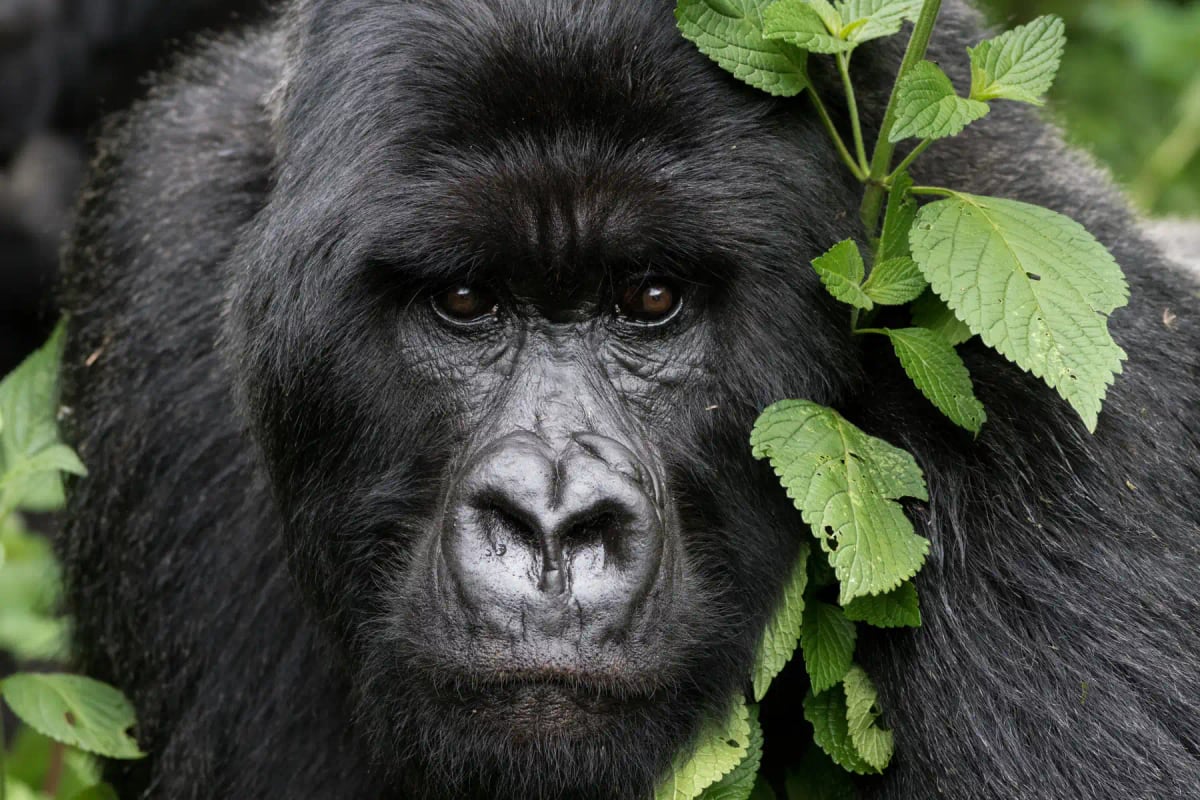
The mountain gorilla is a subspecies of the eastern gorilla found only in two isolated patches of forest in central Africa: the Virunga volcanic mountains and Bwindi Impenetrable Forest. These great apes live at elevations between roughly 2,200 and 4,300 metres, where temperatures can drop close to freezing. Their thick, dense fur keeps them warm in the cold and misty conditions of the highlands. Groups of around ten individuals, known as troops, are led by a dominant male called a silverback, whose job is to protect the family and settle disputes. Mountain gorillas spend most of the day eating leaves, stems, roots and bamboo shoots, and each night they build fresh nests from vegetation to sleep in. Thanks to sustained conservation work across three countries, their population has grown past 1,000 individuals, making them a rare example of a species recovering from the edge of extinction.
Habitat and range
Mountain gorillas exist in just two places on Earth. One population lives across the Virunga massif, a chain of volcanic mountains straddling the borders of Rwanda, Uganda, and the Democratic Republic of Congo. The other lives entirely within Bwindi Impenetrable Forest in southwestern Uganda. Both areas sit at elevations between roughly 2,200 and 4,300 metres, where mist, rain, and cold temperatures are common year round. The forests at these heights are dense with the vegetation gorillas depend on for food and shelter. Because both populations are completely isolated from each other, they cannot mix or interbreed naturally, which makes protecting each habitat all the more critical to the survival of the subspecies.
Diet
Food takes up a large part of a mountain gorilla's day. These apes are mostly herbivores, eating the leaves, stems, bark, and roots of a wide variety of plants, along with bamboo shoots when they are in season. Wild celery, thistles, and nettles also feature regularly in their diet. Because plant matter is not very rich in energy, gorillas need to eat a lot of it, and adults can consume around 18 to 20 kilograms of vegetation per day. They rarely need to drink water directly, as the plants they eat contain plenty of moisture. Fruit plays only a minor role compared to other great apes, since the high altitude forests where they live offer limited fruit throughout the year.
Social structure
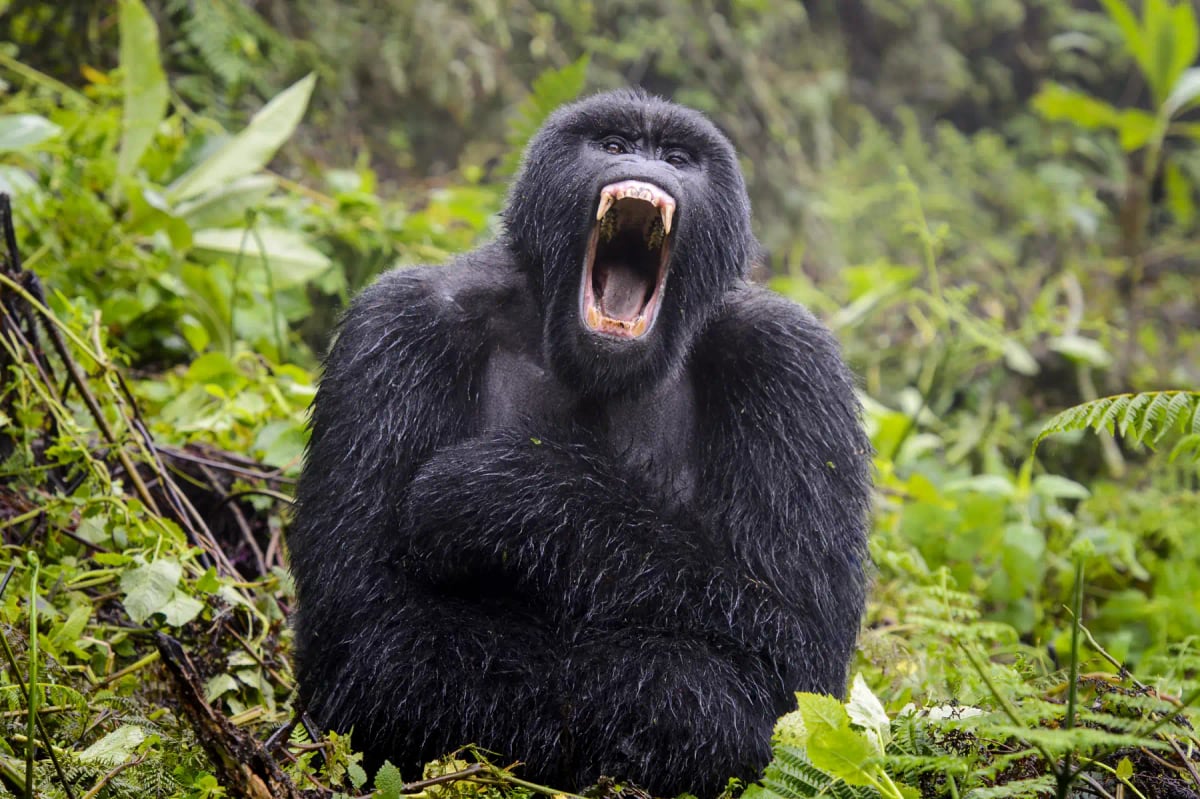
At the heart of mountain gorilla society is the troop, typically made up of around ten individuals, though some groups are considerably larger. Every troop is led by a dominant adult male known as a silverback, named for the distinctive patch of silver hair that develops on his back as he matures. He makes decisions about where the group travels, settles conflicts between members, and steps in to defend the family if danger arises. Females often form close relationships with the silverback, and these bonds help hold the troop together. Younger males, called blackbacks, may eventually leave to start their own groups. Grooming is a regular activity that strengthens trust and social ties among all members of the troop.
Behavior
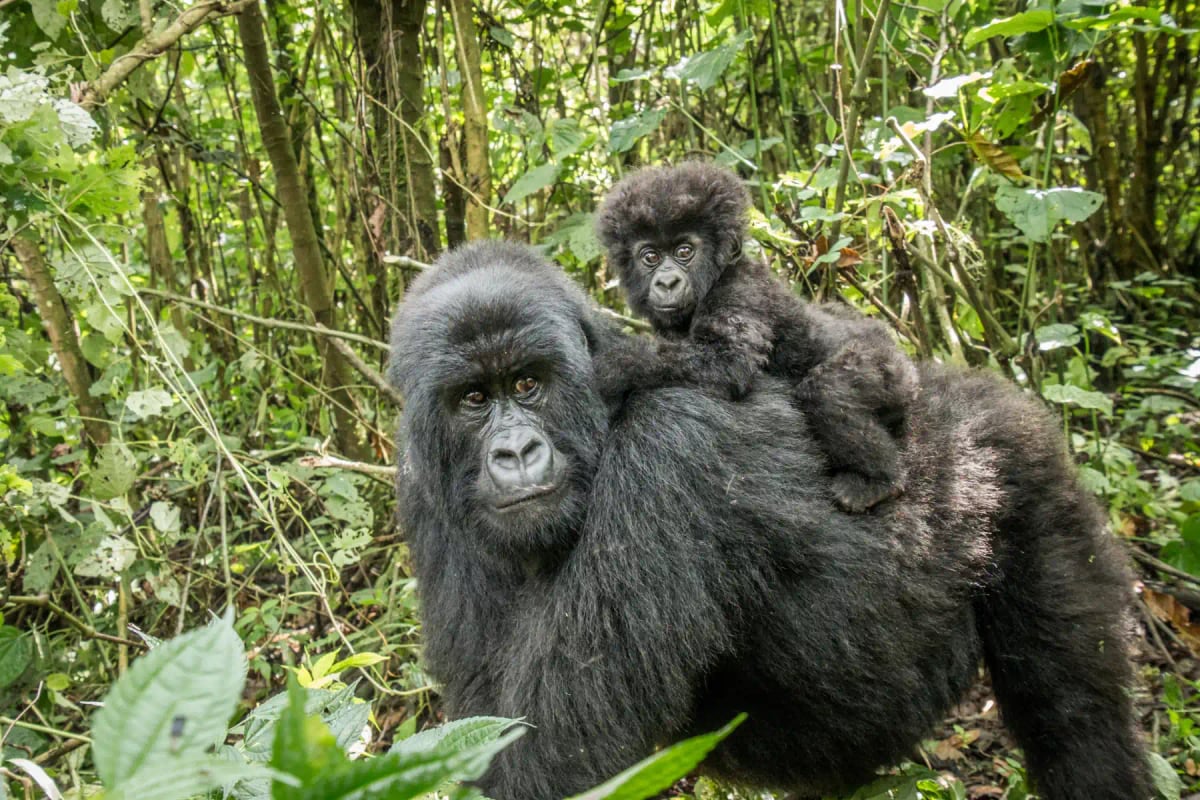
Despite their imposing size, mountain gorillas are generally calm and spend much of their time resting, eating, and moving slowly through the forest. Each evening, every individual builds a fresh nest from branches and leaves, either on the ground or low in the trees, where they sleep through the night. Young gorillas are highly playful, chasing each other, climbing, and wrestling in ways that help them develop the social skills they will need as adults. When a silverback feels that his troop is threatened, he may stand upright, beat his chest, and charge to intimidate the intruder. This display is usually enough to resolve the situation without physical contact. Within the group, serious aggression is uncommon, and conflicts are often settled through posturing alone.
Conservation
Few wildlife stories offer as much hope as that of the mountain gorilla. Classified as Endangered on the IUCN Red List, this subspecies has nonetheless managed to grow in number over recent decades, passing the milestone of 1,000 individuals. That recovery is the result of coordinated efforts across three countries, including anti-poaching patrols, habitat protection, and regular health monitoring by veterinary teams. Revenue from gorilla trekking permits has given local communities a financial reason to protect the forests. However, serious threats remain. Habitat loss due to agriculture, disease transmission from humans, and instability in the region all continue to put pressure on the population. Sustained commitment from governments, conservation organisations, and local people will be essential to keep this positive trend going over the long term.
Researched and written by Juan Pablo. Sources: IUCN Red List, scientific literature and regional field guides. Last updated: .
Technical factsheet



Frequently Asked Questions
How many mountain gorillas are left in the world?
There are just over 1,000 mountain gorillas alive today, making them one of the rarest great apes on Earth. That number is actually a success story. Decades ago, the population was far smaller and declining fast. Thanks to conservation efforts across Rwanda, Uganda, and the Democratic Republic of Congo, numbers have grown steadily. They remain Endangered, but the trend is moving in the right direction.
What do mountain gorillas eat?
Mountain gorillas are mostly plant eaters. Their daily menu includes leaves, stems, bark, roots, wild celery, thistles, and bamboo shoots when in season. Adults can put away around 18 to 20 kilograms of vegetation per day. They rarely drink water directly because the plants they eat already contain plenty of moisture. Fruit is not a big part of their diet, since the high altitude forests they call home offer very little of it.
Where do mountain gorillas live?
Mountain gorillas live in just two areas of central Africa. One group is spread across the Virunga volcanic mountains, which reach into Rwanda, Uganda, and the Democratic Republic of Congo. The other lives entirely within Bwindi Impenetrable Forest in Uganda. Both habitats sit at high elevations where it is often cold, wet, and misty. The two populations are completely isolated from each other and cannot mix naturally.
Are mountain gorillas dangerous to humans?
Mountain gorillas are generally calm and gentle animals. In the wild, a silverback may put on a dramatic display, standing tall and beating his chest, if he feels his troop is under threat. But this is usually a warning, not an attack. Groups habituated to the presence of humans for tourism purposes behave peacefully around visitors who follow the rules. Unprovoked aggression toward people is very rare.
Why are mountain gorillas endangered?
Several pressures threaten mountain gorillas at once. Their habitat keeps shrinking as forests are cleared for farming. Because their biology is so similar to ours, they can catch human diseases, and even a common cold can be serious for them. Armed conflict in parts of their range makes protection difficult. Poaching has also been a problem historically. All of these factors together explain why this subspecies still needs urgent, ongoing protection.
How do mountain gorillas sleep?
Every evening, each mountain gorilla builds a brand new nest to sleep in. They bend and weave branches and leaves together, either on the ground or low in a tree, creating a kind of mattress for the night. Adults almost always sleep on the ground, while younger gorillas may nest a little higher up. They never reuse the same nest two nights in a row, always building fresh each day.
Do mountain gorillas live in groups?
Yes, mountain gorillas are highly social animals. They live in family groups called troops, which usually have around ten members, though some are much larger. Each troop is led by a silverback, the dominant adult male, who protects the group and makes decisions about where they move. Females, young gorillas, and sometimes a few younger males round out the troop. Grooming and play help keep the bonds between members strong.