Bengal Tiger
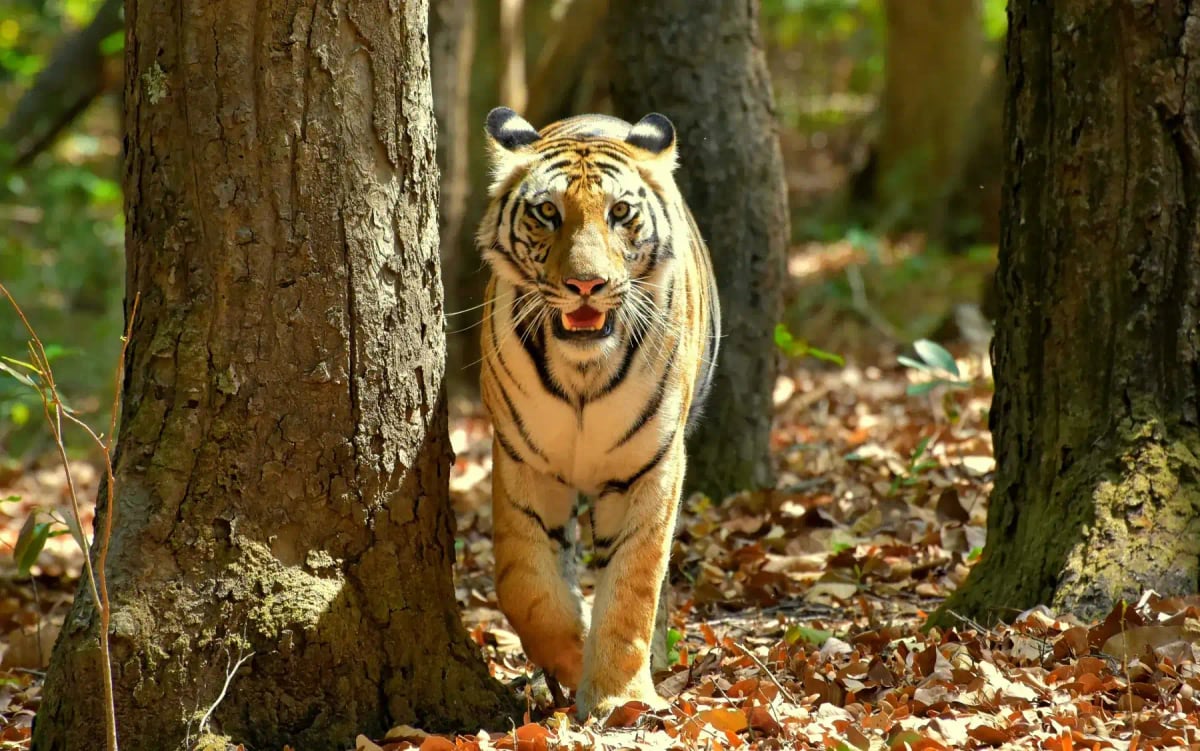
The Bengal tiger (Panthera tigris tigris) is the most numerous of all tiger subspecies, yet it remains in serious danger, with roughly 2,500 to 3,000 individuals estimated in the wild. Its range covers India, Bangladesh, Nepal, and Bhutan, spanning tropical and subtropical forests, tall grasslands, and the vast mangrove delta of the Sundarbans. The coat is deep orange with bold black stripes and a pale underside, and no two animals share an identical pattern. Males are substantially larger than females and can bring down prey as large as gaur and water buffalo, though sambar deer and wild boar make up the bulk of their diet. Territorial and largely solitary outside of mating, adults mark home ranges that can exceed 100 square kilometers. As apex predators, Bengal tigers shape the structure of entire ecosystems across the Indian subcontinent.
Habitat and distribution
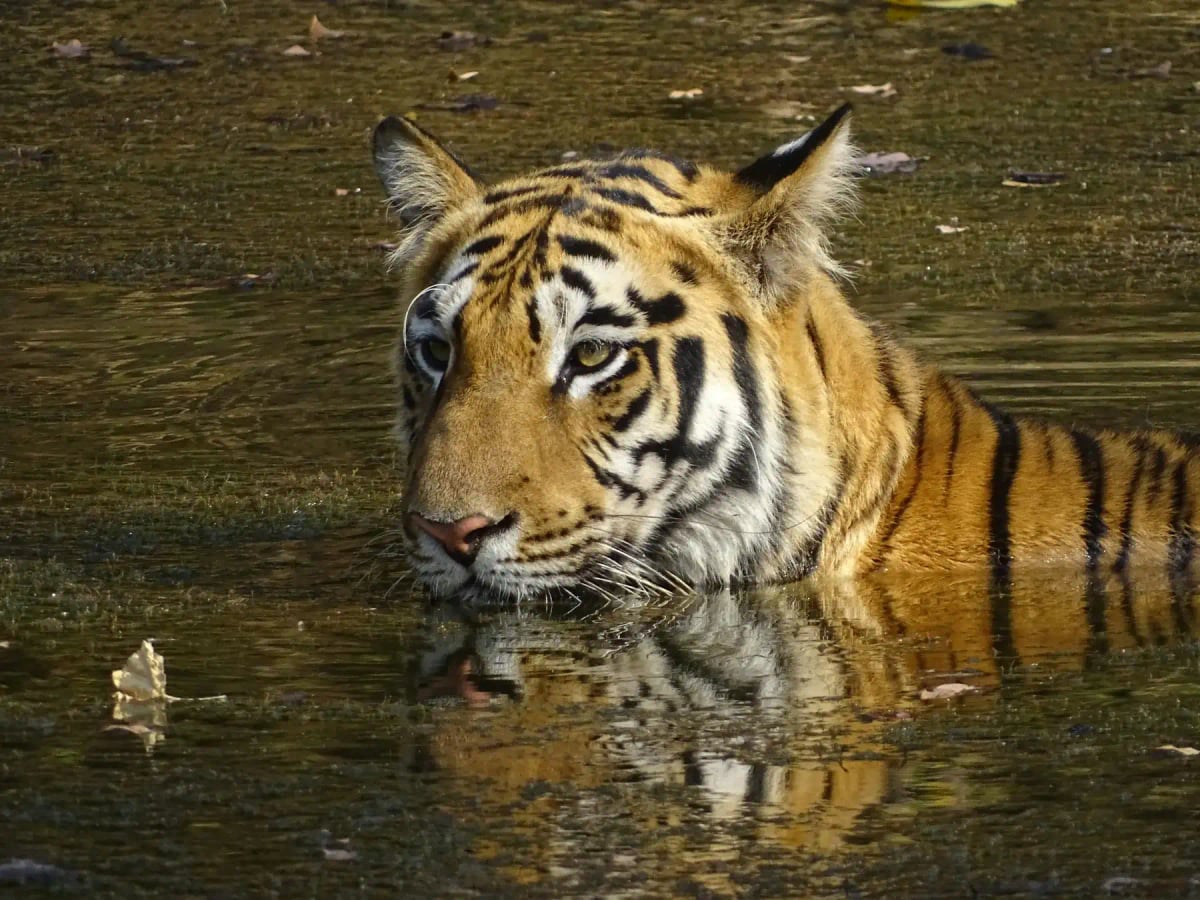
Bengal tigers occupy a remarkably wide range of environments across South Asia. The majority live in India, where protected reserves such as Ranthambore, Bandhavgarh, and Kaziranga provide forest and grassland habitat. Populations also persist in Nepal's Terai lowlands, the forests of Bhutan, and the coastal wetlands of Bangladesh. The most distinctive habitat this subspecies uses is the Sundarbans, a vast mangrove delta shared by India and Bangladesh where tigers have adapted to swimming between islands and hunting in tidal terrain. Across their range, Bengal tigers occupy tropical moist forests, dry deciduous forests, and tall grasslands known as terai. Elevation can vary considerably, with individuals recorded at higher altitudes in Bhutan. Prey availability and access to fresh water are the primary factors shaping where a tiger establishes its territory.
Built for the hunt: physical and sensory adaptations
The Bengal tiger's body is engineered for ambush predation. Powerful forelimbs and retractable claws allow it to seize and pin prey much larger than itself, including gaur weighing over 900 kilograms. Its striped coat breaks up its outline against tall grass and dappled forest light, making it nearly invisible before a strike. Vision in low light is far sharper than in humans, supported by a reflective layer behind the retina called the tapetum lucidum, which makes the tiger an effective nocturnal hunter. Padded paws muffle its approach, and flexible ankle joints allow it to move with exceptional stealth. Bengal tigers are also strong swimmers, a trait particularly important in the Sundarbans. Their large body size helps regulate temperature in cooler highland zones, while waterways provide relief from heat in lowland forests.
Behavior and social life
Bengal tigers are solitary animals for most of their lives. Adults maintain large territories that they mark with scent spray, scratch marks on trees, and vocalizations including the deep, carrying roar that can travel several kilometers. Male territories often overlap with those of several females but rarely with those of rival males. Females raise cubs entirely on their own, giving birth to litters of two to four cubs after a gestation period of around 104 days. Cubs stay with their mother for up to two or three years, learning to hunt before they disperse. Hunting takes place mainly at night and at dusk or dawn, with tigers using dense cover to stalk within close range before launching a rapid charge. A tiger may travel 20 kilometers or more in a single night while patrolling its range.
Conservation
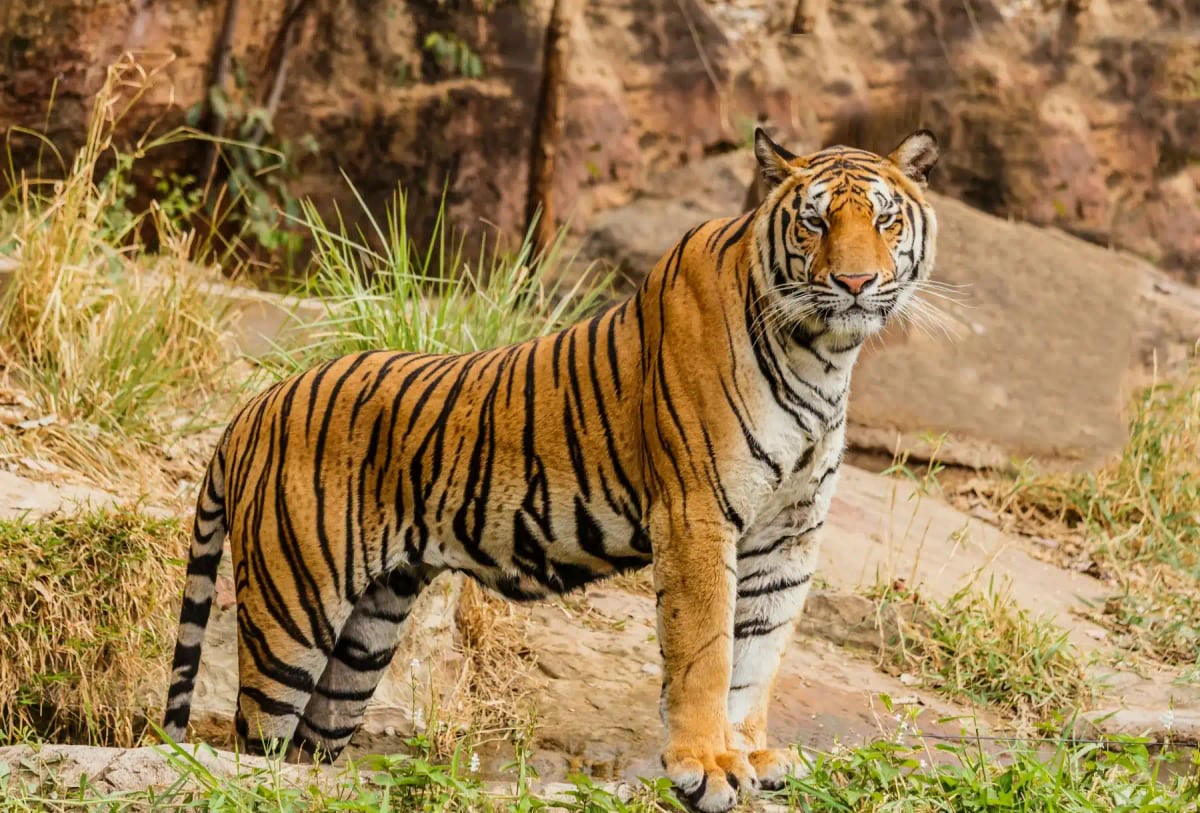
The Bengal tiger is listed as Endangered on the IUCN Red List. India's Project Tiger, launched in 1973, is widely regarded as one of the most successful large carnivore conservation programs in history. It established a network of tiger reserves that has grown to over 50 sites today, and the national tiger census of 2022 estimated around 3,167 tigers in India alone, a significant recovery from fewer than 2,000 in the early 1970s. Across the broader range, threats include habitat loss from agricultural expansion, fragmentation of forest corridors, poaching for the illegal wildlife trade, and conflict with local communities. Nepal has also reported strong population growth in its Terai reserves. International cooperation, strict anti-poaching enforcement, and the maintenance of wildlife corridors between reserves remain critical to the subspecies' survival over the long term.
Researched and written by Juan Pablo. Sources: IUCN Red List, scientific literature and regional field guides. Last updated: .
Technical factsheet



Frequently Asked Questions
How much does a Bengal tiger weigh?
Male Bengal tigers typically weigh between 180 and 260 kilograms, making them one of the heaviest wild cats on Earth. Females are considerably lighter, usually ranging from 100 to 160 kilograms. Body size can vary depending on the region, with tigers in Nepal's Terai and northern India generally growing larger than those in the hotter, more humid lowland forests further south.
What do Bengal tigers eat?
Bengal tigers are carnivores that rely mainly on large ungulates. Sambar deer and wild boar are their most frequent prey, but they are capable of taking much larger animals such as gaur and water buffalo. They will also hunt smaller mammals, monkeys, and even fish in certain habitats. A single large kill can provide enough food to last a tiger several days before it hunts again.
How long do Bengal tigers live?
In the wild, Bengal tigers generally live between 10 and 15 years. Life in the wild is demanding: injuries from hunting large prey, territorial fights with other tigers, and the challenge of securing enough food all take a toll over time. In managed care, such as zoos and sanctuaries, tigers can live beyond 20 years due to regular veterinary attention and a consistent food supply.
Are Bengal tigers good swimmers?
Yes, Bengal tigers are exceptionally strong swimmers and genuinely seem to enjoy the water. This is especially evident in the Sundarbans mangrove delta, where tigers routinely swim across channels between islands while patrolling their territories or pursuing prey. Unlike many other large cats, tigers actively seek out rivers and pools to cool down in hot weather, and they have been observed swimming distances of several kilometers without difficulty.
Why are Bengal tigers endangered?
Bengal tigers face several serious pressures. Poaching for the illegal wildlife trade, particularly for skins and bones used in traditional medicine markets, remains a persistent threat. Beyond poaching, the steady loss of forest cover to agriculture and human settlement has shrunk and fragmented their habitat. When tigers venture near villages in search of prey or territory, conflict with local communities can result in retaliatory killings, adding further pressure to already small populations.
Do Bengal tigers roar?
Yes, and it is one of the most powerful sounds in the animal kingdom. A Bengal tiger's roar can carry up to three kilometers through dense forest. Tigers use roaring primarily to communicate with other tigers across large territories, whether to advertise their presence to rivals or to make contact with potential mates. They also produce a range of other vocalizations, including chuffs, a soft puffing sound used as a friendly greeting between individuals.
How many Bengal tigers are left in the world?
Current estimates place the global wild population at roughly 2,500 to 3,500 individuals, with the vast majority living in India. The Indian government's 2022 census recorded around 3,167 tigers within the country's borders. Smaller but meaningful populations exist in Nepal, Bhutan, and Bangladesh. While numbers have improved thanks to decades of conservation effort, the subspecies remains Endangered, and habitat loss continues to pose a serious challenge outside of protected areas.