Chamois
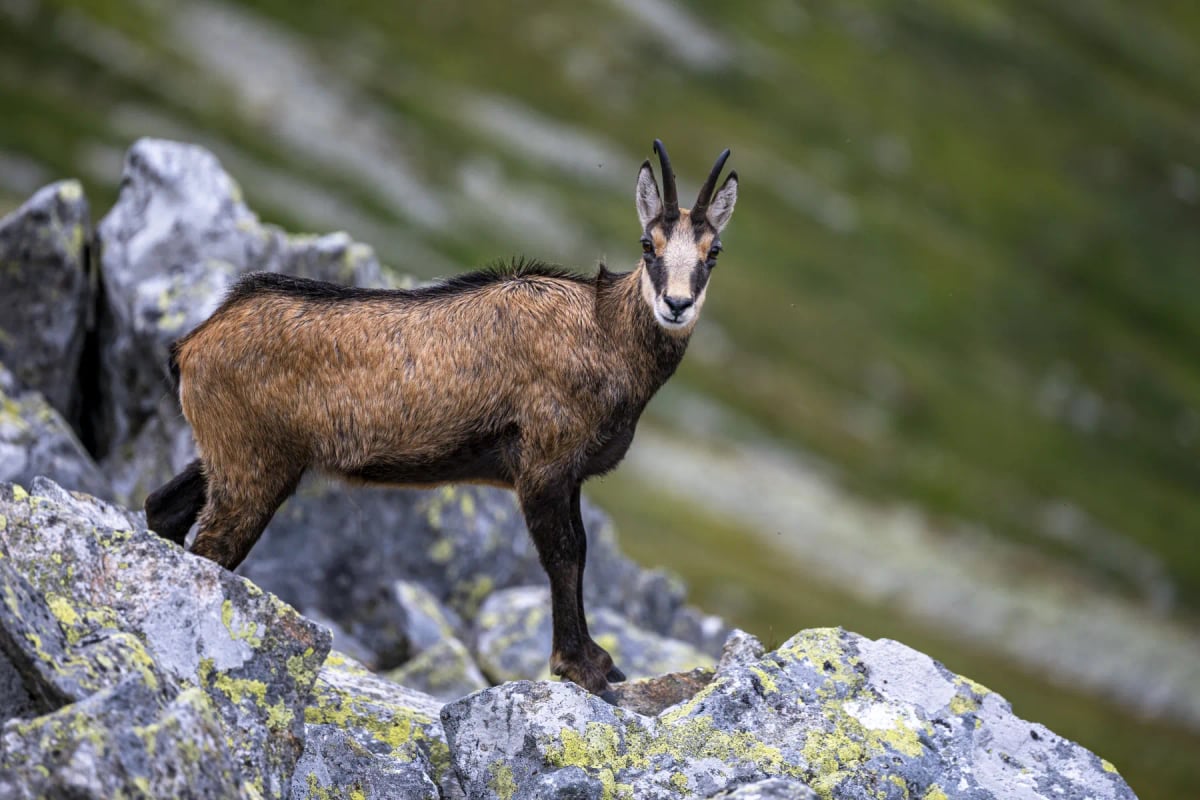
The chamois is a compact, sure-footed bovid native to the mountain ranges of Europe and western Asia. It belongs to the subfamily Caprinae, making it more closely related to goats than to true antelopes, despite its common name. Adults of both sexes grow short, black, backward-hooking horns that curve sharply near the tip. The coat shifts from a warm reddish brown in summer to a dense, dark brown in winter, with a pale face marked by dark eye stripes. Chamois are at home on near-vertical rock faces, using specially adapted hooves with rubbery pads that grip slick surfaces. Females and young live in herds of up to 30 individuals, while mature males tend to be solitary outside the autumn rut. They graze on grasses, herbs, and flowering plants in summer, switching to lichens, mosses, and bark in leaner winter months.
Habitat and distribution
Across Europe and western Asia, chamois occupy some of the most rugged terrain on the continent. Their core range covers the Alps, Carpathians, Balkans, Apennines, and the Caucasus mountains, where they favour steep rocky slopes, cliff faces, and open alpine meadows typically above 1,800 metres. In summer they move to higher elevations where grasses are abundant, retreating to lower forested zones when winter snow deepens. Isolated subspecies occur in the Cantabrian Mountains of northern Spain and the Tatra Mountains of Poland and Slovakia. Outside their native range, chamois were introduced to New Zealand's South Island in the early twentieth century and have since established a widespread feral population in the Southern Alps. Across all regions, proximity to broken rocky terrain offering both grazing and escape routes from predators is the defining feature of suitable habitat.
Diet
Seasonal change shapes the chamois diet more than almost any other factor. During spring and summer, chamois graze heavily on grasses, sedges, flowering herbs, and low shrubs found across alpine meadows. They also browse young shoots and leaves from dwarf willows and other mountain shrubs when available. As autumn arrives, the animals begin shifting their feeding habits in preparation for leaner months. Through winter, when snow covers the upper pastures, chamois rely on lichens, mosses, pine needles, and the bark of young trees to meet their nutritional needs. They dig through snow with their hooves to reach dried vegetation underneath. Water requirements are largely met through the plants they consume and from snow and ice licked directly from rock surfaces. This flexible approach to feeding allows chamois to persist through the harsh conditions of high mountain winters.
Appearance
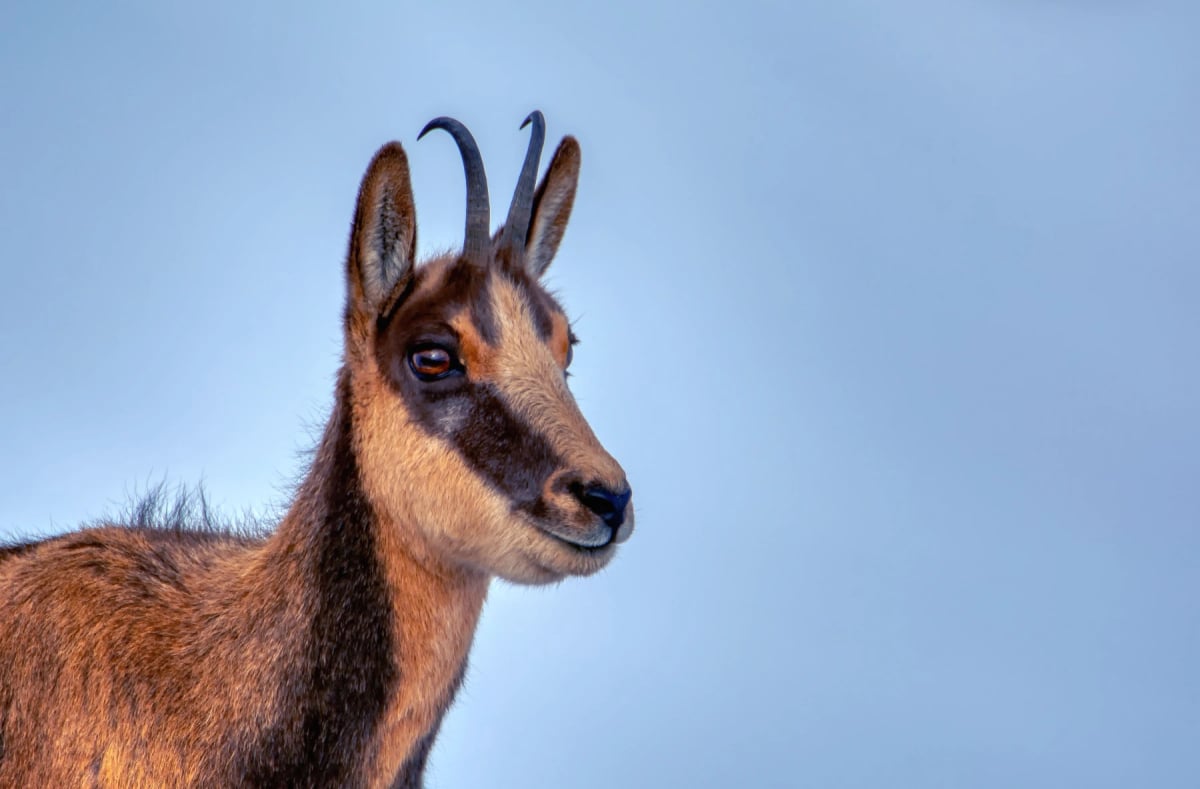
Few mountain mammals are as distinctive in appearance as the chamois. Adults of both sexes carry a pair of short, black horns that rise nearly vertically from the skull before hooking sharply backward at the tip, a shape unlike that of any other European bovid. Body size is modest, with adults typically weighing between 25 and 50 kilograms. The coat changes markedly with the seasons: a warm reddish brown in summer gives way to a thick, dark brown winter coat that provides insulation in freezing temperatures. The face is pale cream or white, crossed by a bold dark stripe running from each eye toward the muzzle. The legs are dark, and a dark dorsal stripe runs along the back. The hooves are specially built for mountain terrain, with hard outer edges for grip on rock and soft, rubbery inner pads that act like natural crampons.
Behavior
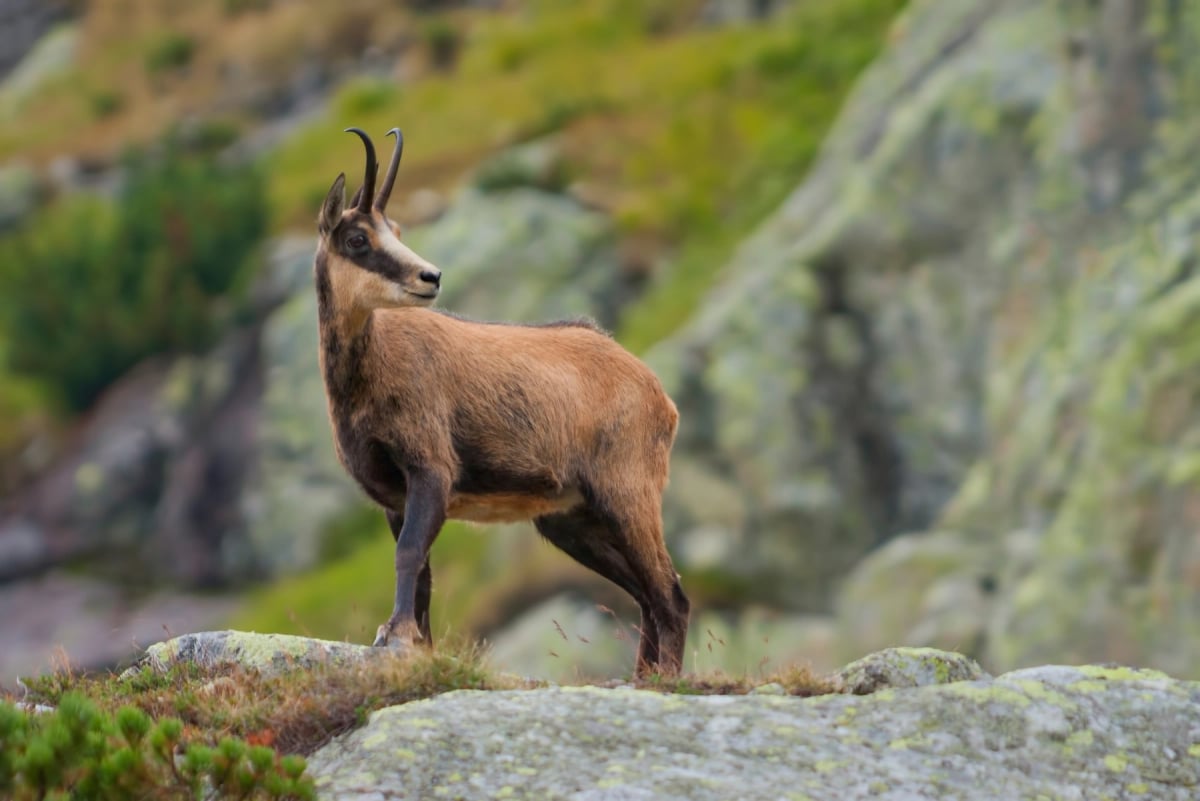
Social structure in chamois varies considerably between the sexes. Females, along with their young of the year and juveniles, form cohesive herds that can number up to 30 individuals, moving together across the mountain terrain in search of food and shelter. Mature males live largely on their own for much of the year, occupying separate ranges from the female groups. This changes dramatically in November, when the rut begins. Males actively pursue females, engaging in chases across steep slopes and confrontations with rival males, sometimes resulting in serious injuries from their hooked horns. Outside of the breeding season, chamois are alert and cautious animals, relying on keen eyesight and a sharp sense of smell to detect threats. When alarmed, a herd member will emit a piercing whistle to warn others, and the entire group will scatter rapidly up rocky terrain where most predators cannot follow.
Conservation
The IUCN currently classifies the chamois as Least Concern, reflecting a species that has recovered well across much of its European range after severe hunting pressure in earlier centuries reduced numbers sharply. Strict legal protections introduced during the twentieth century, combined with regulated hunting quotas and the establishment of national parks in the Alps, Carpathians, and Balkans, allowed populations to rebound substantially. Today the total European population is estimated at over 400,000 individuals. Despite this overall positive picture, certain subspecies remain vulnerable. The Chartreuse chamois in France and the Abruzzo chamois in Italy have restricted distributions and small population sizes requiring targeted management. Infectious keratoconjunctivitis, a contagious eye disease, poses a recurring threat in some areas. Climate change also presents a growing concern, as rising temperatures reduce snow cover and alter the alpine vegetation that chamois depend on through the warmer months.
Where it is found
The Chamois can be found in places such as:
Researched and written by Juan Pablo. Sources: IUCN Red List, scientific literature and regional field guides. Last updated: .
Technical factsheet





Frequently Asked Questions
How fast can a chamois run?
Chamois are remarkably agile for their size. They can reach speeds of around 50 kilometres per hour on open ground and are capable of jumping roughly 2 metres vertically and 6 metres horizontally. What truly sets them apart, though, is their ability to move at speed across near-vertical rock faces, something most predators simply cannot match. Their specially adapted hooves provide the grip needed to navigate ice and slick rock with confidence.
What do chamois eat?
Chamois adjust their diet depending on the season. In spring and summer they graze on grasses, herbs, sedges, and low shrubs across alpine meadows. As winter sets in and snow buries the upper pastures, they switch to lichens, mosses, pine needles, and bark. They also dig through snow with their hooves to uncover dried vegetation underneath. This flexible approach to feeding is key to surviving the harsh conditions of high mountain winters.
Where do chamois live?
Chamois are found across the mountain ranges of Europe and western Asia, including the Alps, Carpathians, Balkans, Apennines, and the Caucasus. They favour steep rocky slopes and open alpine meadows, generally above 1,800 metres, moving to lower forested zones in winter. They were also introduced to New Zealand's South Island in the early twentieth century and now have a well-established population in the Southern Alps.
Is the chamois endangered?
The chamois is currently classified as Least Concern by the IUCN, with a European population estimated at over 400,000 individuals. Numbers recovered strongly after strict hunting protections were introduced in the twentieth century. However, some subspecies, such as the Abruzzo chamois in Italy, remain at risk due to small, restricted populations. Climate change and recurring outbreaks of infectious eye disease also pose real threats in certain areas.
How do chamois survive winter in the mountains?
Chamois are well equipped for mountain winters. Their coat thickens into a dense, dark layer that retains heat effectively in freezing temperatures. They move down to lower forested areas to find shelter and food, feeding on lichens, bark, mosses, and pine needles when snow covers the meadows above. They also dig through snow to reach dried vegetation underneath. Their sure-footed hooves allow them to navigate icy terrain safely throughout the coldest months.
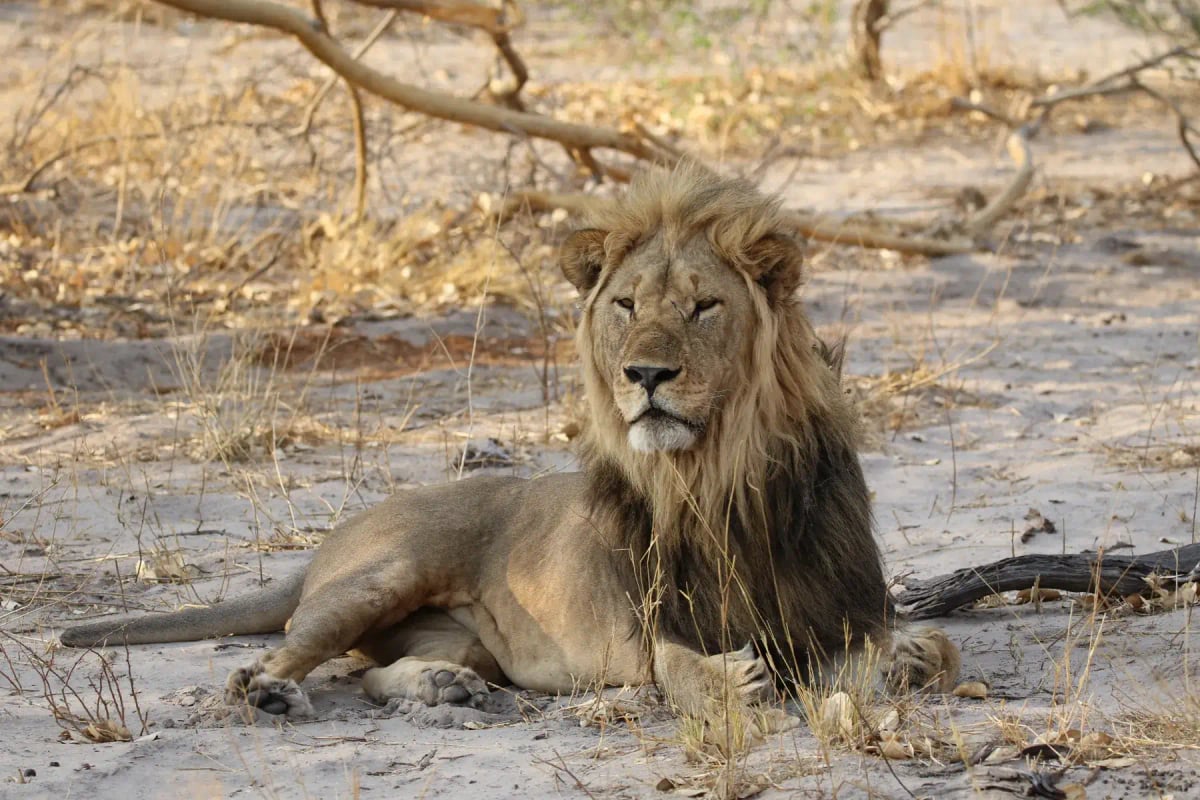
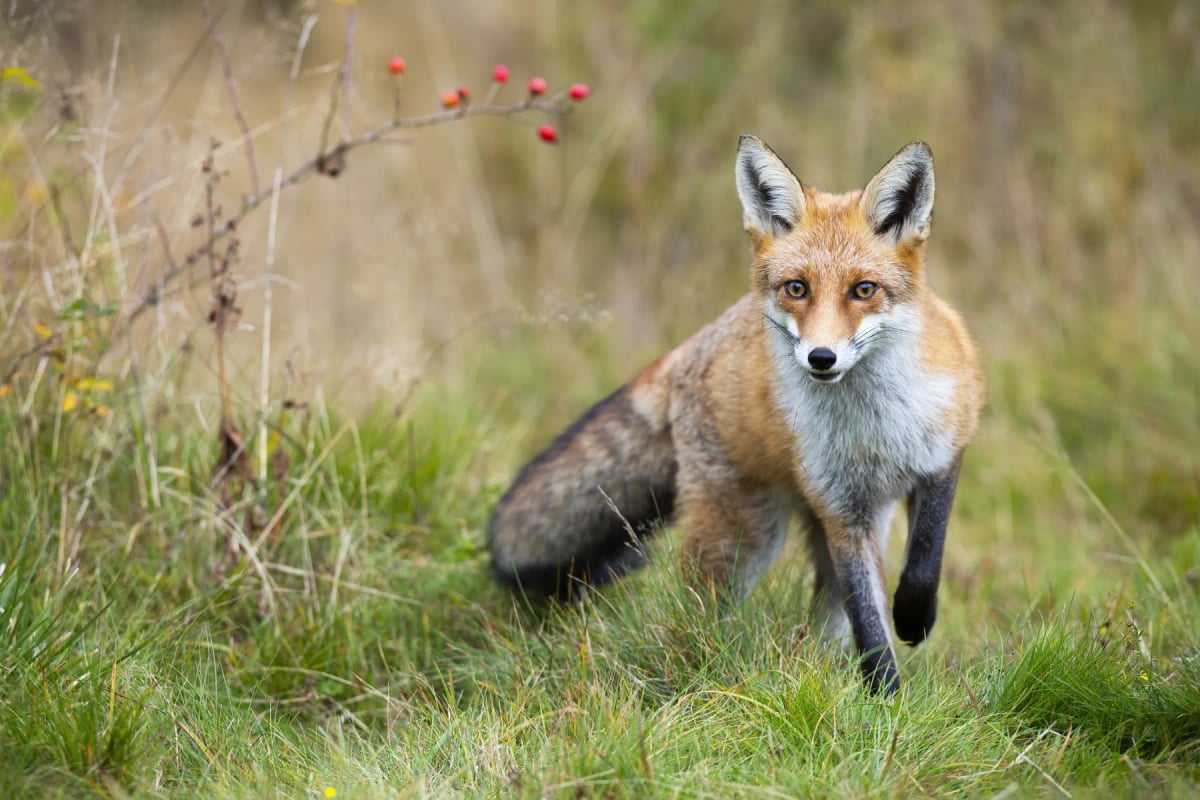
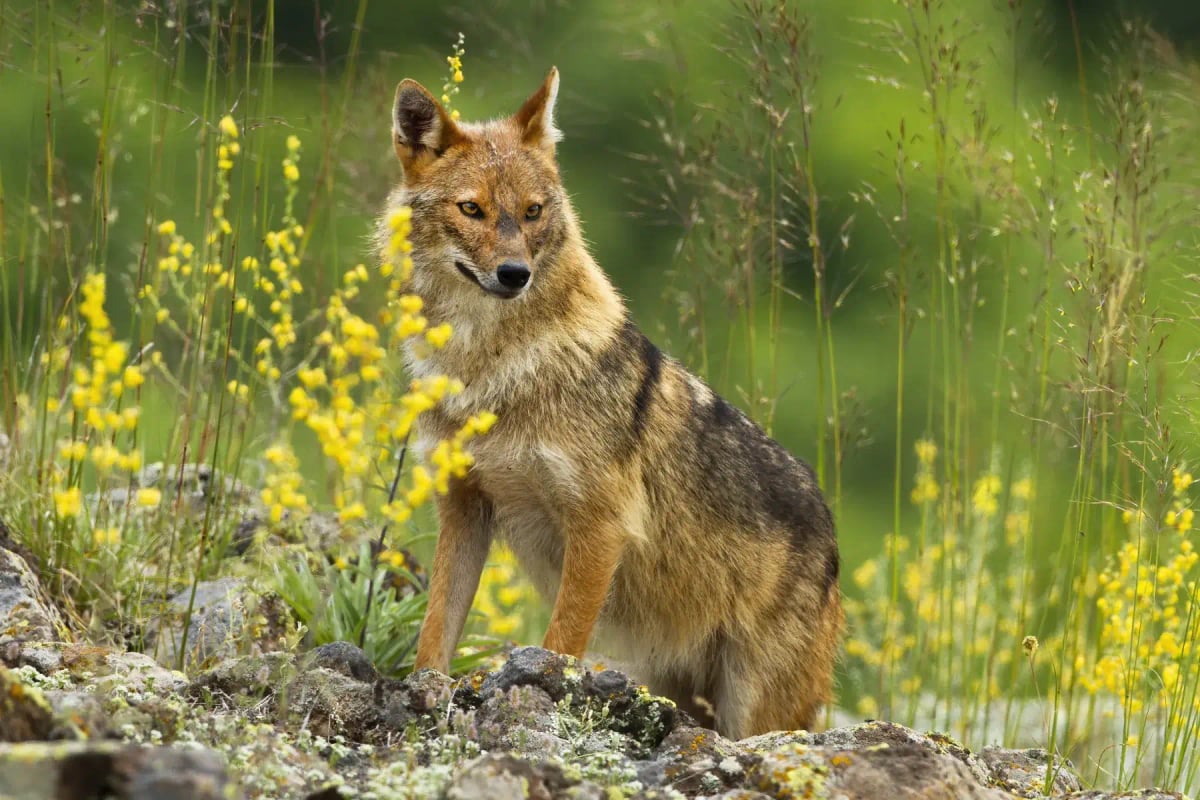
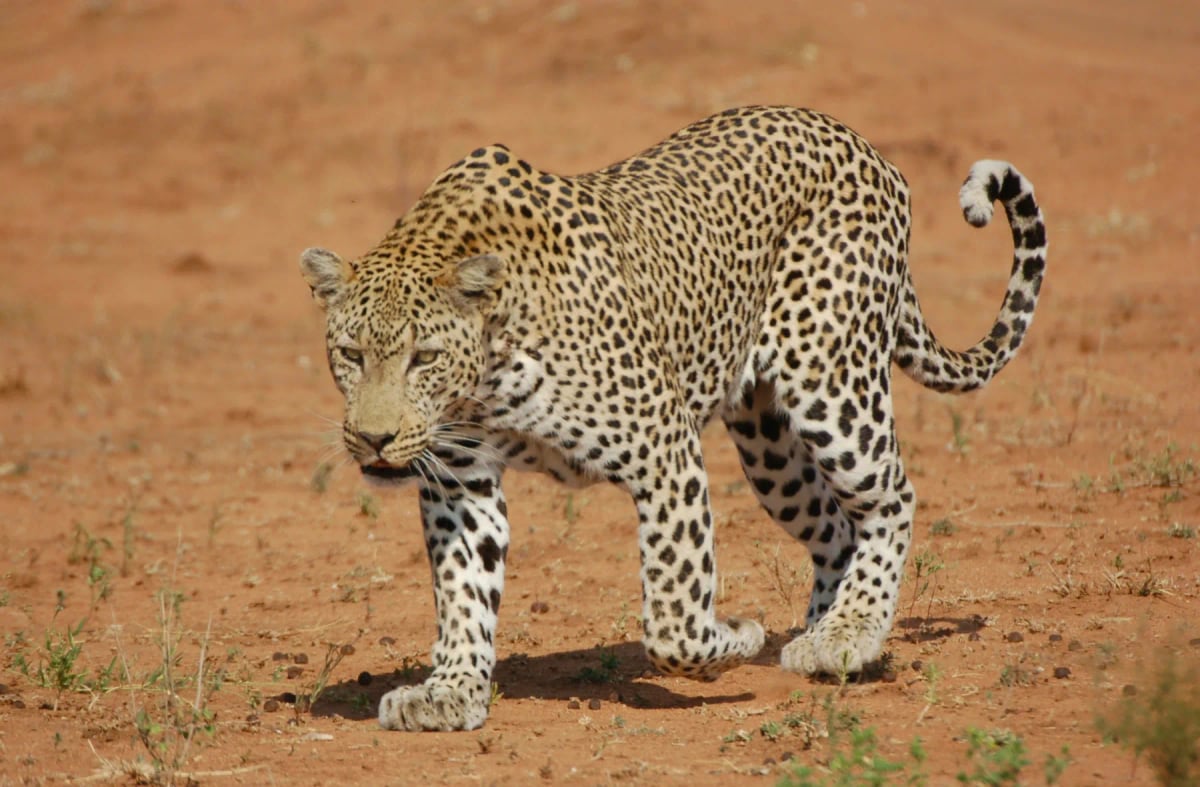
Do chamois have any predators?
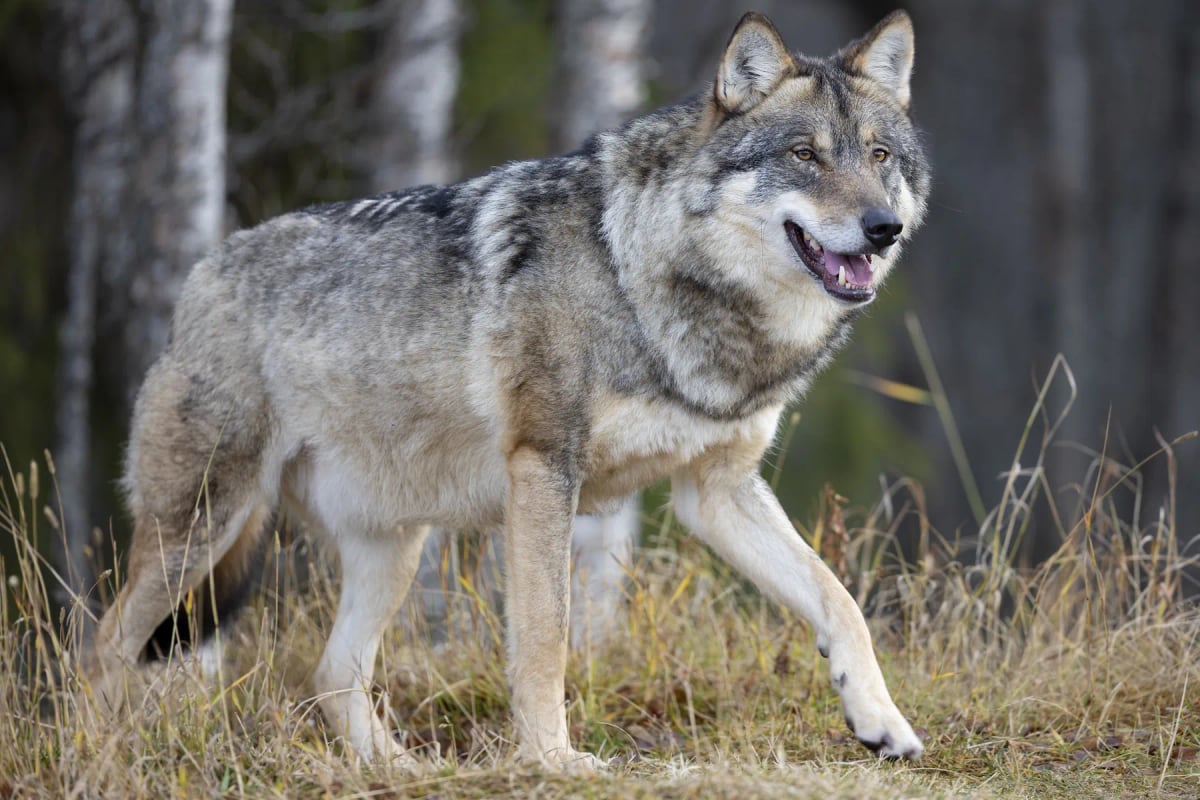
Yes, chamois face predation from several large carnivores. Wolves, lynx, and bears are their main natural predators across Europe, while golden eagles can take young or weak individuals. Chamois rely on sharp eyesight and a keen sense of smell to detect danger early. When threatened, one animal in the group lets out a piercing whistle to alert the others, and the herd retreats rapidly up rocky slopes where most predators struggle to follow.
What is the rut like in chamois?
The chamois rut takes place in November and is a dramatic, physical affair. Males that spend most of the year alone actively seek out females, chasing them across steep slopes at considerable speed. Rival males confront each other with chases, posturing, and direct combat, and the hooked shape of their horns can cause serious injuries during these clashes. The rut is brief but intense, and successful males may mate with several females before the season ends.