American Bison
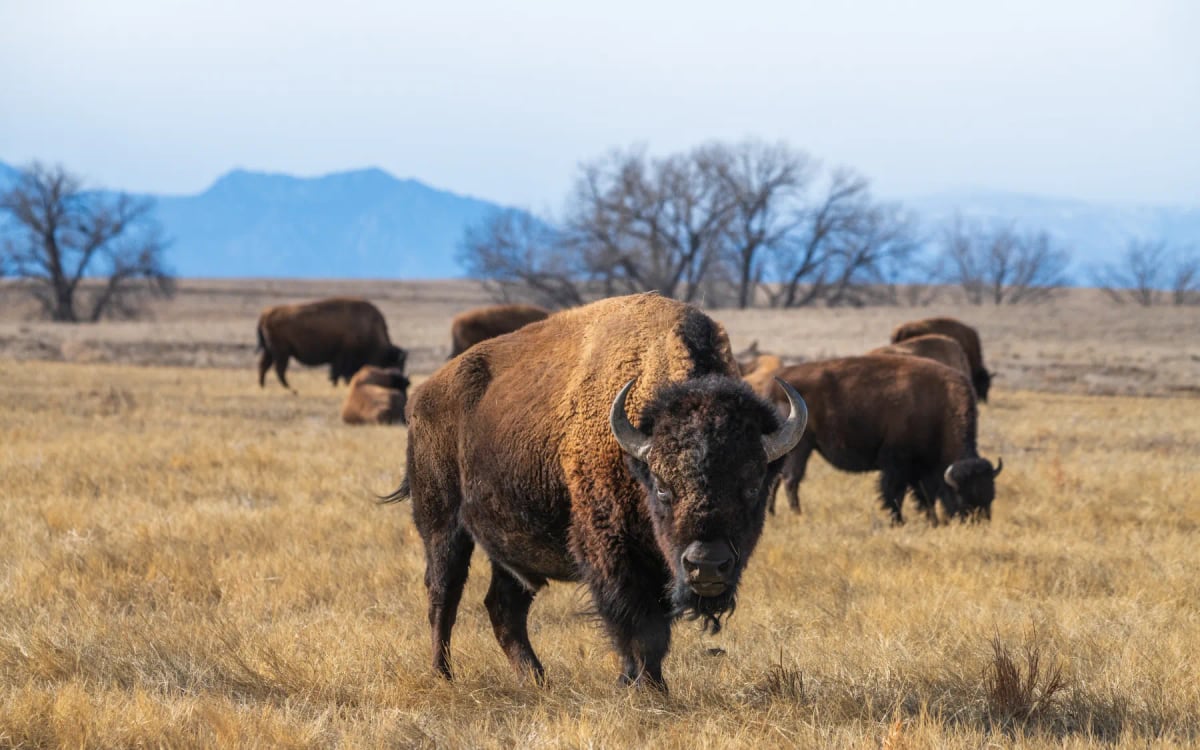
The American bison is the largest land mammal in North America, once numbering tens of millions across the Great Plains. Overhunting in the 19th century reduced the species to near extinction, but conservation efforts restored it to national parks and reserves in the United States and Canada, with small reintroductions in northern Mexico. Living in herds, bison shape prairies by grazing, trampling and wallowing, supporting countless other species. Despite recovery, most populations are intensively managed and genetic diversity remains a concern.
Habitat and distribution
The American bison historically ranged across most of North America, from the Great Plains to open woodlands east of the Rockies and well into Canada. Overhunting reduced this vast range to almost nothing by the late 19th century. Today populations exist in protected areas across the United States and Canada, with the most significant wild herds in Yellowstone National Park and Wood Buffalo National Park. A small reintroduction program has established bison in the Janos region of northern Mexico. Most animals outside protected areas live in commercial or tribal ranches under intensive management.
Diet
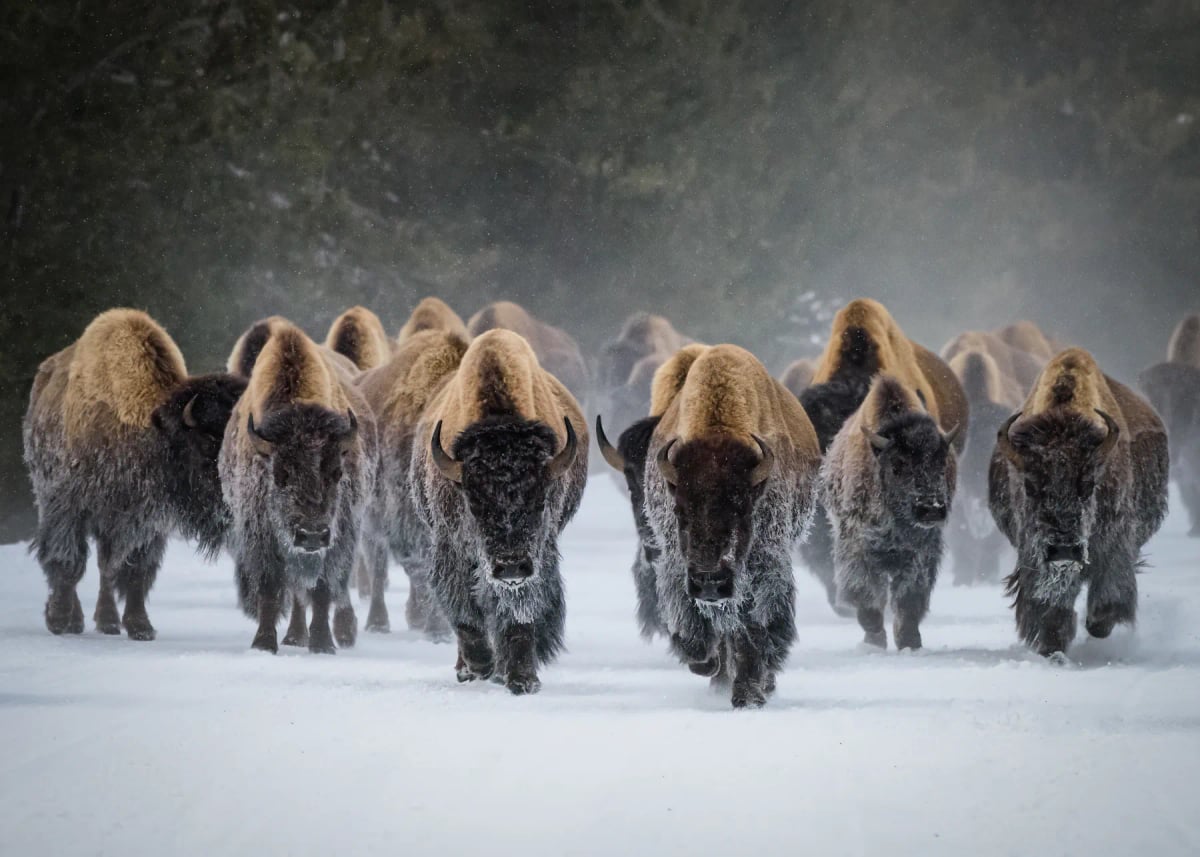
The American bison is a grazing herbivore that feeds primarily on native grasses and sedges. It eats throughout the day and can consume large quantities of vegetation, using its broad, flat tongue to pull grasses close to the ground. In winter, bison use their large heads to sweep snow aside and expose buried vegetation beneath. This grazing behavior, combined with wallowing and trampling, plays a key ecological role in maintaining prairie structure, promoting plant diversity, and creating habitat features that benefit birds, insects, and other grassland species.
Distinctive features
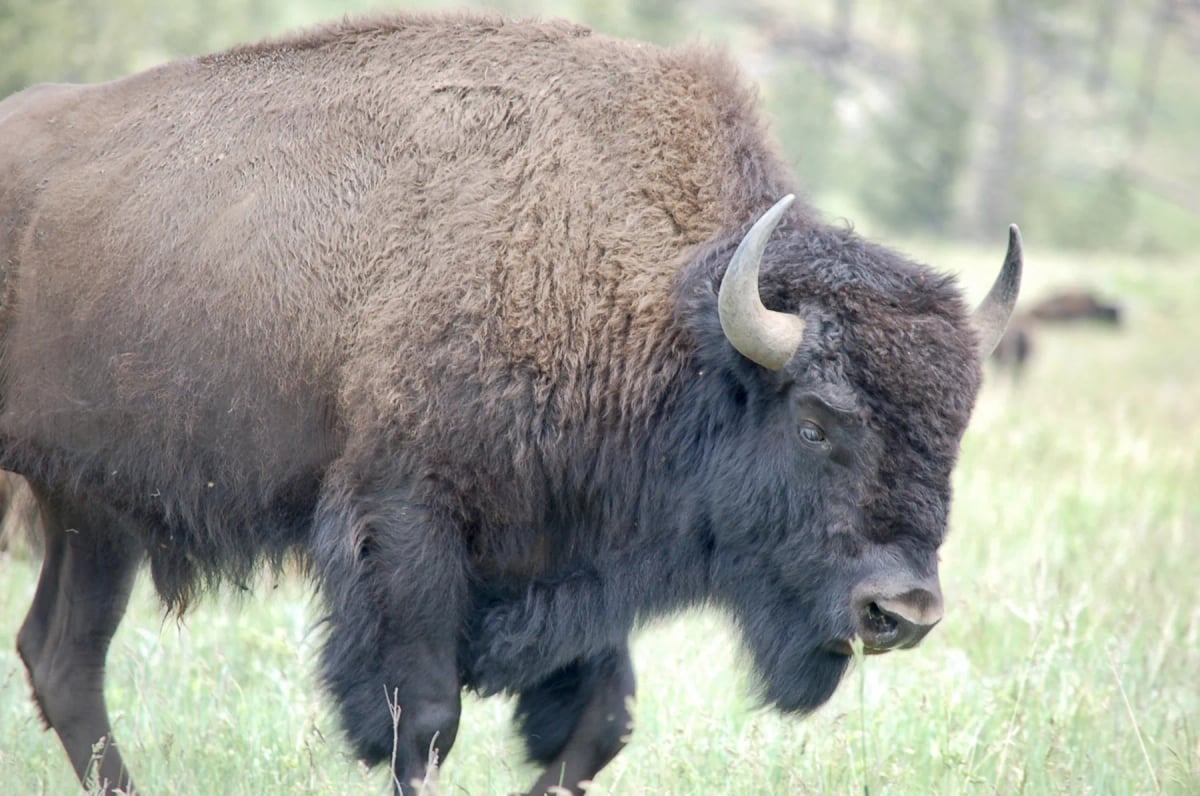
The American bison is an imposing animal built for life on open plains. Males can weigh over 900 kilograms and stand nearly two meters at the shoulder, with a massive head that sits low to the ground and a prominent muscular hump formed by enlarged vertebrae and supporting muscles. Both sexes carry short, curved horns. The front half of the body is covered in thick, shaggy brown fur, while the hindquarters have shorter, lighter hair. This asymmetric build gives the bison its distinctive silhouette, immediately recognizable on the horizon of any open grassland.
Behavior
American bison live in herds led by older females that roam and graze together throughout the year. Adult males form separate bachelor groups for most of the year, joining female herds only during the rut, which peaks in late summer. During the rut, bulls compete intensely through bellowing, displaying, and sometimes fighting. Bison are known for wallowing in dust or mud, which helps control parasites and maintain their coats. Despite their size and calm appearance, bison are unpredictable and capable of explosive speed, reaching up to 55 kilometers per hour when alarmed or threatened.
Conservation
The American bison was brought back from the brink of extinction through one of the earliest and most successful wildlife conservation efforts in North America. From a low of fewer than 1,000 animals in the late 19th century, the population has grown to around 350,000, though most are managed in commercial herds and lack genetic purity due to historical crossbreeding with domestic cattle. Truly wild conservation herds number far fewer. The IUCN lists the species as Near Threatened. Ongoing efforts focus on expanding wild populations and restoring genetic diversity through managed breeding programs.
Where it is found
The American Bison can be found in places such as:
Researched and written by Juan Pablo. Sources: IUCN Red List, scientific literature and regional field guides. Last updated: .
Technical factsheet


Frequently Asked Questions
How many American bison are left?
Around 350,000 American bison exist today, but most live in commercial or tribal ranches under intensive management. Truly wild conservation herds number far fewer, with Yellowstone National Park holding the most significant free roaming population in the United States and Wood Buffalo National Park in Canada holding the largest in the world. Many managed animals also lack genetic purity due to historical crossbreeding with domestic cattle, which complicates long term conservation efforts.
Why were American bison nearly extinct?
American bison once numbered an estimated 30 to 60 million animals across the Great Plains. Commercial hunting in the nineteenth century, driven by demand for hides and government policies aimed at undermining the food supply of Indigenous peoples, reduced the species to fewer than 1,000 animals by the late 1880s. The slaughter happened in just a few decades. A small group of conservationists and ranchers preserved the remaining animals, forming the foundation of today's population.
Are American bison dangerous?
American bison appear calm but are unpredictable and genuinely dangerous. Despite weighing up to 900 kilograms, they can reach speeds of 55 kilometers per hour and are highly agile. Yellowstone National Park records more injuries from bison than from any other animal in the park, as visitors frequently underestimate their speed and unpredictability. Bison will charge if they feel threatened, cornered, or surprised, and should always be observed from a significant distance.
What is the difference between a bison and a buffalo?
Bison and buffalo are often used interchangeably in North America, but they are different animals. The American bison belongs to the genus Bison and is native to North America. True buffalo are found in Africa and Asia: the African buffalo and the Asian water buffalo. The confusion comes from early European settlers who applied the name buffalo loosely to the large bovines they encountered on the Great Plains. Scientifically, the correct name for the North American species is bison.
What role do bison play in the ecosystem?
American bison are a keystone species of the Great Plains. Their grazing patterns promote plant diversity by preventing any single grass species from dominating. They wallow in dust and mud, creating depressions that collect water and support specialized plant communities. Trampling opens up soil for new growth. Their dung fertilizes the grassland and supports insects that feed birds and other animals. The entire prairie ecosystem evolved alongside bison and depends on their presence to function at its best.
How big is the American bison?
The American bison is the largest land mammal in North America. Adult males can stand nearly two meters at the shoulder and weigh up to 900 kilograms. Females are considerably smaller, typically weighing between 400 and 600 kilograms. The most distinctive feature of their build is the large muscular hump over the front shoulders, formed by elongated vertebrae and supporting muscles. This hump, combined with the massive head carried low to the ground, gives the bison its immediately recognizable silhouette.