Siberian Tiger
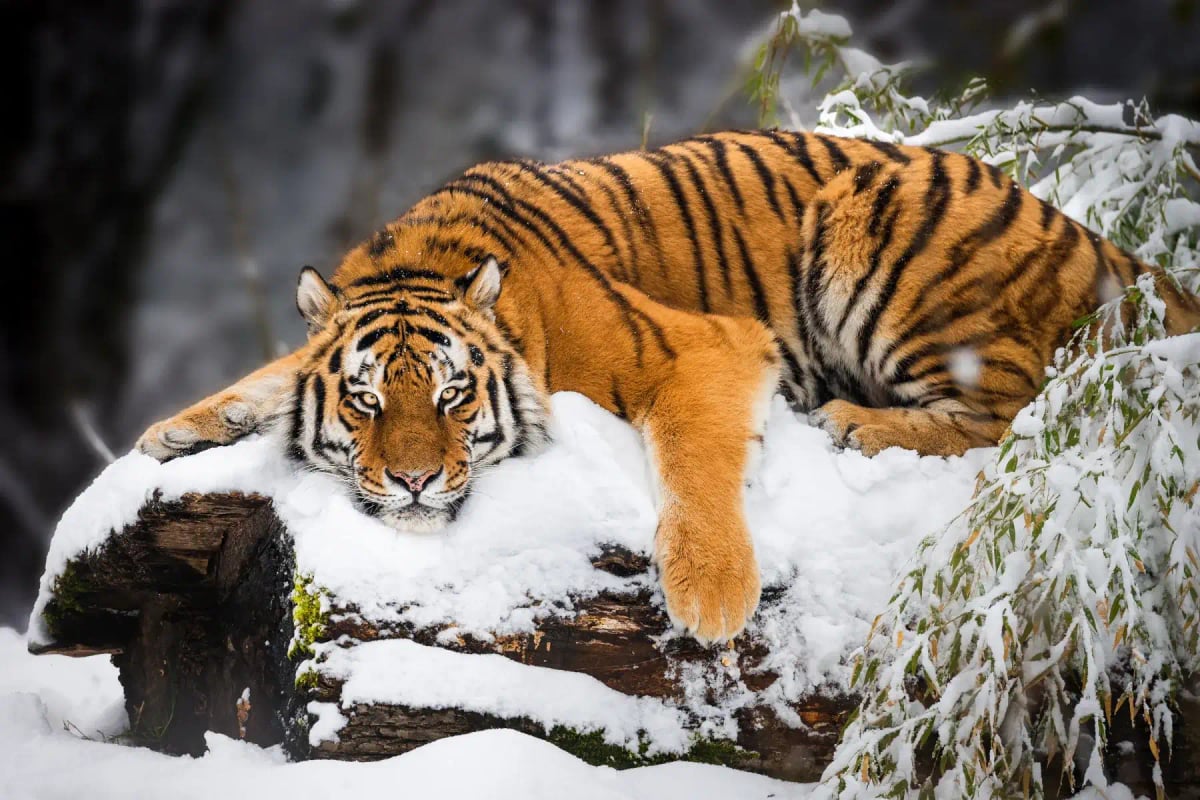
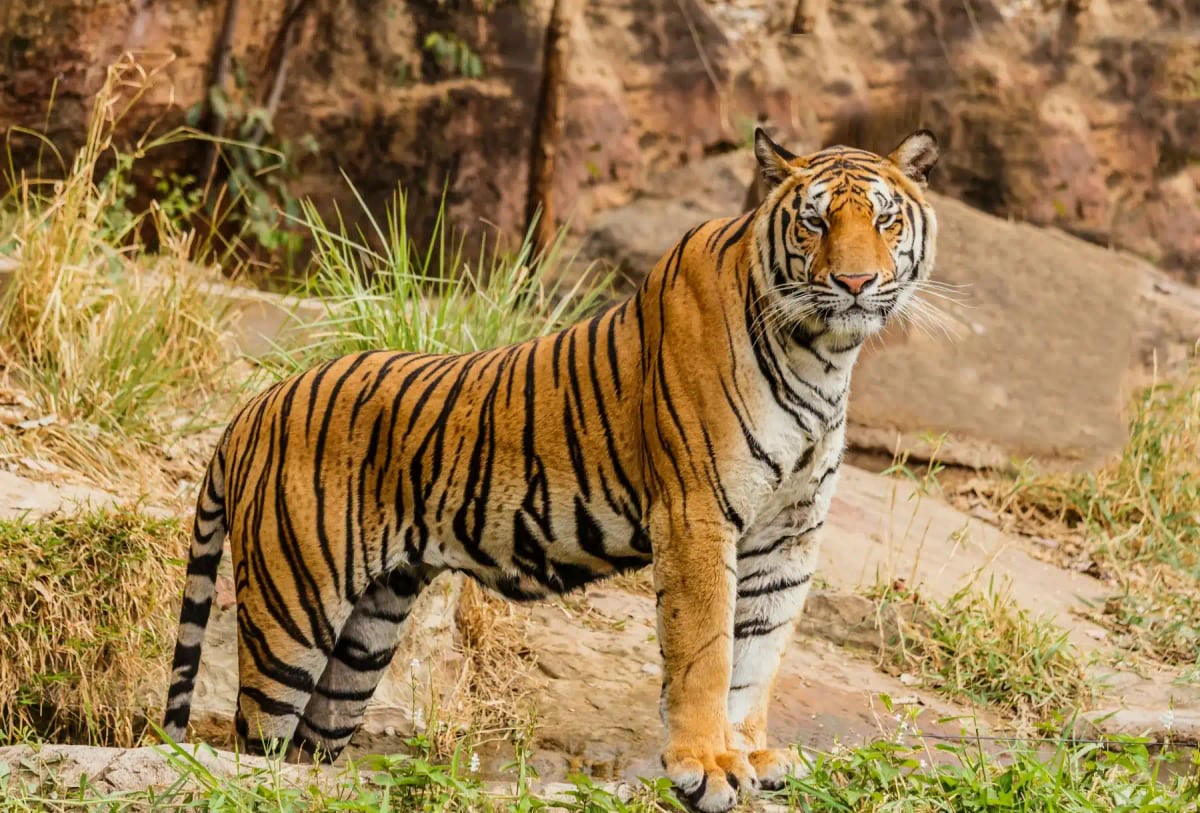
The Siberian tiger (Panthera tigris altaica), also called the Amur tiger, is the largest cat on Earth. Males can weigh more than 300 kg and stretch over 3 m from nose to tail. This subspecies lives in the temperate forests of Russia's Far East and a sliver of northeastern China, where winters are brutal and temperatures can plunge below minus 40 °C. A coat that is thicker than that of any other tiger subspecies, combined with a layer of fat along the belly and flanks, keeps it alive through months of deep snow. It hunts mostly red deer, sika deer, and wild boar, relying on ambush rather than speed. Once pushed to the edge of extinction, the wild population has climbed back to roughly 500 to 600 individuals, though poaching and the steady loss of forest habitat continue to put pressure on its recovery.
Habitat and distribution
Most Siberian tigers live in the Sikhote-Alin mountain range of Russia's Primorsky and Khabarovsk regions, where dense forests of Korean pine, oak, and birch provide both cover and prey. A much smaller group persists along the border between Russia and northeastern China. The landscape is rugged and remote, with winters that regularly drop below minus 40 °C and snowfall that blankets the ground for months. Far from being a disadvantage, this isolation has helped protect the subspecies from human pressure. Each tiger needs a very large territory to find enough food, with males roaming areas that can cover several hundred square kilometers. Access to rivers and valleys is important, as prey animals such as red deer and wild boar tend to concentrate near water sources and lower elevations during the coldest months.
Size
No wild cat on Earth grows as large as the Siberian tiger. Adult males typically weigh between 180 and 300 kg, though exceptional individuals have tipped the scales even higher. From the tip of the nose to the base of the tail, a male can measure more than 3 meters, with the tail itself adding another 90 to 100 cm. Females are noticeably smaller, usually weighing between 100 and 170 kg. Beyond raw weight, the body is built for cold weather survival: the limbs are thick and powerful, the paws are broad enough to act like natural snowshoes, and the coat is considerably denser than that of any other tiger subspecies. A layer of fat along the belly and flanks adds insulation and serves as an energy reserve during periods when prey is hard to find.
Diet
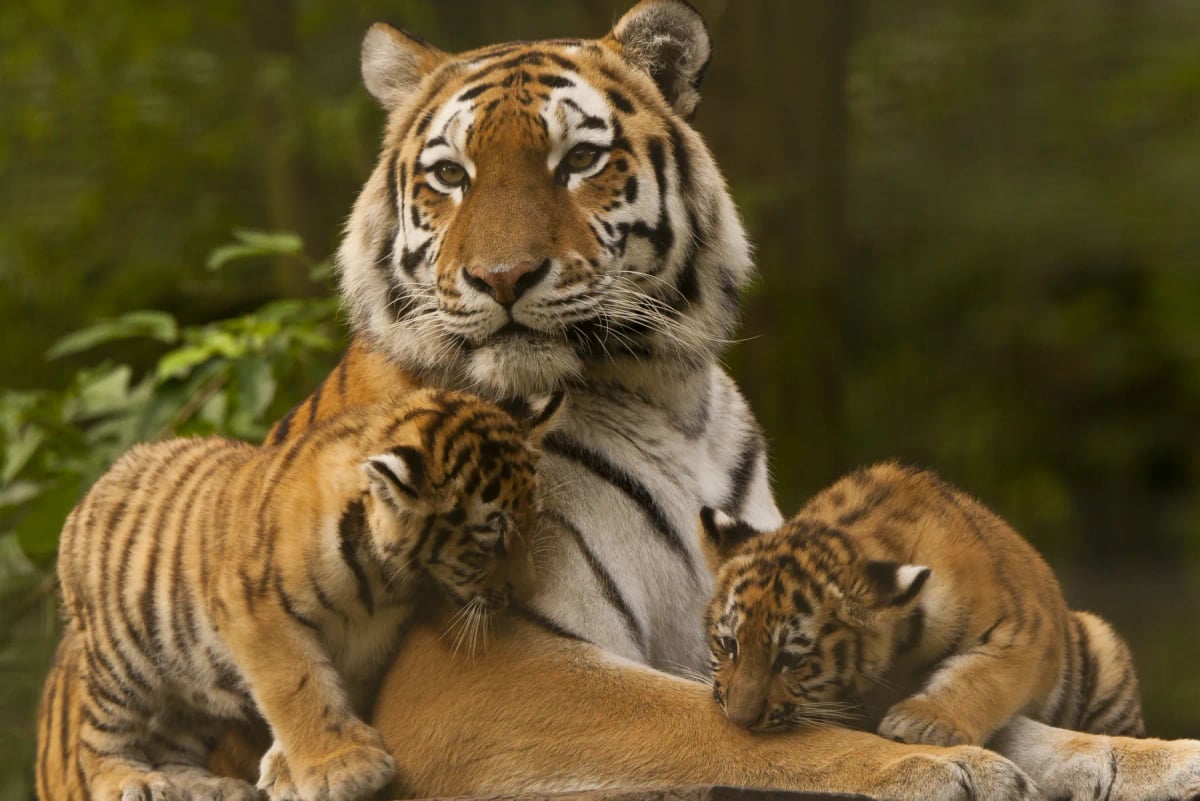
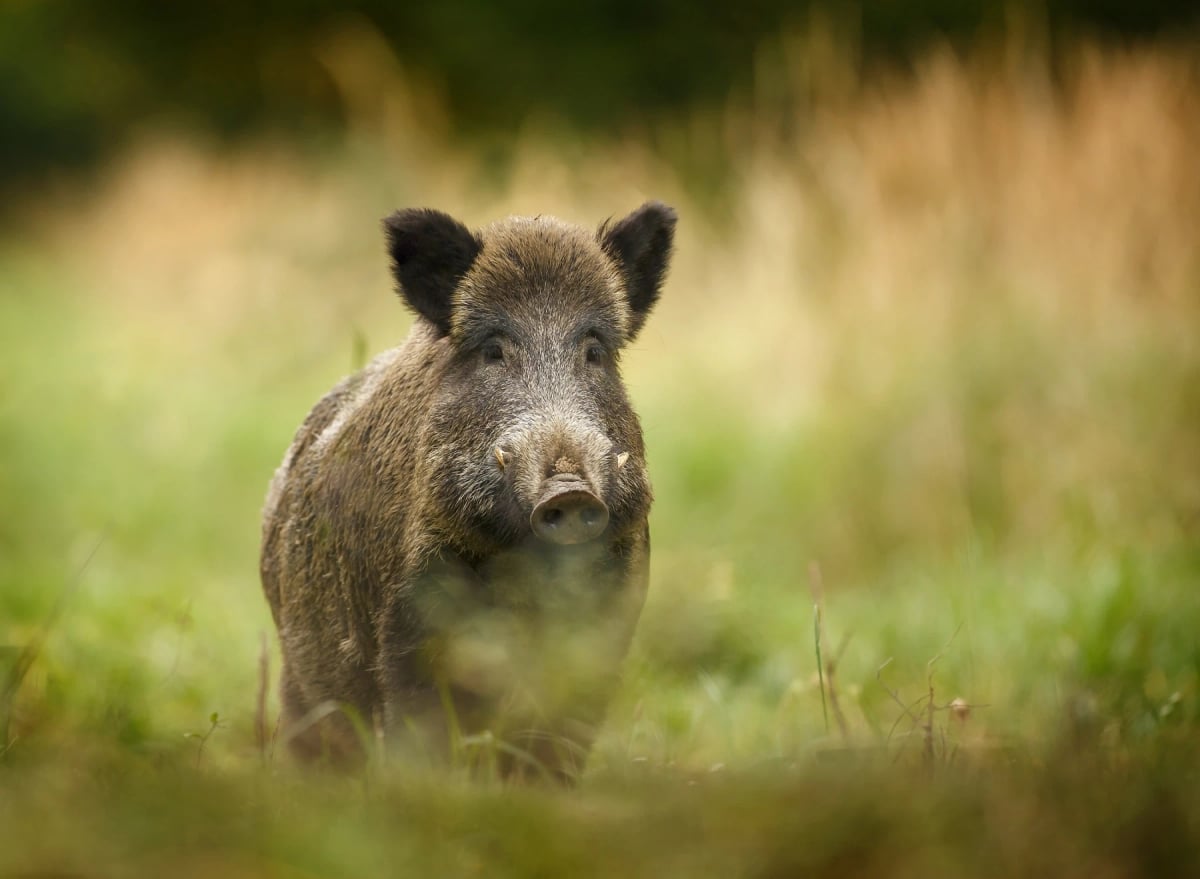
Prey selection in the Siberian tiger depends heavily on what is available across its vast range. Red deer and wild boar make up the core of its diet, but sika deer, roe deer, and even moose are taken when the opportunity arises. Smaller animals such as hares and badgers are eaten during lean periods, though a single tiger needs to consume roughly 9 to 10 kg of meat per day on average to meet its energy needs. Rather than chasing prey over long distances, the tiger relies on stealth. It stalks carefully, uses the forest as cover, and launches a short, explosive rush from close range. A successful hunt often ends with a bite to the back of the neck or throat. Kills from large prey may be fed on over several days, with the tiger returning to the carcass between rests.
Behavior
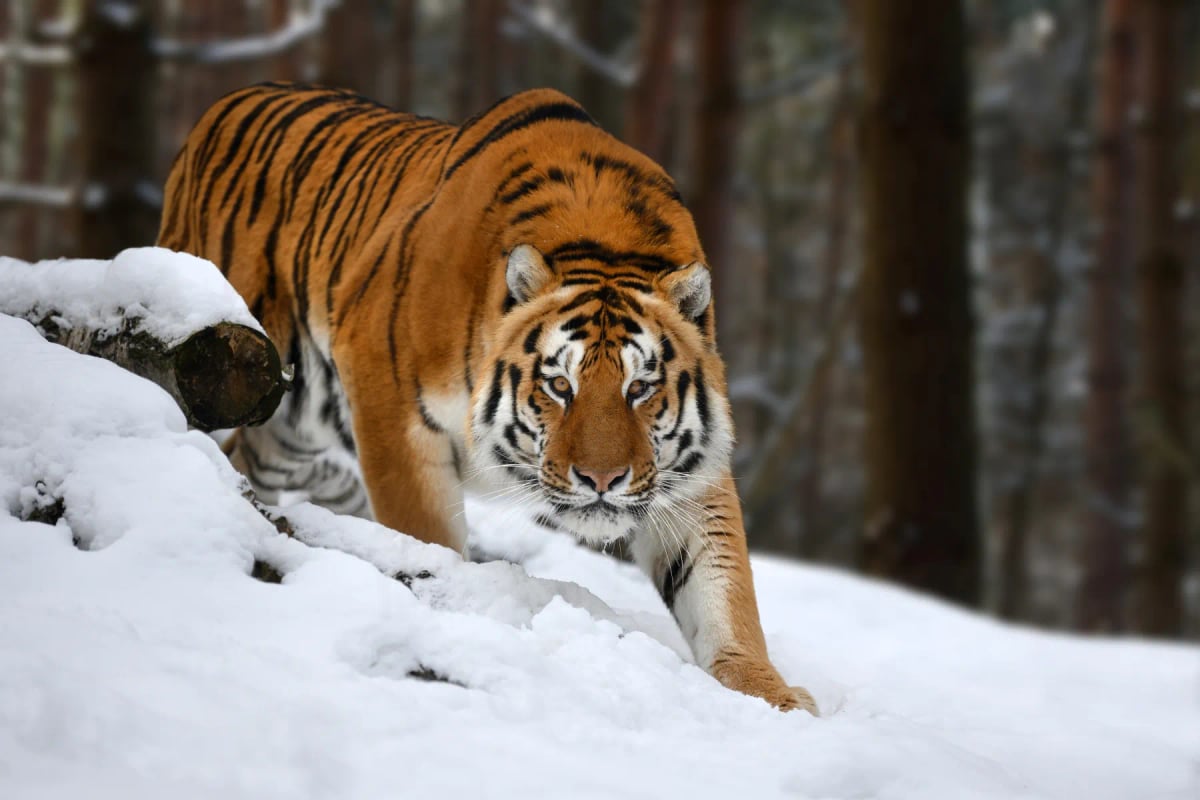
Siberian tigers are solitary animals for most of their lives. Adults hold individual territories that they mark with scent sprays, scratch marks on trees, and scrapes on the ground. Males maintain much larger territories than females, and a male's range often overlaps with those of several females. Outside of the brief mating season, encounters between adults are generally avoided. Despite their great size, these tigers are remarkably quiet and difficult to spot in the wild. Attacks on people are extremely rare and almost always linked to injured or starving individuals. Cubs stay with their mother for up to two and a half years, learning hunting techniques through observation and practice before striking out on their own. Communication includes a range of vocalizations: roars to signal presence, chuffing sounds during friendly encounters, and growls when threatened.
Conservation
The IUCN lists the Siberian tiger as En peligro, and the road to that status involved a dramatic collapse in the twentieth century, when hunting and habitat loss reduced the wild population to perhaps as few as 40 individuals by the 1940s. Strict protections put in place in Russia, combined with decades of work by conservation organizations and government agencies, helped numbers climb back to an estimated 500 to 600 animals today. Russia's Land of the Leopard and Sikhote-Alin Biosphere Reserve are among the protected areas that provide a foundation for recovery. However, poaching for bones and skin, conflict with local communities over livestock predation, and the steady reduction of forest cover continue to threaten progress. Climate change also poses a concern, as it may alter the prey base and shrink the habitat suitable for the subspecies over time.
5 Curiosities
Here are five fascinating facts about the Siberian tiger: • Its paws are unusually wide, which spreads its weight across soft snow and makes movement through deep drifts far easier, much like a built-in snowshoe. • Unlike most members of the cat family, Siberian tigers take readily to water and are capable swimmers, sometimes crossing wide rivers while patrolling their territories. • The pattern of stripes on every tiger is unique, similar to fingerprints in humans, and researchers use photo identification to track individuals in the wild. • A single adult needs a territory that can stretch from 500 to over 1,000 square kilometers, one of the largest home ranges of any land predator on Earth. • The Siberian tiger and the Amur leopard share part of the same habitat in Russia's Far East, making that region one of the most important areas for big cat conservation anywhere in the world.
Researched and written by Juan Pablo. Sources: IUCN Red List, scientific literature and regional field guides. Last updated: .
Technical factsheet



Frequently Asked Questions
What do Siberian tigers eat?
Siberian tigers rely mostly on red deer, wild boar, and sika deer. A single adult needs around 9 to 10 kg of meat per day on average. Rather than running prey down, they stalk quietly through the forest and rush from close range. After bringing down large prey, a tiger may return to the same carcass over several days until the food is gone.
Where do Siberian tigers live?
Most Siberian tigers are found in the temperate forests of Russia's Far East, mainly in the Sikhote-Alin mountain range across Primorsky and Khabarovsk regions. A small number also live near the border between Russia and northeastern China. The habitat is cold and remote, with winters that regularly push below minus 40 °C and heavy snow covering the ground for months at a time.
How big is a Siberian tiger?
The Siberian tiger is the largest wild cat on Earth. Adult males typically weigh between 180 and 300 kg and can measure more than 3 meters from nose to tail tip. Females are considerably smaller, usually between 100 and 170 kg. Their broad paws, thick coat, and a layer of fat along the belly help them handle months of freezing temperatures and deep snow.
Are Siberian tigers endangered?
Yes, the IUCN lists the Siberian tiger as Endangered. The population crashed to perhaps as few as 40 individuals in the wild by the 1940s due to hunting and habitat loss. Thanks to strict protections in Russia and years of conservation work, numbers have recovered to an estimated 500 to 600 animals today. Poaching, loss of forest cover, and conflict with local communities remain serious threats.
Do Siberian tigers live alone or in groups?
Siberian tigers are solitary animals. Each adult holds its own territory, marked with scent sprays and scratch marks on trees. Males patrol much larger areas than females, and their territories often overlap with those of several females. The only regular social bond is between a mother and her cubs, who stay with her for up to two and a half years before going off on their own.
Can Siberian tigers swim?
Yes, and they are quite good at it. Unlike many other members of the cat family, Siberian tigers take readily to water and will cross wide rivers while moving through their territories. Swimming also plays a role during hunts and when traveling between different parts of their range. This comfort in water sets them apart from the image most people have of cats avoiding getting wet.
How many Siberian tigers are left in the wild?
Current estimates put the wild population at around 500 to 600 individuals, almost all of them in Russia's Far East. This is a real recovery compared to the 1940s, when the subspecies came close to disappearing entirely. Even so, the population remains vulnerable. Poaching for bones and skin used in traditional medicine, along with the ongoing loss of forest habitat, continues to slow the pace of recovery.