Clownfish
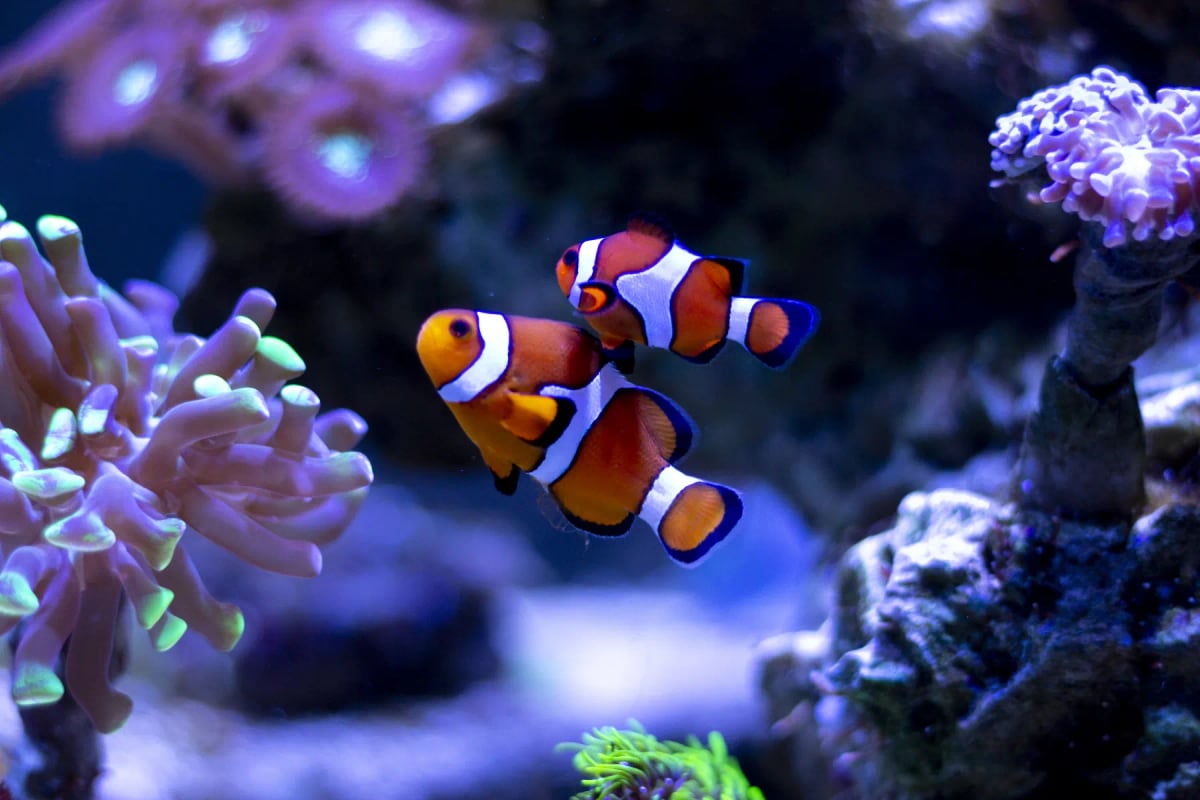
Clownfish are small, vividly colored reef fish instantly recognized by their bright orange bodies marked with bold white bands edged in black. There are more than 30 species, all belonging to the subfamily Amphiprioninae, and all of them depend on a close partnership with sea anemones. A protective layer of mucus on their skin shields them from the anemone's stinging cells, letting them shelter safely among the tentacles. In exchange, they drive away predatory fish, remove parasites, and their waste provides nutrients to the anemone. Clownfish live in small, tightly organized groups centered on one large, dominant female. If she dies, the dominant male changes sex and takes her place. Found across the Indo-Pacific from the Red Sea to the Pacific Ocean, they rarely stray far from a single host anemone throughout their entire lives.
Habitat and distribution
Clownfish are found across the warm, shallow waters of the Indo-Pacific, stretching from the Red Sea and the coast of East Africa all the way to the islands of Polynesia and the Great Barrier Reef of Australia. They are strictly reef-associated animals, spending virtually their entire lives within a few meters of a single host anemone. Most species prefer depths of between one and fifteen meters, where sunlight still reaches the seafloor and coral growth is dense. Different species show preferences for particular anemone hosts, and the availability of those anemones largely determines where a clownfish can settle. Countries such as Indonesia, the Philippines, Papua New Guinea, and Australia hold some of the richest populations, sitting at the heart of the Coral Triangle, which is the most biodiverse marine region on Earth.
Appearance
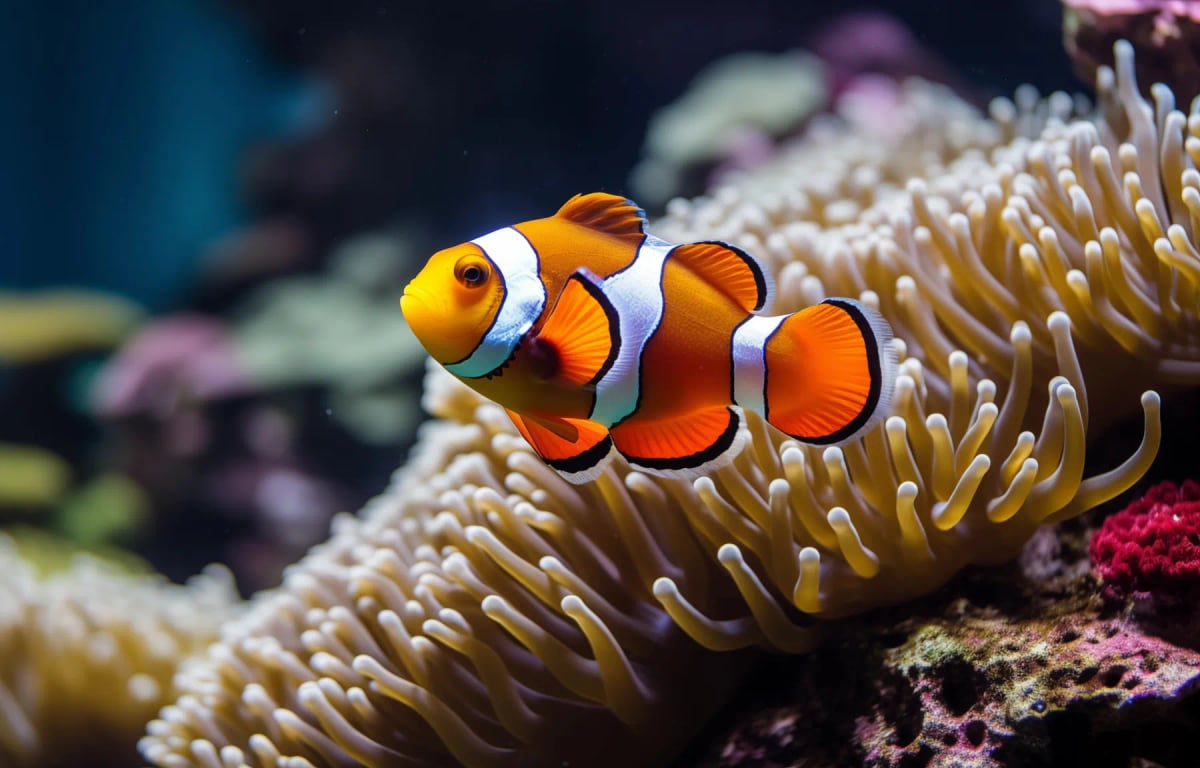
Few reef fish are as instantly recognizable as the clownfish. The most familiar species, Amphiprion ocellaris, wears a vivid orange coat broken by three bold white bands, each outlined in a thin line of black. The body itself is deep and compact, which suits a life spent weaving through the tight tangle of anemone tentacles. Fins are rounded rather than pointed, adding to the fish's almost toy-like silhouette. Size varies among species, but most adults measure between eight and fifteen centimeters in length, with females being the largest individuals in any group. Coloration does differ across the subfamily: some species are black with white or orange patches, and a few are almost entirely brown. That variety, however, rarely diminishes the striking visual impression these fish make on anyone who spots them on a reef.
Symbiosis with anemones
The partnership between clownfish and sea anemones is one of the most studied relationships in all of marine biology. Sea anemones use stinging cells called nematocysts to paralyze small prey, yet clownfish move freely among the tentacles without being harmed. Research points to a thick layer of mucus on the fish's skin as the key protection. That mucus appears to either mask the chemical signals that normally trigger a sting, or directly suppress the anemone's firing mechanism. The benefit flows both ways. The anemone provides the fish with shelter and protection from predators. In return, clownfish chase away fish that would otherwise nibble on the anemone's tentacles, remove dead tissue and parasites, and their waste delivers nitrogen directly to the anemone, functioning much like a fertilizer on a coral reef.
Behavior
Social life for clownfish revolves entirely around a single anemone. Each group consists of one large dominant female, one breeding male, and several smaller non-breeding males. The hierarchy is strict, and each fish's size reflects its rank within the group. When the dominant female dies, the breeding male increases in size, changes sex, and becomes the new female. The next largest non-breeding male then steps up as the new breeding male. This process, known as sequential hermaphroditism, is rare among vertebrates and makes clownfish one of the more remarkable examples of flexible reproduction in the animal kingdom. Despite their small size, clownfish are bold defenders of their home. They will aggressively chase away fish much larger than themselves that venture too close to the host anemone.
Diet
Clownfish are opportunistic omnivores that feed on a varied diet throughout the day. Their meals typically include small zooplankton such as copepods, tiny crustaceans, algae, and the occasional piece of undigested food left over from their host anemone's own feeding. They forage mostly within the immediate space around their anemone, rarely straying far from safety. Feeding activity tends to be highest in the morning and early afternoon, when plankton drifts close to the reef surface on water currents. Their role as omnivores gives them a degree of dietary flexibility that helps them cope with seasonal changes in food availability on the reef. The nitrogen in their waste, produced as a byproduct of digestion, has been shown in studies to promote the growth of the zooxanthellae algae living inside the anemone's tissue, improving the anemone's overall health.
Cultural significance
Perhaps no marine fish has captured the public imagination quite like the clownfish. The release of the animated film Finding Nemo in 2003 turned this already photogenic reef species into a global icon overnight. Aquarium demand for clownfish spiked dramatically after the film, raising serious concerns among conservationists about the impact of collection on wild reef populations. That cultural moment ended up sparking real conversations about the ethics of the marine aquarium trade and the broader health of coral reef ecosystems. Today clownfish appear widely in wildlife education, conservation campaigns, and reef tourism, particularly in countries such as Australia, Indonesia, and the Philippines. Their instantly recognizable appearance makes them ideal ambassadors for reef conservation, helping connect people of all ages to the fragile underwater world that coral reefs represent.
Where it is found
The Clownfish can be found in places such as:
Researched and written by Juan Pablo. Sources: IUCN Red List, scientific literature and regional field guides. Last updated: .
Technical factsheet


Frequently Asked Questions
What do clownfish eat?
Clownfish are omnivores, so they eat a mix of plant and animal matter. Their diet includes tiny crustaceans, copepods, algae, and leftovers from their host anemone's meals. They forage close to the anemone throughout the day, with feeding activity peaking in the morning. This flexible diet helps them handle seasons when food on the reef is harder to come by.
Can clownfish really change sex?
Yes, and it is one of the most fascinating things about them. All clownfish are born male. When the dominant female of a group dies, the breeding male changes sex and becomes the new female. The largest non-breeding male then steps up as the new breeding partner. This process is called sequential hermaphroditism and is quite rare among vertebrates.
Where do clownfish live?
Clownfish are found in the warm, shallow waters of the Indo-Pacific, from the Red Sea and East Africa to Australia and the islands of Polynesia. They live almost exclusively on coral reefs, staying close to a single host anemone their entire lives. Countries like Indonesia, the Philippines, and Papua New Guinea hold some of the largest populations in the world.
Are clownfish endangered?
Most clownfish species are currently listed as Least Concern by the IUCN. That said, they face real pressures. Coral bleaching driven by rising ocean temperatures destroys the reefs and anemones they depend on. Collection for the aquarium trade, which surged after the film Finding Nemo, also puts certain wild populations under stress. Healthy reefs are essential to their survival over the long term.
Why aren't clownfish stung by anemones?
Clownfish produce a thick layer of mucus on their skin that protects them from the anemone's stinging cells. Scientists believe this mucus either masks the chemical signals that normally trigger a sting or directly stops the anemone's firing mechanism. It is not something they are born with. Young clownfish carefully acclimate to a new anemone through a gradual process of contact.
How long do clownfish live?
In the wild, clownfish can live anywhere from six to ten years on average, though some individuals in stable environments have been known to survive for over twenty years. Their lifespan depends heavily on the health of their host anemone and the surrounding reef. In aquarium settings, they often live longer due to the absence of predators and a steady food supply.
Do clownfish stay in one place their whole lives?
Pretty much, yes. Once a clownfish settles on a host anemone, it rarely leaves. The anemone provides food, shelter, and protection from predators, so there is little reason to wander. They defend their anemone aggressively against intruders, including fish much larger than themselves. This strong attachment to a single spot makes them one of the most site-faithful fish on any reef.