Moose
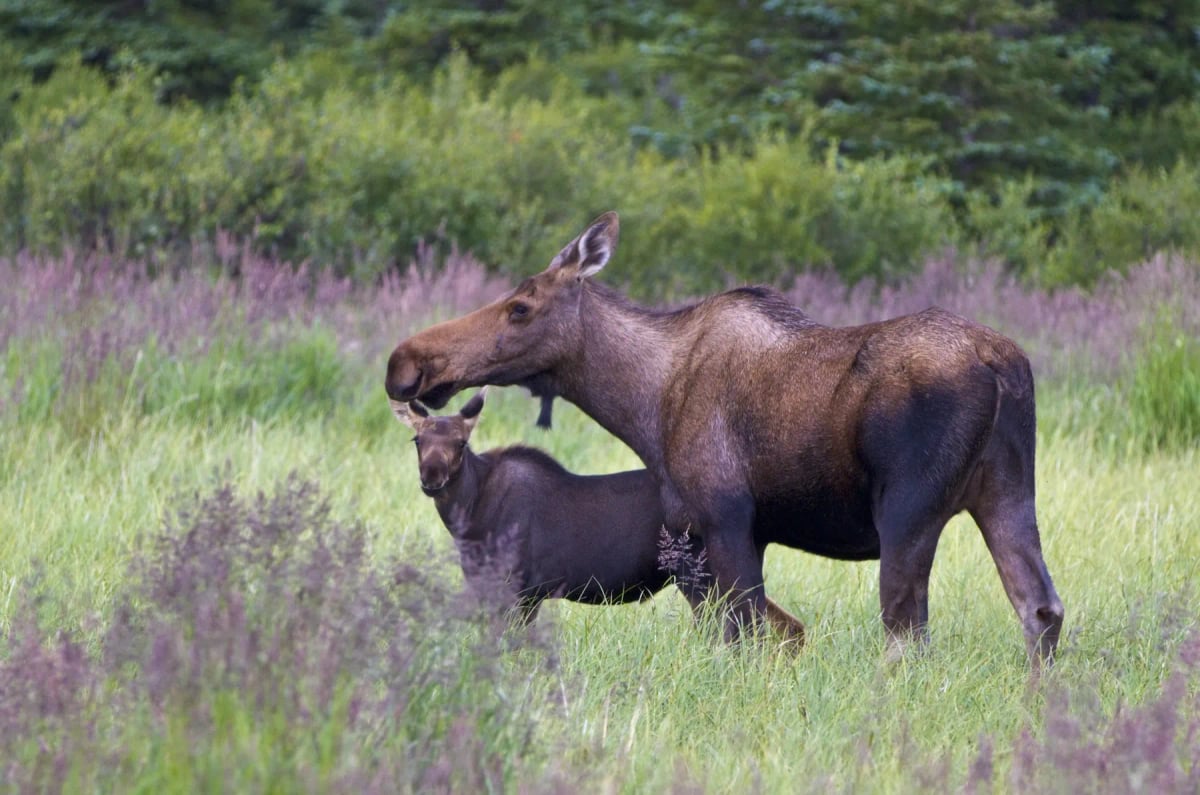
The moose (Alces alces) is the largest member of the deer family, with bulls reaching up to 2.1 m at the shoulder and tipping the scales at more than 600 kg. Those long, almost stilts-like legs are perfectly built for wading through deep snow and standing in rivers. Only males grow antlers, and theirs are broad and palmate, sometimes spanning more than 1.5 m across. Both sexes graze on willows, birches, aquatic grasses and water plants, often plunging their heads fully underwater to reach the best growth. Moose are spread across the boreal forests of northern Europe, Russia and North America, always favouring areas close to lakes, rivers or marshes. They live alone for most of the year, becoming active mainly around dawn and dusk. Despite their unhurried look, moose can charge without much warning and should always be given plenty of space.
Habitat and range
Moose are creatures of the north, living across the boreal and mixed forests of Scandinavia, Russia, Central Asia and North America. Their range stretches from Alaska and Canada down into parts of the northern United States, and from Norway and Finland east through Siberia into Mongolia and China. Within these forests, moose gravitate strongly toward water. Lakes, rivers, marshes and boggy ground give them access to the aquatic plants they rely on heavily in summer, while the surrounding trees offer food and cover through winter. Elevation matters too. In mountainous areas, moose often move to lower ground when snow becomes too deep at altitude. They are highly adaptable and can persist in logged or disturbed forests as long as shrubby regeneration, water sources and space are available.
Diet
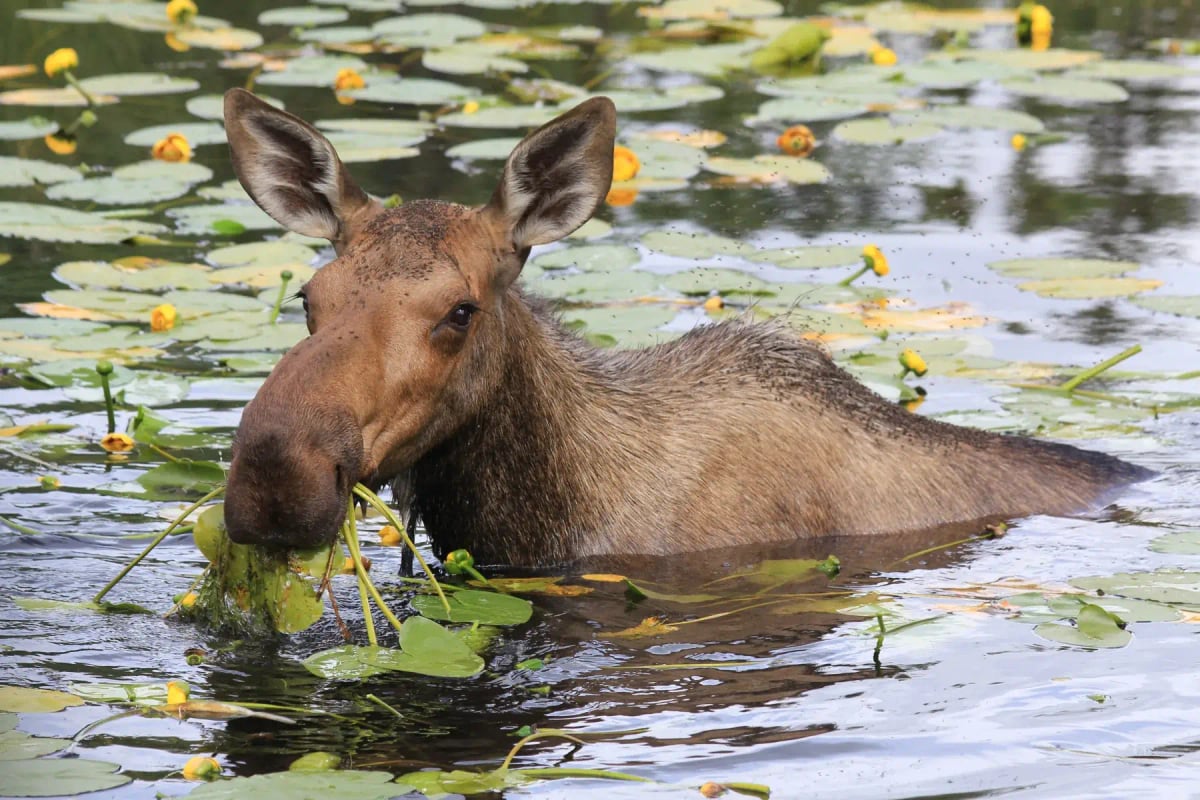
Few large animals eat such a wide variety of plant types as the moose does. In spring and summer, aquatic vegetation takes centre stage. Moose wade into lakes and rivers to reach pondweed, water lilies and other plants growing below the surface, sometimes submerging their entire head to pull up roots and stems rich in sodium. On land, willow and birch dominate their diet throughout the warmer months, along with aspen, maple and various shrubs. As winter sets in and green growth disappears, moose shift to browsing on twigs, bark and the lower branches of conifers. An adult needs to consume around 20 to 30 kilograms of vegetation every day to meet its energy needs. Their long legs and flexible upper lip help them strip bark and reach branches well above the ground.
Antlers
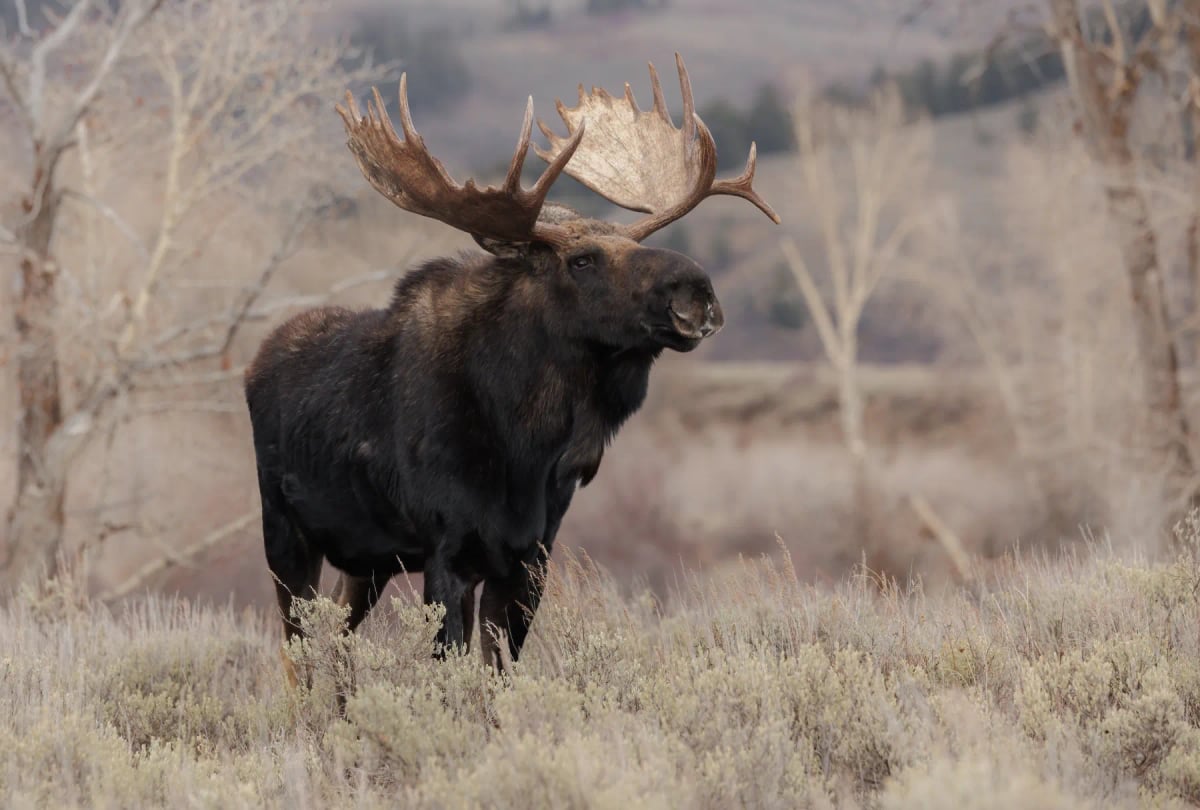
Among all living deer species, the moose carries the most impressive headgear. Only bulls grow antlers, and they do so at a remarkable pace each year, with full growth achieved by late summer in time for the autumn rut. A large bull's antlers can span more than 1.5 metres from tip to tip and weigh up to around 20 kilograms. The shape is broad and flat, often described as palmate, with multiple tines projecting from the outer edges. This palm and tine structure distinguishes moose antlers from the branched antlers typical of other deer. Once the rut ends, bulls shed their antlers, usually between November and January, and the cycle begins again. Younger bulls tend to grow smaller, less complex antlers, with size and shape improving as the animal reaches its prime.
Behavior and temperament
For most of the year, moose live alone. They are not territorial in the strict sense, but adults tend to use familiar home ranges and rarely seek the company of others outside of the breeding season. Activity peaks around dawn and dusk, with long rest periods in between. During the autumn rut, bulls become vocal and aggressive, producing deep grunting calls and competing with rivals through displays and, occasionally, direct clashes of antlers. Cows with young calves are among the most dangerous moose to approach, as they will charge with very little warning to protect their offspring. Despite their slow, almost lumbering appearance, moose can run at speeds of up to 55 kilometres per hour over short distances. Visitors to moose country are always advised to keep a generous distance and never position themselves between a cow and her calf.
Swimming ability
Water holds a special place in the life of a moose. These animals take to lakes and rivers with surprising ease, using their long legs to wade through shallows and their powerful bodies to push through deeper water. Moose are strong swimmers and have been recorded crossing open water stretches of several kilometres without difficulty. Their hollow outer hairs trap air and help with buoyancy, making long swims less demanding. In summer, moose spend considerable time in the water, partly to feed on aquatic plants and partly to escape the biting insects that gather in the forest. They can dive to reach vegetation growing on lake beds, briefly submerging to pull up plants from below. For a land animal of this size, the ease with which a moose moves through water is quite remarkable.
Conservation
The IUCN currently classifies the moose as Least Concern, reflecting a global population that remains large and broadly stable. Estimates suggest there are around one million moose in Canada, roughly 300,000 in the United States and several hundred thousand more across Scandinavia and Russia. Even so, some regional populations have shown real declines in recent decades. In parts of the northeastern United States, numbers have dropped sharply, with warming temperatures linked to increased parasite loads, particularly from winter ticks that can weaken and kill individual animals. Habitat loss, road collisions and hunting pressure also affect local populations in various countries. Climate change is considered the most significant threat over the long term, as rising temperatures shrink the suitable habitat the moose depends on and shift the range of the parasites and diseases that affect it.
Where it is found
The Moose can be found in places such as:
Researched and written by Juan Pablo. Sources: IUCN Red List, scientific literature and regional field guides. Last updated: .
Technical factsheet
Frequently Asked Questions
What do moose eat?
Moose eat a wide range of plants depending on the season. In summer, they wade into lakes and rivers to feed on aquatic plants like water lilies and pondweed. On land, they browse willow, birch and aspen. In winter, they switch to twigs, bark and conifer branches. An adult moose needs around 20 to 30 kilograms of vegetation every single day to keep its energy up.
How big do moose get?
Moose are the largest members of the deer family by a wide margin. Bulls can stand up to 2.1 metres at the shoulder and weigh more than 600 kilograms. Their legs alone can measure over a metre in length. Cows are noticeably smaller than bulls but are still imposing animals. A full-grown moose simply has no equal among deer anywhere in the world.
Where do moose live?
Moose are found across the boreal forests of the northern hemisphere. Their range covers Canada, Alaska, parts of the northern United States, Scandinavia, Russia, and stretches as far as Mongolia and China. They always favour areas near water, such as lakes, rivers and marshes. These wetland edges give them access to the aquatic plants they depend on in summer and offer shelter throughout the year.
Are moose dangerous to humans?
Yes, moose can be genuinely dangerous. Despite their calm appearance, they can charge with very little warning, especially cows protecting their calves. During the autumn rut, bulls become aggressive and unpredictable. Moose can run at up to 55 kilometres per hour, so outrunning one is not a realistic option. Anyone in moose country should keep a good distance and never walk between a mother and her young.
Can moose swim?
Moose are surprisingly strong swimmers. They regularly cross lakes and rivers, and have been recorded swimming several kilometres in open water without any trouble. Their hollow outer hairs trap air and help them stay buoyant. They even dive below the surface to reach plants growing on lake beds. In summer, they spend a lot of time in the water, both to feed and to escape biting insects.
Are moose endangered?
Globally, moose are classified as Least Concern by the IUCN. There are around one million in Canada alone, with hundreds of thousands more across Russia and Scandinavia. However, some regional populations are declining. In parts of the northeastern United States, numbers have fallen sharply. Warming temperatures are increasing parasite loads, especially from winter ticks, which can be fatal. Climate change is considered the biggest threat over the long term.
Why do moose have such long legs?
A moose's long legs serve several practical purposes. They make it much easier to walk through deep snow without getting bogged down, and to wade into rivers and lakes to reach food. Those long limbs also help the animal strip bark and reach branches high above the ground. As a bonus, having long legs raises the body well above the snow surface, which helps moose conserve heat in very cold winters.