Reticulated Python
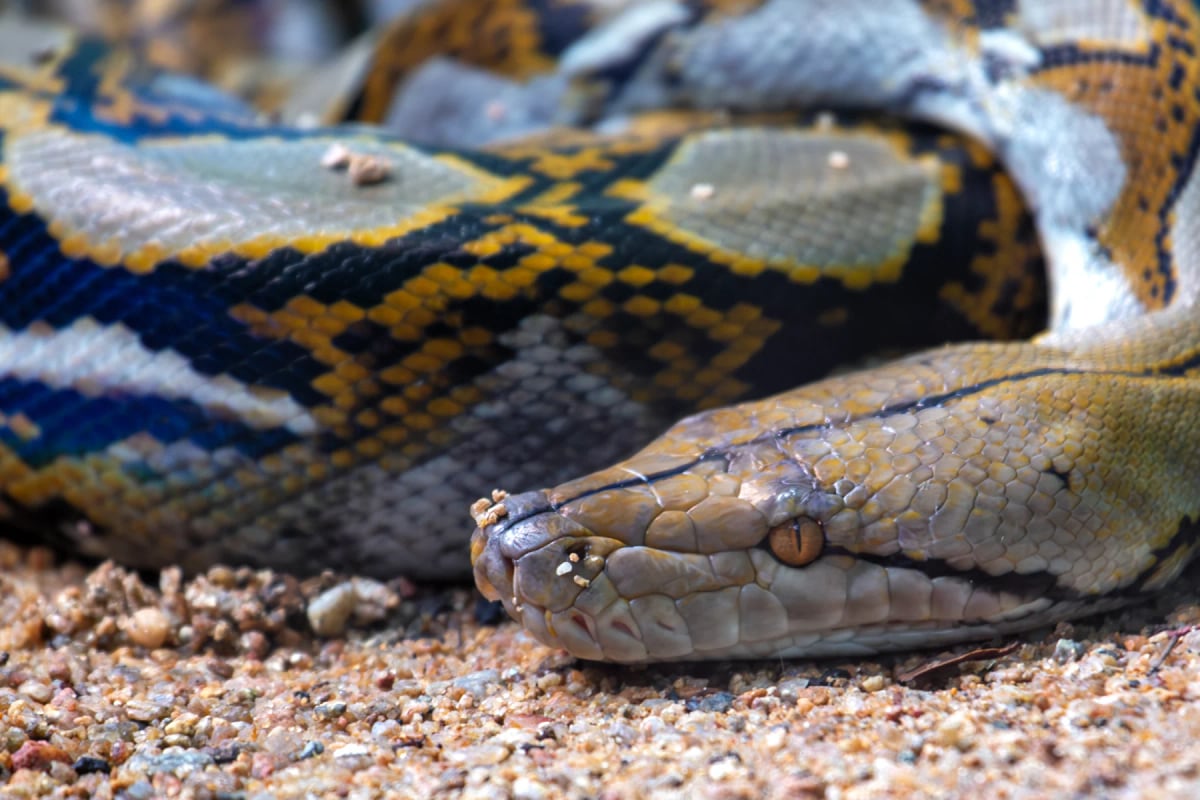
The reticulated python (Malayopython reticulatus) holds the title of the world's longest snake, with verified individuals surpassing 7 meters and weighing well over 100 kg. It is native to South and Southeast Asia, where it occupies rainforests, swamps, riverbanks, and areas of farmland close to forest. The species is an ambush predator that kills entirely by constriction, coiling tightly around prey until the animal can no longer breathe. Its diet includes mammals of various sizes, from rats and civets to pigs and deer, as well as birds. The intricate geometric pattern across its scales, which resembles a net, breaks up its outline in dense vegetation and near water. Though it carries no venom, its size and muscular build make it one of the most powerful snakes on Earth. Habitat loss and hunting for the leather trade remain the main pressures on wild populations.
Habitat and distribution
Reticulated pythons are found across a wide stretch of South and Southeast Asia, from Bangladesh and northeastern India through Myanmar, Thailand, Cambodia, Laos, Vietnam, Malaysia, and the Philippines, all the way to the many islands of Indonesia. They are highly adaptable animals, comfortable in dense tropical rainforest, swamps, and mangrove edges, as well as along riverbanks where prey is plentiful and water is always close at hand. They also turn up on farmland that borders forest, and even in the outskirts of villages and towns. The species handles island life remarkably well, and some island populations have evolved into noticeably smaller forms. Wherever they live, access to fresh water appears to be one of the most consistent features of their territory.
Diet
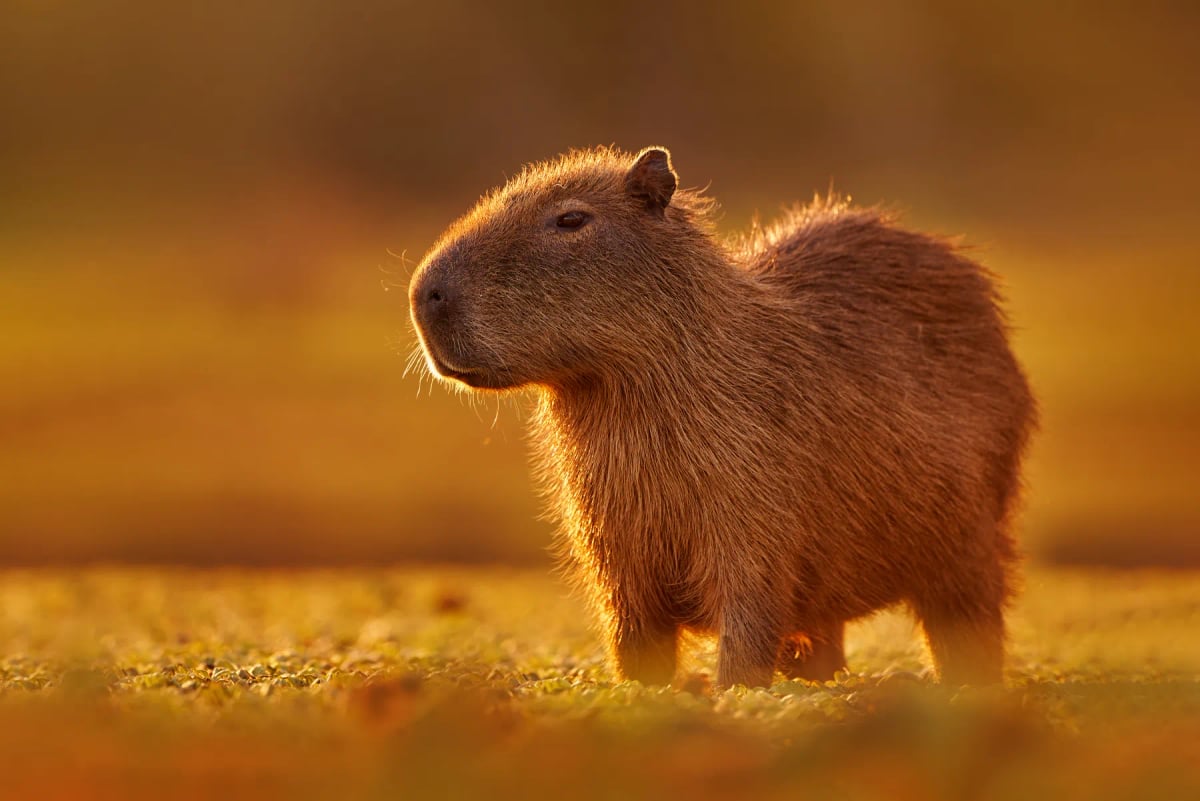
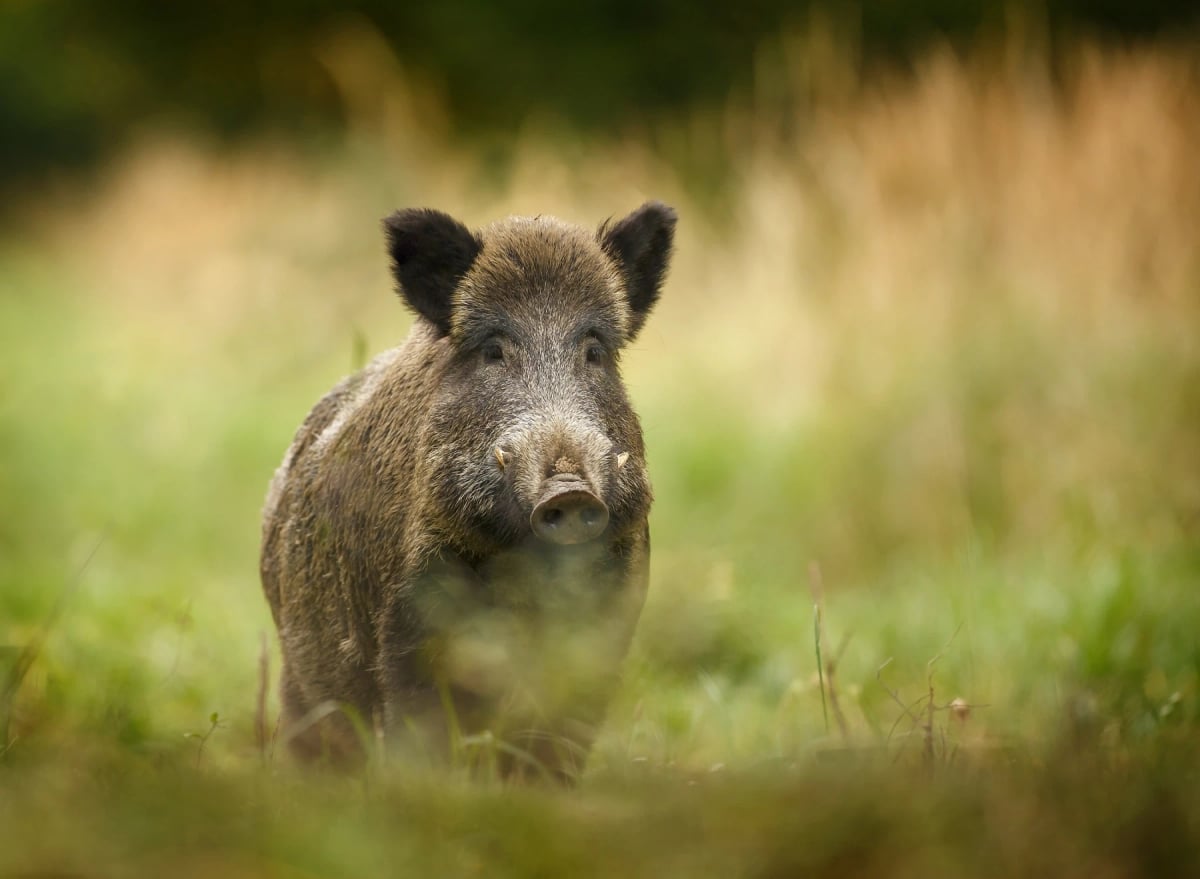
Prey selection in reticulated pythons depends largely on the snake's size. Younger, smaller individuals tend to focus on rats, other small rodents, and birds, while adults are capable of taking much larger animals. Pigs, deer, sun bears, and various primates have all been documented as prey in the wild. The python locates targets using heat-sensitive pits along its jaw that detect the warmth of nearby animals, even in complete darkness. Once a meal is secured in its jaws, the snake throws several coils around the body of its prey and tightens with each exhaled breath until the animal's heart stops. Meals of this size are digested slowly, and a large python may need to eat only a handful of times each year to meet its energy needs.
Behavior
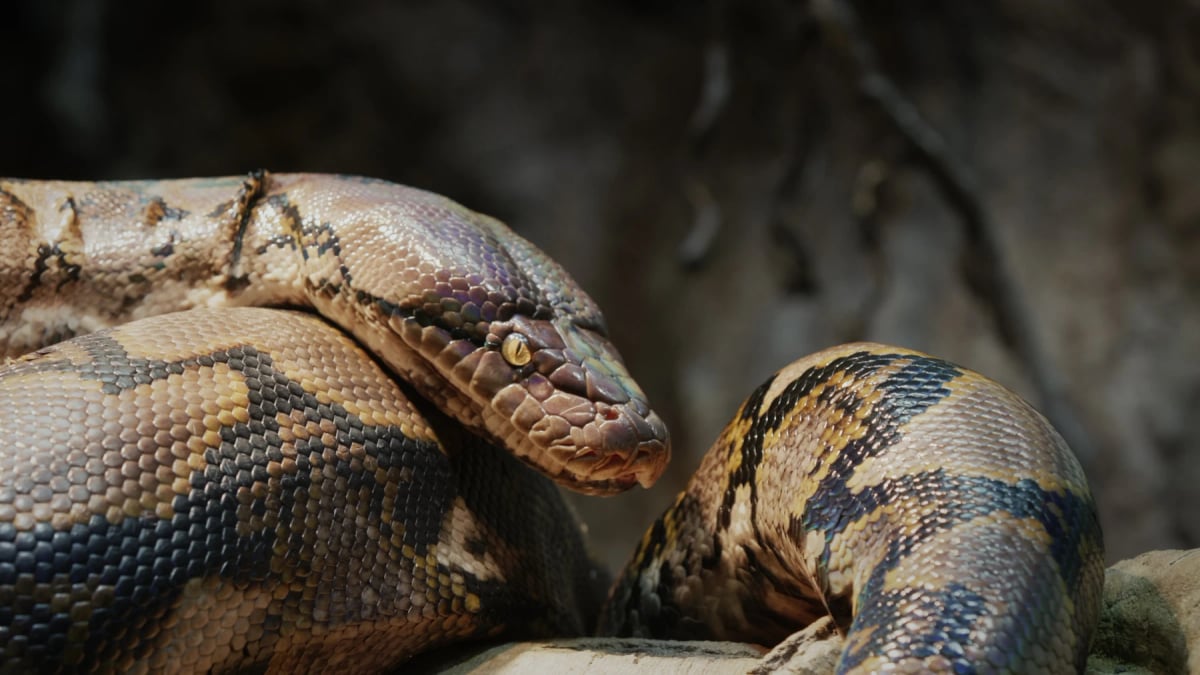
For most of the day, a reticulated python rests in a concealed spot, relying on its intricate scale pattern to blend into the surrounding vegetation or leaf litter. Activity picks up after dark, when the snake moves slowly through its home range in search of prey or a suitable resting site. It is a strong swimmer and crosses rivers and flooded areas with ease, which helps explain how it has colonized so many islands across the region. Females show a degree of maternal care that is unusual among snakes: after laying a clutch of eggs, the mother coils around them and uses muscular contractions to generate heat, keeping the eggs at a stable temperature until they hatch. Clutches typically contain between 25 and 80 eggs, depending on the size of the female.
Record size
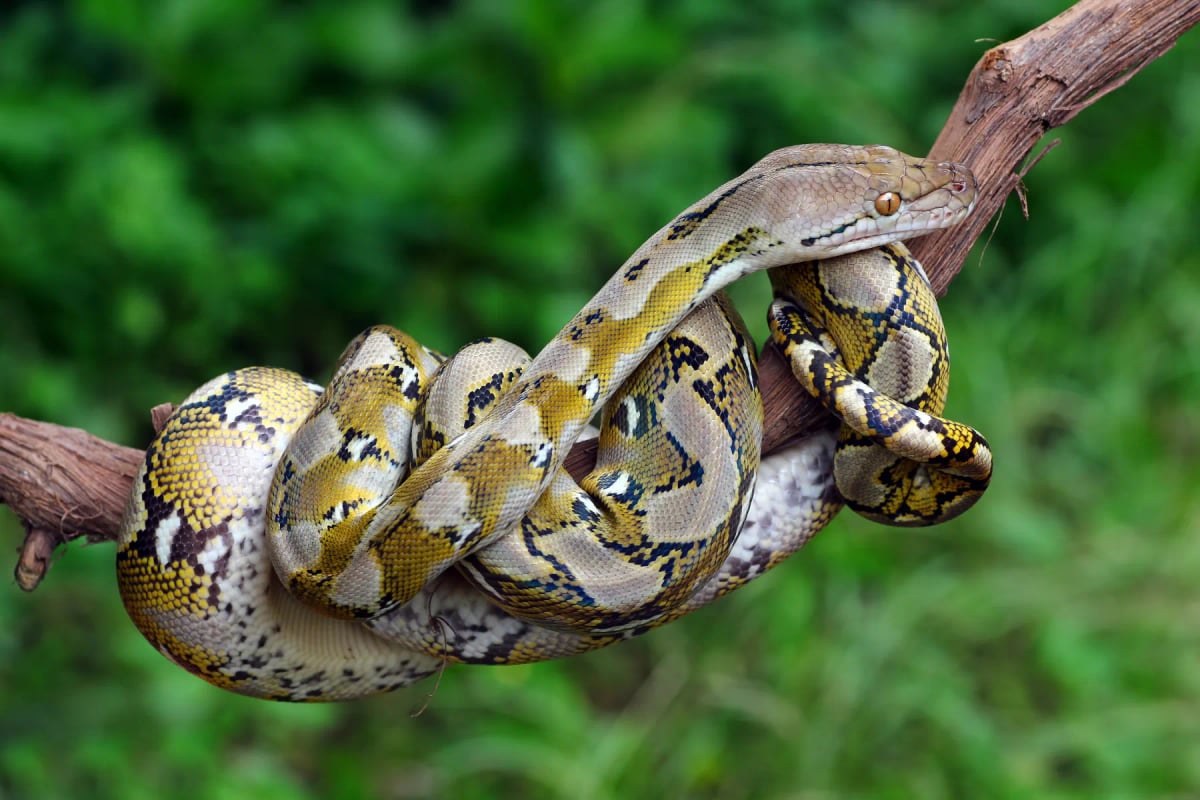
No other snake on Earth matches the reticulated python when it comes to length. Verified wild specimens have exceeded 7 meters, and a female named Medusa, held in the United States, was measured at 7.67 meters and recognized by Guinness World Records as the longest living snake ever documented in captivity. Body mass in large adults can reach well over 100 kilograms. The combination of this length with a muscular build gives the species a physical power that few other animals can match. It is worth noting that while the reticulated python is the longest snake, the green anaconda of South America is generally heavier and bulkier, holding the title for the greatest body mass among snakes. Both species sit at the absolute upper limit of what a snake body can achieve.
Conservation
The IUCN currently lists the reticulated python as Least Concern, reflecting its broad range and ability to persist in disturbed habitats. That said, the species faces real and ongoing pressures. The leather trade has historically driven heavy hunting, as the skin of this snake is prized for bags, belts, shoes, and other goods. Millions of skins have been exported from Southeast Asia over the decades, and while international trade is regulated under CITES, illegal collection continues in several countries. Deforestation and the conversion of forests to farmland reduce available habitat, particularly in areas with dense human populations. In some parts of its range the python is also killed out of fear or harvested for meat. Continued monitoring and enforcement of trade regulations are important steps toward ensuring that populations remain stable over the long term.
Where it is found
The Reticulated Python can be found in places such as:
Researched and written by Juan Pablo. Sources: IUCN Red List, scientific literature and regional field guides. Last updated: .
Technical factsheet


Frequently Asked Questions
Is the reticulated python the longest snake in the world?
Yes. The reticulated python holds the title of the longest snake on Earth, with wild individuals confirmed at over 7 meters. The record in captivity belongs to a female named Medusa, measured at 7.67 meters. While the green anaconda of South America is generally heavier and bulkier, no other snake species comes close to the reticulated python in terms of length.
Is the reticulated python venomous?
No, the reticulated python is not venomous at all. It kills its prey entirely by constriction, wrapping its powerful body around the animal and tightening its coils with each breath the prey takes until the heart stops. Despite carrying no venom, its sheer size and muscular strength make it one of the most formidable predators in all of Asia.
What do reticulated pythons eat?
Their diet depends on their size. Younger snakes focus on rats, small rodents, and birds, while large adults can take down pigs, deer, and even primates. They hunt by ambush, using heat-sensitive pits along the jaw to detect warm-blooded animals in total darkness. A big meal takes so long to digest that a large python may only need to eat a few times a year.
Where do reticulated pythons live?
They are found across South and Southeast Asia, from Bangladesh and India through Myanmar, Thailand, Vietnam, Malaysia, the Philippines, and the many islands of Indonesia. They thrive in tropical rainforests, swamps, and along riverbanks, and they also appear near farms and villages at the edge of forest. Access to fresh water is a constant feature of wherever they settle.
Are reticulated pythons dangerous to humans?
Large adults are potentially dangerous, and there are documented cases of attacks on people, including a small number of fatalities. That said, unprovoked attacks are rare. These snakes are generally more interested in avoiding humans than confronting them. Most incidents involve snakes that feel cornered or are being handled. People living near forests in Southeast Asia have coexisted with this species for centuries.
Why does the reticulated python have such a complex scale pattern?
The intricate geometric pattern across its scales works as camouflage. The net-like arrangement of shapes and colors breaks up the snake's outline when it rests among vegetation, leaf litter, or near the surface of water. This makes it very hard to spot even when it is lying completely still, which is essential for an ambush predator that relies on staying invisible until prey comes within striking range.
Is the reticulated python threatened with extinction?
The IUCN lists it as Least Concern, meaning it is not currently at risk of extinction. However, it does face serious pressures. The skin trade has driven large-scale hunting for decades, and deforestation continues to shrink its habitat across Southeast Asia. Illegal collection still happens despite international trade regulations. Populations appear stable for now, but continued monitoring and enforcement remain important.