Yak
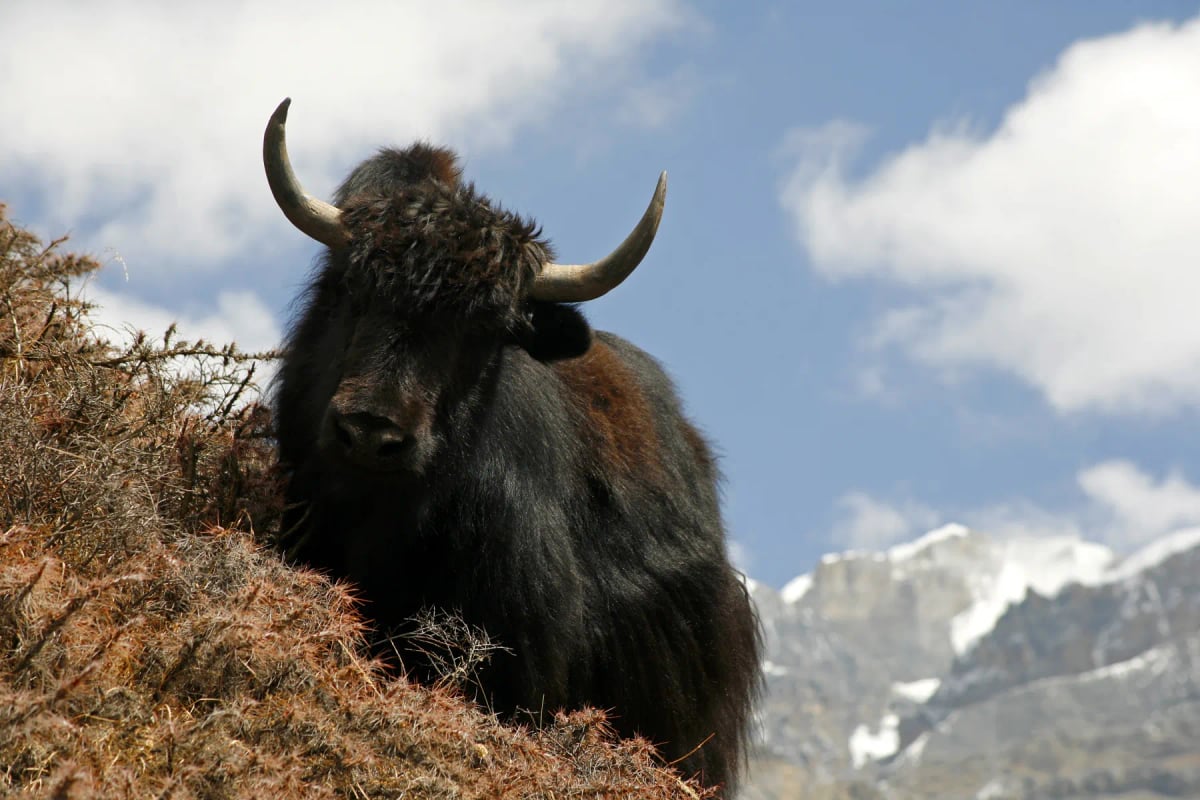
The yak is a high altitude bovine from the Tibetan Plateau and surrounding ranges. Its dense coat, robust frame and efficient lungs allow reliable work and survival above 4,000 meters. Herds graze alpine meadows and windswept steppe, moving seasonally to track forage. People in the Himalayas and Central Asia rely on yaks for transport, milk, meat and fiber, and their sure footedness keeps trade and daily life running in terrain that defeats most livestock.
Habitat and distribution
Wild yaks survive on the Qinghai Tibet Plateau and neighboring ranges, generally between 3,000 and 5,500 meters, where oxygen is scarce and temperatures fall far below freezing. Populations persist in Qinghai, Xizang and parts of Xinjiang in China, in the Changthang plateau of Ladakh in India, and in smaller numbers across Nepal, Bhutan, the Mongolian Altai and northern Pakistan. Domesticated herds occupy a broader range across these same countries, kept by herding communities at altitudes that few other livestock can tolerate. Wild herds favor open alpine steppe and rocky slopes, while domestic animals graze closer to villages and seasonal camps.
Diet
Yaks feed mainly on grasses, sedges and alpine herbs, adding mosses and lichens to their diet when better forage runs low. During harsh winters, thick snow often buries the pasture, so yaks use their broad hooves and muzzles to dig through the cover and reach dried vegetation underneath. Their digestive system processes coarse, fibrous plants more efficiently than most cattle, letting them extract enough energy from sparse mountain vegetation. Domesticated yaks sometimes receive supplementary fodder near winter camps, but wild populations depend entirely on whatever the highland terrain provides as the seasons change.
High-altitude adaptations
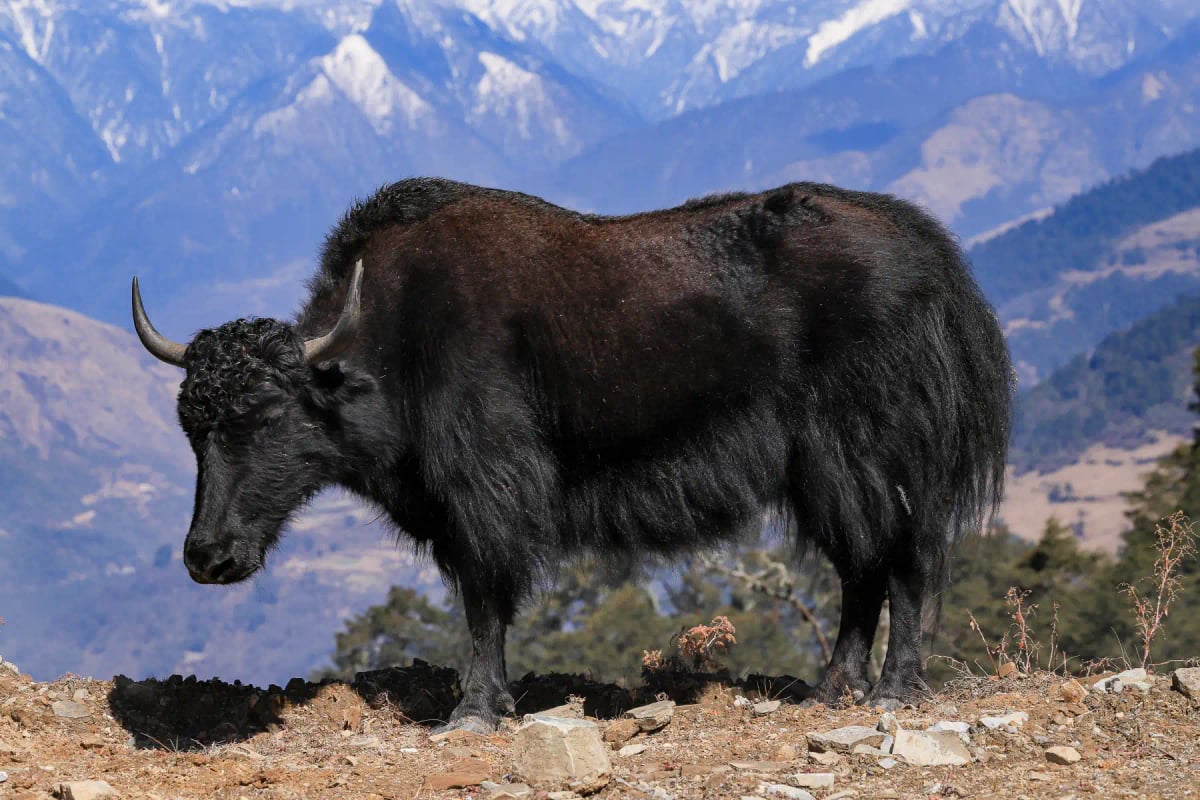
Surviving above four thousand meters demands a body built for cold and low oxygen. Yaks have unusually large lungs and hearts for their size, along with more red blood cells than lowland cattle, which lets them absorb oxygen more efficiently from thin mountain air. A dense double coat, with a coarse outer layer and a soft insulating undercoat, traps body heat even in fierce wind and frigid temperatures. Short legs, a compact frame and few sweat glands reduce heat loss further, while wide hooves give stable footing on rocky terrain blanketed in snow and ice.
Behavior
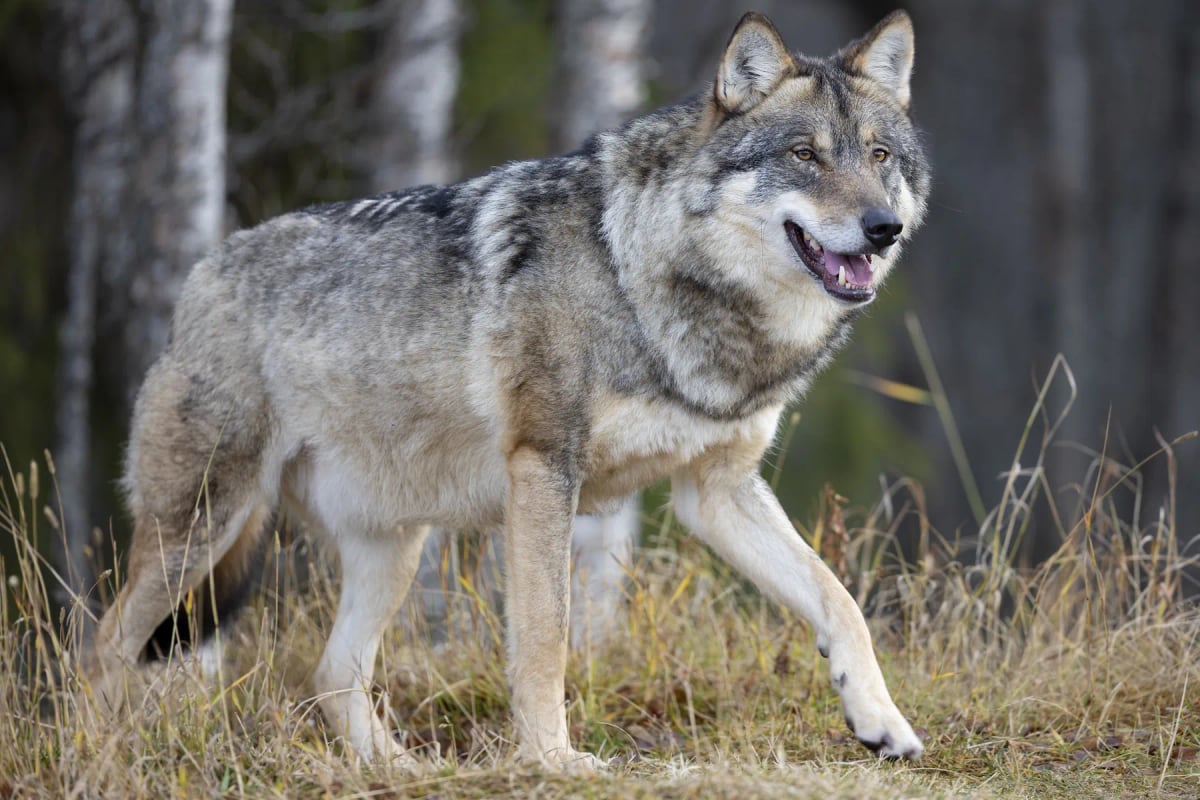
Yak society centers on herds of related females and their young, led by experienced matriarchs who decide where and when the group moves. Adult males often live alone or in small bachelor groups for most of the year, joining female herds only during the autumn breeding season. Herds shift between higher pastures in summer and sheltered valleys in winter, a pattern that helps them avoid the deepest snow while following available forage. When threatened by wolves or snow leopards, yaks may bunch together and face outward, using their size and horns for collective defense.
Uses by people
Yaks remain central to life across the high mountains of Asia. Female yaks, called dri, provide milk that is churned into butter and fermented into cheese, both staples of Himalayan diets. Their fiber is spun into ropes, tents and warm textiles, while dried dung serves as fuel where trees cannot grow. As pack animals, yaks carry loads along steep Himalayan trails, including routes used by trekkers and mountaineering expeditions. In Mongolia and parts of Tibet, yaks are also raced or shown at festivals, and their hides are turned into leather and traditional boats used to cross rivers.
Researched and written by Juan Pablo. Sources: IUCN Red List, scientific literature and regional field guides. Last updated: .
Technical factsheet



Frequently Asked Questions
What is a yak?
The yak is a large, shaggy bovine native to the high mountains of Central Asia and the Tibetan Plateau. It belongs to the same family as cattle and bison and adapted over thousands of years to survive in cold conditions with very little oxygen, at altitudes above 4,000 meters. Communities across the Himalayas and Mongolia raise yaks for milk, meat, wool and transport, while a smaller wild population still roams remote stretches of the plateau, listed as vulnerable by conservationists.
Where do yaks live?
Yaks live across the Tibetan Plateau and the mountain ranges around it, including parts of China, India, Nepal, Bhutan, Mongolia and Pakistan. Wild herds favor remote alpine steppe and high meadows, usually between 3,000 and 5,500 meters, while domesticated yaks stay closer to villages at somewhat lower elevations. Because the species tolerates extreme cold and thin air so well, it remains one of the only large animals herding communities can rely on across such harsh terrain.
What do yaks eat?
Yaks are herbivores that graze on grasses, sedges and alpine herbs, switching to mosses, lichens and shrubs when better forage becomes scarce. In winter, thick snow can bury much of the available pasture, so yaks use their broad hooves to dig through the cover and reach dried vegetation underneath. Their digestive system is well suited to coarse, fibrous plants, which lets them survive on the sparse vegetation typical of high mountain environments where most other livestock would struggle.
How big do yaks get?
Yaks are large, sturdy animals. Wild males can weigh over a thousand kilograms and stand close to two meters at the shoulder, while domesticated yaks tend to be smaller, generally a few hundred kilograms. Females, in both populations, are noticeably lighter and shorter than males. Their dense, shaggy coat adds to their bulky appearance, with long guard hairs hanging down past the belly, protecting them from wind, snow and the bitter cold of the heights where they live.
What is the difference between a yak and a bison?
Although yaks and bison are both large, shaggy bovines, they are not closely related and live in very different places. Yaks are adapted to cold regions at very high altitude in Central Asia, with smaller bodies and a compact build suited to mountain terrain. Bison are native to the grasslands of North America and Europe, where they evolved a bulkier frame for life on open plains rather than steep slopes. The two species differ in habitat, behavior and physical traits.
Are yaks dangerous to humans?
Yaks are generally calm and used to close contact with people, since many populations have been domesticated for centuries. Even so, they are large, powerful animals, and bulls can become aggressive during the breeding season or if they feel threatened. Wild yaks, which have little contact with humans, tend to be far more wary and usually retreat rather than approach. As with most large herd animals, caution and respect for their space reduce the risk of injury.
How long do yaks live?
Yaks typically live between 20 and 25 years, both in the wild and under human care, though exact lifespan can vary with diet, altitude and access to veterinary support. Domesticated yaks that receive consistent food and shelter during harsh winters often live toward the higher end of that range. Wild yaks face additional pressures, including predation by wolves and snow leopards and competition for limited forage, which can shorten their lifespan compared to herds that are cared for closely.