Anaconda
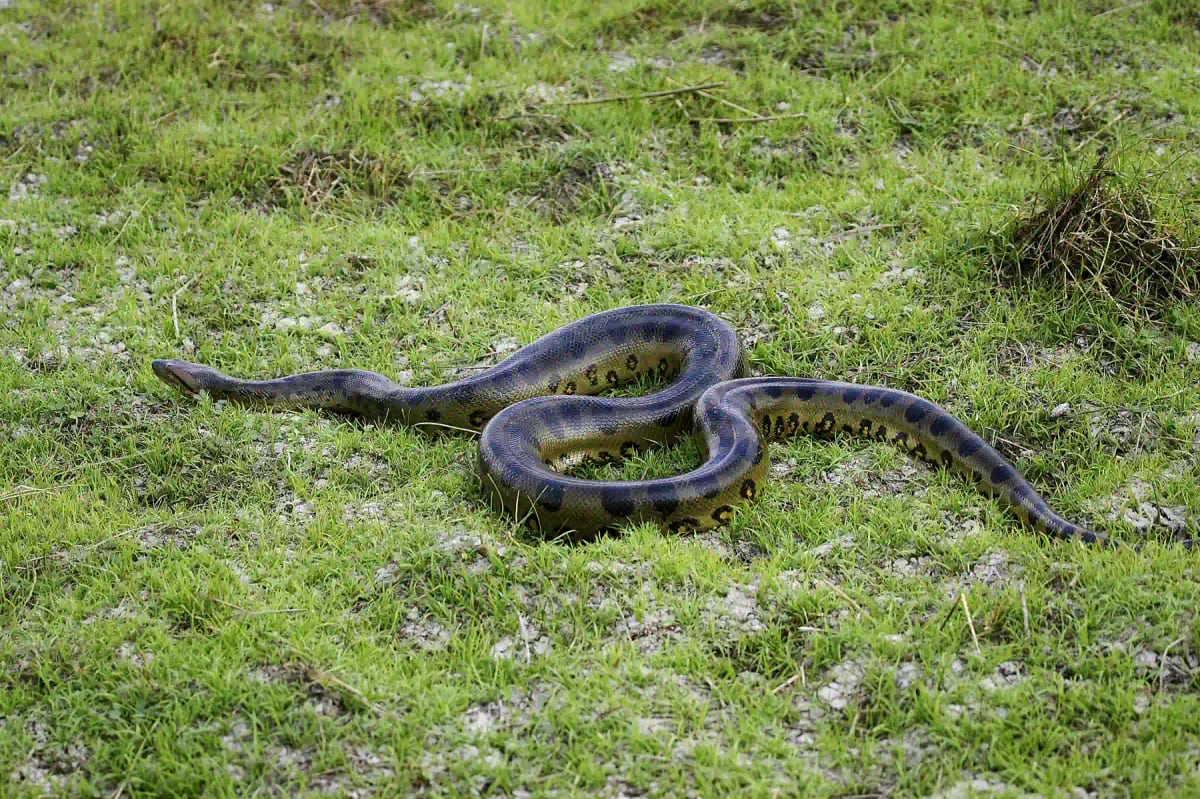
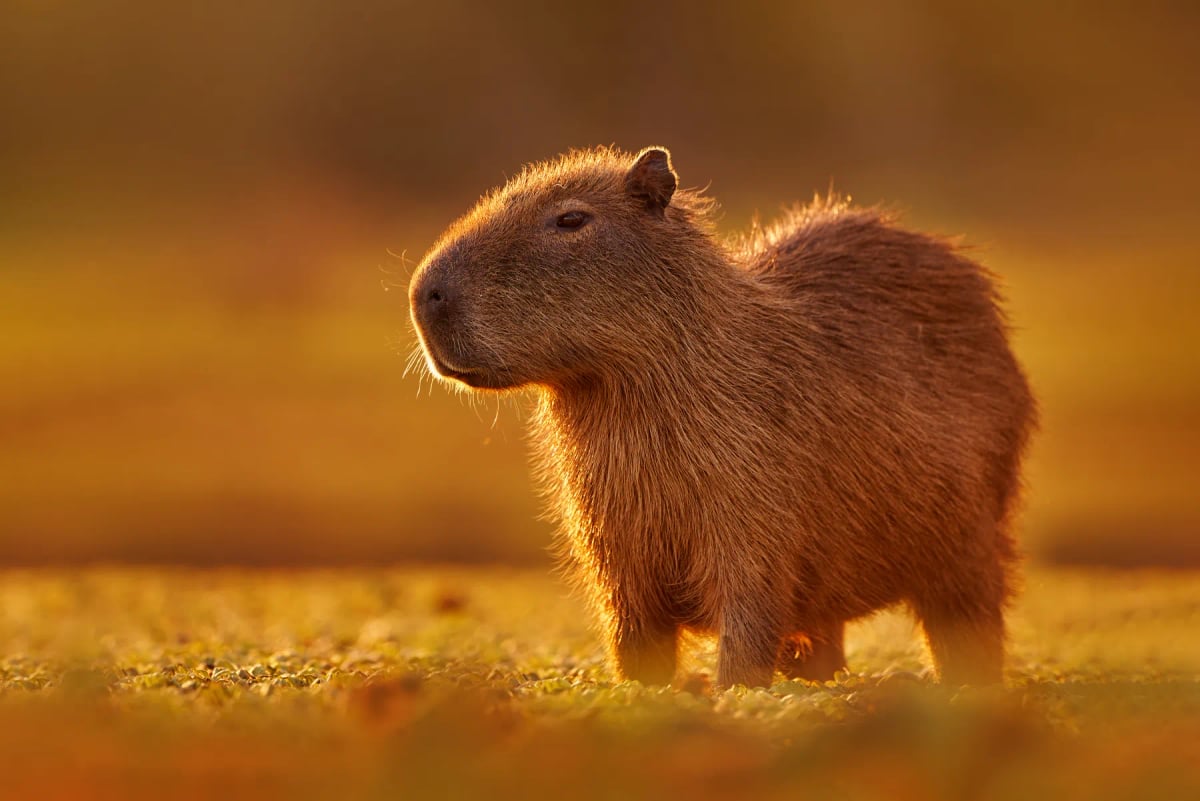
The green anaconda is the heaviest snake in the world and one of the longest, reaching more than seven meters and up to 250 kilograms. Native to the Amazon and Orinoco basins, it inhabits sluggish rivers, swamps, and flooded forests. Anacondas are ambush predators that kill by constriction, preying on fish, birds, caimans, capybaras, and even deer. Although surrounded by myths, they rarely pose a threat to humans. Pollution, habitat destruction, and persecution reduce local populations, but the species remains widespread.
Habitat and distribution
The green anaconda is found across the Amazon and Orinoco river basins, with populations in Bolivia, Brazil, Colombia, Ecuador, French Guiana, Guyana, Paraguay, Peru, Suriname, Trinidad and Tobago, and Venezuela. It favors slow rivers, swamps, oxbow lakes, and seasonally flooded forests and plains. During the dry season, anacondas concentrate around permanent water bodies, which become critical refuges for hunting. The Llanos of Venezuela and Colombia and the Brazilian Pantanal are among the most productive habitats for this species, supporting high densities of both anacondas and the prey they depend on.
Size and strength
The green anaconda is the heaviest snake in the world and among the longest. Females are significantly larger than males and can exceed seven meters in length and reach 250 kilograms, making them one of the largest predators in South America. Their thick, muscular bodies are built for constriction, capable of generating enough force to immobilize large prey such as caimans and capybaras. Despite their bulk, anacondas move with surprising ease in water. On land they are slower, which is why they spend most of their time submerged or near the water's edge.
Diet
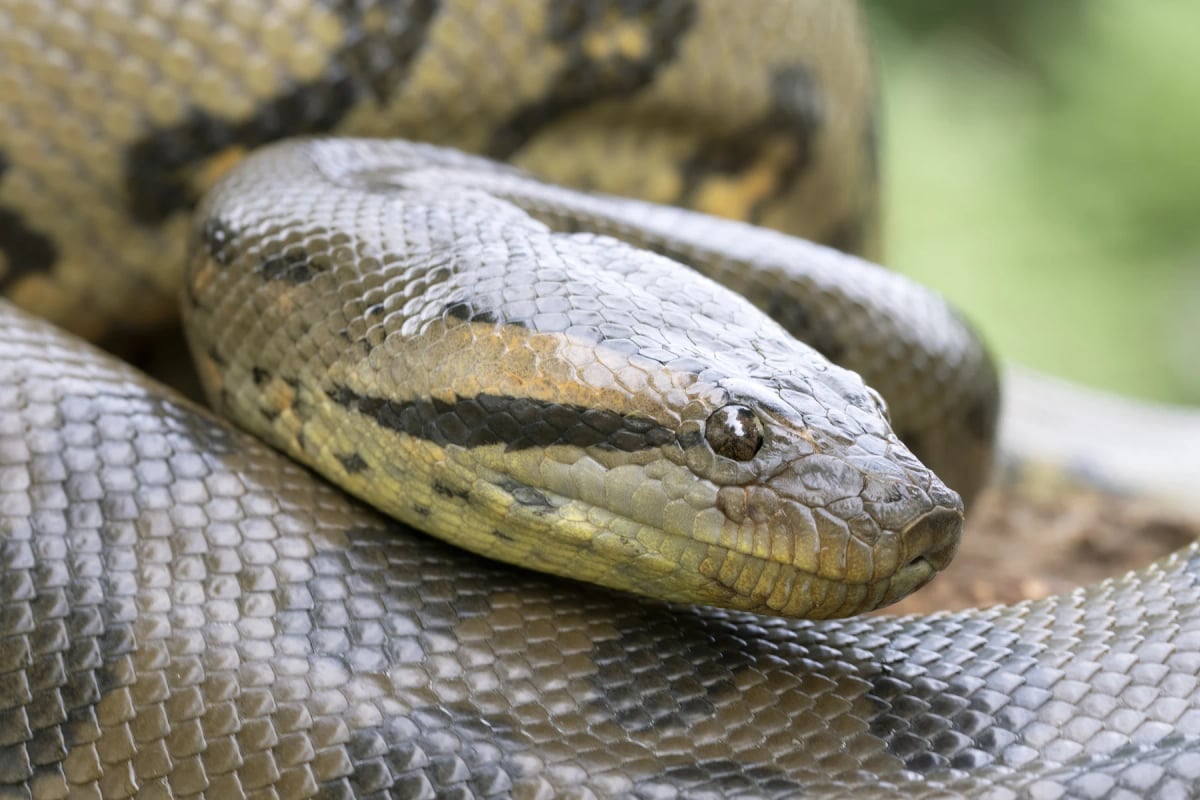
The green anaconda is a generalist predator that eats a wide variety of animals depending on size and availability. Smaller individuals feed mainly on fish, frogs, and birds. Larger adults are capable of taking capybaras, deer, caimans, and large wading birds. They are ambush hunters that wait motionless in shallow water until prey comes within reach, then strike with speed and wrap their coils tightly to restrict blood flow. Death occurs by cardiac arrest. After consuming a large meal, anacondas may go weeks or months without eating while digestion is completed.
Behavior
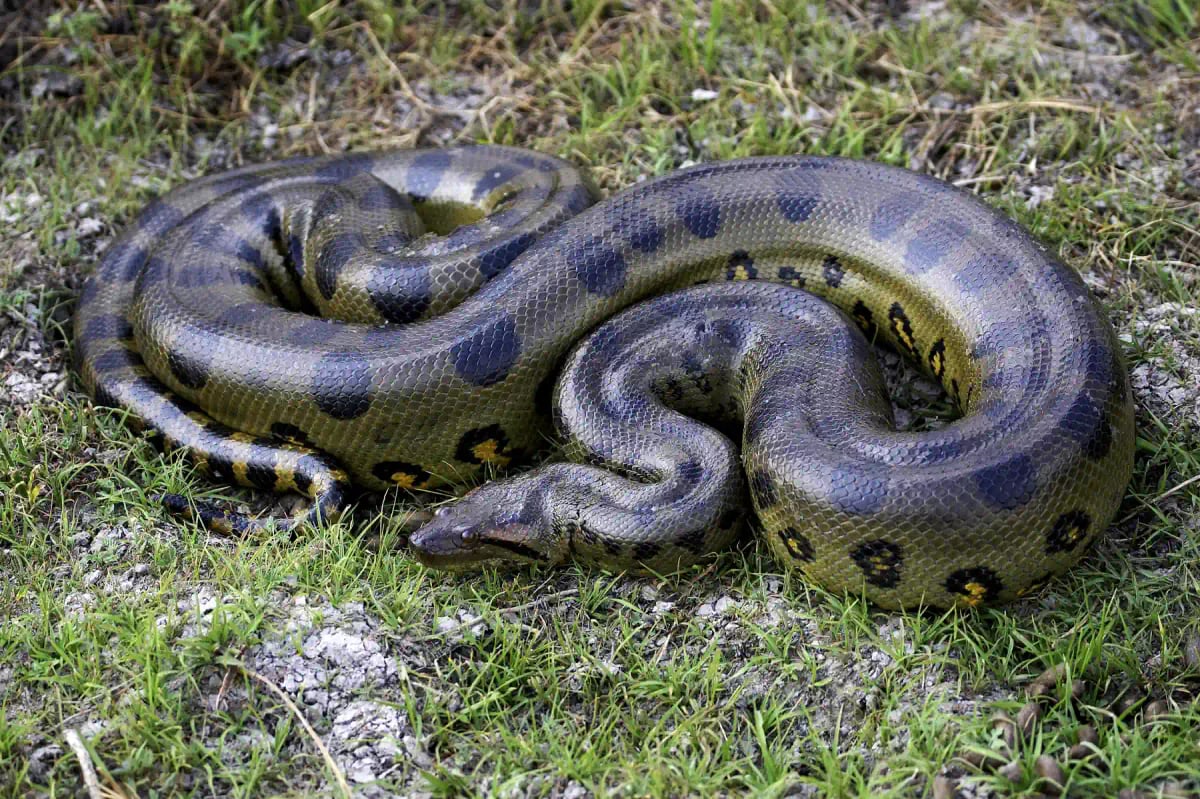
The green anaconda is solitary and primarily nocturnal, though it may be active during the day, especially in cooler periods. It spends the majority of its time in or near water, where buoyancy compensates for its heavy body and allows it to move efficiently. Anacondas are not aggressive toward humans by nature and typically retreat when encountered. During the breeding season, several males may pursue a single female, forming breeding balls that can last for weeks. Females give birth to live young, with litters of 20 to 40 offspring being common in large females in good condition.
Conservation
The green anaconda is listed as Least Concern by the IUCN, reflecting its broad range and adaptability. However, local populations face significant pressure from habitat loss due to deforestation and wetland drainage, hunting by people who fear the snake or value its skin, and water contamination from agricultural runoff and mining. In some regions the species is harvested for the exotic pet trade. Because anacondas reproduce relatively slowly and require intact wetland ecosystems, degradation of the Amazon and Orinoco basins poses an ongoing risk even where the species remains common today.
5 Curiosities
Here are five quick anaconda facts: • The green anaconda is the heaviest snake in the world, though the reticulated python of Southeast Asia can exceed it in length. • Females are far larger than males, sometimes more than four times their weight, one of the most extreme size differences between sexes of any snake. • Anacondas are viviparous, giving birth to live young rather than laying eggs. • They can remain submerged for up to ten minutes, using eyes and nostrils positioned on top of the head to breathe and watch for prey. • After a large meal, an anaconda can go weeks or even months without eating again.
Where it is found
The Anaconda can be found in places such as:
Researched and written by Juan Pablo. Sources: IUCN Red List, scientific literature and regional field guides. Last updated: .
Technical factsheet
Frequently Asked Questions
How big is the green anaconda?
The green anaconda is the heaviest snake in the world. Females, which are far larger than males, can exceed seven meters in length and weigh up to 250 kilograms. The reticulated python of Southeast Asia can exceed the anaconda in length, but no other snake comes close in mass. The anaconda's thick, muscular body is built for constriction and allows it to overpower prey as large as caimans and capybaras in shallow water.
How does the anaconda kill its prey?
The anaconda is an ambush predator that waits motionless in shallow water until prey comes within range. It strikes with speed and wraps its coils tightly around the animal, restricting blood flow until the heart stops. Death occurs by cardiac arrest, not suffocation as is commonly believed. After the prey is dead, the anaconda swallows it whole, head first. Following a large meal it may go weeks or even months without eating again while digestion is completed.
Is the anaconda dangerous to humans?
Despite its fearsome reputation, the green anaconda is not a significant threat to humans. It is generally shy and retreats when encountered. Confirmed cases of anacondas attacking adult humans are extremely rare. The species is large enough in theory to prey on a person, but such events are almost unheard of in practice. The much greater risk runs in the other direction: anacondas are often killed out of fear or for their skin, which poses a real threat to local populations.
Where does the anaconda live?
The green anaconda is native to the Amazon and Orinoco river basins, with populations in Bolivia, Brazil, Colombia, Ecuador, French Guiana, Guyana, Paraguay, Peru, Suriname, Trinidad and Tobago, and Venezuela. It favors slow rivers, swamps, oxbow lakes, and seasonally flooded forests. During the dry season it concentrates around permanent water bodies. The Llanos of Venezuela and Colombia and the Brazilian Pantanal are among its most productive habitats.
Does the anaconda lay eggs?
No. The anaconda is viviparous, meaning it gives birth to live young rather than laying eggs. This is unusual among large constrictors. Females can produce litters of 20 to 40 offspring at a time, with larger females in good condition tending to have bigger litters. The young are born fully formed and independent, capable of hunting from the moment they emerge. The breeding season involves multiple males pursuing a single female, sometimes forming a tangled group that can last for weeks.
What is the difference between an anaconda and a python?
Anacondas and pythons are both large constrictors but belong to different snake families and live on different continents. Anacondas are native to South America and belong to the boa family. Pythons are found in Africa, Asia, and Australia. The green anaconda is the heaviest snake in the world, while the reticulated python of Southeast Asia holds the record for length. Both kill by constriction, but anacondas are more closely tied to water and spend much of their lives submerged.