Gharial
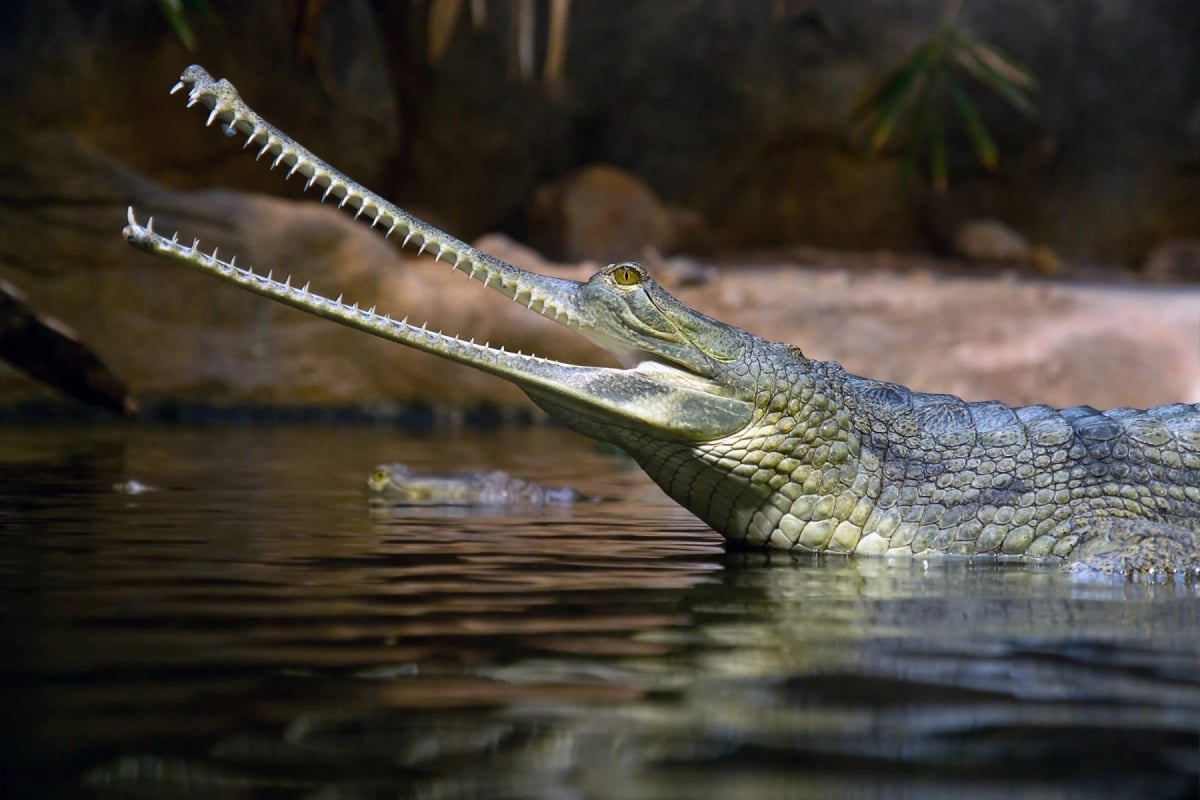
The gharial is one of the most distinctive reptiles on Earth. It belongs to the crocodilian order but stands apart from all other members thanks to a snout so long and narrow it looks almost like a pair of needlenose pliers. That slender jaw is lined with dozens of small, interlocking teeth built for gripping fish rather than tearing flesh. Adult males grow a rounded, fleshy knob at the tip of the snout called a ghara, which they use to produce buzzing sounds during courtship. Found only in the rivers of northern India and southern Nepal, this species once ranged across much of South Asia. Hunting, river damming, sand mining, and accidental drowning in fishing nets reduced the wild population to fewer than 200 individuals by the 1970s. Captive breeding programs have helped, but fewer than 650 mature individuals are believed to survive today.
Habitat and distribution
Centuries ago, gharials swam through major rivers across South Asia, from the Indus in the west to the Irrawaddy in the east. Today, the species clings to a narrow slice of that former range. The Chambal River, flowing through Madhya Pradesh, Uttar Pradesh, and Rajasthan, holds the largest surviving population. Smaller numbers are found along the Girwa River in Uttar Pradesh's Katerniaghat Wildlife Sanctuary, and occasional individuals turn up in the Gandak and Rapti rivers. Gharials need a very specific kind of river environment: deep pools for resting and thermoregulating, calm sandy stretches where juveniles can feed safely, and clean sandy banks that remain undisturbed long enough for females to nest and incubate their eggs each season.
Appearance
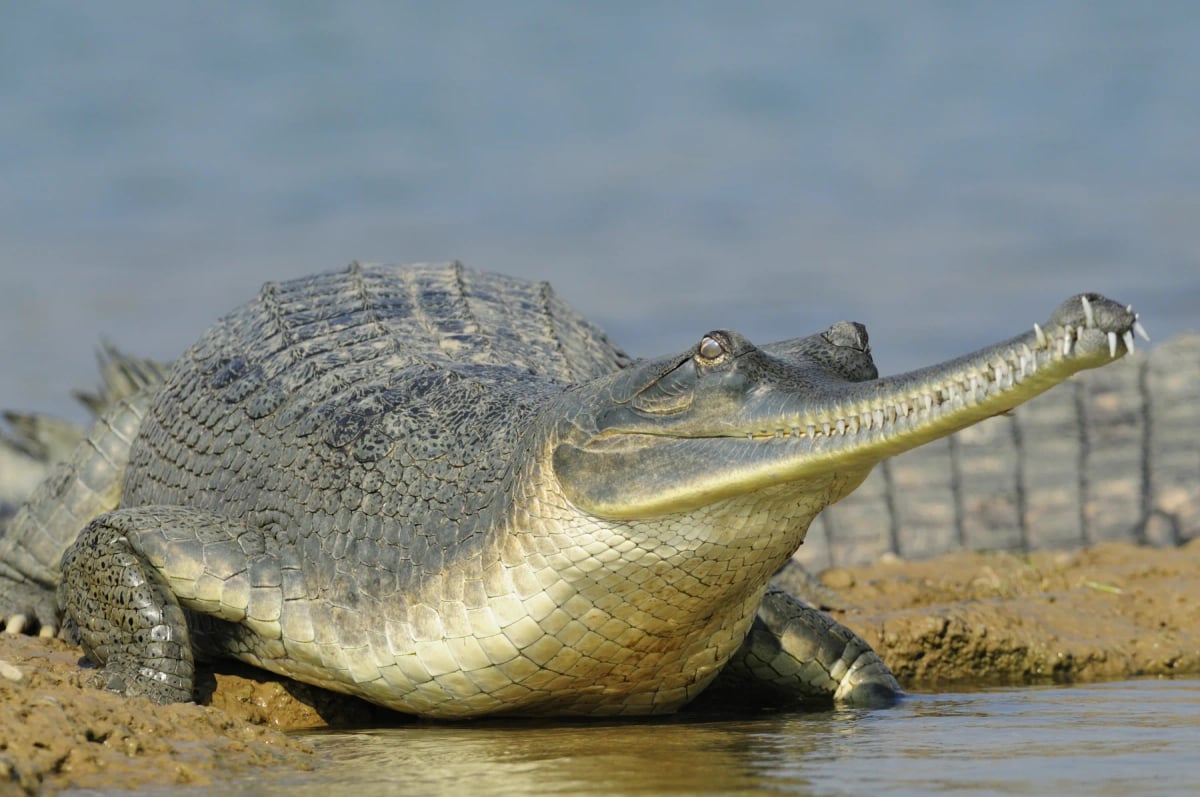
Few animals are as instantly recognizable as the gharial. Its snout is extraordinarily long and narrow, roughly three to four times the length of its width at the base, and packed with more than 100 small, sharp, interlocking teeth ideal for gripping fish. Adults can reach lengths of around five meters, with males considerably larger than females. The skin is olive to brownish gray, helping the animal blend into riverbed sediments and dappled light. Mature males carry a rounded, fleshy growth at the very tip of the snout called a ghara. This structure, absent in females and young males, amplifies vocalizations and produces buzzing sounds that play a central role in courtship.
Diet
Fish form the backbone of the gharial's diet at every stage of adult life. To catch them, the animal swings its slender snout sideways in a quick sweeping motion through the water. Because the jaws are so narrow, they meet almost no resistance, making each strike faster and more precise than what a broader snout could manage. Small and medium fish are the main prey throughout the year. Juveniles begin life eating insects, small frogs, and invertebrates, gradually shifting toward fish as they grow. Unlike the Nile crocodile or the saltwater crocodile, gharials do not hunt on land and are not known to take large mammals. They pose no meaningful threat to people and are among the most peaceable of all crocodilians.
Reproduction
Breeding season falls in the cool dry months between November and January. Males position themselves in the water and use the ghara to produce buzzing sounds and blow bubbles, signaling dominance and attracting females. A single dominant male typically mates with several females. Once mating is complete, females choose a sandy bank above the waterline and excavate a nest chamber, laying between 30 and 95 eggs. The eggs incubate for roughly 60 to 80 days, with temperature influencing both the pace of development and the sex of the hatchlings. After hatching, the young gather in groups close to the nest, and the mother stays nearby to watch over them. This parental attention fades gradually over the first weeks as the juveniles grow stronger.
Conservation
Listed as Critically Endangered by the IUCN, the gharial has faced a dramatic collapse in numbers over the past century. A population that likely ran into the thousands across South Asia shrank to fewer than 200 individuals by the late 1970s, the result of widespread hunting for skins and fat, river damming, sand and gravel extraction, and drowning in fishing nets. India and Nepal responded with captive breeding efforts that released large numbers of juveniles into protected stretches of river, stabilising the situation to some degree. Even so, survival among released animals is low, and the total number of mature individuals in the wild is estimated at only a few hundred. Protecting continuous stretches of undisturbed river, reducing fishing pressure, and controlling sand mining remain the priorities for recovery.
Researched and written by Juan Pablo. Sources: IUCN Red List, scientific literature and regional field guides. Last updated: .
Technical factsheet



Frequently Asked Questions
What does a gharial eat?
Gharials eat almost exclusively fish. They catch them by swinging their long, slender snout sideways through the water in a rapid sweeping strike. The narrow jaws meet very little resistance, making each lunge fast and accurate. Young gharials start out eating insects, small frogs, and invertebrates, then shift almost entirely to fish as they get older. They do not hunt on land and pose no real danger to people.
Are gharials dangerous to humans?
No. Despite being large crocodilians, gharials are not a threat to people. Their jaws are built specifically for catching fish, not for overpowering large prey. The teeth are small and designed to grip, not to tear. Gharials spend most of their time in deep water and are generally very shy around people. They are widely considered the most peaceful of all crocodilians.
Why do male gharials have a bulge on their snout?
That rounded, fleshy growth at the tip of the male's snout is called a ghara, a Hindi word for a clay pot it resembles. Males develop it as they reach maturity. It works like a resonator, amplifying buzzing sounds and helping produce bubbles during courtship displays. Females do not have it. Scientists also think the ghara signals a male's age and health to potential mates.
Where do gharials live today?
Gharials are found only in a handful of rivers in northern India and southern Nepal. The Chambal River holds the largest known population. Smaller groups survive in the Girwa River and occasionally in the Gandak and Rapti rivers. The species once ranged across much of South Asia, but habitat loss, hunting, and other pressures have reduced it to these few isolated stretches of river over the past century.
How big do gharials get?
Gharials are among the longest crocodilians in the world. Adults can reach around five meters in length, and males tend to grow significantly larger than females. Despite their impressive size, they look quite slender compared to other crocodilians because of their narrow body shape and that remarkably long snout. Their olive to brownish gray skin helps them blend in with the sandy riverbeds and shifting light of the rivers they live in.
Why are gharials endangered?
Several pressures have pushed the gharial to the edge of extinction. Hunting for skins and fat wiped out huge numbers in the past. Dams cut rivers into disconnected sections, trapping populations. Sand mining destroys the clean sandy banks females need for nesting. Fishing nets accidentally drown both adults and juveniles. Together, these threats reduced a species that once thrived across South Asia to just a few hundred mature individuals surviving today.
How do gharials reproduce?
Gharials breed during the cool dry months between November and January. Males use the ghara to produce buzzing sounds and blow bubbles to attract females. One dominant male usually mates with several females in a season. Females lay between 30 and 95 eggs in a nest dug into a sandy riverbank. The eggs take around 60 to 80 days to hatch, and the mother stays close to protect the nest during that time.