Brown Skua
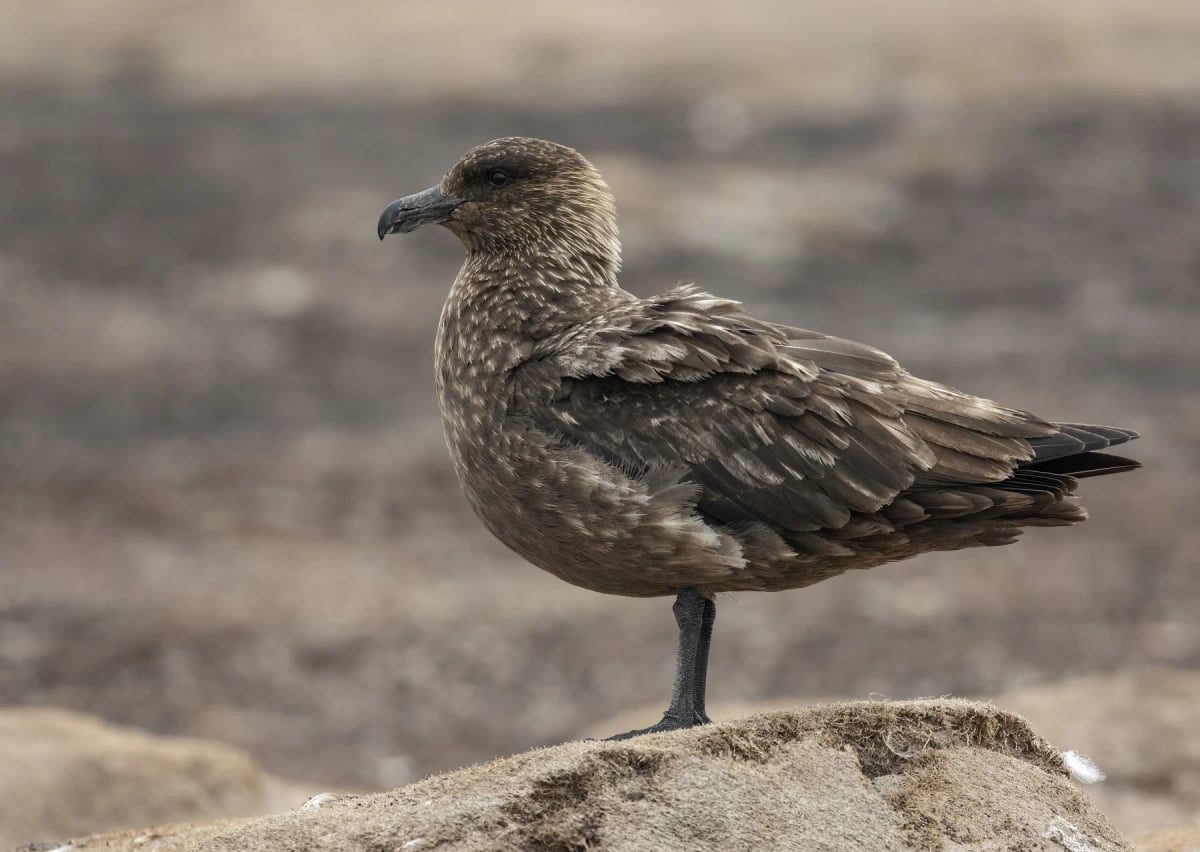
The brown skua is a large, heavily built seabird of the Southern Ocean, instantly recognizable by its dark brown plumage, broad wings, and thick hooked bill. One of the most dominant birds in its range, it earns much of its food through kleptoparasitism, relentlessly chasing gulls, petrels, and terns until they drop their catch. It also hunts directly, taking the eggs and chicks of penguins and other colonial seabirds. Breeding pairs hold strongly defended territories on coastal ground across Antarctica, sub-Antarctic islands, the Falklands, and southern tips of South America, Australia, and New Zealand. Each pair typically raises one or two chicks per season. Outside the breeding season, brown skuas roam widely over open ocean. The species is classified as Least Concern by the IUCN, with populations considered stable, though some local colonies are vulnerable to human disturbance and shifts in prey availability.
Habitat and distribution
Across the Southern Ocean, brown skuas occupy some of the most remote coastlines on Earth. Breeding colonies are established on the Antarctic Peninsula, South Georgia, the South Sandwich Islands, the Falkland Islands, and a scatter of sub-Antarctic islands near South Africa, Australia, and New Zealand. On the Antarctic continent itself, pairs nest close to penguin colonies, which provide a reliable source of food during the breeding season. Outside of that season, brown skuas become truly pelagic, ranging widely across open ocean at high southern latitudes. They show a strong preference for rocky or grassy coastal terrain when nesting, avoiding dense vegetation. Some individuals wander as far north as the tropics during the non-breeding months, though the heart of the species' range remains firmly anchored to the cold, productive waters of the Southern Ocean.
Diet
Few seabirds match the brown skua's flexibility as a feeder. Kleptoparasitism is one of its most effective strategies: it pursues gulls, terns, petrels, and other seabirds with relentless aerial chases, forcing them to drop or regurgitate their catch. Brown skuas also hunt directly, raiding penguin and petrel colonies to take eggs and small chicks. Fish, squid, and krill are caught at the ocean surface when conditions allow. Carrion, including the carcasses of seals and other marine animals, rounds out the diet, particularly outside the breeding season. Near fishing vessels, brown skuas readily scavenge discarded bycatch and offal. This broad dietary range is a key reason the species maintains stable populations across such a vast and variable environment.
Appearance
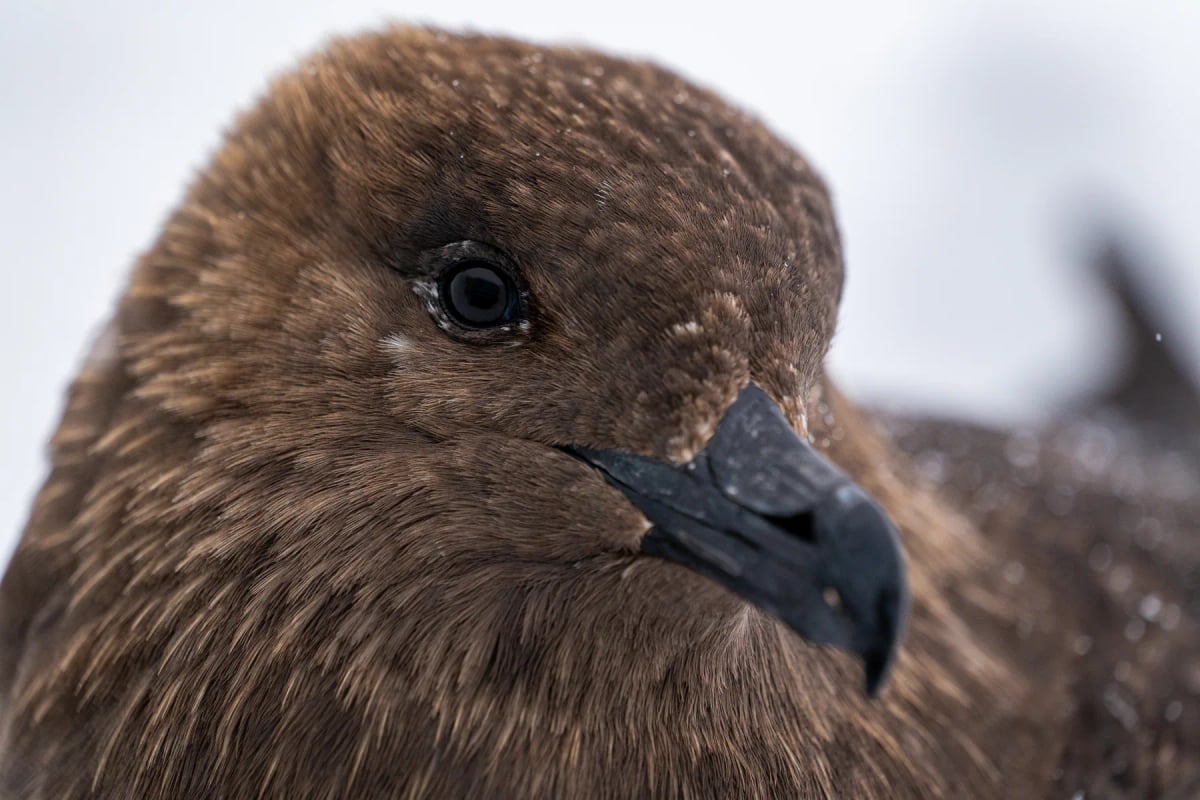
Built for power rather than speed, the brown skua is one of the largest members of the skua family, with a body length of around 52 to 64 centimetres and a wingspan that can reach 160 centimetres. The plumage is uniformly dark brown, sometimes with paler streaking around the head and neck. The bill is heavy and strongly hooked at the tip, well suited to tearing food apart. At the base of the primaries, white wing patches flash visibly in flight and are one of the most reliable field marks for the species. The legs and feet are dark grey to black. Compared with the similar great skua of the North Atlantic, brown skuas tend to be slightly darker overall and are found exclusively in southern waters.
Behavior
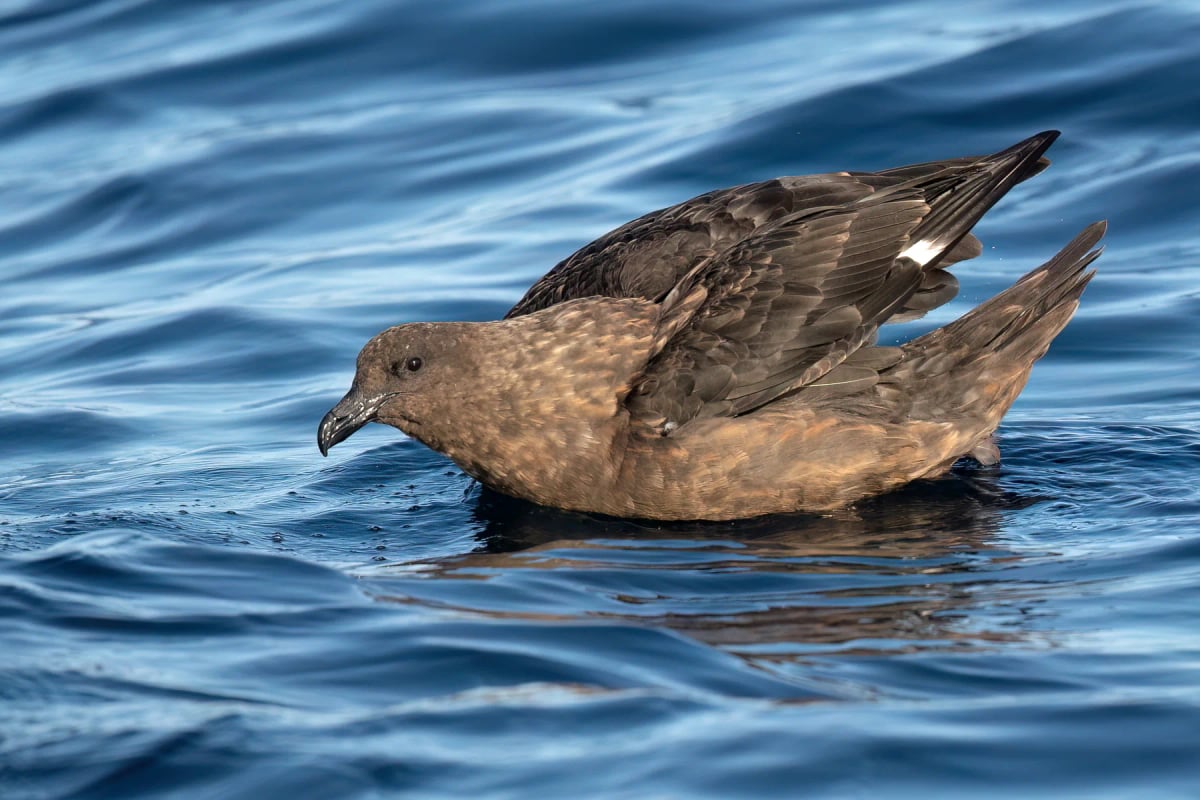
Boldness defines the brown skua more than almost any other trait. Breeding pairs are fiercely territorial, launching direct aerial attacks on intruders that venture too close to the nest, including humans, seals, and even larger birds. Each pair defends a clearly defined territory around its nest site, and these boundaries are maintained with great consistency from one season to the next. Away from the breeding colony, brown skuas are less aggressive but remain dominant birds, able to intimidate most other seabirds. They are largely monogamous and pairs often return to the same territory year after year. Outside the breeding season, individuals tend to be solitary at sea. Vocalizations are used mainly to defend territory and reinforce the bond between a pair, and include loud calls and elaborate displays near the nest.
Conservation
The IUCN classifies the brown skua as Least Concern, reflecting populations that are considered stable across the species' wide range. Global population estimates point to several hundred thousand individuals, with no evidence of a sustained decline at the overall level. That said, certain local colonies face real pressures. Human activity at research stations in Antarctica can disturb nesting pairs, and introduced predators on some sub-Antarctic islands have historically posed a threat to ground-nesting birds. Shifts in prey availability linked to changes in ocean temperature and fishing pressure are also a concern for the long term. The species benefits from protections afforded by the Antarctic Treaty and associated agreements, which limit the impact of direct human interference across much of its core breeding range.
Where it is found
The Brown Skua can be found in places such as:
Researched and written by Juan Pablo. Sources: IUCN Red List, scientific literature and regional field guides. Last updated: .
Technical factsheet








Frequently Asked Questions
What does the brown skua eat?
The brown skua is an opportunistic feeder with a wide-ranging diet. It steals food from other seabirds by chasing them until they drop their catch, raids penguin and petrel colonies for eggs and chicks, and catches fish, squid, and krill at the ocean surface. It also scavenges carrion from seal carcasses and feeds on offal discarded by fishing vessels. This dietary flexibility is central to its success across the Southern Ocean.
Where does the brown skua live?
Brown skuas breed across the Southern Ocean, with colonies on the Antarctic Peninsula, South Georgia, the Falkland Islands, and various sub-Antarctic islands near South Africa, Australia, and New Zealand. During the breeding season they stick to rocky or grassy coastal terrain near penguin colonies. Outside that season they roam widely over open ocean, and some individuals travel as far north as the tropics before returning south to breed.
Is the brown skua aggressive?
Yes, the brown skua is one of the most assertive birds in the Southern Ocean. Breeding pairs defend their territory by launching direct aerial attacks on anything that comes too close to the nest, including humans, seals, and large birds. This boldness extends to its feeding behavior, where it dominates and intimidates other seabirds to steal their food. Away from the nest, it is less combative but still commands respect from most other species.
How does the brown skua steal food from other birds?
The brown skua uses a technique called kleptoparasitism. It targets gulls, terns, and petrels that are carrying food, then chases them relentlessly through the air until the victim drops or regurgitates its meal. The skua catches the food before it hits the water or snatches it off the surface. This strategy requires speed, persistence, and a willingness to pursue birds far from shore, and the brown skua excels at all three.
Is the brown skua endangered?
No, the brown skua is classified as Least Concern by the IUCN, with a global population of several hundred thousand individuals and no sign of a sustained overall decline. However, some local colonies face pressure from human activity near research stations, introduced predators on sub-Antarctic islands, and shifts in prey availability tied to changes in ocean temperature. The species benefits from protections under the Antarctic Treaty across much of its core breeding range.
How big is a brown skua?
The brown skua is a large, powerfully built seabird. It measures roughly 52 to 64 centimetres from bill to tail and has a wingspan that can reach up to 160 centimetres. Its most distinctive features in flight are the white patches at the base of its primary feathers, which stand out sharply against the dark brown plumage. It is slightly darker overall than its North Atlantic relative, the great skua, and is found only in southern waters.
Do brown skuas mate for life?
Brown skuas are largely monogamous, and established pairs tend to reunite at the same nesting territory season after season. While it is not guaranteed that every pair bonds for life in all circumstances, long-term partnerships are common and well documented in the species. Pairs reinforce their bond through vocalizations and displays near the nest. Each season, a successful pair typically raises one or two chicks from a clutch of one to three eggs.