Parrotfish
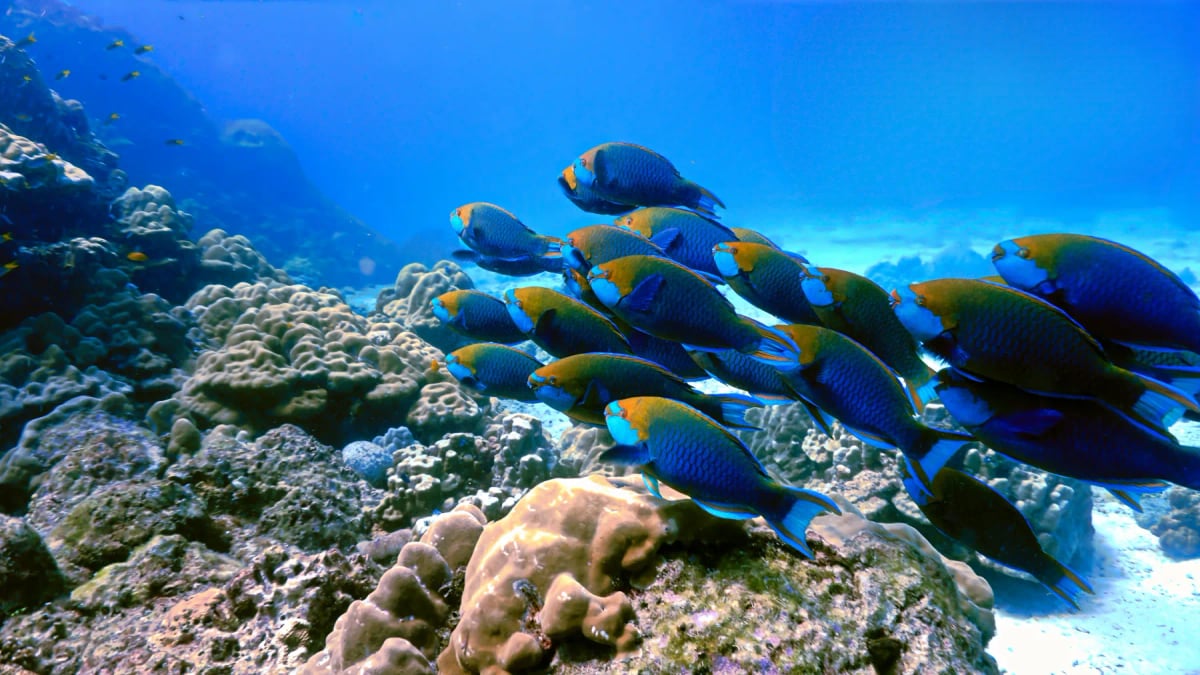
Parrotfish are among the most striking fish on tropical reefs. Named for their fused teeth that form a rigid beak, they scrape algae and fragments of dead coral from reef surfaces and grind the material in their throats, producing the fine white sand that blankets many Caribbean and Pacific beaches. A single large parrotfish can produce hundreds of kilograms of sand per year. Most species go through dramatic color changes as they mature, with females and juveniles often looking entirely different from adult males. They spend their days grazing in groups across shallow reefs, and at night many individuals retreat into crevices and secrete a transparent cocoon of mucus around their bodies, thought to mask their scent from hunting eels and other predators. Their constant grazing keeps algae in check and gives corals room to grow, making them one of the reef's most important residents.
Habitat and distribution
Parrotfish are found across the tropical and subtropical waters of the Atlantic, Pacific, and Indian Oceans. They thrive in shallow, sunlit reef environments, typically at depths of one to thirty metres, where coral growth is dense and algae is plentiful. The Caribbean Sea holds some of the highest concentrations of parrotfish, with species also well established across the reefs of Australia, Indonesia, the Philippines, and Fiji. Rocky reefs, seagrass beds, and sandy lagoons can all serve as habitat at different life stages. Juveniles often shelter in seagrass meadows before moving onto the reef as adults. Countries such as Mexico, Belize, Costa Rica, Jamaica, and the Bahamas all support healthy parrotfish populations along their coastlines, where reef ecosystems remain relatively intact.
Appearance
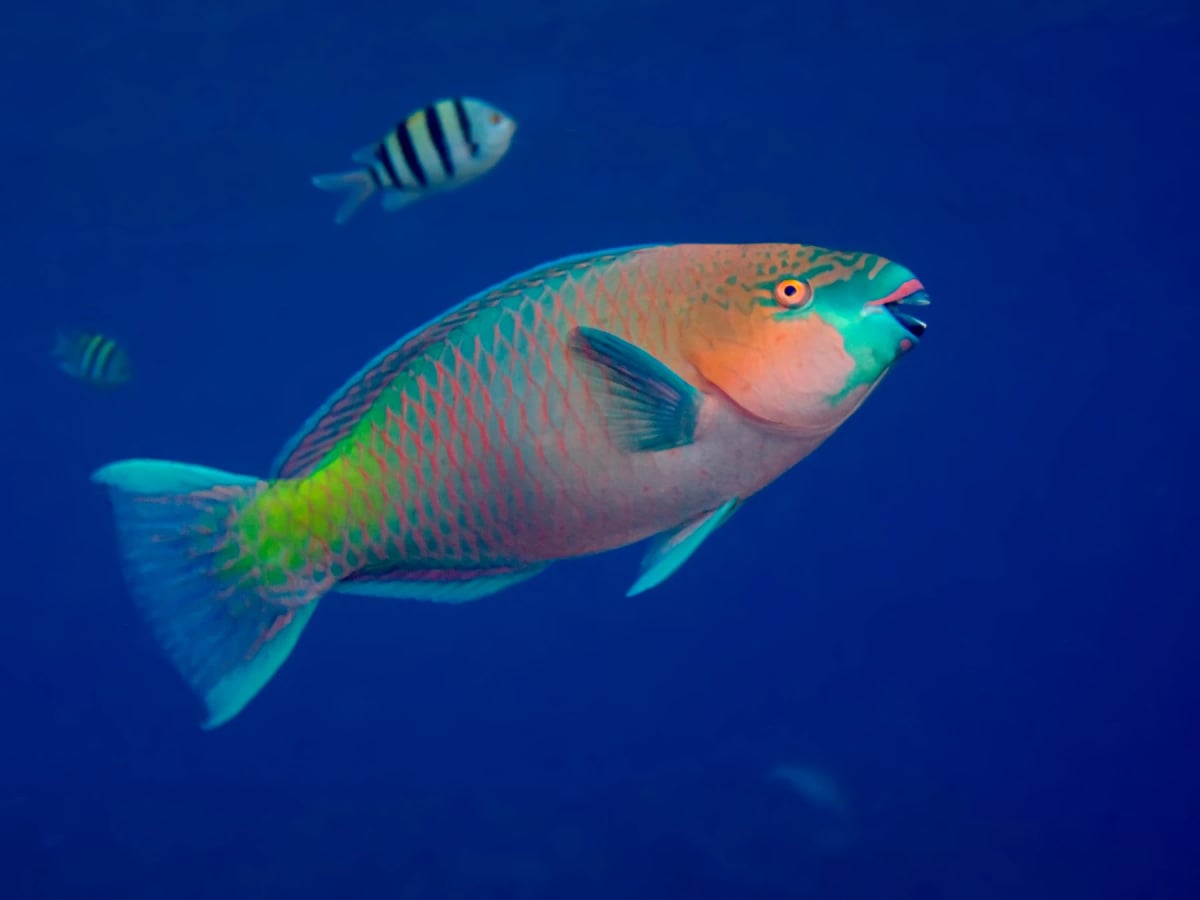
Few reef fish are as visually striking as parrotfish. Their most recognisable feature is their beak, formed by teeth that have fused together into a solid plate, tough enough to scrape material directly from rock and coral. Colours vary enormously, not just between species but within the same species depending on age and sex. Juveniles and females tend to be duller, often showing browns, reds, or mottled patterns, while adult males display vivid greens, blues, and pinks with contrasting facial markings. This difference in appearance between phases of life was so pronounced that scientists once classified some phases as entirely separate species. Most parrotfish are also covered in large, clearly visible scales, giving them a somewhat armoured look as they move across the reef.
Feeding habits
Grazing takes up most of a parrotfish's waking hours. Using their hard beak, they scrape algae and loose fragments of dead coral from reef surfaces, then grind the material down using a set of grinding teeth located deep in the throat, known as pharyngeal teeth. This grinding process separates the organic matter they need from the calcium carbonate in the coral skeleton. The calcium carbonate passes through and is excreted as fine white sand. A large individual can produce several hundred kilograms of sand in a single year. Some species also consume living coral tissue, though algae forms the bulk of the diet for most. Their feeding is not random. They often return to the same grazing patches day after day, leaving visible scrape marks on the reef surface.
Behavior
During the day, parrotfish are almost constantly on the move, grazing across the reef in loose groups or alongside other herbivorous fish. Larger males often hold territories and can be aggressive toward rivals. As daylight fades, they retreat to a familiar crevice or ledge and settle in for the night. Many species then do something quite remarkable. They secrete a transparent cocoon of mucus from glands near their gills, surrounding their entire body within about thirty minutes. Researchers believe this cocoon helps mask the fish's scent, making it harder for nocturnal hunters such as moray eels to detect them. Some parrotfish also change sex during their lifetime, with females capable of transitioning into fully functioning males, a process common across several reef fish families.
Ecological role
Reef ecosystems depend on parrotfish in ways that go well beyond sand production. Algae grows fast and, left unchecked, can smother coral colonies and prevent new coral larvae from settling on the reef surface. By grazing heavily and continuously, parrotfish keep algae populations in check and open up bare patches of rock where young corals can take hold. Studies on Caribbean reefs have shown that reefs with healthy parrotfish populations recover from disturbances, such as bleaching events or storms, significantly faster than those where parrotfish have been overfished. In this sense, they act as one of the reef's most important maintenance crews. Their sand production also replenishes beaches and shallow seafloor sediments across the tropics, a benefit that extends well beyond the reef itself.
Where it is found
The Parrotfish can be found in places such as:
Researched and written by Juan Pablo. Sources: IUCN Red List, scientific literature and regional field guides. Last updated: .
Technical factsheet









Frequently Asked Questions
What do parrotfish eat?
Parrotfish use their hard, beak-like teeth to scrape algae and bits of dead coral from reef surfaces. The material gets ground up deep in their throat, where the organic nutrients are absorbed and the coral fragments are passed out as fine white sand. Most species focus on algae, though some also nibble living coral tissue. Their grazing keeps the reef clean and gives young corals space to grow.
Do parrotfish really make sand?
Yes, and in impressive quantities. After grinding up coral material, parrotfish excrete the calcium carbonate portion as fine white sand. A large individual can produce several hundred kilograms of sand every year. Much of the white sand found on Caribbean and Pacific beaches actually came from parrotfish. It is one of the most surprising ecological roles any reef fish plays.
Why do parrotfish sleep in a cocoon?
Many parrotfish secrete a bubble of transparent mucus around their bodies each night, produced by glands near their gills. The process takes about thirty minutes. Researchers believe the cocoon helps disguise the fish's scent, making it harder for predators like moray eels to detect them while they rest. It is one of the more unusual survival strategies found among reef fish.
Can parrotfish change sex?
Yes. In several parrotfish species, females can transition into fully functioning males. This process is common across a number of reef fish families and is not considered unusual in the animal kingdom. The male that results from this change often displays much brighter colors than the female it once was, which is part of the reason scientists once mistook different life stages for completely separate species.
Are parrotfish endangered?
As a family, parrotfish are listed as Least Concern by the IUCN. However, certain species face pressure from overfishing in areas like the Caribbean, where they are caught for local food markets. The loss of parrotfish from a reef has serious consequences, as algae quickly takes over and corals struggle to recover. Conservation efforts in several countries now protect them through fishing restrictions.
Where in the world do parrotfish live?
Parrotfish are found across tropical and subtropical seas worldwide, including the Caribbean, the Great Barrier Reef, and the reefs of Southeast Asia. They prefer shallow, sunlit waters where coral and algae are abundant. Countries like Indonesia, the Philippines, Fiji, Australia, Mexico, Belize, Jamaica, and the Bahamas all have well-established parrotfish populations along their coastlines.
Why are parrotfish important to coral reefs?
Parrotfish are among the most valuable fish on any reef. By grazing on algae constantly, they prevent it from smothering coral colonies and keep the reef surface clear for new coral growth. Studies have shown that reefs with healthy parrotfish populations bounce back from bleaching events and storms much faster. Without them, algae takes over and the entire reef ecosystem can decline rapidly.