Warthog
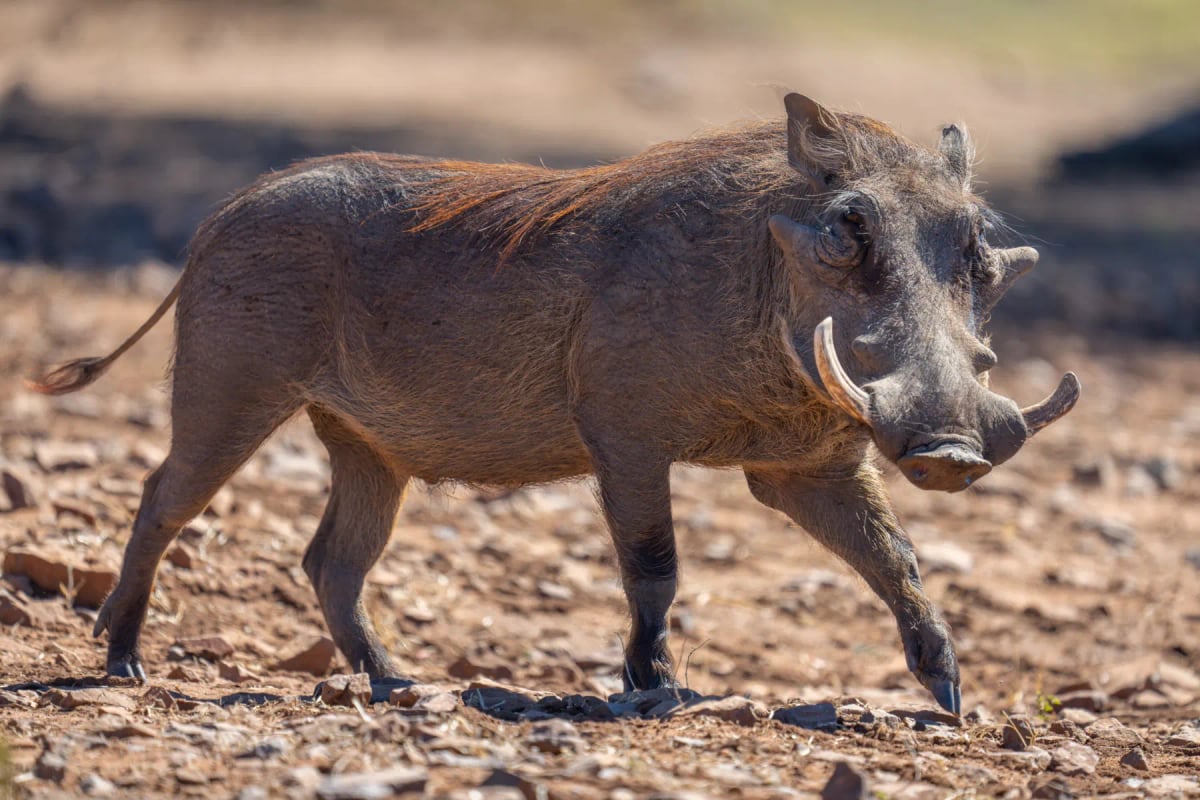
The common warthog is a wild pig found across the savannas and open grasslands of sub-Saharan Africa. It is one of the most recognizable animals on the continent, thanks to its curved tusks, the fleshy growths on its face that give the species its name, and the habit of running with its tail held straight up. It feeds mostly on grasses, roots and bulbs, often dropping to its calloused front knees to dig and graze close to the ground. Warthogs live in small family groups and take shelter in burrows, usually ones abandoned by aardvarks. They enter these feet first, keeping their tusks pointed outward as a last line of defense. Lions, leopards, hyenas, cheetahs and crocodiles all prey on them regularly. Despite this, the species is widespread and its populations are considered stable across most of its range.
Habitat and distribution
Warthogs are found across a vast stretch of sub-Saharan Africa, ranging from Mauritania and Senegal in the west to Ethiopia and Somalia in the east, and south through Kenya, Tanzania, and into southern Africa. They favor open savannas, short grasslands, and areas with scattered shrubs where visibility is good and food is close to the ground. They tend to avoid dense rainforests and true deserts, though they cope well with dry conditions as long as water is reachable. Proximity to burrows matters as much as food availability, since warthogs rely on them for nightly shelter and raising young. They are often found near the territories of aardvarks, whose abandoned burrows they readily adopt. Elevation is not a major barrier, and populations exist at a wide range of altitudes.
Diet
Grasses make up the bulk of the warthog's diet throughout most of the year. When grass is scarce during dry seasons, it relies more heavily on roots, bulbs, and tubers dug from the soil. To reach food at ground level, warthogs drop onto the calloused pads on their front legs and shuffle forward while grazing or digging with their tough snouts. This kneeling posture is one of their most distinctive behaviors. Fruits and bark are eaten when available, and warthogs will occasionally scavenge on carrion, though this is not a regular habit. They need to drink water fairly often and are usually found within a reasonable distance of a reliable water source. Their diet shifts with the seasons, making them flexible feeders capable of surviving periods when preferred food plants are in short supply.
Behavior
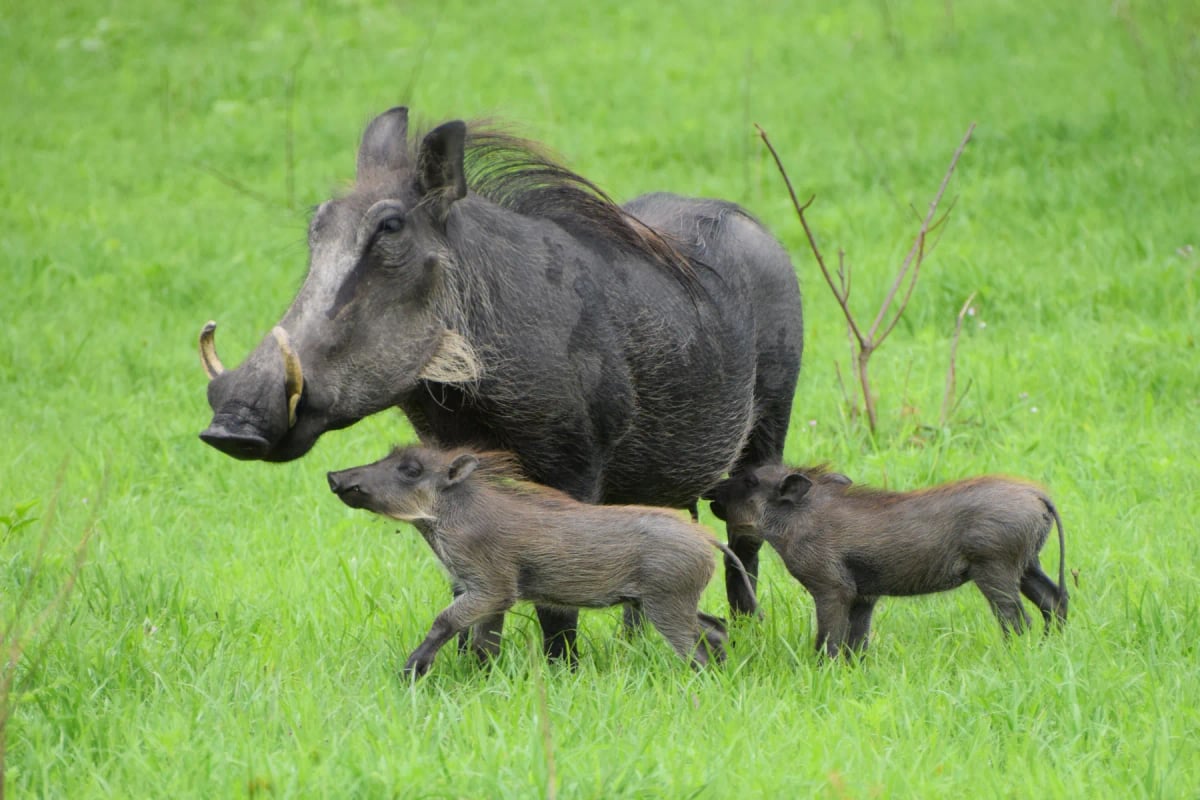
Active during the day, warthogs rest at night inside burrows, which provides protection from both predators and cold temperatures. They live in small family groups known as sounders, typically made up of a female and her offspring, though males sometimes join temporarily. Adult males tend to be more solitary outside of the breeding season. One of their most recognizable habits is running with the tail held straight up, which helps group members keep track of each other through tall grass. When threatened, they sprint for the nearest burrow and reverse into it, leaving their tusks pointing outward at the entrance. Warthogs are not territorial in a strict sense but do maintain home ranges that overlap with those of neighboring groups. They are generally not aggressive unless cornered or protecting young.
Predators
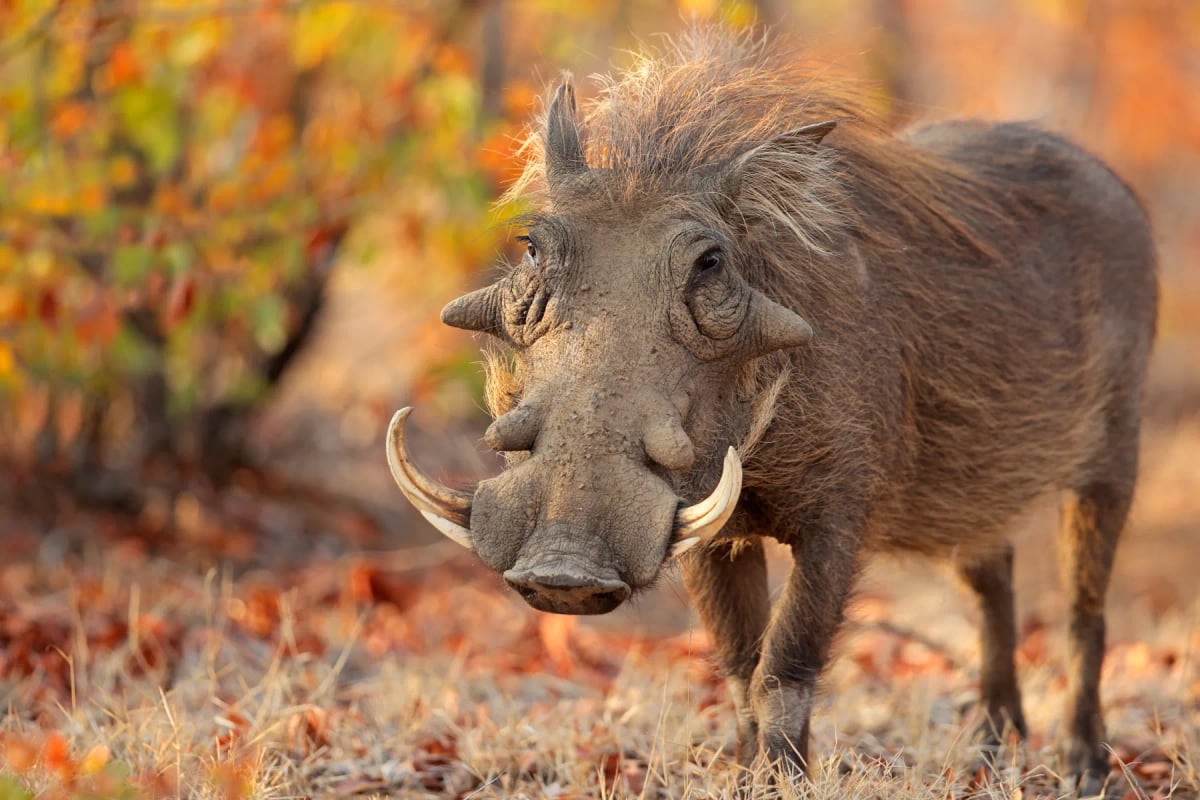
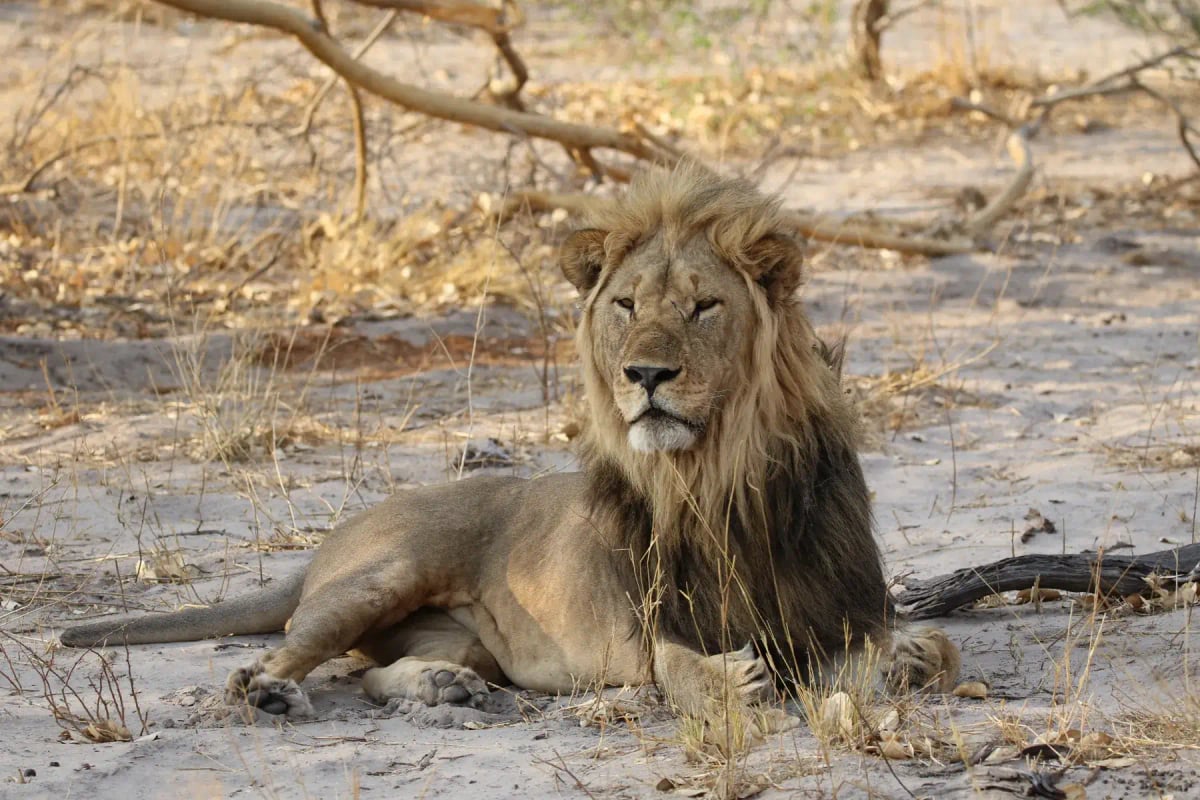
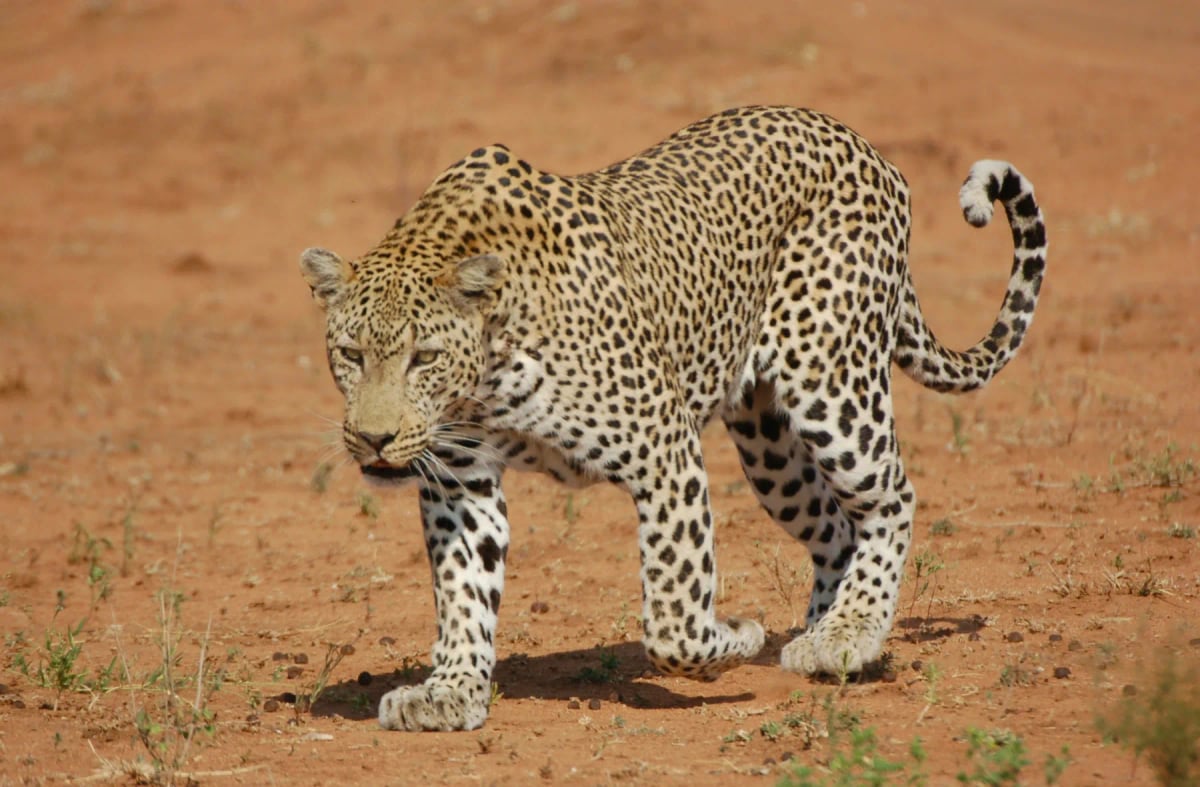
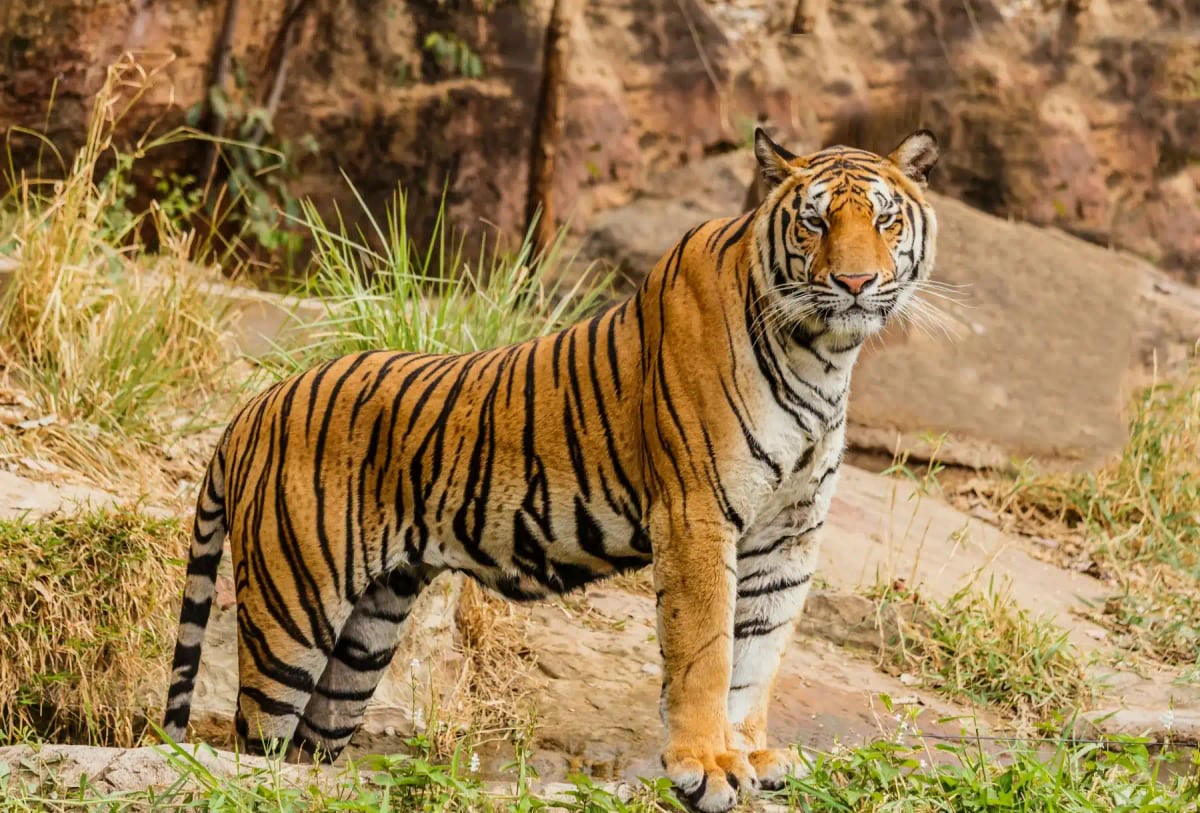
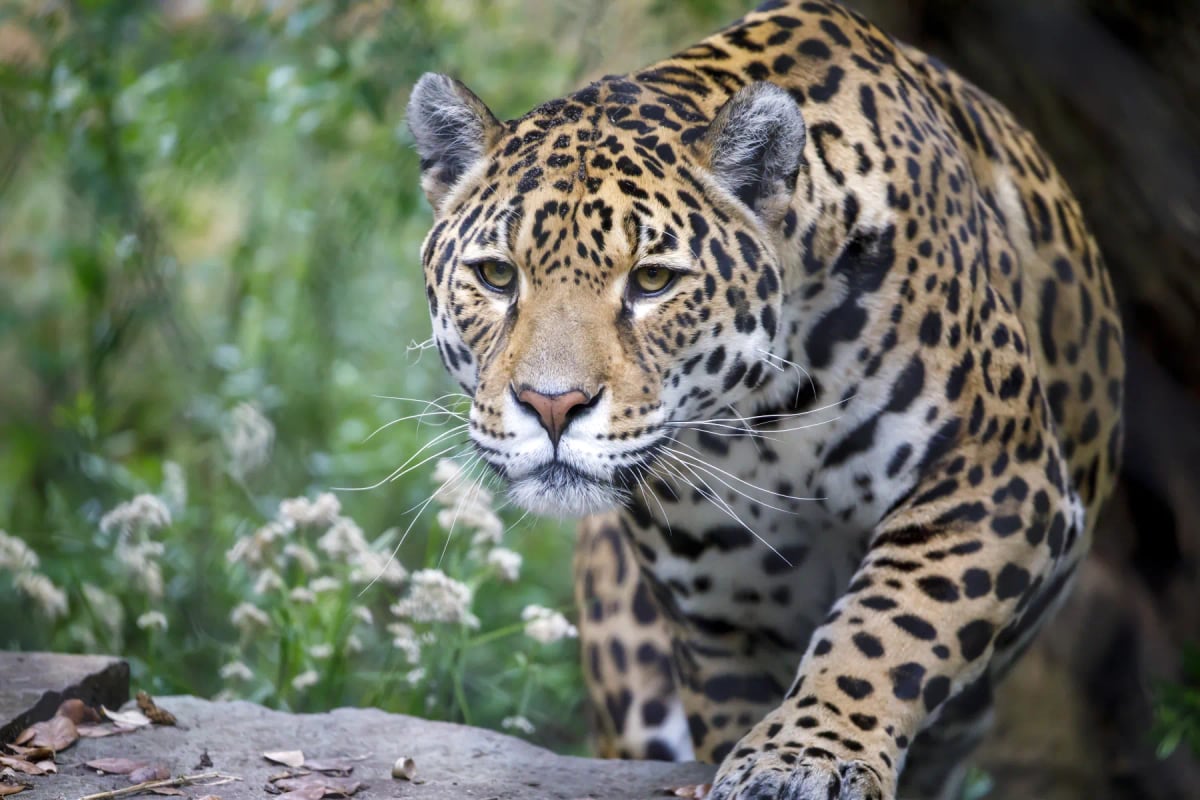
Across its range, the warthog faces pressure from a wide variety of large predators. Lions and leopards are among the most common threats, hunting warthogs both in open ground and near burrow entrances. Spotted hyenas and cheetahs also take them regularly, particularly targeting younger or smaller individuals. Crocodiles pose a danger at water sources, where warthogs must drink despite the risk. Nile monitors and large eagles have been recorded preying on piglets. When escape is impossible, warthogs will defend themselves with their tusks, and a cornered adult can cause serious injury to an attacker. Their best defense, however, is speed combined with knowledge of the local terrain. Piglets are far more vulnerable than adults, and mothers will charge at predators to protect them. This constant predation pressure keeps warthog groups alert and rarely far from cover.
Conservation
The IUCN classifies the warthog as Least Concern, reflecting its wide distribution and broadly stable populations across sub-Saharan Africa. Its ability to adapt to a range of habitats and food sources has helped it persist in areas where other large mammals have declined. That said, the species is not entirely free of pressure. Hunting for bushmeat is a significant factor in some regions, and in parts of West Africa numbers have fallen noticeably. Habitat loss through agricultural expansion reduces the open grasslands warthogs depend on. They are also considered a pest in some farming communities due to crop raiding, which can lead to local persecution. Protected areas play an important role in supporting healthy populations, and the species is common in many national parks across Africa. Overall, no major conservation intervention is currently considered necessary at the global level.
Where it is found
The Warthog can be found in places such as:
Researched and written by Juan Pablo. Sources: IUCN Red List, scientific literature and regional field guides. Last updated: .
Technical factsheet




Frequently Asked Questions
What do warthogs eat?
Warthogs eat mostly grasses, and when those are hard to find during dry seasons, they dig up roots, bulbs, and tubers. To graze close to the ground, they drop onto the calloused pads on their front knees and shuffle forward. They also eat fruits and bark when available, and they drink water regularly. Their diet shifts with the seasons, which makes them surprisingly flexible eaters.
Why do warthogs run with their tails up?
When a warthog runs, it holds its tail straight up like a little flag. This is thought to help members of a family group keep track of each other while moving through tall grass. It may also play a role during the early moments of a chase, giving young warthogs a visual signal to follow. It is one of their most recognizable traits and is visible from a good distance.
Where do warthogs sleep?
Warthogs sleep inside burrows at night, almost always ones that were originally dug by aardvarks. They back into the burrow tail first, so their tusks face outward at the entrance and can be used to fend off any predator that gets too close. This behavior keeps them safe from both night predators and cold temperatures. The same burrows are also used by females to raise their young.
What animals prey on warthogs?
Warthogs are hunted by a wide range of predators. Lions, leopards, spotted hyenas, and cheetahs all take them regularly. Crocodiles are a serious threat at watering holes. Piglets face additional dangers from large eagles and Nile monitors. When escape is not possible, an adult warthog will fight back with its tusks and can seriously injure an attacker. Speed and knowledge of nearby burrows are their main defenses.
Are warthogs dangerous to humans?
Warthogs are generally not aggressive toward people and will usually run away when they sense a threat. However, a cornered warthog or a mother protecting her piglets can become dangerous. Their tusks are sharp and powerful enough to cause serious wounds. In areas where people and warthogs share space, conflicts sometimes arise over crops, since warthogs will raid fields when food is scarce. Giving them space is always the safest approach.
What are the growths on a warthog's face?
Those fleshy bumps on a warthog's face are called warts, and they are the feature that gives the animal its name. They are not true warts but rather thick pads of skin and connective tissue. Males have up to four of them, while females usually have two. They are thought to offer some protection during fights between males. Combined with the curved tusks, they give the warthog one of the most distinctive faces in the animal kingdom.
How long do warthogs live?
In the wild, warthogs typically live between 12 and 18 years, though many do not reach old age due to predation. In captivity, where food is reliable and predators are absent, some individuals have lived past 18 years. Females generally live longer than males, partly because male warthogs face more risk from fighting and from being targeted by predators. Piglets are the most vulnerable, with survival in the first few months far from guaranteed.