Kob
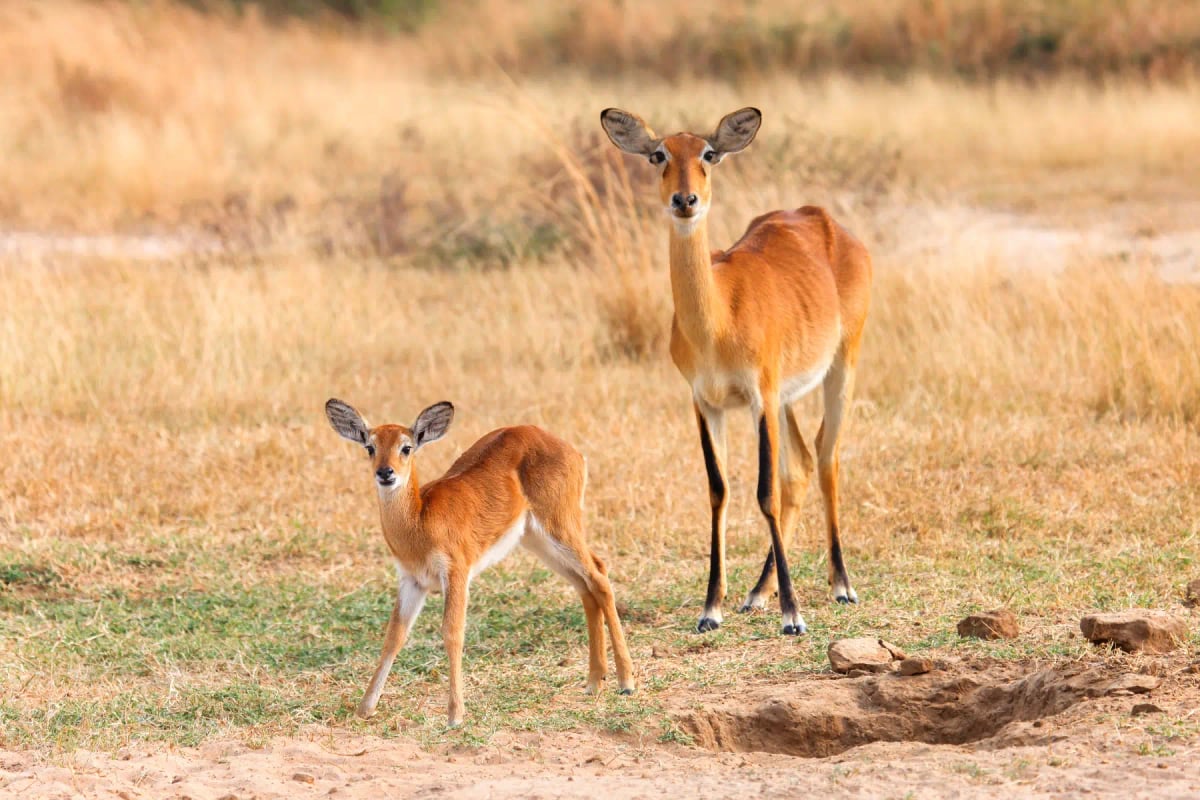
The kob (Kobus kob) is a medium sized antelope found across the savannas and floodplains of Africa south of the Sahara. Males carry a distinctive set of lyre shaped, ridged horns that curve outward and then inward, while females and young are hornless. Their coat is a warm reddish gold on the back and sides, fading to white on the underside, with black markings along the front legs. Kobs are highly social and typically move in herds, often congregating in large numbers near rivers and wetlands where grass stays green through dry spells. One of their most remarkable behaviors is lek mating: males compete for small, tightly packed territories where females come to choose a partner. The kob is listed as Least Concern by the IUCN, but hunting pressure and habitat loss continue to reduce populations in parts of its range.
Habitat and distribution
Kobs range across a broad sweep of sub-Saharan Africa, from Senegal and Guinea in the west through the Central African Republic and the Democratic Republic of Congo, and east into Uganda, South Sudan, and Ethiopia. They are most at home on open floodplains, grassy savannas, and the fringes of wetlands, particularly where water is close enough to keep grasses fresh through the dry season. Elevation matters little to them as long as water and pasture are available. South Sudan's Sudd wetland and Uganda's Queen Elizabeth National Park support some of the largest remaining populations. Kobs generally avoid dense forest and very arid terrain, favouring flat or gently rolling ground where visibility is good and grazing is plentiful.
Diet
Grazing is the foundation of the kob's diet. It feeds almost entirely on grasses, showing a clear preference for short, green growth over tall or dry stems. During the dry season, kobs often travel considerable distances to reach floodplains and riverbanks where soil rich in moisture keeps grasses growing long after the surrounding savanna has dried out. This dependence on fresh pasture is one reason the species congregates so reliably near rivers and wetlands. Kobs drink water regularly, typically once or twice a day, and rarely stray far from a reliable source. Occasionally they will browse on low herbs and sedges, but grass makes up the vast majority of what they eat throughout the year.
Behavior
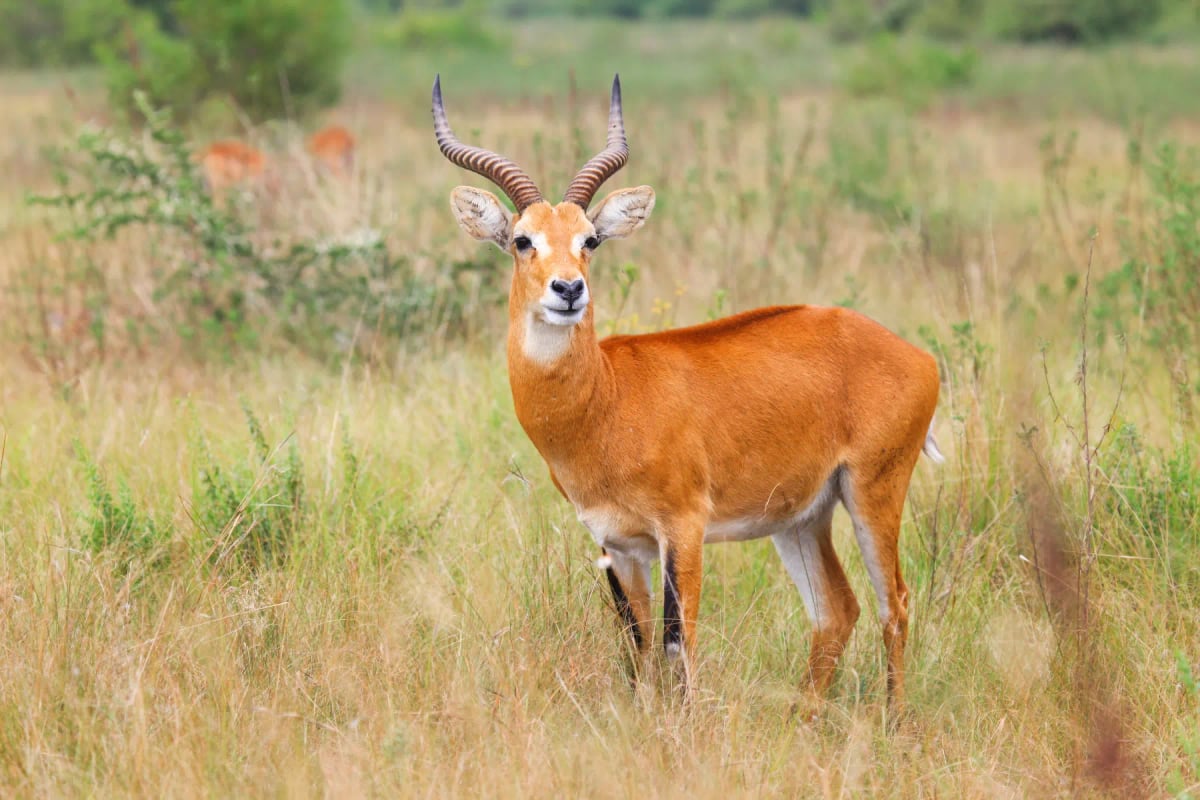
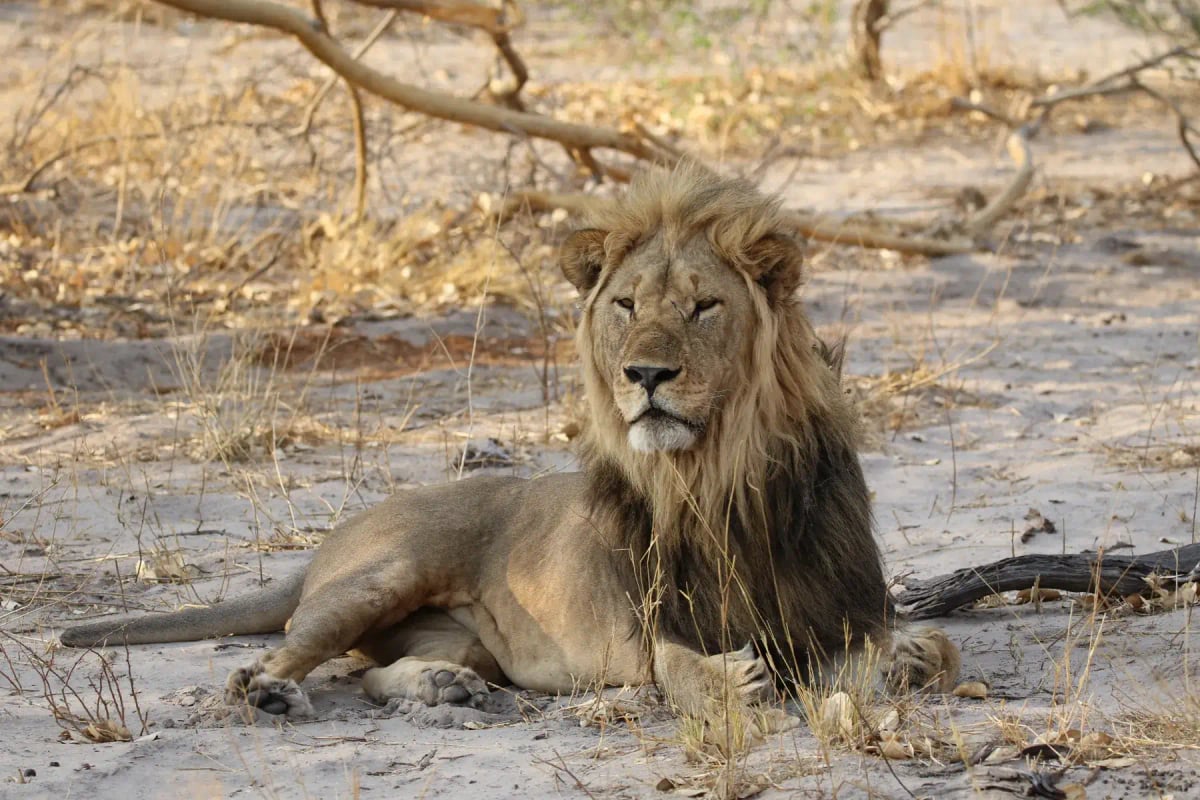
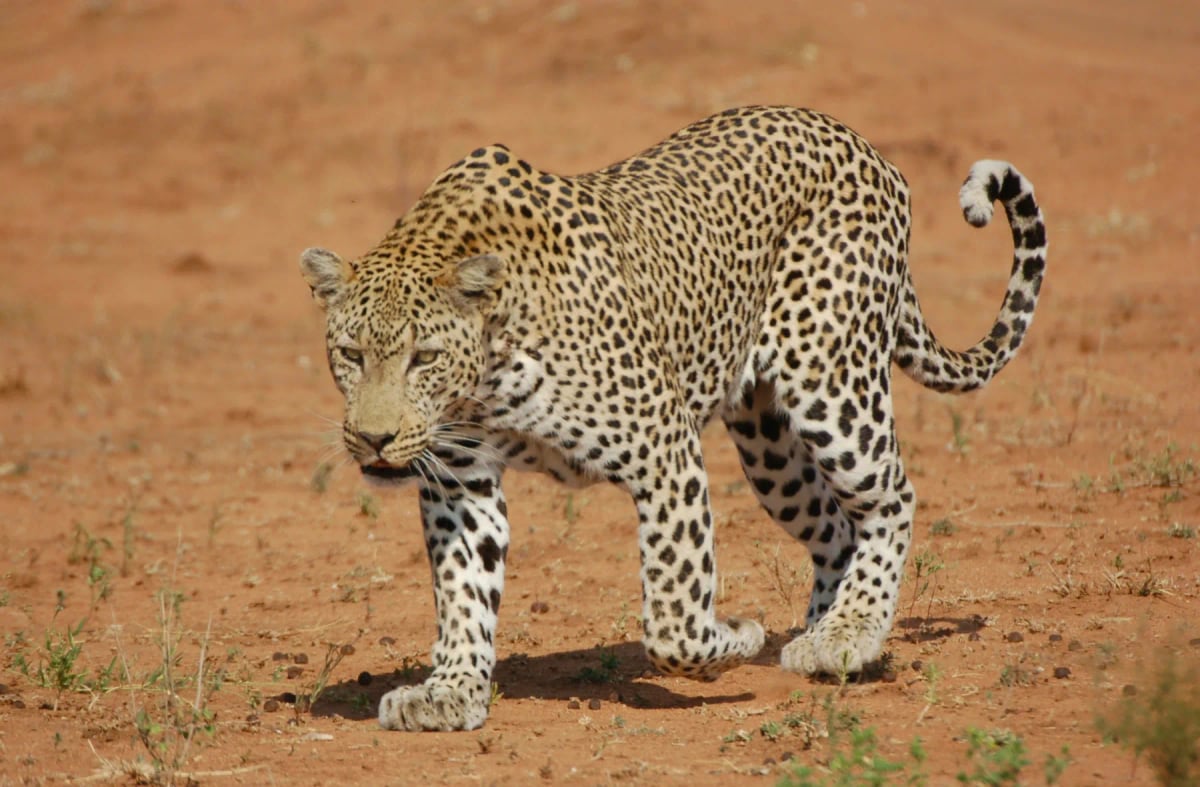
Few antelopes have a mating system as striking as the kob's. Males compete for tiny, clustered territories within communal arenas known as leks, sometimes packed as tightly as a dozen territories within a single hectare. Females move freely through these arenas and choose their own mates, giving them real control over reproduction. Outside of the breeding season, kobs live in groups that are often sorted by sex, with females and young forming their own herds and males gathering separately. Herd sizes can reach into the hundreds during seasonal gatherings near water. Kobs are most active in the cooler hours of early morning and late afternoon, resting in shade during the midday heat. When threatened, they rely on speed and group alertness to escape predators such as lions, leopards, and wild dogs.
Appearance
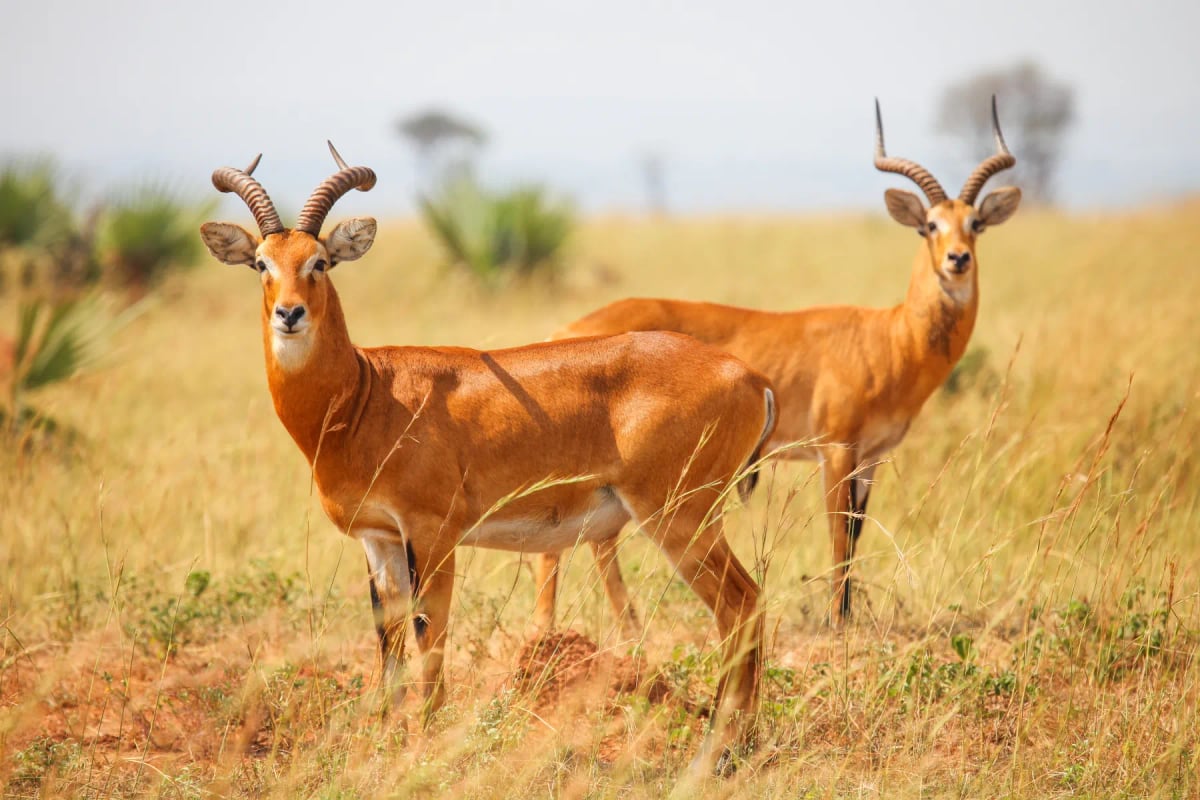
In build, the kob is sturdy and medium in size, with adult males typically weighing between 94 and 121 kilograms and standing around 90 centimetres at the shoulder. Females are noticeably smaller. The coat on the back and flanks is a warm reddish gold, shifting to clean white on the throat, chest, and belly. A white ring encircles each eye, and the insides of the ears are also white. Dark markings run down the front of each foreleg, adding contrast to the otherwise warm tones of the body. Only males grow horns. These curve outward and upward before sweeping inward at the tips, forming a shape reminiscent of a lyre. The ridges along the horns are a reliable way to tell older males from younger ones, as the ridges become more pronounced with age.
Conservation
The IUCN lists the kob as Least Concern, reflecting the fact that it remains widespread and reasonably numerous across its range. That said, the picture is uneven. Populations in several West African countries have declined sharply due to unregulated hunting and the steady loss of wetland and savanna habitat to agriculture and human settlement. Civil conflict in parts of Central Africa and South Sudan has also made it harder to monitor and protect local populations. Protected areas such as Uganda's Queen Elizabeth National Park and Cameroon's Benoue National Park are important strongholds. Continued investment in anti-poaching patrols, community conservation programmes, and the protection of key wetland corridors will be essential for keeping populations stable over the long term.
Where it is found
The Kob can be found in places such as:
Researched and written by Juan Pablo. Sources: IUCN Red List, scientific literature and regional field guides. Last updated: .
Technical factsheet
Frequently Asked Questions
What do kobs eat?
Kobs are grazers and feed almost entirely on grass. They strongly prefer short, green growth and will travel long distances during the dry season to find fresh pasture near rivers and wetlands. They drink water once or twice a day and rarely wander far from a reliable source. Occasionally they nibble on herbs and sedges, but grass is by far the most important part of their diet all year round.
Where do kobs live?
Kobs are found across a wide stretch of sub-Saharan Africa, from Senegal in the west to Ethiopia and Uganda in the east. They thrive on open savannas, grassy floodplains, and the edges of wetlands where water keeps grass growing through dry periods. They avoid dense forests and very dry terrain. South Sudan and Uganda hold some of the largest populations today.
What is a kob lek and how does it work?
A lek is a communal mating arena where male kobs each defend a tiny patch of ground, sometimes just 15 to 30 meters across. Several of these territories are packed tightly together, and females walk through freely to pick the male they want to mate with. It is a remarkable system because the females are fully in charge of the choice. This behavior makes the kob one of the most studied antelopes in Africa.
Are kobs endangered?
The kob is currently listed as Least Concern by the IUCN, meaning it is not considered at risk of extinction as a whole. However, populations in several West African countries have dropped considerably due to hunting and the loss of wetland and savanna habitat. Civil conflict in parts of Central Africa has also made conservation harder. Protected parks in Uganda and Cameroon remain important refuges for the species.
What predators hunt kobs?
Lions are the main predators of kobs, but leopards, African wild dogs, and spotted hyenas also hunt them regularly. Kobs rely on their speed and the collective alertness of the herd to detect and escape danger. Living in open, flat terrain helps them spot threats from a distance. Young and solitary individuals are most vulnerable, while large groups offer better protection through more pairs of eyes watching at all times.
How big do kobs get?
Kobs are medium in size for an antelope. Adult males typically weigh between 94 and 121 kilograms and stand about 90 centimetres at the shoulder. Females are noticeably smaller and lighter. Males also carry a distinctive set of ridged horns that curve outward and then sweep inward at the tips. Females do not grow horns. The coat is a warm reddish gold on the back, with white on the belly and around the eyes.
Do kobs migrate?
Kobs do not follow fixed migration routes like wildebeest, but they do move seasonally in search of fresh grazing. When the dry season dries out the savanna, herds shift toward floodplains, riverbanks, and wetlands where green grass is still available. In South Sudan, large concentrations gather around the Sudd wetland during these movements. These seasonal shifts can involve hundreds or even thousands of animals moving together across the landscape.