Black Mamba
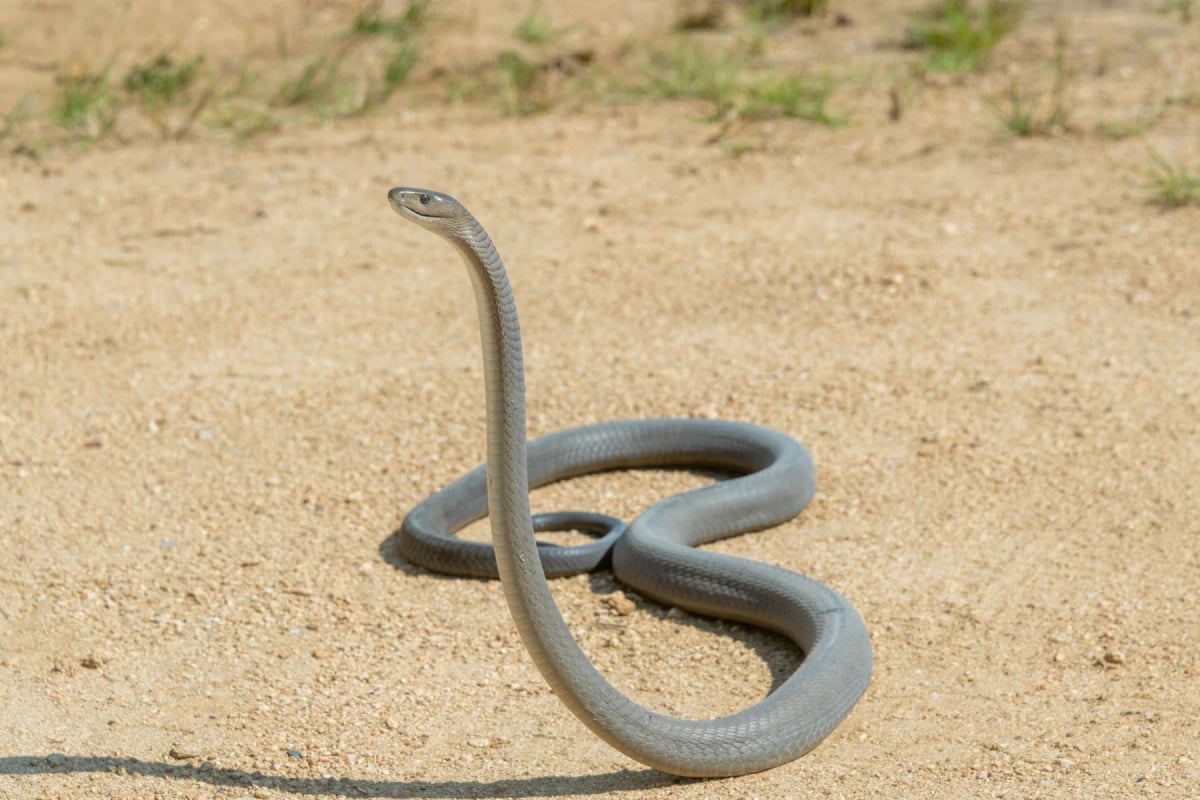
The black mamba is Africa's longest venomous snake, with adults commonly reaching between 2 and 3 meters and some individuals exceeding 4 meters. Despite its name, the body is olive, gray or khaki in color. The name comes from the jet black interior of the mouth, which the snake displays wide open as a warning when it feels cornered. It is also among the fastest snakes on Earth, capable of short bursts above 15 km/h across open ground. Found across sub-Saharan Africa, it favors savannas, rocky hillsides and open woodland. It hunts by day, targeting birds, rodents and other small mammals, and immobilizes prey rapidly with a highly potent neurotoxic venom. Without treatment, a bite can cause progressive paralysis and respiratory failure within hours. Modern antivenom has greatly improved survival rates, though access remains limited in some parts of its range.
Habitat and distribution
The black mamba ranges widely across sub-Saharan Africa, from Senegal and Guinea in the west to Somalia and Ethiopia in the east, and south through Tanzania, Zambia and Mozambique to South Africa and Namibia. It is absent from the Congo Basin's dense rainforest interior, preferring drier, more open environments. Savannas, rocky hillsides, scrubland and open woodland are its favored habitats. It relies on stable shelter such as termite mounds, rock crevices or hollow logs, returning to the same retreat repeatedly. Elevation is not a major barrier, and populations exist from sea level up to around 1,800 meters in parts of East Africa. Where habitat remains intact and human pressure is moderate, local densities can be relatively high.
Speed, venom and defense
Few snakes match the black mamba's combination of speed and venom potency. Over short distances it can reach speeds above 15 km/h, making escape from a threatening animal a realistic option. Its venom is a powerful blend of neurotoxins and cardiotoxins that acts rapidly on the nervous system. A full defensive bite can deliver well over 100 mg of venom, and the lethal dose for an adult human is estimated at around 10 to 15 mg. Before modern antivenom became available, bites were almost universally fatal. The distinctive black mouth lining plays a key defensive role. When cornered, the mamba spreads a narrow hood, opens its mouth wide and holds its ground, giving any potential threat a clear warning before striking. This display is a last resort; the snake prefers to retreat when given the chance.
Behavior and social life
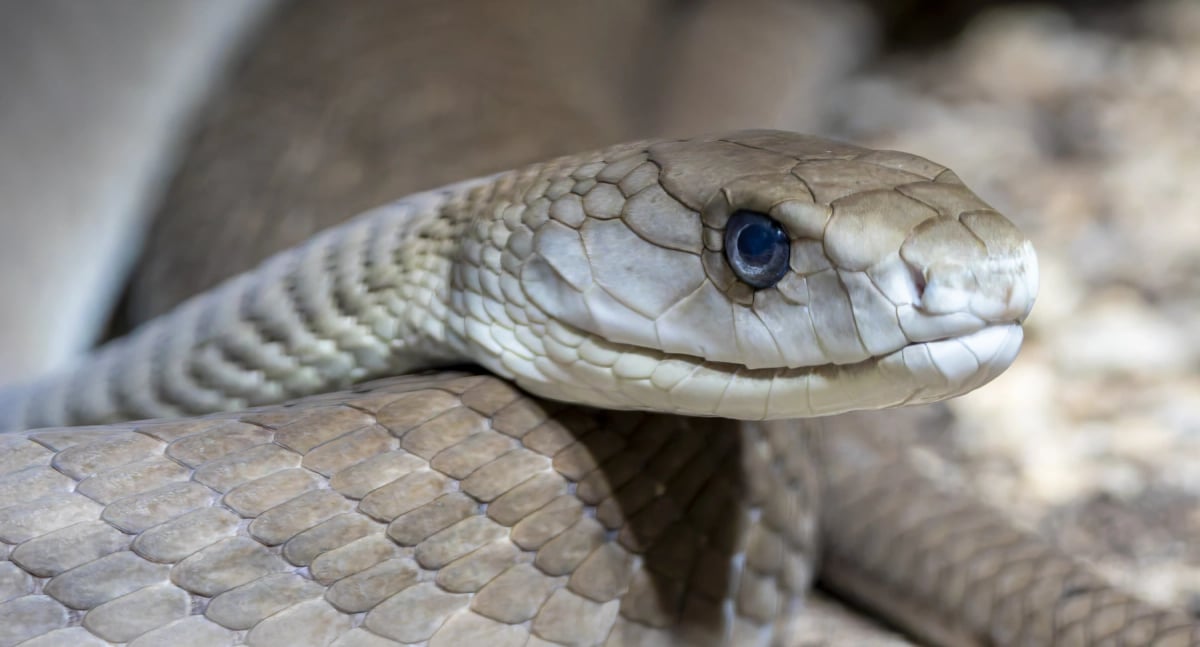
The black mamba is a solitary and largely diurnal hunter. It emerges during the day to bask and forage, targeting warm-blooded prey including rodents, rock hyraxes, and birds, occasionally climbing into low shrubs or trees in pursuit. It strikes quickly, injects venom and then waits for prey to succumb before feeding. Unlike constrictors, it relies entirely on venom to immobilize animals. Outside of the breeding season, individuals avoid each other. Males compete during the mating season through ritualized combat, wrestling and pushing rivals to the ground without biting. Females lay clutches of 6 to 17 eggs in warm, humid sites such as termite mounds or decomposing vegetation. Hatchlings emerge fully independent and already carry functional venom. Adults show strong site fidelity, regularly returning to a favored burrow or rock shelter at nightfall.
Conservation
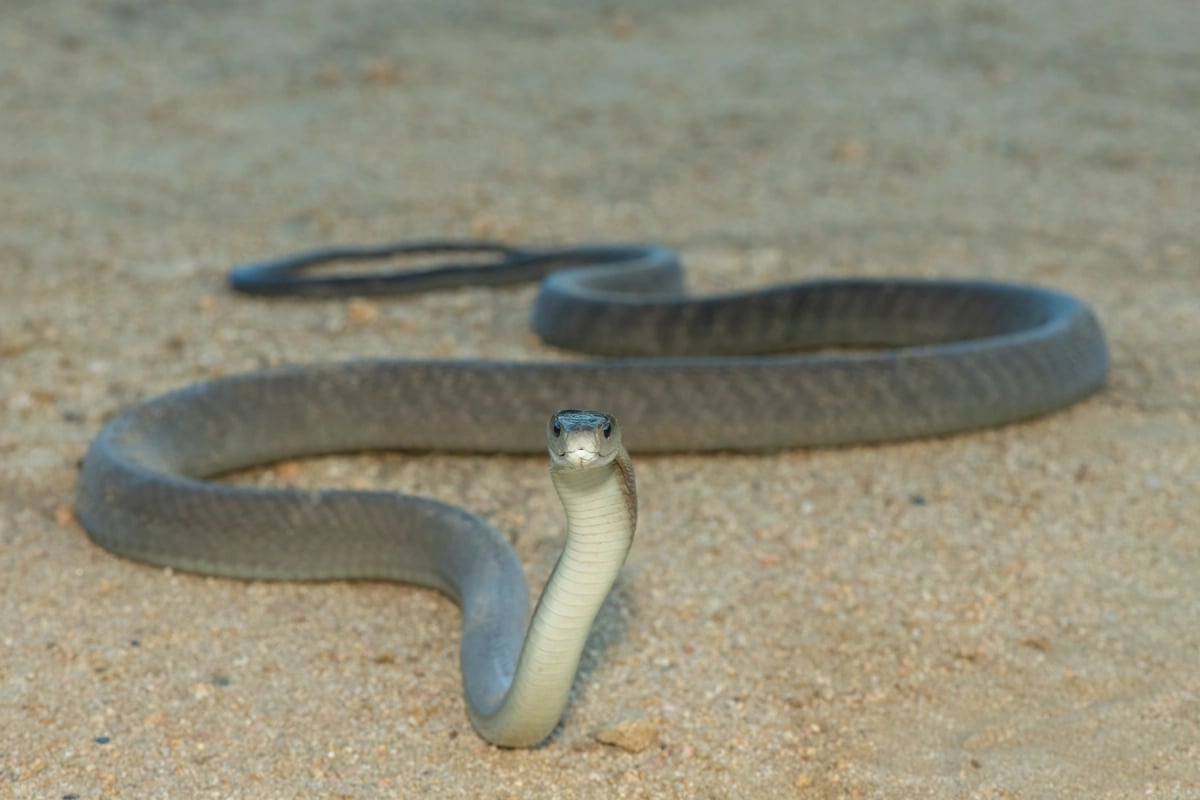
The black mamba is currently listed as Least Concern on the IUCN Red List, reflecting its wide range and stable population across much of sub-Saharan Africa. Habitat loss through agricultural expansion and urban development poses a localized threat in parts of its range, as does deliberate killing by people who live near it. Fear of the species leads to many individuals being killed on sight, even where they present no immediate danger. The snake plays a genuine ecological role as a predator of rodents that can otherwise damage crops and spread disease. Antivenom production and distribution remain a public health priority across Africa, since treatment access is still uneven in rural areas. Formal conservation programs specific to the species are limited, but broad savanna and bushveld protection initiatives in southern and eastern Africa benefit local populations indirectly.
Where it is found
The Black Mamba can be found in places such as:
Researched and written by Juan Pablo. Sources: IUCN Red List, scientific literature and regional field guides. Last updated: .
Technical factsheet
Frequently Asked Questions
Why is the black mamba called a black mamba if it isn't black?
The name has nothing to do with the snake's outer color, which is olive, gray or khaki. It refers to the deep black lining of the mouth. When the black mamba feels threatened, it gapes its jaws wide to expose that inky interior as a warning display. Early observers named the species after this striking feature, and the name has stuck ever since.
How dangerous is a black mamba bite?
A black mamba bite is a genuine medical emergency. The venom attacks both the nervous system and the heart, and without antivenom, death can occur within hours due to respiratory failure. The estimated lethal dose for a human is just 10 to 15 mg, yet a single bite can deliver many times that amount. Prompt access to antivenom is the critical factor in survival, and outcomes in well-equipped medical facilities are generally good.
How big does a black mamba get?
The black mamba is the longest venomous snake on the African continent. Most adults measure between 2 and 3 meters, though some individuals grow beyond 4 meters. Despite their impressive length, they have a relatively slender build, which contributes to their agility both on the ground and when moving through low vegetation. Size can vary across different parts of their range in sub-Saharan Africa.
Does the black mamba spend time in trees?
The black mamba is primarily a ground-dwelling snake, but it is a capable climber. It will move into shrubs or low trees when pursuing prey such as birds or when searching for a warm basking spot. It is not considered a true arboreal species in the way that some other mamba species are. The green mamba, a close relative, is far more tree-dependent in its daily habits.
What eats a black mamba?
Despite its fearsome reputation, the black mamba does have natural predators. The secretary bird and various eagle species, particularly the brown snake eagle, are known to prey on it. Mongooses are also capable of killing black mambas, using their speed and resistance to neurotoxic venom to their advantage. Young snakes face a wider range of threats, including other predatory birds, monitor lizards and even larger snakes.
Is the black mamba endangered?
The black mamba is currently classified as Preocupación menor (Least Concern) by the IUCN, meaning the species as a whole is not considered at risk of extinction. Its wide distribution across sub-Saharan Africa and stable populations in many areas support this status. That said, local numbers can decline where land is converted for agriculture or development, and widespread fear of the species unfortunately leads to many snakes being killed unnecessarily.
Can a black mamba chase a human?
This is one of the most common myths surrounding the species. Black mambas do not pursue humans. Like most snakes, they are far more interested in escaping a perceived threat than in confronting one. Bites almost always occur when a person accidentally corners or steps on the snake, giving it no other option. The mamba's speed is used primarily for fleeing and for catching prey, not for chasing people.