Peregrine Falcon

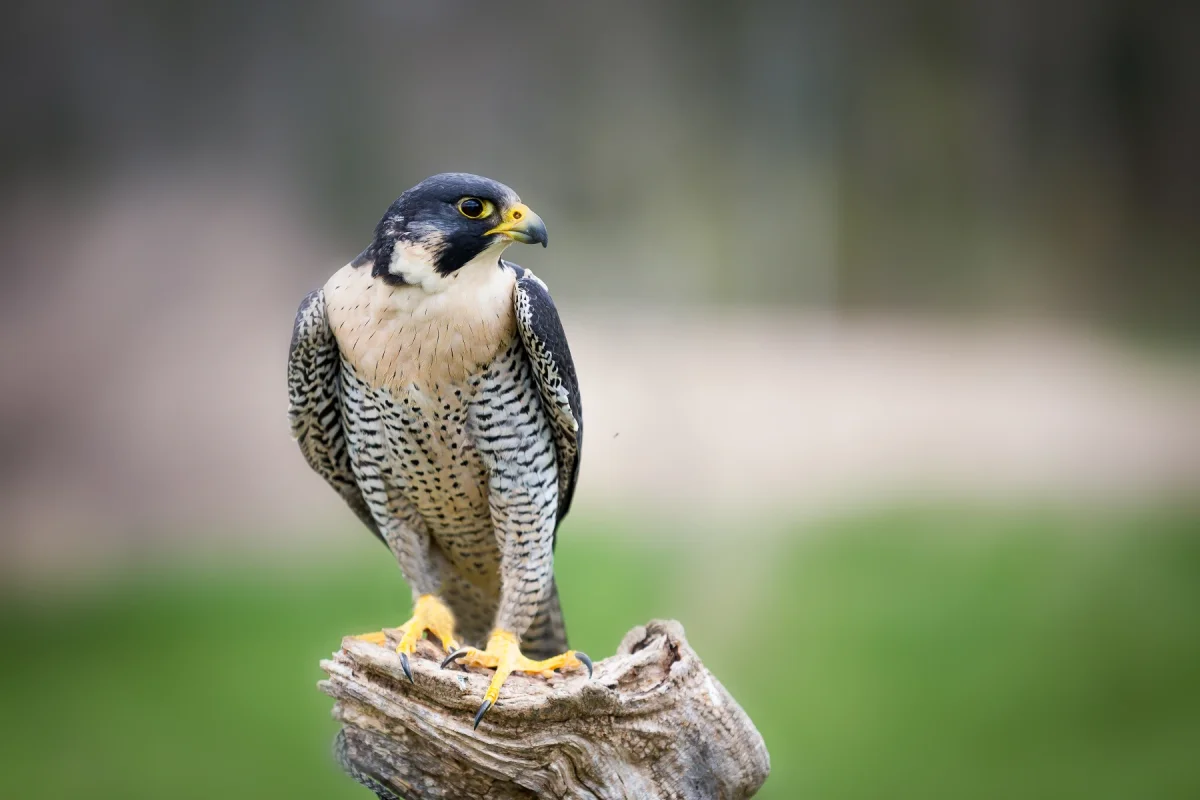
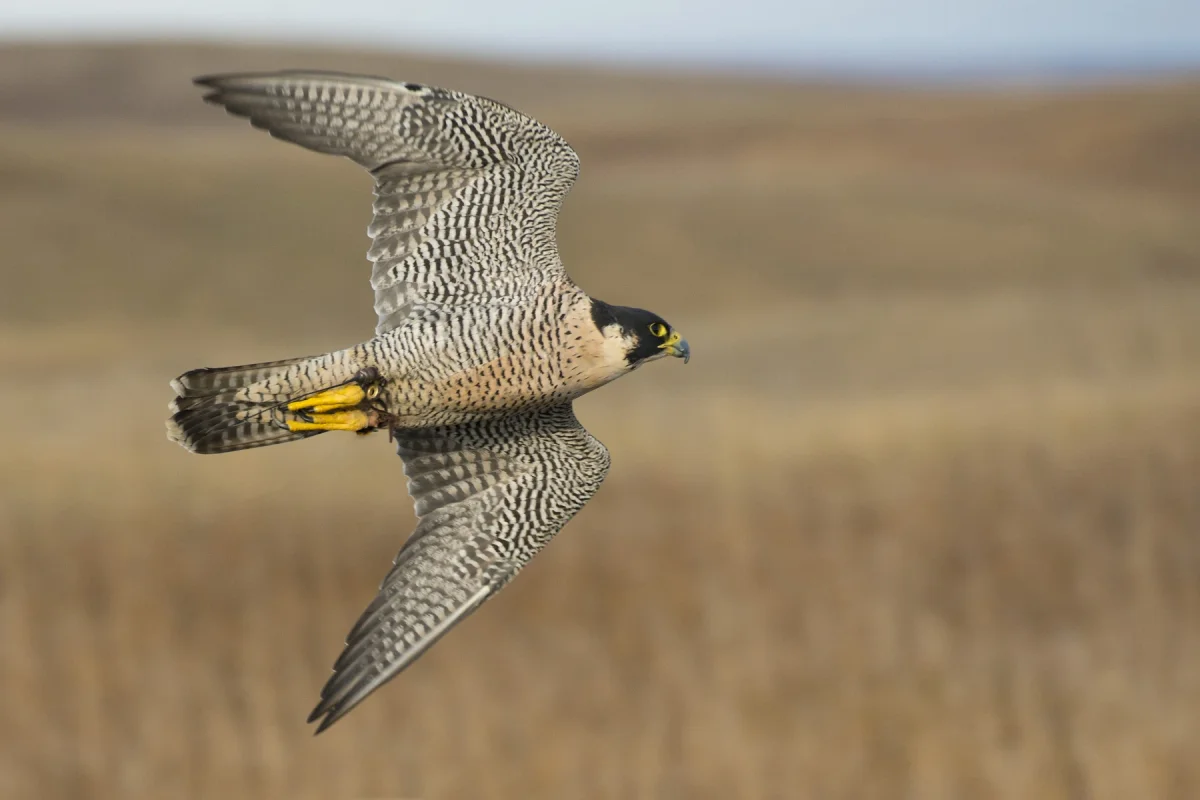
The peregrine falcon holds the title of fastest animal on Earth. In a hunting dive known as a stoop, it folds its wings and plunges at speeds that can exceed 300 km/h, striking other birds in midair with deadly accuracy. It is one of the most widespread birds on the planet, breeding on every continent except Antarctica and adapting with ease to sea cliffs, mountain gorges, open tundra, and the ledges of city skyscrapers. Adults have slate blue upperparts, a pale chest streaked with dark bars, and a distinctive dark hood. They form pairs that stay together for years, returning to the same nest site each breeding season. The species suffered a sharp collapse in the mid twentieth century due to the pesticide DDT, which caused eggshell thinning and widespread breeding failure. After DDT was banned, populations recovered strongly, making this bird one of the most celebrated conservation recoveries in history.
Habitat and distribution
Few birds match the peregrine falcon for sheer geographic reach. It breeds on every continent except Antarctica, from the frozen tundra of Alaska and northern Canada to the sun-baked cliffs of the Mediterranean and the open coastlines of Australia. Natural nest sites are almost always on bare rock ledges of steep cliffs, sea stacks, or mountain gorges, places that offer height, a clear view of the surroundings, and protection from ground predators. Over the past few decades, peregrines have colonized cities on a remarkable scale, nesting on cathedral towers, suspension bridges, and skyscrapers, which serve as artificial cliffs with an abundant supply of pigeons nearby. Migratory populations breeding in the Arctic travel thousands of kilometers to reach wintering grounds in South America and sub-Saharan Africa each year.
Diet
Birds make up almost the entire diet of the peregrine falcon, and the variety is impressive. Pigeons and doves are the most common prey in urban areas, while in coastal and wetland habitats the falcon regularly takes waders, ducks, and terns. Songbirds, swifts, and starlings are also taken with regularity. The peregrine hunts almost entirely in open air, watching from a high perch or soaring above before committing to a stoop. It rarely pursues prey in a level chase. Instead, it climbs above its target, folds its wings tightly, and dives to deliver a blow with its feet at tremendous speed, killing or stunning the bird instantly. In lean periods it will occasionally take bats, small mammals, or large insects, though these are very much a secondary option.
Speed record
No animal on Earth moves faster than a peregrine falcon in a full hunting dive. During this stoop, the bird tucks its wings against its body, narrows its silhouette, and accelerates to speeds that have been recorded above 320 km/h. Reaching those speeds requires remarkable physical adaptations. The falcon has a reinforced skull and specially structured nostrils that regulate airflow at high speed so it can breathe normally during the dive. Its eyes are protected by a transparent third eyelid, and its vision is sharp enough to spot a pigeon more than a kilometer away. The impact at the bottom of the stoop is delivered with the feet closed into a fist, transferring enormous force to the prey. Horizontal cruising flight is far slower, typically around 65 to 90 km/h.

Behavior
Peregrine falcons are strongly territorial during the breeding season, and a pair will defend its nest site aggressively against other raptors and intruders. Pairs bond over the long term and typically return to the same cliff ledge or building year after year. The nest itself, called a scrape, is simply a shallow hollow scratched into bare gravel or soil on a ledge. No nesting material is gathered. The female does most of the incubating, while the male provides food throughout the incubation period. Chicks take about six weeks to fledge. Outside the breeding season, peregrines are largely solitary. Migratory individuals follow consistent routes across continents, often stopping at the same staging areas each year. Vocalizations are loud and harsh, used mainly near the nest to warn rivals or communicate between partners.
Conservation
The story of the peregrine falcon is one of the most dramatic reversals in the history of wildlife conservation. From the 1950s onward, populations across North America and Europe collapsed due to widespread use of the pesticide DDT. The chemical accumulated through the food chain and caused females to lay eggs with shells so thin they broke under the weight of the incubating parent. By the 1970s the species had disappeared from large parts of its former range. Following the ban on DDT in the United States in 1972 and similar restrictions elsewhere, populations began to climb. Captive breeding and reintroduction programs helped speed up the recovery. Today the peregrine is listed as Least Concern on the IUCN Red List, with populations stable or growing across most of the world. Ongoing threats include illegal persecution and collisions with power lines.
5 Curiosities about the Peregrine Falcon
Here are five surprising facts about the peregrine falcon: • A stoop can exceed 320 km/h, making the peregrine the fastest animal ever recorded on Earth, faster than any land animal, fish, or insect. • Its nostrils contain small bony baffles that slow incoming air during a dive, allowing the bird to breathe without difficulty at extreme speed. • Peregrines living in cities have been observed hunting at night, using the glow of streetlights and illuminated buildings to spot prey in the dark. • A single pair often defends the same nest site for a decade or more, with new partners taking over the same location if one bird of the pair dies. • The word «peregrine» comes from the Latin peregrinus, meaning wanderer or traveler, a fitting name for a bird that crosses entire continents on migration.
Technical factsheet
Where it is found
The Peregrine Falcon can be found in places such as:
Frequently Asked Questions
How fast can a peregrine falcon fly?
In a hunting dive called a stoop, a peregrine falcon can reach speeds above 320 km/h, making it the fastest animal ever recorded on Earth. It achieves this by tucking its wings tightly against its body and plunging steeply toward its prey. Regular cruising flight is much slower, typically between 65 and 90 km/h. The dive ends with a powerful strike delivered by the feet.
What does a peregrine falcon eat?
The peregrine falcon feeds almost entirely on other birds. In cities, pigeons and doves are its main targets. Near coasts and wetlands, it hunts waders, ducks, and terns. Songbirds, swifts, and starlings are also common prey. On rare occasions it will take bats, small mammals, or large insects, but birds make up the overwhelming majority of its diet throughout the year.
Where does the peregrine falcon live?
The peregrine falcon is found on every continent except Antarctica, which makes it one of the most widespread birds on the planet. It nests on rocky cliffs, sea stacks, and mountain gorges. Over recent decades it has also settled in cities, where tall buildings act as artificial cliffs. Populations that breed in the Arctic migrate each year to wintering grounds in South America and sub-Saharan Africa.
Is the peregrine falcon endangered?
No, the peregrine falcon is currently listed as Least Concern on the IUCN Red List. This was not always the case. From the 1950s onward, the pesticide DDT caused population collapses across North America and Europe. After DDT was banned and reintroduction programs were put in place, numbers recovered strongly. Today populations are stable or growing across most of the world, making this one of conservation's greatest success stories.
Do peregrine falcons mate for life?
Peregrine falcons form strong pair bonds and typically stay together for many years, returning to the same nest site each breeding season. However, the bond is tied more to the territory than to the partner. If one bird dies, the surviving bird will usually accept a new mate at the same location. Pairs that share a site over many seasons often raise more chicks successfully than newly formed pairs.
Why do peregrine falcons live in cities?
Cities offer two things a peregrine falcon needs: high ledges for nesting and a reliable food supply. Tall buildings and bridges replicate the steep cliffs these birds naturally prefer, while urban areas provide an abundance of pigeons year round. City peregrines have also been observed hunting at night, using artificial lighting to spot prey in the dark, a behavior rarely seen in birds living in wild habitats.
What does the name 'peregrine' mean?
The name comes from the Latin word peregrinus, which means wanderer or traveler. It is a fitting description for a bird that crosses entire continents during migration. Some populations breeding in the Arctic fly thousands of kilometers each year to reach their wintering grounds in South America or sub-Saharan Africa, following consistent routes and stopping at the same staging areas season after season.