Mugger Crocodile
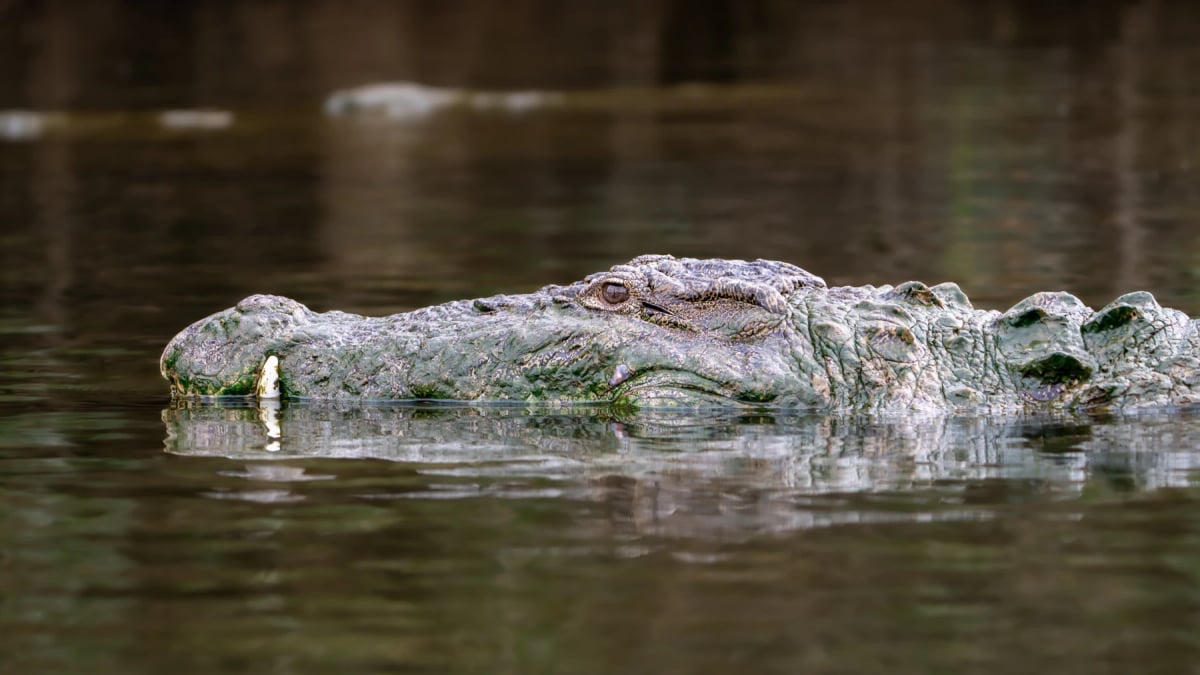
The mugger crocodile is a broad snouted freshwater species found across rivers, lakes and reservoirs of the Indian subcontinent. Adults can reach 5 meters and ambush fish, birds and mammals such as goats or dogs that approach the water’s edge. Opportunistic and highly adaptable, it also uses man made ponds and irrigation canals. Populations have grown in some reserves due to protection, but habitat loss, human conflict and entanglement in fishing gear continue to threaten the species. It is currently listed as Vulnerable by the IUCN.
Habitat and distribution
The mugger crocodile is native to the Indian subcontinent and parts of the Middle East. Its range includes India, Nepal, Sri Lanka, Pakistan, and a small population in the Sarbaz River basin of southeastern Iran, the westernmost point of its distribution. It occupies a wide variety of freshwater environments: rivers, lakes, seasonal marshes, reservoirs, and irrigation canals. Unlike most crocodilians, it tolerates significant habitat modification and can establish itself in artificial water bodies far from natural rivers. It prefers shallow water with sandy banks suitable for basking and nesting.
Diet
The mugger crocodile is an opportunistic predator whose diet shifts as the animal grows. Juveniles feed mainly on insects, frogs, and small fish. Adults take fish, water birds, turtles, snakes, and mammals that approach the water to drink, including deer, goats, and domestic livestock. Like all crocodilians, it uses an ambush strategy, remaining motionless near the surface or on a bank before lunging at prey with a rapid strike. It can go weeks between large meals. Carrion is also consumed when available, and individuals sometimes gather at sites where food is concentrated.
Behavior
The mugger crocodile is cathemeral and can be active at any hour depending on temperature and season. It spends long periods basking on sandbanks to regulate body temperature. During the dry season, individuals may travel overland for considerable distances in search of water, a behavior unusual among crocodilians that brings them into contact with people and livestock. Muggers are more tolerant of others of their kind than most large crocodilians and can be found basking in groups at productive sites. Males become territorial during breeding season and will defend preferred stretches of riverbank.
Reproduction
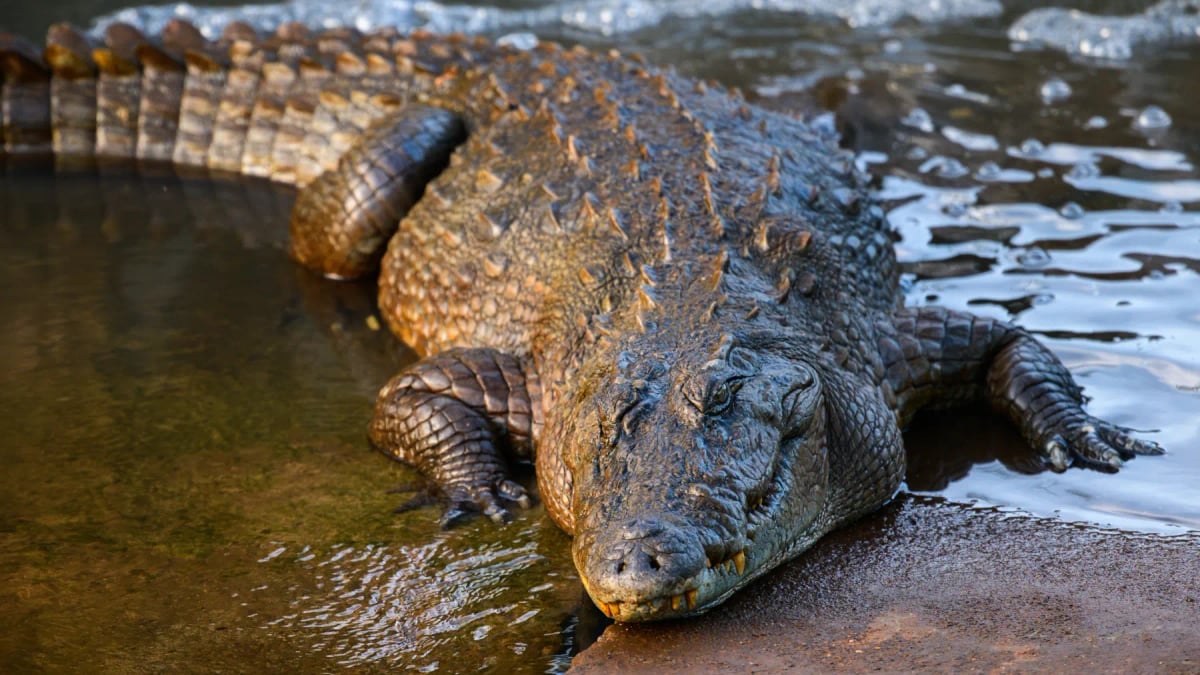
Mugger crocodiles nest during the dry season, typically between February and April. Females dig hole nests in sandy riverbanks or earthen mounds and lay clutches of 25 to 30 eggs. Incubation lasts around 60 to 75 days, with temperature determining the sex of the hatchlings. Females guard the nest throughout incubation and respond to the calls of hatching young by opening the nest and sometimes carrying hatchlings to the water in their mouths. Maternal care continues for several weeks after hatching, with juveniles remaining near the female before dispersing.
Conservation
The mugger crocodile is listed as Vulnerable by the IUCN. In India its numbers have recovered in several protected areas thanks to conservation programs active since the 1970s, but it remains under pressure across much of its range. The main threats are wetland drainage and conversion, accidental entanglement in fishing nets, killing by people who fear it or whose livestock it has taken, and collection for skin and traditional uses. In Iran and Pakistan populations are small and fragmented. Legal protection exists in most range countries, though enforcement is uneven and habitat loss continues.
Where it is found
The Mugger Crocodile can be found in places such as:
Researched and written by Juan Pablo. Sources: IUCN Red List, scientific literature and regional field guides. Last updated: .
Technical factsheet
Frequently Asked Questions
Is the mugger crocodile dangerous to humans?
The mugger crocodile can be dangerous and has been involved in attacks on people, particularly in areas where it lives close to villages and shares water sources with humans. Most incidents happen when people wash, fish or collect water near riverbanks where the crocodile hunts. It is generally less aggressive than some other large crocodile species, but its size and ambush strategy still make it a genuine risk in certain regions.
How big does a mugger crocodile get?
Adult mugger crocodiles typically grow between three and five meters in length and can weigh between two hundred and four hundred fifty kilograms. They are smaller than species like the saltwater crocodile but still rank among the larger freshwater predators of Asia. Males tend to grow larger than females, and the biggest individuals are usually found in well protected reserves with abundant food and little disturbance.
What is the difference between a mugger crocodile and a gharial?
The mugger crocodile has a broad, rounded snout suited to a varied diet that includes fish, birds and mammals, while the gharial has a long, narrow snout adapted almost exclusively for catching fish. Muggers also tolerate a wider range of habitats, including ponds and irrigation canals, whereas gharials depend on fast flowing rivers. In Nepal and India the two species sometimes share the same river systems despite these differences in shape and behavior.
Why is the mugger crocodile considered vulnerable?
The mugger crocodile is classified as Vulnerable mainly due to ongoing habitat loss from wetland drainage and conversion of rivers and lakes for agriculture and development. Accidental entanglement in fishing nets and retaliatory killing by people who fear the species or have lost livestock to it add further pressure. Although some protected populations in India have recovered through decades of conservation work, many populations across its range remain small and fragmented.
Where does the mugger crocodile live?
The mugger crocodile is native to the Indian subcontinent and a small part of the Middle East, with populations in India, Nepal, Sri Lanka, Pakistan and the Sarbaz River basin of southeastern Iran. It inhabits rivers, lakes, seasonal marshes, reservoirs and even irrigation canals, showing a tolerance for modified water bodies that few crocodile species share. Shallow water with sandy banks for basking and nesting is its preferred setting.
Do mugger crocodiles travel on land?
Yes, mugger crocodiles can travel considerable distances overland during the dry season in search of water, a behavior that is unusual among large crocodilians. This overland movement sometimes brings them into populated areas, ponds and farmland far from their original water source. It is one of the reasons human encounters with this species occur even outside major rivers and lakes.
How long do mugger crocodiles live?
Mugger crocodiles can live between forty and sixty years in the wild, making them one of the longer lived reptiles in their range. Survival to old age depends heavily on avoiding conflict with humans and having access to stable habitat, since wetland drainage and fishing net entanglement cut many lives short before reaching this potential lifespan. Individuals in well protected reserves tend to live closer to the upper end of this range.