Dama Gazelle
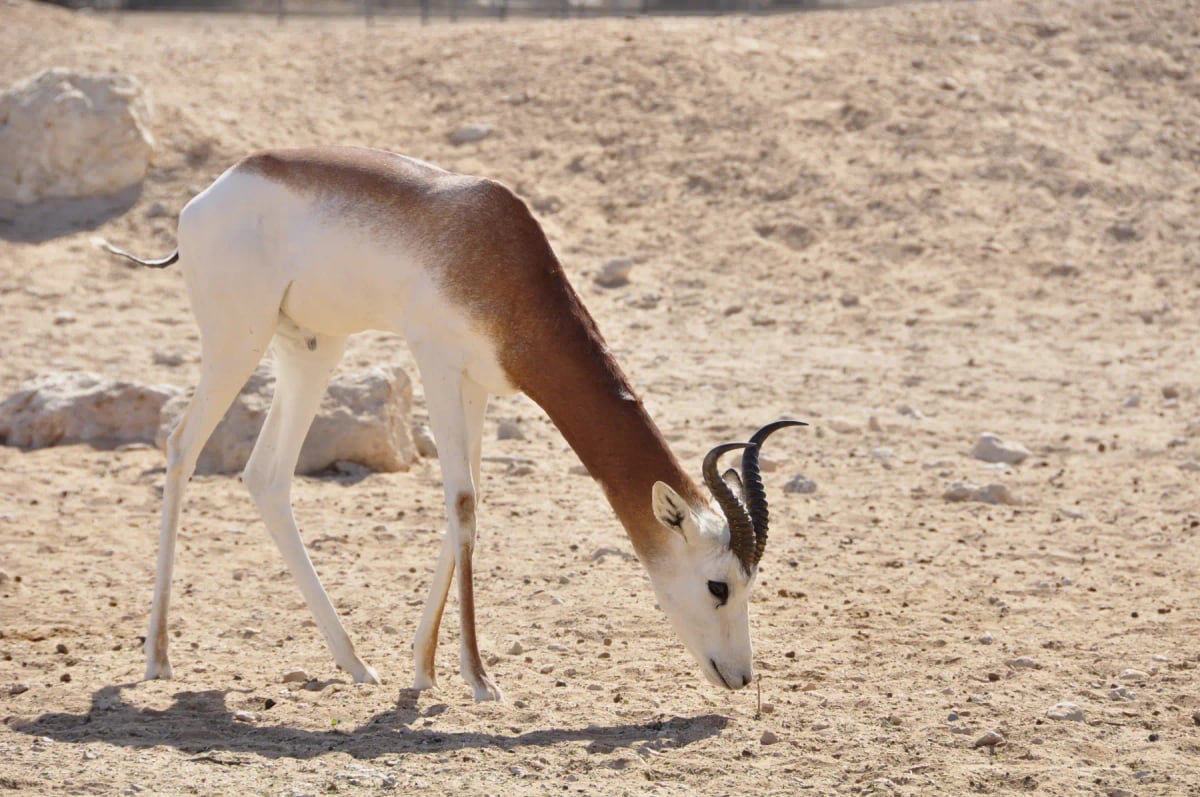
The dama gazelle is the largest of all gazelle species, standing out for its long neck washed in reddish brown and its strikingly white body. Adult males carry a pair of curved, ringed horns that arch backward and then tip forward. This gazelle once roamed freely across a broad belt stretching from Senegal to Sudan, but relentless hunting and the loss of grazing land have reduced it to a handful of fragmented populations in Chad and Niger. It browses on acacia leaves, grasses, and desert shrubs, drawing most of its moisture directly from vegetation rather than open water sources. Herds are typically small, often made up of fewer than ten animals. With wild numbers estimated at only a few hundred individuals, the dama gazelle ranks among the rarest large mammals on Earth, and coordinated breeding programs are now critical to its survival.
Habitat and distribution
Once spread across the entire Sahel belt from Senegal to Sudan, the dama gazelle now clings to survival in just two countries: Chad and Niger. Its strongholds today are the Termit and Tin Toumma region of Niger and the Ouadi Rimé-Ouadi Achim reserve in Chad. Within these areas it favors open desert plains, sandy valleys, and the transition zones between the Sahara and the Sahel, where sparse grasses and low shrubs still grow. It tends to move with the seasons, shifting toward the Sahara during the wet season when vegetation briefly flushes, then retreating south as conditions dry out again. This seasonal movement can cover vast distances, making the gazelle highly dependent on large, connected landscapes free from fencing and human disruption.
Diet
Food and water are both scarce across the dama gazelle's range, and the species has adapted remarkably well to both challenges. It feeds mainly by browsing the leaves, shoots, and pods of acacia trees, supplementing this with grasses, desert herbs, and the foliage of low shrubs. When standing on its hind legs, it can reach branches well above the height most other gazelles could manage, a useful advantage in areas where ground vegetation is thin. Rather than relying on pools or rivers, it draws the moisture it needs almost entirely from the plants it eats. During the brief rainy season, it takes advantage of fresh green growth to build up body condition before the long dry months ahead.
Behavior
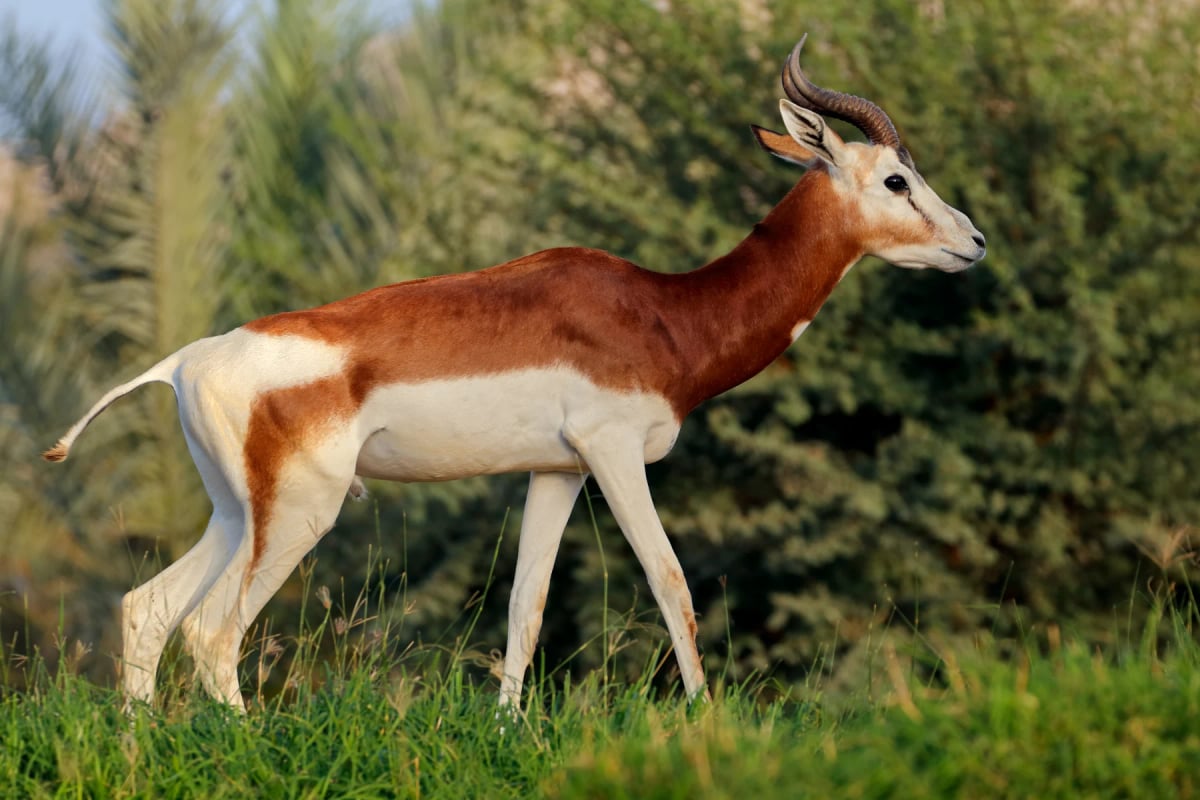
Social groups among dama gazelles tend to be small, usually fewer than ten animals, though loose aggregations of several dozen have been recorded at good grazing sites. Groups typically consist of females and young led by a dominant male. When threatened, they rely on their speed and stamina to outrun predators such as cheetahs and African wild dogs. They are also notably alert, using their elevated stature and keen eyesight to spot danger from a distance. During the breeding season, males become territorial and perform displays to compete for females. Calves are born after a gestation period of around six and a half months and are hidden in vegetation for the first days of life while their mothers graze nearby.
Appearance
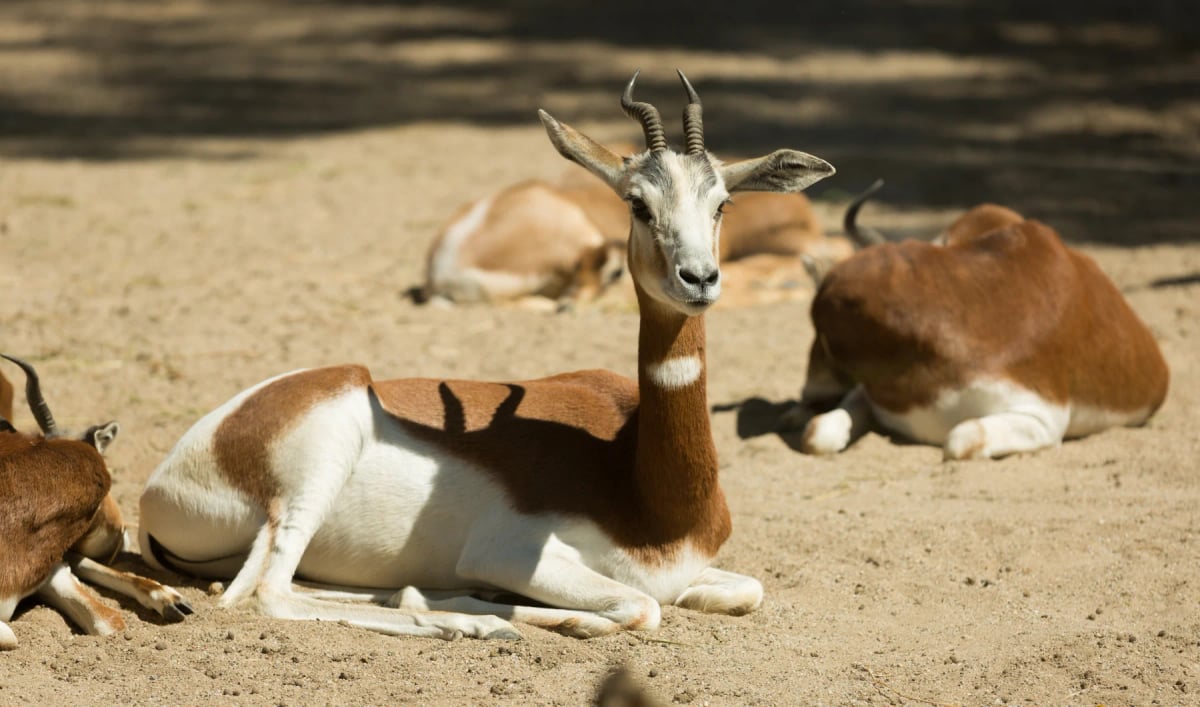
Among all gazelle species, the dama gazelle stands tallest, reaching up to 120 centimeters at the shoulder and weighing as much as 75 kilograms. Its coloring is striking and unlike any other gazelle: the head and neck are a warm reddish brown, while the body, legs, and rump are almost entirely white. This contrast makes it immediately recognizable even at a distance across open desert terrain. Both males and females carry horns, though those of the male are longer, reaching roughly 35 centimeters, with a distinctive S-shaped curve that arcs backward before tipping forward at the ends. The horns are also clearly ringed along most of their length. Its long legs and neck give it an elegant, upright silhouette well suited to life in open landscapes.
Conservation
Classified as En peligro crítico by the IUCN, the dama gazelle is one of the rarest large mammals on the planet, with wild population estimates suggesting only a few hundred individuals remain. Decades of unregulated hunting, combined with the steady loss of grazing land to agriculture and livestock, have driven it to the edge of extinction. Conservation efforts today combine strict protection of key reserves in Chad and Niger with coordinated breeding programs run by zoos across Europe and North America. Reintroduction projects are underway in Morocco and Tunisia, working to establish new populations in areas where the species once lived. International cooperation is essential because no single country or organization can address the scale of the threat alone.
Researched and written by Juan Pablo. Sources: IUCN Red List, scientific literature and regional field guides. Last updated: .
Technical factsheet





Frequently Asked Questions
What does the dama gazelle eat?
The dama gazelle browses mainly on acacia leaves, shoots, and pods, rounding out its diet with grasses, desert herbs, and low shrubs. One remarkable trick it uses is rearing up on its hind legs to reach branches too high for most other gazelles. It gets the water it needs almost entirely from the plants it eats, rarely needing to visit open water sources at all.
How many dama gazelles are left in the wild?
Estimates put the wild population at only a few hundred individuals, making the dama gazelle one of the rarest large mammals on Earth. It now survives in just two countries, Chad and Niger, in small, scattered groups. Decades of hunting and the loss of grazing land have pushed it to the very edge of extinction, and coordinated breeding programs in zoos are now vital to keeping the species alive.
Why is the dama gazelle endangered?
Two main pressures have brought this gazelle close to extinction: unregulated hunting over many decades and the steady loss of grazing land to agriculture and livestock. Its need to travel vast distances with the seasons also makes it very vulnerable to fencing and human settlement that cut off migration routes. With so few animals left and their range so fragmented, even small threats can have a serious impact on the whole population.
Where does the dama gazelle live?
Today the dama gazelle is found only in Chad and Niger, in open desert plains, sandy valleys, and the transition zones between the Sahara and the Sahel. Its main strongholds are the Termit and Tin Toumma region in Niger and the Ouadi Rimé-Ouadi Achim reserve in Chad. It moves with the seasons, heading north when rains bring fresh vegetation and returning south as the landscape dries out again.
How big is the dama gazelle compared to other gazelles?
The dama gazelle is the largest of all gazelle species. It can reach up to 120 centimeters at the shoulder and weigh as much as 75 kilograms, which is considerably bigger than more familiar species like the Thomson's gazelle. Its long legs and neck give it an especially tall, upright build that helps it spot predators across open terrain and reach food sources higher up in trees.
What are the dama gazelle's predators?
Cheetahs and African wild dogs are among the main predators that the dama gazelle faces in the wild. When threatened, it relies on its speed and endurance to escape rather than on camouflage or hiding. Its tall stature and sharp eyesight also help it detect danger early, giving it a head start. Newborn calves are at greatest risk and spend their first days hidden in vegetation while their mothers stay close by.
Is the dama gazelle being reintroduced anywhere?
Yes. Reintroduction projects are currently underway in Morocco and Tunisia, aiming to establish new wild populations in parts of North Africa where the species once lived. These efforts are supported by breeding programs run by zoos across Europe and North America, which maintain a reserve population to supply animals for release. International cooperation between governments, conservation organizations, and zoos is essential for these projects to succeed over the long term.