Blue Crane
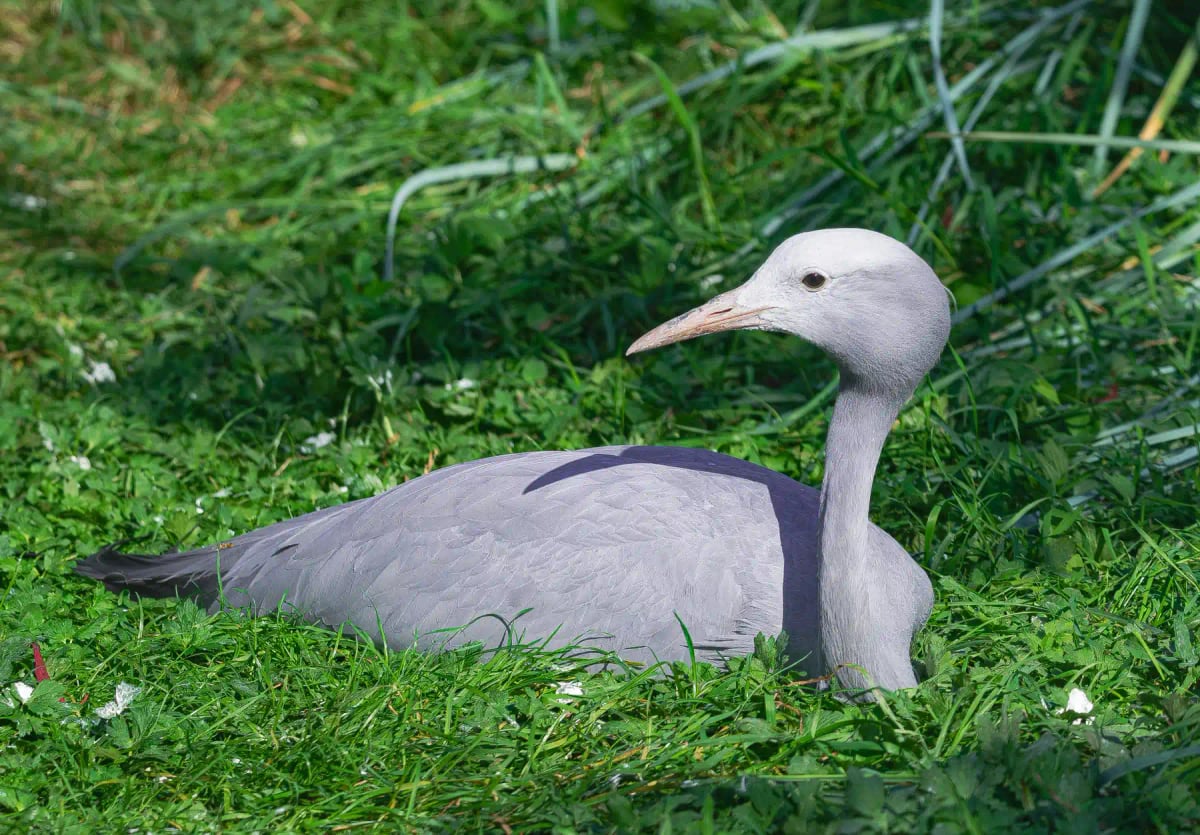
The Blue Crane is South Africa's national bird and one of the most recognizable birds on the continent. It stands roughly one meter tall, with pale blue grey plumage, a small head, a long neck and elongated inner wing feathers that drape nearly to the ground and are often mistaken for a tail. Found mainly in open grasslands, Karoo shrublands and cultivated farmland, it feeds on grass seeds, grains, insects, frogs and the occasional small vertebrate. Pairs form lasting bonds and perform elaborate courtship dances involving leaping, wing spreading and object tossing. Outside the breeding season, the species gathers in flocks that can number in the hundreds. The global population is estimated between 25,000 and 30,000 individuals, almost entirely concentrated in South Africa. The IUCN lists the species as Vulnerable, with habitat loss, agricultural intensification and power line collisions among the leading threats.
Habitat and distribution
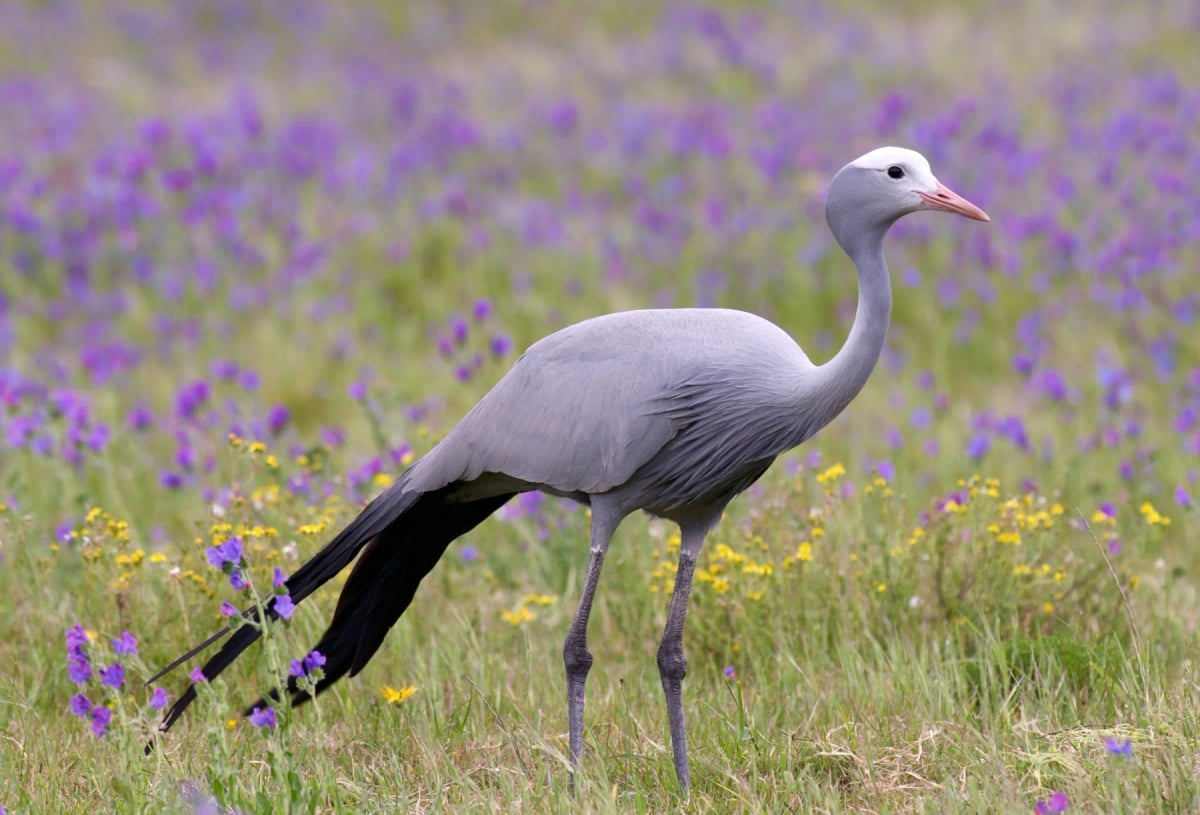
The Blue Crane is almost entirely restricted to South Africa, where it occupies the open grasslands of the Eastern Cape, KwaZulu-Natal and the Western Cape, as well as the semi-arid shrublands of the Karoo and the wheat and canola fields of the Overberg region. A smaller, isolated population persists in the highlands of Namibia. Unlike many crane species, the Blue Crane shows a strong preference for dry, open terrain rather than wetlands, nesting directly on the ground in areas with sparse vegetation. Seasonal movements bring large flocks together on agricultural land outside the breeding season, particularly in the Western Cape. The species rarely strays beyond South African borders, making its global range one of the most restricted of any crane in the world.
Built for open landscapes
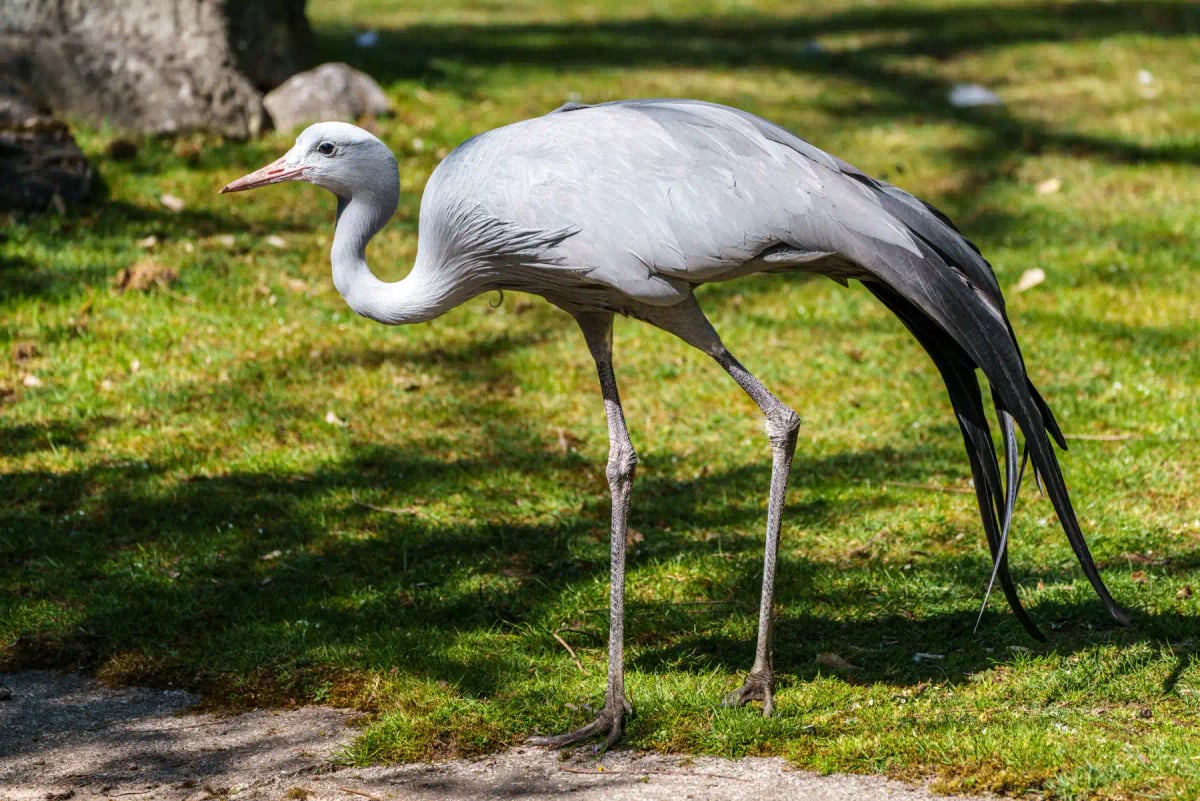
The Blue Crane's pale blue grey coloring blends well with the dry grasslands and Karoo shrublands it calls home, offering a degree of camouflage against terrestrial predators. Its elongated inner wing feathers, which can trail almost to the ground, play a key role in courtship display rather than flight, signaling fitness to potential mates. The species has relatively long legs suited to walking and foraging across open ground, and a sturdy bill capable of cracking hard seeds and capturing small prey. Its compact, rounded head is notably small for a crane of its size, a feature that gives it a distinctive silhouette. Like other cranes, it produces loud, resonant calls that carry across wide open spaces, helping pairs and flocks maintain contact across the landscape.
Behavior and social life
Blue Cranes form monogamous pairs that tend to remain together over many years. Courtship involves energetic displays in which both birds leap, spread their wings and toss grass or small objects into the air, often calling loudly throughout. Breeding pairs are territorial and nest on bare ground or among low vegetation, typically laying one or two eggs per season. Outside the breeding period, the species becomes markedly more social. Flocks of several hundred birds gather on farmland to feed, particularly on waste grain after harvests. Chicks are precocial and follow their parents within hours of hatching, though they remain dependent on adults for several months. The species is diurnal and spends much of the day foraging on foot, walking steadily across grassland and agricultural fields in search of seeds, insects and small animals.
Conservation
The IUCN lists the Blue Crane as Vulnerable, with a global population estimated at between 25,000 and 30,000 individuals. South Africa holds the vast majority of these birds, making the health of that population critical to the survival of the entire species. Habitat loss driven by agricultural expansion, the conversion of natural grasslands and the intensification of farming practices have reduced available nesting and foraging areas. Collisions with power lines are a significant and well-documented source of mortality. Poisoning, both accidental through pesticide use and deliberate, also poses a serious threat. Conservation efforts in South Africa include power line marking programs, farmer education initiatives and legal protection under national wildlife legislation. The Blue Crane's status as the national bird of South Africa has raised public awareness, though ongoing monitoring and habitat management remain essential.
Researched and written by Juan Pablo. Sources: IUCN Red List, scientific literature and regional field guides. Last updated: .
Technical factsheet

Frequently Asked Questions
What does the Blue Crane eat?
The Blue Crane is an opportunistic feeder that eats grass seeds, grains, insects, frogs and small vertebrates such as lizards. It forages almost entirely on foot, walking slowly across open ground to pick up food. On farmland, it takes advantage of crops like wheat and canola. Its sturdy bill handles both hard seeds and live prey with equal ease, making it well suited to the varied landscapes it inhabits.
How tall is the Blue Crane and what does it look like?
The Blue Crane stands around one meter tall, making it a relatively large bird. Its plumage is a soft, pale blue-grey across most of the body, with a white forehead and a contrasting dark head. One of its most striking features is its elongated inner wing feathers, which drape nearly to the ground and are frequently mistaken for tail feathers. Its head is notably small and rounded compared to other cranes of similar size.
Is the Blue Crane endangered?
The Blue Crane is currently listed as Vulnerable on the IUCN Red List. Its global population sits between 25,000 and 30,000 individuals, nearly all of them in South Africa. While it is not on the brink of extinction, population pressures remain serious. The species benefits from legal protection in South Africa and active conservation programs, but its restricted range means any significant decline could quickly push it toward a more critical status.
Why is the Blue Crane South Africa's national bird?
The Blue Crane was designated South Africa's national bird in 1968, chosen largely for its strong cultural ties to the Zulu and Xhosa peoples, among whom it has long been a symbol of nobility and status. Zulu chiefs traditionally wore its feathers as a mark of honor. Its striking appearance and near-exclusive presence within South African borders made it a natural choice to represent the country on a national level.
How long do Blue Cranes live?
Blue Cranes are long-lived birds. In the wild, individuals can reach 20 to 30 years of age, though survival depends heavily on avoiding the main threats they face. In captivity, some birds have lived beyond 30 years under ideal conditions. Their tendency to form lasting pair bonds and invest heavily in raising a small number of chicks each season reflects a reproductive strategy built around extended lifespans rather than high breeding output.
Can Blue Cranes fly?
Yes, Blue Cranes are fully capable of flight and use it regularly, particularly when traveling between feeding and roosting sites or during seasonal movements to agricultural areas. Their elongated inner wing feathers, sometimes mistaken for a tail, do not interfere with flight. When airborne, they extend their necks forward and trail their legs behind, much like other cranes. Flocks sometimes cover considerable distances as they shift between grassland and farmland areas.
What are the main threats to the Blue Crane?
Collisions with power lines rank among the most well-documented causes of death for the Blue Crane. Poisoning is another major concern, whether from pesticides applied to crops or from deliberate poisoning by people who see the birds as agricultural pests. Egg collection and disturbance at nest sites add further pressure. These threats combine with the species' already narrow global range to make ongoing monitoring a priority for conservationists working in South Africa.