Cottonmouth Snake
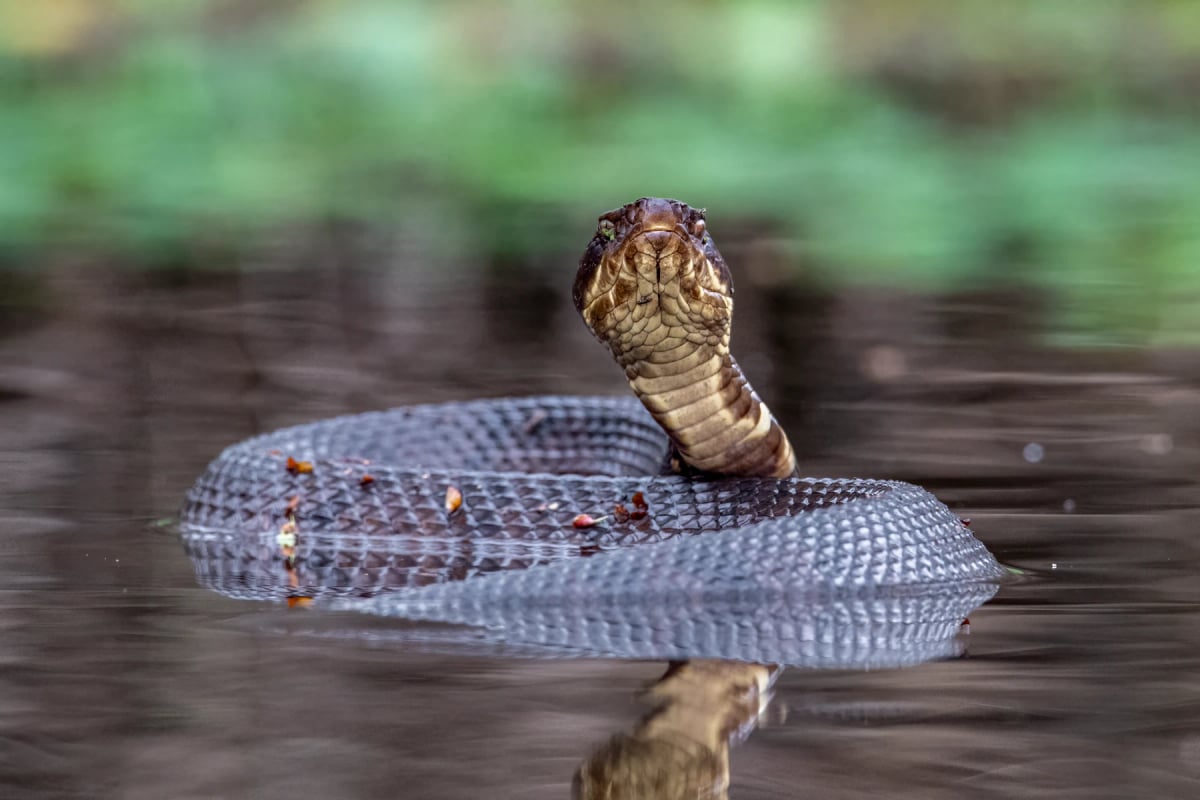
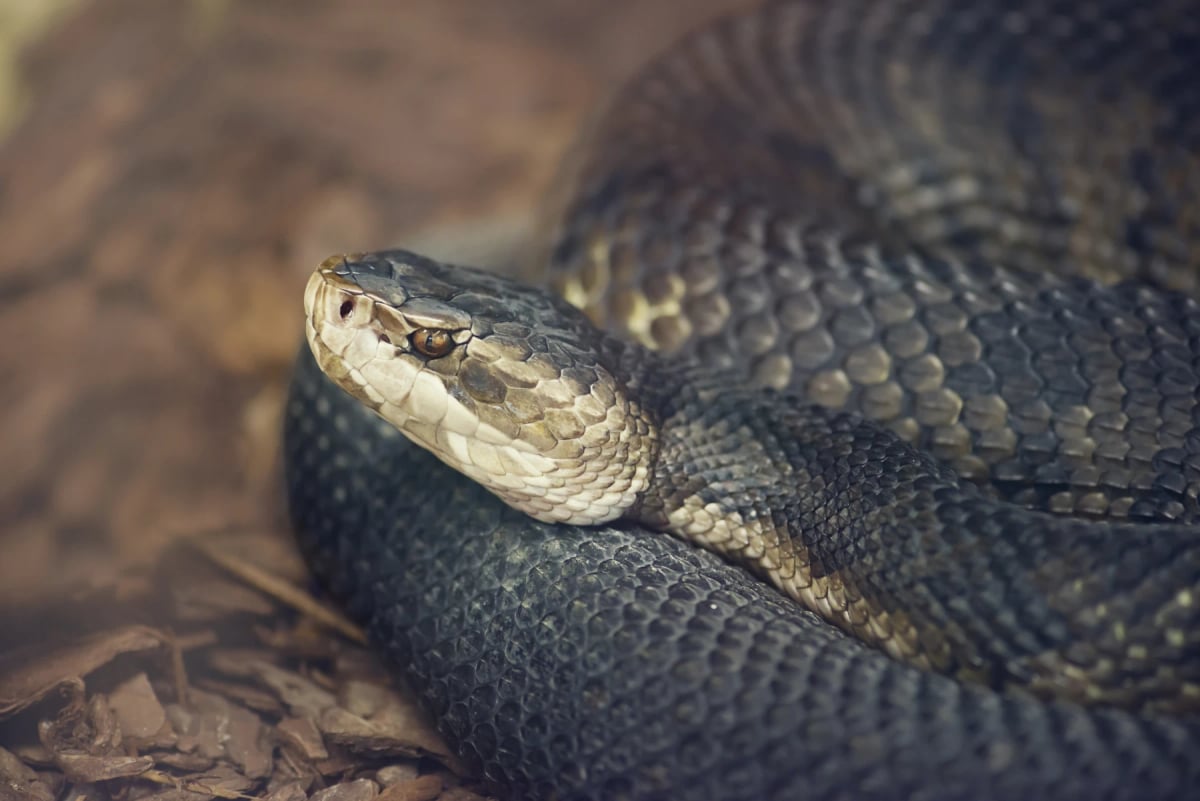
The cottonmouth (Agkistrodon piscivorus), also known as the water moccasin, is the only venomous semiaquatic snake in North America. It belongs to the pit viper family and lives across the southeastern United States, from Virginia and Florida to eastern Texas. Adults are heavy bodied with a broad, triangular head and keeled scales that range from dark brown to nearly black. The inside of the mouth is bright white, and the snake gapes it wide as a warning when it feels threatened. Its venom is hemotoxic, breaking down tissue and blood cells, and a bite demands prompt medical attention. The cottonmouth is an opportunistic hunter that feeds on fish, frogs, salamanders, small birds, and mammals. It spends much of its time in or near slow moving water, including swamps, river floodplains, and drainage ditches, and is active mainly at night and around dusk.
Habitat and distribution
Cottonmouths range across the southeastern United States, from the coastal plains of Virginia and the Florida peninsula west through Louisiana and into eastern Texas. They are strongly tied to water and show up in swamps, river floodplains, marshes, ponds, and drainage ditches. They prefer slow or still water over fast currents, and cypress swamps in the Deep South are among their most characteristic haunts. In Florida, populations also inhabit brackish coastal areas. While adults tend to stay close to water, younger snakes sometimes wander further into surrounding woodland, especially during warm nights. Elevation plays a role in their distribution too, as they are far more common at lower elevations where wetland habitat is plentiful. Their range overlaps with several nonvenomous water snakes, leading to frequent misidentification.
Diet
Few snakes in North America eat as wide a variety of prey as the cottonmouth. Fish make up a large portion of its diet, and it often hunts at the water's edge or waits motionless in shallows for a fish to come within striking range. Frogs, salamanders, and other amphibians are also taken regularly. On land, the cottonmouth will catch small mammals, lizards, and even other snakes, including smaller members of its own species. It is one of the few North American snakes known to eat carrion with some regularity. Young cottonmouths use their yellowish tail tips to lure small frogs and lizards closer, a behavior called caudal luring. Adults tend to rely more on ambush than active pursuit, sitting still and waiting for prey to approach.
Behavior
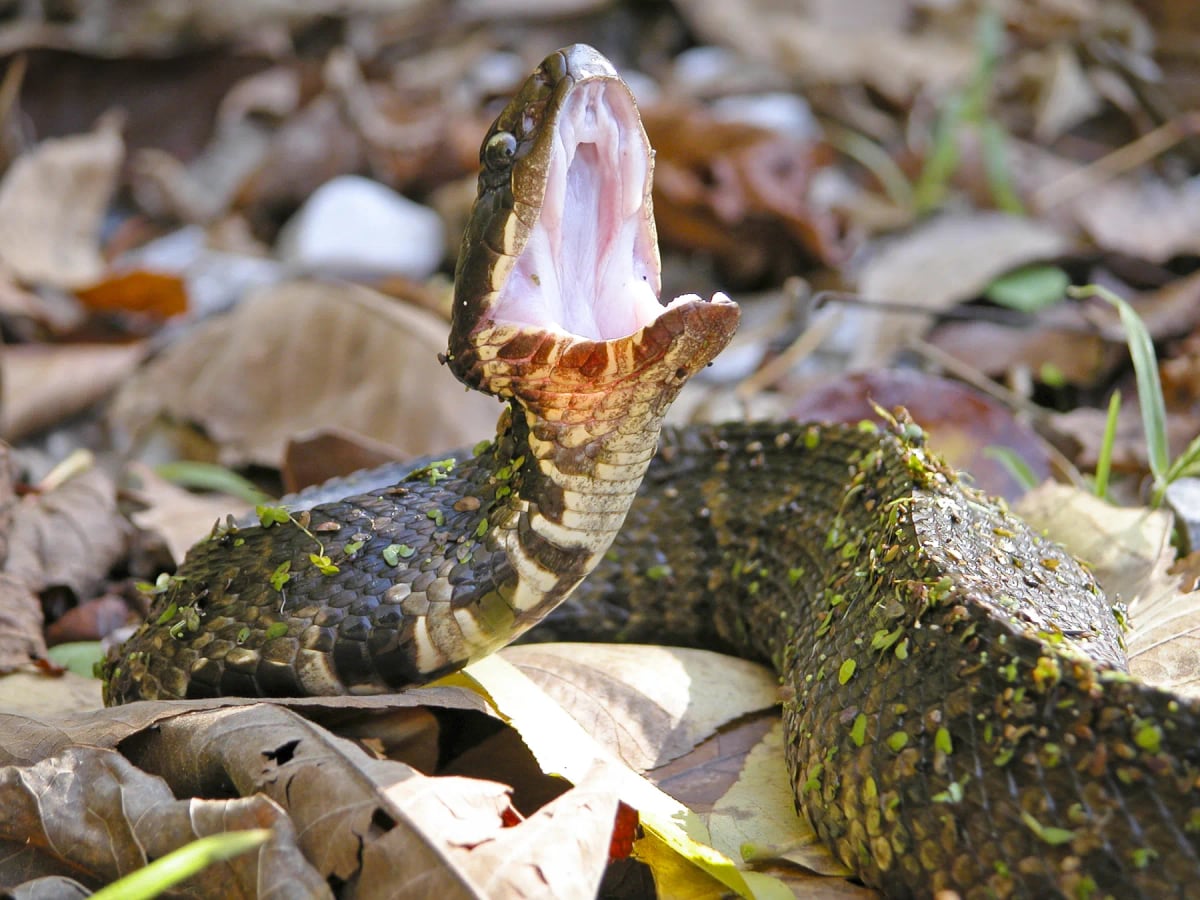
Cottonmouths are active mainly at night and during the hours around dusk, though they will bask in the sun during the day, often coiled on logs or branches that hang over the water. When a person or large animal approaches too closely, the snake holds its ground and gapes its mouth wide open, revealing the bright white lining that gives the species its common name. This display is a warning, not an attack. If the threat continues, the snake may vibrate its tail and release a pungent musk from glands near the base of the tail. Unlike many other snakes, cottonmouths rarely flee immediately and tend to stand their ground. During winter in the northern parts of their range, they retreat into burrows, rock crevices, or rotting logs and enter a period of reduced activity.
Venom and danger
As the only venomous semiaquatic snake in North America, the cottonmouth deserves respect, though it is not the unprovoked aggressor it is often made out to be. Its venom is hemotoxic, meaning it breaks down red blood cells and causes damage to surrounding tissue. A bite produces immediate and intense pain, significant swelling, and can lead to tissue death if not treated promptly. Antivenom is available and effective when administered in time, so any bite should be treated as a medical emergency. The risk of being bitten rises sharply when people try to handle or kill the snake. Most bites happen in or near water, often when someone accidentally steps on a snake that is resting in shallow water or among vegetation at the bank.
Conservation
The IUCN lists the cottonmouth as Least Concern, reflecting populations that remain broadly stable across most of the southeastern United States. That said, the species does face localized pressures in certain parts of its range. Wetland drainage and the conversion of floodplain forests to farmland reduce the availability of suitable habitat. Many cottonmouths are also killed deliberately by people who fear them, a problem made worse by the fact that harmless water snakes are frequently mistaken for cottonmouths and killed as well. Pollution in rivers and wetlands can affect the fish and amphibian populations that cottonmouths rely on for food. Continued protection of wetland ecosystems across the Southeast is the most important factor for the survival of this species over the long term.
Where it is found
The Cottonmouth Snake can be found in places such as:
Researched and written by Juan Pablo. Sources: IUCN Red List, scientific literature and regional field guides. Last updated: .
Technical factsheet
Frequently Asked Questions
Is the cottonmouth snake dangerous to humans?
Yes, the cottonmouth is venomous and a bite is a medical emergency. Its venom breaks down tissue and blood cells, causing intense pain and swelling. That said, it rarely bites without provocation. Most bites happen when people accidentally step on one or try to handle it. Leave it alone and it will almost always do the same. Antivenom exists and works well when given quickly.
What does a cottonmouth snake eat?
Cottonmouths eat a wide variety of prey. Fish are a staple, and they hunt them at the water's edge or in the shallows. They also eat frogs, salamanders, small mammals, lizards, and even other snakes. They are one of the few North American snakes that will eat carrion. Young snakes use their bright tail tips to lure small prey closer, a clever trick called caudal luring.
Where does the cottonmouth snake live?
Cottonmouths live across the southeastern United States, from Virginia and Florida west to eastern Texas. They are almost always found near water, favouring swamps, river floodplains, marshes, and ponds. They do especially well in cypress swamps across the Deep South. In Florida, some populations also live in coastal areas with brackish water. They strongly prefer slow or still water over rivers with fast currents.
Why does the cottonmouth open its mouth wide?
That wide open mouth is a warning display, not an attack. When the snake feels cornered or threatened, it tilts its head back and gapes to show off the bright white lining inside its mouth. This is where its common name comes from. The message is simple: back off. If the threat does not go away, the snake may also vibrate its tail and release a strong musky smell from glands near its tail.
How can you tell a cottonmouth apart from a harmless water snake?
It can be tricky, but there are reliable clues. Cottonmouths have a broad, triangular head, thick bodies, and a facial pit between the eye and nostril. Their eyes have vertical pupils. Harmless water snakes tend to have narrower heads, slimmer bodies, and round pupils. Both species can look dark and similar in low light, which is why so many harmless water snakes are mistakenly killed each year.
Is the cottonmouth an endangered species?
No. The IUCN classifies the cottonmouth as Least Concern, meaning its populations are broadly stable. However, it does face real local pressures. Wetland drainage, the conversion of floodplain forests to farmland, and deliberate killing by people who fear it all take a toll. Water pollution also reduces the fish and amphibian prey it depends on. Protecting wetland ecosystems across the Southeast is essential for keeping populations healthy.
Are cottonmouth snakes good swimmers?
Yes, cottonmouths are excellent swimmers. They move through water with ease and are often spotted crossing ponds, rivers, and flooded areas. When swimming, they tend to hold much of their body at or above the surface, which is another feature that helps tell them apart from most water snakes. They hunt fish directly in the water and are just as comfortable moving through shallow marshes as they are on dry land.