Common Genet
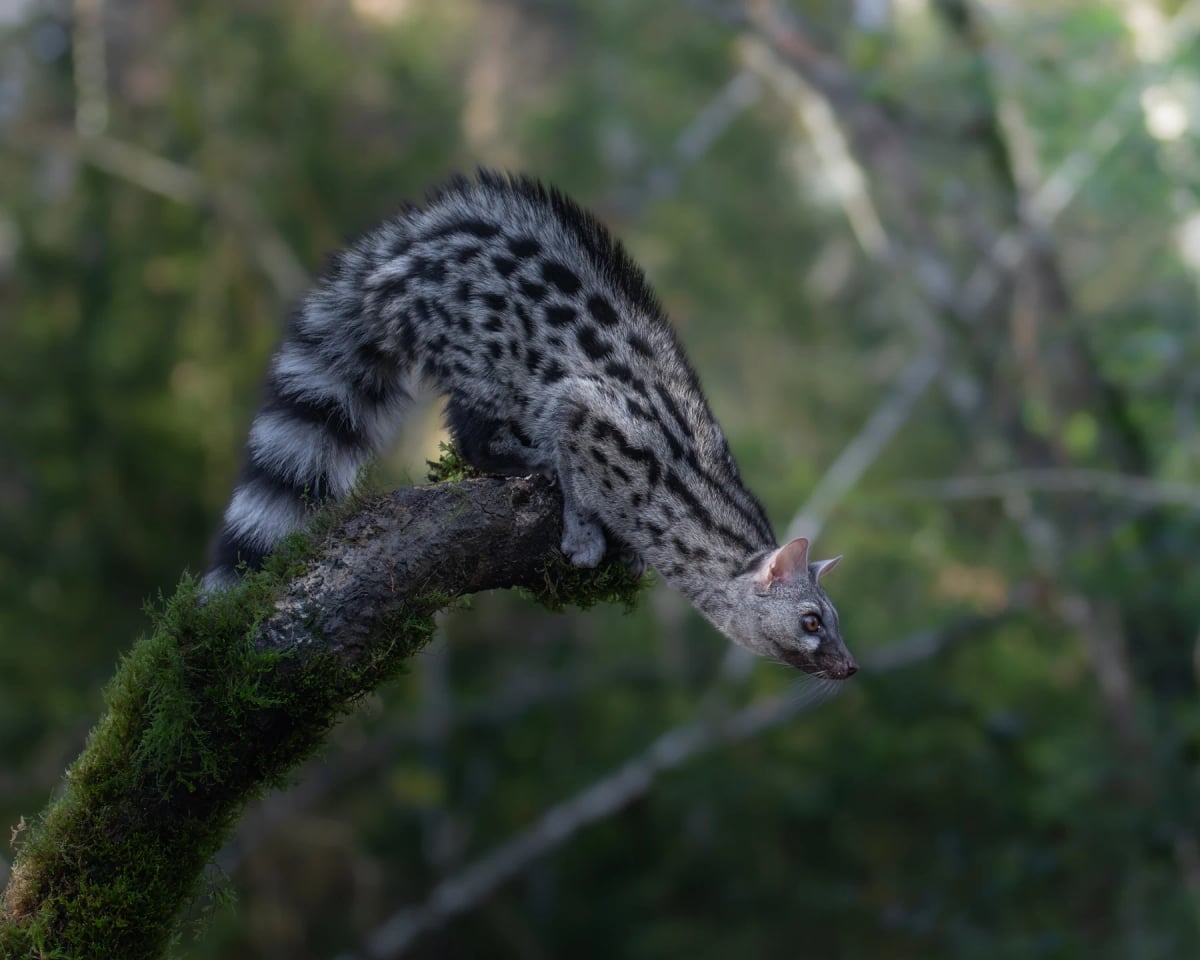
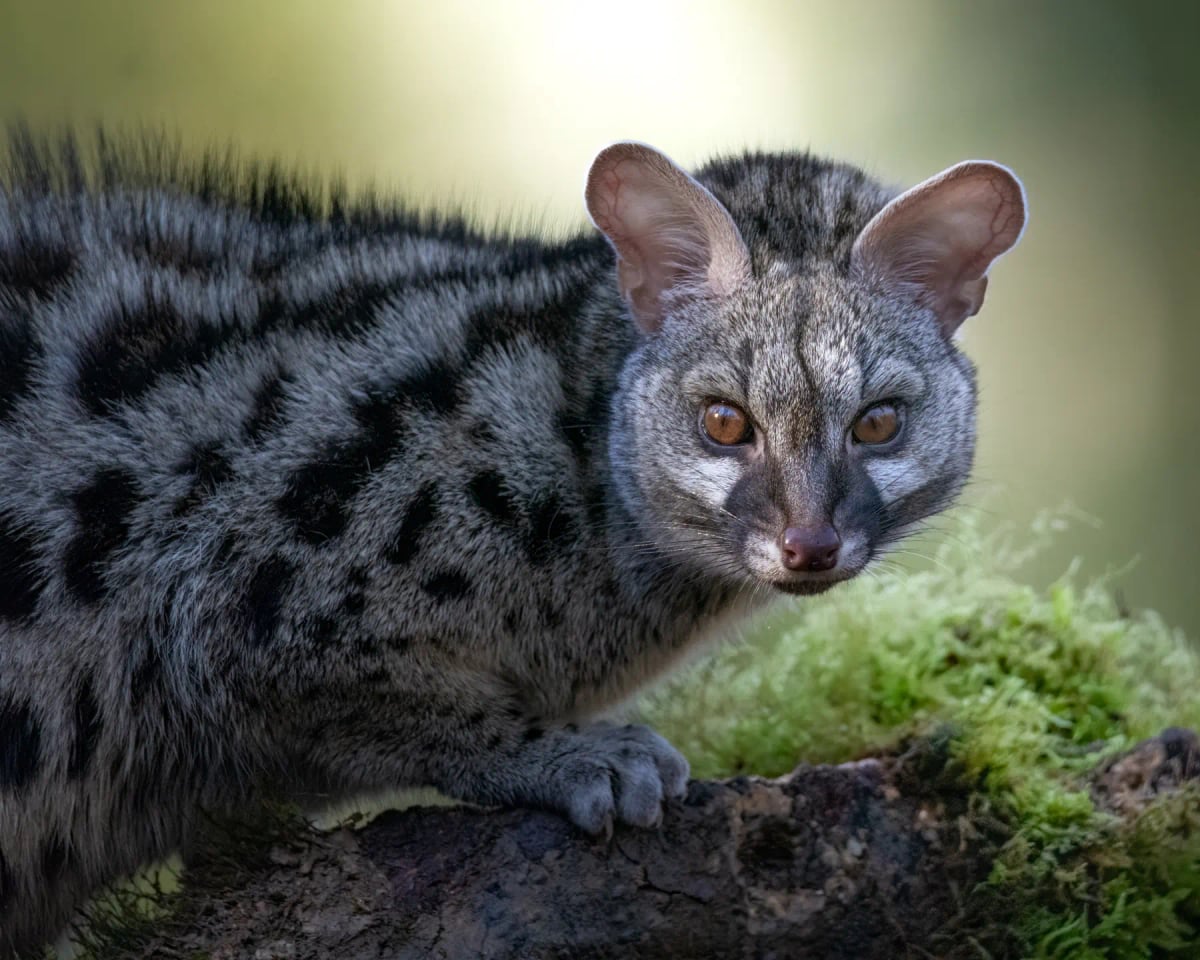
The common genet (Genetta genetta) is a slender carnivore with a pale coat covered in dark spots and a long tail banded in alternating rings. Native to Africa and the Arabian Peninsula, it was brought to the Iberian Peninsula by humans during the medieval period, and it remains the only member of the family Viverridae living wild in Europe today. It is strictly nocturnal and spends daylight hours resting in hollow trees, rock crevices or dense thickets. An excellent climber, it moves through trees with ease and hunts close to the ground as well. Its diet includes small mammals, birds, reptiles, insects and some fruit. It marks territories with scent glands and leaves droppings in prominent spots. Despite its resemblance to a cat, the genet is more closely related to civets and mongooses.
Habitat and distribution
The common genet has one of the broadest ranges of any viverrid, stretching across most of Africa, the Arabian Peninsula, and into southwestern Europe. In Africa it occupies a wide variety of environments, from savanna woodland and dry scrubland to rocky hillsides and riverine forest. It tends to favor areas with good cover, such as dense shrubs or boulder fields, and is often found close to streams and rivers where prey is plentiful. In Europe, established populations live throughout the Iberian Peninsula and extend into southern France. Here it thrives in Mediterranean woodland, cork oak forest, and olive groves. Elevation is no barrier: genets have been recorded at altitudes above 2,000 meters in parts of their range.
Diet
Small mammals make up the largest share of the common genet's diet, with rodents such as mice and voles taken most frequently. Birds, lizards, frogs, and large insects round out the menu, and the genet will also eat fruit and berries when other food is harder to find. Studies of scat content across different regions consistently show that it hunts according to what is locally available, switching prey types with the seasons. It stalks prey in the manner of a cat, creeping low to the ground before making a short, precise lunge. Prey is usually killed with a bite to the back of the skull. Despite being classified as a carnivore, its willingness to include plant matter in its diet makes it one of the more flexible hunters in its family.
Behavior
Strictly nocturnal, the common genet rests through the day in hollow trees, rock crevices, dense thickets, or even abandoned burrows dug by other animals. Once darkness falls it becomes highly active, covering considerable ground in search of food. It is a solitary animal, and individuals defend territories using scent glands near the base of the tail, as well as by depositing droppings in conspicuous places called latrines. Its long, banded tail is not just striking in appearance. It plays a genuine role in balance, which is essential for an animal that moves through tree branches with such agility. Although it spends much of its hunting time at or near ground level, it retreats into the canopy when threatened, moving through branches with remarkable speed and precision.
Conservation
The IUCN classifies the common genet as Least Concern, reflecting its wide range and generally stable numbers across most of its territory. Its ability to adapt to disturbed habitats, including farmland and the edges of villages, has helped it cope with the steady loss of natural land. That said, it does face real pressures. Road collisions are a significant source of mortality in Europe, particularly in Spain and Portugal, where road networks cut through genet habitat. Persecution by farmers who see it as a threat to poultry also contributes to local population losses. In some parts of Africa it is trapped for its fur or caught as bushmeat. None of these threats currently push the species toward a more serious conservation category, but monitoring of European populations in particular continues.
Introduction to Europe
Among all the members of the family Viverridae, the common genet stands alone as the only one to have established a wild population in Europe. The prevailing scientific view is that it was brought to the Iberian Peninsula by people during the early medieval period, most likely by Moorish settlers who kept genets as domestic mousers in much the same way that cats were used elsewhere. Over centuries, escaped or released individuals spread across the peninsula and eventually into southern France. Genetic studies suggest the European population descends from animals originating in northwestern Africa. Today, with a presence in Spain, Portugal, and France spanning well over a thousand years, the genet is considered naturalized rather than invasive, and it occupies a recognized place in the native ecosystems of southwestern Europe.
Where it is found
The Common Genet can be found in places such as:
Researched and written by Juan Pablo. Sources: IUCN Red List, scientific literature and regional field guides. Last updated: .
Technical factsheet


















Frequently Asked Questions
What does the common genet eat?
The common genet feeds mainly on small rodents like mice and voles, but it also catches birds, lizards, frogs, and large insects. When prey is scarce, it will eat fruit and berries too. It hunts like a cat, creeping low before striking with a quick, precise bite to the back of the skull. This flexibility in diet helps it survive across a wide range of habitats.
Where does the common genet live?
The common genet is found across most of Africa, parts of the Arabian Peninsula, and in southwestern Europe. In Europe it lives throughout Spain and Portugal and into southern France, where it was introduced by humans during the medieval period. It favors areas with plenty of cover, such as dense shrubs, rocky hillsides, and woodland near streams. It has even been recorded at elevations above 2,000 meters.
Is the common genet dangerous to humans?
The common genet poses no real danger to people. It is a shy, solitary animal that avoids contact with humans and is almost never seen during the day. In rural areas it occasionally targets poultry, which brings it into conflict with farmers, but it shows no aggression toward people. Like any wild animal it can bite if cornered or handled, so it is always best to observe it from a distance.
How did the common genet end up in Europe?
The common genet is not native to Europe. The most widely accepted explanation is that Moorish settlers brought it to the Iberian Peninsula during the early medieval period, keeping it as a mouser in homes and storerooms. Over time, animals that escaped or were released spread across Spain and Portugal, and eventually into southern France. Genetic research points to northwestern Africa as the origin of the European population.
Is the common genet a cat?
No, despite looking a lot like one. The common genet is a viverrid, which means it is more closely related to civets and mongooses than to any cat. Its spotted coat and slender build can make it look like a small, exotic cat at first glance, but the two groups are quite different. The genet is actually the only member of the family Viverridae living wild in Europe today.
What are the main threats to the common genet?
The common genet is currently listed as Least Concern by the IUCN, but it does face genuine pressures. In Europe, collisions with vehicles are one of the leading causes of death, especially in Spain and Portugal. Farmers who keep poultry sometimes kill genets to protect their animals. In parts of Africa it is hunted for its fur or for bushmeat. Habitat loss also affects local populations in some areas.
Is the common genet nocturnal?
Yes, the common genet is strictly nocturnal. It spends daylight hours resting out of sight in hollow trees, rock crevices, or dense thickets, and only becomes active after dark. Once night falls, it can cover a lot of ground while searching for food. This nocturnal lifestyle is one reason it is rarely spotted by people, even in areas where it is relatively common.