Bellbird
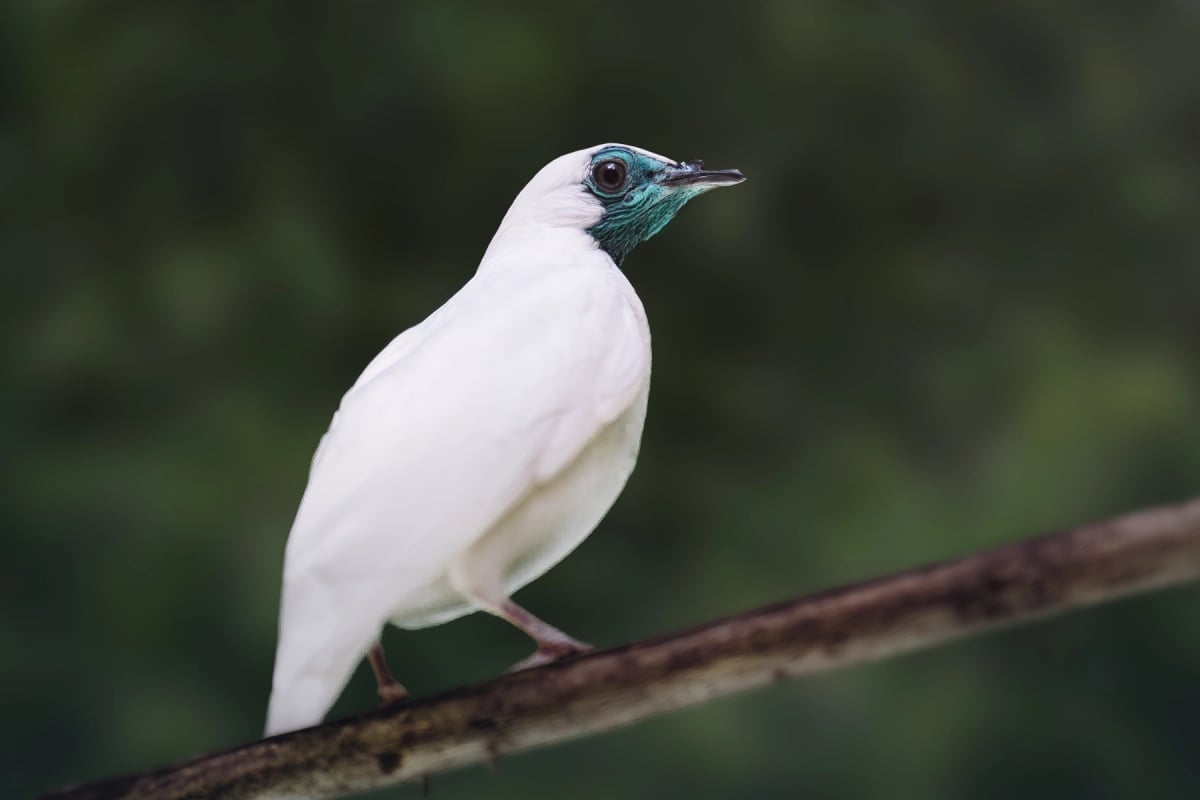
The bare-throated bellbird is one of the most remarkable birds of the Atlantic Forest. Males are unmistakable: pure white plumage, bare blackish skin around the throat, and a metallic call that ranks among the loudest produced by any bird on Earth, carrying well over a kilometer through dense canopy. Females look entirely different, dressed in olive green with streaked underparts that blend into the forest foliage. The species lives almost exclusively in the canopy layer, where it feeds on fleshy fruits from trees such as figs and laurels. By swallowing fruits whole and moving through the forest, bellbirds disperse seeds across large distances, making them a key driver of forest regeneration. The bare-throated bellbird is currently listed as Vulnerable by the IUCN, with deforestation and habitat fragmentation in the Atlantic Forest posing the greatest threats to its survival over the long term.
Habitat and distribution
The bare-throated bellbird is native to the Atlantic Forest, one of the most biodiverse and threatened biomes on the planet. Its range spans eastern and southern Brazil, eastern Paraguay, and the province of Misiones in northeastern Argentina. Within this region it favors the interior of tall humid forests, spending most of its life in the upper canopy where fruiting trees are most abundant. The species is not a strict resident in any single area. It performs seasonal altitudinal movements, descending to lower elevations during cooler months in search of fruit. Because it depends on large, continuous forest patches to find enough food and suitable nesting sites, it is particularly vulnerable to the fragmentation that has reduced the Atlantic Forest to less than twelve percent of its original extent.
Voice and physical adaptations
Among the loudest voices in the bird world belongs to the male of this species. Research has measured its call at around 125 decibels at close range, placing it among the loudest avian sounds ever recorded. This extreme volume is made possible by highly developed syringeal muscles and a wide gape that amplifies sound projection. The bare, fleshy skin around the throat, from which the species takes its name, may also play a role in resonance. The stark white plumage of the male likely serves as a visual signal during courtship displays in the bright canopy, while the cryptic olive green of the female provides effective camouflage in the leafy understory where she incubates eggs. This sharp difference in appearance between the sexes is one of the most pronounced examples of sexual dimorphism among cotingas.
Behavior and social life
Outside the breeding season, this cotinga leads a largely solitary life. Males spend much of the year perched high in the canopy, calling persistently from exposed branches to establish their presence and attract females. Unlike many birds that form leks, males of this species tend to display and call from widely spaced, individual perches rather than congregating in groups. Breeding typically occurs in spring and summer in the Southern Hemisphere. The female alone builds the nest, incubates the single egg, and raises the chick, receiving no assistance from the male. Diet consists almost entirely of large, fleshy fruits, which the bird swallows whole. Foraging journeys can cover considerable distances through the canopy, and this wide movement range makes the bellbird an effective disperser of seeds over long distances.
Conservation
Listed as Vulnerable on the IUCN Red List, this species has declined significantly due to the ongoing destruction of the Atlantic Forest. Today this biome covers less than twelve percent of its historical area, with most remaining fragments too small and isolated to support viable populations of species that depend on the canopy. Deforestation for agriculture, cattle ranching, and urban expansion continues to reduce and degrade suitable habitat. Illegal trapping for the cage bird trade has also been recorded as a local pressure. Conservation efforts focus on protecting and connecting forest remnants through biological corridors, restoring degraded land, and enforcing existing environmental legislation in Brazil, Paraguay, and Argentina. Because the bellbird plays a key role in dispersing the seeds of canopy trees with large fruits, protecting this species also benefits the regeneration of the broader forest ecosystem.
Researched and written by Juan Pablo. Sources: IUCN Red List, scientific literature and regional field guides. Last updated: .
Technical factsheet











Frequently Asked Questions
What does the bare-throated bellbird eat?
The bare-throated bellbird feeds almost entirely on large, fleshy fruits, which it swallows whole. Figs and laurels are among its preferred food sources. Because it moves widely through the canopy and passes seeds intact, it plays a vital role in forest regeneration. It is considered one of the most important seed dispersers in the Atlantic Forest ecosystem.
Why is the bellbird's call so loud?
The male bare-throated bellbird produces one of the loudest calls of any bird on Earth, measured at around 125 decibels at close range. This remarkable volume comes from exceptionally powerful syringeal muscles and a wide gape that maximizes sound projection. The call serves to establish territory and attract females across large stretches of dense forest canopy where visual contact is limited.
Why do male and female bellbirds look so different?
Males are entirely white with bare, dark skin around the throat, while females are olive green with streaked underparts. This sharp contrast is one of the most striking cases of sexual dimorphism among cotingas. The male's white plumage helps him stand out during courtship displays in the bright canopy. The female's cryptic coloring provides camouflage while she incubates eggs and raises her chick alone.
In which countries can the bare-throated bellbird be found?
The bare-throated bellbird is native to three countries in South America: Brazil, Paraguay, and Argentina. In Brazil it occupies the Atlantic Forest along the eastern and southern portions of the country. In Argentina it is restricted to the province of Misiones in the northeast. Paraguay holds populations in its eastern forested regions. All three countries share the responsibility of protecting the habitat this species depends on.
Does the bellbird migrate?
The bare-throated bellbird does not migrate in the traditional sense, but it does move seasonally within its range. It performs altitudinal movements, shifting to lower elevations during cooler months when fruit availability at higher altitudes decreases. These movements can take individuals across significant distances within the Atlantic Forest. It does not migrate over long distances and remains within the same general biome throughout the year.
Is the bare-throated bellbird endangered?
The bare-throated bellbird is currently listed as Vulnerable on the IUCN Red List. Its population has declined steadily as deforestation and habitat fragmentation continue to shrink the Atlantic Forest. Illegal trapping for the cage bird trade adds further pressure in some areas. While not yet critically endangered, the species faces serious risks if forest loss continues at its current pace across Brazil, Paraguay, and Argentina.
How long does a bare-throated bellbird live?
In the wild, the bare-throated bellbird can live up to around ten years, though precise data on lifespan in natural conditions is limited. Like many frugivores that dwell in the canopy, its survival depends heavily on the availability of large forest patches with enough fruiting trees to sustain it year-round. Habitat loss and fragmentation are likely the greatest factors reducing the life expectancy of wild individuals today.