Blackbuck
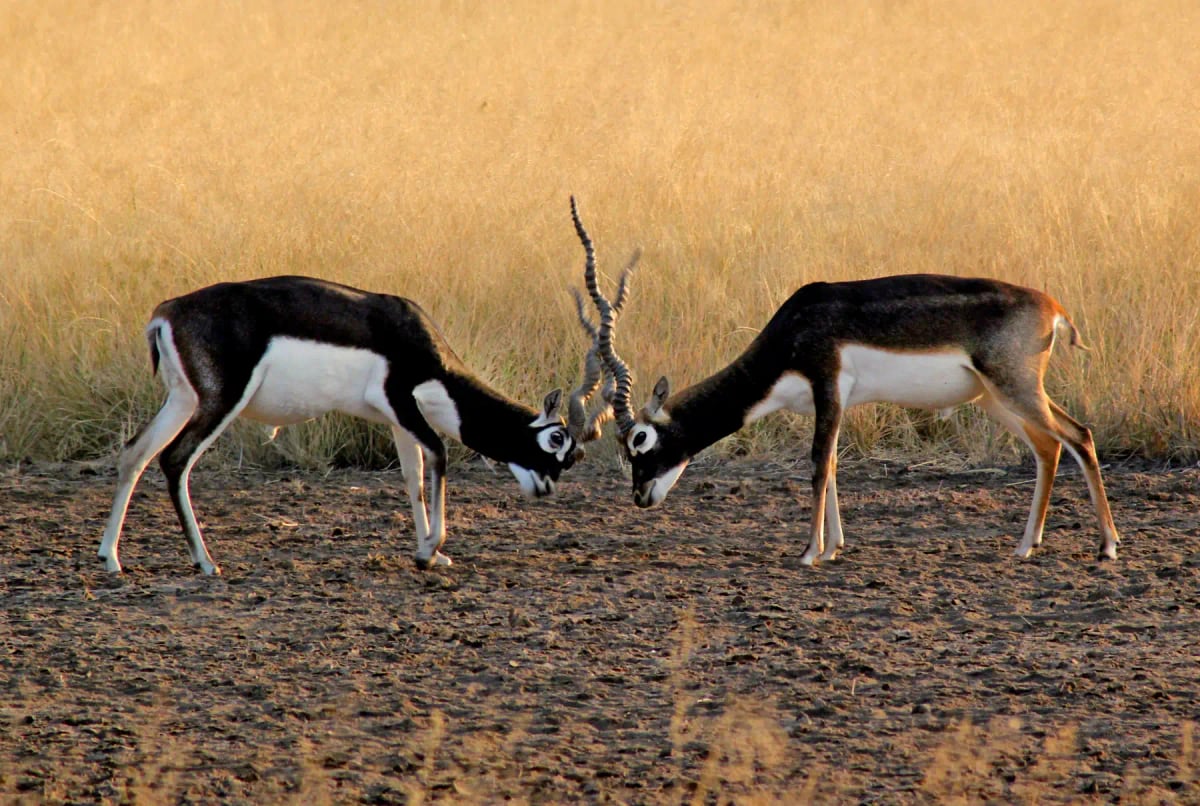
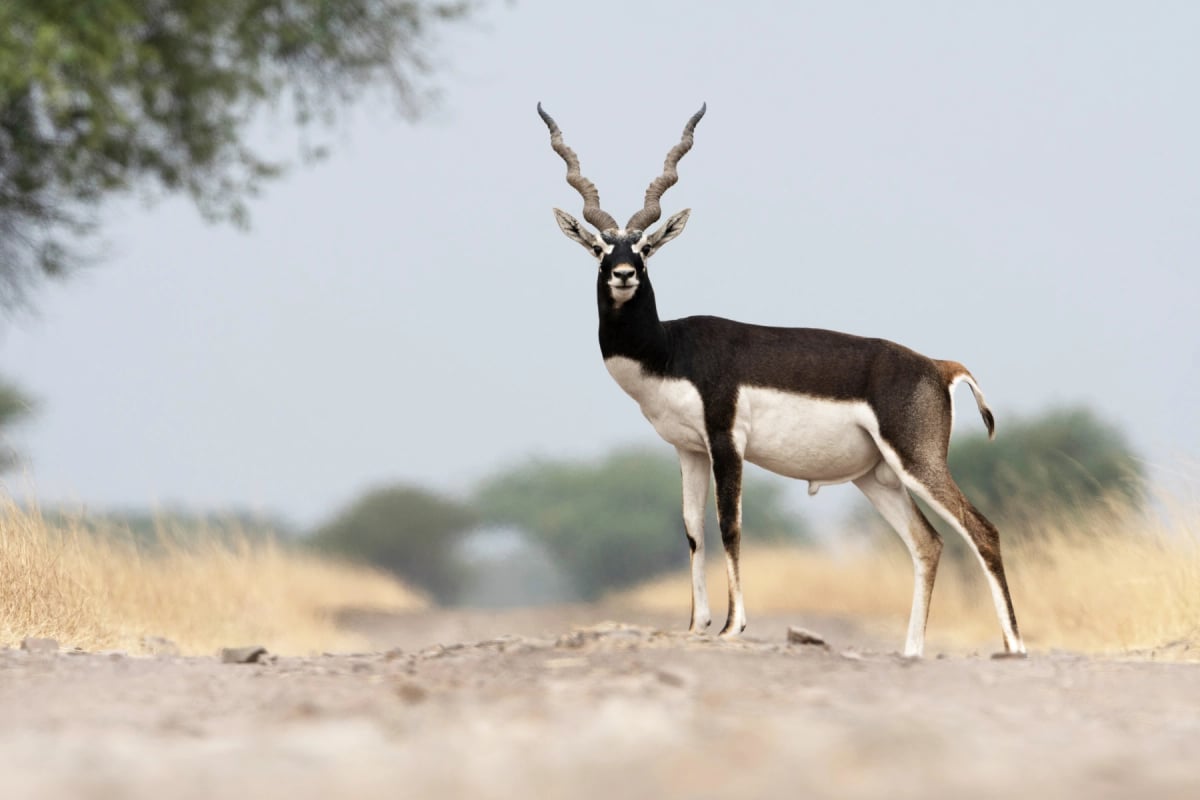
The blackbuck (Antilope cervicapra) is a slender antelope native to the Indian subcontinent, where it roams open grasslands and semi-arid plains. Adult males are easy to recognize: their upper body shifts from tan in youth to deep brown or nearly black at maturity, contrasting sharply with white underparts, inner legs, and a white ring around each eye. Their long, tightly spiraled horns can exceed 70 cm. Females and young remain a pale fawn and are almost always hornless. Blackbucks are strict grazers under normal conditions, favoring short grasses, but they supplement their diet with leaves, flowers, and pods when vegetation is scarce. They are among the fastest antelopes in the world, capable of sustained speeds approaching 80 km/h. Social groups tend to be single sex outside the breeding season. The species is listed as Least Concern by the IUCN, with the global population estimated at around 50,000 individuals.
Habitat and distribution
The blackbuck is native to the Indian subcontinent, historically ranging across most of India, parts of Pakistan, and the lowland grasslands of Nepal. Today its stronghold is India, where populations persist in states such as Rajasthan, Gujarat, Punjab, and Andhra Pradesh. It favors open short-grass plains, dry scrublands, and lightly wooded areas near water. The species cannot tolerate dense forest or very tall grass, as it relies on open sightlines to detect predators. Introduced populations now exist in Argentina and the United States, particularly in Texas, where the animal has established free-ranging herds on private ranches. Blackbucks tend to remain in the same general area year-round, though they may shift locally in response to rainfall patterns and the availability of fresh, short-cropped grasses.
Speed, senses, and surviving open plains
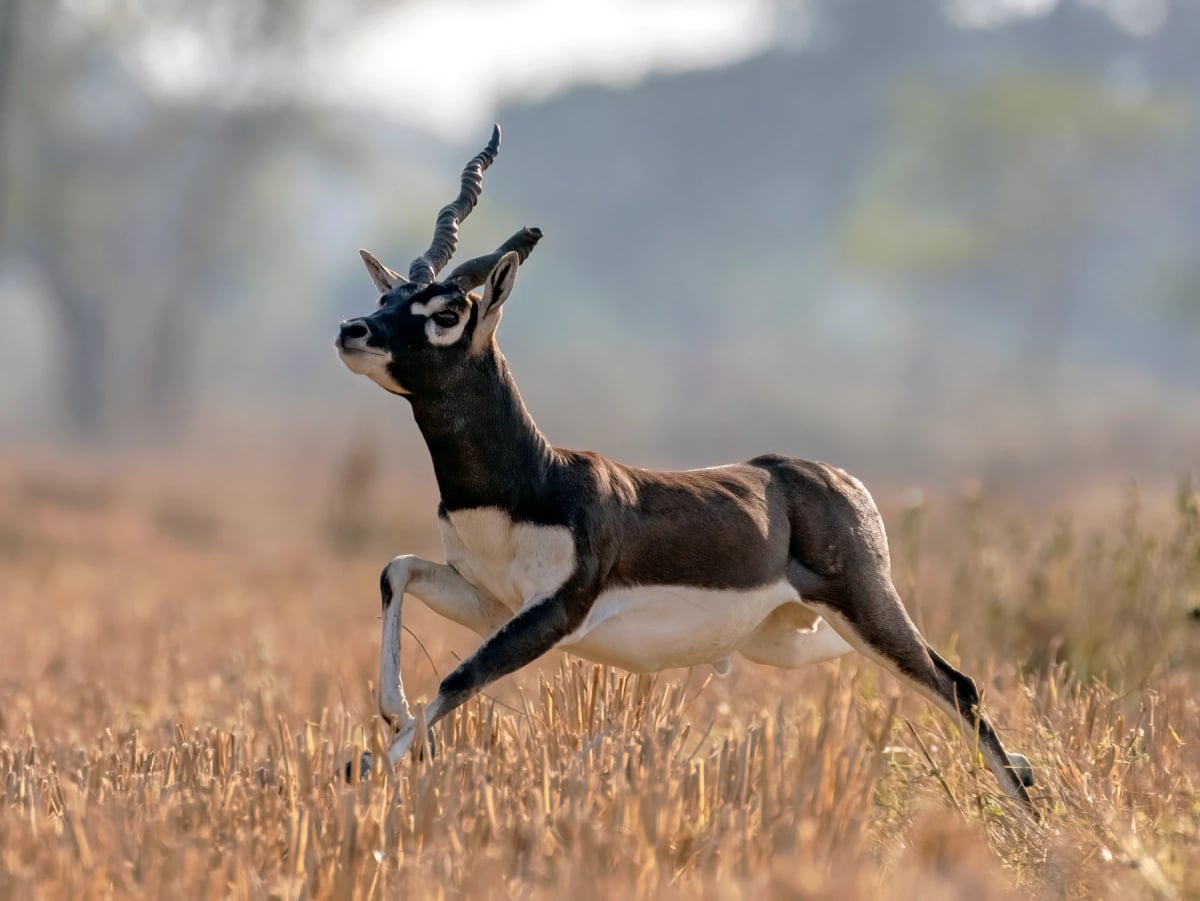
The blackbuck is one of the fastest antelopes on Earth, capable of reaching sustained speeds close to 80 km/h and maintaining a bounding gait over long distances. This speed is its primary defense against coursing predators such as the cheetah, which was once its main natural pursuer in India. Large, laterally placed eyes provide a wide field of vision, giving the animal early warning of approaching threats across open terrain. Its digestive system is adapted to extract nutrition from dry, low-quality grasses during lean seasons. Males develop increasingly dark coats as they age, a trait that signals dominance and reproductive condition to rivals and females alike. The spiraled horns, which can grow beyond 70 cm, serve both in male-to-male combat and as a visual indicator of age and fitness.
Behavior and social life
Blackbucks are highly social animals that typically form separate male and female groups outside the breeding season. Female herds with young can number in the dozens, while bachelor male groups tend to be smaller. Dominant males establish and defend territories, marking boundaries with preorbital gland secretions deposited on grass stems and with dung middens. During the rut, territorial males perform elaborate displays, including strutting walks and chases, to attract females and warn rivals. Breeding can occur at almost any time of year in India, though peaks are often observed in spring and autumn. Females usually give birth to a single calf after a gestation of around six months. Newborns are kept hidden in vegetation for the first few days before joining the herd, a behavior that reduces the risk of predation.
Conservation
The blackbuck is listed as Least Concern by the IUCN, with a global population estimated at around 50,000 individuals. This is a remarkable recovery: by the mid-twentieth century, hunting, agricultural expansion, and habitat loss had pushed numbers to critically low levels across the Indian subcontinent. Protective legislation, most notably India's Wildlife Protection Act of 1972, and the establishment of dedicated reserves such as Velavadar Blackbuck National Park in Gujarat have allowed populations to rebound substantially. The species holds cultural and religious significance in many parts of India, which has historically aided its protection in certain regions. Ongoing threats include habitat fragmentation caused by expanding farmland and infrastructure, as well as occasional poaching. Outside its native range, introduced populations in Texas and Argentina are managed through private landowners and, in some areas, regulated hunting programs.
Where it is found
The Blackbuck can be found in places such as:
Researched and written by Juan Pablo. Sources: IUCN Red List, scientific literature and regional field guides. Last updated: .
Technical factsheet
Frequently Asked Questions
What do blackbucks eat?
Blackbucks are dedicated grazers that prefer short, fresh grasses above all else. When drought or seasonal changes reduce grass cover, they broaden their diet to include leaves, flowers, and seed pods. They need regular access to water but can cope with fairly dry conditions for short periods. Their digestive system is well suited to extracting nutrients from coarse, low-quality vegetation during the leaner months of the year.
How fast can a blackbuck run?
The blackbuck is one of the fastest land animals in the world, capable of sustaining speeds close to 80 km/h. What makes it especially impressive is its endurance: unlike some predators that rely on a short burst, the blackbuck can hold a high-speed bounding stride over a considerable distance. This stamina made it a near-perfect match for the now-extinct Indian cheetah, which was historically its main predator.
Why do male blackbucks change color as they age?
Young males start out a pale fawn color, similar to females, but their coat gradually darkens with age, shifting to deep brown and eventually to near black on the upper body. This color change is tied to hormonal maturity and acts as a clear signal to other animals. Darker, older males are typically dominant and in peak reproductive condition, so the coat serves as a reliable visual cue for both rival males and females selecting a mate.
Is the blackbuck endangered?
The blackbuck is currently listed as Least Concern by the IUCN, which reflects a genuine population recovery over recent decades. Numbers had fallen sharply by the mid-1900s due to overhunting and land conversion, but legal protection and dedicated reserves helped the species bounce back to an estimated 50,000 individuals. Habitat loss from agricultural expansion and scattered poaching remain concerns, but the overall population trend is considered stable.
Do blackbucks live in groups?
Yes, blackbucks are highly social. Outside the breeding season, females and young typically gather in herds that can reach several dozen individuals, while adult males form their own smaller bachelor groups. A dominant territorial male will occasionally associate with a female herd during the rut. This separation by sex for much of the year is common among antelope species and helps reduce competition for food within the herd.
What are the blackbuck's main predators?
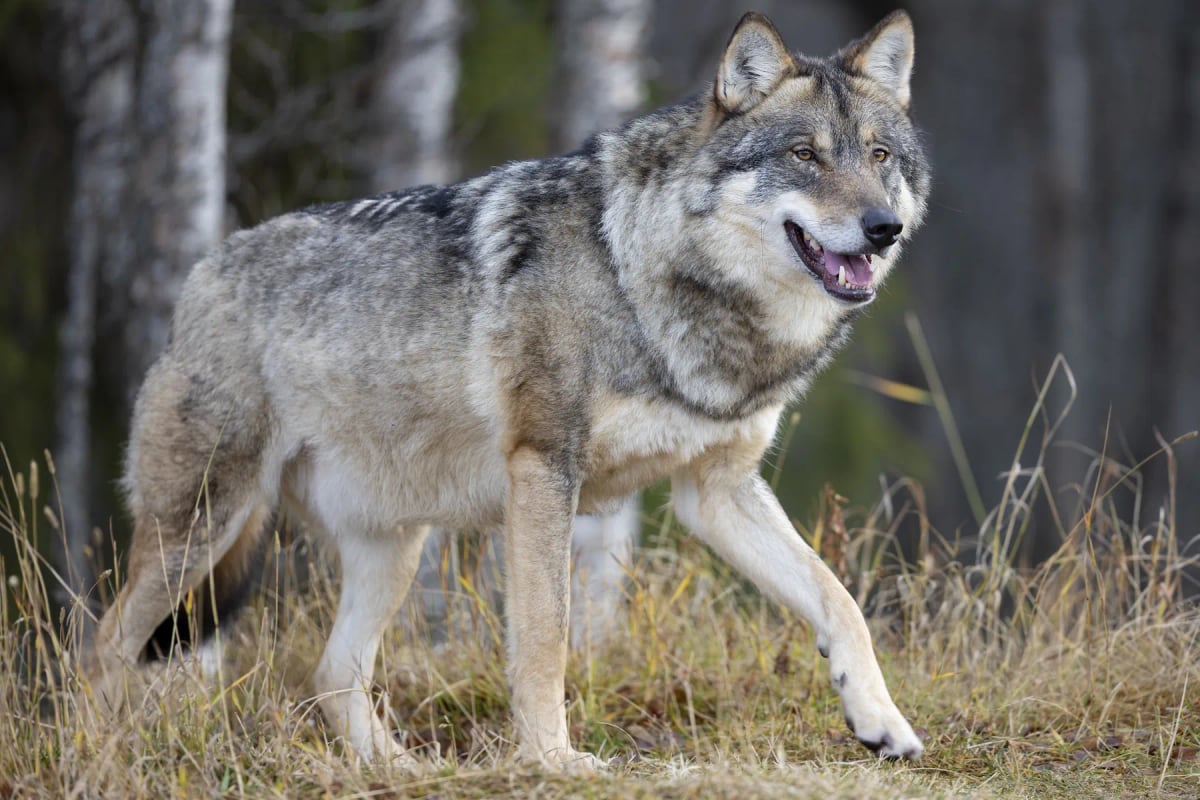
In its native range across India and Nepal, the blackbuck is preyed upon by wolves, leopards, and feral dogs, which have become an increasingly significant threat near human settlements. Historically, the Indian cheetah was considered its primary natural predator, a species now extinct in the wild in India. Eagles and other large raptors may occasionally target newborn calves. In introduced populations in Texas and Argentina, the animal has very few natural predators.
What is the cultural significance of the blackbuck in India?
The blackbuck holds a notable place in Indian culture and religion. It is sacred to the Bishnoi community of Rajasthan, who have protected it for centuries as part of their religious practice, making Bishnoi villages some of the safest places for the species in the country. The animal also appears in ancient Indian art and texts. This deep cultural connection has played a meaningful role in local conservation efforts across several regions of India.