Platypus
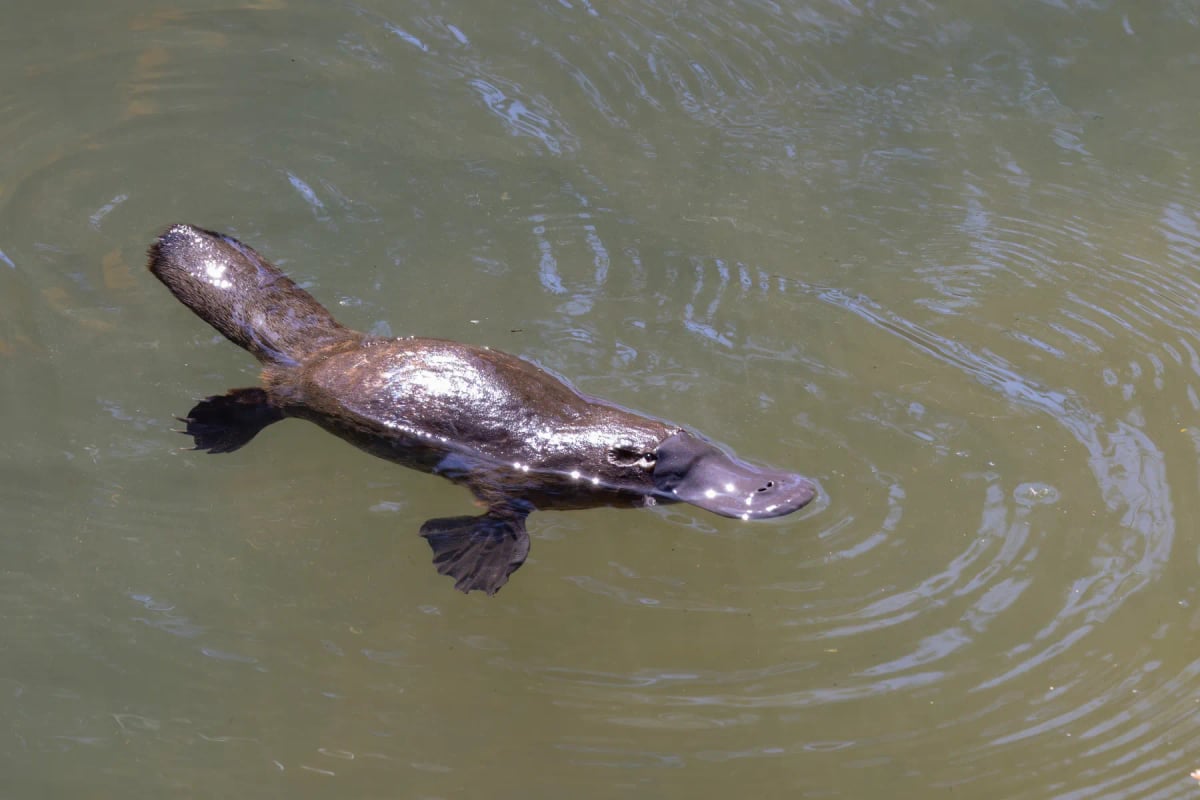
The platypus is one of the world's most extraordinary mammals. Native to eastern Australia and Tasmania, it is one of only five living monotremes, a group of mammals that lay eggs instead of giving birth to live young. Its broad, flat bill is packed with electroreceptors that detect the tiny electrical fields produced by invertebrates hiding in the riverbed, allowing it to hunt with its eyes and ears closed. Dense, waterproof fur keeps it insulated in cold water, while webbed front feet make it a capable swimmer. A broad, beaver-like tail stores fat reserves. Males carry a hollow spur on each hind ankle connected to a venom gland, producing a venom strong enough to cause severe pain in humans. After mating, females lay one to three leathery eggs in a burrow dug into the riverbank and incubate them for about ten days.
Habitat and distribution
Platypuses are found only in freshwater habitats along the eastern coast of Australia, from the tropical rainforest streams of Queensland down through New South Wales and Victoria, and into the cool rivers of Tasmania. They favour clean, slow-moving streams and rivers with soft banks where they can dig burrows, though they also inhabit lakes and some reservoirs. A burrow can stretch more than a metre into the bank and serves as both a resting place and a nursery during breeding season. Water quality matters greatly to this species. Platypuses tend to disappear from waterways affected by sedimentation or pollution, making them a useful indicator of the health of a freshwater ecosystem. They are absent from Western Australia and most of the arid interior of the continent.
Diet
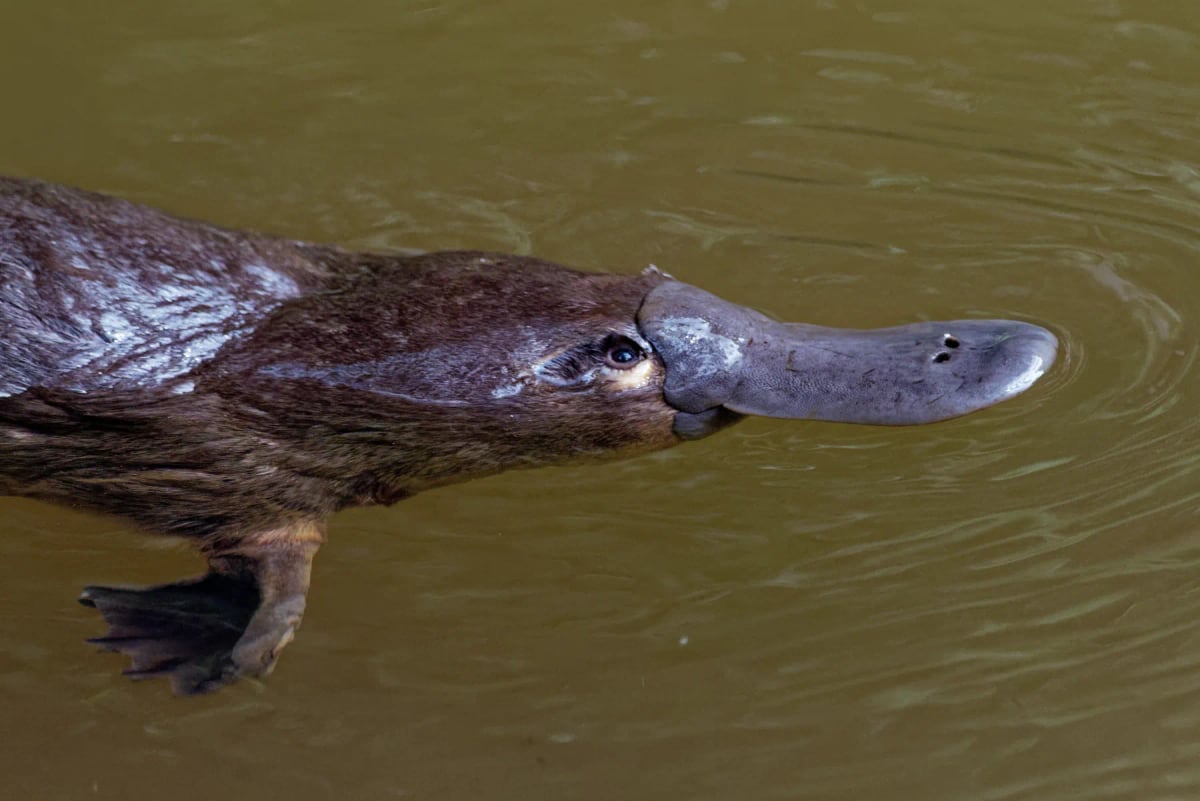
Hunting takes place almost entirely underwater, where the platypus forages along the riverbed with its eyes, ears, and nostrils all sealed shut. It relies on the thousands of electroreceptors packed into its soft, rubbery bill to detect the weak electrical signals produced by the muscles of invertebrates buried in the sediment. Prey includes insect larvae, freshwater shrimp, worms, yabbies, and small quantities of aquatic plants. Because platypuses have no teeth, they collect grit and gravel along with their prey and use it to grind food in their cheek pouches before swallowing. Adults can consume roughly their own body weight in food every day, making feeding a near constant activity during their active hours at dawn and dusk.
Unique features
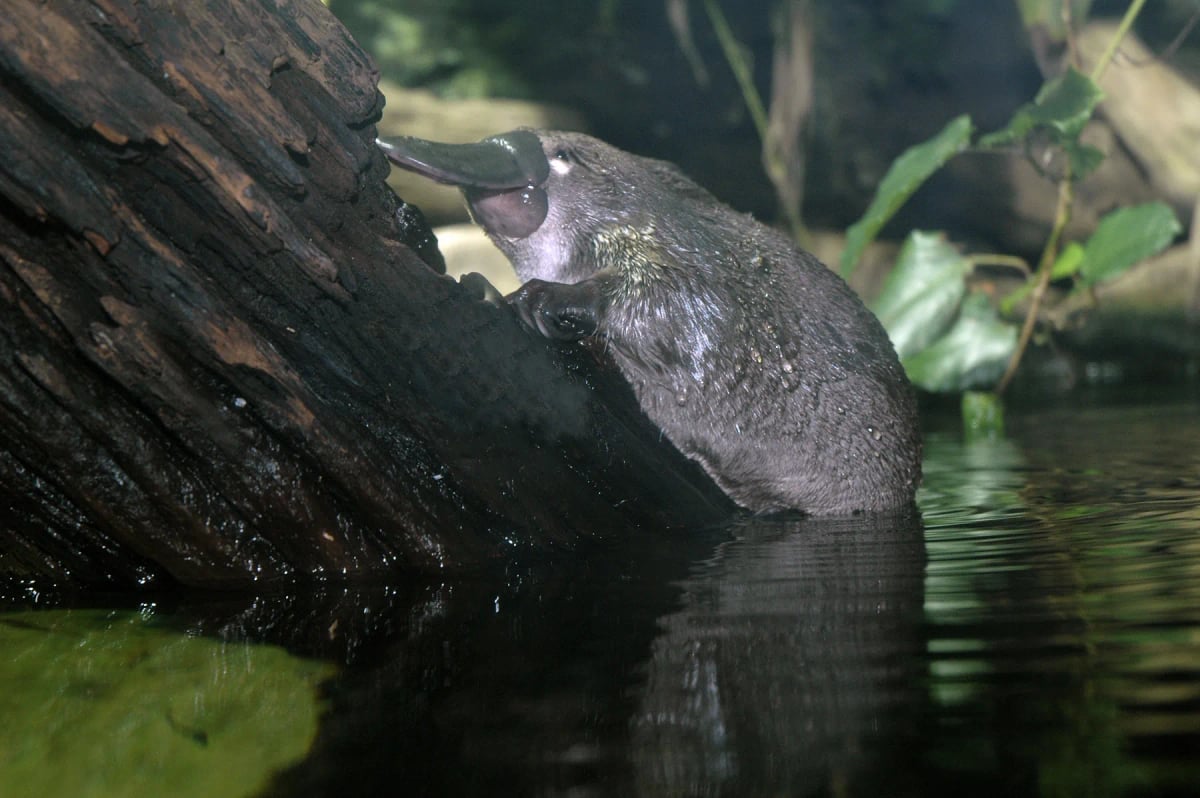
Few animals on Earth combine as many unusual traits as the platypus. It is one of only five surviving monotremes, the most ancient lineage of mammals, and one of just two mammals known to use electroreception for hunting. Its bill is not rigid like a bird's beak but soft and packed with sensors. The fur consists of two layers that trap air to keep the animal warm and dry even in cold mountain streams. The broad, flat tail stores fat reserves for periods when food is scarce. Males possess a hollow spur on each hind ankle linked to a venom gland. The venom is powerful enough to cause intense, long-lasting pain in humans and is thought to play a role in competition between males during breeding season.
Reproduction
Breeding season runs from late winter through spring, roughly between July and October in Australia. After mating, the female retreats to a specially prepared nesting burrow, which she lines with damp leaves and grass to keep the eggs from drying out. She lays one to three small, leathery eggs and curls her body around them to incubate them for about ten days. Once the young hatch, they feed on milk that seeps through patches of skin on the mother's belly, as platypuses have no nipples. The offspring, sometimes called puggles, remain in the burrow for around three to four months until they are large enough to venture into the water. Females raise their young entirely without help from the male.
Conservation
The IUCN currently lists the platypus as Near Threatened, and researchers have raised concerns that its populations have declined significantly over recent decades. Loss of streamside vegetation, agricultural runoff, and the extraction of water for irrigation all degrade the freshwater habitats this species depends on. Prolonged drought, which has become more frequent and severe across eastern Australia, reduces water levels and food availability at the same time. Platypuses can also become entangled in fishing traps and nets left in waterways. Conservation efforts focus on restoring riverbank vegetation, improving water flows, and removing illegal nets. Some researchers have called for the species to be upgraded to a higher threat category, arguing that current assessments underestimate the true scale of population decline.
Researched and written by Juan Pablo. Sources: IUCN Red List, scientific literature and regional field guides. Last updated: .
Technical factsheet




Frequently Asked Questions
Is the platypus really a mammal if it lays eggs?
Yes, the platypus is a true mammal, but it belongs to a very ancient group called monotremes. These are mammals that lay eggs instead of giving birth to live young. There are only five monotreme species left on Earth. Despite laying eggs, the platypus still nurses its young with milk, which is a defining mammal trait. Think of it as a living window into the early days of mammal evolution.
How does the platypus find its food underwater?
The platypus hunts with its eyes, ears, and nostrils completely sealed. It relies on thousands of electroreceptors inside its soft bill to pick up the tiny electrical signals produced by the muscles of invertebrates hiding in the riverbed. This sixth sense, known as electroreception, is extremely rare among mammals. It lets the platypus track down worms, shrimp, insect larvae, and yabbies buried in the sediment with remarkable precision.
Where does the platypus live?
Platypuses are found only in freshwater habitats along the eastern side of Australia, from Queensland in the north down to Victoria in the south, and on the island of Tasmania. They need clean rivers and streams with soft banks where they can dig burrows. They are completely absent from Western Australia and the dry interior of the continent. Water quality is crucial for them, and they tend to vanish from rivers affected by pollution or heavy sedimentation.
Can a platypus sting you?
Only the males can, and it is not technically a sting but a spur. Males have a hollow spur on each hind ankle connected to a venom gland. The venom causes intense pain in humans that can last for days or even months and does not respond well to standard painkillers. It is not considered lethal to humans, but it is strong enough to kill a small dog. Males are thought to use the venom mainly when competing with other males during breeding season.
Is the platypus endangered?
The platypus is currently listed as Near Threatened on the IUCN Red List. Its populations have declined significantly in recent decades due to habitat loss, drought, agricultural runoff, and reduced water flows in rivers. Some scientists believe the species deserves a higher threat category. Platypuses can also drown in fishing traps left in waterways. Conservation work is focused on restoring riverbank vegetation and improving the overall health of the freshwater systems they depend on.
How do baby platypuses feed if their mother has no nipples?
Mother platypuses do not have nipples. Instead, milk seeps out through patches of skin on her belly, and the young, known as puggles, lap it up directly from her fur. The eggs hatch after about ten days, and the puggles then spend three to four months inside the burrow growing and feeding before they are ready to swim on their own. The father plays no part in raising the young at all.