Southern Lapwing
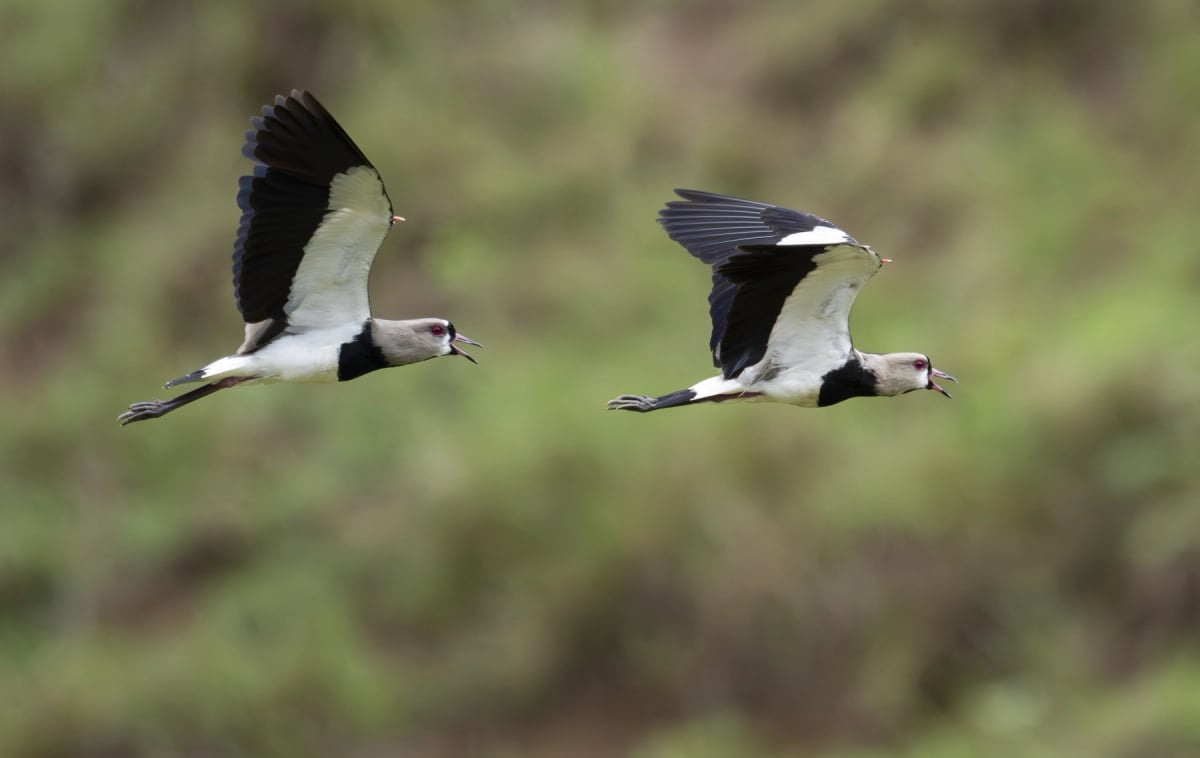
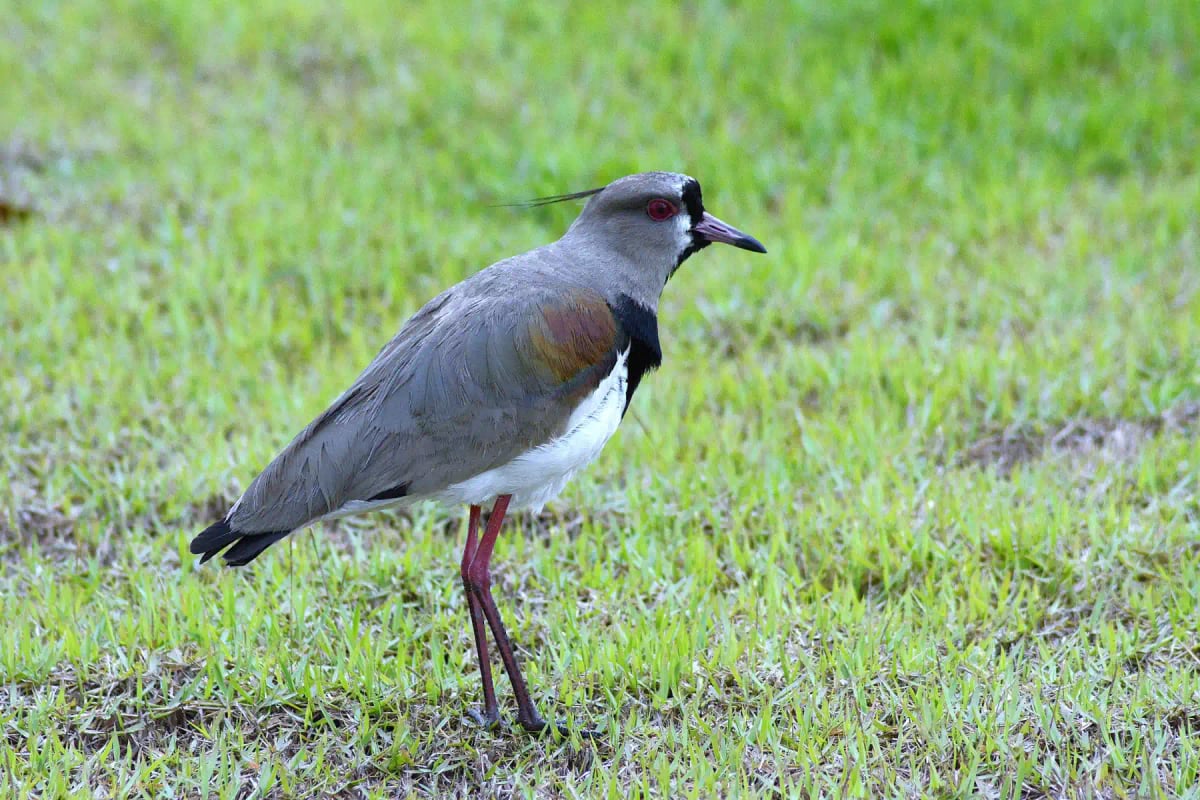
The southern lapwing is one of South America's most recognizable birds, identifiable at a glance by its glossy black crest, vivid red eyes, and red bill with a dark tip. Its back is a warm bronze brown, its chest bears a bold black patch, and its belly is white. In flight, a broad white stripe runs across each wing. Adults carry small spurs on their wings, used during territorial clashes. This plover inhabits open country: grasslands, wetland edges, farmland, roadsides, and city parks. It nests on bare ground, and both parents defend the eggs with striking ferocity, diving at dogs, horses, and people alike. Its loud, repetitive call is one of the most familiar sounds across South American lowlands. Highly adaptable to landscapes shaped by humans, the species has expanded its range northward as far as Panama in recent decades.
Habitat and distribution
Few birds in South America are as broadly distributed as the southern lapwing. It occupies a sweeping range from Tierra del Fuego and the Falkland Islands in the far south to Panama in the north, taking in Argentina, Uruguay, Brazil, Bolivia, Paraguay, Peru, Ecuador, Colombia, the Guianas, and Trinidad and Tobago along the way. Rather than forests, it favors open terrain: short grasslands, the margins of rivers and lakes, flooded fields, roadsides, and urban parks. It is especially common at low elevations but can be found at considerable altitude in Andean valleys where open ground is available. The species has pushed its range northward through Central America over recent decades, an expansion closely tied to the spread of cattle pastures and cleared land.
Diet
Across its range, the southern lapwing eats mainly invertebrates. Beetles, ants, grasshoppers, earthworms, and insect larvae make up the bulk of its diet, along with other small creatures found in soil and vegetation. It hunts in the typical plover style: walking a few steps, pausing to scan, then picking at the ground with its bill. Moist soils and areas with short grass suit it best, as both make prey easier to spot and reach. The species also forages along the muddy edges of ponds and streams, where aquatic invertebrates are more accessible. It is a daytime feeder but will call and move about on moonlit nights, particularly during the breeding season when adults remain alert around the nest.
Behavior
The southern lapwing is strongly territorial, and its boldness during the breeding season is remarkable. When a nest is threatened, both parents respond instantly, calling at full volume and making steep aerial dives toward the intruder. Dogs, horses, cattle, and people all receive the same treatment. The wing spurs adults carry can inflict real contact during these strikes, making the birds genuinely formidable defenders. Outside of breeding, lapwings are more tolerant of one another and may gather in loose flocks to feed. They roost on open ground, often near water. The species is largely resident across its range, though some populations at higher latitudes make seasonal movements in response to cold weather and the availability of food.
Calls
Anyone who has spent time in the South American countryside knows the southern lapwing's call before they know its name. The sharp, insistent cry, often described as a rapid series of notes resembling "tero tero" or "kree kree," carries a long distance across open fields and is one of the most frequently heard bird sounds on the continent. The call functions as an alarm, warning other animals of approaching danger, and as a territorial signal directed at rival lapwings. It is delivered with particular intensity during the breeding season, often continuing through the night. Other birds and mammals have learned to pay attention to these outbursts, since a suddenly calling lapwing frequently signals that a predator is nearby.
Conservation
The southern lapwing holds a status of Least Concern on the IUCN Red List, a reflection of its large population and its remarkable ability to thrive alongside people. Where many species struggle as natural habitats disappear, this lapwing has turned the transformation of land to its advantage. Cattle pastures, irrigated cropland, roadside verges, and city parks all provide the short grass and open ground it needs to feed and nest. Urban populations have grown noticeably in cities across South America, with pairs nesting on lawns, flat rooftops, and sports fields. No significant threats currently affect the species at a population level, and its range continues to expand northward. It stands as one of the clearest examples of a bird that has adapted well to a world shaped by human activity.
Where it is found
The Southern Lapwing can be found in places such as:
Researched and written by Juan Pablo. Sources: IUCN Red List, scientific literature and regional field guides. Last updated: .
Technical factsheet










Frequently Asked Questions
Why is the southern lapwing so loud?
The southern lapwing uses its sharp, piercing call, often described as 'kree kree' or 'tero tero', to warn of danger and drive away intruders near its nest. It is essentially the neighborhood alarm system of South American grasslands. The calls are so reliable that other animals, including livestock and deer, often react to them as a signal that something is approaching.
Does the southern lapwing really attack people?
Yes, it does. When nesting, the southern lapwing will dive at anyone or anything it sees as a threat, including dogs, horses and people. It swoops low and calls aggressively, and some individuals will even make physical contact. This fearless behavior is what makes it one of the most recognizable and talked about birds across South America.
Where does the southern lapwing build its nest?
The southern lapwing nests directly on the ground, usually in open areas like pastures, roadsides, parks or the edges of wetlands. The nest is a simple shallow scrape in the soil, sometimes lined with a few plant fragments. Both parents share incubation duties and are extremely protective of the eggs, which are well camouflaged against the ground.
What does the southern lapwing eat?
The southern lapwing feeds mainly on insects, earthworms and small invertebrates found in moist soil and grassy areas. It forages by walking steadily across the ground, stopping to peck or probe with its bill. It tends to prefer areas where the soil is soft and easy to search, which is why it is so common around irrigated fields, riverbanks and parks.
Is the southern lapwing endangered?
No. The southern lapwing is listed as Least Concern on the IUCN Red List, and its population is actually doing very well. It has adapted easily to landscapes shaped by humans, such as farmland, city parks and roadsides, which has helped it expand rather than decline. It is one of the most common and visible birds across the whole of South America.
Can the southern lapwing live in cities?
Absolutely. The southern lapwing has adapted remarkably well to urban life and is a familiar sight in city parks, sports fields, highway medians and even school yards across South America. As long as there is an open grassy area with some moist soil nearby, it will settle in. Nesting on the ground in busy urban spaces does mean its eggs are sometimes at risk from pedestrians and dogs.
What does the southern lapwing look like?
The southern lapwing is a striking bird. It has a black chest patch and a black crest that curves backward from the top of its head. Its back is a warm bronze brown, its belly is white, and it has bright red eyes and a red bill with a dark tip. In flight, a bold white wing stripe becomes visible. Adults also have small wing spurs, which they use during confrontations.