Echidna
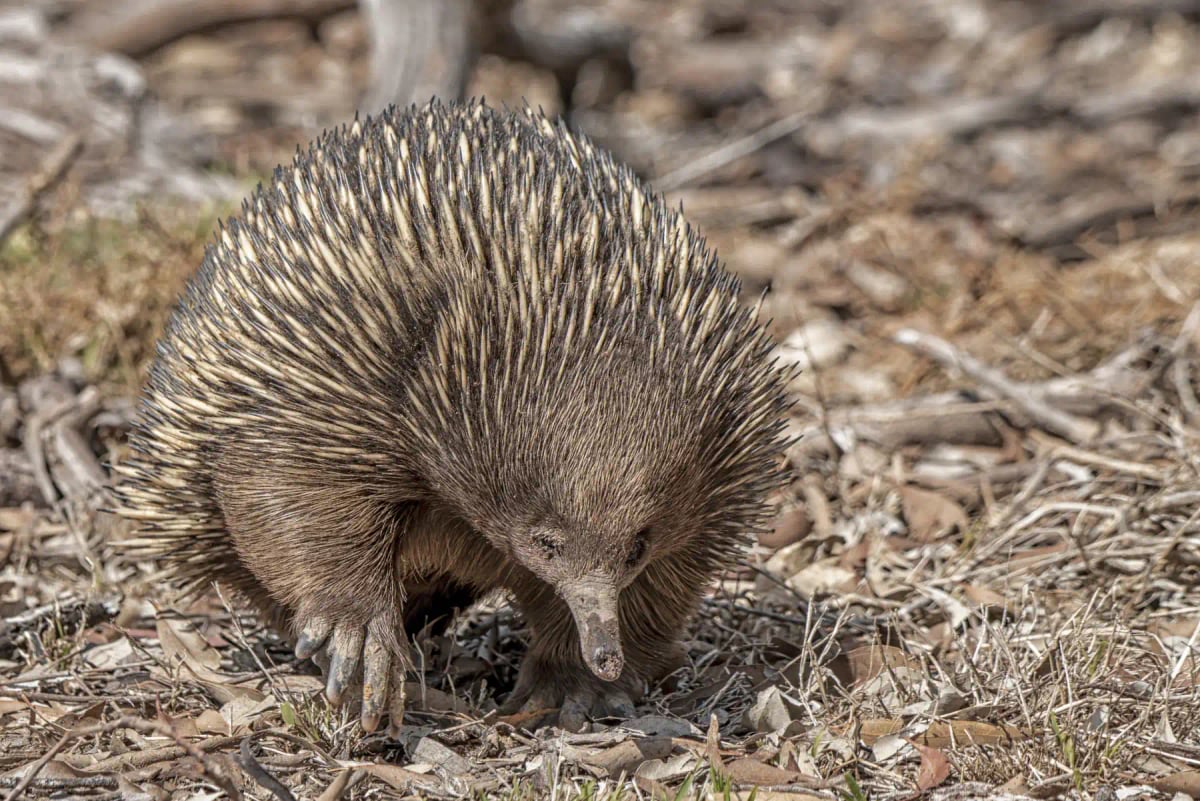
The short-beaked echidna is one of only five surviving monotremes, a group of mammals that reproduce by laying eggs rather than giving birth to live young. Native to Australia, Papua New Guinea, and parts of eastern Indonesia, it thrives in habitats ranging from rainforests and alpine meadows to arid scrublands. Its body is covered in cream-colored spines made of keratin, with coarse brown or black fur in between. It has no teeth at all. Instead, it uses a long, sticky tongue to sweep up ants, termites, worms, and beetle larvae. Powerful front claws make it a surprisingly fast digger. When threatened, it either burrows straight into the ground or curls into a tight ball, leaving only a shield of spines visible to predators. Females lay a single leathery egg directly into a temporary abdominal pouch, where the hatchling, called a puggle, develops for around 45 to 55 days.
Ancient lineage
Monotremes are the oldest surviving branch of the mammal family tree, and the echidna sits right at its heart. Along with the four species of platypus, echidnas are the only mammals on Earth that reproduce by laying eggs. Their origins trace back more than 100 million years, meaning their ancestors shared the planet with dinosaurs. What makes this even more remarkable is how little the basic body plan has changed. The echidna's skeleton shows features that link it directly to ancient mammal-like reptiles, yet the animal is warm-blooded, produces milk, and raises young. Scientists study monotremes closely because they offer a living window into the early evolution of mammals, a period that is otherwise only visible through fossils.
Habitat and range
Few mammals can match the echidna's ability to thrive across such a wide variety of environments. It is found throughout most of Australia, including Tasmania, across Papua New Guinea, and in parts of eastern Indonesia. Within that range it occupies rainforests, coastal heathlands, alpine meadows, and arid scrublands with equal ease. The key to this flexibility is the echidna's tolerance of temperature extremes and its ability to enter a state of torpor when conditions become harsh. It does not need a permanent shelter and will rest under logs, in rock crevices, or in dense vegetation depending on what is available. Rather than being tied to a fixed territory, individuals roam widely in search of food, covering large areas of ground each day.
Diet
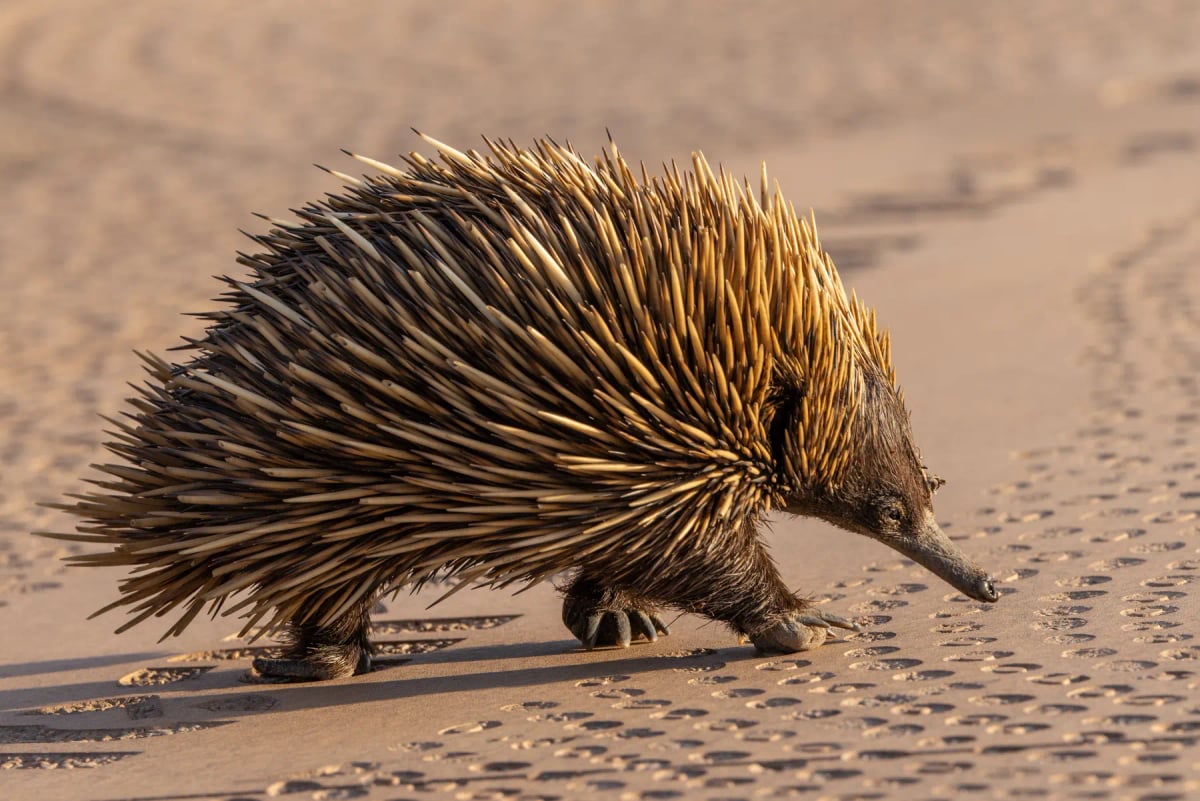
Ants and termites make up the bulk of the echidna's diet, though it also eats worms, beetle larvae, and other small invertebrates when the opportunity arises. It has no teeth at all, so it relies entirely on a long, sticky tongue that can reach deep into tunnels and crevices. Once prey sticks to the tongue, it is ground up between the tongue itself and a pad on the roof of the mouth. The echidna's front claws are powerful enough to tear apart compacted soil, rotting logs, and even the hard outer walls of termite mounds. Electroreceptors in its snout help it detect the tiny electrical signals produced by moving prey, which is especially useful when foraging in leaf litter or soft soil.
Defense
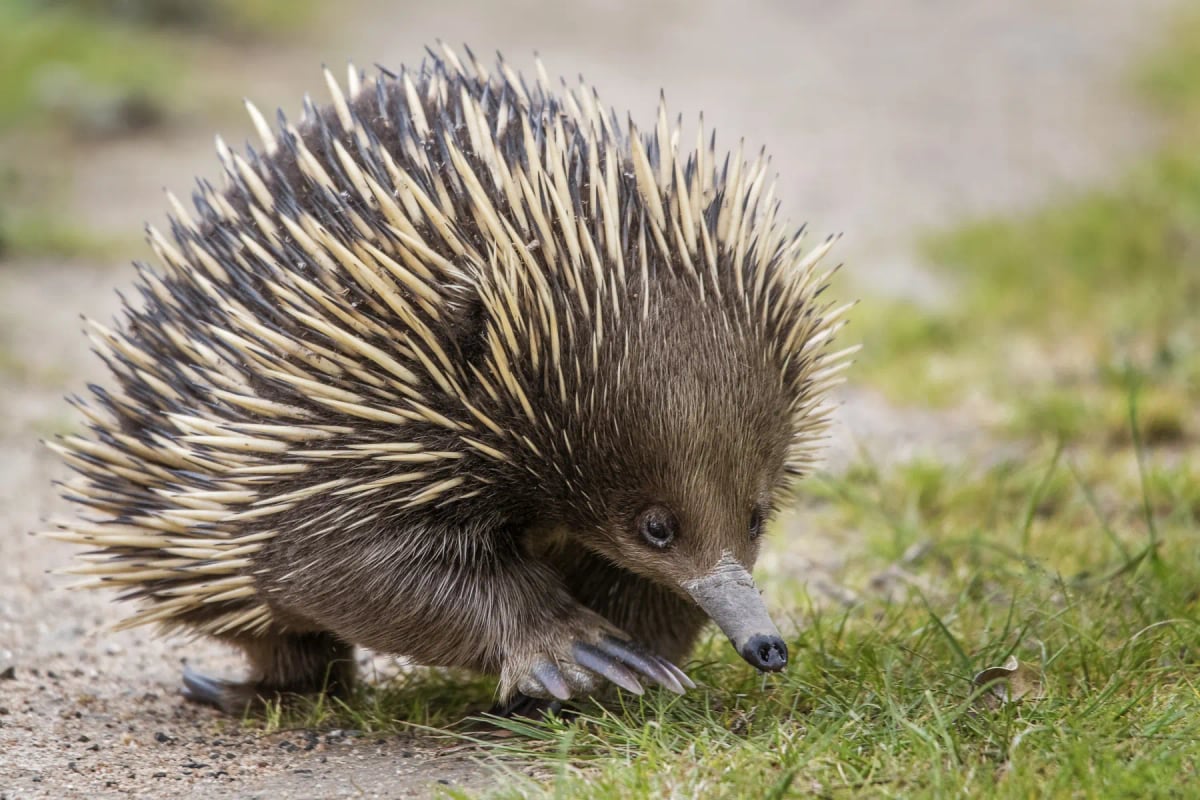
The spines that cover an echidna's back are not just for show. Each one is a hollow shaft made of keratin, the same protein found in human fingernails, and can reach up to 50 millimetres in length. When a predator approaches, the echidna has two reliable options. On soft ground it digs straight down at surprising speed, sinking its body into the earth so that only the spines remain visible above the surface. On hard ground, or when caught in the open, it curls into a tight ball and tucks its soft belly, legs, and snout safely inside. Foxes, feral dogs, and goannas are among its main threats, though even large predators typically give up quickly when faced with a ball of sharp spines and no obvious point of attack.
Reproduction
Echidna reproduction is unlike anything seen in most other mammals. After mating, the female develops a temporary pouch on her abdomen and lays a single small egg with a soft, leathery shell directly into it, roughly ten days after fertilisation. The egg hatches after about ten days inside the pouch, producing a tiny, undeveloped hatchling called a puggle. Unable to feed itself, the puggle attaches to a milk patch on the mother's skin, since echidnas have no nipples. Milk seeps through the skin and the puggle laps it up. It stays in the pouch for around 45 to 55 days, until its spines begin to emerge and make it uncomfortable for the mother to carry. She then leaves it in a burrow, returning every few days to nurse it for several more months.
Researched and written by Juan Pablo. Sources: IUCN Red List, scientific literature and regional field guides. Last updated: .
Technical factsheet


Frequently Asked Questions
Do echidnas really lay eggs?
Yes, and that makes them extremely rare. Echidnas are monotremes, one of only five mammal species on Earth that reproduce by laying eggs instead of giving birth to live young. The female lays a single egg with a soft, leathery shell directly into a temporary pouch on her belly. It hatches after about ten days, and the tiny hatchling, called a puggle, continues developing inside that pouch.
What do echidnas eat?
Echidnas feed mainly on ants, termites, worms, and beetle larvae. Since they have no teeth, they use a long, sticky tongue to collect prey from soil and rotting wood, then grind it between the tongue and a hard pad on the roof of the mouth. They also have a remarkable snout packed with electroreceptors that detect the tiny electrical signals produced by moving insects, which helps them find food even in dark or dense leaf litter.
Where do echidnas live?
Echidnas are found across most of Australia, including Tasmania, throughout Papua New Guinea, and in parts of eastern Indonesia. They are remarkably adaptable and can survive in rainforests, arid scrublands, coastal heathlands, and alpine meadows. Rather than keeping a permanent home, they roam widely each day in search of food and rest wherever they find suitable cover, such as under logs, in rock crevices, or among dense vegetation.
Are echidnas dangerous to humans?
Echidnas are not aggressive toward people at all. If they feel threatened, they either dig rapidly into the ground or curl into a tight ball, hiding their soft parts behind a shield of sharp spines. Those spines can certainly cause a painful puncture if you try to handle one, but the animal itself will not chase or attack. In the wild, the best approach is simply to observe them from a respectful distance and leave them alone.
How long do echidnas live?
Echidnas are surprisingly long lived for animals of their size. In the wild they typically reach 15 to 20 years, and individuals kept in captivity have been recorded living past 50 years. Researchers believe their slow metabolism and ability to enter torpor during cold or dry periods play a big role in this longevity. They also have relatively few natural predators once they are fully grown, which further helps them survive over the long term.
What is the conservation status of the echidna?
The short-beaked echidna is currently listed as Least Concern on the IUCN Red List, meaning its population is considered stable overall. However, it still faces real pressures in certain areas, including habitat loss, road collisions, and predation by introduced species such as foxes and feral dogs. In Australia, it is protected by law. Populations in parts of Indonesia and Papua New Guinea are under somewhat greater pressure due to habitat clearance and local hunting.
Can echidnas swim?
Yes, and they are actually quite capable swimmers. Echidnas have been observed crossing rivers and even swimming in the sea for short distances. They keep their snout above the surface and paddle steadily with all four legs. This ability is thought to help them move between territories or escape certain situations on land. It is one of those behaviors that tends to surprise people who only think of them as slow, spiny creatures that shuffle through leaf litter.