Animals in Namibia
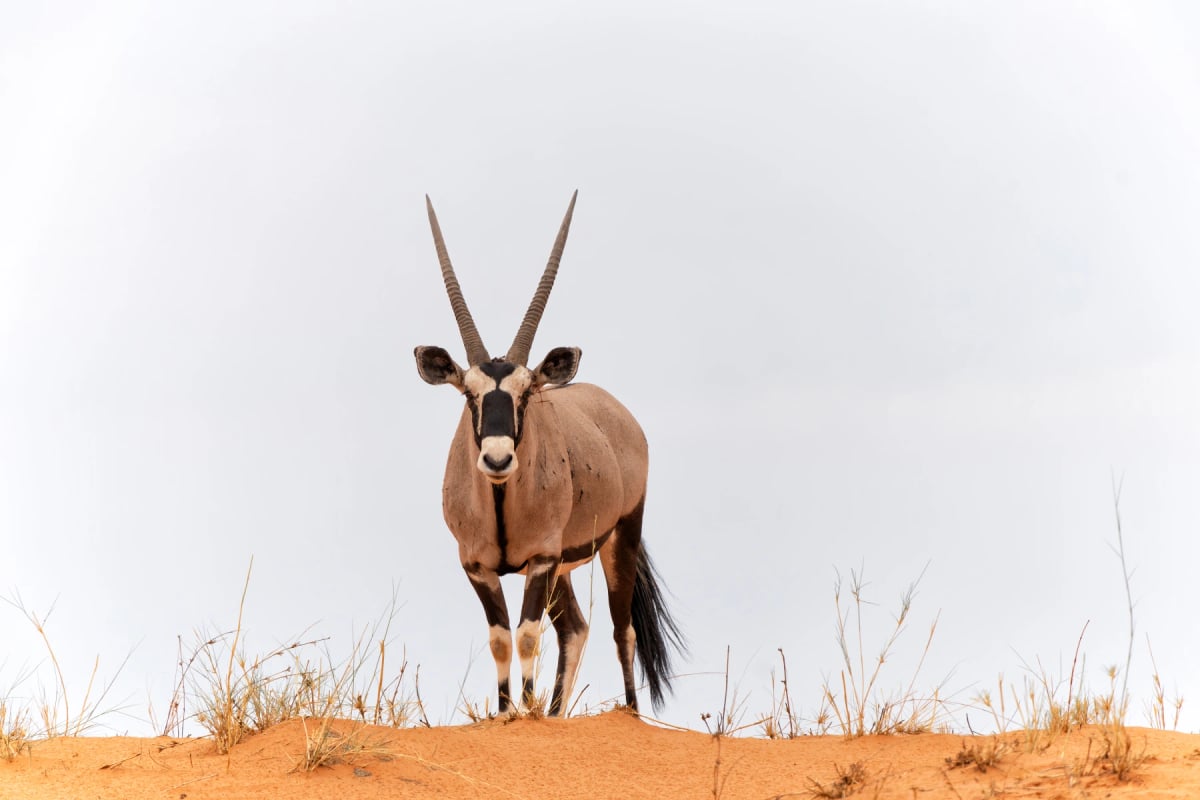
Oryx
Oryx spp.
The oryx, Namibia’s national animal, represents strength and grace in the desert. Its long horns and ability to survive with little water make it a true symbol of endurance. Often seen in open landscapes, it reflects the harmony between wildlife and the harsh but beautiful Namibian environment.
View details→Wildlife in Namibia
Namibia’s wildlife thrives in vast deserts, rugged mountains and along the Atlantic coast. Desert elephants, oryxes, giraffes and rhinos wander across dry plains, while whales and dolphins move through cold coastal waters. National parks such as Etosha and Skeleton Coast protect these species and attract visitors from around the world.
Most Dangerous Animals in Namibia
Some of Namibia’s wildlife can be dangerous, especially elephants, hippos and predators in remote areas. In coastal waters, sharks and seals can be seen near fishing zones. Keeping distance and following guide instructions ensures a safe and respectful experience in nature.
Top 10 Animals in Namibia
Namibia’s most famous animals include elephants, lions, leopards, cheetahs and rhinos. Visitors can explore Etosha National Park, where herds gather around waterholes, or travel to the Skeleton Coast to see seals resting on the beaches. The country’s open spaces make wildlife observation both easy and unforgettable.
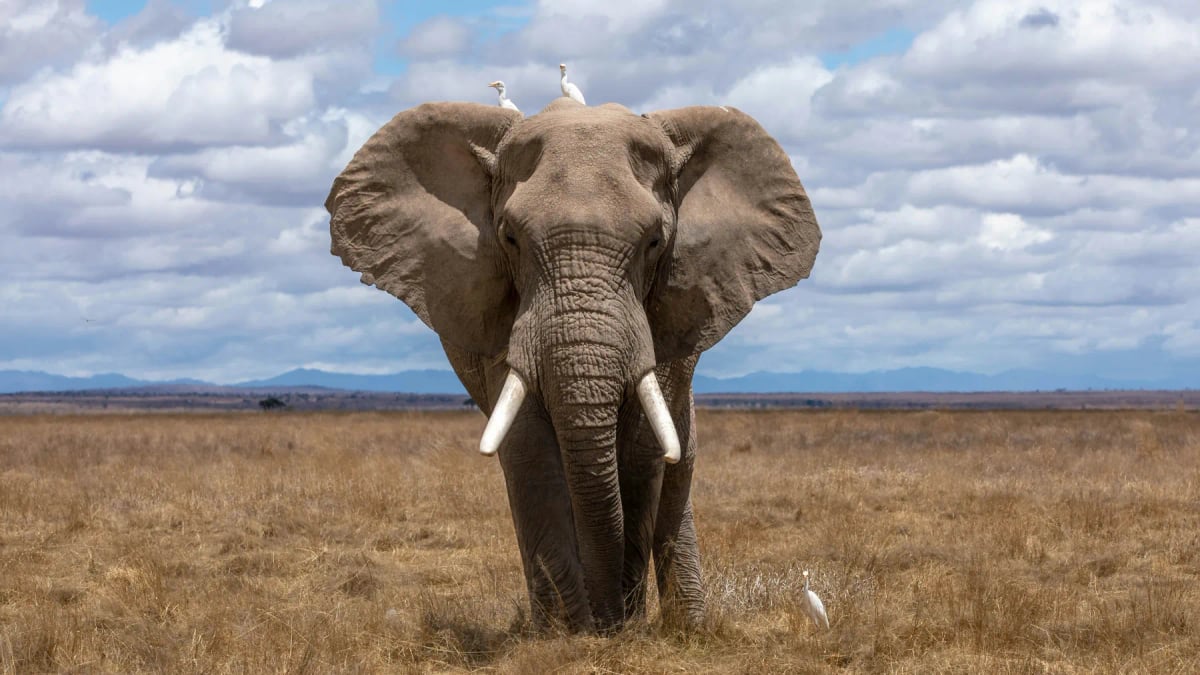
African Elephant
Loxodonta africana
Namibia is famous for its desert-adapted elephants, a population living in the Kunene and Erongo regions in the northwest that has learned to survive with minimal water and sparse vegetation across vast gravel plains. These elephants have developed longer legs and smaller bodies compared to savanna populations, and can travel up to 70 kilometers per day in search of water. Etosha National Park in the north also holds a substantial elephant population, one of the most visited wildlife areas in southern Africa.
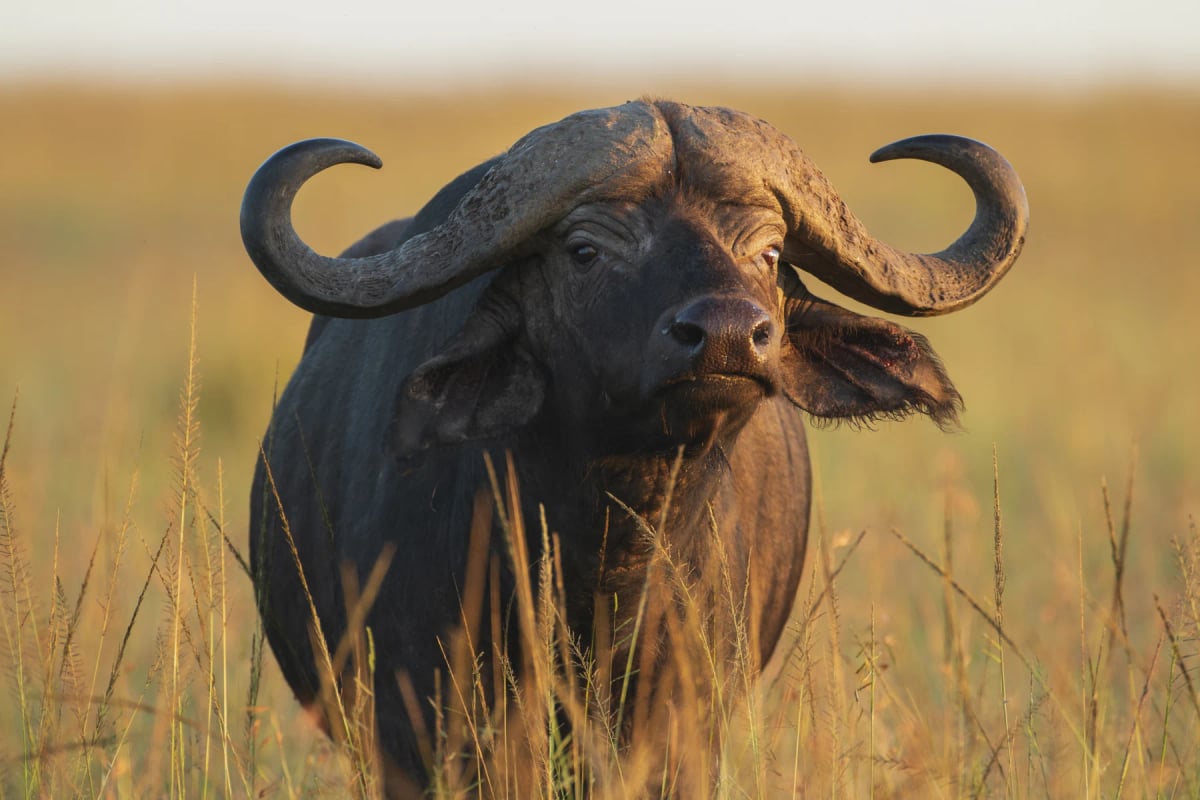
Buffalo
Syncerus caffer
In Namibia, African buffaloes are largely confined to the northeastern Caprivi Strip, now known as the Zambezi Region, where the floodplains of the Chobe and Zambezi rivers provide the permanent water and lush grazing they require. Etosha National Park historically held buffalo, but disease control measures led to their removal. Communal conservancies in the northeast now play a growing role in supporting viable populations. IUCN status: Least Concern.
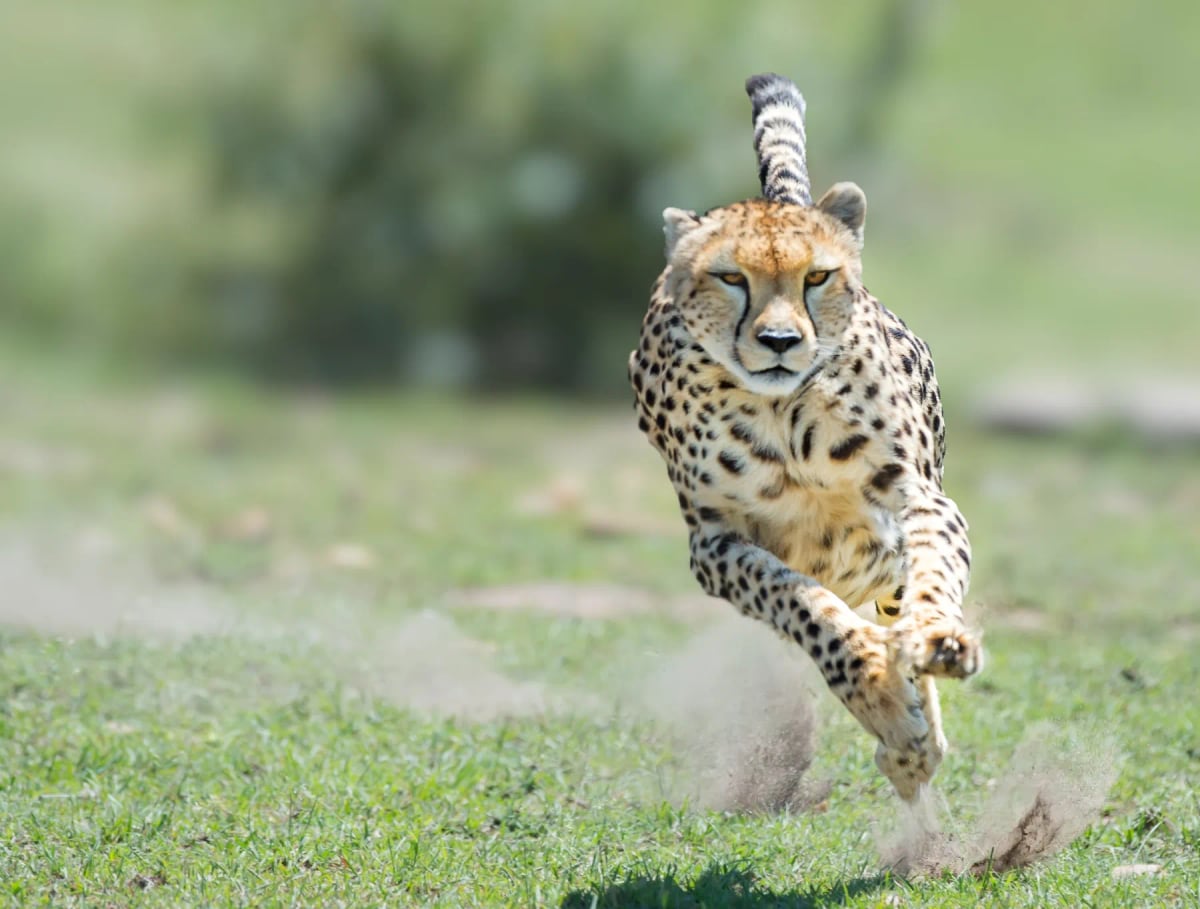
Cheetah
Acinonyx jubatus
Namibia holds one of the largest cheetah populations in the world, with estimates suggesting over a third of all surviving cheetahs live here. Remarkably, most occur on commercial farmland rather than inside protected areas. The Cheetah Conservation Fund, headquartered in Namibia, has pioneered programs that help farmers coexist with cheetahs, making the country a global model for the conservation of this species.
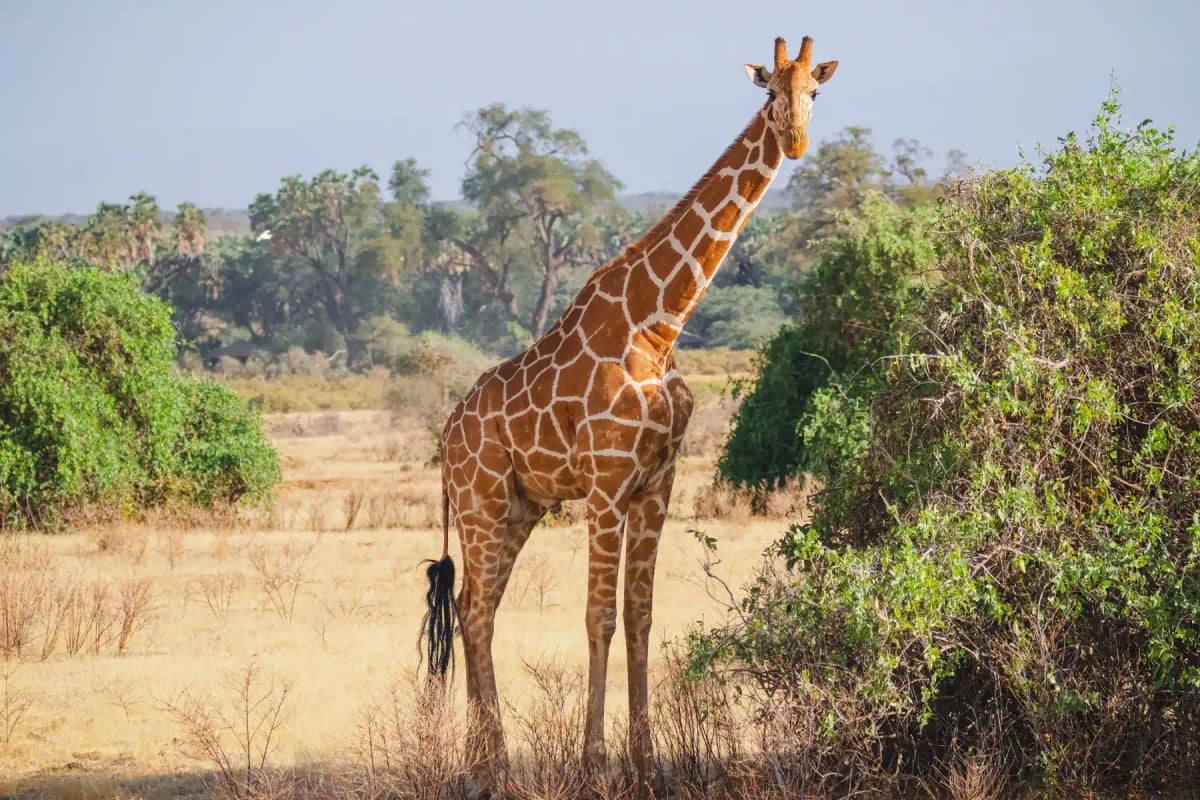
Giraffe
Giraffa camelopardalis
Namibia has one of the more encouraging giraffe conservation stories in Africa. Populations on private land and in communal conservancies have grown steadily, thanks to strong legal protections and community involvement in wildlife management. Etosha National Park is among the best places to see giraffes in the country, where they move through dry savanna and thornbush in search of acacia leaves. Namibia supports a significant portion of southern Africa's giraffe population. IUCN status: Vulnerable.
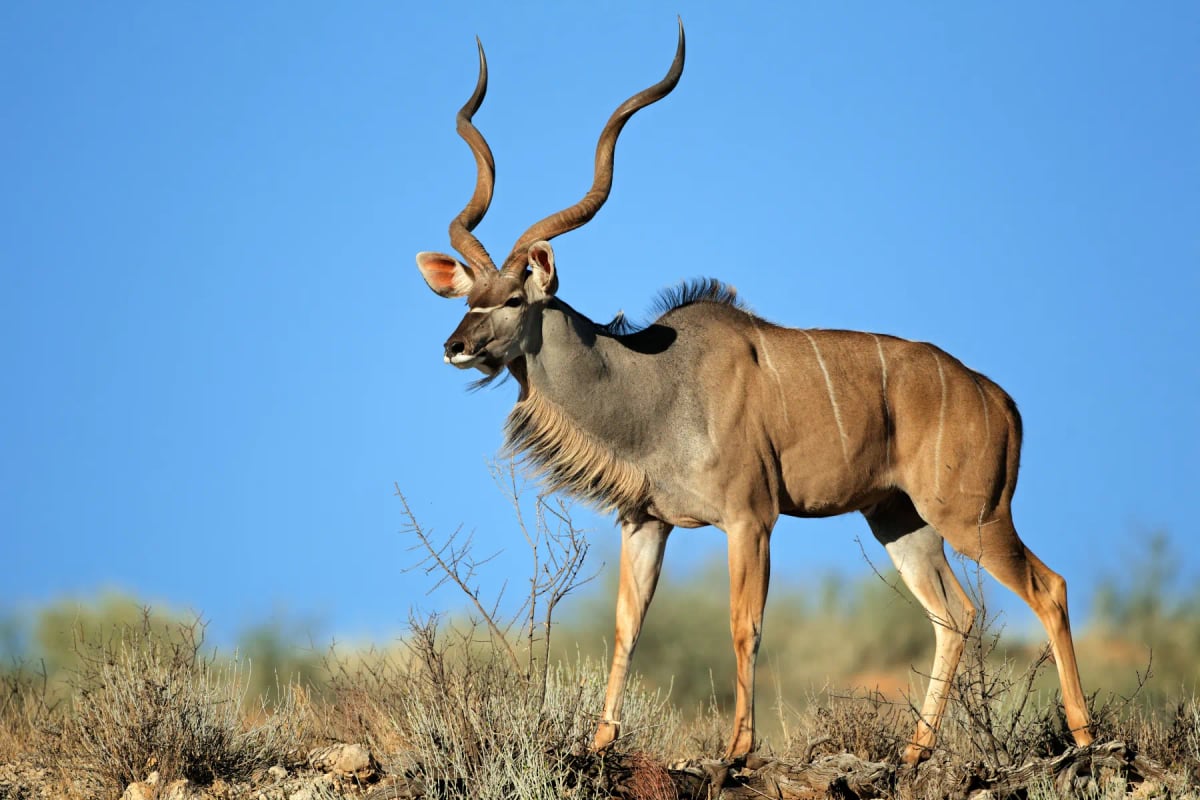
Greater Kudu
Tragelaphus strepsiceros
Namibia holds one of Africa's healthiest greater kudu populations, with the antelope thriving across thornbush savanna and dry woodland throughout the country. They are especially common on commercial farmland, where they can sometimes conflict with farmers by raiding crops. Parks such as Etosha National Park offer reliable sightings. Their IUCN status is Least Concern.
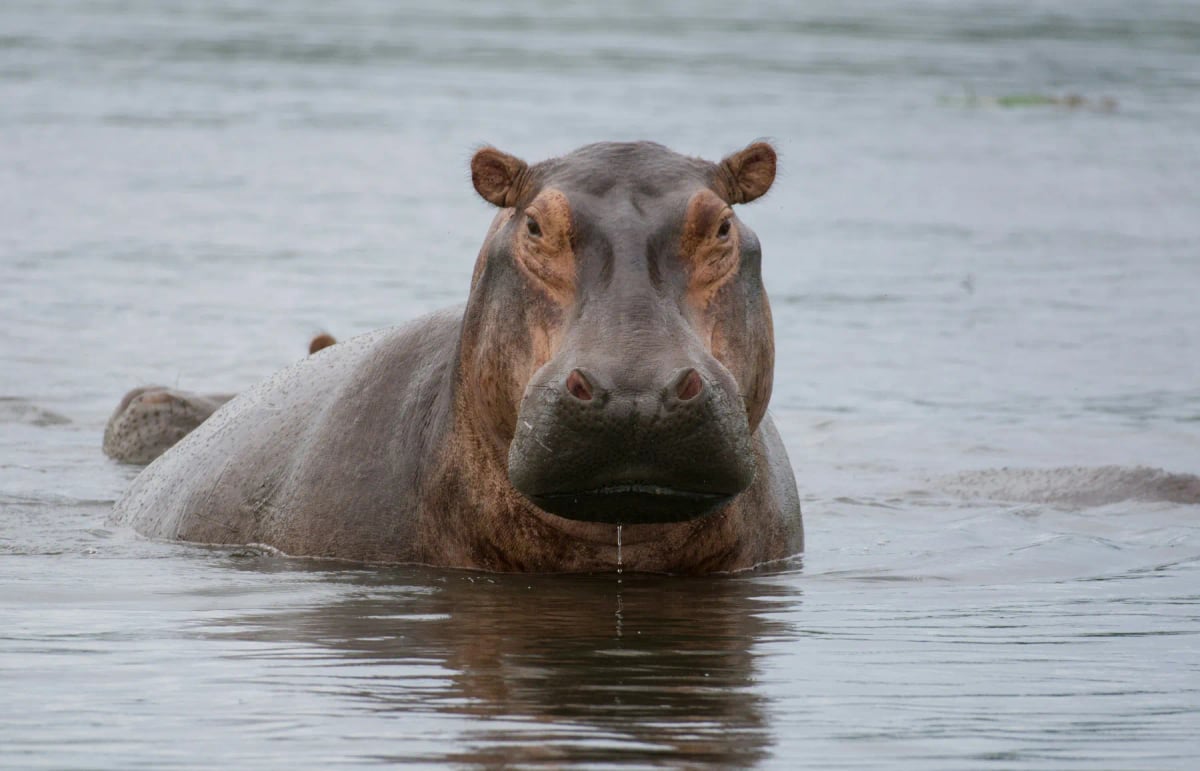
Hippopotamus
Hippopotamus amphibius
In Namibia, hippos are found mainly in the Kavango and Zambezi regions in the northeast, where the Okavango and Zambezi rivers provide the permanent water they need to survive. This is one of the few parts of the country wet enough to support them year round. Numbers are relatively small compared to neighboring countries. The IUCN lists the hippopotamus as Vulnerable.
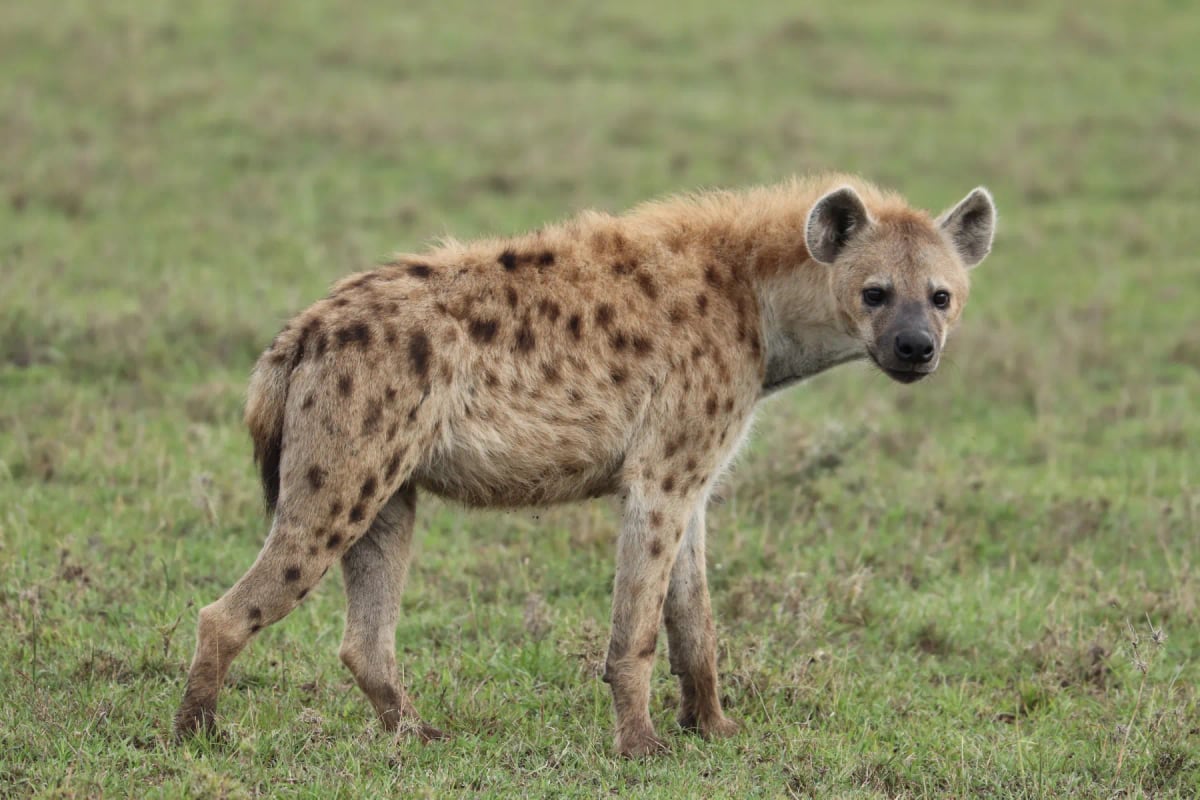
Spotted Hyena
Crocuta crocuta
In Namibia, spotted hyenas range across the Caprivi Strip, Etosha National Park, and communal conservancies in the northeast. Etosha's open pans and surrounding savanna provide ideal conditions for large clans. Namibia's community conservancy model has been important for reducing conflict between hyenas and farmers, offering a hopeful example of how people and carnivores can share the same landscapes.
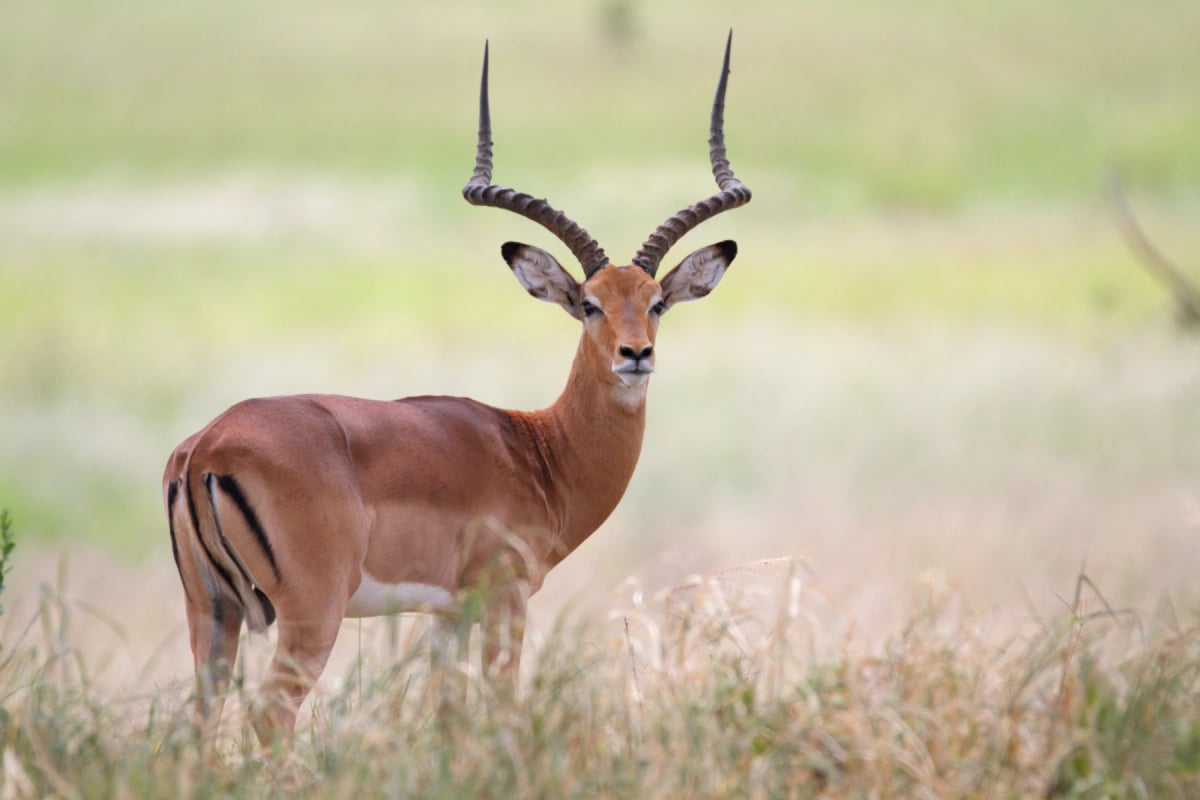
Impala
Aepyceros melampus
In Namibia, impalas are found mainly in the northeastern regions, particularly in the Caprivi Strip, now known as the Zambezi Region, where riverine forests and floodplain grasslands create suitable habitat. They are also present in Etosha National Park. Impalas are mixed feeders, shifting between grazing and browsing depending on the season. Only males carry the distinctive, lyre-shaped horns. With a global population of around two million, the IUCN lists the impala as Least Concern.
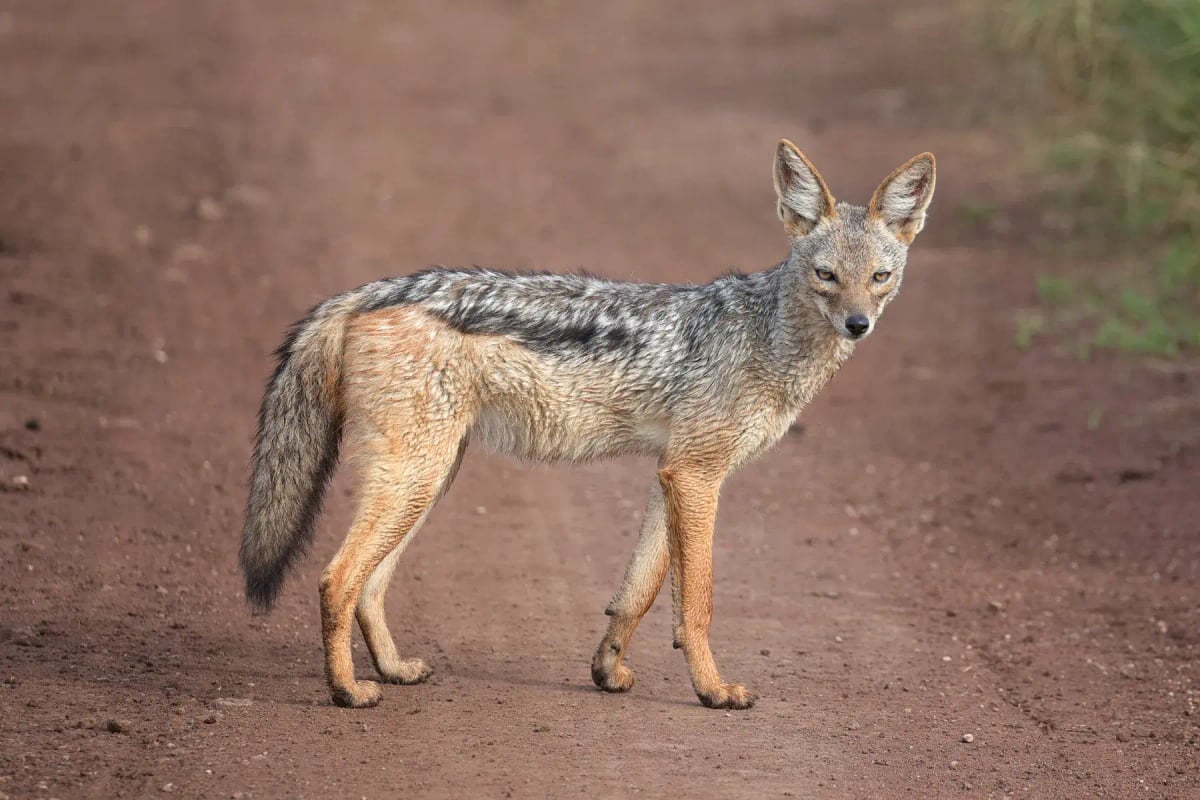
Black backed Jackal
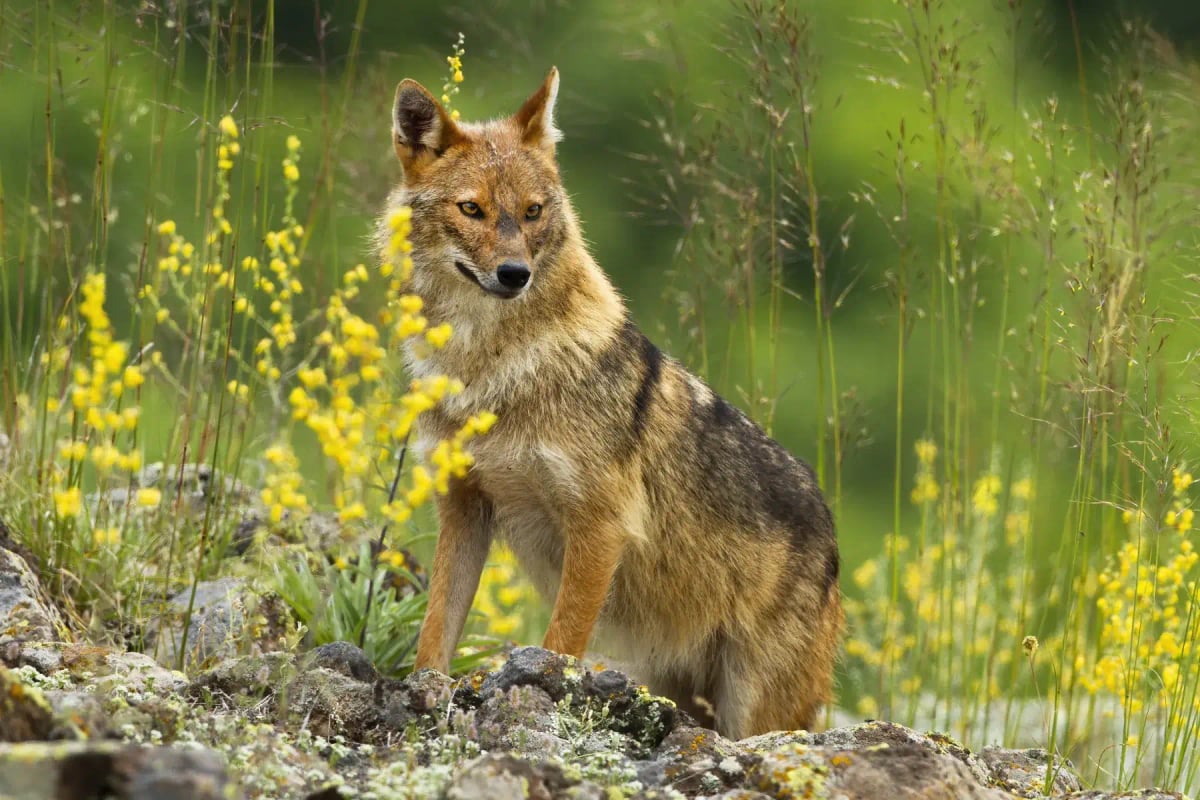
Canis mesomelas
In Namibia, the black backed jackal inhabits the arid plains of the Namib Desert, the central highland farms, and the thornbush savanna of the north. It is one of the most persecuted predators in the country due to attacks on sheep and goats on commercial and communal farmland. Populations remain resilient regardless. Its IUCN status is Least Concern. It often scavenges alongside vultures at carcasses across the open landscape.
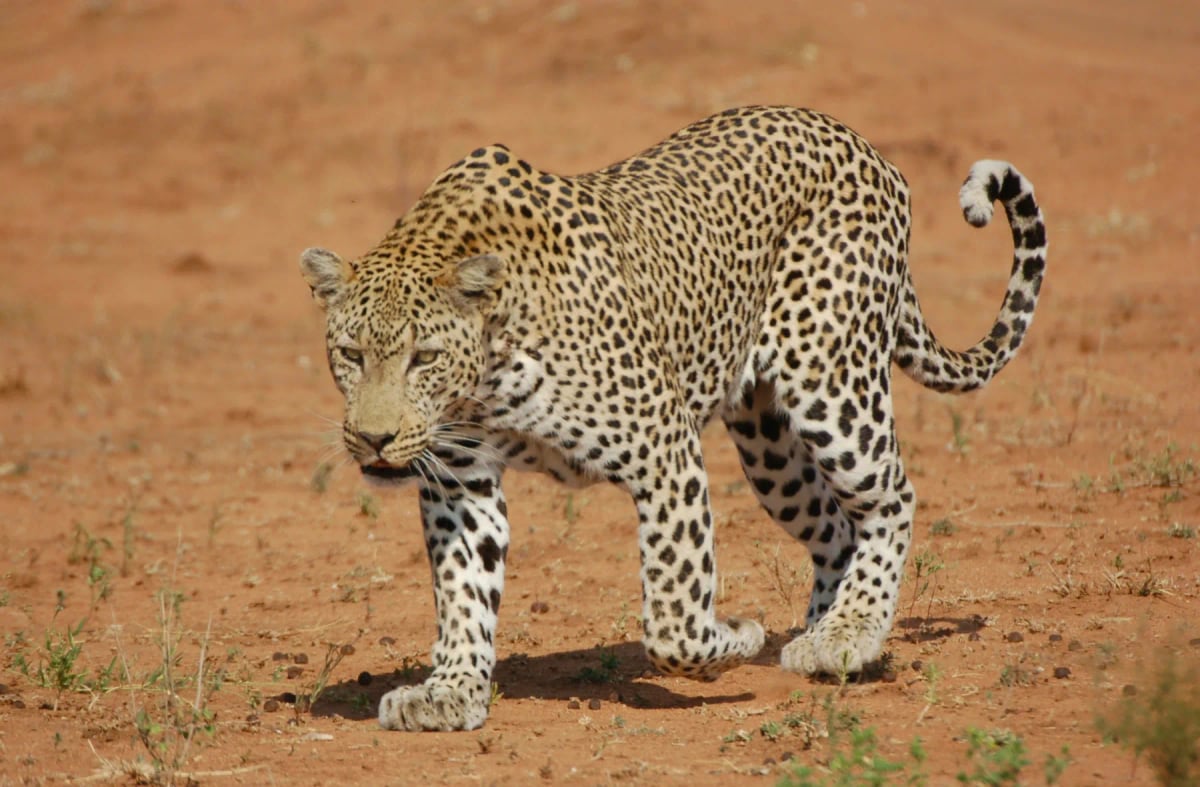
Leopard
Panthera pardus
Namibia has a notable leopard population and is one of the few countries where they are found both inside and outside protected areas. The Namibian farmlands, particularly in the central and northern regions, support many individuals that live alongside human communities. Namibia has been a leader in community based conservation efforts that help reduce conflict between leopards and farmers, offering a model for coexistence that other countries have looked to.
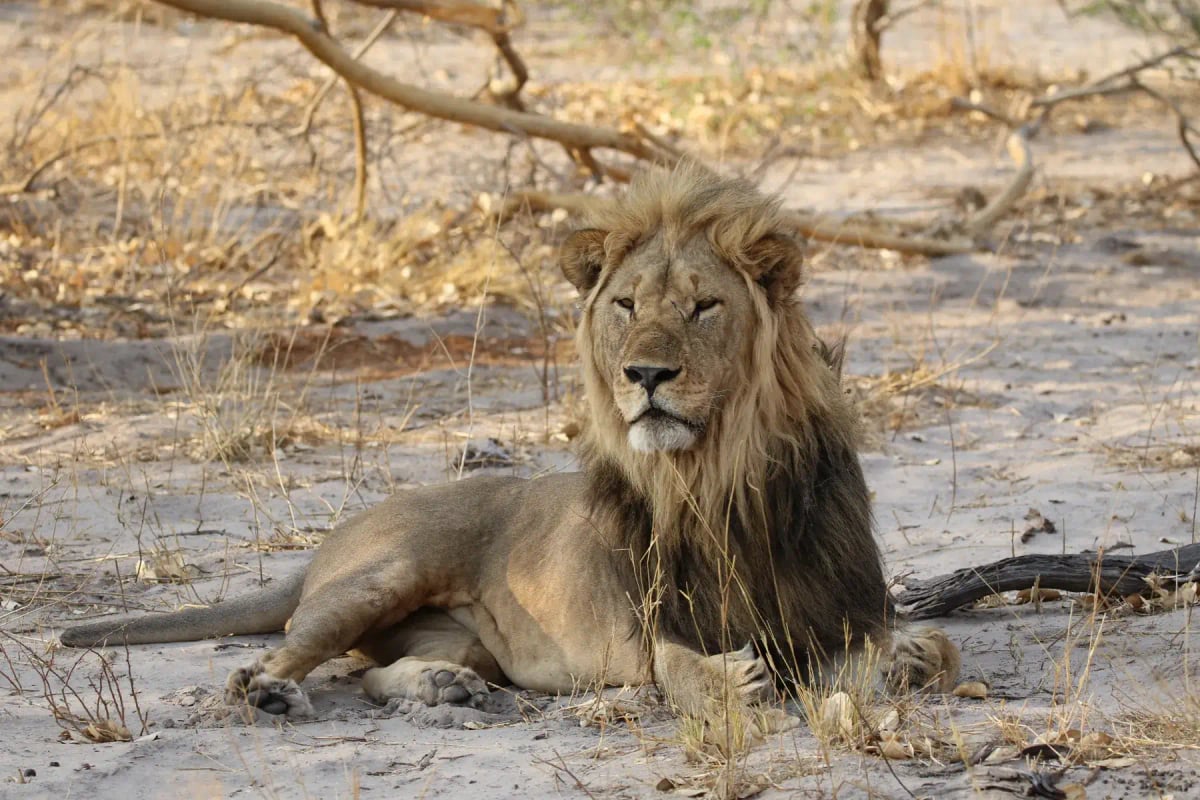
Lion
Panthera leo
Namibia has a notable lion population, particularly in Etosha National Park, where lions gather near waterholes and are among the most reliably spotted predators in the country. The Kunene region in the northwest is also home to desert lions known for covering vast distances across rocky terrain. Namibia is considered one of the more successful countries for lion conservation in southern Africa.
Oryx
Oryx spp.
Namibia is home to one of Africa's largest populations of gemsbok, which roam freely across the Namib Desert and the vast plains of Etosha National Park. Perfectly suited to extreme heat and little rain, these antelopes can store heat in their bodies during the day and release it at night, cutting down on water loss. They are a defining symbol of Namibian wildlife and appear on the country's coat of arms.
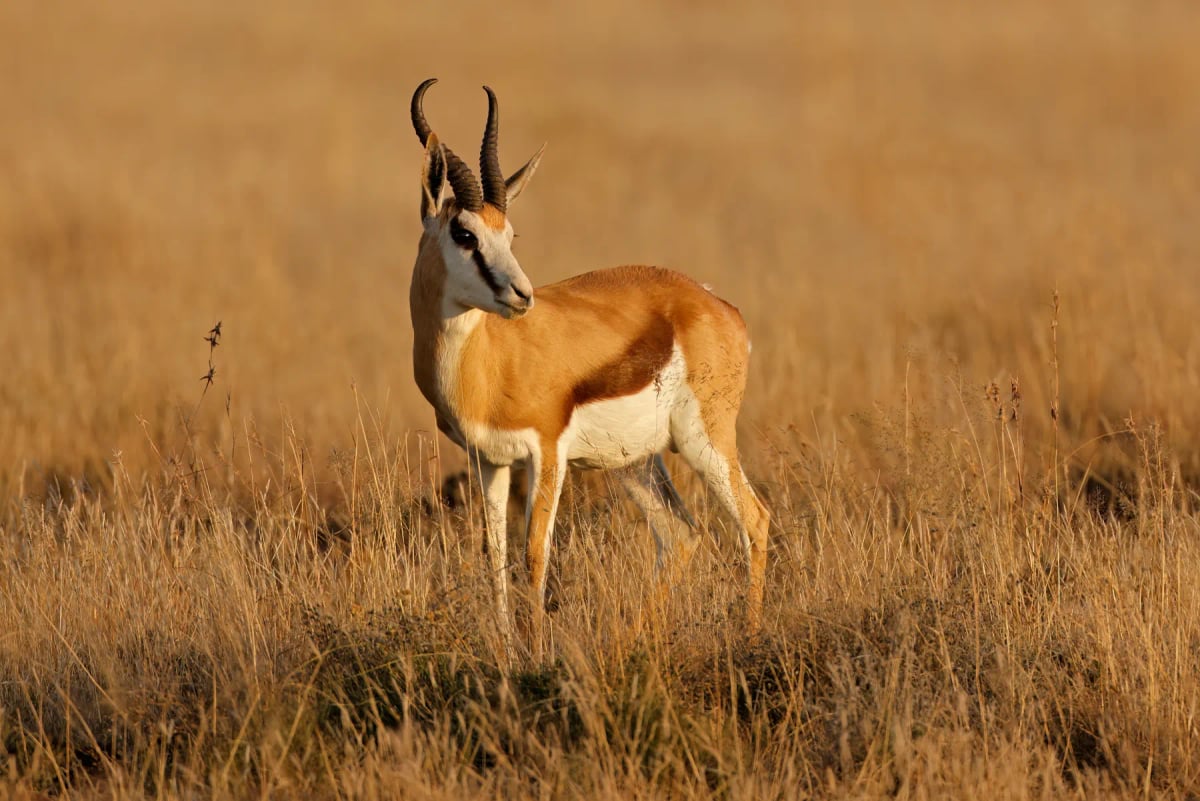
Springbok
Antidorcas marsupialis
In Namibia, the springbok is one of the most commonly seen large mammals, roaming the gravel plains of the Namib Desert and the grasslands of Etosha National Park. It is superbly suited to life in dry environments, rarely needing to drink water at all. During good rains, herds can swell dramatically in size. The IUCN lists this species as Least Concern.
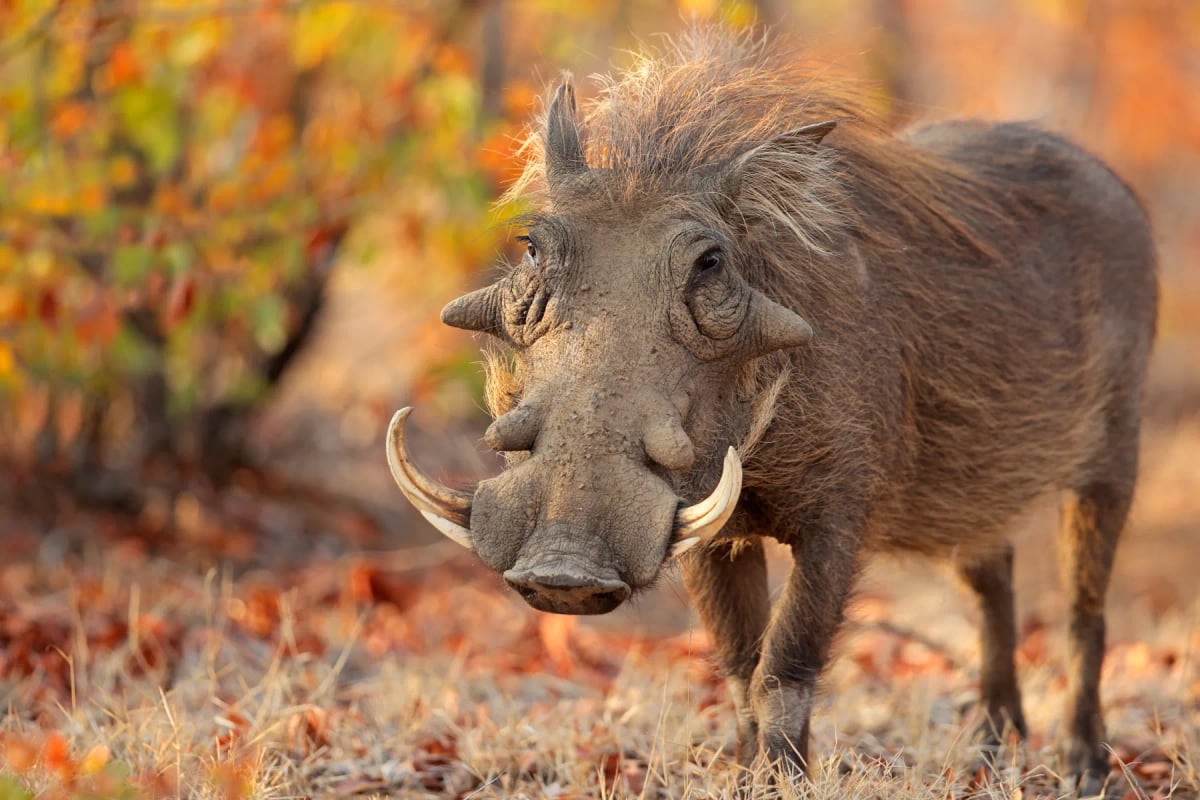
Warthog
Phacochoerus africanus
In Namibia, warthogs thrive across the bushveld and savanna regions, including Etosha National Park, where they are among the most visible mammals at waterholes. They are well adapted to the dry conditions of the country, relying on tubers and roots when grass is scarce. Predators such as lions, leopards, and cheetahs keep populations in check naturally. Their numbers in Namibia remain healthy. IUCN status: Least Concern.
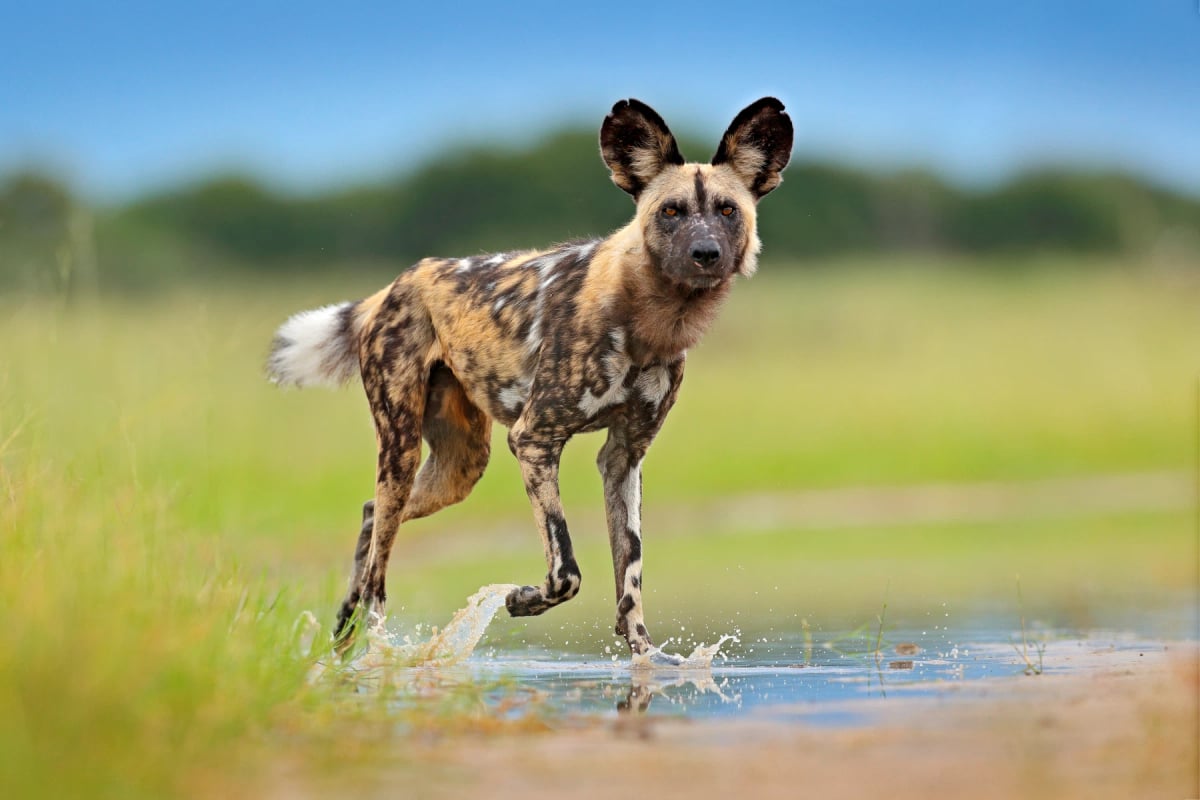
Wild Dog
Lycaon pictus
In Namibia, African wild dogs roam across the northeastern reaches of the country, particularly around Khaudum National Park and the Kavango-Zambezi transfrontier conservation area. Packs here benefit from vast, unfenced wilderness that allows them to follow prey across wide territories. Community conservancies have become vital to their survival, reducing conflict with farmers and giving these endangered hunters room to recover their numbers.
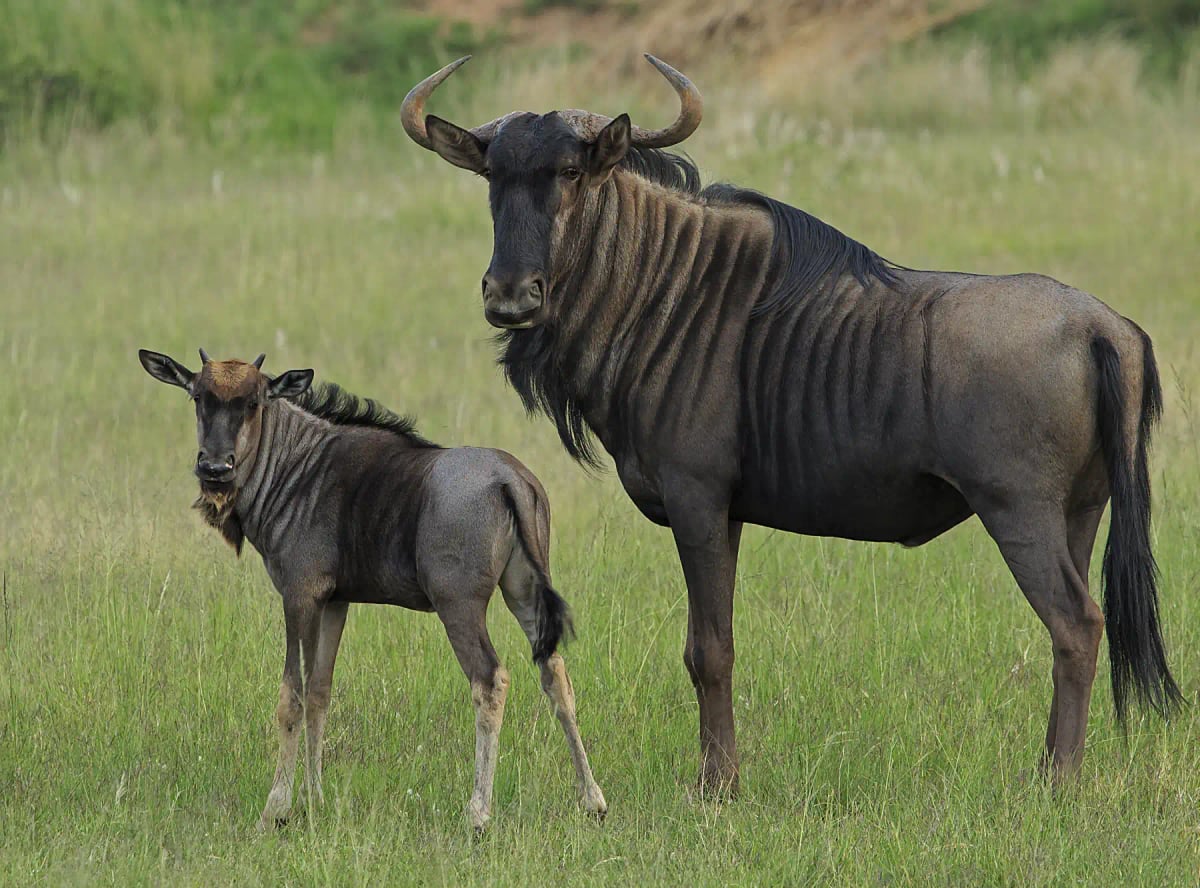
Wildebeest
Connochaetes spp.
Blue wildebeest are a common sight across Namibia's Etosha National Park, one of Africa's great wildlife destinations. The park's flat, dry terrain and seasonal waterholes concentrate large herds during the dry season, making wildebeest easy to observe. They share Etosha's pans and grasslands with zebras, elephants, and lions, forming one of the most diverse large mammal communities in southern Africa.
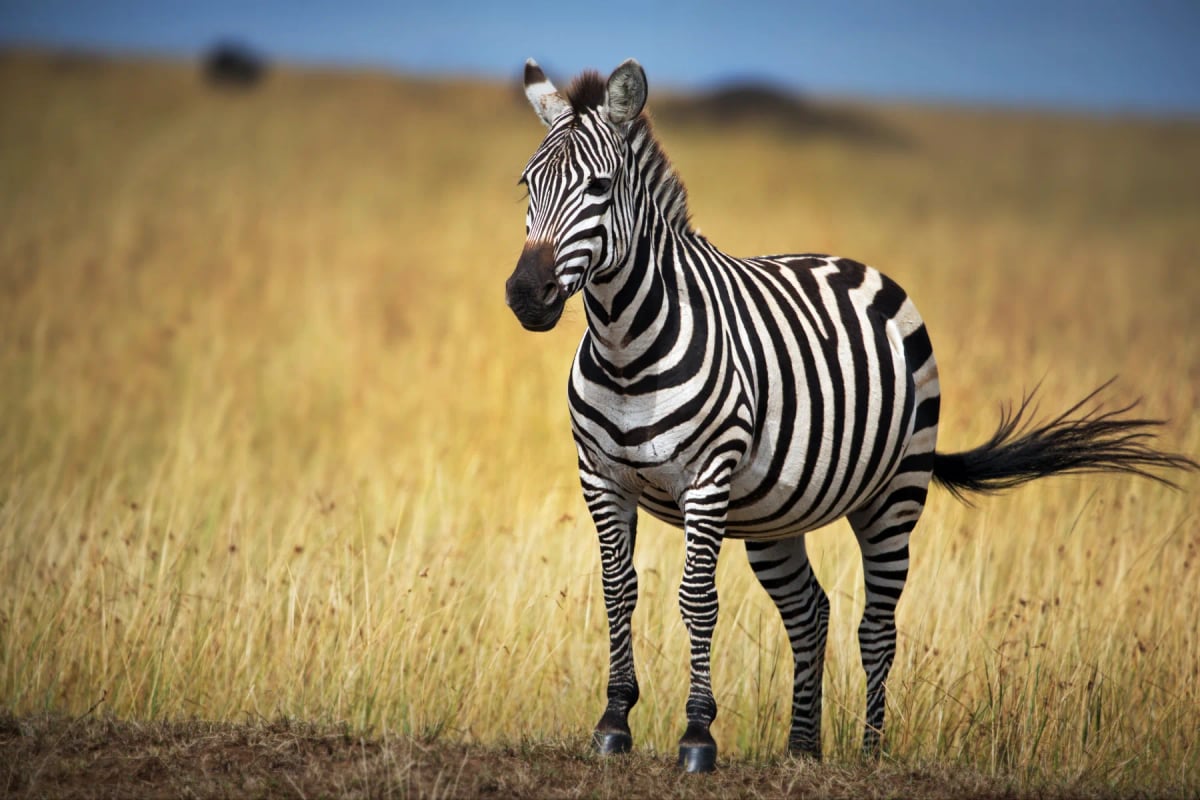
Zebra
Equus spp.
Namibia is one of the only countries with two zebra species. The Hartmann's mountain zebra lives along the rocky escarpment and dry hills of the northwest, well adapted to steep, arid terrain, while plains zebras range across Etosha National Park and other savanna areas further east. Namibia holds one of the largest mountain zebra populations in Africa, supported by extensive private and communal conservation land.
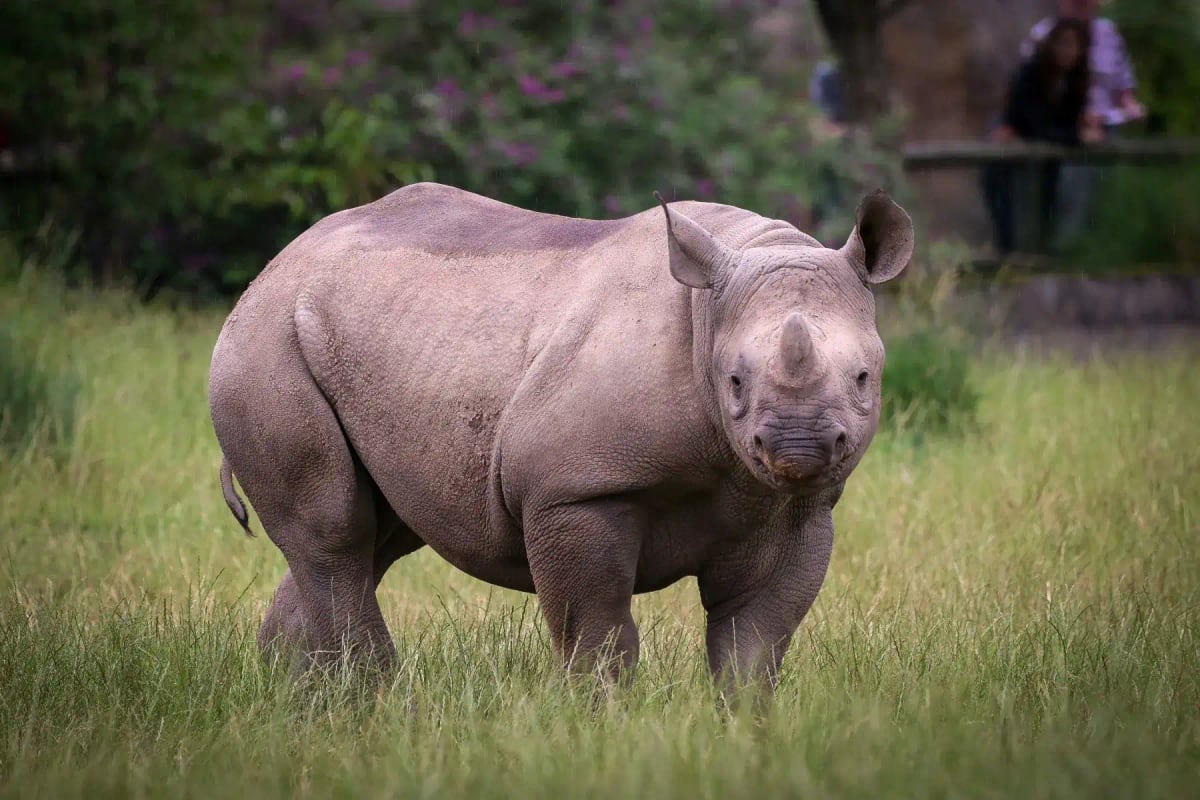
Black Rhinoceros
Diceros bicornis
Namibia hosts one of Africa's largest and most celebrated black rhinoceros populations, with a notable concentration found in the rugged landscapes of Damaraland and the Kunene Region. These desert-adapted rhinos survive in arid terrain with remarkable resilience. Communal conservancies, supported by the government and NGOs, have been central to the species' recovery here. Save the Rhino Trust has played a particularly important role in monitoring and protecting these animals for decades.
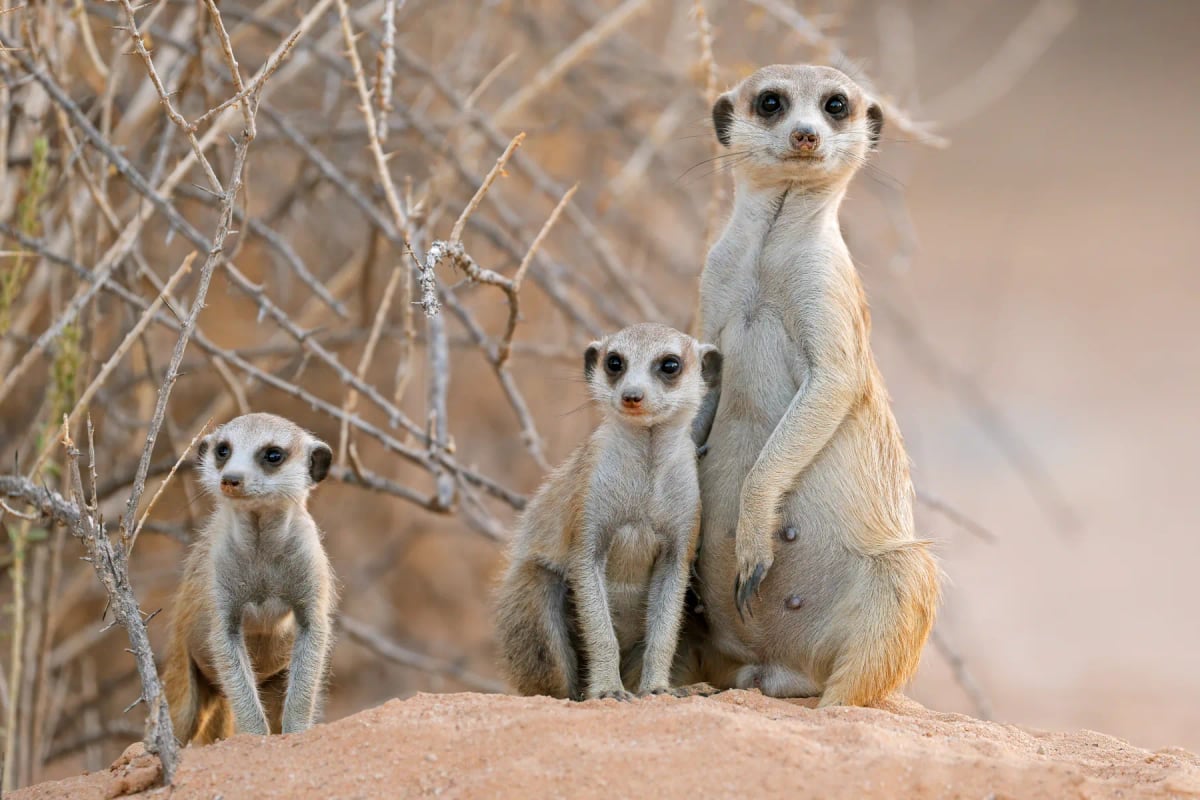
Meerkat
Suricata suricatta
The meerkat is a small mammal of the mongoose family found across Namibia's Kalahari and Namib desert edges. Families of up to 30 individuals share burrow networks, take turns standing guard, and forage for scorpions, beetles and lizards. Young meerkats learn from adults which prey is safe to eat. They are immune to several venoms and are listed as Least Concern by the IUCN.
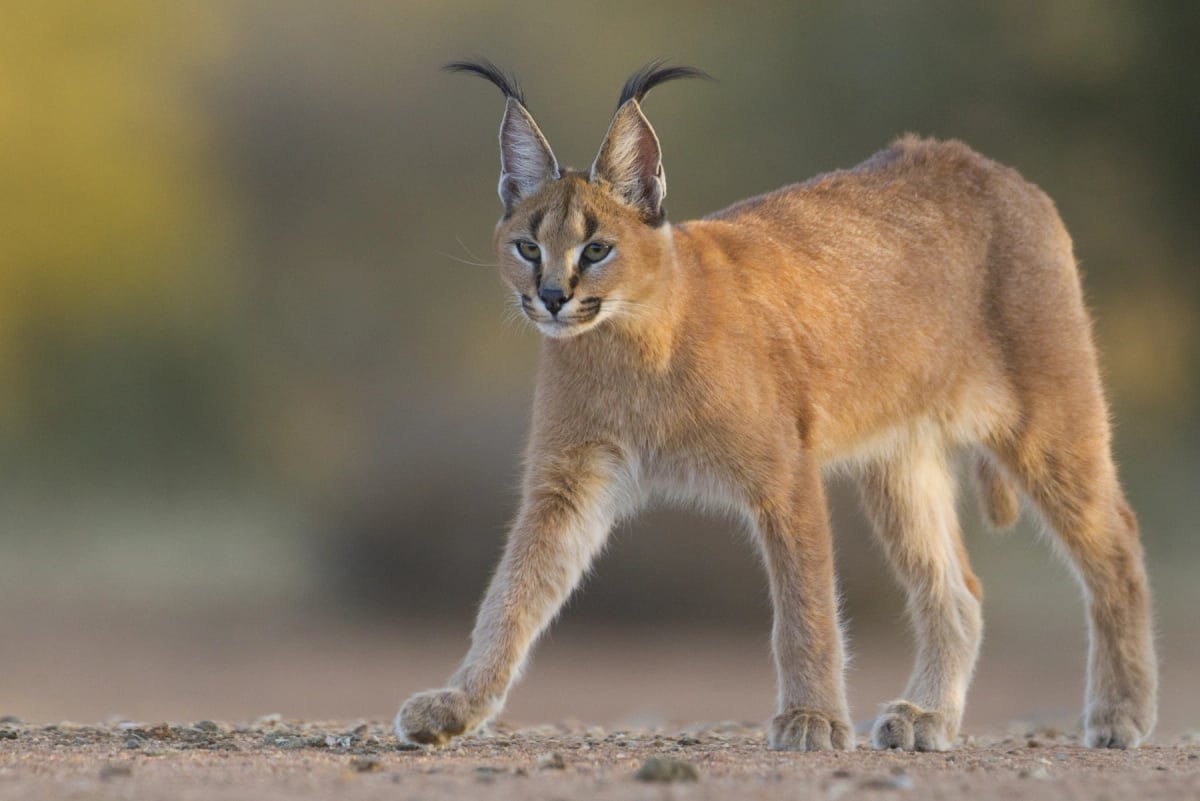
Caracal
Caracal caracal
Namibia holds one of the highest densities of caracals on the continent, particularly across commercial farmland in the central and northern regions. This abundance has led to widespread persecution, as farmers consider it a serious threat to small livestock and goats. Conservation efforts increasingly focus on non-lethal deterrents to reduce this conflict. The species occupies scrubland and dry savanna with ease. The IUCN classifies it as Least Concern.
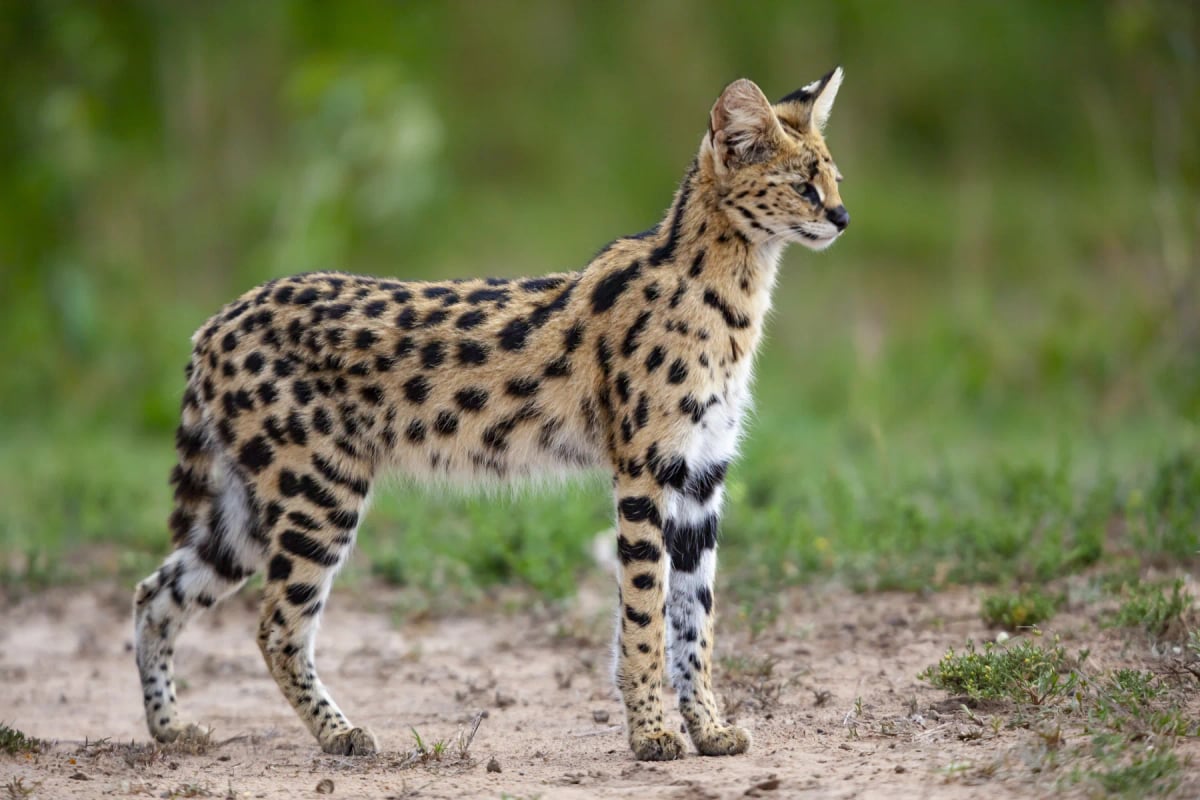
Serval
Leptailurus serval
In Namibia, servals are largely tied to the north and northeast of the country, where the Caprivi Strip and surrounding wetlands provide the moist grassland habitat they need. They are rarely seen in the arid central or coastal zones. Hunting alone and mostly at night, they prey chiefly on rodents. The IUCN lists the serval as Least Concern, and Namibia's communal conservancies offer some protection for local populations.
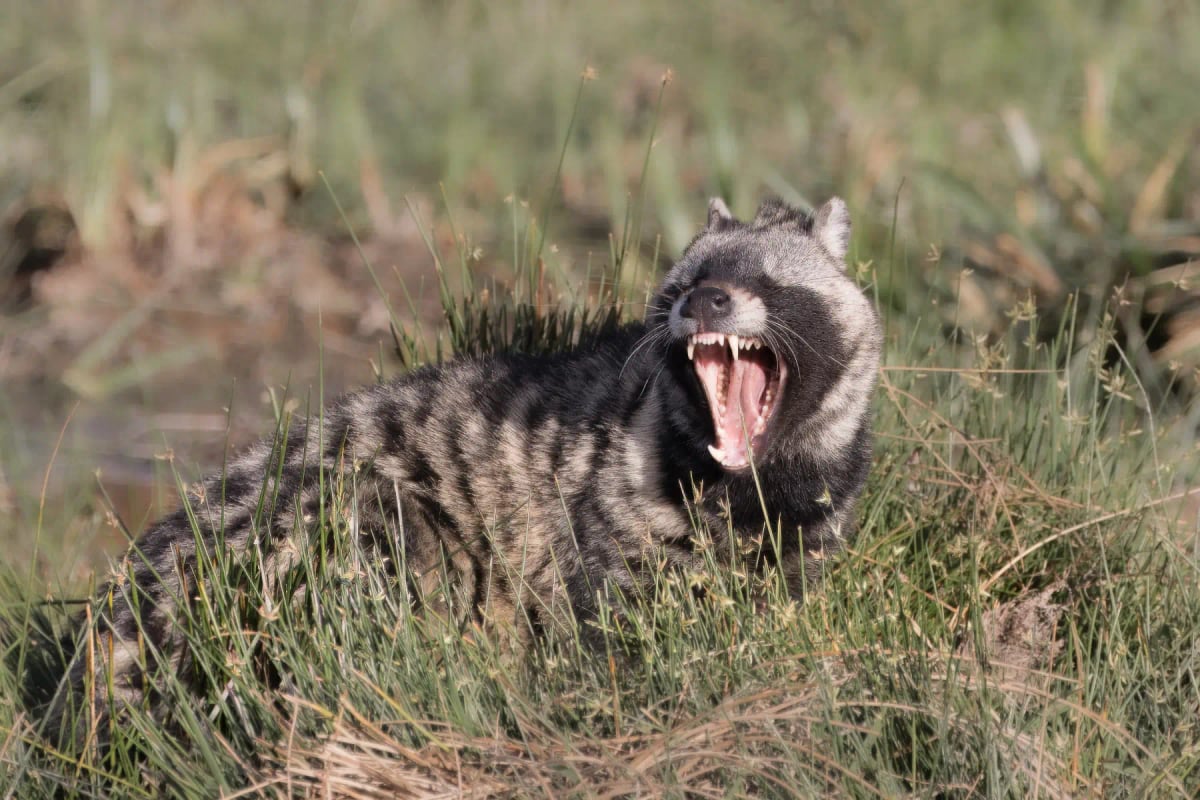
African Civet
Civettictis civetta
The African civet in Namibia is confined to the northeast, in the Caprivi Strip and Kavango region, where the Okavango and Zambezi river systems create a network of woodland, riverine forest and wetland. Bwabwata National Park and surrounding communal conservancies form the core of its range in the country. The rest of Namibia, dominated by the Namib Desert and arid Kalahari, provides no suitable habitat.
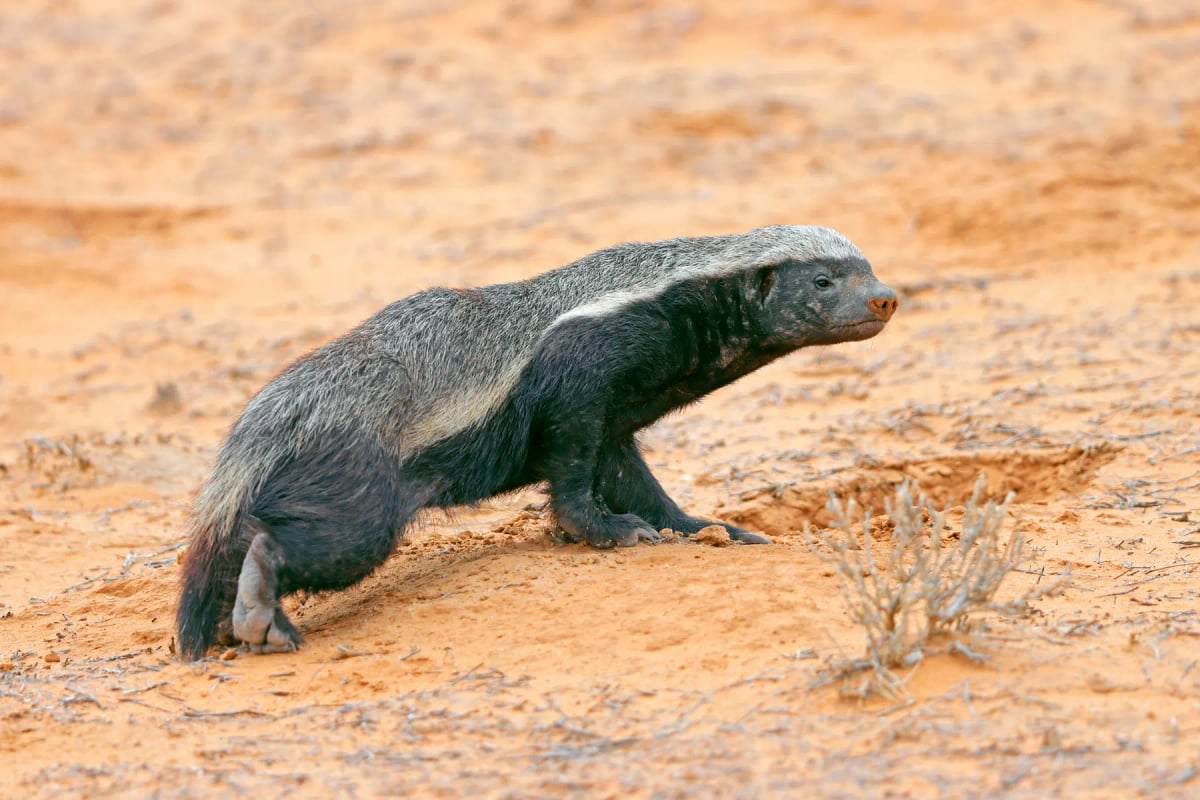
Honey Badger
Mellivora capensis
In Namibia, the honey badger ranges across the Kalahari, the fringes of the Namib desert and the savanna of the north, wherever loose soil makes digging possible. It feeds on rodents, reptiles and insects and is known to confront much larger predators when threatened. Its tolerance for arid, harsh conditions makes it one of the country's more resilient carnivores. The IUCN lists it as Least Concern.
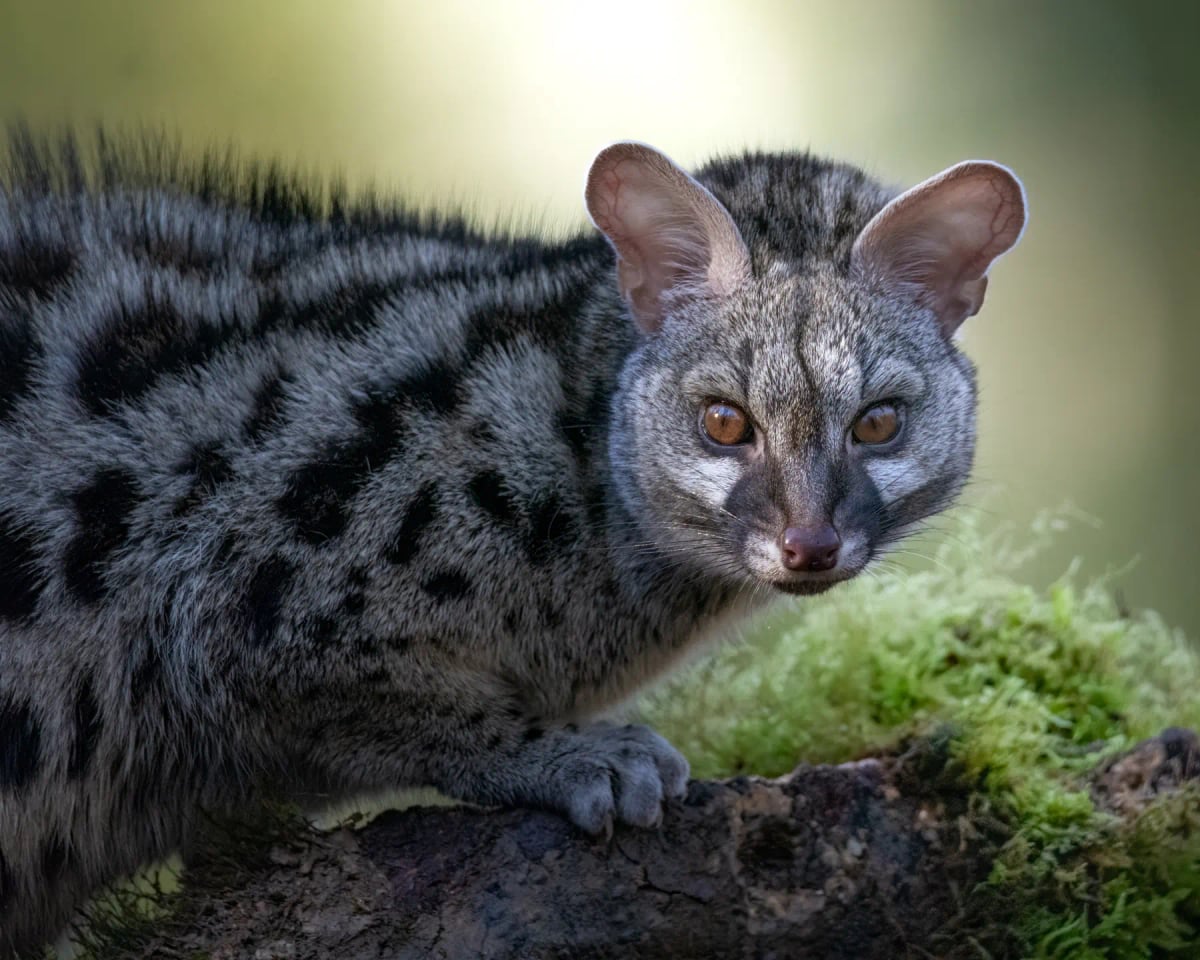
Common Genet
Genetta genetta
In Namibia, the common genet is mainly found in the north and northeast, in areas with enough tree cover and water sources, such as the Caprivi Strip and the woodlands bordering Botswana. It avoids the driest parts of the Namib Desert. Nocturnal and secretive, it rests in rocky shelters or hollow trees by day and hunts at night. IUCN status: Least Concern.
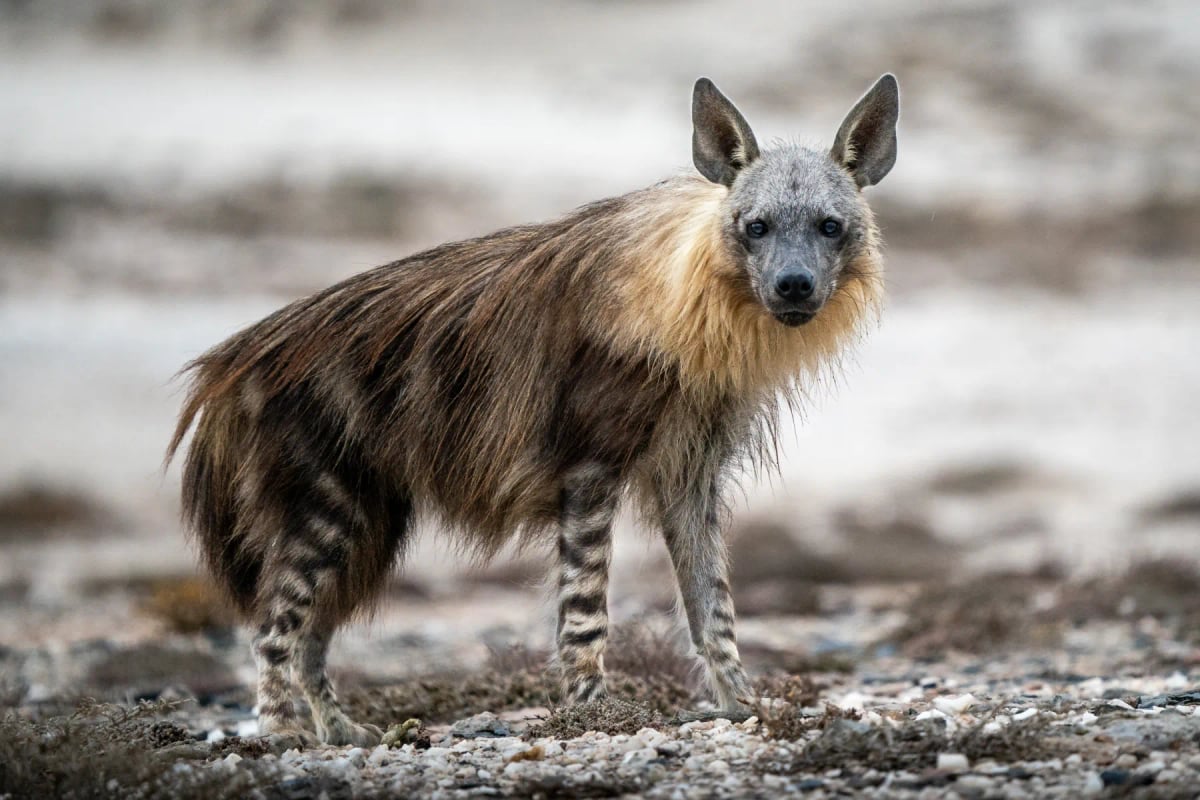
Brown Hyena
Parahyaena brunnea
Namibia's vast desert and dryland ecosystems make it a core range country for the brown hyena. Populations are particularly active across the Namib Desert edges and the central plateau, where the species scavenges carcasses left by larger predators and supplements its diet with wild fruits and insects. Despite legal protection, persecution by farmers on private land continues to suppress numbers. The IUCN lists it as Near Threatened.
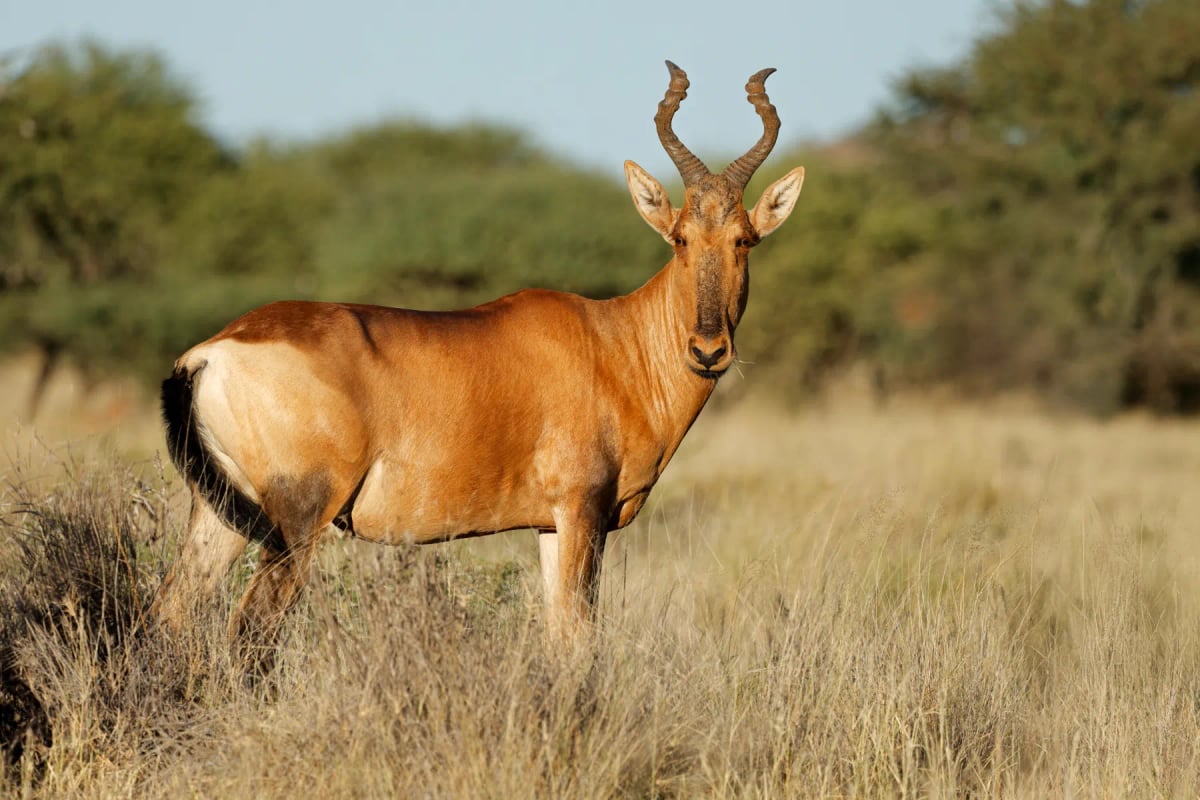
Hartebeest
Alcelaphus buselaphus
In Namibia, the red hartebeest is the subspecies most commonly seen, found across the savannas and semi-arid grasslands of the country's interior and north. It is a regular sight in Etosha National Park, where large herds graze alongside zebras and wildebeest. Privately managed game ranches also support healthy populations. The red hartebeest is well adapted to dry conditions and can go without water for extended periods when green forage is available.
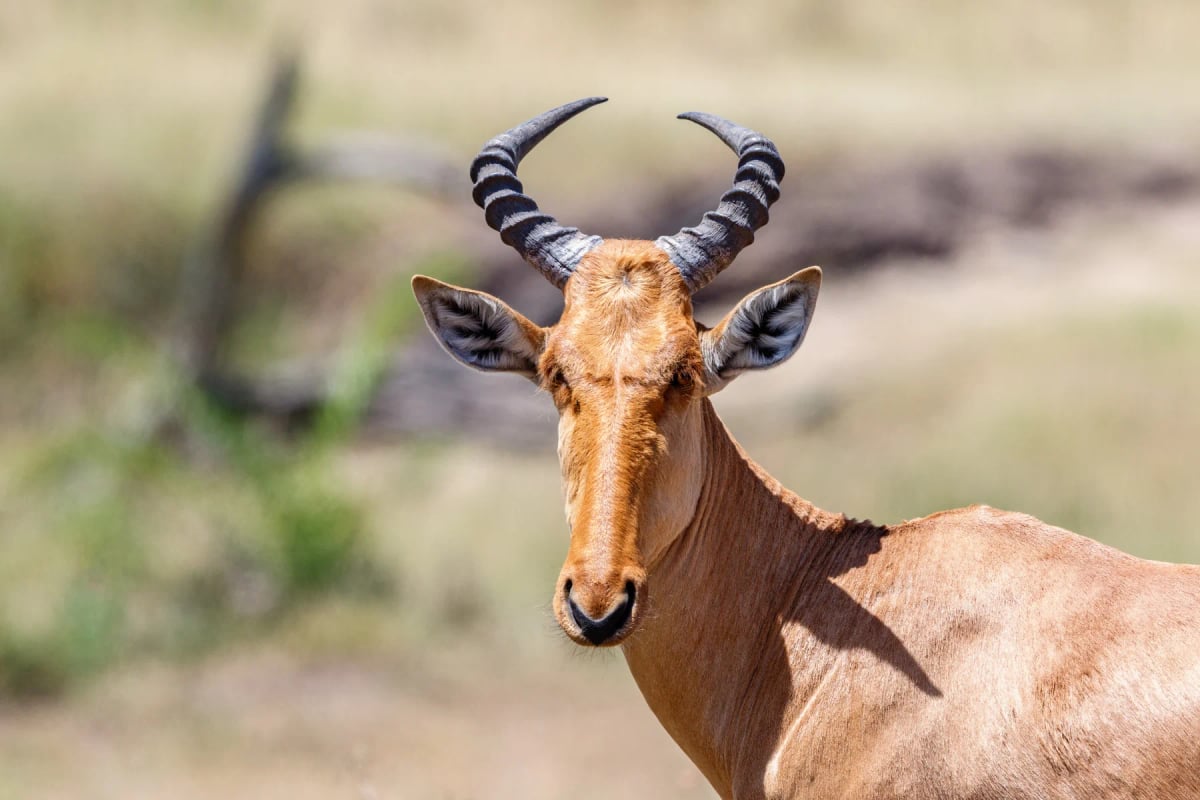
Topi
Damaliscus lunatus
In Namibia, topis are found in small numbers in the northeastern regions, particularly in and around the Caprivi Strip, now known as the Zambezi Region. This narrow corridor of floodplains and woodland connects to broader savanna ecosystems shared with neighboring countries. Their presence here represents the southern edge of their range, where suitable grassy habitats become less continuous. IUCN status: Least Concern.
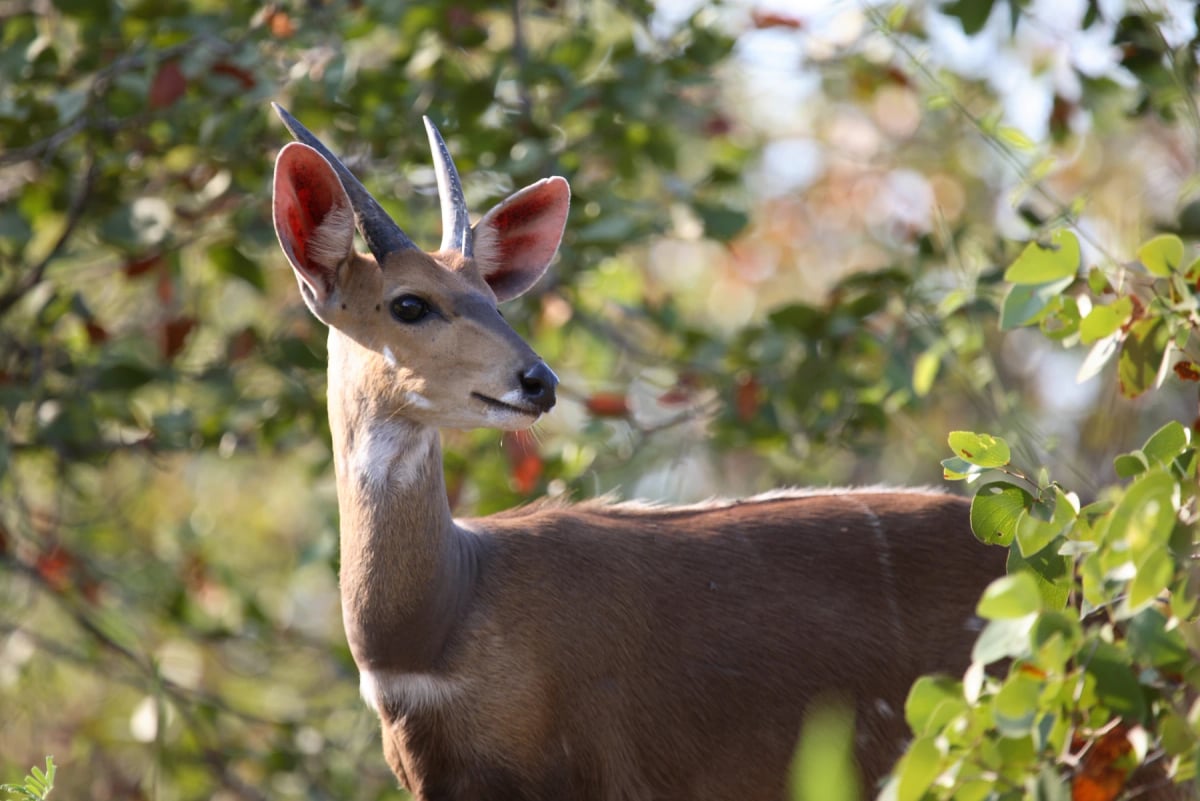
Bushbuck
Tragelaphus scriptus
In Namibia's woodlands and riparian zones, bushbucks inhabit vegetation dense enough to provide refuge from predators. These solitary antelopes browse primarily at night and during twilight hours on leaves, shoots, and fallen fruits. Males possess the species' characteristic spiraled horns, while females remain hornless. Their shy nature and preference for thick cover make bushbucks elusive inhabitants of Namibia's forested riverine areas and woodland edges.
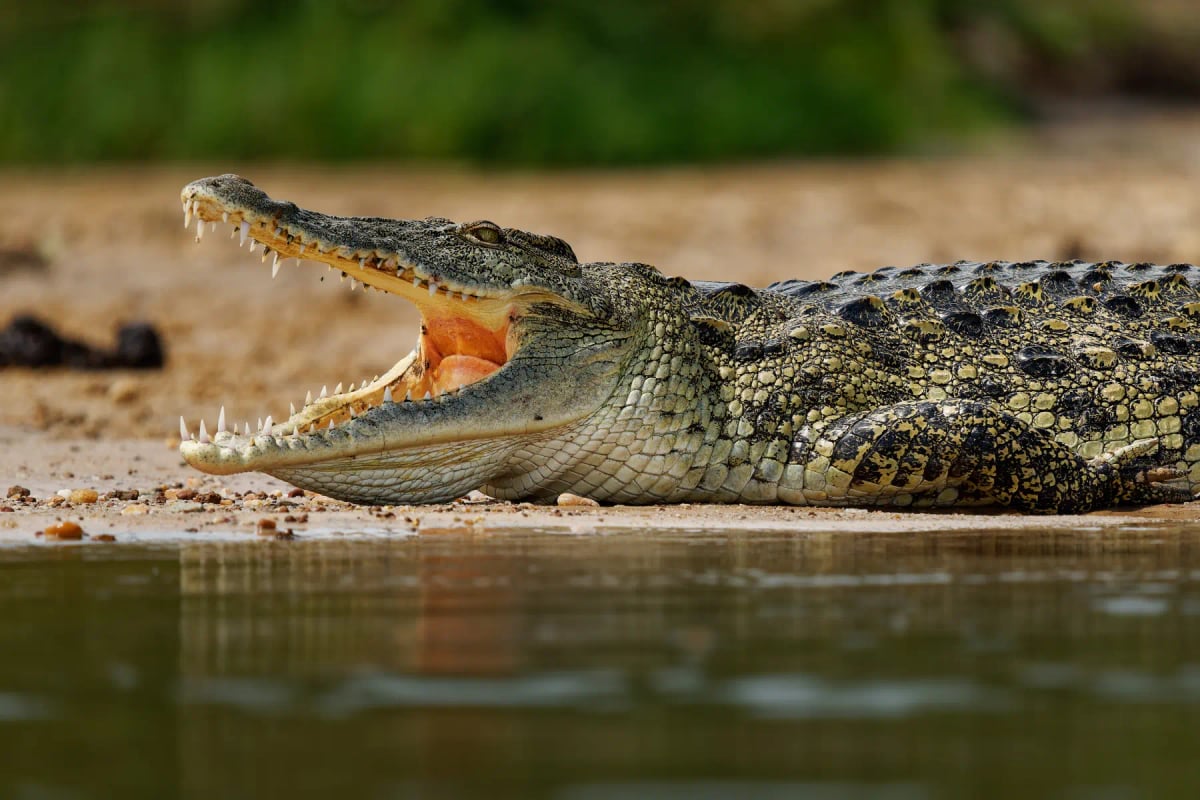
Nile Crocodile
Crocodylus niloticus
In Namibia, Nile crocodiles are largely restricted to the Kavango and Zambezi regions in the northeast, particularly along the Okavango, Kwando and Zambezi rivers. These are arid surroundings by African standards, making the rivers essential lifelines for both wildlife and people. Crocodiles here face pressure from habitat disturbance and human conflict. The IUCN rates the species as Least Concern overall, but Namibia's population is considered small and regionally significant.
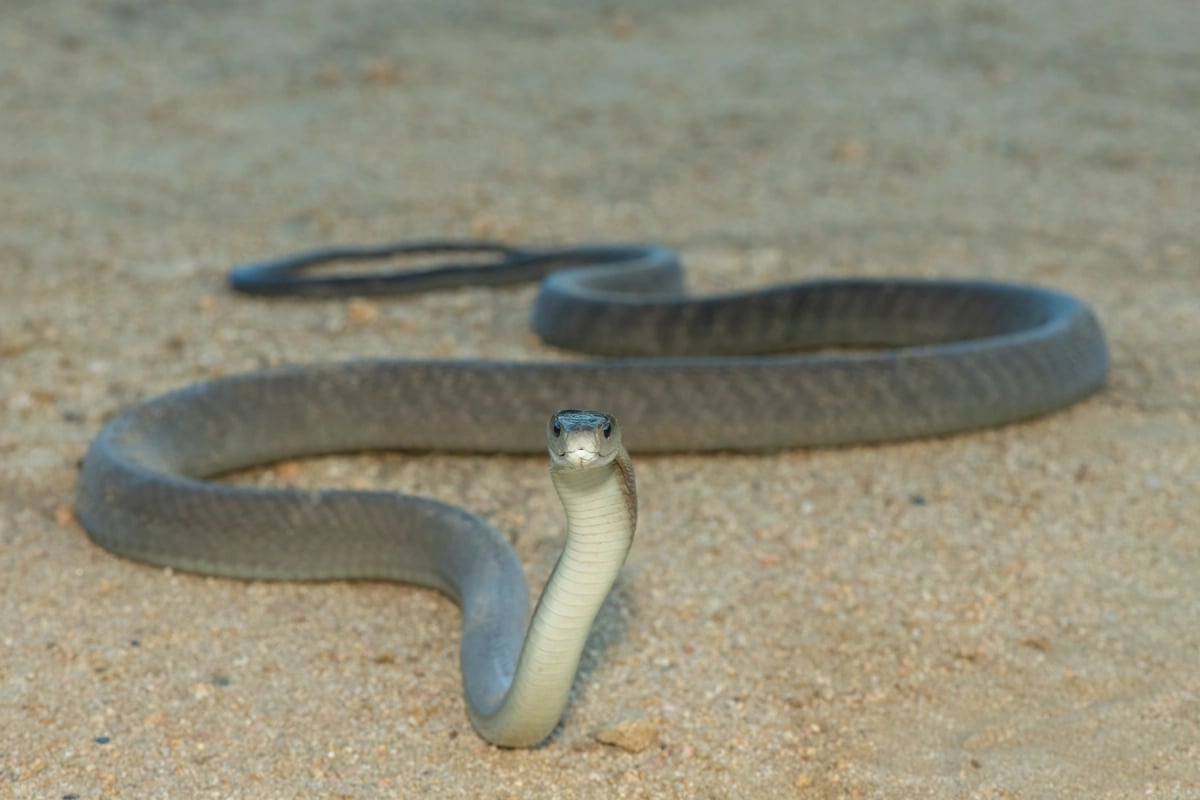
Black Mamba
Dendroaspis polylepis
In Namibia, the black mamba (Dendroaspis polylepis) is most commonly encountered in the bushveld and rocky outcrops of the northeast and the Kavango region, avoiding the country's central desert zones. Its olive to gray body blends well with dry scrub and fallen branches. Classified as Least Concern by the IUCN, it plays an important role in controlling rodent populations across Namibia's semi-arid ecosystems.
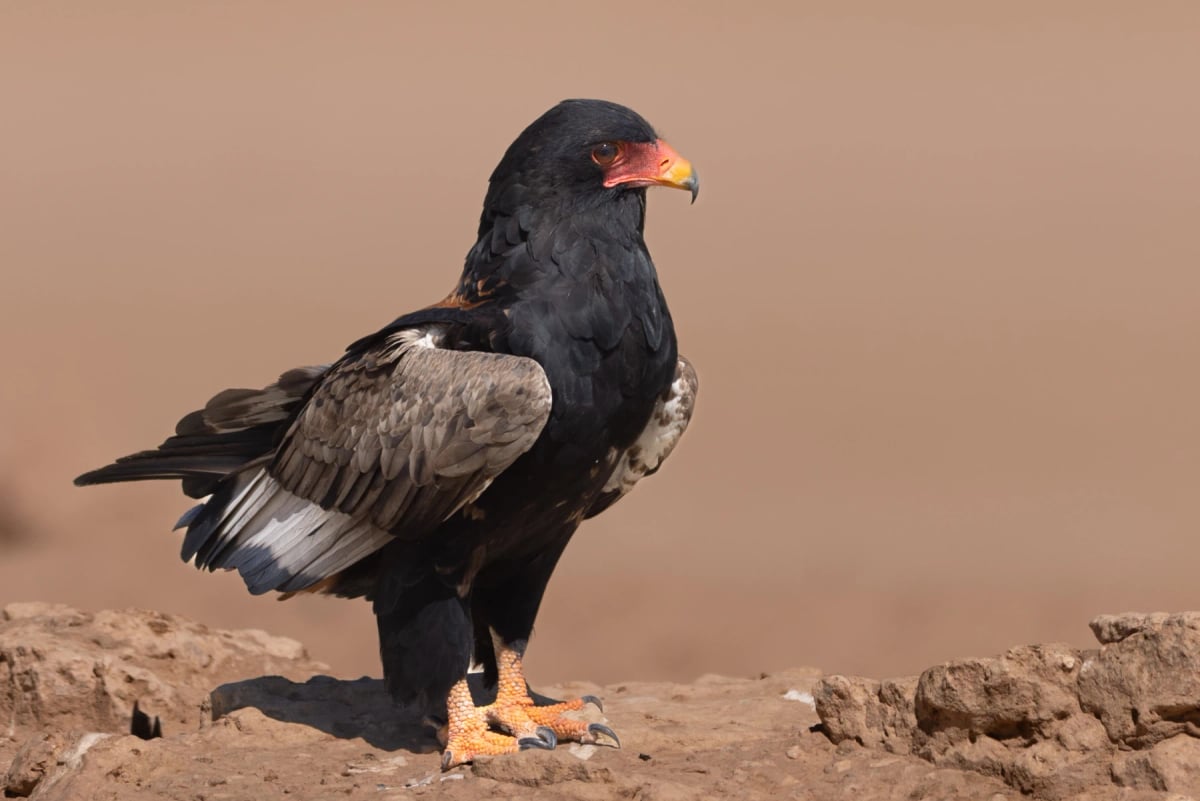
Bateleur
Terathopius ecaudatus
The Bateleur is a resident of Namibia's northeastern bushveld and savanna, with its stronghold in the Kavango and Zambezi regions as well as Etosha National Park. It spends much of the day in the air, covering great distances in search of food with its distinctive tilting flight. Classified as Endangered by the IUCN, it is threatened by poisoning, power line collisions, and habitat degradation.
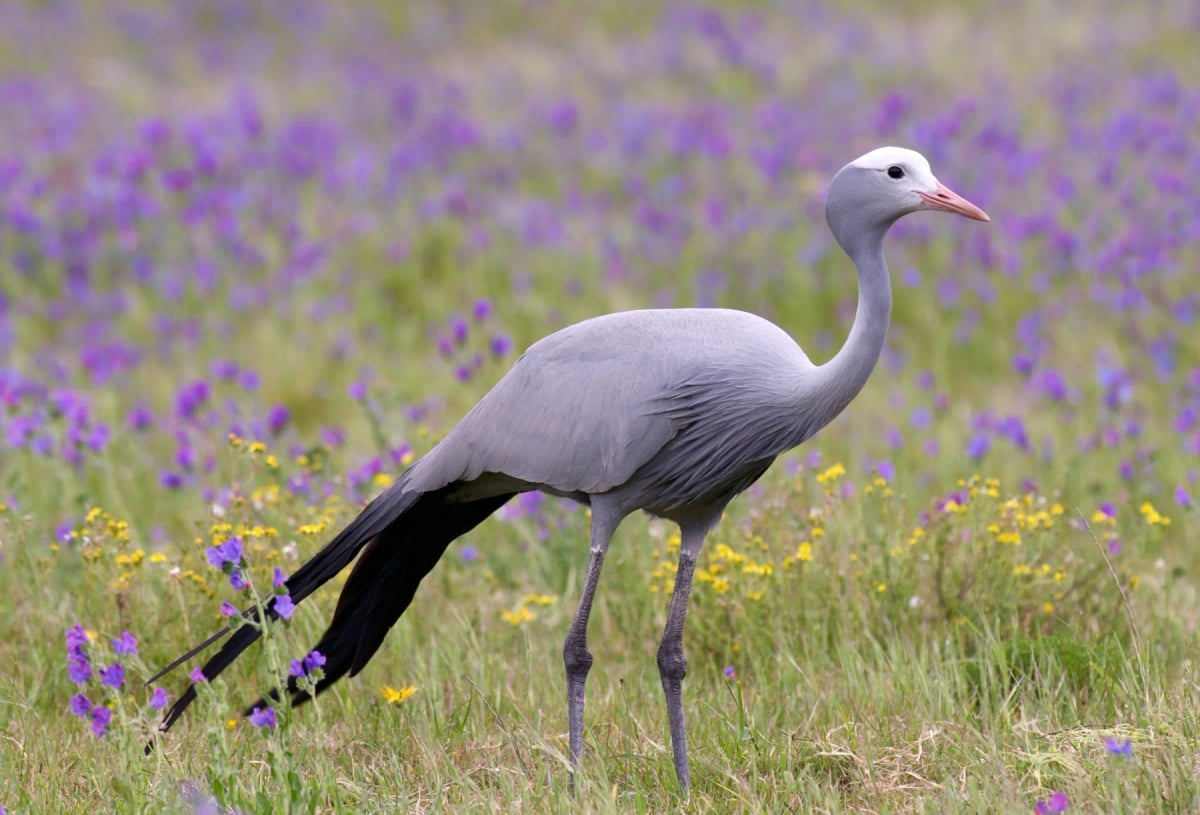
Blue Crane
Anthropoides paradiseus
The Blue Crane occurs in Namibia at the southern fringe of its range, appearing mainly in the grasslands of the country's southern regions. Sightings here are far less frequent than in South Africa, where the vast majority of the global population resides. The IUCN lists the species as Vulnerable, and any Namibian population contributes meaningfully to the broader conservation picture for this distinctive bird.
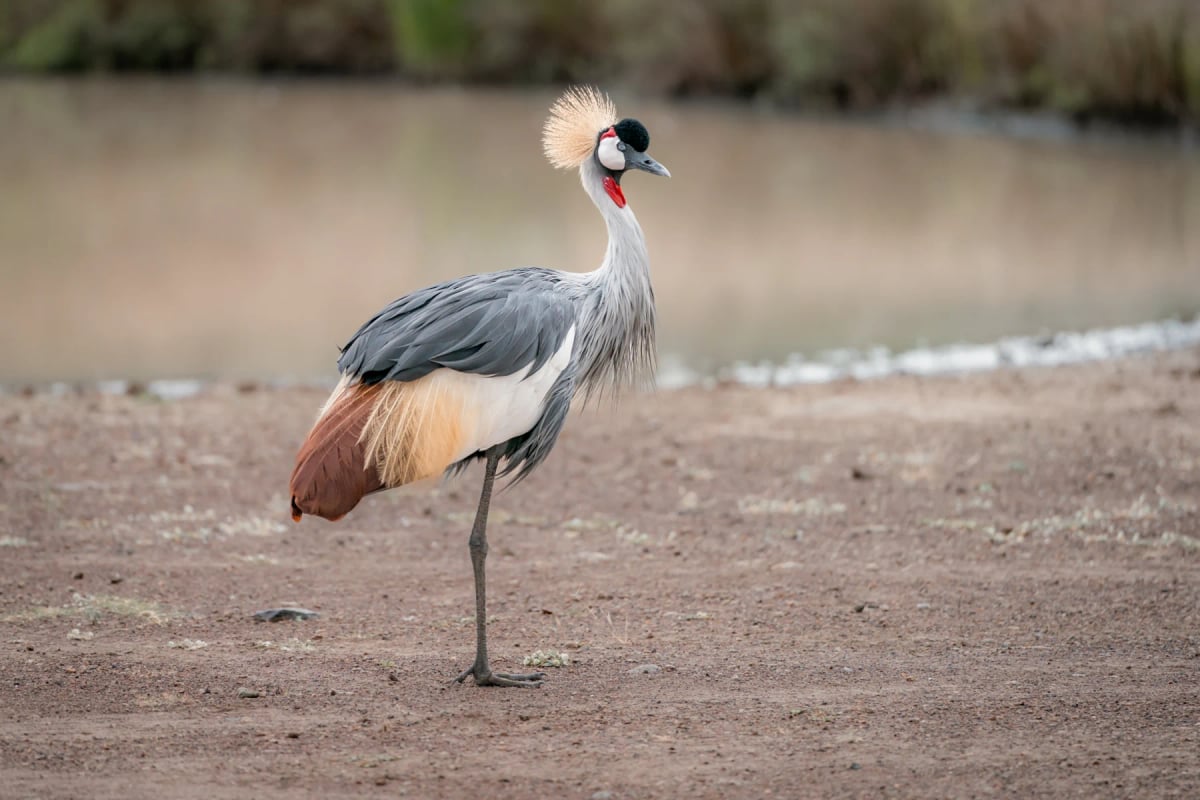
Grey Crowned Crane
Balearica regulorum
The Grey Crowned Crane reaches the southwestern edge of its range in Namibia, where it is found in the northeast, especially in the Caprivi Strip, known today as the Zambezi Region. This area's floodplains and wetlands connect to a broader network of habitats shared with Botswana and Zambia. The bird forages for seeds, insects, and small animals in open, waterlogged ground. Namibia's population is small, and the species is classified as Endangered globally.
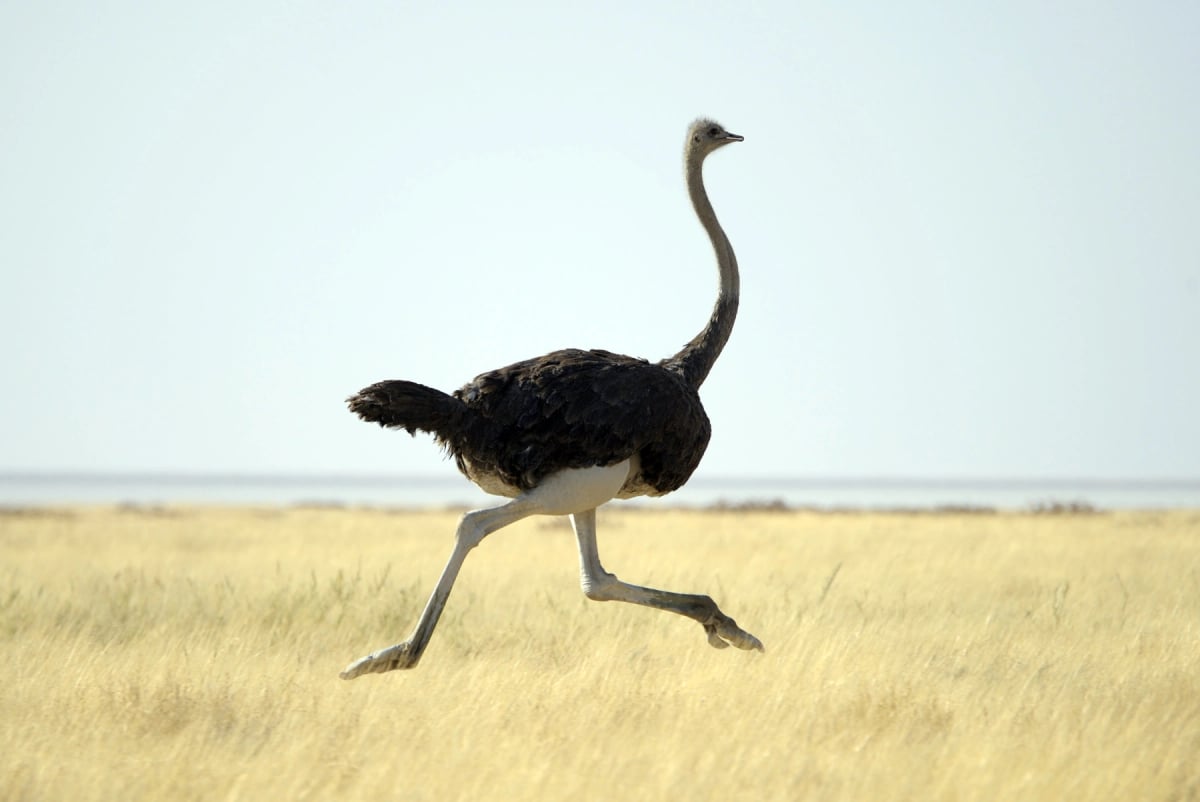
Ostrich
Struthio camelus
Namibia holds some of southern Africa's strongest ostrich populations, particularly across the Namib Desert edges, the Kalahari, and Etosha National Park. Adapted to life in arid conditions, they extract moisture from the plants they eat and can endure intense heat for long stretches. Ostriches are also commercially farmed in Namibia, especially in the south. In the wild, they remain widespread and are listed as Least Concern.
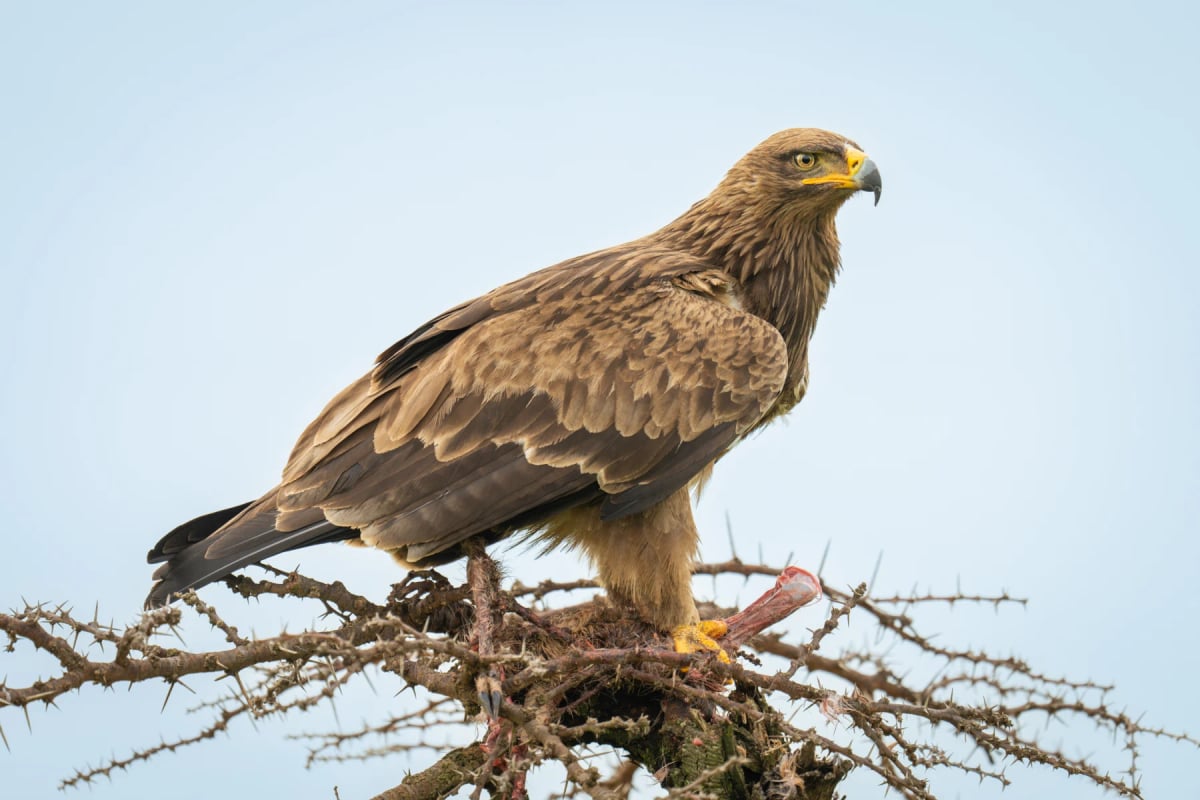
Steppe Eagle
Aquila nipalensis
Namibia's open arid plains and savanna regions in the east and northeast receive Steppe Eagles during the austral summer, when the birds have migrated south from Central Asia. They are often spotted in groups near livestock carcasses or termite columns. Namibia represents one of the southernmost parts of this eagle's wintering range in Africa. The IUCN lists the species as Endangered, with ongoing declines driven by poisoning and habitat degradation.
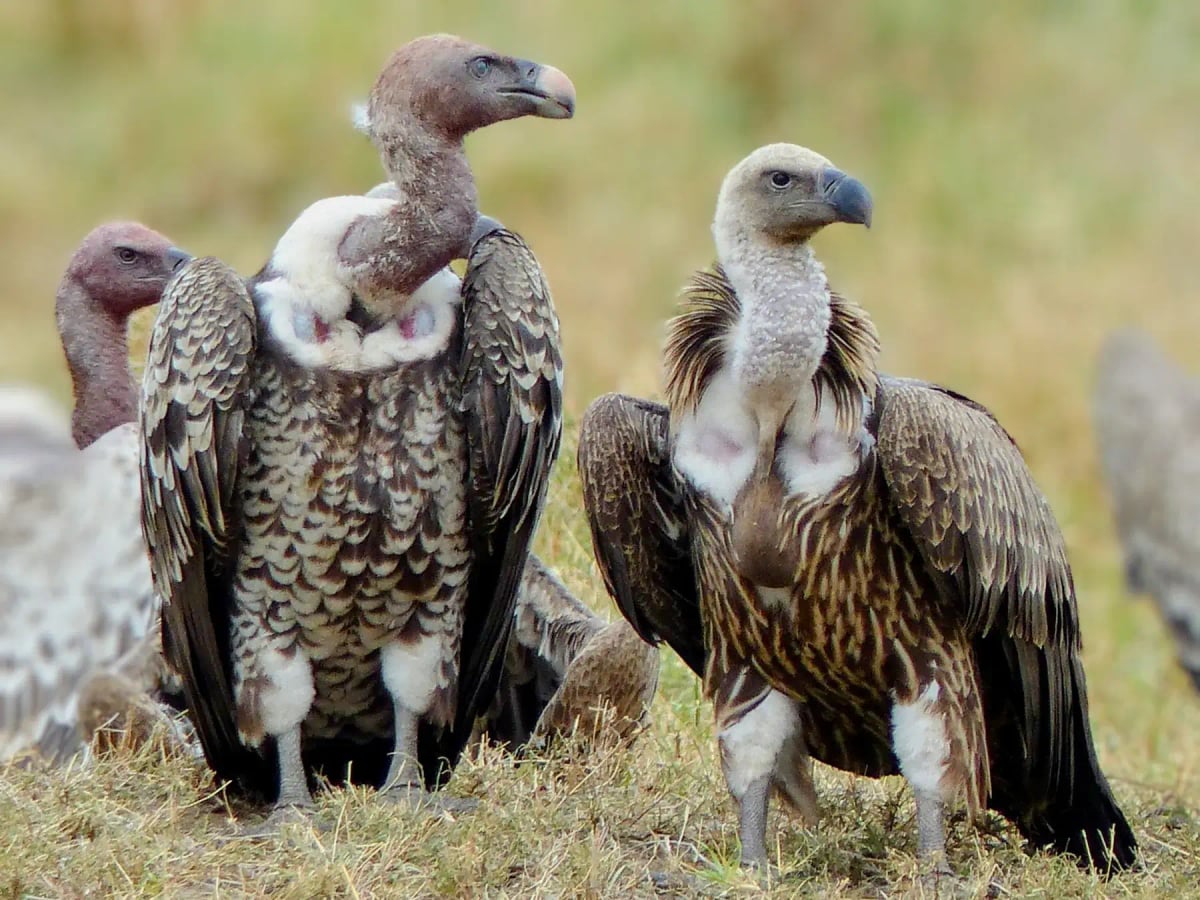
White backed Vulture
Gyps africanus
In Namibia, the white backed vulture inhabits the northeastern savannas, particularly around Etosha National Park and the Caprivi Strip, where wildlife is most abundant. Communal conservancies have become increasingly important for its protection outside formal reserves. Critically endangered, this vulture depends on vast open landscapes to find food, and poisoning remains its most serious threat across the region.
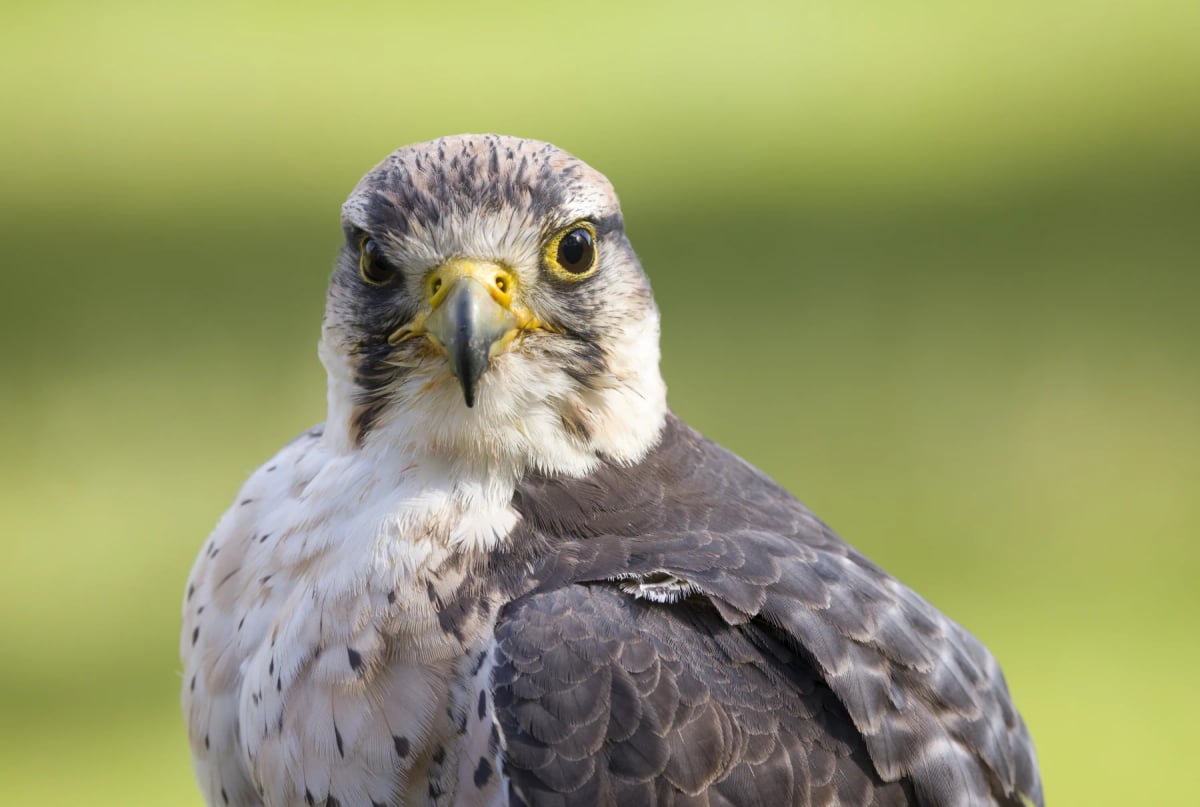
Lanner Falcon
Falco biarmicus
The lanner falcon is well suited to Namibia's wide open landscapes, from the rocky escarpments of the central highlands to the edges of the Namib Desert. Pairs nest on cliff ledges and are territorial throughout the year. They hunt birds using coordinated, low pursuit flights. The IUCN lists the species as Least Concern, though electrocution on power lines poses a real risk across southern Africa.
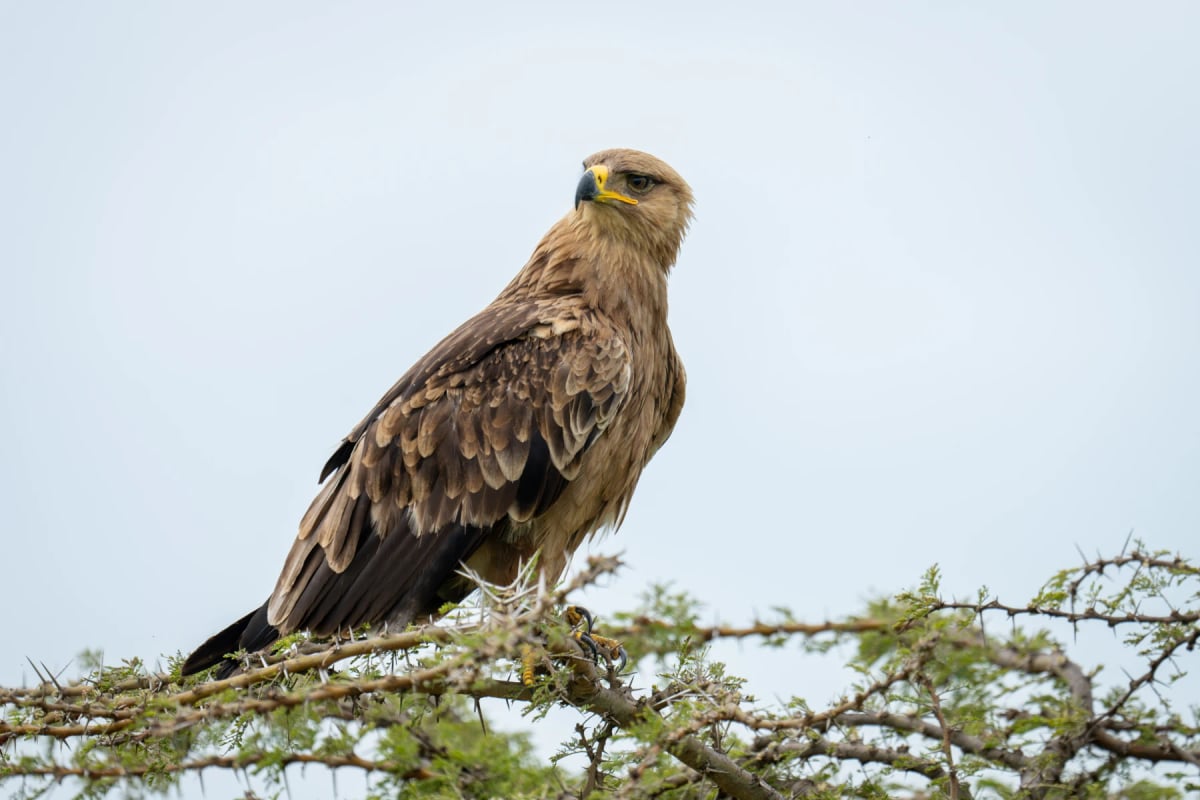
Tawny Eagle
Aquila rapax
In Namibia, the tawny eagle is found across open savanna and thornbush habitats, particularly in the north and east of the country, including Etosha National Park. It soars on thermals over flat terrain and perches prominently on dead trees. Poisoning linked to human-wildlife conflict and electrocution on power lines are the main threats. Namibia holds a meaningful population, but numbers have declined in line with the global trend. The IUCN lists it as Vulnerable.
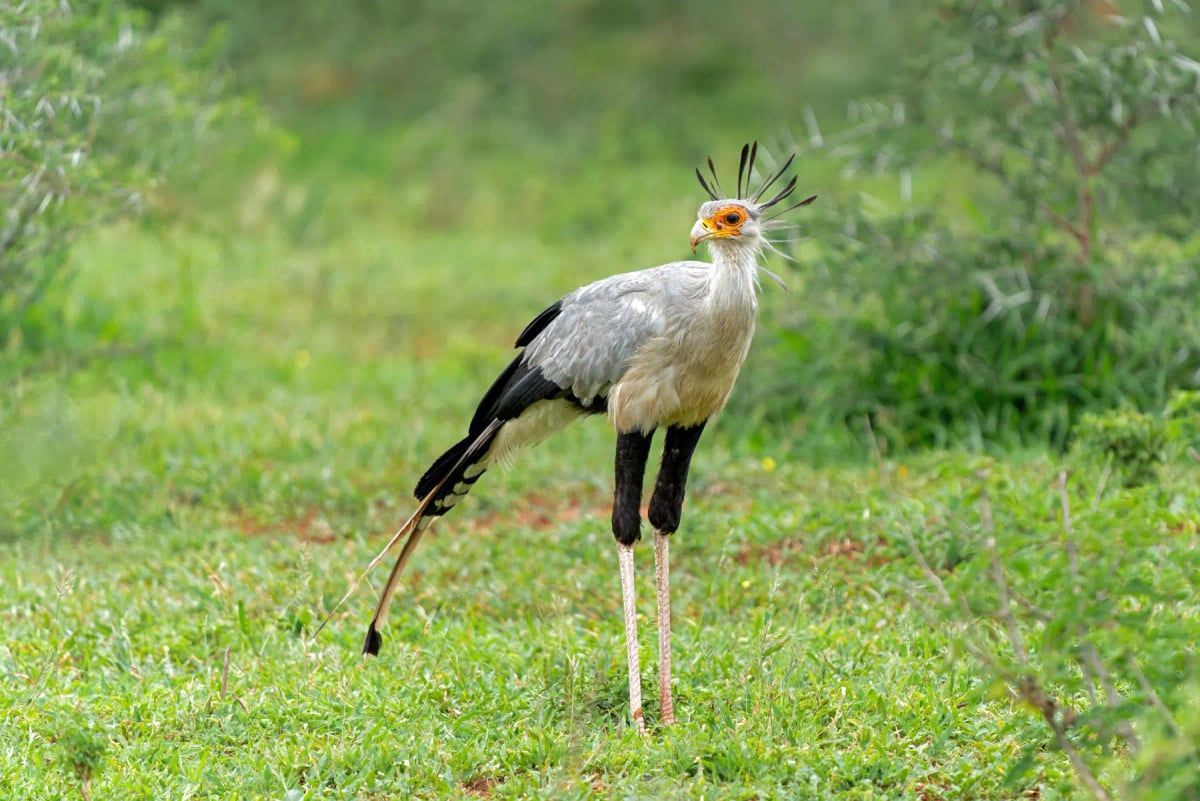
Secretary Bird
Sagittarius serpentarius
Namibia's vast open savannas and thornbush plains provide good habitat for the secretary bird, particularly in the north and northeast of the country. It hunts on foot across dry grasslands, targeting venomous snakes and rodents. Large stick nests are built on flat-topped trees typical of Namibian bush. Despite suitable terrain, declining numbers linked to habitat loss have earned it Endangered status from the IUCN.
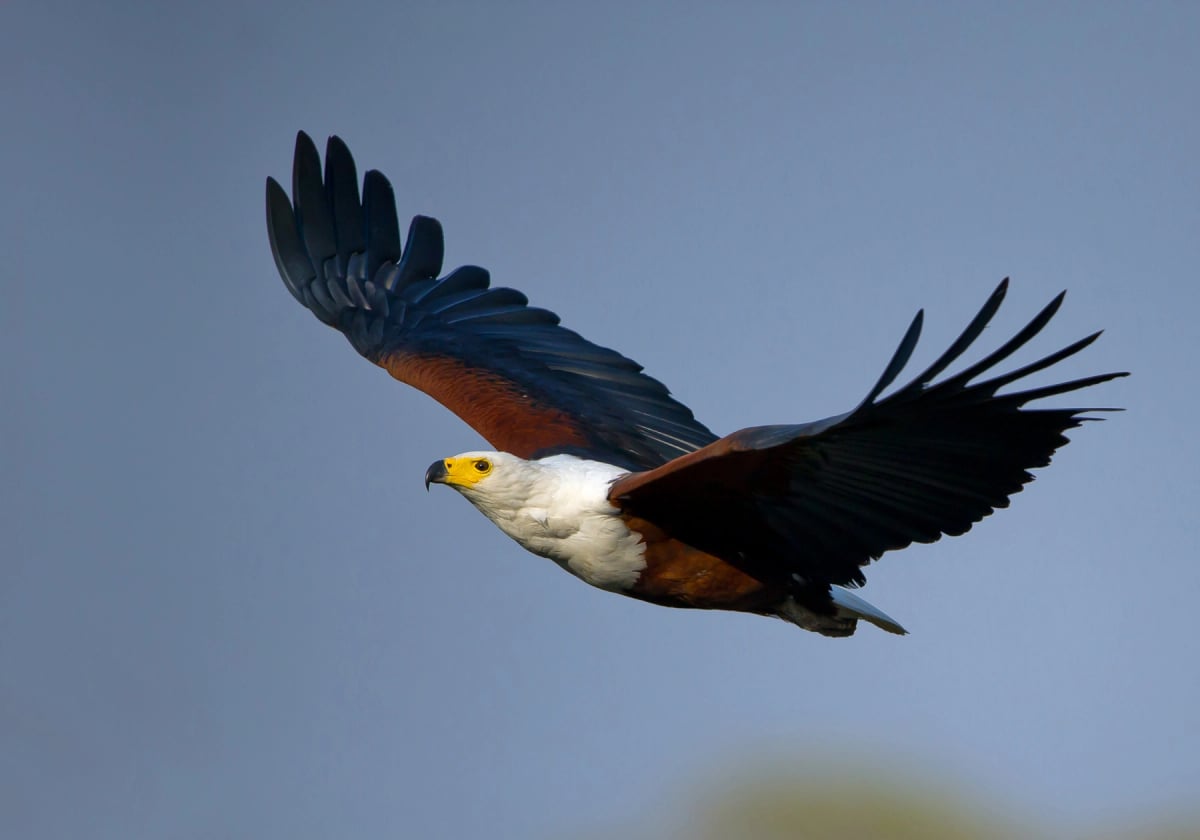
African Fish Eagle
Haliaeetus vocifer
The African fish eagle is the national bird of Namibia and is found near the country's permanent rivers and wetlands, mainly in the north and northeast. The Caprivi Strip, with the Okavango, Zambezi, Chobe and Kwando rivers, supports the largest concentrations. The Orange River along the southern border also holds resident pairs. In this largely arid country, the eagle is tightly restricted to areas with reliable water, making its presence in the Caprivi wetlands especially notable.
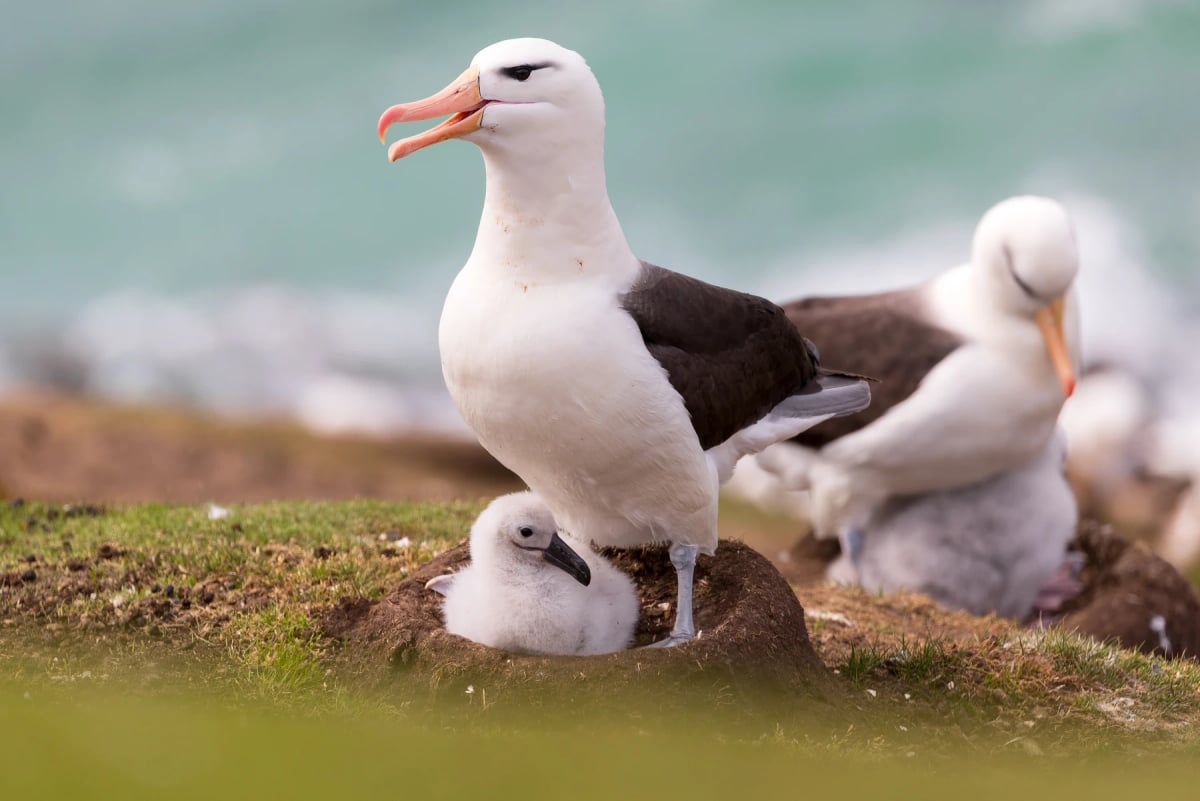
Black browed Albatross
Thalassarche melanophris
The Black Browed Albatross visits Namibian waters during the non-breeding season, supported by the cold, fish-rich Benguela Current that runs along the southwestern African coast. These highly productive waters attract large numbers of seabirds from the Southern Ocean. Namibia's trawl and longline fisheries operating in the Benguela ecosystem present bycatch risks, and the country has been working toward better seabird conservation practices. IUCN status: Near Threatened.
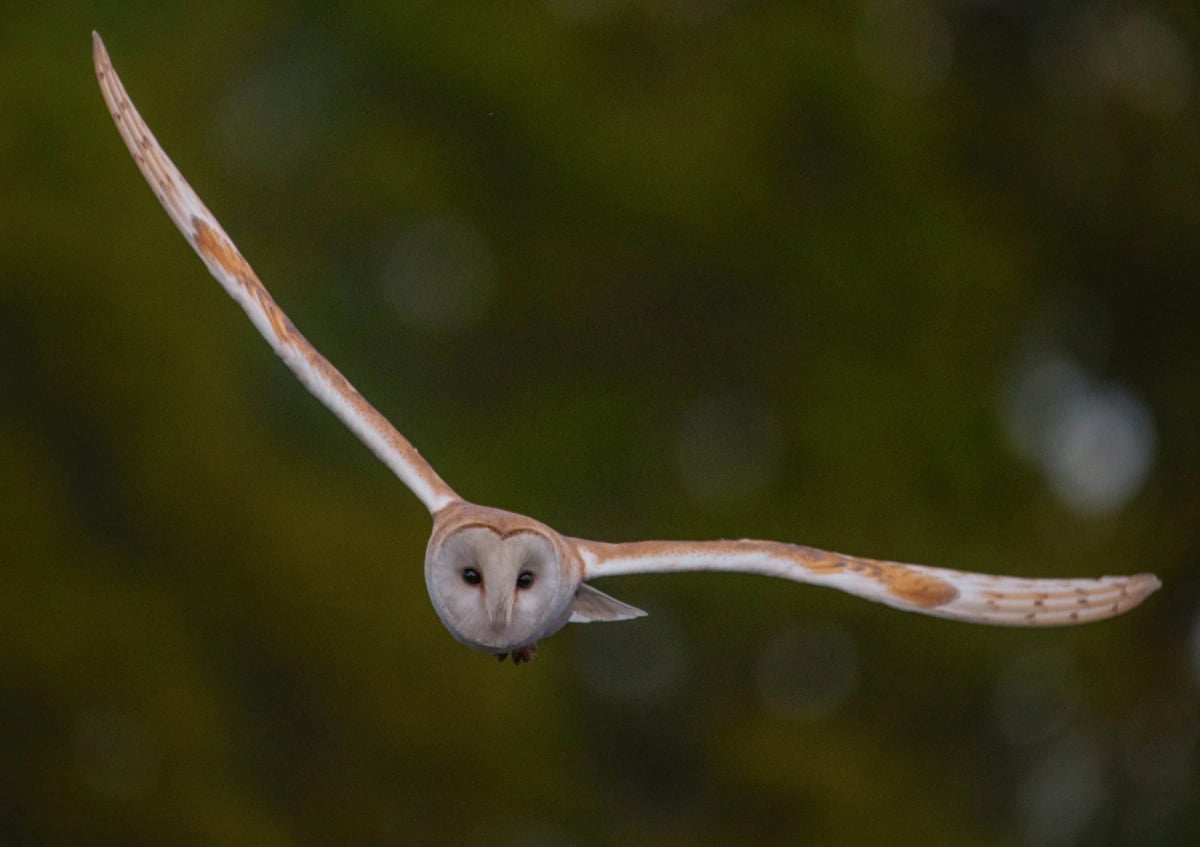
Barn Owl
Tyto alba
The barn owl is found across Namibia in open savanna, farmland, and areas near towns and villages, particularly in the north and northeast where rainfall supports more productive habitat. It nests in old buildings, cliff faces, and hollow trees, and hunts rodents at night using its exceptional hearing. In Namibia's farming communities, particularly in the commercial and communal farmlands of the north, it is valued as a natural pest controller. It is less commonly encountered in the hyperarid Namib Desert along the coast.
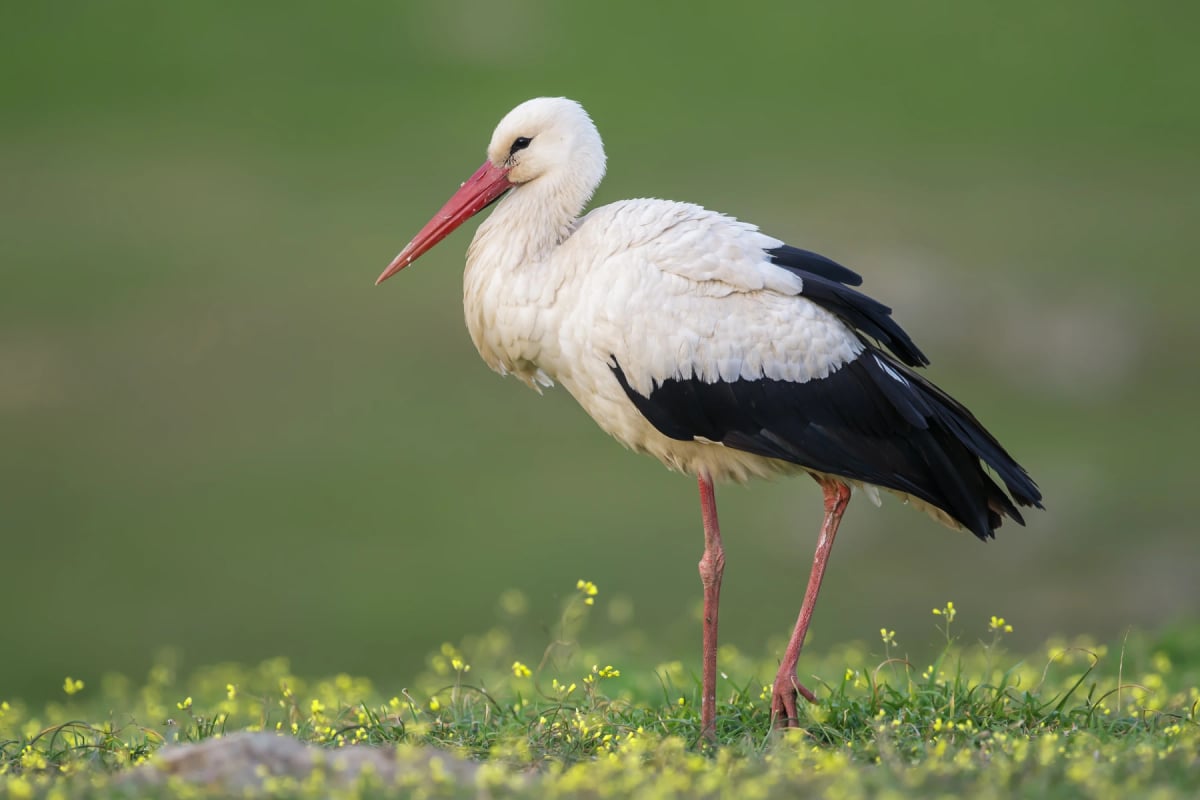
Stork
Ciconia ciconia
White storks arrive in Namibia during the austral summer, wintering across the northern and central parts of the country. They favour open grasslands, thornbush savanna, and farmland where food is easy to find. The species often gathers in large flocks, sometimes following locust swarms or foraging near waterholes. The IUCN lists the white stork as Least Concern, and Namibia plays a role in supporting its African wintering range.
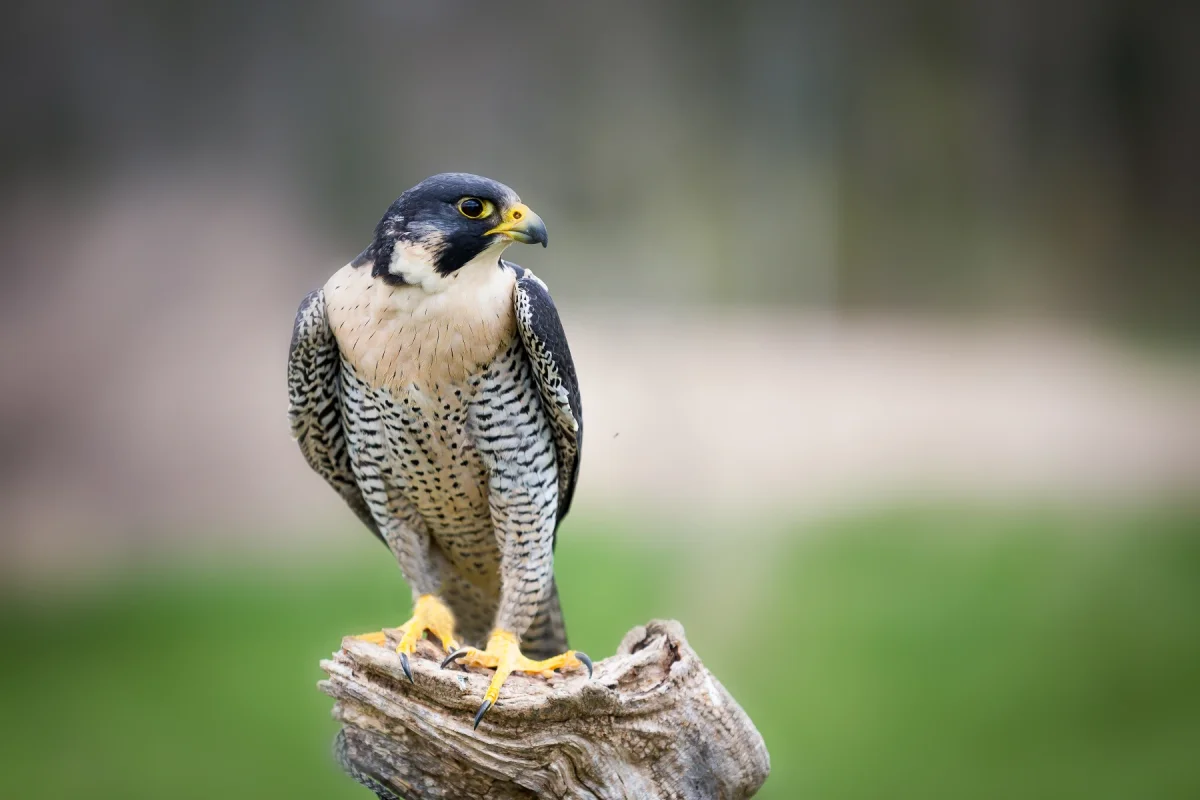
Peregrine Falcon
Falco peregrinus
Namibia's dramatic desert landscapes, including the cliffs of the Namib Desert and the rocky escarpments of the interior, provide ideal nesting sites for the peregrine falcon. Resident pairs breed on exposed cliff faces, while migrant birds from the northern hemisphere supplement the population during winter months. The species hunts shorebirds along the Skeleton Coast and doves and pigeons over inland areas. Its IUCN status is Least Concern.
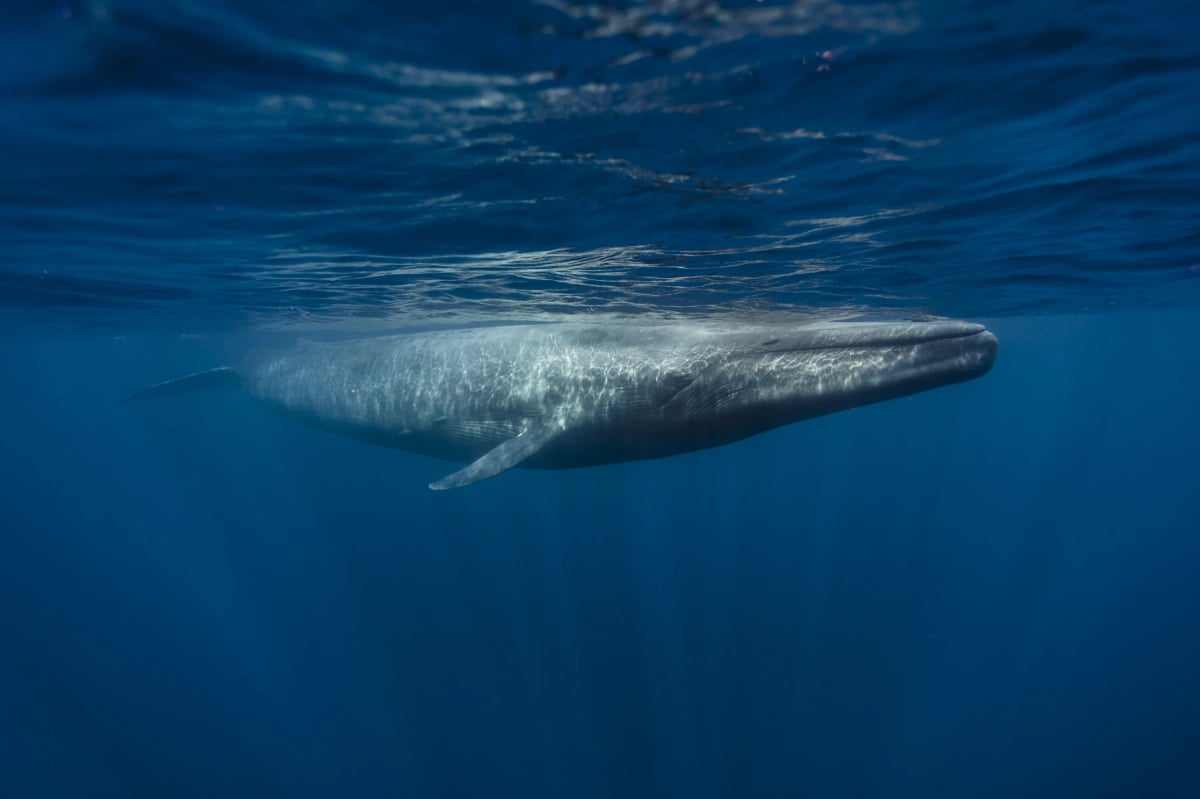
Blue Whale
Balaenoptera musculus
The cold, nutrient-rich Benguela Current running along Namibia's Atlantic coastline creates highly productive waters that attract blue whales during their seasonal movements. This upwelling system supports dense concentrations of krill, a critical food source for these enormous animals. As the largest creatures ever to have lived, blue whales passing through Namibian waters represent one of the most remarkable wildlife events along Africa's southwestern coast.
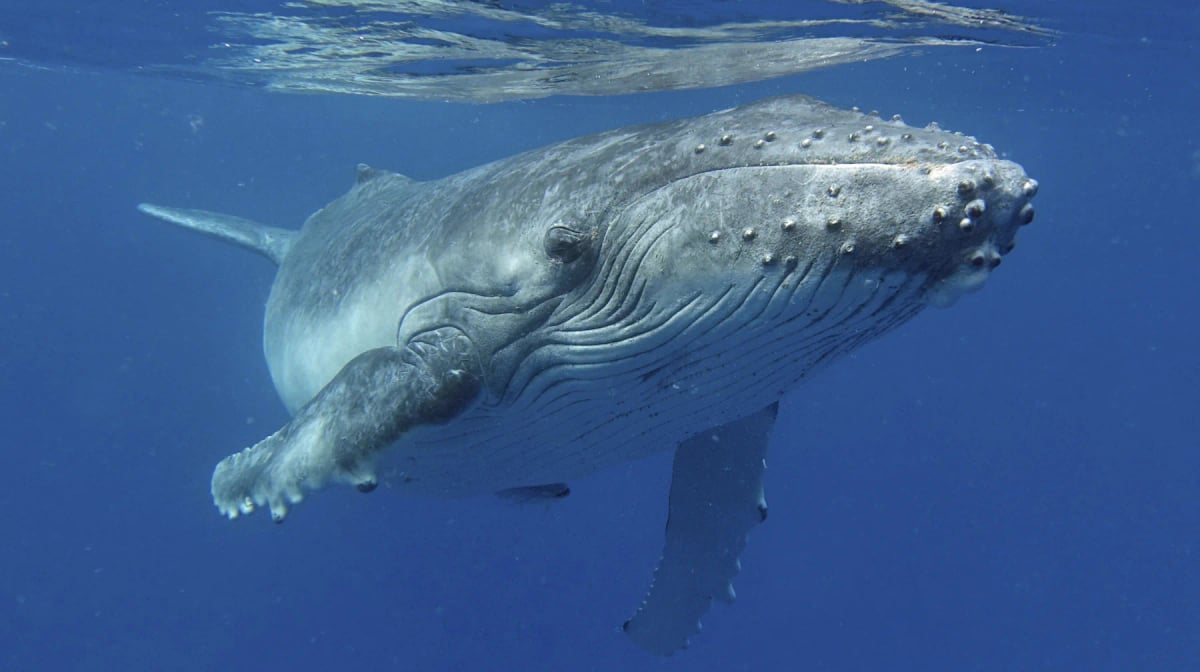
Humpback Whale
Megaptera novaeangliae
Humpback whales travel along the Namibian coastline as part of their annual migration through the South Atlantic. The cold, productive Benguela Current system along this coast supports rich marine ecosystems, making Namibian waters a notable passage for these whales as they move between southern feeding grounds and tropical breeding areas. The IUCN classifies the humpback whale as Least Concern, reflecting the species' broad recovery since whaling ended.
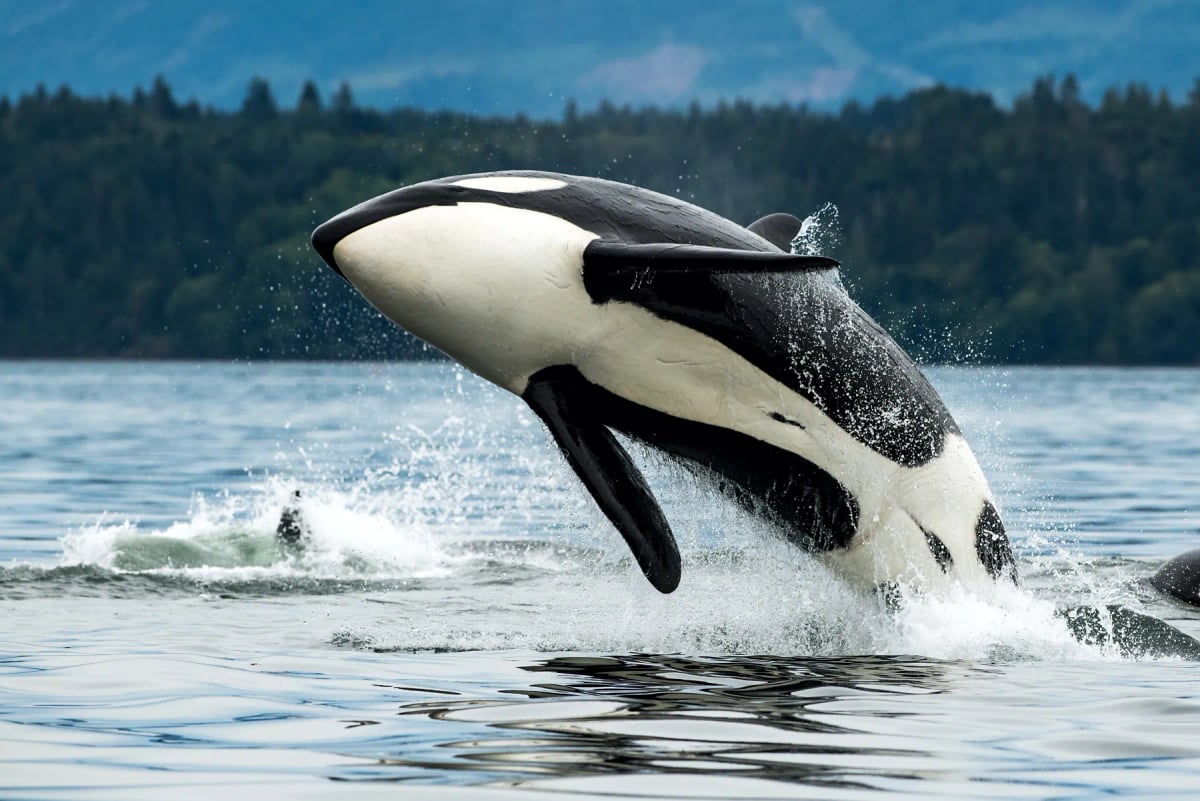
Orca
Orcinus orca
Namibia's cold Benguela Current makes the waters along its Atlantic coast exceptionally productive, drawing large numbers of fish and marine mammals. Orcas are known to frequent this region, where they prey on other cetaceans, seals at Cape Cross, and fish. The Skeleton Coast in particular provides rich feeding opportunities. Namibia's waters are considered one of the more reliable locations for orca sightings along the African continent.
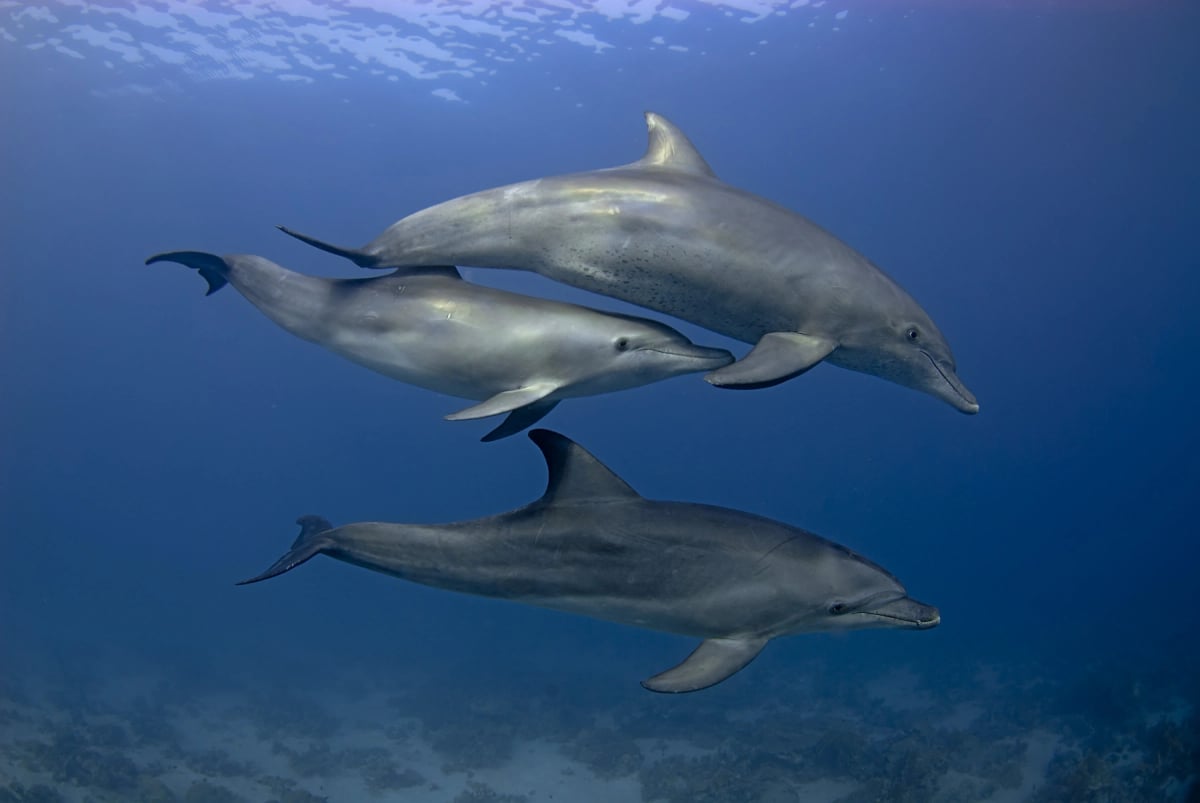
Bottlenose Dolphin
Tursiops truncatus
Bottlenose dolphins inhabit the cold, nutrient-rich waters of the Benguela Current system along Namibia's Atlantic coast. This upwelling zone supports large concentrations of fish, making it ideal foraging habitat. Dolphins are regularly seen near Walvis Bay, where they sometimes interact with fishing operations. The IUCN lists the species as Least Concern globally, and Namibia's marine environment supports healthy populations.
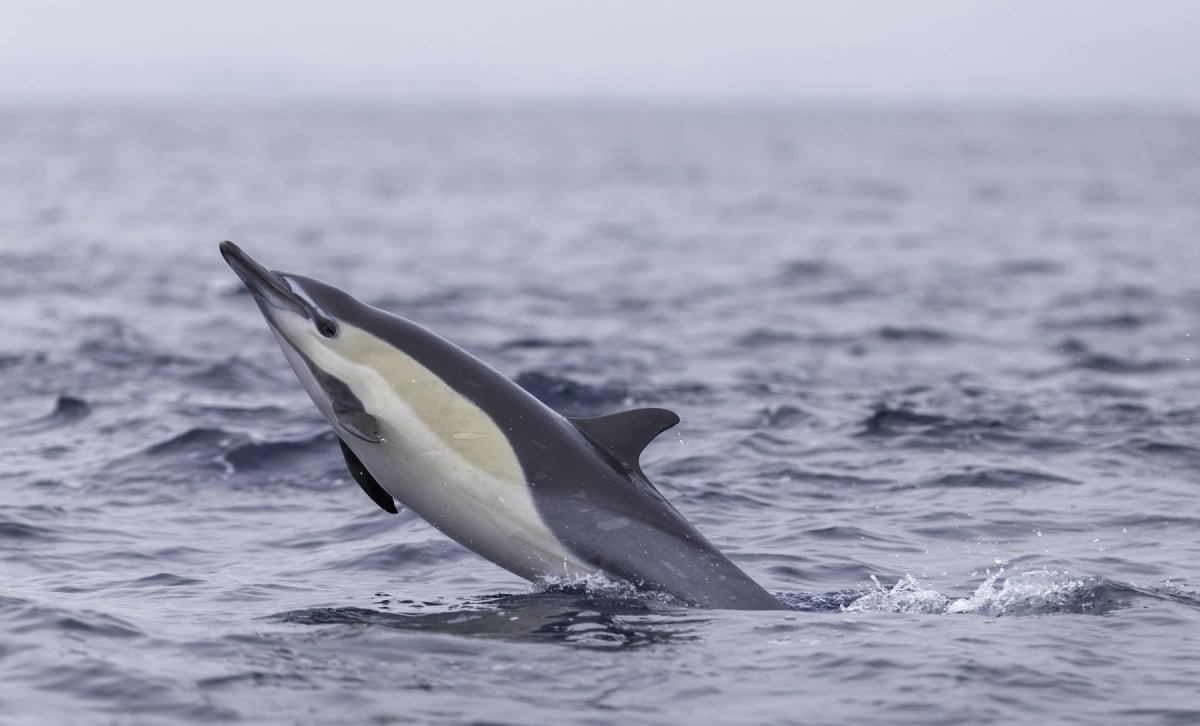
Common Dolphin
Delphinus delphis
Off the coast of Namibia, the cold and nutrient-rich Benguela Current creates ideal conditions for the common dolphin. These waters teem with anchovies and sardines, the core prey of this species. Large superpods form regularly along the Namibian coastline, putting on dramatic displays of leaping and bow-riding. The species holds a Least Concern status globally, and Namibia's productive Atlantic shelf supports a healthy local population.
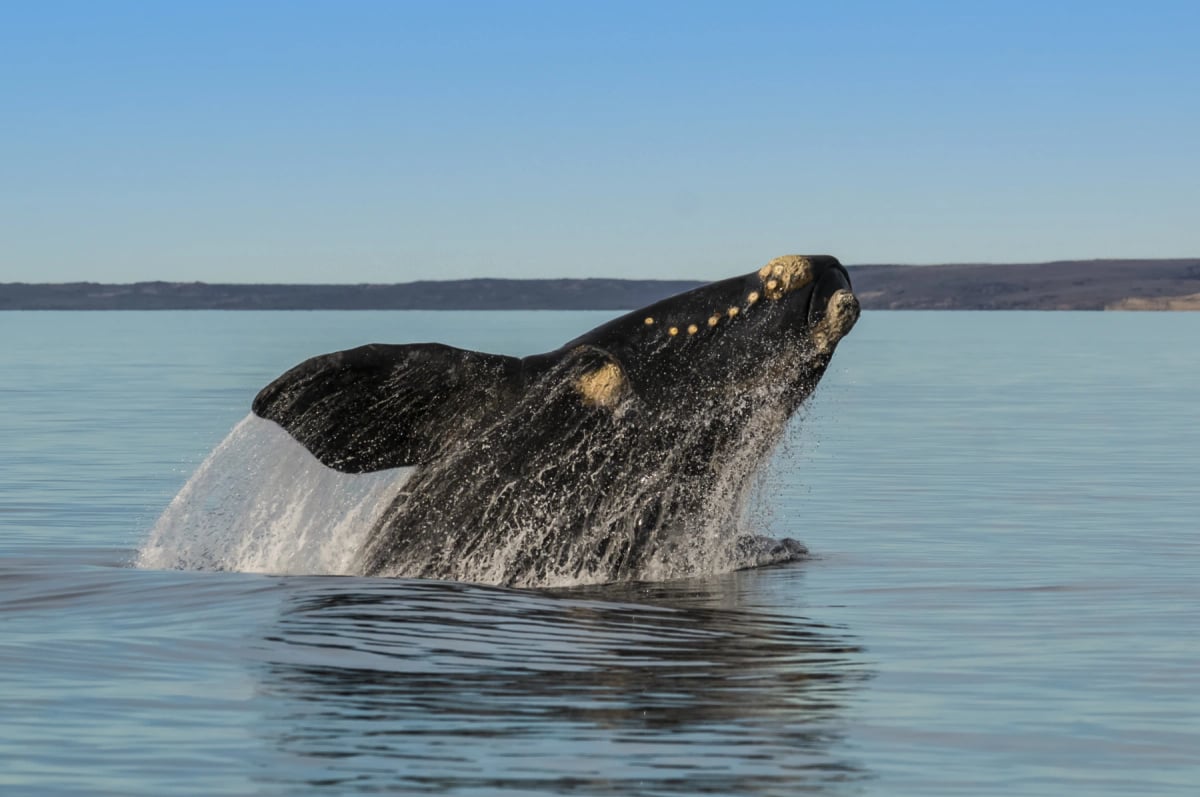
Southern Right Whale
Eubalaena australis
Namibia's cold, nutrient-rich Atlantic coastline, shaped by the Benguela Current, falls within the migratory path of the southern right whale. Whales have been observed near the coast, and the country's waters may serve as a transit zone between feeding areas in the south and calving grounds further north. Historical whaling in the region took a heavy toll, and populations are still on a gradual path toward recovery. Listed as Least Concern.
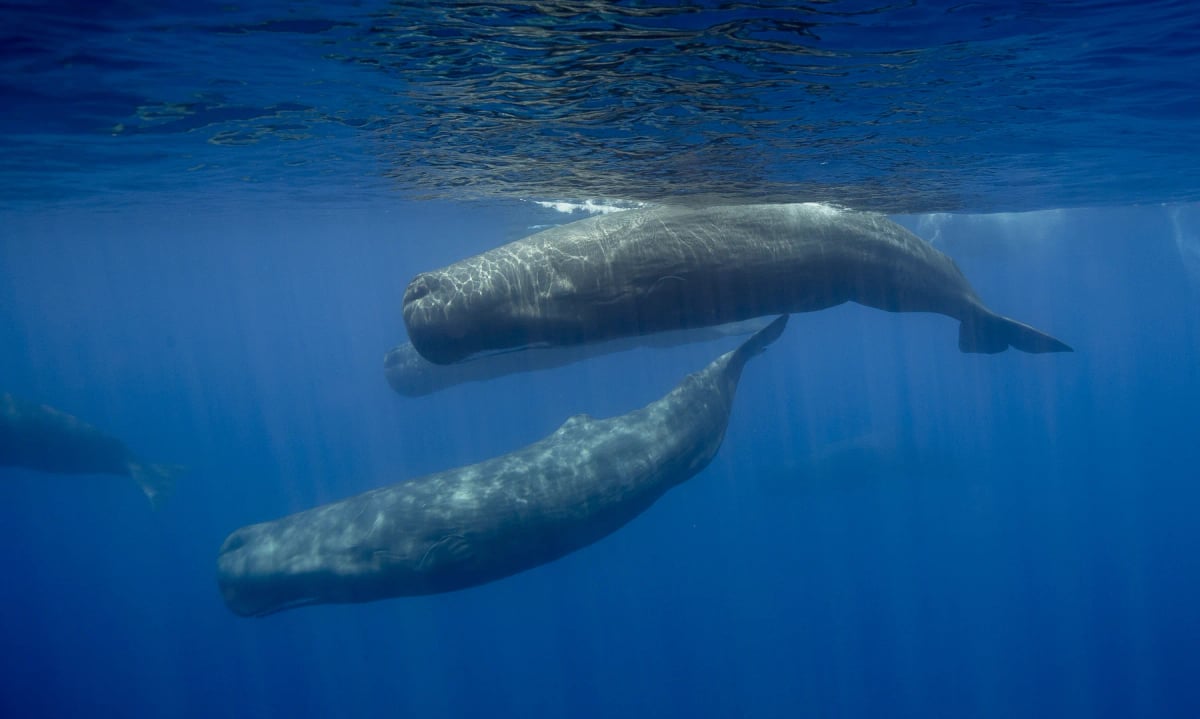
Sperm Whale
Physeter macrocephalus
Along Namibia's Atlantic coast, sperm whales are drawn to the cold, productive waters influenced by the Benguela Current. This upwelling system supports a rich food web that ultimately sustains large predators like the sperm whale. Males in particular are known to range into these cooler southern waters. Classified as Vulnerable, these animals face threats from noise pollution and occasional entanglement in fishing equipment.
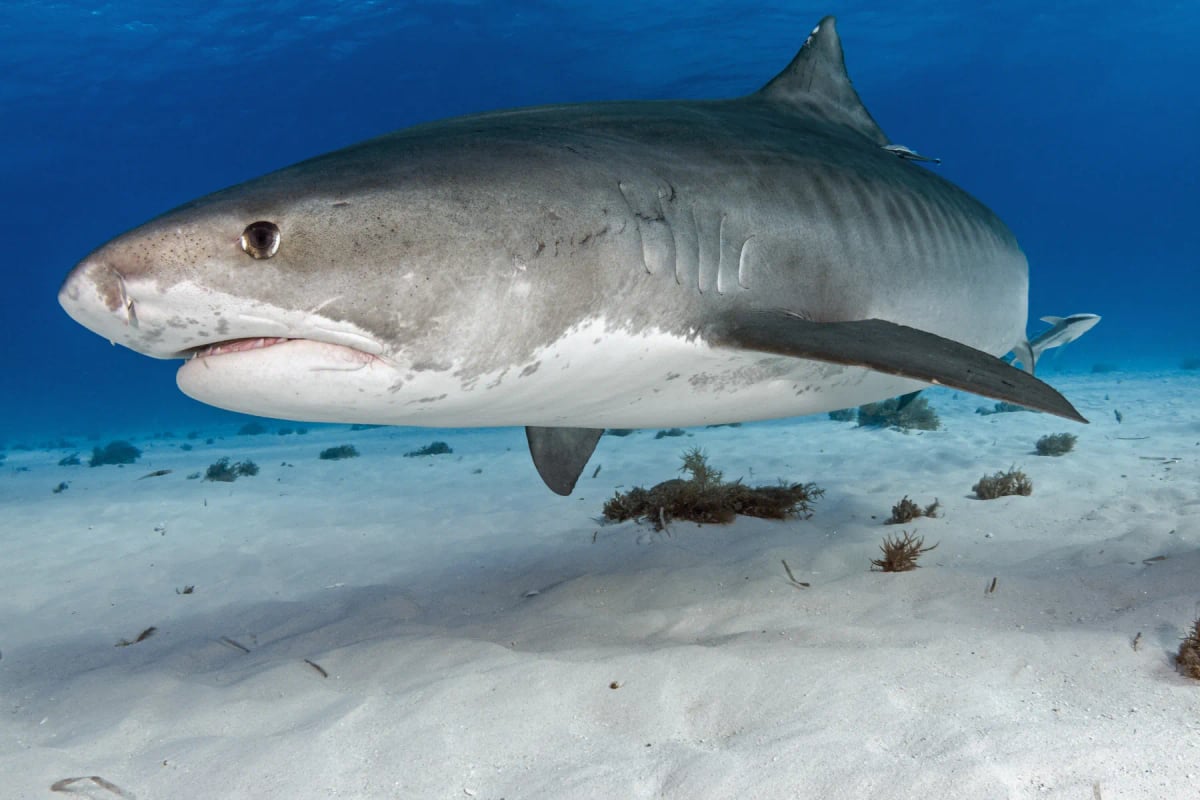
Tiger Shark
Galeocerdo cuvier
Tiger sharks occur along Namibia's cold but productive Atlantic coast, where the Benguela Current drives an abundance of marine life. They tend to follow prey into coastal zones and occasionally appear near river mouths and harbours. Though less commonly reported here than in tropical waters, their presence is documented along southern African shores. The IUCN lists the species as Near Threatened, largely due to ongoing fishing pressure across its range.
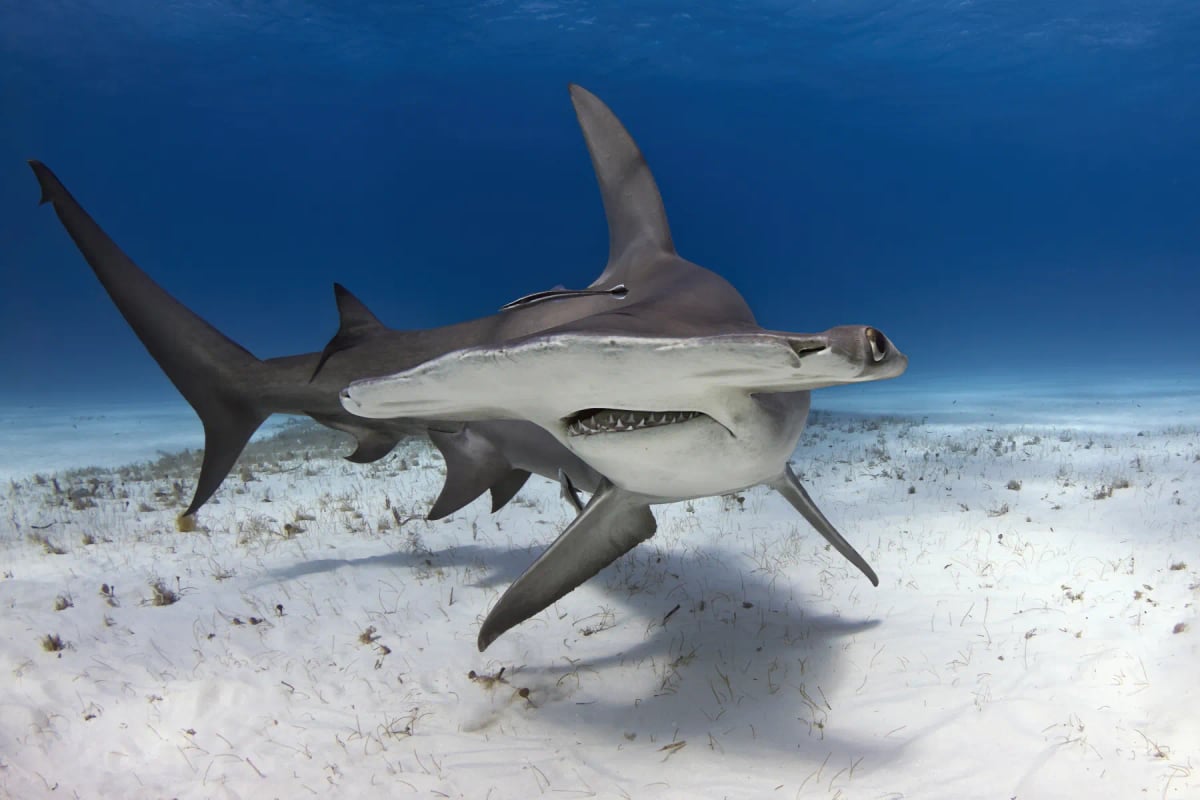
Hammerhead Shark
Sphyrna spp.
Namibia's cold, nutrient-rich Atlantic coast, influenced by the Benguela Current, supports a diverse marine ecosystem where hammerhead sharks have been recorded. These sharks follow prey into productive coastal and offshore waters. Namibia has developed one of Africa's more regulated fishing industries, but hammerheads remain vulnerable to bycatch. Globally Critically Endangered, their populations along the southwestern African coast continue to face pressure from fishing activity.
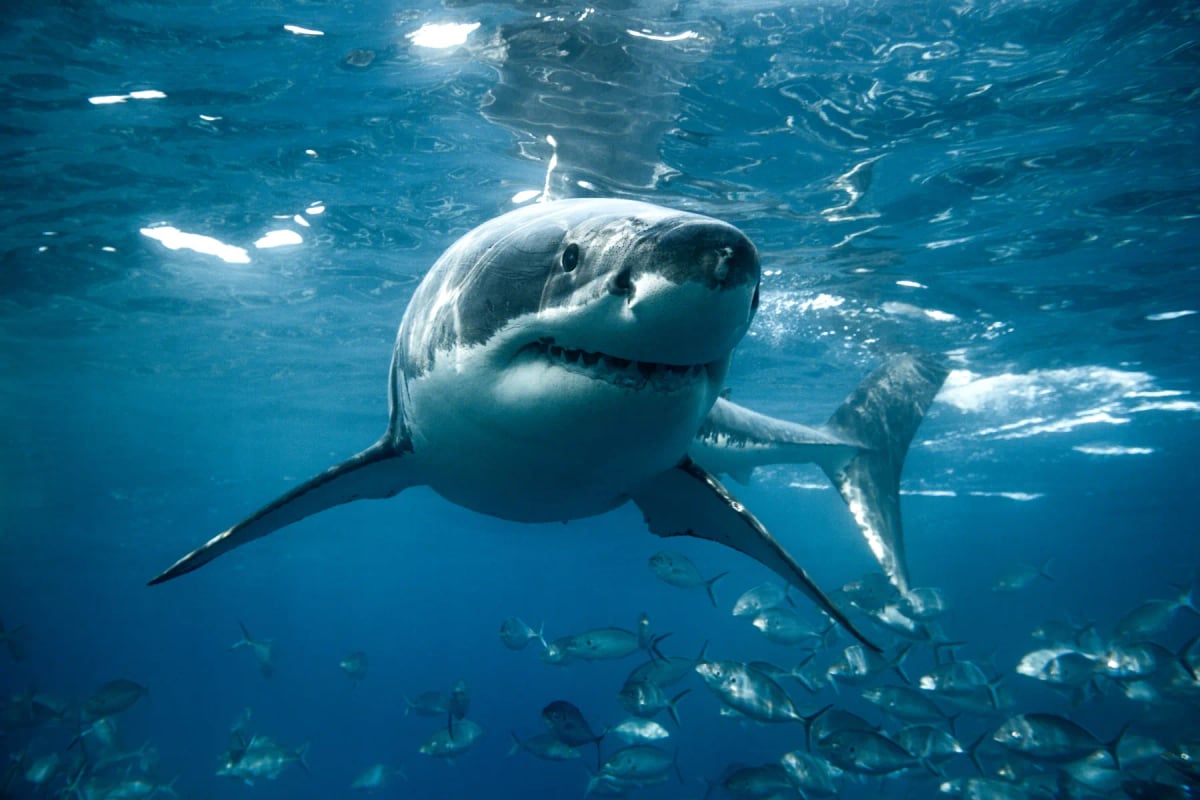
Great White Shark
Carcharodon carcharias
Namibia's cold Atlantic coast, shaped by the nutrient-rich Benguela Current, supports large colonies of Cape fur seals, particularly at places like Cape Cross. These colonies are a significant food source for great white sharks, which are regularly observed hunting in these waters. South Africa and Namibia together form one of the most well-studied regions for this species in the Southern Hemisphere. The shark is listed as Vulnerable and benefits from growing regional research efforts.
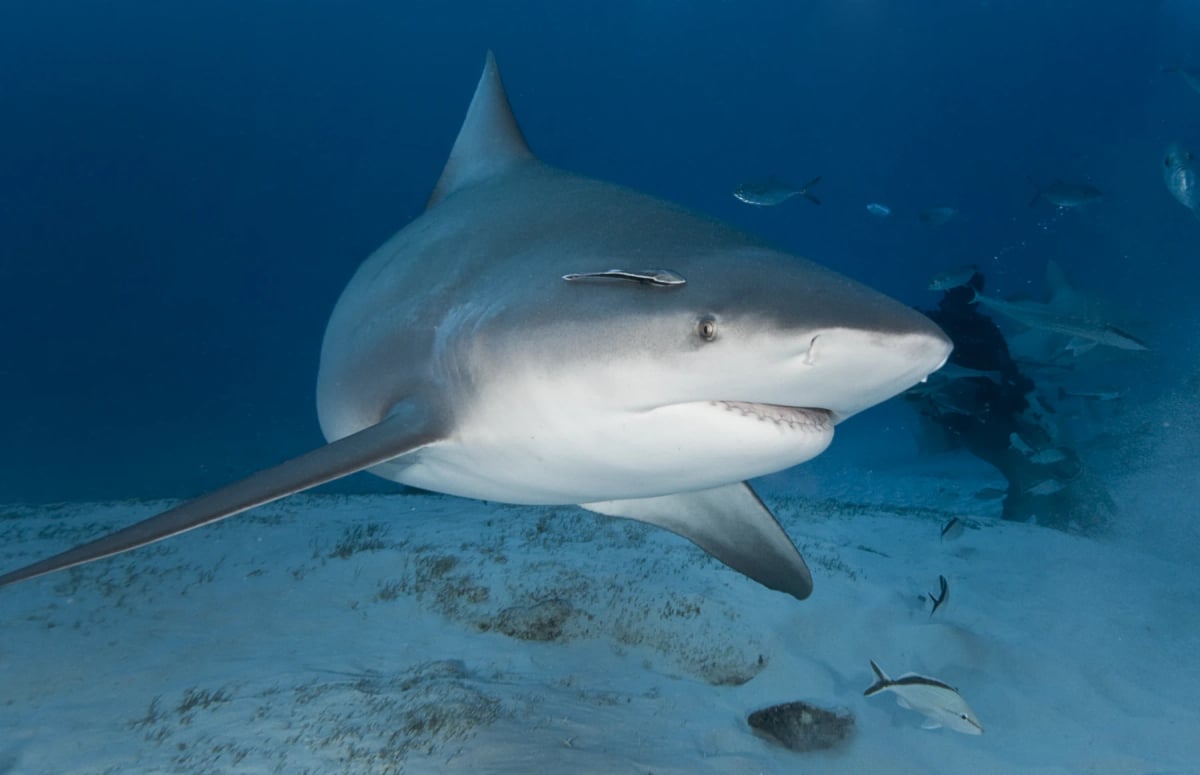
Bull Shark
Carcharhinus leucas
Bull sharks appear along Namibia's Atlantic coast, particularly in the warmer, shallower waters of the northern coastal zone near the border with Angola. The cold Benguela Current dominates much of Namibia's offshore environment, limiting the range of warm water species. Bull sharks here are more likely to be encountered near estuaries and river mouths where conditions are more suitable. They are sometimes taken as bycatch in Namibia's commercially important fisheries.
Researched and written by Juan Pablo. Sources: IUCN Red List, scientific literature and regional field guides. Last updated: .