Sri Lankan Elephant
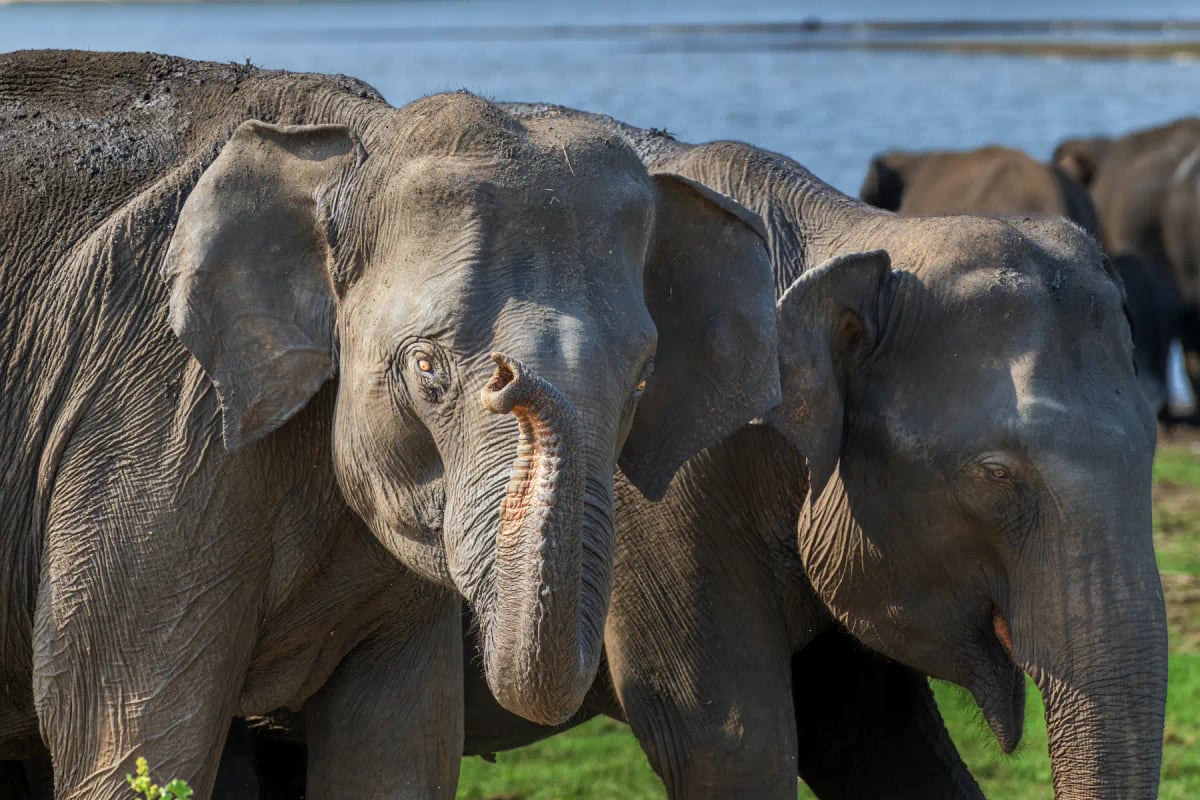
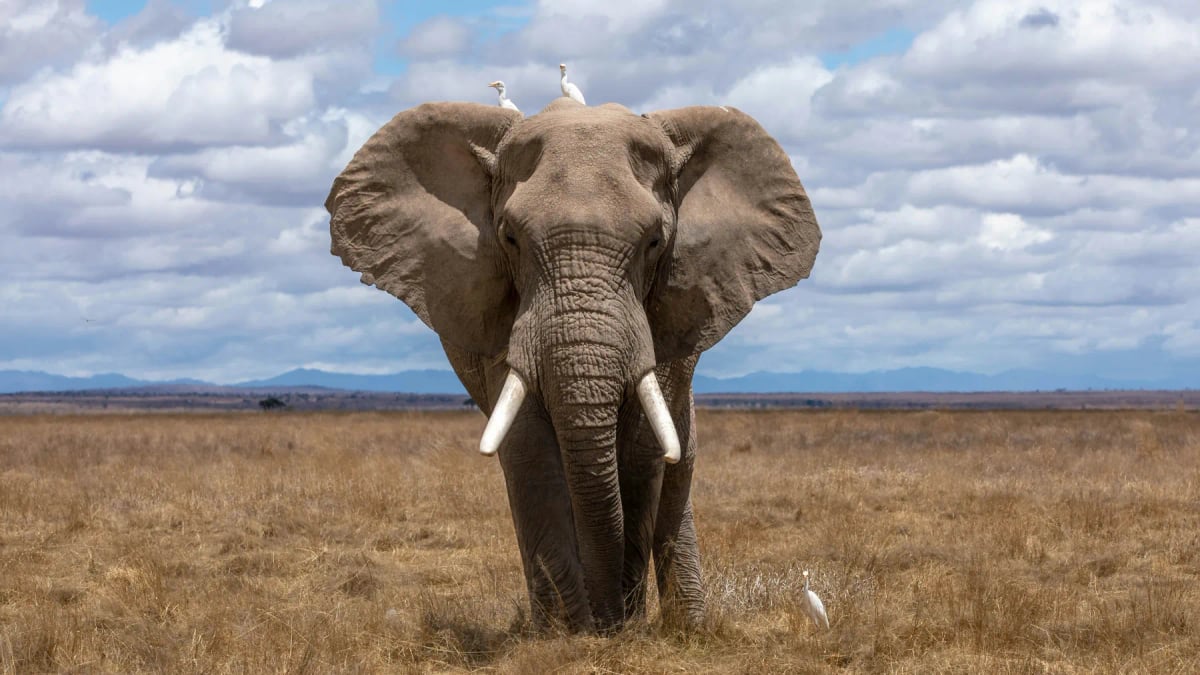
The Sri Lankan elephant is the largest of the three recognized subspecies of the Asian elephant, and it lives exclusively on the island of Sri Lanka. Adults can weigh up to five and a half tonnes and are notable for their relatively dark skin and, in many males, the absence of tusks. They roam dry zone forests, scrublands and grassy plains, often traveling long distances in search of water and food. Groups are organized around a matriarch, the oldest and most experienced female, who guides the herd through familiar territory. Males typically leave the family group once they reach adolescence and spend most of their adult lives alone. The species holds a central place in Sri Lankan Buddhism and appears in temple processions across the country. Habitat loss, conflict with farming communities, and collisions with trains are the main threats to its survival.
Habitat and distribution
Found nowhere else on Earth, the Sri Lankan elephant is spread across the island's dry zone, which covers much of the north, east, and southeast. These elephants favour dry deciduous forests, scrublands, and open grassy plains where water sources and browse are within reach. They move across large home ranges, following seasonal rainfall to find rivers, tanks, and waterholes. A significant portion of the population lives within protected areas such as Yala, Udawalawe, and Minneriya national parks. Minneriya is famous for the annual gathering, when hundreds of elephants congregate around the reservoir as surrounding grasslands dry out. Outside protected land, elephants frequently move through forest corridors and farmland, placing them in close and often difficult contact with rural communities.
Diet
An adult Sri Lankan elephant can consume up to 150 kilograms of food in a single day, and finding that volume of food keeps them on the move for much of their waking hours. Grasses make up the bulk of their diet, supplemented by leaves, roots, bark, and wild fruits. They use their muscular trunks to uproot grasses, strip bark from trees, and bring food to their mouths with remarkable precision. In drier months, when natural vegetation is scarce, elephants will move into agricultural land and feed on crops including rice, sugarcane, and various vegetables. This habit brings them into direct conflict with farming communities. Mineral intake is also important, and elephants are known to visit areas of soil rich in salts and minerals to supplement their diet.
Behavior and social structure
Family life for Sri Lankan elephants revolves around the matriarch, typically the oldest female in the group. She holds the memory of water sources, safe routes, and past dangers, and the herd relies on her judgment to navigate their environment. A typical family unit includes several related females and their young calves, ranging from a handful to over a dozen individuals. Young males stay with the family until adolescence, then gradually drift away to live on their own or in loose associations with other males. Adult males enter a periodic state called musth, marked by elevated testosterone and heightened aggression, during which they actively seek out females. Despite their mostly solitary adult lives, males maintain awareness of nearby herds and will trail family groups during breeding opportunities.
Cultural significance
Few animals are as deeply woven into a country's identity as the elephant is in Sri Lanka. Revered in Theravada Buddhism, the elephant is associated with the god Ganesh and with the sacred white elephant said to have appeared in a dream to the Buddha's mother before his birth. Across the country, temples keep captive elephants that take part in religious festivals and daily rituals. The most celebrated of these events is the Esala Perahera in Kandy, held every July or August, where a decorated elephant carries a replica of the Buddha's tooth relic through the streets in a grand procession. The elephant also features prominently on the Sri Lankan coat of arms and has long appeared in local art, architecture, and ceremony, reflecting centuries of coexistence between people and the species.
Conservation
The IUCN classifies the Sri Lankan elephant as Endangered, and estimates put the wild population at between 2,500 and 4,000 individuals. Habitat loss driven by agricultural expansion and infrastructure development has fragmented the forests these elephants depend on, cutting off ancient movement corridors. Railway lines crossing elephant territory are responsible for dozens of deaths each year, making train collisions one of the leading causes of mortality. Conflict with farming communities is equally serious. Elephants raiding crops can devastate a family's livelihood overnight, leading some people to retaliate with poison or trap guns. Authorities have trialled various mitigation measures including electric fences, beehive barriers, and translocation programmes. Conservation efforts over the long term will require balancing the needs of both elephants and the rural communities that share land with them.
Researched and written by Juan Pablo. Sources: IUCN Red List, scientific literature and regional field guides. Last updated: .
Technical factsheet
Frequently Asked Questions
How much do Sri Lankan elephants weigh?
Sri Lankan elephants are the largest of the three Asian elephant subspecies. Adults can weigh up to five and a half tonnes, with males generally being larger than females. Their size makes them the heaviest land animals found on the island. Despite that bulk, they move quietly through forests and can cover many kilometers in a single day while foraging.
What do Sri Lankan elephants eat?
They are herbivores with a big appetite. An adult can eat up to 150 kilograms of food per day, spending most of their waking hours foraging. Grasses are the main part of their diet, along with leaves, bark, roots, and wild fruits. During dry months, when natural food is scarce, they sometimes enter farmland and feed on crops like rice and sugarcane.
Where do Sri Lankan elephants live?
They live exclusively on the island of Sri Lanka and are found nowhere else in the world. Most of the population lives in the dry zone covering the north, east, and southeast, where they roam forests, scrublands, and open plains. Key populations are found in national parks such as Yala, Udawalawe, and Minneriya, though many elephants also move through forest corridors and farmland outside protected areas.
Do Sri Lankan elephants have tusks?
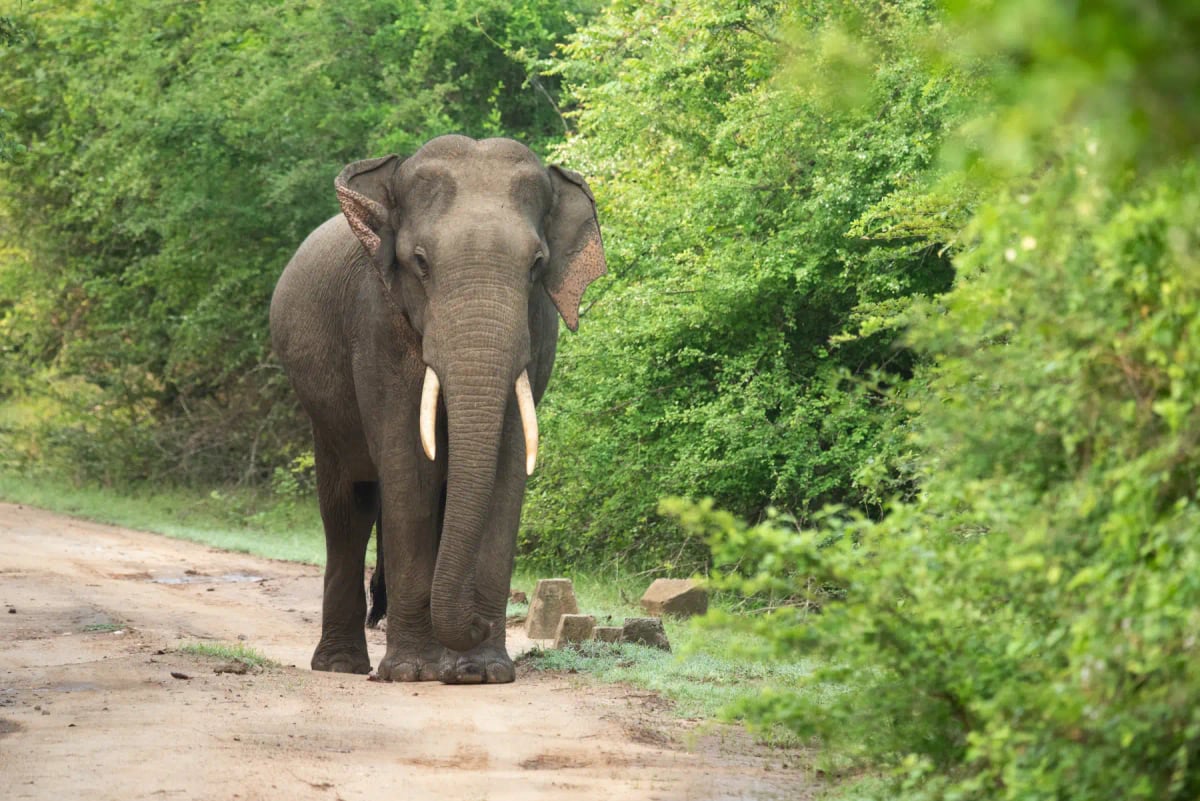
Not always. One of the most distinctive features of this subspecies is that a large proportion of males have no tusks at all. In African elephants, most males and females carry tusks, but among Sri Lankan elephants, it is estimated that only around five to ten percent of males develop them. Females almost never have tusks. Scientists believe decades of ivory poaching may have contributed to this trait becoming more common.
Are Sri Lankan elephants endangered?
Yes. The IUCN lists them as Endangered, with an estimated wild population of between 2,500 and 4,000 individuals. The main threats are habitat loss from farming and development, conflict with rural communities whose crops elephants raid, and collisions with trains crossing elephant territory. All of these pressures have reduced their numbers significantly over the past century.
How do Sri Lankan elephants live in groups?
They live in family herds led by a matriarch, the oldest and most experienced female. She guides the group to water, food, and safe routes based on memory built up over decades. A typical herd includes several related females and their young. Male elephants leave the family during adolescence and spend most of their adult lives alone, though they rejoin herds temporarily during the breeding season.
What is the Minneriya elephant gathering?
Every year, hundreds of Sri Lankan elephants converge around Minneriya reservoir in the north of the country as the surrounding grasslands dry out during the dry season. It is one of the largest gatherings of wild Asian elephants anywhere in the world. The elephants come to feed on the fresh grasses that grow along the receding waterline. This event draws wildlife visitors from across the globe.