Japanese Macaque
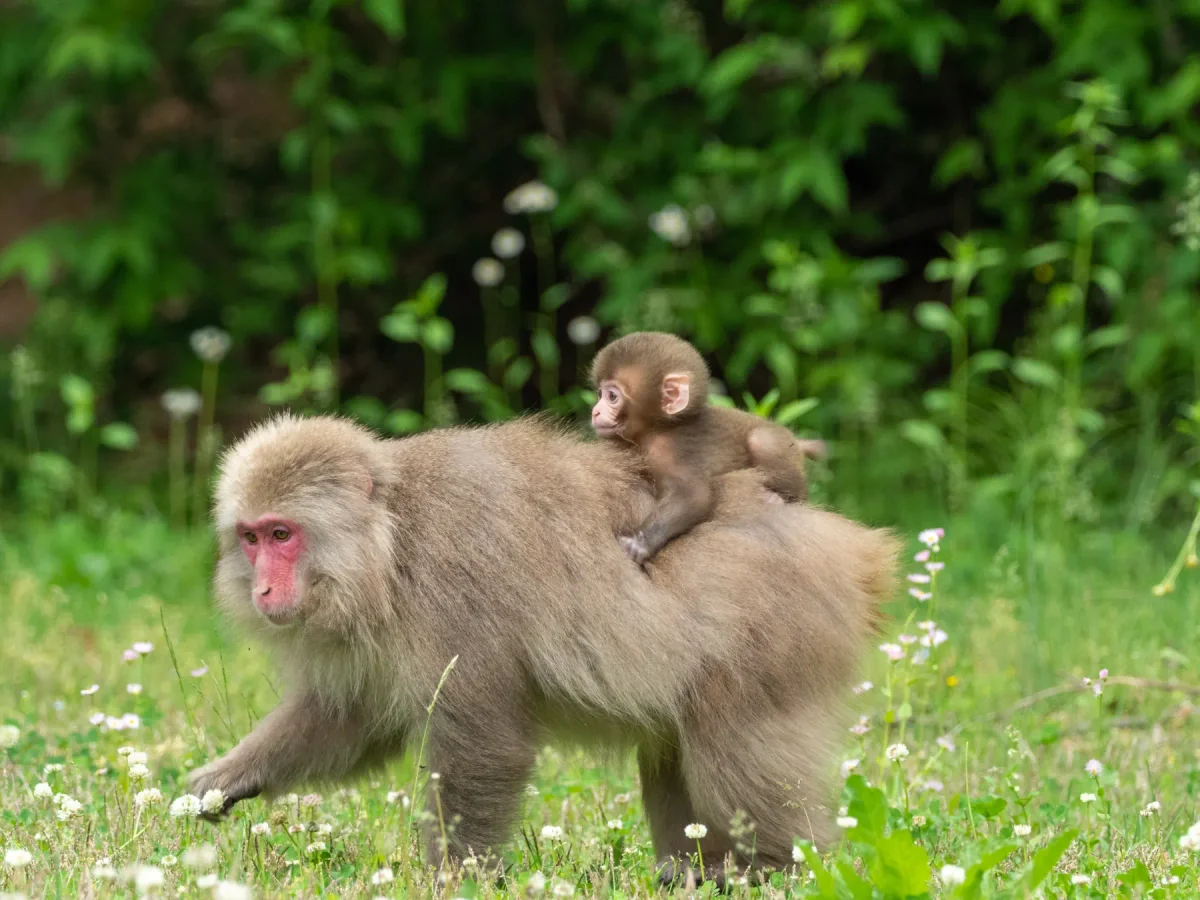
The Japanese macaque (Macaca fuscata), widely known as the snow monkey, is the northernmost nonhuman primate on Earth and lives exclusively in Japan. It is easy to recognize by its bare red face, short tail, and thick fur in shades of grey and brown that thickens considerably in winter. These primates form troops that can number in the dozens, organized around clear social hierarchies where females typically remain in their birth group for life. They eat a varied diet of fruit, leaves, bark, fungi, insects, and small invertebrates, shifting what they consume with the seasons. One of their most celebrated behaviors is soaking in geothermal hot springs during cold winters, something first recorded at Jigokudani in Nagano Prefecture. This habit spreads through social learning rather than instinct. The IUCN lists the species as Least Concern, though habitat loss and clashes with farming communities remain ongoing pressures.
Habitat and distribution
Japanese macaques are found across three of Japan's four main islands: Honshu, Shikoku, and Kyushu, as well as several smaller islands such as Yakushima. They are absent from Hokkaido in the north. Few primates on Earth tolerate such a wide range of climates. In the south, these monkeys inhabit warm subtropical forests close to the coast, while in central and northern Honshu they survive winters where temperatures drop well below freezing and snow can lie thick on the ground for months. They make use of broadleaf forests, mixed woodlands, and montane forests depending on what the landscape offers. The population on Yakushima Island lives in a particularly lush environment, while the troop at Jigokudani in Nagano Prefecture has become famous for living at the edge of snowy mountain terrain.
Diet
Seasons shape everything about what Japanese macaques eat. In spring and summer, they feed heavily on fresh leaves, buds, and fruit, while insects and small invertebrates add protein to their diet. As autumn arrives, they shift toward nuts, seeds, and fungi to build up energy before winter. When snow covers the ground, they turn to bark, roots, and any buried plant material they can dig up. Troops living near hot springs in Nagano have been observed eating algae growing in the warm water. This flexibility is part of what allows the species to thrive across such varied environments. They have also been recorded washing food in water at certain locations, a behavior that, like several others in the species, spreads through observation and imitation rather than instinct.
Behavior and social structure
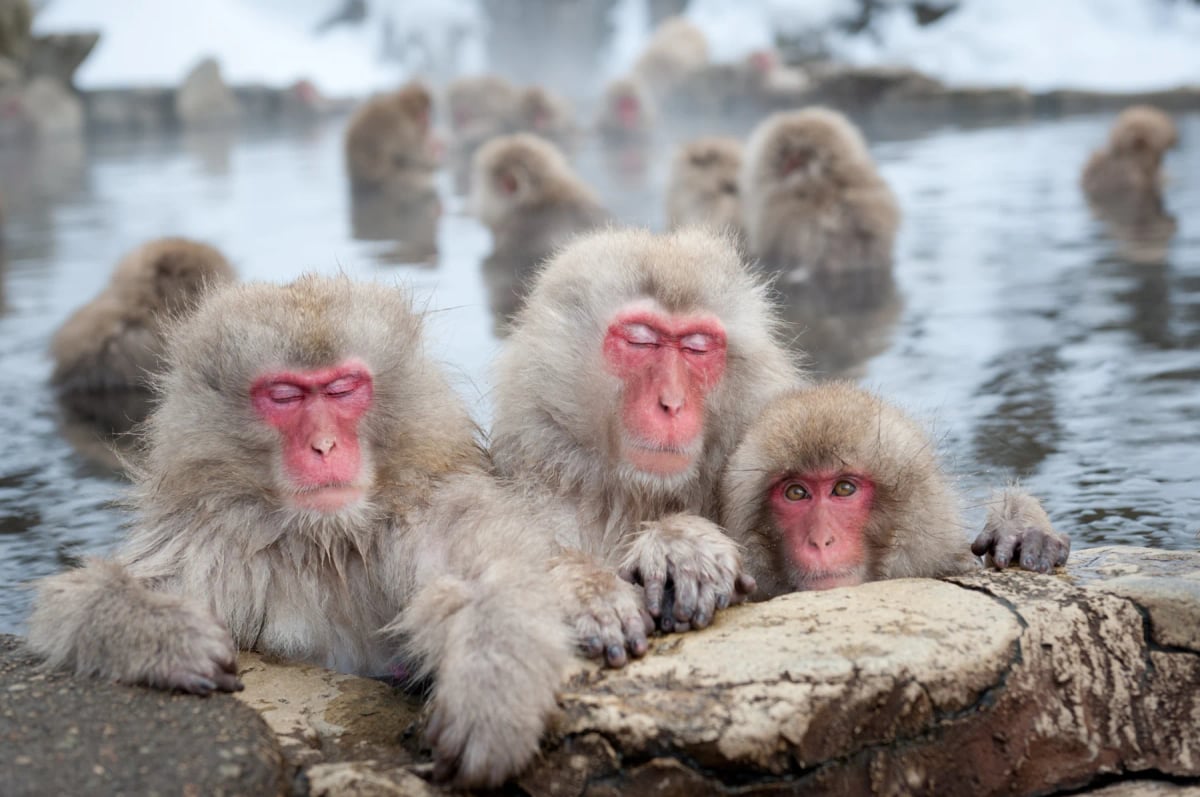
Troops are at the heart of Japanese macaque life. A typical group ranges from a few dozen to over a hundred individuals and is organized around a clear hierarchy, with dominant males and females enjoying better access to food and resting spots. Females spend their entire lives in the troop they were born into, forming the stable core of the group, while males often move between troops. Grooming plays a central role in maintaining relationships, helping individuals form alliances and reduce tension. Communication happens through a range of vocalizations, facial expressions, and body postures. Young macaques are playful and spend much of their time with peers, which is also how they pick up behaviors from older members of the troop. Troops shift their home range across seasons in search of food.
Unique adaptations
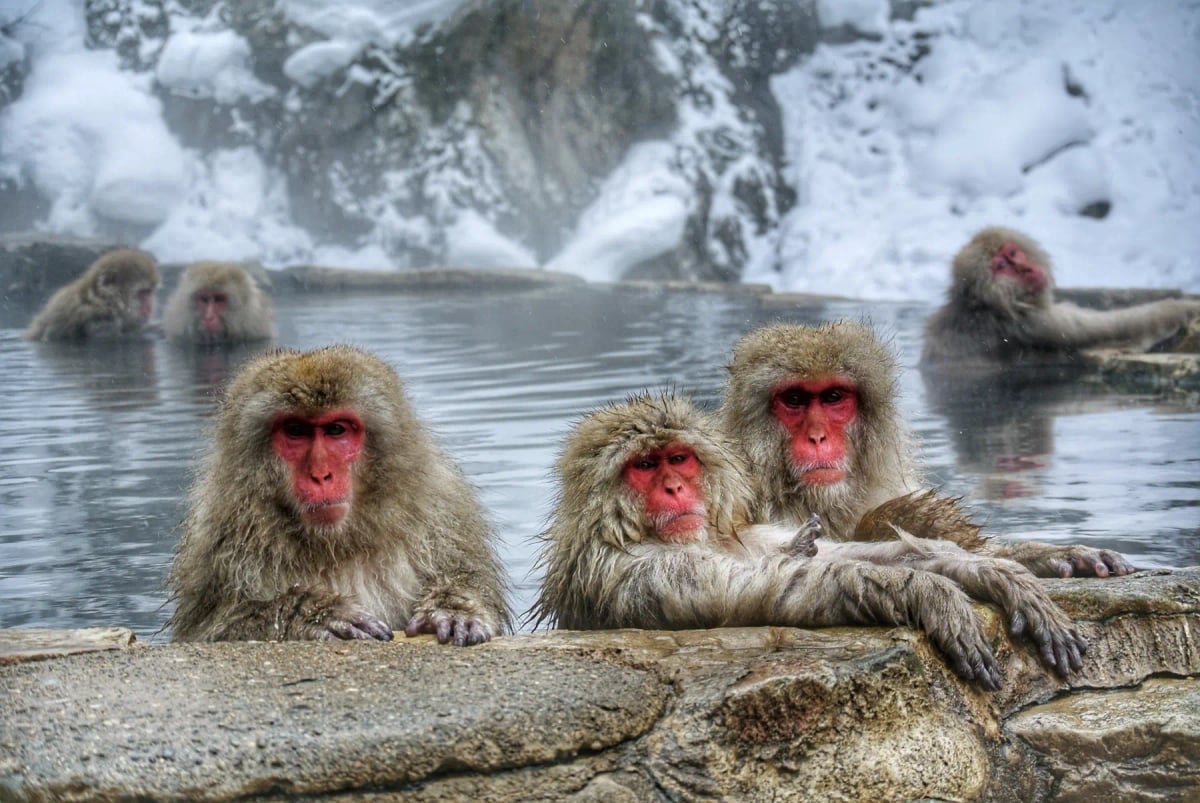
Perhaps nothing about the Japanese macaque captures attention quite like its habit of soaking in geothermal hot springs. This was first documented at Jigokudani Monkey Park in Nagano Prefecture, where a troop began entering the springs decades ago. The behavior is not hardwired. It spread through the troop by social learning, with younger individuals copying older ones, and it has since become a defining characteristic of that population. Their dense, layered fur is a genuine physical adaptation for cold, allowing them to function in temperatures that would be dangerous for most primates. The bare red skin on the face and rump is linked to blood circulation and plays a role in signaling social and reproductive status. Their relatively short tail compared to many other macaque species reduces heat loss in cold conditions.
Conservation
The IUCN currently lists the Japanese macaque as Least Concern, reflecting a population that remains widespread and relatively stable across its range. That said, the species faces real pressures that deserve attention. Forest clearance for agriculture and urban development has reduced and fragmented the habitat available to many troops. Macaques frequently raid crops, which brings them into conflict with farming communities and has historically led to culling in some areas. The total population has been estimated at around 114,000 individuals, though numbers are difficult to verify precisely. Several protected areas and national parks across Japan provide important refuges. Ongoing monitoring of troop sizes and the management of interactions between macaques and local communities will be important for keeping the species stable over the long term.
Researched and written by Juan Pablo. Sources: IUCN Red List, scientific literature and regional field guides. Last updated: .
Technical factsheet

Frequently Asked Questions
Why do Japanese macaques sit in hot springs?
The hot spring habit started at Jigokudani in Nagano Prefecture, where younger monkeys copied older ones and the behavior gradually spread through the troop. It is not something they are born knowing. Soaking appears to help them stay warm during bitterly cold winters. Today it is one of the most recognizable things about the species, though not every population in Japan does it.
Where do Japanese macaques live?
Japanese macaques live only in Japan, across the islands of Honshu, Shikoku, Kyushu, and several smaller islands including Yakushima. They are the most northerly nonhuman primates on Earth, surviving in everything from warm coastal forests in the south to snow-covered mountain terrain in central and northern Honshu. They are not found on Hokkaido, Japan's northernmost main island.
What do Japanese macaques eat?
Their diet shifts with the seasons. In warmer months they eat fruit, leaves, buds, and insects. Come autumn, they focus on nuts, seeds, and fungi. In winter, when food is scarce, they resort to bark, roots, and whatever plant material they can dig up from under the snow. Some troops near hot springs have also been seen eating algae from the warm water.
Are Japanese macaques endangered?
No. The IUCN lists the Japanese macaque as Preocupación menor, meaning the species is not currently at risk of extinction. The total population is estimated at around 114,000 individuals. Even so, habitat loss and conflicts with farmers over crop raiding are real ongoing pressures. Protected areas and national parks across Japan play an important role in keeping the population stable.
How do Japanese macaques survive such cold winters?
Their fur is thick and dense, built up in layers that trap warmth even when temperatures drop well below freezing. They also adjust their diet to higher-calorie foods like nuts and bark during the coldest months. Staying close together in the troop helps conserve heat too. The famous hot spring soaking behavior, seen in some populations, is another way certain groups cope with the cold.
Do Japanese macaques live in groups?
Yes, they live in troops that can range from a few dozen to well over a hundred individuals. Each troop has a clear social hierarchy, with dominant members getting first access to food and resting spots. Females stay in their birth troop for life and form the stable core of the group, while males tend to move between troops. Grooming is a key way they maintain bonds.
Why do Japanese macaques have red faces?
The bare red skin on their face and rump comes down to blood circulation close to the surface of the skin. The intensity of the red color can signal health, social rank, and reproductive condition to other members of the troop. A brighter, deeper red is generally associated with higher status or readiness to mate. It is one of the most distinctive features of the species.