White tailed Eagle
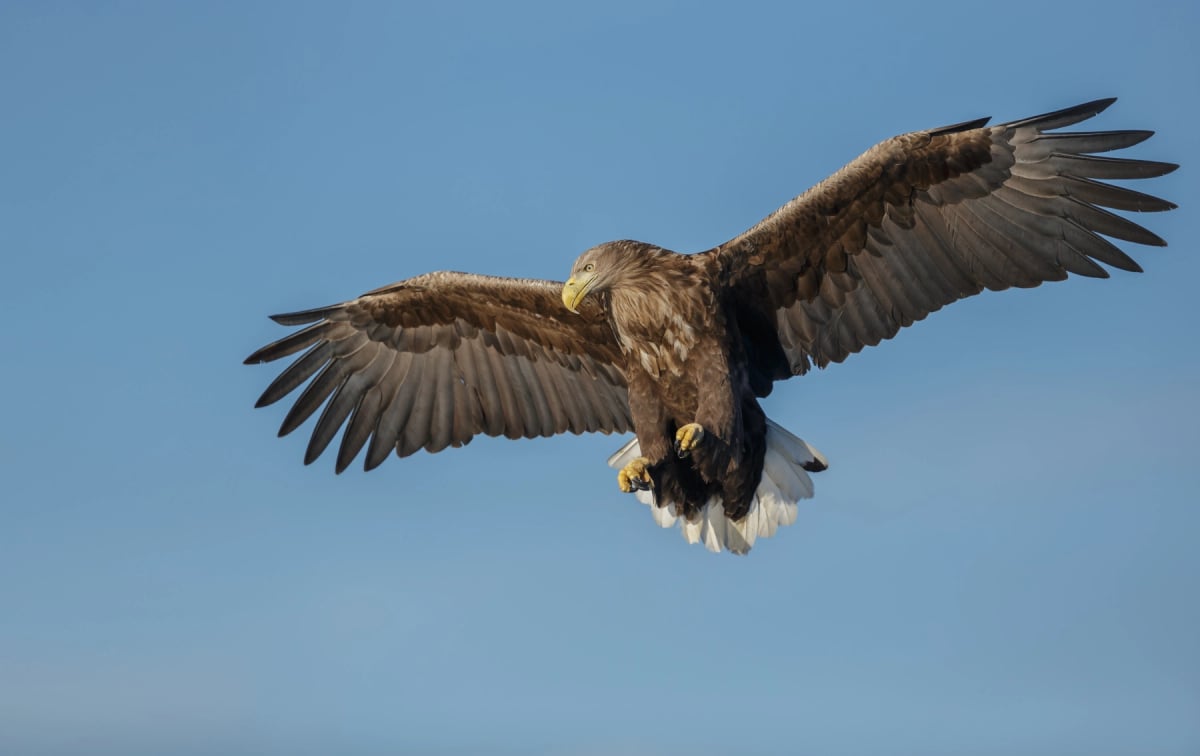
The white tailed eagle (Haliaeetus albicilla) is one of the largest birds of prey in Eurasia, with a wingspan reaching 2.5 meters. Distinguished by its broad wings, pale head, yellow bill and gleaming white tail, it patrols coasts, lakes and large rivers from Greenland and Iceland across Europe to Japan. It feeds mainly on fish and waterfowl, but also scavenges carrion. Once driven to near extinction in parts of Europe due to persecution and pollution, strong legal protection and reintroduction programs have enabled a remarkable comeback. Today, it is listed as Least Concern, though still vulnerable to poisoning and disturbance.
Habitat and distribution
Spanning one of the widest ranges of any eagle on Earth, the white tailed eagle breeds from Greenland and Iceland through most of Europe and across Russia all the way to the Pacific coast of Japan. It shows a strong preference for water, settling near large lakes, broad rivers, estuaries, and sheltered sea coasts where fish are plentiful. In winter, birds from northern and eastern populations move south and west, appearing across Central Asia, the Indian subcontinent, parts of the Middle East, and East Asia. Nesting sites are typically found in mature forests or on rocky cliffs close to open water. The species avoids dense urban areas but has shown a growing tolerance for human presence where it is no longer persecuted.
Diet
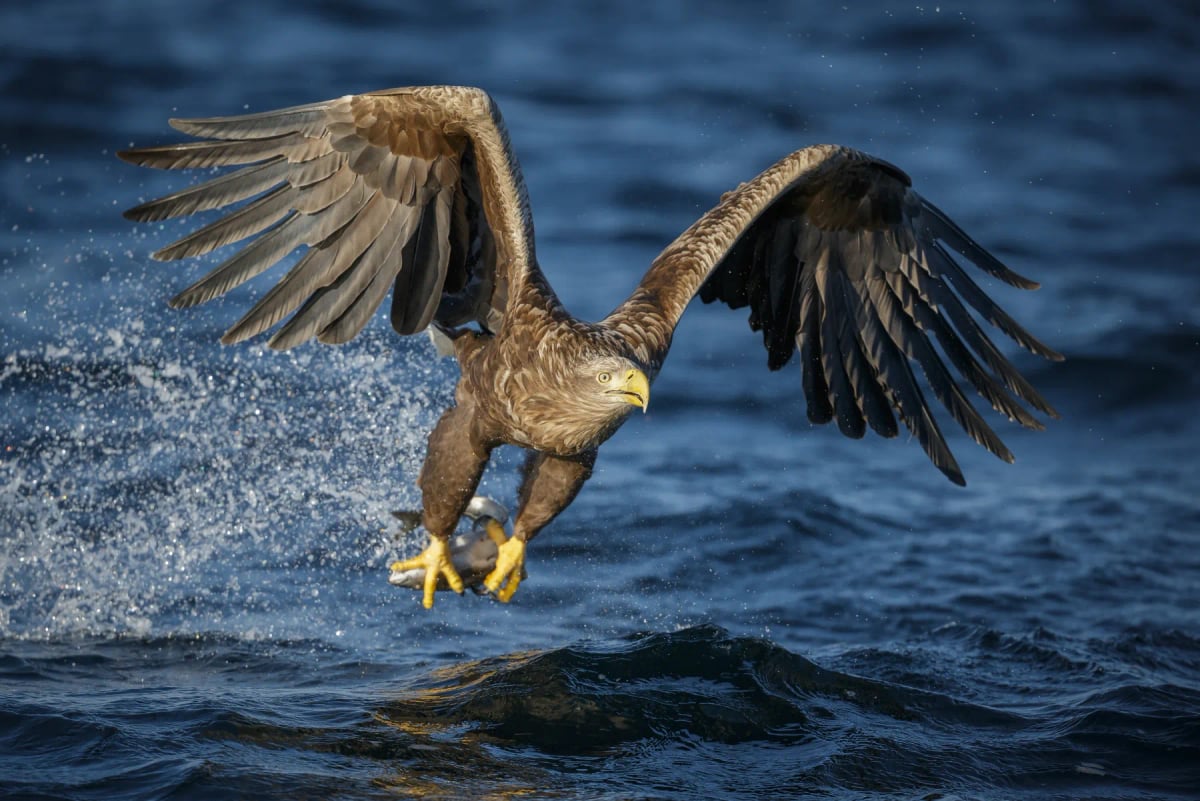
Fish form the backbone of this eagle's diet, and it catches them by swooping low over the water and snatching prey with its large, powerful talons. Species taken vary by region, but pike, carp, and salmon are among the most common targets. Waterfowl, including ducks, coots, and geese, are also taken regularly, especially in winter when fish are harder to catch. The white tailed eagle is equally at home as a scavenger, feeding on the carcasses of deer, livestock, and stranded marine animals. It will also steal meals from other birds such as ospreys and herons. This flexible approach to feeding allows the species to survive in a wide range of environments throughout the year, regardless of season or local prey availability.
Behavior
White tailed eagles are largely monogamous and form pair bonds that can last for many years. Breeding pairs claim and defend large territories, often covering dozens of square kilometers around a favored nest site. The nest, known as an eyrie, is a massive structure built from branches and lined with softer material. Pairs return to the same eyrie season after season, adding to it each year until it can reach several meters in depth and weigh hundreds of kilograms. Courtship involves dramatic aerial displays, with both birds soaring together and occasionally locking talons in mid-air. Outside the breeding season, younger birds and non-breeding adults may gather in loose groups at reliable food sources such as fish-rich lakes or deer carcasses in winter landscapes.
Recovery in Europe
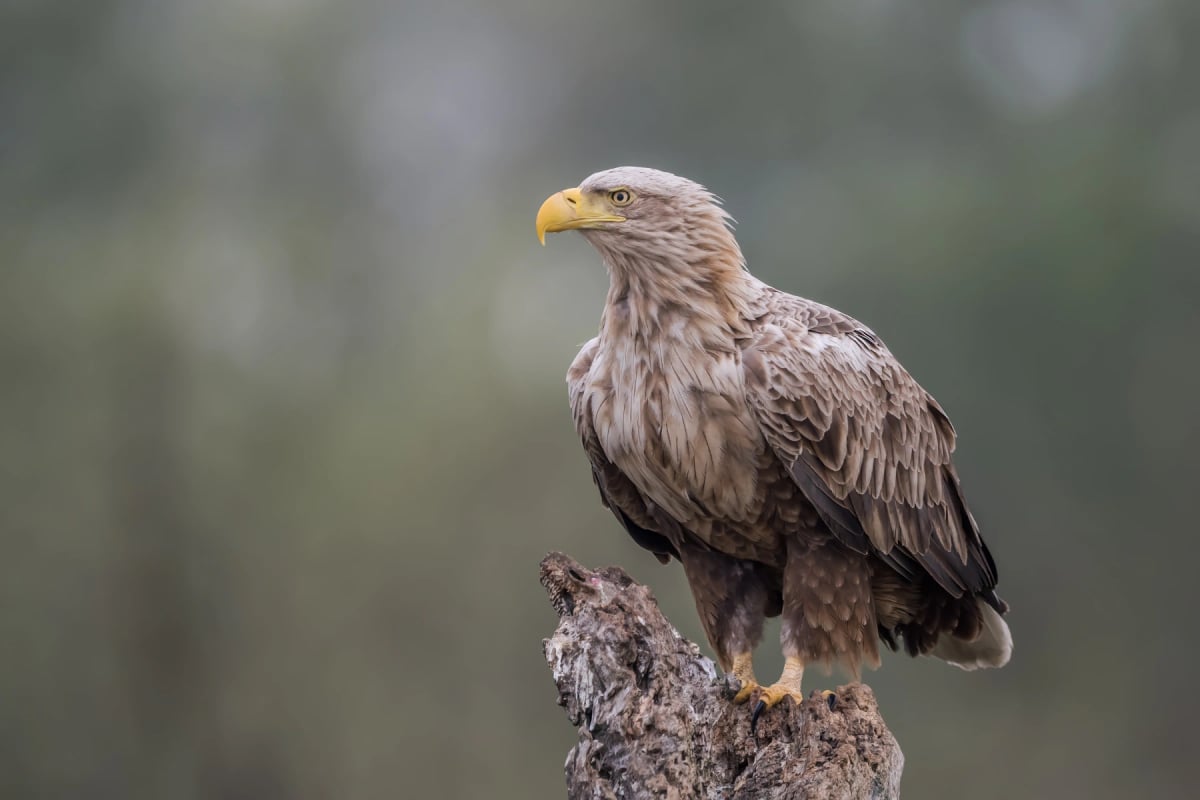
Few conservation stories in Europe are as striking as the return of the white tailed eagle. By the early twentieth century, persecution through shooting and poisoning had eliminated the species from much of Western Europe, including the British Isles, where the last breeding pair disappeared from Scotland in 1916. Dedicated reintroduction programs began in the 1970s, starting with releases in western Scotland. Later efforts brought the species back to Ireland, England, and several other countries where it had vanished. Across Scandinavia and Central Europe, strict legal protection allowed existing populations to expand steadily. The ban on organochlorine pesticides such as DDT was also critical, as these chemicals had thinned eggshells and caused widespread breeding failure. Today, several thousand pairs breed across Europe, marking one of the continent's great wildlife recoveries.
Conservation
Globally, the white tailed eagle is assessed as Least Concern by the IUCN, reflecting its large range and recovering populations. Even so, the species faces real threats that conservation managers continue to monitor closely. Illegal poisoning, often linked to rodenticides or bait intended for other predators, remains one of the leading causes of death across Europe and Central Asia. Collisions with overhead power lines and wind turbines also account for significant numbers of fatalities each year. Disturbance at nest sites during the breeding season can cause pairs to abandon eggs or chicks. Lead poisoning from ammunition fragments in carcasses and offal is another serious concern. Ongoing legal protection, public awareness campaigns, and cooperation between governments across the eagle's vast range are all essential to securing its future.
Technical factsheet
Where it is found
The White tailed Eagle can be found in places such as:
Frequently Asked Questions
How big is a white tailed eagle?
The white tailed eagle is one of the largest birds of prey in Eurasia. It can weigh up to 7 kilograms and has a wingspan that reaches 2.5 meters, making it broader winged than a golden eagle. Females are noticeably larger than males, which is common among birds of prey. When soaring overhead, its wide, rectangular wings and short white tail make it easy to identify.
What does the white tailed eagle eat?
Fish are its main food source, caught by swooping low over the water and grabbing them with powerful talons. It also hunts waterfowl such as ducks and coots, and readily feeds on carrion including deer and stranded marine animals. It will even steal food from ospreys and herons. This varied diet helps it thrive across a wide range of environments in every season.
Where does the white tailed eagle live?
This eagle has one of the widest ranges of any bird of prey in the world, found from Greenland and Iceland across Europe and Russia all the way to Japan. It always stays close to water, favouring large lakes, rivers, estuaries, and sea coasts. In winter, birds from northern populations travel south into Central Asia, the Middle East, and parts of South and East Asia.
Is the white tailed eagle endangered?
It is currently listed as Least Concern on the IUCN Red List, thanks to a remarkable recovery across Europe and a large global population. However, it still faces serious threats, including illegal poisoning, lead contamination from ammunition in carcasses, and collisions with power lines and wind turbines. Conservation work across many countries continues to be essential to keeping populations stable and growing.
How does the white tailed eagle build its nest?
The nest, called an eyrie, is built from large branches and lined with softer materials like grass and moss. Pairs return to the same nest year after year, adding new material each season. Over time, an eyrie can grow several meters deep and weigh hundreds of kilograms, becoming one of the largest bird nests on Earth. Nests are usually placed in tall trees or on cliff ledges close to water.
How long do white tailed eagles live?
In the wild, white tailed eagles can live for over 20 years, with some individuals reaching 25 years or more. They are slow to mature, not reaching full breeding condition until around five years of age. Because of this, the survival of adult birds is especially important to population growth. Young eagles spend their early years wandering widely before eventually settling in a territory and finding a mate.
Can you see white tailed eagles in the UK?
Yes, and their return is one of Britain's greatest conservation successes. The species was extinct in the UK by the early twentieth century, but reintroduction programs beginning in western Scotland in the 1970s brought it back. Eagles have since been reintroduced to Ireland and England as well. Today, breeding pairs can be found in Scotland and parts of England, with more birds arriving each year as the population grows.