Mandrill
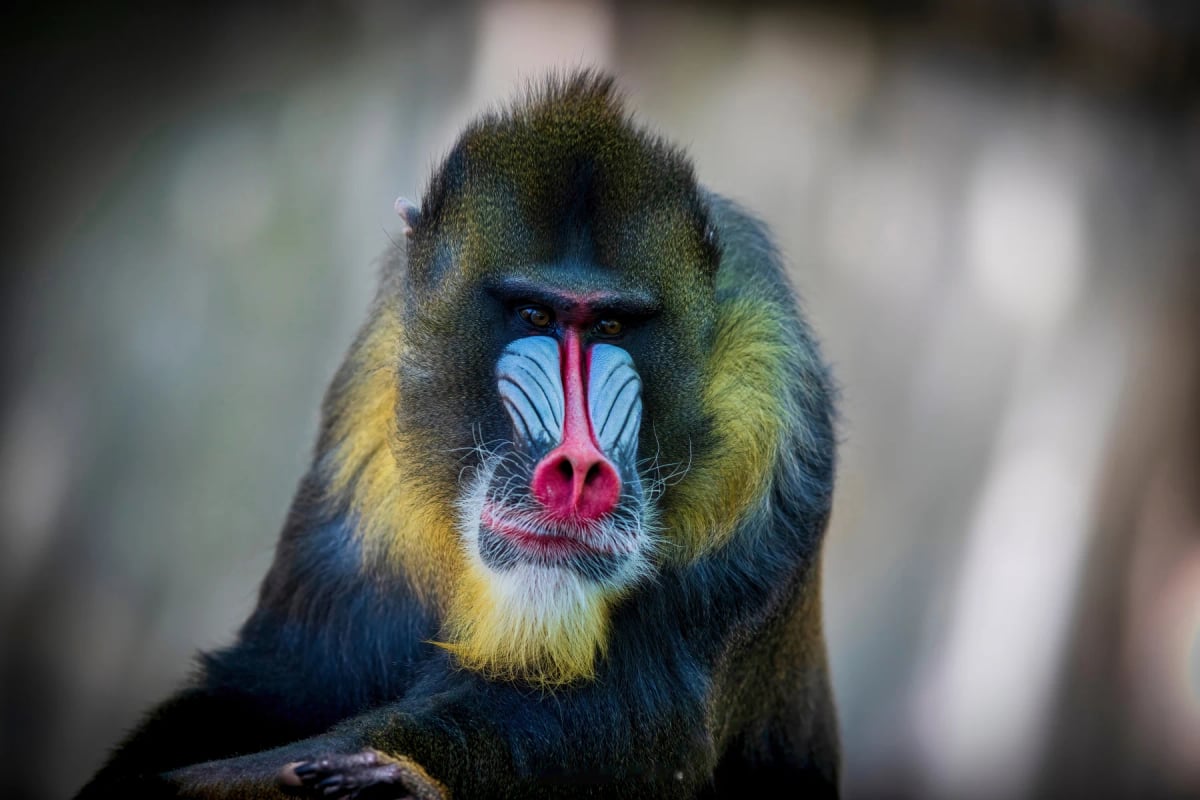
The mandrill is the world's largest monkey, found in the tropical rainforests of Gabon, Cameroon, the Republic of Congo, and Equatorial Guinea. Males are among the most visually striking primates on Earth, with vivid red and blue skin on the face and rump, a heavy frame, and canine teeth that can reach up to 6.5 cm in length. Females are notably smaller and carry far less color. Mandrills are omnivores that spend much of their day foraging on the forest floor for fruit, nuts, seeds, roots, insects, and small vertebrates. They form some of the largest gatherings of any non-human primate, with groups called hordes that can exceed 800 individuals. Communication relies on vocalizations, facial expressions, and scent marking. Listed as Vulnerable by the IUCN, the mandrill is threatened by habitat loss from logging and by hunting for bushmeat.
Appearance
The mandrill is the largest monkey in the world, and the male is one of the most visually striking animals on the planet. His face is painted in vivid shades of red and blue, with a ridged snout that intensifies in color when he is excited or agitated. The rump displays matching patches of red, blue, and violet. His canine teeth can reach up to 6.5 cm in length, used more for display than for fighting. A fully grown male can weigh over 30 kg. Females are considerably smaller, typically weighing around 12 kg, and their coloring is far more subdued. Both sexes have a short tail and a stocky, muscular build suited to life on the forest floor.
Habitat and distribution
Mandrills are found across a relatively small stretch of Central and West Africa, with their range covering Gabon, Cameroon, the Republic of Congo, and Equatorial Guinea. Gabon is believed to hold the largest portion of the population. These primates favor dense tropical rainforest, where thick vegetation provides cover and food is plentiful year round. They also venture into forest clearings and gallery forests along rivers. Mandrills spend a great deal of time on the ground, moving through undergrowth in search of food, but they climb into trees to sleep at night. The Ogooué River in Gabon is thought to act as a natural boundary at the southern edge of their range.
Diet
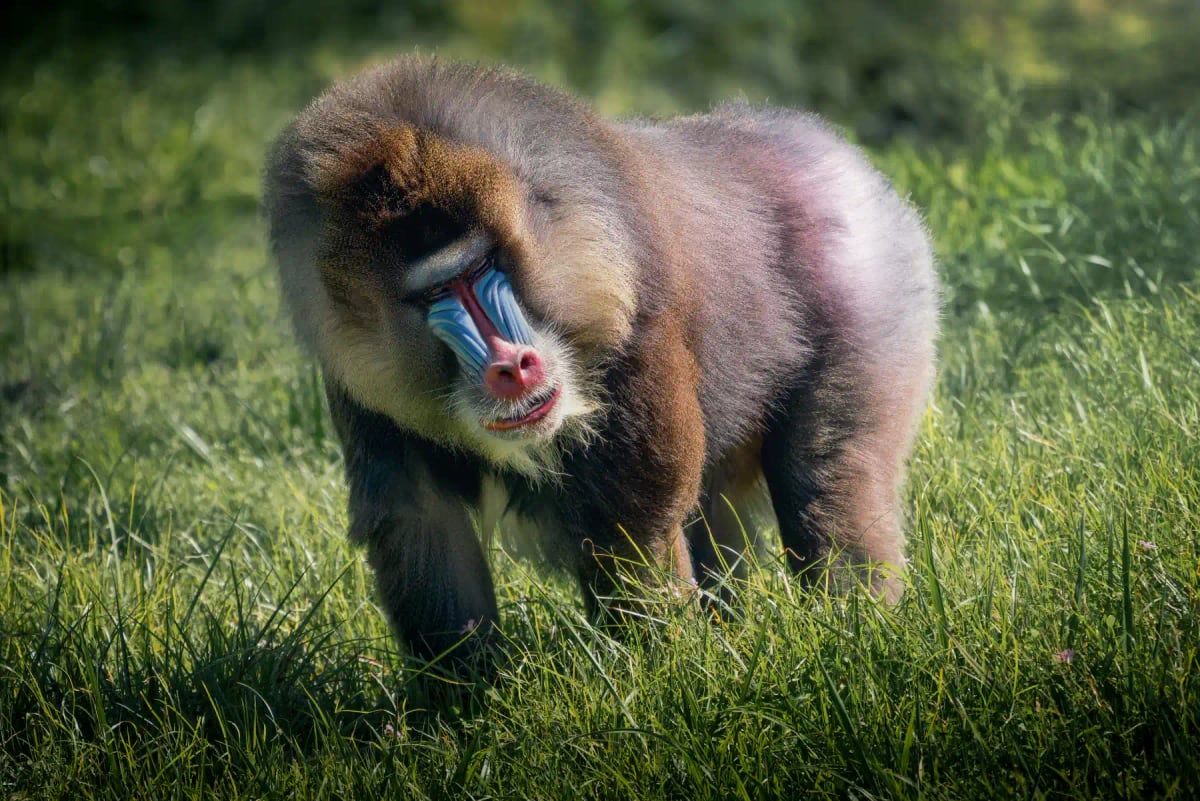
Fruit makes up the core of the mandrill's diet, but these animals are true omnivores and will eat a wide range of foods depending on what the forest offers. Seeds, nuts, roots, and fungi are all consumed regularly, and mandrills use their powerful jaws to crack open hard shells and tough plant material. Insects, worms, and other invertebrates are also eaten, and mandrills will occasionally take small vertebrates such as frogs, lizards, and even small birds. They forage mainly on the forest floor, using their hands to dig, turn over leaf litter, and probe crevices. This varied appetite makes mandrills important seed dispersers within their forest ecosystem, helping plants spread across wide areas.
Social structure
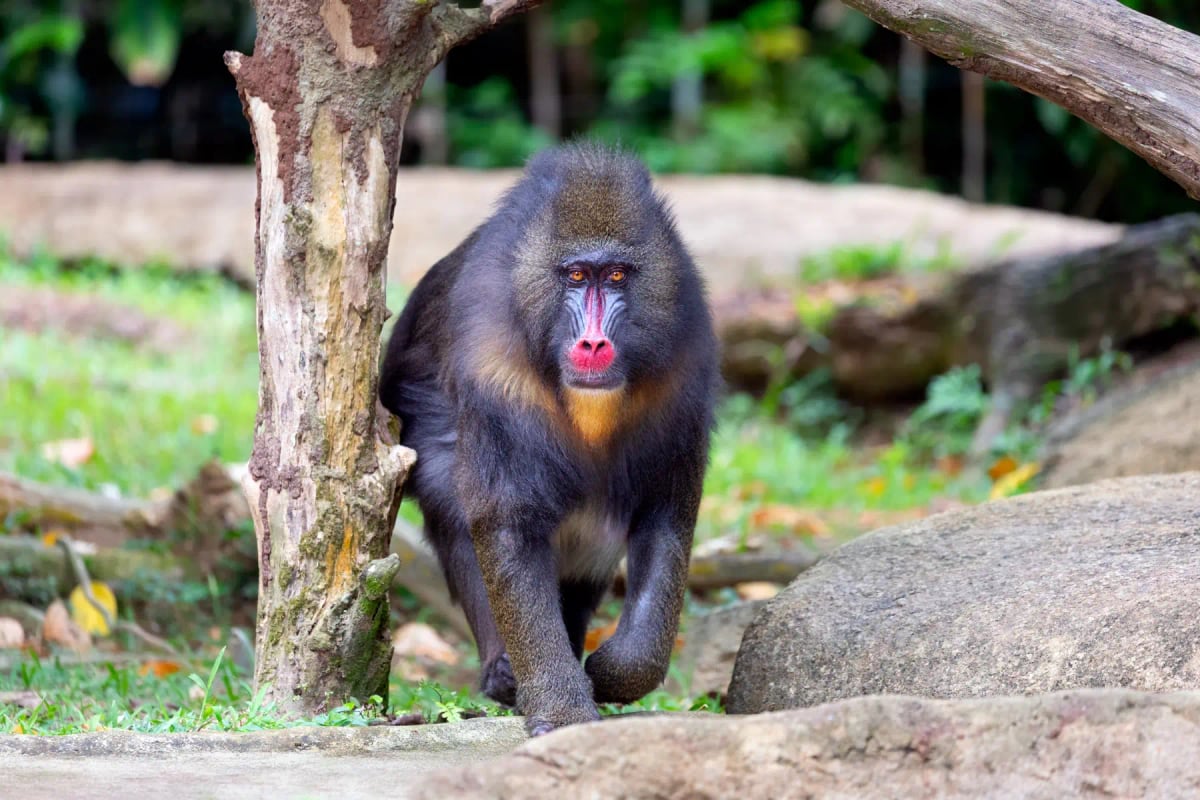
Few primates gather in groups as large as those formed by mandrills. The biggest assemblies, known as hordes, can exceed 800 individuals, making them among the largest gatherings of any non-human primate recorded anywhere in the world. Within these hordes, smaller family units built around females and their young form the stable core. Adult males tend to be more solitary outside of the breeding season, joining larger groups mainly to mate. Communication is rich and varied, relying on a range of calls, facial gestures, and scent marking from glands on the chest. The intensity of a male's coloring is linked to his hormonal levels and social rank, with the most dominant males showing the brightest hues.
Conservation
The IUCN lists the mandrill as Vulnerable, reflecting genuine concern about declines across its range. The two biggest threats are hunting for bushmeat and the destruction of forest habitat driven by commercial logging and agricultural expansion. Mandrills are particularly exposed to hunters because they travel in large, noisy groups that are relatively easy to locate. Protected areas such as Lopé National Park in Gabon provide important refuges, and research conducted there has greatly improved understanding of mandrill behavior. However, protections outside of reserves remain weak in many parts of the range. Continued loss of forest cover and persistent hunting pressure mean that without stronger enforcement and community involvement, the species will face increasing difficulty over the long term.
Researched and written by Juan Pablo. Sources: IUCN Red List, scientific literature and regional field guides. Last updated: .
Technical factsheet
Frequently Asked Questions
What do mandrills eat?
Mandrills eat a wide variety of foods, with fruit being their favorite. They also consume seeds, nuts, roots, fungi, and insects. When the opportunity arises, they will catch small animals like frogs and lizards too. They do most of their foraging on the forest floor, using their hands to dig and search through leaf litter. This varied diet makes them useful seed dispersers in the rainforest ecosystem.
Where do mandrills live?
Mandrills live in the tropical rainforests of Central and West Africa. Their range covers four countries: Gabon, Cameroon, the Republic of Congo, and Equatorial Guinea. Gabon is thought to hold the largest share of the population. They prefer dense forest with thick vegetation, though they also move through clearings and forests along rivers. They sleep in trees at night but spend most of the day on the ground.
Why do mandrills have colorful faces?
The bright red and blue coloring on a male mandrill's face is closely tied to his hormones and social rank. The more dominant a male is, the more vivid his colors tend to be. These colors help females identify strong, healthy mates and also signal status to other males. The colors intensify when the animal is excited or agitated, acting as a kind of mood display visible even in dim forest light.
How big are mandrill groups?
Mandrills form some of the largest groups of any primate in the world. These gatherings, called hordes, can exceed 800 individuals. Within a horde, smaller units built around females and their young make up the stable core. Adult males are more solitary for most of the year and join the larger group mainly during the breeding season. Their groups are big enough to be heard from a considerable distance in the forest.
Are mandrills dangerous to humans?
Mandrills are wild animals and should always be treated with caution. Males are large and powerful, with canine teeth that can reach 6.5 cm in length. That said, mandrills are not naturally aggressive toward humans and tend to avoid contact. In the wild, they are far more threatened by people than the other way around, since hunting is one of the main reasons their populations have declined across Central Africa.
Is the mandrill endangered?
The mandrill is listed as Vulnerable on the IUCN Red List. Their numbers have dropped mainly because of hunting for bushmeat and the loss of forest habitat due to logging and farming. Large, noisy groups make them relatively easy to locate, which increases their exposure to hunters. Protected areas like Lopé National Park in Gabon offer some shelter, but enforcement outside reserves remains inconsistent across much of their range.
What is the difference between a mandrill and a baboon?
Mandrills and baboons are related but belong to different genera. The mandrill is stockier and far more colorful, with that famous red and blue face that baboons do not have. Baboons are found across a much wider range in Africa and parts of Arabia, while mandrills are limited to a small patch of Central and West African rainforest. Mandrills also tend to live in denser forest, whereas baboons favor more open savanna environments.